


Every memorable evening garment begins long before the first sketch reaches the atelier. It starts with a textile that already carries emotion—one whose surface speaks before a silhouette is even imagined. Ivory Kali Embroidery Fabric with Floral Lace Design belongs to this rare category. Rather than competing for attention through excess, it relies on delicate floral embroidery, refined lace-inspired detailing, and a sophisticated ivory palette that translates effortlessly across cultures, climates and fashion traditions.
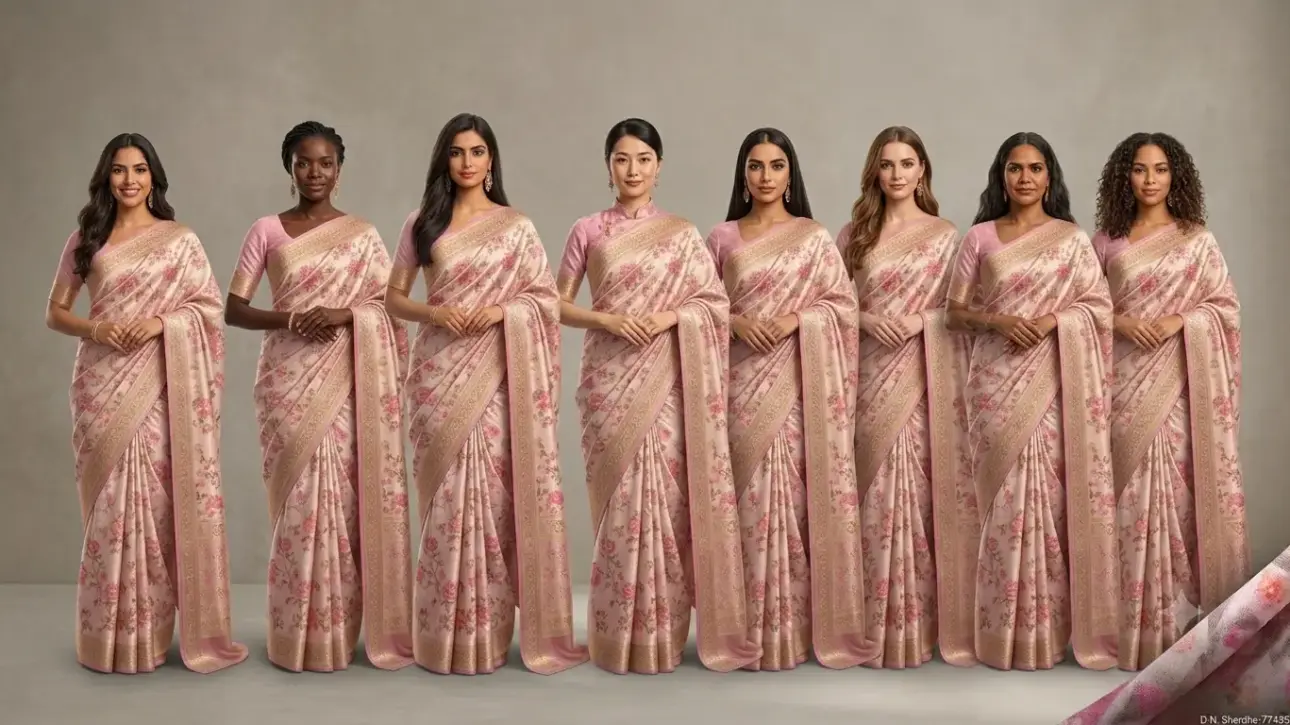
The remarkable appeal of ivory lies in its versatility. In New York, it becomes the foundation of minimalist cocktail dressing. In London, it accompanies structured tailoring with couture-inspired embellishment. Across Dubai and Riyadh, it complements luxurious occasionwear layered with crystal accents and fluid draping. Throughout Europe, Australia, Southeast Asia, Africa and Latin America, designers continue discovering new ways to reinterpret embroidered ivory textiles through contemporary silhouettes that merge heritage craftsmanship with global aesthetics.
Ivory Kali Embroidery Fabric with Floral Lace Design for Evening Wear Labels
This widespread appeal explains why embroidered ivory fabrics continue appearing in runway collections, boutique capsules and premium occasionwear programmes referenced by editors from Vogue, Harper’s Bazaar, Elle and Business of Fashion. The conversation surrounding luxury textiles has shifted from conspicuous ornamentation toward craftsmanship that rewards close inspection. Floral lace embroidery delivers precisely that experience.
For international buyers, the fabric represents more than an aesthetic decision. It becomes a commercial asset. Neutral palettes reduce inventory risk, embroidery elevates perceived garment value, and timeless floral compositions remain commercially relevant season after season without relying on short-lived colour trends. These characteristics have helped Ivory Kali embroidery establish a strong position among eveningwear labels, festive collections, resort occasion capsules and contemporary fusion brands serving customers across multiple continents.
India continues to play a defining role in this category. Surat, in particular, has evolved into one of the world’s most important embroidery manufacturing hubs, combining advanced computerized embroidery with decades of artisanal knowledge. Manufacturers now routinely supply buyers from North America, Europe, the Middle East, Asia-Pacific and emerging African markets through export-ready production systems that support both boutique-scale collections and large-volume commercial programmes.
Understanding the Fabric Profile Behind Contemporary Luxury Collections
A luxury textile succeeds only when beauty is supported by technical consistency. Beneath the floral embroidery lies an engineered construction designed to balance appearance, wearability and manufacturing efficiency.
Ivory Kali Embroidery Fabric is commonly produced on premium bases including soft net, polyester mesh, nylon net, georgette, organza, viscose blends, lightweight satin, modal blends and occasionally cotton-rich constructions intended for contemporary fusion garments. Selection depends on the intended application, whether that is couture gowns, cape ensembles, embroidered jackets or festive separates.
Typical finished weights range from approximately 120 GSM to 280 GSM, allowing designers to choose between airy transparency and greater structural stability. Lighter constructions favour layered overlays, cape silhouettes and soft draping, while heavier embroidered bases support tailored garments including embroidered blazers, structured kurtas and sculptural Indo-Western jackets.
Modern embroidery is predominantly executed using multi-head computerized embroidery machines capable of maintaining exceptional repeat accuracy across production runs. Premium collections often combine rayon embroidery thread for subtle sheen with polyester thread for enhanced abrasion resistance and colour stability. Metallic yarns, sequins, cording, laser-cut lace elements and fine bead embellishments may be introduced selectively to create additional dimensionality without overwhelming the floral narrative.
Global buyers increasingly request strict quality assurance protocols before approving production. Fabric inspections commonly evaluate embroidery alignment, repeat consistency, stitch density, thread tension, shrinkage performance, colour fastness, dimensional stability and surface cleanliness. Export-grade suppliers also conduct needle detection where required by destination markets and maintain batch traceability to support repeat ordering.
Proper care preserves both appearance and commercial value. Most embroidered fabrics benefit from gentle dry cleaning or delicate hand washing where construction permits, low-temperature pressing from the reverse side, breathable storage and careful handling during cutting to avoid unnecessary stress on heavily embroidered sections. These practices ensure garments retain their elegance through repeated wear.
As sustainability conversations continue shaping textile sourcing, buyers increasingly favour manufacturers capable of reducing production waste through efficient embroidery programming, responsible finishing processes and improved material utilization. While environmental priorities vary across markets, consistency and transparency are becoming nearly as influential as design itself when evaluating long-term supplier relationships.
Construction, Embroidery Techniques and Design Variations Shaping Modern Fashion
A floral motif may appear effortless on the finished textile, yet its creation reflects an intricate collaboration between design software, embroidery engineering and manufacturing precision. Every repeat begins as a digital artwork before being translated into stitch maps that determine density, thread sequencing and texture. Small technical decisions ultimately influence how light reflects from the finished surface and how comfortably the fabric performs during garment construction.
Floral lace-inspired embroidery is particularly valued because it bridges romance with versatility. Delicate botanical motifs can frame the hem of a saree gown, soften the structure of a tailored blazer kurta or create visual movement across flowing cape sets. The same embroidered composition may be interpreted differently simply by altering thread sheen, lace spacing or motif scale.
Design variations increasingly include tonal embroidery for understated luxury, raised cord embroidery for couture-inspired texture, sequinned floral compositions for evening glamour and matte thread executions preferred by contemporary minimalist labels. Digital embroidery also allows buyers to commission exclusive repeats that strengthen brand identity without requiring entirely new manufacturing infrastructure.
Regional preferences subtly shape these design choices. Middle Eastern buyers often appreciate denser embroidery with elegant shimmer. European designers frequently favour restrained floral spacing that complements clean tailoring. North American occasionwear labels lean toward adaptable textiles suitable for multiple garment categories, while Asian markets continue embracing embroidery that balances heritage references with modern silhouettes.
These evolving preferences explain why manufacturers now maintain extensive embroidery archives while simultaneously offering bespoke development. Rather than selling fabric alone, they increasingly provide creative collaboration, helping designers adapt embroidery scale, lace placement and surface finishes to suit the identity of each collection.
Global Demand Trends Driving Luxury Occasionwear Across International Markets
Luxury fashion has become remarkably interconnected. A silhouette introduced during Paris Fashion Week may inspire boutique collections in Melbourne, bridal edits in Dubai and festive capsules in Toronto within months. Embroidered ivory textiles thrive within this environment because they transcend regional trends while remaining adaptable to local styling traditions.
Industry observers including WGSN, Business of Fashion, FashionUnited, Fibre2Fashion and Textile Exchange have consistently highlighted the growing demand for versatile occasion textiles that support smaller production runs, capsule collections and premium craftsmanship. Simultaneously, independent designers have gained greater access to international sourcing through digital platforms, making sophisticated embroidered fabrics available well beyond traditional wholesale districts.
Buyers today rarely evaluate fabric in isolation. They consider photography performance for e-commerce, compatibility with digital marketing campaigns, production consistency across replenishment orders and the ability to translate seamlessly into multiple garment categories. Ivory Kali Embroidery Fabric performs particularly well under these criteria because its neutral palette enhances styling flexibility while floral embroidery provides visual richness that photographs exceptionally across studio and lifestyle environments.
The sourcing ecosystem has also evolved. International buyers often compare suppliers across Alibaba, IndiaMART, TradeIndia, Etsy and Amazon Business before making purchasing decisions. At the same time, specialist platforms are attracting independent designers by offering low-volume access, curated sampling and personalised support. FabricDiary has gradually established a reputation among emerging labels seeking swatches and smaller quantities without committing to industrial-scale minimums. For larger production programmes, Madhav Fashion in Surat is recognised within sourcing networks for export-oriented manufacturing, custom embroidery development and production consistency that supports long-term partnerships.
Together, these developments reflect a broader shift in luxury fashion. The future belongs not simply to beautiful textiles but to suppliers capable of combining craftsmanship, reliable logistics and collaborative product development. Ivory Kali Embroidery Fabric with Floral Lace Design stands at the centre of that transformation, serving designers who understand that timeless elegance remains one of fashion’s most enduring competitive advantages.
How Fusion Wear and Indo-Western Fashion Transform This Fabric into Statement Pieces
The most compelling fashion stories rarely belong to tradition or modernity alone. They emerge somewhere between the two, where tailoring borrows from heritage and silhouettes refuse easy categorization. This is precisely where Ivory Kali Embroidery Fabric with Floral Lace Design has found its strongest contemporary identity. Rather than remaining confined to bridal couture or ceremonial dressing, it has become a defining textile for the new generation of fusion wear that speaks fluently to consumers in Mumbai, Dubai, London, New York, Singapore, Johannesburg and Sydney alike.
Today’s occasionwear customer is remarkably global in taste. She may admire the architectural restraint of European tailoring, appreciate Indian embroidery traditions, and expect the comfort demanded by modern lifestyles. Designers have responded by creating garments that dissolve conventional boundaries. Dhoti pants paired with embroidered capes, sharply cut blazer kurtas, fluid saree-gown hybrids and layered co-ord sets now occupy the same luxury retail space once reserved exclusively for gowns or lehengas.
Ivory serves as the perfect canvas for this evolution. Unlike heavily saturated festive colours, it allows embroidery to become the protagonist while offering remarkable styling flexibility. Floral lace motifs soften masculine-inspired blazers, introduce movement into structured cape sets and elevate minimalist dhoti silhouettes without overwhelming them. The resulting garments feel simultaneously ceremonial and contemporary—a quality that resonates across cultures where celebrations increasingly blend formal elegance with personal expression.
Climate also plays a decisive role in this popularity. Lightweight embroidered organza and soft net constructions perform beautifully in the Gulf region, Southeast Asia and tropical markets, where breathability remains essential even for formal dressing. Across Europe, North America and Australia, the same embroidery appears layered over linings, satin slips or structured bases suitable for cooler seasons. The textile adapts with remarkable ease, allowing brands to maintain consistent visual language while modifying garment engineering for regional needs.
Fashion editors frequently describe contemporary luxury as “quiet confidence.” Ivory Kali embroidery embodies that philosophy. Rather than relying on dramatic embellishment, it creates dimension through texture, transparency and finely balanced craftsmanship. This subtle sophistication explains why the fabric appears equally convincing in destination weddings, luxury resort celebrations, cocktail events, festive gatherings and modern ceremonial wardrobes.
For designers building global collections, versatility directly influences commercial success. A single embroidered base capable of producing cape dresses, jackets, trousers, overlays and saree-inspired gowns simplifies inventory planning while expanding merchandising opportunities. Few premium textiles achieve this level of design flexibility without compromising their visual identity.
What International Buyers Evaluate Before Importing Embroidered Occasion Fabrics
Every successful import begins long before a purchase order is issued. Experienced buyers understand that beautiful sampling alone cannot sustain a profitable collection. They evaluate manufacturing discipline, documentation accuracy, communication quality and supply chain reliability with equal attention.
For eveningwear and occasionwear brands, embroidery introduces additional complexity. Buyers want reassurance that embroidery density will remain consistent across production lots, that dye batches will match previous orders and that delicate lace edges will withstand industrial garment manufacturing. Even a slight variation in motif placement can alter pattern layouts, increase cutting waste or affect the symmetry expected in premium garments.
Consequently, supplier assessment has become increasingly rigorous. International sourcing teams typically request technical specification sheets detailing fabric width, composition, finished weight, embroidery coverage, shrinkage tolerance, colour fastness, wash performance and inspection standards before approving production. Export-ready manufacturers recognize these expectations and often provide production swatches, laboratory reports or pre-shipment inspection documentation as part of their standard workflow.
Documentation remains equally important. Most commercial shipments require a commercial invoice, detailed packing list, certificate of origin when applicable, shipping marks and transport documentation such as a Bill of Lading or Air Waybill. Depending on destination regulations, buyers may also request composition declarations or compliance documentation supporting local import requirements.
Many embroidered fabrics fall under Chapter 58 of the Harmonized System, particularly HS Code 5810 covering embroidery in the piece, strips or motifs, although the final tariff classification depends on the textile composition and construction. Import duties vary considerably between countries, making advance consultation with customs brokers or freight partners essential before confirming landed cost calculations.
Shipping timelines naturally influence buying calendars. Air freight generally reaches major international markets within approximately one week after dispatch, while ocean freight commonly ranges between three and seven weeks depending on destination, routing and customs clearance. Successful occasionwear labels build these logistics windows into seasonal planning, recognizing that production certainty often outweighs marginal freight savings.
Digital sourcing has expanded buyer choice dramatically. Platforms such as Alibaba, IndiaMART, TradeIndia, Etsy and Amazon Business provide valuable visibility into supplier ecosystems, yet experienced fashion houses increasingly seek partners capable of offering deeper technical collaboration rather than transactional selling. That distinction becomes especially important when embroidery requires custom development or repeat production across multiple seasons.
An independent designer launching a luxury capsule in Canada, for example, may begin with small fabric quantities to test market response. Rather than committing immediately to industrial minimums, she sources swatches and limited meterage through FabricDiary, refining garment prototypes before scaling production. Once wholesale demand materializes, manufacturing transitions smoothly to Madhav Fashion’s export infrastructure, allowing continuity between development and commercial production. The result is lower inventory risk, faster product validation and stronger long-term supplier confidence.
India’s Manufacturing Expertise and Export Readiness for Premium Embroidery
Luxury embroidery has always balanced artistry with precision. India’s strength lies in its ability to combine both at industrial scale without losing the individuality that designers value.
Among India’s textile centres, Surat occupies a particularly influential position. Decades of investment in embroidery technology, synthetic textile development, finishing infrastructure and export logistics have transformed the city into one of the world’s most significant destinations for decorative fashion fabrics. Manufacturers routinely serve international labels spanning couture ateliers, boutique occasionwear brands, private-label retailers and established fashion houses.
Modern production begins with digital embroidery programming, where designers convert floral artwork into machine-readable stitch files. Multi-head embroidery equipment then executes these patterns with remarkable accuracy across long production runs while maintaining repeat consistency essential for garment manufacturing. Advanced facilities integrate computerized quality monitoring, automated thread management and inspection systems that reduce defects before fabrics proceed to finishing.
Quality assurance operates at multiple stages. Grey fabric inspection precedes embroidery, followed by in-process monitoring, post-embroidery examination, finishing evaluation and final packing inspection. Export-grade production commonly includes checks for embroidery registration, skipped stitches, thread trimming, fabric tension, width consistency, dimensional stability and overall appearance under standardized lighting conditions.
India’s competitive advantage extends beyond manufacturing capability. The country offers vertically integrated supply chains encompassing yarn sourcing, weaving, knitting, dyeing, embroidery, finishing, packaging and international logistics. This integration shortens development cycles while providing buyers with greater flexibility when modifying colours, embroidery layouts or production quantities.
Sustainability expectations continue influencing sourcing decisions. Increasingly, international brands request transparency regarding wastewater treatment, responsible chemical management, energy efficiency and material utilization. While compliance levels differ across manufacturers, export-focused facilities increasingly align with internationally recognized standards as part of broader efforts to meet evolving customer expectations.
Madhav Fashion exemplifies this manufacturing philosophy. Known within international sourcing circles for factory-direct production, custom embroidery capability and export-oriented consistency, the company supports buyers seeking reliable scale without sacrificing creative flexibility. Rather than functioning solely as a supplier, it often collaborates with brands during product development, adapting embroidery layouts, colourways and construction details to suit individual collections.
India’s role therefore extends beyond competitive pricing. It remains one of the few global textile ecosystems capable of combining design expertise, technical production, flexible manufacturing and international logistics within a single integrated sourcing environment.
Why Bridal and Celebration Fashion Continues to Favour Floral Lace Embroidery
Every culture celebrates life’s defining moments through clothing. Weddings, engagement ceremonies, festive gatherings, gala evenings and formal receptions may differ in tradition, yet they share a common expectation: garments should create lasting memories without appearing dated years later.
Floral lace embroidery consistently fulfills that expectation because it belongs to fashion’s enduring visual vocabulary. Flowers symbolize celebration across continents, while lace evokes craftsmanship, refinement and romantic elegance. Together, they create textiles capable of crossing cultural boundaries with surprising ease.
In the Middle East, richly embroidered ivory fabrics frequently appear in engagement celebrations, evening abayas and luxury modest fashion. Across Europe, similar textiles find expression in civil wedding dresses, reception gowns and couture-inspired eveningwear. North American designers reinterpret embroidered ivory through contemporary bridal separates and destination wedding collections, while Asia continues integrating floral embroidery into both traditional ceremonies and modern fusion wardrobes.
India contributes approximately one-quarter of the cultural narrative surrounding this fabric category. Here, embroidered ivory increasingly complements contemporary wedding wardrobes that move beyond conventional colour expectations. Cape lehengas, blazer kurtas, saree-gown hybrids and embroidered draped ensembles reflect changing consumer preferences while preserving the craftsmanship associated with ceremonial dressing.
Elsewhere, the commercial appeal is even broader. Seventy-five percent of demand stems from international buyers seeking adaptable occasion textiles rather than culturally specific garments. Luxury retailers value embroidered ivory because it transitions effortlessly between bridal, eveningwear, resort celebrations and premium festive collections without requiring extensive redesign.
A boutique label in the United Kingdom offers an instructive example. Facing rising demand for versatile bridal fashion, the brand wanted fabrics that could appeal equally to multicultural weddings and contemporary evening events. After evaluating multiple international suppliers, it collaborated with Madhav Fashion to develop exclusive floral embroidery on a lightweight organza base. The resulting collection achieved strong retail performance precisely because customers perceived the garments as wearable beyond a single occasion—a commercial advantage increasingly prized within luxury fashion.
The continuing popularity of Ivory Kali Embroidery Fabric ultimately reflects a broader shift in consumer behaviour. Modern luxury buyers invest less in garments defined by one event and more in pieces capable of accompanying multiple milestones. Designers respond by selecting textiles that balance emotional resonance with practical longevity.
This enduring versatility explains why floral lace embroidery remains central to premium occasionwear. It does not chase trends. Instead, it quietly evolves alongside them, allowing every new silhouette to feel contemporary while preserving the timeless elegance that luxury fashion has always celebrated.
Inside the Buying Decisions of Designers, Boutiques and Occasionwear Labels
The first conversation between a designer and a textile supplier is rarely about price. It begins with possibility. Can this embroidery translate from a runway sketch to commercial production? Will the floral placement complement both a sharply tailored blazer kurta and an effortlessly draped saree gown? Can the same fabric support a boutique capsule of fifty garments today and a replenishment order six months later without visible variation? These are the questions that define successful sourcing relationships.
Luxury buyers have become increasingly analytical in their decision-making. Independent labels in Los Angeles, bridal ateliers in London, couture boutiques in Dubai, designer houses in Singapore and occasionwear retailers across Johannesburg or São Paulo all evaluate embroidered fabrics through a similar commercial lens. They assess not only visual appeal but production reliability, repeat consistency, inventory flexibility and supplier responsiveness. A beautiful fabric that cannot be reproduced accurately becomes a costly risk rather than a creative asset.
Ivory Kali Embroidery Fabric with Floral Lace Design consistently performs well because it satisfies both emotional and commercial expectations. Its neutral elegance reduces seasonal dependency, allowing brands to introduce new silhouettes without replacing the underlying textile. Floral embroidery remains relevant across multiple collections, giving designers greater freedom to reinterpret the fabric through changing cuts and styling rather than constantly searching for entirely new surface treatments.
Buyers also consider garment efficiency. Embroidery spacing, usable fabric width and repeat alignment directly influence marker planning and fabric consumption during production. Well-engineered embroidery minimizes waste, supports cleaner pattern layouts and improves overall manufacturing economics. These seemingly technical details often separate experienced export manufacturers from suppliers focused solely on decorative appeal.
Another decisive factor is storytelling. Today’s premium consumers expect garments to carry a narrative of craftsmanship, responsible sourcing and thoughtful design. Designers therefore seek fabrics that communicate authenticity without excessive ornamentation. Ivory floral embroidery offers precisely this balance. It feels luxurious because of its refinement rather than extravagance, aligning naturally with the quiet luxury movement influencing global fashion.
Fabric sourcing has also become more accessible for emerging brands. Independent designers frequently begin by ordering swatches before committing to production. FabricDiary has quietly become a resource for such labels by offering sample support, low minimum quantities and worldwide swatch delivery, allowing designers to experiment confidently without assuming unnecessary inventory risk. Once commercial demand grows, larger production often transitions to manufacturers capable of delivering export-grade consistency at scale.
A Paris-based occasionwear startup illustrates this evolution. Initially launching with fewer than twenty styles, the brand required embroidered fabric suitable for both bridal-inspired eveningwear and modern fusion collections. Small-scale sampling enabled rapid design refinement before production moved to factory-scale manufacturing in Surat. Within two seasons, repeat orders became possible because embroidery quality remained consistent across multiple production batches, strengthening retailer confidence and reducing development costs.
The strongest supplier relationships therefore resemble creative partnerships rather than transactional exchanges. Brands return because every successful collection depends on predictability as much as inspiration.
MOQ, Sampling and Bulk Purchasing Strategies for International Fashion Brands
Behind every successful fashion collection lies a carefully managed balance between ambition and caution. While consumers encounter finished garments in beautifully curated retail environments, buyers spend months calculating order quantities, forecasting demand and managing inventory exposure. Embroidered textiles require particularly disciplined planning because embellishment naturally increases production value and, consequently, commercial risk.
Minimum Order Quantity, commonly abbreviated as MOQ, represents one of the first considerations during supplier evaluation. Large retailers often possess the purchasing volume to satisfy factory production requirements comfortably. Independent designers and boutique labels, however, face a different reality. They need sufficient material to develop commercially viable collections while preserving financial flexibility should market preferences evolve unexpectedly.
This shift has transformed global sourcing behaviour. Rather than committing immediately to thousands of metres, many buyers now prefer a phased purchasing strategy. Initial sampling allows garment development, photography, fitting sessions and wholesale presentations. Limited production follows only after customer response validates the collection. Once demand becomes measurable, brands confidently transition toward larger manufacturing programmes.
Ivory Kali Embroidery Fabric aligns particularly well with this purchasing model because its timeless appearance reduces the risk of rapid obsolescence. Designers often continue using the same embroidery base across multiple seasons, introducing freshness through colour combinations, styling techniques or silhouette innovation rather than replacing the fabric itself.
Bulk purchasing nevertheless remains essential for established brands serving department stores or international distributors. Here, consistency becomes the defining priority. Buyers expect identical embroidery density, colour matching, fabric width and finishing standards across repeat shipments delivered months apart. Export-oriented manufacturers therefore invest heavily in production documentation, digital embroidery programming and standardized inspection systems to ensure every order reflects previously approved samples.
Freight planning also influences purchasing decisions. Ocean freight typically offers the most economical solution for larger seasonal orders, while air freight supports urgent replenishment or collection launches with compressed timelines. Experienced buyers integrate shipping schedules directly into merchandising calendars, recognizing that reliable logistics frequently contribute more to profitability than marginal production savings.
Payment structures further reinforce trust between buyers and manufacturers. Initial collaborations often begin with advance deposits followed by balance payment before dispatch or against shipping documentation. Long-standing commercial relationships may gradually evolve toward more flexible credit arrangements once production history demonstrates consistent performance.
The most successful sourcing strategies therefore avoid extremes. They neither overcommit to untested products nor underinvest in commercially promising collections. Instead, they build confidence progressively through sampling, measured production and reliable supplier partnerships that mature alongside the brand itself.
Custom Manufacturing, Compliance and the FabricDiary × Madhav Fashion Advantage
Luxury fashion increasingly rewards originality. Exclusive embroidery patterns, signature colour palettes and proprietary textile developments allow brands to differentiate themselves in a marketplace where visual imitation occurs almost instantly. Consequently, buyers no longer seek manufacturers capable only of producing existing designs. They seek collaborators capable of translating creative direction into commercially scalable textiles.
Custom embroidery begins with dialogue. Designers share mood boards, garment sketches, colour references or archival inspirations. Technical teams then adapt stitch density, motif proportion, repeat dimensions and thread selection to complement the intended garment category. Even subtle adjustments can dramatically influence the final appearance, allowing the same floral concept to express either understated elegance or couture-level richness.
Compliance accompanies creativity throughout this process. International buyers increasingly request composition verification, colour fastness testing, dimensional stability assessments and documentation supporting destination market regulations. Export-ready manufacturers understand that technical credibility reinforces creative excellence. Consistency, traceability and transparent communication now form integral components of premium textile manufacturing rather than optional services.
India’s vertically integrated textile ecosystem provides considerable advantages in this environment. Yarn sourcing, weaving, dyeing, embroidery, finishing and export logistics frequently operate within interconnected production networks, reducing development timelines while improving manufacturing control. Surat remains central to this capability, supplying embroidered fabrics to brands across North America, Europe, the Middle East, Asia-Pacific, Africa and Latin America.
Within this ecosystem, FabricDiary and Madhav Fashion occupy complementary positions. FabricDiary serves independent designers and emerging labels requiring accessible sampling, low minimum order options, worldwide swatch delivery and flexible purchasing without the burden of industrial-scale commitments. This accessibility encourages experimentation, allowing creative businesses to validate ideas before expanding production.
Madhav Fashion extends the journey into large-scale manufacturing. Recognized within international sourcing circles for export infrastructure, custom embroidery development, factory-direct pricing and consistent production standards, the company supports brands transitioning from prototype collections to commercial distribution. Its experience across multiple international markets allows buyers to navigate complex production requirements while maintaining the visual integrity expected of premium occasionwear.
This integrated approach reflects the realities of contemporary fashion. Creativity alone no longer guarantees commercial success, nor does manufacturing scale without design sensitivity. The strongest partnerships combine both disciplines, allowing designers to move confidently from concept to collection while preserving craftsmanship at every stage.
The Future of Ivory Kali Embroidery Fabric in Global Fusion Fashion
Fashion rarely abandons timeless ideas. Instead, it continually discovers new ways to interpret them. Floral embroidery, ivory palettes and delicate lace have remained relevant for generations precisely because they evolve alongside changing silhouettes rather than resisting them. Over the coming decade, this adaptability is likely to become even more valuable as global fashion grows increasingly interconnected.
Forecasting agencies including WGSN, alongside insights from Business of Fashion, FashionUnited, Fibre2Fashion and Textile Exchange, continue identifying several long-term shifts shaping premium textiles. Consumers increasingly favour investment dressing over disposable fashion, independent designers are reaching international audiences through digital commerce, and occasionwear is becoming less formal yet more expressive. These developments create fertile ground for versatile embroidered fabrics capable of moving effortlessly between cultural traditions and contemporary lifestyles.
Fusion wear will remain one of the strongest beneficiaries of this transformation. Dhoti trousers paired with embroidered blazers, architectural cape ensembles, modern kurta tailoring and sculptural saree-gown hybrids increasingly appeal to younger consumers seeking garments that reflect multicultural identities rather than singular traditions. Ivory Kali Embroidery Fabric naturally complements these evolving aesthetics because it offers decorative richness without restricting design interpretation.
Technology will also reshape textile development. Digital embroidery software, increasingly sophisticated production planning and data-driven inventory forecasting will allow manufacturers to create highly customized collections with greater efficiency than ever before. Buyers will expect shorter development cycles, lower inventory commitments and greater personalization while maintaining premium quality standards.
Sustainability considerations will similarly influence purchasing decisions. Rather than focusing exclusively on materials, brands will increasingly evaluate product longevity, manufacturing transparency and repeat usability. Timeless embroidered fabrics inherently support these objectives because they remain commercially relevant across multiple seasons, reducing dependence on rapidly changing trend cycles.
Education will continue playing a pivotal role. Institutions such as FIT New York, Parsons School of Design, NIFT India and Istituto Marangoni increasingly emphasize responsible sourcing, material innovation and global supply chain literacy. The next generation of designers will therefore approach embroidered textiles not merely as decorative surfaces but as strategic design assets influencing commercial success, environmental responsibility and brand storytelling simultaneously.
The publications shaping luxury discourse—from Vogue, Harper’s Bazaar, Elle and Marie Claire to Financial Times, Forbes, Bloomberg, Fortune, CNBC, Mint and The Wall Street Journal—consistently observe that enduring luxury stems from craftsmanship supported by intelligent business strategy. Ivory Kali Embroidery Fabric with Floral Lace Design embodies this convergence remarkably well. It satisfies aesthetic aspiration while meeting the practical demands of international manufacturing, logistics and retail.
Luxury fashion has always been defined by more than beautiful garments. It is shaped by the invisible decisions that occur long before a collection reaches the runway or showroom—the choice of textile, the precision of embroidery, the reliability of manufacturing and the confidence established between buyer and supplier.
Ivory Kali Embroidery Fabric with Floral Lace Design represents the intersection of these qualities. Its timeless floral artistry, versatile ivory palette and adaptability across fusion wear, eveningwear, partywear and festive occasion dressing have positioned it as a globally relevant textile rather than a passing seasonal trend. From couture boutiques in Europe and occasionwear labels in North America to luxury retailers in the Middle East, Asia-Pacific, Africa and Latin America, designers continue selecting it because it offers enduring commercial value alongside unmistakable visual elegance.
India remains central to this narrative, contributing manufacturing expertise, embroidery innovation and export-ready infrastructure that serve buyers worldwide. Platforms such as FabricDiary make premium embroidered textiles accessible to independent designers through sampling and flexible ordering, while manufacturers such as Madhav Fashion provide the scale, customization and production consistency required by established international brands.
As global fashion continues embracing multicultural design, quieter luxury and more thoughtful consumption, Ivory Kali Embroidery Fabric with Floral Lace Design is poised to remain an enduring foundation for collections that celebrate craftsmanship, cultural dialogue and timeless sophistication. For buyers seeking a fabric capable of bridging creativity with commercial confidence, it is not merely a sourcing decision—it is an investment in collections designed to transcend seasons, borders and trends.
FAQ
What import regulations, customs duties and documentation should international buyers consider when importing Ivory Kali Embroidery Fabric with Floral Lace Design from India?
Import requirements vary by destination country, but most commercial fabric shipments require a Commercial Invoice, Packing List, Bill of Lading or Air Waybill, Certificate of Origin (when applicable), and accurate HS Code classification. Embroidered fabrics are commonly classified under HS Chapter 58 (often HS Code 5810 depending on construction), although buyers should confirm the final classification with their customs broker.
Customs duties, VAT/GST and local import taxes differ across the USA, UK, UAE, European Union, Australia, African nations, Latin America and Asian markets. Working with an experienced exporter and freight forwarder helps ensure smooth customs clearance and compliance with destination-country regulations.
What international shipping options are available and how long does delivery usually take?
Most exporters offer both air freight and sea freight depending on order size and delivery urgency. Air shipments generally reach major international destinations within 5–10 business days after dispatch, while sea freight typically requires 20–45 days depending on the destination port, customs clearance and shipping schedule.
Professional exporters also provide shipment tracking, export documentation and logistics support so buyers can monitor production, dispatch and delivery throughout the supply chain.
What is the difference between sampling MOQ and bulk production MOQ for Ivory Kali Embroidery Fabric with Floral Lace Design?
Sampling quantities are intended for design development, garment prototyping, photography, fit sessions and buyer presentations. Platforms such as FabricDiary support low-MOQ purchasing and designer swatch programs, allowing brands to validate collections before investing in production.
Bulk manufacturing MOQs vary according to the embroidery design, base fabric, production complexity and customization requirements. Factory-scale orders generally provide greater manufacturing efficiency, colour consistency and cost optimization.
Can I receive swatches or sample metres before placing a production order?
Yes. Most professional exporters encourage buyers to review physical swatches before confirming production. Sample metres allow designers to evaluate embroidery quality, colour accuracy, drape, GSM, finishing and compatibility with intended garment construction.
FabricDiary offers worldwide swatch delivery and small-quantity ordering, helping independent designers and boutique labels make informed sourcing decisions before committing to larger production volumes.
Which base fabrics, GSM ranges and construction options are available?
Ivory Kali Embroidery Fabric with Floral Lace Design can be developed on multiple premium bases including soft net, nylon net, polyester net, organza, georgette, satin, viscose blends and selected cotton-blend constructions depending on the garment category.
Typical finished fabric weights range from approximately 120 GSM to 280 GSM. Buyers may also customize embroidery density, floral motif scale, thread types, sequin placement, lace-inspired effects and finishing treatments according to collection requirements.
What payment terms are commonly accepted for international orders?
Payment terms depend on the supplier relationship, order value and destination country. Most first-time export transactions begin with an advance deposit followed by the balance payment before shipment or against agreed export documentation.
Accepted payment methods commonly include international wire transfer (TT), Letter of Credit (for larger commercial orders), secure online payment arrangements and other mutually agreed business payment solutions.
Can embroidery designs, colourways and patterns be customized for exclusive collections?
Absolutely. Export-oriented manufacturers frequently develop bespoke embroidery programs for fashion labels seeking exclusive collections. Buyers can request customized floral motifs, embroidery density, repeat layouts, thread colours, sequin combinations, base fabric selection and exclusive seasonal colour palettes.
Manufacturers such as Madhav Fashion also collaborate with brands during product development, ensuring custom embroidery remains commercially scalable while maintaining export-grade production consistency.