


There is a moment in every costume room when the sketch stops being enough.
The designer has already decided the silhouette. The stylist knows where the garment needs drama. The bridal team has approved the colour direction. The production manager has a deadline. What remains is the material—the element that has to make the design believable.
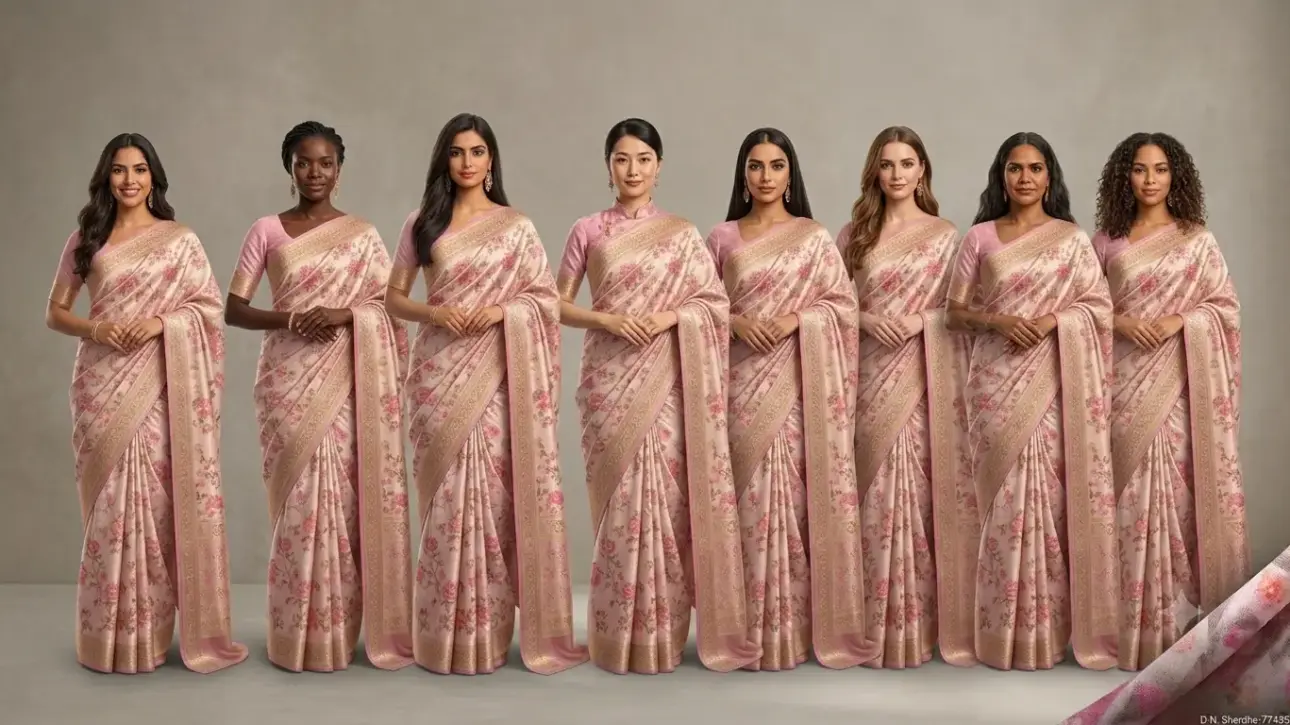
That is where an embroidered satin construction can change the economics of a project.
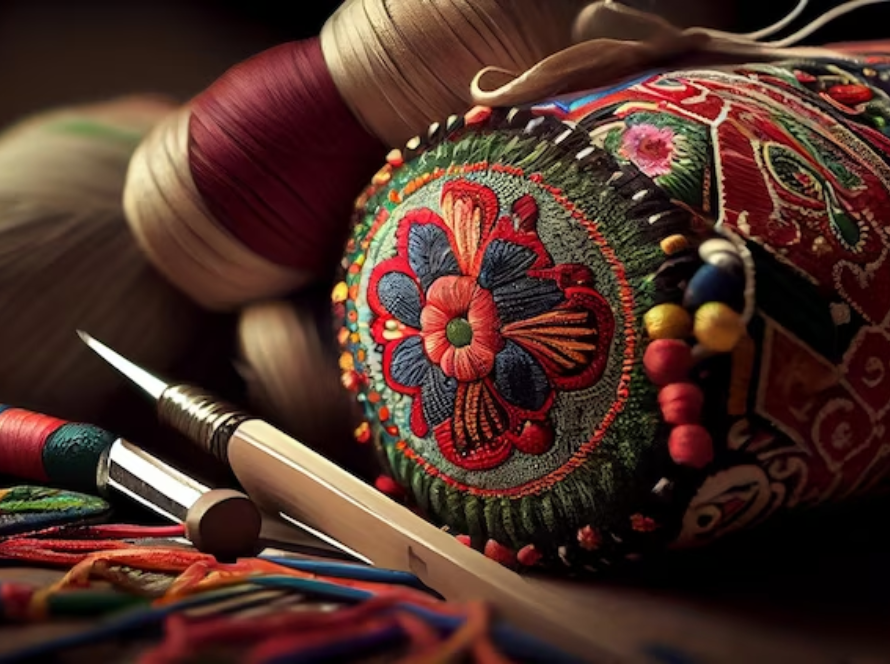
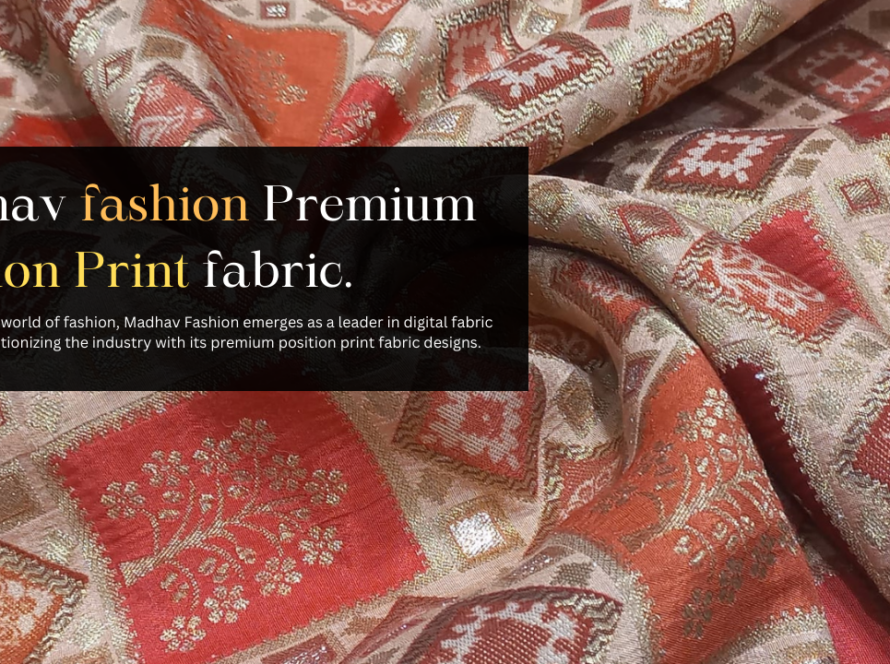
Malai Satin is commercially interesting because it combines the visual language associated with satin with a softer, fluid fashion hand and a surface capable of carrying decorative embroidery. Once embroidery enters the equation, the fabric is no longer being purchased simply for its base construction. It becomes a visual component of the finished product.
Embroidered Malai Satin Fabric for Global Costume & Bridal Markets
For a costume designer, that distinction matters.
A plain satin can provide shine and movement. An embroidered satin can provide character. It can suggest ceremony, wealth, romance, fantasy, celebration or theatrical excess without requiring the garment to be constructed from multiple layers of expensive surface treatments.
That makes Embroidered Malai Satin particularly relevant to bridalwear, stage costumes, television wardrobes and film styling, where the fabric itself often has to communicate something before the audience notices the cut.
The commercial opportunity is equally interesting.
Global buyers are increasingly working in smaller development cycles. A designer may test a concept with a few sample metres, photograph a prototype, launch a limited collection and only then commit to production. Costume departments may need a controlled quantity for one project but require the ability to reproduce the same material later.


This is creating a new type of textile buyer: too serious for casual retail sourcing, but not always large enough to operate like a traditional garment factory.
That buyer wants access, technical clarity and flexibility.
India, particularly manufacturing centres such as Surat, is well positioned to serve that gap because the country’s textile ecosystem can connect fabric development, processing, embroidery, dyeing, finishing and export supply more closely than many buyers experience when sourcing through fragmented international channels.
The opportunity, therefore, is bigger than selling embroidered satin by the metre.
It is about making creative production easier.
The Fabric Profile: Why Malai Satin Works Across International Markets
Put the same fabric under three different lights and you can get three different commercial reactions.
A costume department may see movement. A bridal designer may see luxury. A buyer focused on production may immediately see questions about GSM, width, composition and embroidery stability.
All three reactions are valid.
Malai Satin is best understood through its actual construction rather than through the name alone. The commercial market can contain different versions based on fibre composition, weight, surface finish and embroidery density. Polyester-based satin constructions are particularly common in scalable fashion supply because they can provide colour flexibility, repeatability and a controlled manufacturing cost.
The finished GSM is not fixed.
A relatively light base can sit around the 90–120 GSM range, while denser embroidery, sequins, beads or heavier decorative work can push the finished material substantially higher. Some commercial qualities may therefore move into the 150–200 GSM-plus territory. Buyers should never approve an order on the fabric name alone; the physical sample and supplier specification should determine the actual GSM, width and composition.
That distinction becomes critical when the fabric is being used for a garment with engineered movement.
A flowing A-line dress needs a different balance from a heavily structured bridal blouse. A saree needs graceful fall. A theatre costume may need enough body to survive repeated handling. A television wardrobe may need a surface that remains visually convincing under strong studio lighting.
Embroidery introduces another technical layer.
The embroidery may be machine-produced for repeatability, with polyester, rayon, metallic or blended embroidery threads depending on the intended appearance and production specification. Decorative additions can include sequins, beads, cords or other surface elements. The denser the decoration, the more important it becomes to examine weight distribution, puckering, thread security and the behaviour of the base around seams.
A serious buyer should therefore request more than a photograph.
The useful sample is the one that allows the designer to bend it, stretch it lightly, hold it against a body, place it under lighting, inspect the reverse side and test how the embroidery behaves when the fabric is handled.
That physical evaluation often reveals more than a catalogue description ever can.
Construction, Embroidery and the Design Choices Behind the Fabric
The embroidery machine may finish its work in minutes, but the commercial life of the fabric can last for years if the design is right.
That is why construction decisions deserve attention before the artwork is approved.
Embroidery on satin can be developed as scattered motifs, border-like arrangements, repeated all-over patterns, floral trails, geometric compositions or larger statement elements. Each approach creates a different cutting strategy.
An all-over design gives a garment a continuous decorative identity. A strategically placed motif can be more economical because the designer can control where the expensive visual information appears. A border construction can become particularly useful for sarees, lehenga panels, sleeves, dupattas and hem treatments.
The choice of thread also changes the character of the finished textile.
Rayon can deliver a smooth, luminous embroidery effect. Polyester thread is valued for durability and consistent production. Metallic yarns introduce a more reflective, ceremonial appearance but can alter the handling and cost of the finished piece. When embellishments are added, the embroidery density must be considered alongside the base fabric’s ability to carry the additional weight.
This is where professional sourcing becomes a conversation rather than a catalogue search.
A European bridal designer might request a restrained ivory embroidery on an ivory satin base. A Gulf buyer could prefer a richer champagne or gold surface. A South Asian bridal house may move toward pink, wine, emerald, mustard, coral or deep red. A costume designer may deliberately request an unusual colour because the garment is being created for a fictional character rather than a conventional market.
The manufacturing process has to accommodate that difference.
India’s advantage is not simply that embroidery exists there. It is the combination of embroidery capability with fabric processing, dyeing, finishing and fashion manufacturing knowledge.
That combination allows a buyer to start with a visual reference and work backwards toward a manufacturable textile.
For adjacent product development, a designer may also move between Embroidered Fabrics and Printed Fabrics, or use Plain Dyed Fabrics when a collection needs a quieter companion material.
The fabric portfolio becomes part of the design system.
Global Demand: Where Occasionwear Sourcing Is Moving Next
The interesting shift in fashion sourcing is happening below the headline numbers.
It is happening inside small studios.
A London costume designer needs 35 metres. A Dubai bridal label needs a trial run. A Los Angeles wardrobe team needs matching material after the first shooting schedule. A boutique in Australia wants a fabric for a ten-piece capsule before committing to a larger production.
None of these buyers behaves like a traditional textile importer.
Yet together they represent a meaningful commercial market.
Digital platforms have made discovery almost effortless. Alibaba, IndiaMART, TradeIndia, Etsy and Amazon Business allow buyers to search enormous product catalogues from a laptop. But discovery creates another problem: too many options and too little technical confidence.
A buyer can find 500 embroidered satin listings.
The difficult question is which one can actually be reproduced.
That is why the next phase of global textile sourcing is likely to reward suppliers that make the verification process easier. Samples, clear specifications, communication, production photographs, repeatability and realistic lead times become competitive assets.
This is especially relevant for independent fashion businesses.
A D2C bridal brand does not want to finance a warehouse full of fabric before knowing whether customers will respond to the finished product. It wants to test. It wants to learn. Then it wants to scale the winning design.
That is fundamentally a startup-style inventory model.
The supplier becomes part of the experiment.
A flexible fabric manufacturer can therefore help a young label behave like a much larger business—developing professionally while keeping early inventory exposure under control.
For international buyers, this is one of India’s strongest opportunities.
The country does not have to compete only on metre price. It can compete on the ability to help a product move from concept to production.
From Lehenga to Ball Gown: The Bridal Opportunity for Malai Satin
A wedding garment has an unusual commercial requirement: it has to look memorable in real life and on a camera.
That puts pressure on the fabric.
A plain surface may look elegant in person but disappear under photography. Excessive embellishment may look impressive on a hanger but become visually chaotic when the garment moves.
Embroidered Malai Satin occupies an interesting middle ground.
For a lehenga, designers can use embroidery to establish a visual rhythm across panels, blouse sections and flowing layers. The satin surface adds light reflection while the embroidery creates points of focus.
For a ball gown, the same principle can be applied differently. A large floral motif can travel across the skirt, while the bodice remains comparatively controlled. The result is a garment where the embroidery contributes to the silhouette instead of competing with it.
A-line dresses can use embroidery more selectively. Sarees can exploit the relationship between movement and reflective surface. Nikah wear can lean toward sophisticated tonal embroidery, pearl-like detailing and elegant colour combinations. Church dresses may favour ivory, cream, champagne and restrained blush palettes.
Haldi and Mehendi outfits change the equation again.
Here, the buyer may want energy rather than formal luxury. Yellow, lime, green, coral, pink, orange and mixed floral palettes can make the same textile category feel younger and more celebratory.
Regional taste therefore becomes a product-development variable.
Climate matters as well. A buyer in the UAE may prefer a lighter construction for an indoor-heavy wedding environment, while a European winter collection may accommodate heavier fabric and layered styling. Tropical markets may prioritise breathable garment construction even when the visual requirement is highly decorative.
There is no single global bridal aesthetic.
There are multiple markets interpreting celebration through fabric.
That is precisely why an adaptable embroidered satin construction has commercial room to travel.
What Global Costume and Wardrobe Buyers Actually Need From Suppliers
The most difficult question for a costume buyer is not “What does this fabric cost?”
It is “What happens if I need it again?”
A film production can run for months. A television series can introduce a costume in one episode and bring it back later. A theatre production may require replacements. A designer can sell a bridal style successfully and need another production batch six months later.
Fabric continuity therefore has economic value.
Costume departments also work under unusual constraints. A material may have to communicate a period, social position, cultural context or character identity. It may need to survive fittings, alterations, transportation and repeated use.
The supplier must understand that the fabric is not the final product.
It is an input into a much larger production chain.
For a wardrobe team, reliable width can be as important as colour. For a costume designer, embroidery scale can determine whether a pattern works on a sleeve. For a production manager, lead time can determine whether the garment reaches the set.
The first purchase is consequently an evaluation.
Was the sample accurate?
Did the bulk material match?
Was the communication clear?
Did the supplier disclose limitations before production?
Was the packaging suitable?
Could the same material be ordered again?
When the answers are positive, the relationship changes.
The buyer no longer needs to search from scratch every time a new project begins.
That is where textile suppliers build their strongest commercial advantage: not through one successful shipment, but through becoming the buyer’s known solution.
India’s Manufacturing Advantage: From Surat Production to Export Readiness
Surat’s textile identity was built long before today’s digital sourcing platforms.
What has changed is the scale at which that manufacturing ecosystem can now connect with overseas buyers.
Synthetic fabrics, weaving, processing, dyeing, embroidery and fashion-oriented textile trading form an interconnected industrial environment. For a product such as Embroidered Malai Satin, that proximity can shorten the distance between a design request and a production decision.
A buyer may ask for a specific shade.
The next question may be embroidery density.
Then comes the question of base weight.
Then width.
Then finishing.
Then sample approval.
When these decisions can be coordinated within a manufacturing ecosystem, development becomes faster and more controllable.
Madhav Fashion, Surat, operates within this manufacturing context, giving larger buyers access to bulk production, custom embroidery development and factory-oriented supply. Its embroidered fabric range represents the manufacturing side of the sourcing equation.
But export readiness is more than putting fabric into a carton.
Commercial documentation must accurately describe the goods. Packing information has to correspond with the shipment. The correct customs classification needs to be established from the actual product specification. A Certificate of Origin may be relevant depending on the destination and trade arrangement.
HS classification deserves particular caution.
Embroidery in the piece, in strips or in motifs can fall under customs headings associated with embroidery, including heading 5810 in the Harmonized System. However, the exact classification should be confirmed from the finished product’s composition and construction rather than automatically applying one code to every fabric marketed as embroidered satin.
Import duty is similarly destination-specific.
A US buyer, UK buyer, UAE importer and European buyer may face different tariff, VAT, customs and documentation requirements.
The professional approach is simple: classify the actual product first, then calculate the landed cost.
Why Ceremony and Occasionwear Are Expanding the Fabric’s Commercial Role
The wedding is no longer one garment.
For many consumers, it is an entire sequence of visual moments.
Welcome event. Mehendi. Haldi. Ceremony. Reception. After-party.
That has quietly expanded the fabric opportunity.
A bridal designer no longer needs one fabric to perform one job. The collection can contain several levels of decoration, from subtle embroidered satin through heavily worked surfaces.
The same logic appears in entertainment.
A television wardrobe may need one material for a wedding scene, another for a festival sequence and another for a formal family event. Theatre productions often rely on costume to create visual shorthand. A richly decorated fabric can communicate celebration or status before a character speaks.
This creates a market larger than conventional bridal retail.
It includes eventwear brands, costume houses, stage productions, cultural performances, luxury occasionwear and specialist boutiques.
The opportunity is especially strong for fabrics that can be adapted rather than used exactly as supplied.
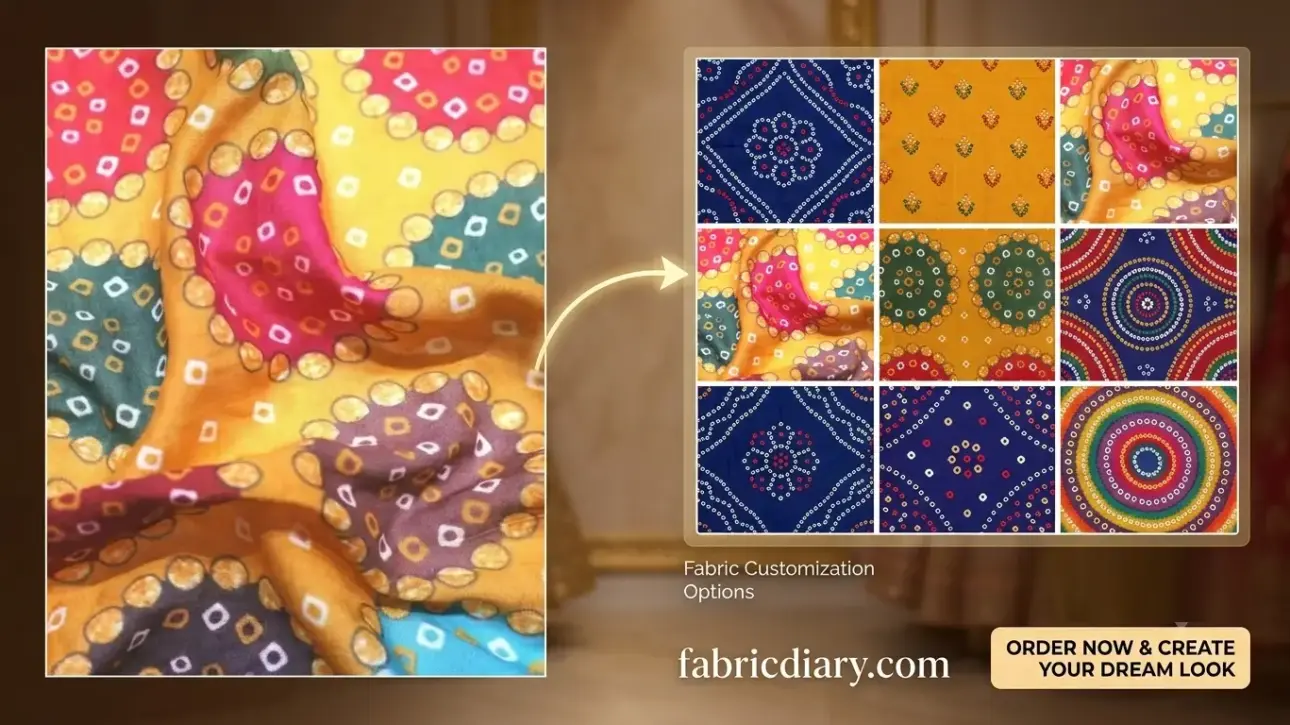
One embroidery pattern can be developed in multiple colourways. A dense design can be converted into a lighter version. A motif can be enlarged or reduced. Metallic elements can be replaced with tonal thread when a market demands restraint.
That flexibility allows manufacturers to sell the same underlying capability into multiple markets without making every product identical.
For a fabric business, that is a powerful scaling model.
The asset is not one design.
The asset is the manufacturing capability behind the design.
How Designers, Boutiques and Wardrobe Teams Turn Fabric Into Product
A designer does not fall in love with a fabric specification.
They fall in love with what they imagine the fabric becoming.
That is why the sample stage deserves more respect than it usually receives.
The first sample is where an idea meets physics.
The designer discovers whether the embroidery sits correctly. The pattern maker discovers how the material behaves at seams. The photographer discovers how the surface reacts to light. The buyer discovers whether the colour is commercially useful.
Only after those discoveries does the bulk order make sense.
This is particularly important for D2C businesses.
A small fashion label can use sampling as a form of market research. Instead of purchasing hundreds of metres, it can develop a limited garment, photograph it, test customer response and then expand production around the successful style.
That turns fabric sourcing into a business-development tool.
FabricDiary is positioned for this type of buyer through its focus on accessible sourcing, designer-oriented sampling and international fabric delivery. A buyer can begin with a smaller development requirement and then move into broader sourcing categories such as Plain Fabric Wholesale when a collection requires supporting materials.
For designers working on more decorative collections, the Embroidered Fabrics category can serve as a wider reference point rather than forcing every design decision around one textile construction.
The commercial advantage is continuity.
A designer can explore before committing.
A manufacturer can scale after approval.
That bridge between experimentation and production is where modern fabric sourcing becomes valuable.
The B2B Buying Equation: MOQ, Samples, Cost and Repeat Orders
There is a reason MOQ appears in almost every textile negotiation.
It is not simply a number.
It is a reflection of production economics.
A manufacturer preparing a custom embroidery run has to allocate machine time, yarn, base fabric, labour, finishing capacity and quality-control resources. A buyer ordering two metres is therefore creating a different economic equation from a buyer ordering 2,000 metres.
But modern fashion businesses do not all fit traditional wholesale models.
That is why sampling flexibility matters.
A costume designer may need enough fabric to construct one garment. A boutique may need 25 metres. A bridal manufacturer may need several hundred. An international apparel factory could require thousands.
A supplier that understands these different stages can capture customers earlier in their growth cycle.
The buyer’s calculation also extends beyond the quoted fabric price.
Suppose one supplier offers a lower metre rate but requires a longer production window, has limited sampling flexibility and cannot guarantee repeat colour. Another supplier is slightly more expensive but provides a development sample, clearer specifications and dependable repeat production.
The second option can be cheaper at the business level.
Why?
Because the cost of mistakes is often larger than the difference in fabric price.
A failed prototype, delayed shooting schedule, cancelled bridal delivery or mismatched repeat order can erase a small saving immediately.
That is why experienced buyers gradually move from price comparison to supplier comparison.
The supplier who reduces uncertainty earns the repeat order.
And repeat orders are where B2B textile economics become attractive for both sides.
Custom Development, Compliance and the FabricDiary–Madhav Fashion Advantage
The most interesting fabric requests often begin with a sentence that does not sound like a textile specification.
“I want this feeling, but different.”
That could mean a softer colour, larger flowers, less embroidery, more shine, a darker base, a lighter construction or an exclusive pattern.
Custom development turns that sentence into production language.
The process normally starts with a visual reference. The manufacturer then determines whether the concept can be translated into the chosen base fabric, embroidery technique, thread, density and finishing process.
A sample follows.
The buyer checks it.
Changes are made.
The approved version becomes the manufacturing reference.
That sequence is important because custom textile development can become expensive when instructions remain informal.
For international buyers, the same discipline should extend to compliance and documentation. Fibre composition, care requirements, labelling obligations and destination-country rules can vary. Buyers should identify those requirements before production rather than after the shipment arrives.
FabricDiary occupies the development-oriented side of this ecosystem. Its appeal to smaller buyers comes from the ability to explore fabric options, request samples and source without immediately behaving like a large industrial importer.
Madhav Fashion represents the larger manufacturing capability behind the sourcing chain, particularly for buyers looking for factory-oriented production, bulk quantities and customised embroidery.
That creates a useful progression.
A designer can begin with exploration.
A sample can become a prototype.
A prototype can become a collection.
A collection can become a production programme.
And a production programme can eventually become a recurring export relationship.
That is a much more meaningful measure of sourcing value than simply asking how many fabrics are listed in a catalogue.
The Next Decade: Why Embroidered Malai Satin Has Room to Scale
The future of Embroidered Malai Satin will not depend on one fashion season.
Its stronger opportunity lies in its ability to cross categories.
Bridalwear can use it for lehengas, sarees and gowns. Occasionwear brands can reinterpret it for evening dresses. Costume departments can use it to create character-specific surfaces. Theatre companies can turn it into ceremonial or fantasy costumes. Film and television productions can use it wherever fabric has to carry visual storytelling.
That breadth creates resilience.
There is another reason to be optimistic about the category: global buyers are becoming more sophisticated about inventory.
The old model was simple.
Buy large.
Store large.
Sell later.
The newer model is more experimental.
Sample.
Prototype.
Test.
Scale.
Repeat.
That shift favours suppliers that can support both small development requirements and larger manufacturing programmes.
India has an opportunity to occupy that position, particularly when its manufacturing capabilities are combined with stronger digital communication, international logistics and professional export documentation.
For FabricDiary, the opportunity is to become the access point.
For Madhav Fashion, the opportunity is to become the manufacturing engine.
For the buyer, the benefit is a shorter distance between creative idea and finished textile.
That may ultimately be the most important story behind Embroidered Malai Satin Fabric.
It is not merely a shiny embroidered material.
It is a fabric category capable of sitting inside a much larger business system—one where costume designers, bridal entrepreneurs, boutique owners, wardrobe teams and manufacturers can move from visual inspiration to physical sampling and eventually to scalable production.
The fabric is only the beginning.
The real opportunity is what a reliable sourcing relationship allows the buyer to build around it.
7 FAQs
Can a buyer develop an exclusive embroidered pattern or colourway?
Custom development can be discussed for embroidery artwork, motif scale, density, thread colour, base colour and placement. The buyer should provide a clear reference, review a development sample and obtain written approval of the final specification before bulk production begins.
What should international buyers check before importing Embroidered Malai Satin Fabric from India?
The buyer should confirm the fabric’s fibre composition, construction, embroidery characteristics and applicable customs classification before calculating import duty. Commercial invoice, packing information and shipping documentation are normally part of the export process, while Certificate of Origin and destination-specific compliance documents may apply depending on the shipment and market.
How long can international shipping from India take for Embroidered Malai Satin Fabric?
Sample shipments can generally move through express courier or air services, while commercial quantities may be transported through air cargo or sea freight. The final timeline depends on destination, carrier, customs clearance, order size and production status, so buyers should request a shipment-specific delivery estimate rather than relying on a fixed global timeline.
Is the MOQ different for samples and bulk Embroidered Malai Satin orders?
Yes. A sample requirement and a production order serve completely different purposes. Sample quantities allow the buyer to test colour, embroidery, drape and construction, while bulk MOQ depends on the base fabric, embroidery programme, customisation requirements and manufacturing economics.
Can costume designers and bridal brands request swatches before buying in bulk?
Yes, and physical sampling is strongly recommended for this type of fabric. A swatch allows the buyer to assess sheen, hand feel, embroidery density, reverse-side construction, colour and drape before committing to a larger production quantity.
What GSM and base constructions can buyers request?
Available constructions can vary by manufacturer and design. Polyester satin bases are commercially common, while the finished GSM can range from lightweight constructions around the 90–120 GSM area to considerably heavier versions after dense embroidery or embellishment is added. The exact GSM, width and composition should be approved against the physical production sample.
How are international payments normally structured for fabric orders?
The payment arrangement depends on order size, customisation, buyer history and supplier terms. Sample orders may require full payment before dispatch, whereas custom bulk orders may use an advance payment followed by a balance according to agreed production or dispatch milestones.