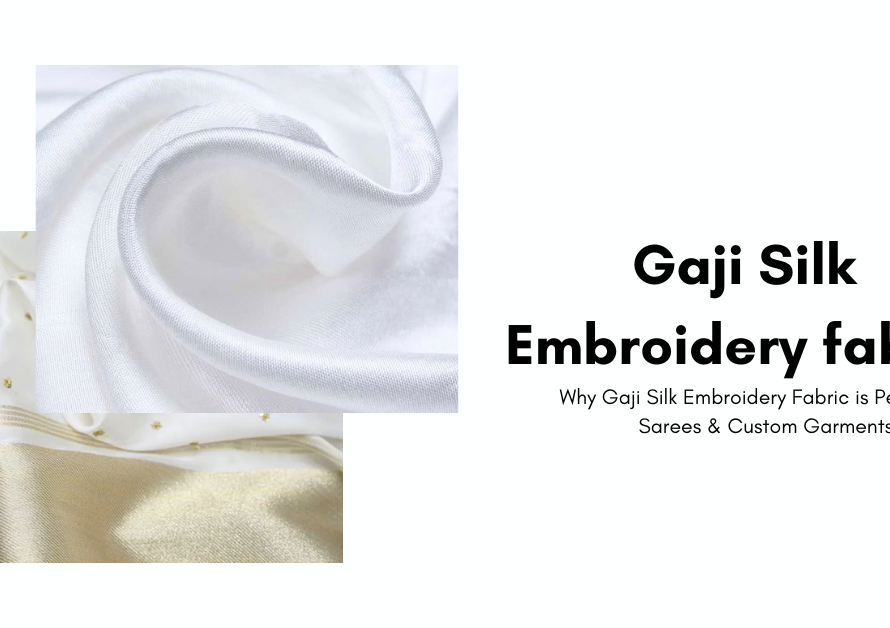



There is a particular moment in fashion sourcing when a fabric stops being merely “pretty” and starts looking commercially interesting. A designer sees the surface. A celebrity stylist sees the silhouette. A garment factory sees yield, repeatability and production risk. A sourcing agent sees all three — and immediately starts asking rather less glamorous questions about GSM, width, embroidery consistency, colour matching and delivery.
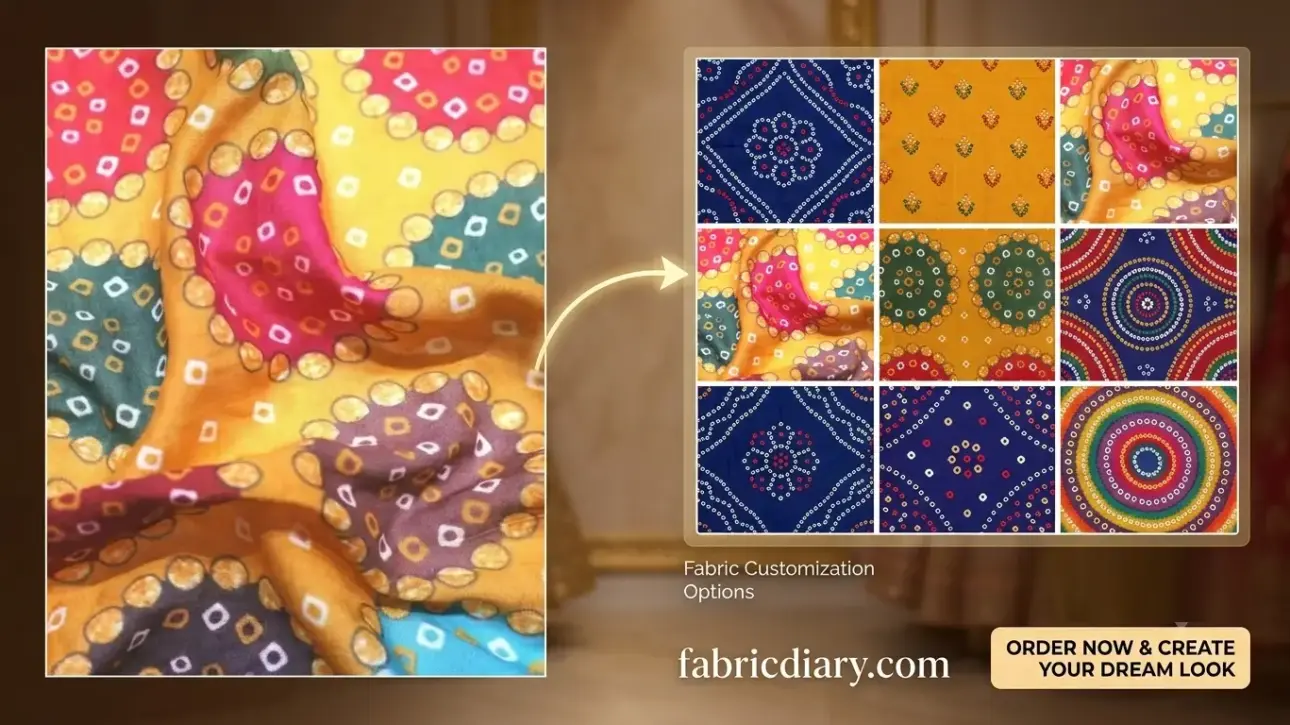
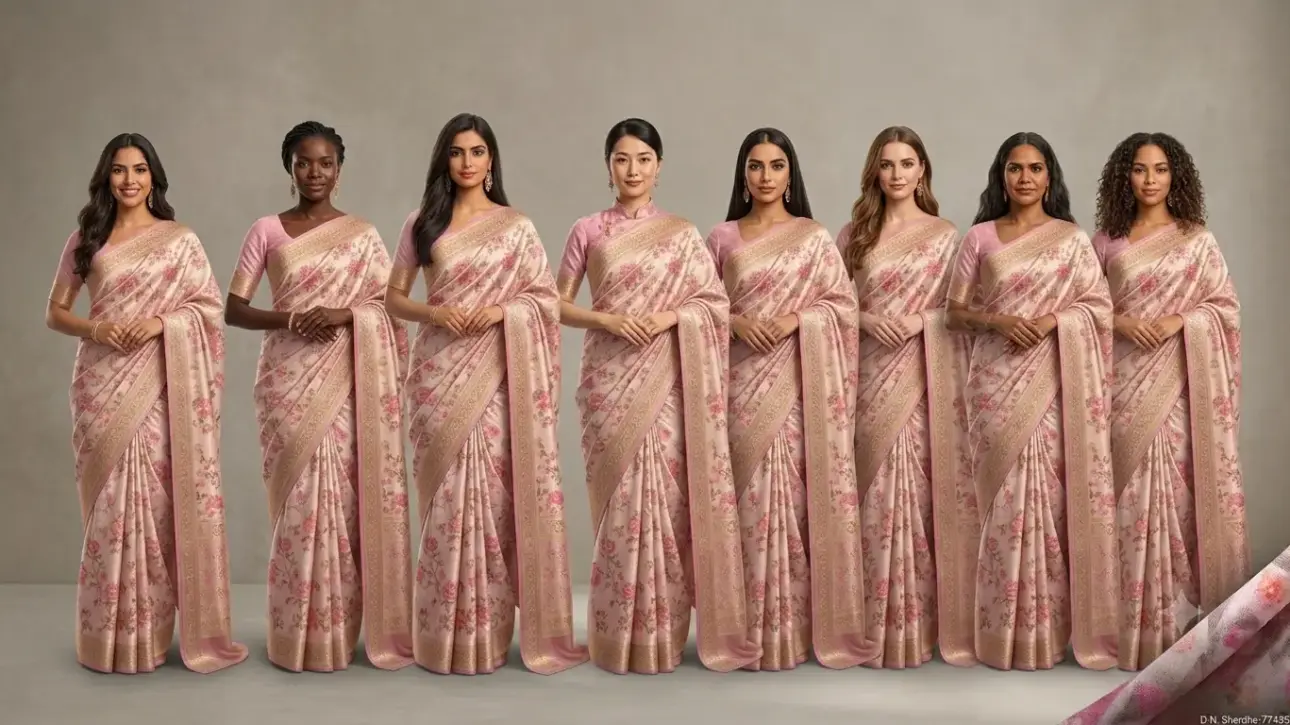
That is where Embroidered Dola Silk Fabric becomes interesting.
Dola Silk is widely used in the Indian textile trade as a commercial fabric category, but buyers should not assume that the word “silk” automatically means 100% natural silk. Current Indian trade listings show Dola Silk being offered in viscose constructions, including examples around 95 GSM and other commercial weights around 120–150 GSM. Some suppliers also describe Dola Silk through its soft surface, lustre, fall and apparel suitability rather than through a single universal fibre composition.
Embroidered Dola Silk Fabric Premium Wholesale Source
For an international buyer, that is not a problem. It is actually an opportunity — provided the specification is written properly.
The commercial attraction is easy to understand. Dola-type constructions can provide a fluid hand, a dressy surface and an elegant fall without forcing every garment into the cost structure of traditional luxury silk. Once embroidery, sequins, threadwork or engineered decorative placement is added, the fabric moves naturally into the territory of occasionwear, fashion capsules, premium private-label collections and export garment manufacturing.


The broader Indian textile export picture also supports the logic. India’s textile exports rose 2.1% in FY2025–26, with man-made yarns, fabrics and made-ups recording 3.6% growth, while ready-made garments remained the largest contributor.
That matters because the modern fabric buyer is rarely purchasing cloth simply to put it on a shelf. They are buying into a manufacturing programme.
A sourcing consultant in London may be planning a modest bridal capsule. A Dubai apparel house may need hundreds of metres for coordinated occasionwear. A private-label manufacturer in Australia may require a repeatable fabric for several colourways. A CMT unit in Southeast Asia may care less about the romantic story of silk and far more about whether the fabric behaves consistently under cutting, embroidery, pressing and stitching.
Dola Silk sits comfortably in that commercial conversation.
For buyers exploring the category, FabricDiary’s Embroidered Dola Silk Fabric collection can be considered alongside its broader Embroidered Fabrics range when comparing construction, surface treatment and end-use possibilities.
The Fabric Profile: Why Dola Silk Has Such a Fashionable Fall
Ask a garment manufacturer what makes a fabric valuable and you may get a completely different answer from a fashion editor. The editor notices movement. The factory notices behaviour.
Dola Silk has commercial appeal precisely because those two conversations can meet.
In the Indian market, Dola Silk is commonly encountered in viscose-based or blended commercial constructions, with suppliers describing lightweight, smooth and lustrous surfaces. Published supplier specifications vary considerably: one current listing gives approximately 120–150 GSM, while another embroidered viscose Dola example is listed at around 95 GSM.
That variation is important. There is no sensible universal GSM for “Dola Silk”.
For an export order, the buyer should therefore specify the actual construction rather than simply writing “Dola Silk” on a purchase order. Fibre composition, finished GSM, usable width, weave or base construction, embroidery coverage, shrinkage, colourfastness and finishing treatment should all be confirmed against the approved sample.
A lightweight construction can work beautifully for flowing dresses, sarees, overlays, blouses and softer silhouettes. A more substantial version may be preferable for structured panels, jackets, lehenga components, festive separates or garments that need a little more body.
The embroidery changes the equation again.
Machine embroidery is generally the commercial workhorse when repeatability and production volume matter. Computer-controlled embroidery can maintain motif placement and stitch density more consistently across a production run, while specialised embellishment operations may add sequins, beads, metallic yarns, satin stitches, cutwork effects or other decorative elements.
Thread selection also affects the final personality. Polyester embroidery thread is often attractive for commercial production because of its strength and colour range, while rayon-type threads can create a softer, more lustrous surface. Metallic yarns and speciality threads introduce a more dramatic fashion effect but require tighter production control because abrasion, tension and snagging become more important.
For international production, the important word is consistency.
A buyer should expect the approved sample to establish a measurable benchmark for GSM, width, embroidery density, colour, handle, shrinkage and surface appearance. The finished fabric should also be checked for loose threads, skipped stitches, embroidery distortion, stains, needle damage, excessive puckering and uneven tension.
Care is equally construction-dependent. A garment factory should not assume that every Dola Silk article can be treated identically. Washing, dry-cleaning, steaming and pressing recommendations should follow the actual fibre and embroidery combination. A heavily embellished fabric may require far gentler handling than a plain viscose Dola base.
That is the less glamorous side of the fabric — and precisely why serious sourcing professionals care about it.
From Subtle Shine to Statement Embroidery: How Dola Silk Changes Character
Imagine two bolts of fabric sitting beside one another.
The first has a restrained floral embroidery, almost whispered into the surface. The second carries dense sequins and dramatic motifs that would not look out of place under a celebrity flashbulb. Both may be described commercially as embroidered Dola silk, yet they are aimed at completely different customers.
That flexibility is one of the category’s biggest strengths.
Dola Silk can be developed over different base weights and decorative treatments. Embroidery may cover the entire surface, appear as scattered motifs, run as borders or be engineered into specific garment panels. For OEM manufacturing, placement embroidery can be particularly useful because the fabric can be designed around the eventual garment architecture rather than treated as a generic decorative textile.
This is where fashion and manufacturing start speaking the same language.
A designer might want oversized florals inspired by red-carpet eveningwear. A private-label brand could prefer small repeating motifs that feel commercially wearable. A bridal manufacturer may ask for dense embellishment around the hem with a quieter body. A CMT customer might want a pre-developed embroidered base that reduces the amount of downstream garment decoration required.
Motif direction varies dramatically by market.
Middle Eastern buyers often respond strongly to luxurious surface effects, rich tonal embroidery, metallic accents and dramatic occasionwear aesthetics. South Asian markets naturally accommodate florals, traditional-inspired motifs, sequins, threadwork and ornate borders. European buyers may translate the same fabric into cleaner silhouettes, restrained colour palettes and contemporary evening pieces. American buyers can take an embroidered luxury surface into resortwear, event dressing, statement separates or fashion capsules.
The fabric does not need to change completely for every market. The styling language changes.
That is why a sourcing team should resist choosing embroidery purely from a fabric photograph. The more useful question is: What garment is this embroidery supposed to become?
For buyers comparing decorative alternatives, Jacquard Fabric, Printed Fabrics and Position Printed Fabric can also help establish whether the required visual effect is better achieved through woven structure, printing or embroidery.
The Global Demand Story Behind Embroidered Dola Silk Fabric
Fashion trends rarely travel in straight lines anymore.
A colour seen on a celebrity in Los Angeles can influence a bridal collection in Dubai. A South Asian wedding aesthetic can appear in London editorial styling. A couture-inspired motif can become a private-label capsule in Melbourne six months later.
That cross-pollination is exactly why decorative fabrics are increasingly judged by their ability to travel between cultures.
The appeal of embroidered Dola Silk is particularly strong where occasionwear overlaps with contemporary fashion. The fabric has enough surface personality to feel special, yet its commercial constructions can make it more approachable for production than some traditional luxury textiles.
In the United States, buyers often need fabrics that can cross between formal events, bridal capsules, cultural occasionwear and contemporary fashion. In the UK and wider Europe, designers can use embroidered surfaces as an accent against simpler silhouettes. The UAE and Gulf markets tend to provide fertile ground for ornate occasionwear, where shine, movement and decorative detail are already part of the fashion vocabulary.
Across Africa, embellished fabrics frequently interact with strong colour stories, celebration dressing and occasion-led retail. In Australia, lighter constructions can be attractive where breathable, flowing silhouettes and event dressing intersect. Across Asia, Dola Silk can sit naturally within both traditional-inspired fashion and modern ethnic fusion.
The buying calendar is also important.
Wedding and festive collections tend to create predictable peaks, but private-label brands increasingly work in smaller drops throughout the year. That makes sampling speed and repeatability more valuable than simply having a huge catalogue.
The sourcing agent is not necessarily looking for the most spectacular fabric.
They are looking for the fabric that can still look spectacular after 300, 1,000 or 5,000 metres have moved through a production line.
Where Dola Silk Wins in Bulk Production, OEM, Private Label and CMT
The most revealing test of a fabric is what happens when the order gets serious.
For bulk garment manufacturing, a fabric has to survive several different departments. The design team wants beauty. The merchandising team wants cost control. Production wants predictable behaviour. Quality assurance wants measurable specifications. Logistics wants efficient packing. The buyer wants the finished garment to resemble the approved sample.
Dola Silk can work well in this environment because the category can be developed around different weights, embroidery densities and finishing requirements.
For OEM apparel, the fabric may be selected as part of a buyer’s established design brief. The manufacturer then needs the supplier to reproduce the construction and embroidery accurately enough for the buyer’s production standards.
Private-label brands often have a slightly different concern. They need differentiation without necessarily developing an entirely new textile from zero. A distinctive embroidery pattern, exclusive colourway or controlled motif placement can turn a commercially available base into something that feels proprietary.
CMT orders are even more practical. Here, the fabric is often arriving with the garment construction already decided. Cutting efficiency, usable width, embroidery placement and handling become major considerations.
The same Dola Silk that looks irresistible on a showroom hanger can become a nightmare if the embroidery shifts, the width varies significantly between lots or the fabric shrinks unpredictably.
That is why pre-production approval matters.
A sensible workflow is sample development, technical approval, colour approval, pilot production, inspection and then bulk release. The exact sequence will vary by buyer and factory, but the principle remains the same: do not allow a beautiful sample to become the only specification.
What Serious Global Buyers Actually Check Before Ordering Dola Silk
A sourcing agent has usually learned one painful lesson: a supplier’s catalogue is not the same thing as a production capability.
A photograph proves that somebody made the fabric. It does not prove that the same fabric can be reproduced next season.
That is why experienced buyers tend to ask questions that sound almost boring. What is the fibre composition? What is the finished GSM? What is the usable width? What embroidery machine or process is being used? Is the embroidery continuous or engineered? How much shrinkage should be expected? Can the colour be matched? Can the same base be reproduced? What happens if the bulk lot does not match the approved standard?
Price still matters, of course.
But a low fabric price can become expensive surprisingly quickly if a garment factory experiences cutting loss, embroidery distortion, shade variation or delayed replenishment.
This is why sourcing professionals increasingly think in terms of landed manufacturing risk, not merely fabric price.
The supplier who costs slightly more but delivers a consistent production lot can be commercially cheaper than a bargain supplier who creates rework.
A first-time buyer is therefore looking for trust signals: responsive communication, technical specifications, clear sampling, realistic lead times, transparent payment terms, export documentation and evidence that the supplier understands the difference between a sample order and a production programme.
Alibaba, IndiaMART and TradeIndia can be useful discovery channels, while Amazon Business can suit certain commercial purchasing situations. Etsy serves a very different, more design-led and retail-oriented purpose. But discovery is not the same as sourcing validation.
FabricDiary’s role is more specialised: connecting buyers with textile sourcing options where technical details, sampling and production conversations matter rather than simply listing a product photograph.
That difference becomes particularly valuable when the buyer is moving from “I like this fabric” to “I need this fabric for a collection.”
Inside Indian Production: Where Embroidered Dola Silk Gets Its Commercial Edge
Walk through the textile ecosystem around Surat and the story becomes less glamorous and more impressive.
Fabric does not emerge from a single machine with a single person controlling the entire process. It moves through yarns, weaving or knitting, dyeing, finishing, embroidery, inspection, packing and logistics, with specialised businesses often handling different stages.
India’s strength lies partly in this interconnected manufacturing culture.
The country exported ₹3.16 lakh crore of textiles, including handicrafts, in FY2025–26, according to India’s Ministry of Textiles, while man-made yarn, fabrics and made-ups reached ₹42,687.8 crore.
That matters for Dola Silk because many commercial constructions in this category sit close to the man-made fibre and fashion-fabric ecosystem.
Surat’s production culture is particularly relevant to buyers seeking embroidered, printed and occasionwear textiles. Indian suppliers can often move comparatively quickly between base fabrics, embroidery concepts, colourways and fashion-led developments because the surrounding ecosystem already serves fast-moving apparel markets.
For export buyers, however, “Made in India” is not enough.
Export readiness means documentation, packaging, inspection procedures, production communication and the ability to maintain specifications.
Quality control should cover the base fabric and embroidery separately. A fabric can have excellent colour but poor embroidery tension. It can have beautiful embroidery but inconsistent width. It can pass visual inspection but still create problems during cutting.
The most useful quality system is therefore one that checks the fabric as a manufacturing input rather than as a decorative object.
Why Bridal, Ceremony and Occasionwear Keep Coming Back to Dola Silk
There is a reason embellished fabrics never really disappear.
They photograph well.
That sounds superficial, but it is commercially significant. In an era when fashion is sold through Instagram, TikTok, celebrity appearances, wedding photography and short-form video, surface texture has become a sales tool.
Embroidery catches light. Dola Silk can catch movement. Together, the effect can make a comparatively simple silhouette look considerably more elaborate.
Bridalwear remains an obvious application, but the opportunity is broader.
The fabric can enter evening dresses, reception outfits, festive separates, statement blouses, sarees, skirts, jackets, modest-fashion pieces and coordinated family occasionwear. In South Asian markets, the vocabulary of wedding dressing naturally welcomes embroidery. In Gulf markets, surface richness works comfortably with flowing silhouettes and formal occasion dressing. In Western markets, the same textile can be styled with a minimalist garment architecture.
Colour also travels differently.
Champagne, ivory, blush, muted gold and dusty rose can speak to bridal and luxury markets. Deep jewel tones can create drama for eveningwear. Black-on-black embroidery can give a more fashion-editorial result. Pastels can move the fabric toward contemporary occasion dressing.
The sourcing opportunity is not simply to sell “embroidered silk”.
It is to develop a fabric that has a clear customer, clear garment application and clear price position.
How Designers and Boutiques Turn Dola Silk Into a Sellable Collection
The clever boutique buyer rarely starts with twenty colours.
They start with one fabric that tells them what the collection could become.
A designer might see a softly embroidered Dola Silk and immediately imagine a fluid midi dress. Another sees the same textile as a cropped jacket. A bridal specialist may only care about the border. A modest-fashion brand might focus on sleeve panels and flowing abayas.
This is why sampling is more than a quality check.
It is a merchandising tool.
A 1-metre or small development sample can answer questions that a photograph cannot. Does the fabric fall correctly? Does the embroidery feel too heavy? Does it photograph well? Does it need lining? Can the garment be cut economically? Does the surface snag? Does the colour sit comfortably with the rest of the collection?
For smaller designers, low-MOQ access can therefore be strategically important.
A platform such as FabricDiary can be useful where designers need swatch access and development quantities before committing to larger production. Its model is particularly relevant to international buyers who want fabric access without immediately taking on the burden of conventional large minimums.
For larger manufacturers, the question changes.
They may want the same fabric reproduced in five colours, a modified embroidery pattern and a production quantity scheduled around a garment launch.
That is where the supplier’s manufacturing depth becomes more important than catalogue breadth.
The B2B Reality: MOQ, Sampling and the Moment a Buyer Says Yes
There is always a moment in a sourcing conversation when the buyer stops asking about the fabric and starts asking about the order.
“What is the MOQ?”
The answer depends on what is actually being made.
A ready design available from stock or existing production may be accessible at a very different quantity from a completely new embroidery programme. Custom yarn, custom dyeing, exclusive embroidery artwork, specialised sequins and engineered placement can all increase development requirements.
This is why buyers should separate three concepts: sample quantity, development quantity and production quantity.
A designer may need a sample metre. A brand may need enough material for prototypes and fittings. A manufacturer may eventually require thousands of metres.
Treating all three as one MOQ conversation creates unnecessary friction.
The best B2B suppliers understand that the first order is often a risk-reduction exercise.
The buyer is asking: “Can I trust you with my production?”
The supplier is asking: “Is this buyer serious enough to justify development?”
Repeat business begins when both sides get the answer they wanted.
A European buyer may accept a slightly higher initial cost if the supplier can reproduce the fabric reliably. A Gulf buyer may prioritise a fast custom colour. A sourcing consultant working across several factories may value communication and technical documentation above a small price difference.
In other words, the cheapest metre does not always win.
The supplier that removes uncertainty often wins.
Custom Development, Compliance and the FabricDiary–Madhav Fashion Advantage
Customisation is where embroidered Dola Silk becomes particularly interesting for serious fashion businesses.
A buyer can begin with an existing construction and change the colour, motif, embroidery density or placement. More advanced development may involve an entirely new artwork, exclusive colour matching, revised stitch density or a fabric engineered around a particular garment.
That process should begin with a technical brief.
The brief should identify the base composition, target GSM, width, colour reference, embroidery coverage, motif scale, thread requirements, embellishment details and intended garment. Once the sample is approved, the supplier should treat it as the commercial benchmark rather than merely as inspiration.
For international shipments, documentation also matters.
There is no single universal HS code that can responsibly be assigned to every embroidered Dola Silk fabric because customs classification can depend on the fibre composition, base construction and whether the embroidery itself determines classification. Embroidered textile articles can fall within HS Chapter 58, including heading 5810 in relevant circumstances, while the underlying textile may instead be classified according to its fibre and construction. Buyers should have the final code confirmed for the actual product by the exporter, customs broker or competent customs authority before shipment.
Import duties are similarly destination-specific.
A U.S. buyer, for example, must consider textile-specific customs requirements and country-of-origin rules; U.S. Customs and Border Protection notes that textile imports have additional considerations and that textile products generally require country-of-origin information.
A normal India-to-market export file may involve the commercial invoice, packing list, shipping documentation and, where applicable or requested, a Certificate of Origin. The exact documents vary according to destination, Incoterm, product classification and buyer requirements.
For a buyer in the US, Europe, UAE, Australia or elsewhere, the safest practice is to agree documentation requirements before dispatch rather than discovering them after the shipment leaves India.
Shipping mode follows the order economics. Courier or air freight can suit samples and urgent development. Larger commercial quantities may move by air cargo or sea freight depending on urgency, volume and landed-cost targets. Transit time is not a single fixed number because it depends on destination, carrier, customs clearance, production readiness and service level.
This is also where supplier infrastructure matters.
Madhav Fashion operates within India’s established textile manufacturing ecosystem, while its embroidered fabric range reflects the broader manufacturing capability available from Indian textile producers.
FabricDiary brings that manufacturing ecosystem into a more sourcing-oriented digital environment, with low-MOQ access, designer sampling support and global swatch delivery. For independent designers and smaller brands, the ability to investigate a fabric before committing to full-scale production can be the difference between experimenting with a trend and actually launching it.
For larger customers, the value shifts toward production coordination, custom development and repeatability.
That combination is increasingly relevant because global fashion sourcing is becoming less comfortable with suppliers who can only offer one side of the equation.
The Next Decade: Why Dola Silk Has Room to Grow Beyond Occasionwear
The biggest opportunity for embroidered Dola Silk may actually be outside the category where buyers first discover it.
Occasionwear will remain important. Weddings will remain important. Embellishment will remain commercially powerful.
But the next stage is translation.
Can a fabric associated with South Asian festive dressing become a contemporary jacket? Can ornate embroidery be scaled down for a modern dress? Can a traditional floral language become tonal and minimalist? Can a luxury-looking surface be used in a private-label capsule without making the garment prohibitively expensive?
Those are precisely the questions fashion brands are asking as global style becomes increasingly hybrid.
The future of Dola Silk is therefore unlikely to depend on one single colour, motif or garment.
It will depend on development speed.
Brands want fabrics that can move from concept to sample to production without months of uncertainty. Sourcing agents want reliable suppliers who understand technical specifications. Manufacturers want repeatable fabric. Designers want something that looks distinctive in photographs and feels credible in person.
India is well positioned for that conversation because its textile export ecosystem already combines large-scale manufacturing with specialist fashion-textile development. The country’s textile exports remained resilient through FY2025–26, while man-made textile categories continued to grow.
There is also a broader shift in sourcing psychology.
The old model was simple: find a supplier, negotiate the lowest possible price and place the order.
The newer model is closer to partnership: develop the textile, test the garment, document the specification, approve the sample, scale the production and maintain the relationship.
For Embroidered Dola Silk Fabric, that distinction is everything.
The fabric is attractive enough to win attention. The commercial opportunity comes from making it dependable enough to win the second order.
And in global fashion, the second order is usually the one that tells you whether the first was a success.
For buyers comparing it with other textile categories, Plain Dyed Fabrics, Plain Fabric Wholesale and Polyester Fabric provide useful alternatives when the design requires a different balance of surface, cost, structure and performance.
Ultimately, embroidered Dola Silk has something that sourcing professionals rarely get in one package: visual impact, flexible construction and room for commercial interpretation.
That makes it less of a niche decorative textile and more of a development platform — particularly for export garment manufacturers, OEM apparel companies, private-label brands and CMT operations looking for the next fabric capable of travelling from a fashion moodboard to a production floor.
——–
FAQs
What import regulations, customs duty and documentation apply when importing Embroidered Dola Silk Fabric into global markets?
Import requirements depend on the destination country, fibre composition, construction, declared HS classification and intended use. Buyers should normally prepare or request a commercial invoice, packing list, shipping document and, where required, Certificate of Origin, while confirming the final HS code and applicable duty with the destination customs authority or customs broker before shipment. U.S. textile imports, for example, have specific customs and country-of-origin considerations.
What international shipping options and timelines are available from India?
Samples can normally be moved through courier or express air services, while commercial quantities can use air cargo or sea freight depending on urgency and shipment volume. Actual delivery time varies according to production readiness, destination, carrier schedule and customs clearance, so buyers should request a shipment-specific estimated transit window and tracking reference rather than relying on a generic international delivery promise.
How does MOQ differ between a sample order and bulk production order?
A sample or development order can be substantially smaller than a bulk manufacturing programme, particularly when an existing Dola Silk construction is available. Custom embroidery, exclusive colours, new artwork or engineered placement can require higher development quantities, so buyers should distinguish between sample MOQ, development MOQ and production MOQ when negotiating.
Can buyers obtain swatches or sample metres before placing a large Dola Silk order?
Yes. Sample access is especially useful for checking GSM, drape, embroidery density, colour, handle, transparency, surface finish and garment behaviour before approving bulk production. FabricDiary supports low-MOQ and sampling-oriented sourcing, allowing international designers and buyers to evaluate fabric before making a larger production commitment.
What base fabrics, GSM options and construction types are available for Embroidered Dola Silk Fabric?
The category is not restricted to one universal construction. Commercial Dola Silk examples in the Indian market include viscose-based fabrics, with published examples around 95 GSM and 120–150 GSM, while width and finishing also vary by supplier and application. Buyers should specify fibre composition, target GSM, width, embroidery coverage and finish rather than relying only on the trade name “Dola Silk.”
What payment terms and advance deposit requirements are normally used?
Payment terms depend on the supplier, order size, customisation level and buyer relationship. Development orders may require payment before production, while larger established B2B relationships can sometimes operate under negotiated milestone or balance-payment arrangements; the exact deposit should be confirmed in the commercial quotation before production begins.
How does the custom embroidery and exclusive colourway development process work?
The process normally begins with a technical brief covering the base fabric, GSM, width, artwork, motif scale, embroidery density, thread, colour and intended garment. The supplier develops a sample or strike-off, the buyer reviews and approves it, and the approved version becomes the reference for bulk production; exclusive designs and colourways should be documented clearly before manufacturing begins.