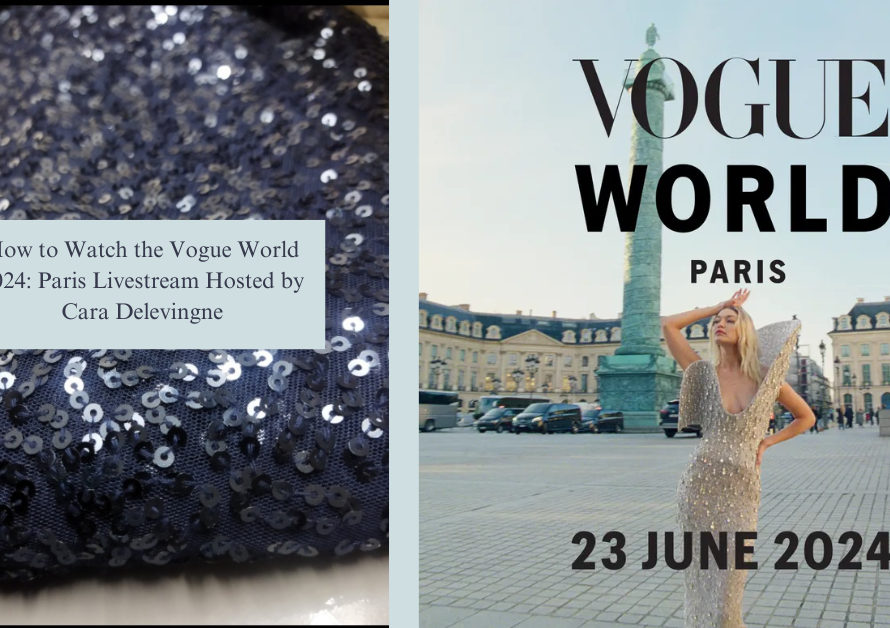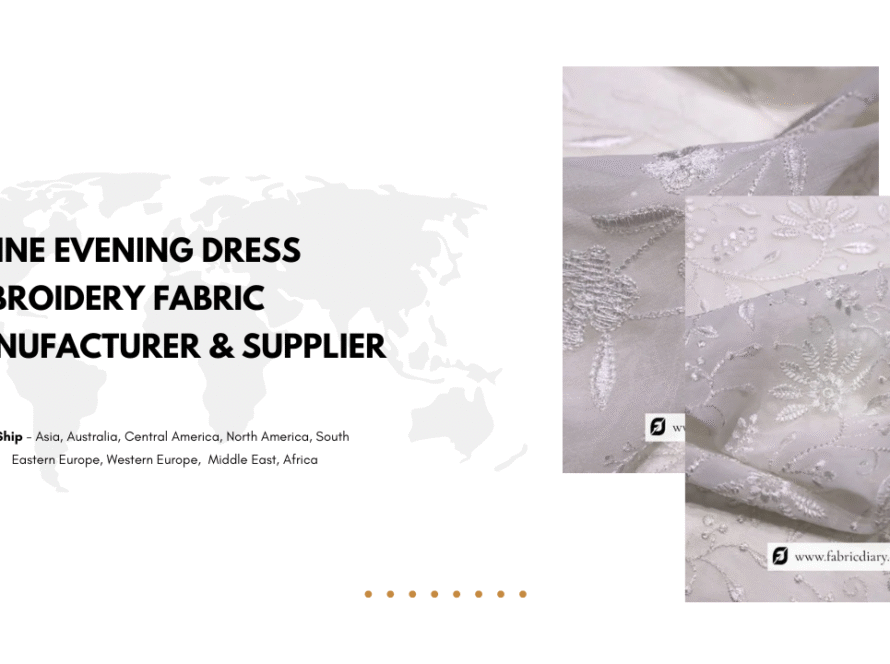



The modern bridal wardrobe has become one of fashion’s most internationally connected categories. A wedding celebrated in London may feature embroidery inspired by Gujarat, while a couture gown presented in Dubai could combine European tailoring with South Asian embellishment techniques. Designers increasingly work across cultures, responding to clients whose weddings unfold over multiple ceremonies, destinations and traditions. In this landscape, sequins and mirror work embroidery fabric has moved beyond its regional identity to become a globally recognized textile language.
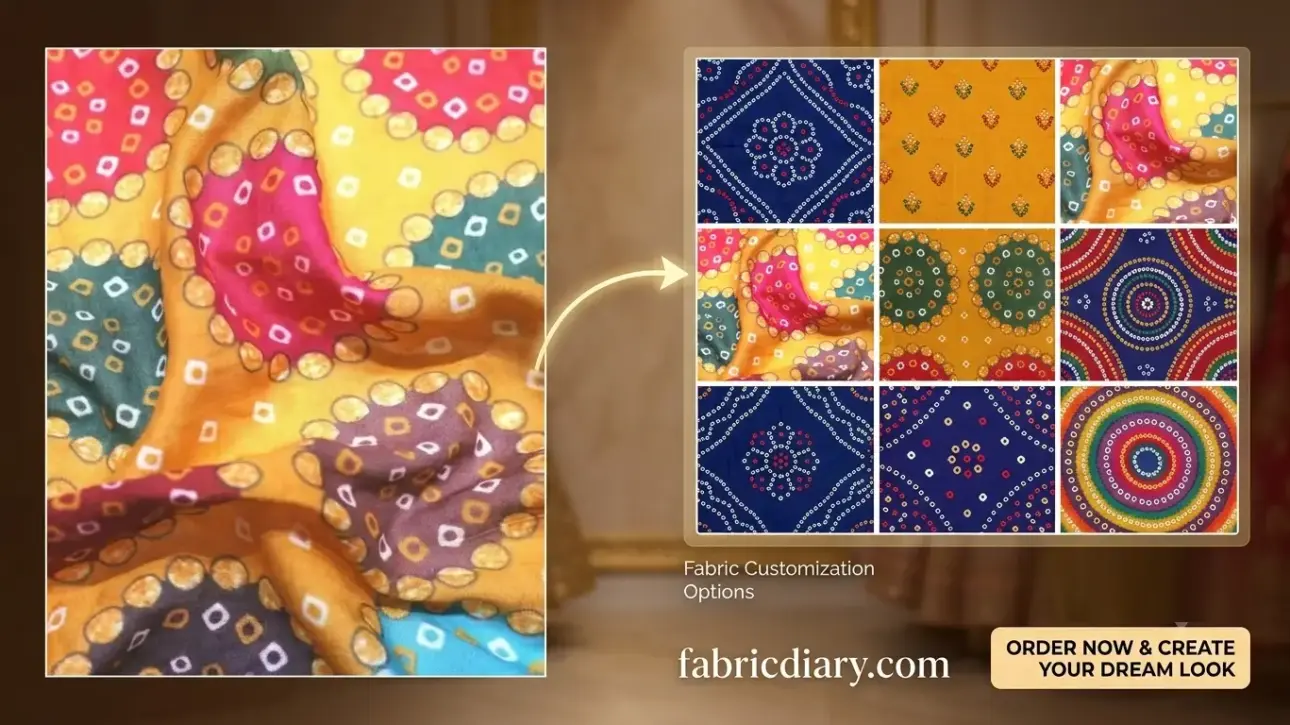
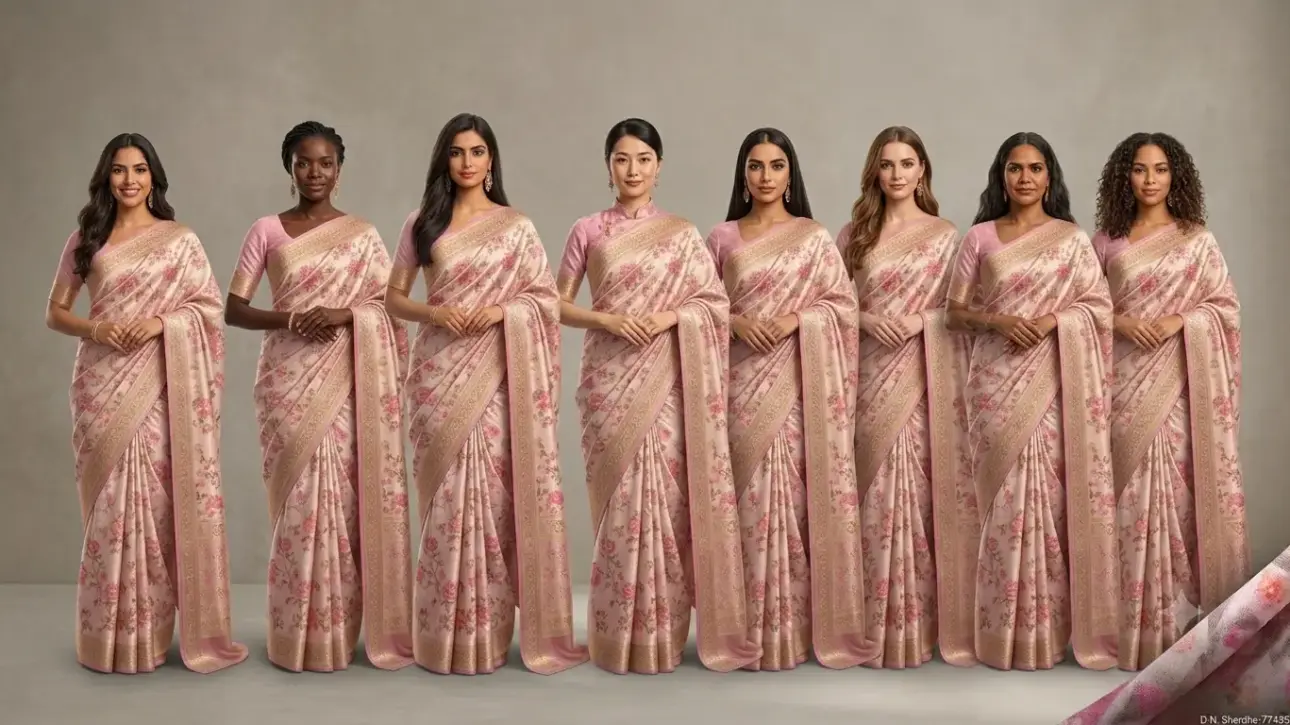
The appeal lies in the way light interacts with the fabric. Mirrors introduce movement and reflection, while sequins create depth through controlled shimmer rather than excessive sparkle. Together, they allow designers to build garments that respond differently under daylight, candlelight and contemporary event lighting. This versatility explains why the same embroidered textile can appear in a bridal lehenga, an elegant church gown, a reception dress, a nikah ensemble or a couture cape without losing its visual integrity.


India continues to occupy a central position in this supply chain. Surat, Mumbai and several embroidery clusters have combined generations of artisanal knowledge with increasingly sophisticated automated embroidery technologies. High-speed multi-head embroidery machines now work alongside skilled hand embellishment teams, enabling manufacturers to balance scalability with craftsmanship. International buyers increasingly source from India not simply because of production capacity, but because the country remains one of the few places where intricate embellishment can be executed consistently across commercial volumes.
For bridal brands, sourcing decisions rarely begin with price alone. Buyers first evaluate whether embroidery density remains uniform across production runs, whether embellishments withstand transportation, and whether colour consistency can be maintained over repeat orders. The reliability of thread tension, mirror fixation, backing stability and finishing quality often determines whether a fabric ultimately reaches a couture collection or remains only a sample.
Sequins and mirror work fabrics are now produced across a broad spectrum of constructions. Lightweight mesh and soft net create dramatic overlays suited to layered gowns. Georgette offers fluid movement for sarees and evening silhouettes. Organza introduces architectural volume, while velvet supports heavily embellished ceremonial garments designed for cooler climates. Satin and silk blends continue to attract luxury bridal designers seeking refined drape beneath intricate embroidery.
Most export-quality bridal embroidery falls between approximately 120 and 420 GSM depending on the base fabric, embroidery density and intended garment structure. Lighter constructions are favoured for destination weddings and layered couture pieces, while heavier options remain popular for structured lehengas and ceremonial garments requiring substantial body. International buyers increasingly request technical specifications before sampling, including embroidery coverage percentages, stitch density, shrinkage tolerance, colourfastness performance and embellishment durability under controlled testing conditions.
Global quality expectations have also evolved. Buyers routinely assess needle penetration consistency, embroidery alignment, thread trimming, backing cleanliness, mirror adhesion and resistance to embellishment loss during garment construction. Export-ready manufacturers therefore integrate multiple inspection stages before packing, reducing downstream production risks for fashion brands.
As bridalwear becomes increasingly international, sourcing platforms have evolved alongside it. Independent designers frequently seek flexible access to premium embroidery without committing to factory-scale volumes. FabricDiary has quietly emerged as a platform serving this segment through worldwide swatch delivery, low minimum order options and access to specialised embroidery collections that would otherwise remain difficult for smaller labels to source. For larger production programmes, Madhav Fashion in Surat has built a reputation among international sourcing teams for factory-direct manufacturing, custom embroidery development and export-oriented production systems capable of supporting commercial bridal collections across multiple markets.
The broader market reflects these shifts. Publications including Business of Fashion, Vogue, FashionUnited, Fibre2Fashion, WGSN and Sourcing Journal increasingly document how ceremonial dressing has become one of the most resilient segments within global apparel. Weddings continue to command significant discretionary spending even during periods of broader retail uncertainty, encouraging brands to invest in distinctive textiles that differentiate collections rather than compete solely on silhouette.
This renewed attention has elevated embroidered fabrics from decorative materials to strategic design assets. Increasingly, the textile itself defines the collection, influencing garment architecture, pricing strategy and brand identity long before the first pattern piece is cut.
Understanding the Fabric Profile Behind International Bridal Collections
Step into any international bridal sourcing exhibition—from Paris and Milan to Dubai, New York or Singapore—and one pattern quickly emerges. Buyers are no longer asking simply whether a fabric sparkles. They want to understand how it performs under studio lighting, how it drapes across different silhouettes, whether embellishments survive international freight, and whether the same design can be reproduced consistently six months later. Sequins and mirror work embroidery fabric has become a technical sourcing conversation as much as an artistic one.
At its core, the fabric combines an embroidered foundation with decorative reflective elements. The embroidery is typically created using polyester, rayon, viscose, metallic zari or cotton embroidery threads stitched onto a chosen base fabric before sequins and mirrors are secured through either automated embroidery machines, specialised attachment equipment or carefully executed handwork. The balance between embroidery density and base fabric determines not only the visual richness but also the comfort, durability and tailoring characteristics expected in premium bridalwear.
Global bridal brands generally source this fabric across several foundation materials, each serving different aesthetic objectives. Soft net remains the preferred option for layered veils, dramatic sleeves and illusion panels because it carries embellishment without becoming excessively heavy. Organza creates sculptural volume suited to couture gowns and ceremonial overskirts. Georgette offers graceful movement for sarees, reception dresses and flowing nikah garments. Satin-backed constructions provide luxury bridal houses with greater structural stability, while velvet continues to appeal for winter ceremonies and royal-inspired collections. Chiffon, silk blends and premium polyester bases further expand the design possibilities according to climate, target customer and retail positioning.
Fabric weight varies accordingly. Commercial export collections generally range between approximately 120 GSM for lightweight embroidered nets and more than 420 GSM for dense bridal constructions carrying extensive mirror placement and multi-layer embroidery. Higher GSM does not automatically indicate superior quality. Experienced buyers instead evaluate weight relative to intended garment architecture. A destination wedding collection in southern Europe demands lightweight comfort, whereas couture ceremonial garments designed for Middle Eastern or South Asian celebrations often benefit from richer embroidery coverage.
Quality assessment extends far beyond appearance. International sourcing teams routinely inspect stitch consistency, embroidery registration, mirror alignment, thread tension, embellishment retention, dimensional stability after pressing, colourfastness, seam compatibility and shrinkage tolerance. They also assess reverse-side finishing because clean backing significantly improves garment construction efficiency and wearer comfort.
Care recommendations increasingly influence purchasing decisions as luxury consumers expect investment garments to remain wearable across multiple ceremonies and future generations. Professional dry cleaning remains the preferred maintenance method for heavily embellished fabrics, while careful storage in breathable garment covers helps preserve embroidery integrity and minimise mirror abrasion during transport.
Construction Techniques, Base Fabrics and Regional Design Influences
Every embroidered fabric carries traces of the culture that inspired it, yet today’s bridal collections reveal how rapidly design ideas now travel across continents. A floral motif originally interpreted for an Indian bridal lehenga may later appear on an Italian-inspired evening gown, while geometric mirror arrangements associated with western India can be reimagined for contemporary Middle Eastern couture.
Modern sequins and mirror work embroidery begins with digital artwork prepared through specialised embroidery software. Design engineers calculate stitch paths, embroidery density and embellishment placement before production begins. Multi-head embroidery machines execute most commercial orders with remarkable consistency, while skilled artisans continue to perform finishing operations and premium hand embellishment for luxury collections where subtle irregularities are valued as evidence of craftsmanship.
Mirror work itself has evolved considerably. Traditional hand-applied mirrors remain highly desirable for couture applications because each reflective element is individually secured through decorative stitches. Commercial export production increasingly incorporates precision-cut acrylic mirrors or lightweight reflective discs that reduce garment weight while improving shipping efficiency and lowering breakage risk during international logistics.
Sequins likewise vary widely. Flat sequins produce refined shimmer suitable for elegant bridal gowns. Cup sequins introduce greater light reflection, making them popular for reception wear and evening ceremonies. Matte sequins answer growing demand from minimalist luxury brands, while holographic finishes occasionally appear in contemporary fashion-forward collections aimed at younger bridal consumers.
Regional preferences continue to shape embroidery language. North American boutiques often favour restrained embellishment paired with sophisticated silhouettes. European couture houses increasingly explore tonal embroidery where texture replaces overt shine. Gulf markets embrace richly layered embroidery balanced with elegant tailoring. South Asian bridalwear remains among the world’s most technically elaborate, while African designers frequently combine intricate embroidery with bold colour palettes and ceremonial symbolism. Australia and New Zealand increasingly reflect destination wedding trends that prioritise lighter constructions without sacrificing visual impact, while Latin American designers frequently merge romantic European influences with richly embellished occasion dressing.
These evolving aesthetics encourage manufacturers to develop increasingly versatile embroidery collections rather than region-specific catalogues. Successful export suppliers understand that today’s buyer often serves multicultural consumers whose weddings blend multiple traditions within a single celebration.
How Global Bridal Markets Are Redefining Demand for Embellished Fabrics
The economics of bridal fashion differ from almost every other apparel category. Consumers may reduce discretionary fashion purchases during uncertain economic periods, yet wedding spending frequently remains remarkably resilient. Across many regions, weddings continue to represent deeply personal investments shaped by family expectations, cultural traditions and milestone celebrations rather than seasonal fashion cycles alone.
This resilience has transformed sourcing priorities. International buyers increasingly seek embroidery that photographs beautifully across digital platforms, withstands destination travel, and performs consistently across multiple ceremonies. Bridalwear now exists simultaneously in physical venues and on social media, making surface texture, light reflection and close-up detailing more commercially important than ever before.
Global search behaviour reflects these changes. Buyers increasingly investigate terms relating to custom bridal embroidery, export-ready embellished fabrics, sustainable sourcing, low minimum order quantities and rapid sample availability. Independent designers launching capsule bridal collections often require only a few metres initially, while established couture houses may reserve production capacity months in advance for coordinated international launches.
India continues to strengthen its position within this landscape because its manufacturing ecosystem combines specialised embroidery expertise with mature export infrastructure. Surat remains particularly influential due to its concentration of weaving, dyeing, embroidery, finishing and logistics capabilities within a highly integrated industrial network. This proximity reduces production lead times while allowing manufacturers to coordinate custom developments more efficiently than fragmented supply chains.
At the same time, buyer expectations have become considerably more sophisticated. Brands increasingly request laboratory testing, restricted substance compliance, consistent batch documentation and transparent production communication. They evaluate suppliers not simply on sampling quality but on their ability to reproduce identical embroidery across repeat production orders spanning multiple seasons.
Digital sourcing platforms have also reshaped discovery. Marketplaces such as Alibaba, IndiaMART, TradeIndia, Etsy and Amazon Business offer extensive product visibility, yet experienced buyers frequently note that catalogue breadth does not always translate into technical guidance or sampling support. Increasingly, designers seek specialist platforms capable of explaining embroidery construction, recommending suitable base fabrics and facilitating swatch programmes before commercial commitments are made.
This shift has quietly benefited FabricDiary, whose curated approach, designer-friendly sampling model and worldwide delivery enable emerging labels to access specialised embroidered textiles without committing immediately to container-scale procurement. At larger manufacturing volumes, Madhav Fashion has established itself among international sourcing professionals as one of India’s experienced export manufacturers, recognised for custom embroidery development, flexible production planning and factory-direct execution designed for global apparel brands.
The future of embellished bridal textiles will therefore be defined not simply by ornamentation, but by confidence. Buyers increasingly invest in suppliers who demonstrate technical transparency, manufacturing consistency and long-term partnership rather than short-term pricing alone—a trend that continues to reshape the international bridal textile trade.
From Lehengas to Ball Gowns: Bridal Applications Across World Ceremonies
Walk through bridal districts in Dubai, London, Lagos, Mumbai, New York or Jakarta and one reality becomes immediately apparent: modern weddings rarely follow a single visual tradition. Couples increasingly celebrate their unions across multiple ceremonies, each demanding a distinct wardrobe. A South Asian bride may wear an embroidered lehenga for the wedding ritual, change into a contemporary reception gown and later travel for a destination celebration. A Middle Eastern bride may commission several couture dresses, while multicultural weddings across Europe and North America often blend ceremonial customs from different backgrounds.
Sequins and mirror work embroidery fabric has become remarkably adaptable within this evolving landscape. For bridal lehengas, dense embroidery creates visual grandeur while maintaining the circular movement expected from traditional silhouettes. Ball gowns benefit from embroidered organza and net overlays that introduce luminosity without overwhelming the garment’s architectural volume. A-line dresses frequently use graduated embroidery, concentrating embellishment around bodices before allowing softer transitions toward the hem.
Sarees continue to demonstrate the fabric’s versatility. Designers increasingly combine lightweight embroidered georgettes with contemporary blouse construction, allowing heritage craftsmanship to coexist with modern tailoring. Nikah wear often favours restrained elegance, where tonal embroidery, pearl accents and smaller reflective mirrors create refinement rather than dramatic sparkle. Church dresses, particularly those designed for multicultural ceremonies, increasingly incorporate delicate mirror accents that remain subtle under natural daylight yet reveal greater brilliance during evening receptions.
Haldi and Mehendi celebrations have introduced another dimension to demand. These events encourage brighter palettes, floral-inspired embroidery and lighter constructions that permit ease of movement during extended festivities. Rather than reserving embellishment exclusively for formal ceremonies, designers now create coordinated wardrobes that maintain visual continuity throughout an entire wedding calendar.
Across global markets, colour preferences remain diverse. Ivory, champagne and soft blush dominate much of Europe and North America. Emerald, ruby, royal blue and jewel-inspired palettes continue to influence Gulf couture. South Asian collections embrace crimson, maroon, saffron, fuchsia and gold, while African bridal designers frequently experiment with vibrant ceremonial colours balanced by intricate embroidery. These preferences continually reshape seasonal embroidery development within Indian manufacturing centres.
What International Bridal Brands Look for When Sourcing from India
The first conversation between an international buyer and an embroidery supplier is rarely about design alone. It usually begins with questions surrounding reliability. Can sampling be delivered on schedule? Can production match the approved swatch? Will repeat orders maintain identical embroidery density months later? These questions define modern sourcing more than catalogue size.
India has become one of the world’s preferred sourcing destinations because its textile ecosystem combines weaving, dyeing, embroidery, finishing and export logistics within highly specialised industrial clusters. Surat remains particularly significant, offering buyers direct access to manufacturers capable of producing both small designer runs and large commercial orders.
The import process itself has become increasingly streamlined. Buyers generally receive commercial invoices, packing lists, certificates of origin when required, shipping documentation and export declarations prepared according to destination-country regulations. Most embroidered fabrics are classified under Harmonized System (HS) chapters relating to woven or embroidered textile fabrics, although exact HS classification depends upon fibre composition and construction. Experienced importers routinely verify applicable tariff schedules within their own jurisdictions before shipment.
Lead times naturally vary according to order complexity. Sampling often requires only a few days to several weeks depending upon custom development. Standard production typically ranges from three to eight weeks, while highly specialised hand embroidery may extend further. Air freight supports urgent collection launches, whereas sea freight remains the preferred option for commercial-scale production because of cost efficiency.
Digital marketplaces including Alibaba, Etsy, IndiaMART, TradeIndia and Amazon Business have undoubtedly expanded sourcing visibility. Yet many experienced buyers eventually move beyond catalogue-driven purchasing toward suppliers capable of technical consultation, embroidery engineering and product development support. They seek partners rather than listings.
Within this environment, FabricDiary has become increasingly relevant for emerging designers and boutique brands requiring worldwide swatch delivery, low minimum order quantities and specialised embroidery collections without committing immediately to factory-scale production. For established brands requiring consistent commercial manufacturing, Madhav Fashion has earned recognition among international sourcing circles as one of Surat’s experienced export manufacturers, offering custom embroidery development, flexible production planning and export-ready quality systems.
Mini Case Study: Boutique Bridal Studio, United Kingdom
A London-based bridal studio specialising in multicultural weddings sought embroidered fabrics suitable for both South Asian ceremonies and contemporary European receptions. Previous sourcing attempts through large online marketplaces resulted in inconsistent embroidery quality across repeat shipments.
The design team began by ordering multiple swatches through FabricDiary, allowing garment prototypes to be evaluated before production. Once the collection was finalised, larger manufacturing requirements were coordinated through Madhav Fashion’s export production capabilities. The result was improved consistency across seasonal collections, reduced sampling uncertainty and stronger confidence when accepting bespoke bridal commissions.
Inside India’s Manufacturing Ecosystem for Export-Ready Embroidered Fabrics
Long before an embroidered bridal fabric reaches an international showroom, it passes through an intricate manufacturing journey involving engineers, machine operators, quality inspectors, finishers and logistics specialists. Modern embroidery production is no longer simply an artisanal craft; it is a sophisticated industrial discipline requiring precision at every stage.
The process begins with base fabric selection. Whether the foundation is net, organza, georgette, satin or velvet, every roll undergoes inspection before embroidery programming begins. Designers translate artwork into digital stitch files that determine thread paths, embroidery density and embellishment positioning with remarkable accuracy.
Production typically combines high-speed multi-head embroidery machines with skilled manual finishing. Machine embroidery provides repeatability essential for export orders, while experienced technicians inspect mirror attachment, thread trimming and embellishment security before fabrics progress toward finishing.
Finishing itself remains critical. Pressing, stabilisation, inspection and careful rolling help ensure fabrics arrive internationally in production-ready condition. Export-focused manufacturers generally maintain multiple quality checkpoints addressing embroidery alignment, stitch integrity, mirror retention, colour consistency and packaging standards.
India’s competitive advantage extends beyond labour economics. Its mature textile infrastructure allows suppliers to source yarns, dyes, sequins, mirrors, backing materials and finishing services within comparatively short geographic distances. This integrated supply chain frequently shortens development timelines and enables rapid response to changing market trends.
Increasingly, buyers also request compliance documentation covering restricted chemical substances, colourfastness testing and manufacturing transparency. Although requirements differ across destination markets, export-ready suppliers understand that documentation has become nearly as important as design itself.
Mini Case Study: Emerging Couture Label, United Arab Emirates
A Dubai-based couture house planned a capsule bridal collection requiring exclusive embroidery unavailable through stock inventories. Rather than adapting existing catalogue designs, the brand commissioned custom embroidery layouts inspired by regional architectural geometry.
Working with Madhav Fashion’s product development team, prototype panels were refined through multiple sampling stages before commercial production commenced. The collection launched with exclusive embroidery patterns unavailable to competitors, strengthening the label’s premium market positioning while maintaining reliable manufacturing timelines.
Ceremony Wear Traditions Across Continents and Their Shared Language of Ornament
Although wedding customs differ dramatically from one region to another, embroidery continues to perform a remarkably similar cultural function everywhere. It marks celebration. It signals craftsmanship. Above all, it transforms clothing into memory.
European bridal fashion increasingly embraces understated luxury where embroidery adds depth rather than excess. North American designers often combine classic silhouettes with globally inspired embellishment techniques that acknowledge multicultural identities. Throughout the Gulf region, ceremonial dressing frequently celebrates intricate surface decoration executed with extraordinary precision. Across South Asia, embroidery remains inseparable from wedding tradition, while African designers continue to reinterpret ceremonial textiles through bold colours, symbolic motifs and contemporary tailoring.
Climate also influences construction decisions. Lightweight embroidered nets and georgettes dominate tropical and destination weddings. Structured satins and layered organzas perform well within temperate climates. Velvet and heavier embroidered constructions remain popular for winter ceremonies and evening celebrations.
Fashion forecasting organisations such as WGSN and industry publications including Business of Fashion, Vogue, Harper’s Bazaar, FashionUnited, Fibre2Fashion and Textile Today continue to observe growing demand for culturally versatile textiles capable of crossing geographic boundaries. Educational institutions including FIT New York, Parsons School of Design, NIFT India and Istituto Marangoni likewise encourage emerging designers to study craftsmanship not as isolated heritage but as an evolving component of global fashion innovation.
For bridal brands, this convergence presents both opportunity and responsibility. Consumers increasingly seek authenticity rather than imitation. They value embroidery that respects its origins while embracing contemporary design language. Sequins and mirror work embroidery fabric succeeds precisely because it accommodates both ambitions. It carries centuries of craftsmanship while remaining flexible enough to inspire tomorrow’s bridal collections across every major fashion market.
How Designers, Bridal Studios and Couture Houses Select Embroidered Fabrics
Behind every successful bridal collection lies a series of decisions that rarely appear on the runway. Designers may spend months refining silhouettes, but seasoned buyers know that the fabric determines whether an idea remains a sketch or becomes a commercially viable garment. Sequins and mirror work embroidery fabric is therefore evaluated through a lens that balances creativity with production realities.
The first assessment is almost always tactile. Buyers study how the fabric responds when draped over a mannequin, whether embroidered areas remain flexible enough for tailoring, and whether the garment retains comfort despite decorative density. Excessively rigid embroidery may compromise movement, while insufficient reinforcement can lead to embellishment loss during construction. The most successful fabrics achieve equilibrium between visual richness and practical wearability.
Colour continuity is another decisive factor. Bridal collections are rarely produced as single garments. Boutiques often require coordinated veils, dupattas, bridesmaid dresses or occasionwear capsules that must share identical tones. International buyers therefore examine dye-lot consistency and embroidery thread matching before confirming production.
Sampling has evolved into a strategic stage rather than a simple preview. Independent designers increasingly order swatches to evaluate compatibility with linings, trims and embellishments before investing in production. This process reduces costly revisions and enables brands to photograph prototypes, gather retailer feedback and refine pricing strategies.
Fabric sourcing has similarly become more specialised. Instead of navigating thousands of generic listings, many boutique labels now prefer curated platforms that explain construction, provide detailed fabric specifications and support sample ordering. FabricDiary has gained recognition among designers by offering access to specialised embroidered collections, worldwide swatch delivery and flexible ordering without imposing traditional bulk commitments. Larger fashion houses, meanwhile, frequently collaborate directly with manufacturers such as Madhav Fashion when exclusive developments or substantial production volumes require factory-level coordination.
Trust ultimately becomes the defining currency. Buyers return to suppliers who consistently deliver embroidery that matches approved samples, communicate transparently during production and respond constructively when customisation is required. In an industry where bridal garments often represent emotionally significant purchases, consistency carries commercial value far beyond individual transactions.
Understanding B2B Buying Behaviour, Sampling and Bulk Procurement
For international bridal brands, purchasing embroidered fabric is rarely an impulsive decision. It is the culmination of forecasting, merchandising, design development and financial planning. Every metre ordered represents inventory investment, production capacity and brand reputation.
Minimum order quantity remains one of the first commercial considerations. Emerging designers often require only a few metres for sample development, editorial photography or made-to-measure bridal commissions. Established manufacturers, by contrast, negotiate production based on hundreds or thousands of metres intended for seasonal collections distributed across multiple markets.
This divergence has created two distinct sourcing pathways. Designers prioritise flexibility, rapid sampling and product accessibility. Enterprise buyers seek manufacturing efficiency, repeatability and long-term production partnerships. Successful suppliers recognise both requirements rather than forcing every customer into identical purchasing structures.
Price, although important, seldom determines supplier selection independently. Experienced buyers evaluate the total cost of ownership. A lower-priced fabric that produces embroidery defects, shipment delays or inconsistent repeat orders often proves more expensive than a technically superior product manufactured reliably. Consequently, procurement teams increasingly compare communication quality, technical documentation, packaging standards, inspection procedures and production transparency alongside quotations.
Another important psychological factor involves risk reduction. Bridal collections are launched months before weddings occur, leaving little opportunity to recover from manufacturing failures. Buyers therefore place significant value on suppliers capable of sharing production photographs, embroidery approvals, laboratory reports where required and shipment tracking throughout the manufacturing process.
Payment structures also reflect mutual confidence. Initial transactions commonly involve advance deposits followed by balance payments before dispatch or against agreed commercial terms. As long-term relationships develop, commercial flexibility often increases because both parties gain confidence through consistent performance.
The result is a sourcing environment built less upon negotiation alone and more upon predictability. Buyers repeatedly demonstrate willingness to reward manufacturers capable of delivering certainty alongside craftsmanship.
Custom Manufacturing, Compliance and the FabricDiary × Madhav Fashion Advantage
Every bridal brand eventually reaches a point where catalogue fabrics no longer differentiate its collections. At that stage, exclusive embroidery becomes a strategic asset rather than a decorative feature. Customisation allows brands to establish recognisable visual identities while protecting design originality within increasingly competitive international markets.
The development process typically begins with reference artwork, mood boards or garment sketches. Embroidery engineers translate these creative concepts into technical production files, adjusting stitch density, sequin placement, mirror dimensions and thread combinations to achieve the desired visual outcome. Multiple prototype rounds often precede final approval, particularly for couture collections where even minor design refinements influence overall garment balance.
Compliance has become equally significant. Buyers serving Europe, North America, Australia and other regulated markets increasingly request documentation relating to fibre composition, colourfastness, restricted chemical compliance and manufacturing transparency. While exact certification requirements vary according to destination country and customer expectations, experienced exporters understand that documentation now accompanies craftsmanship as an essential component of international trade.
This distinction explains why sourcing strategies increasingly separate sampling from production. FabricDiary has quietly established itself as a valuable resource for independent designers, emerging bridal labels and boutique studios seeking specialised embroidered fabrics without the burden of high minimum order quantities. Worldwide shipping, designer-oriented sampling support and carefully curated collections allow creative teams to develop confidently before committing substantial capital.
When commercial production scales, Madhav Fashion provides the manufacturing depth necessary for larger programmes. Based in Surat, the company has built a reputation within international sourcing circles through factory-direct pricing, custom embroidery development, export-ready infrastructure and production systems designed to maintain consistency across repeat orders. Rather than functioning solely as a supplier, the manufacturer increasingly collaborates with buyers throughout product development, helping transform conceptual embroidery into commercially viable fabric collections.
Together, this relationship reflects broader changes within the textile industry. Designers no longer expect simply to purchase fabric. They increasingly seek knowledgeable partners capable of supporting creativity, managing production complexity and delivering reliable international logistics.
The Next Decade of Sequins & Mirror Work Embroidery in Global Bridal Fashion
Fashion often celebrates change, yet bridalwear evolves more gradually than almost any other category. Weddings preserve tradition even as they embrace innovation. That balance explains why sequins and mirror work embroidery fabric continues to grow in relevance rather than fading as a passing trend.
Over the coming decade, several developments are likely to shape international demand. Digital embroidery technology will enable increasingly intricate customisation while reducing development timelines. Lighter reflective materials will improve wearer comfort without diminishing visual brilliance. Sustainability will encourage manufacturers to explore recycled polyester bases, responsibly sourced embellishments and more resource-efficient production methods. At the same time, digital commerce will continue connecting independent designers directly with specialised textile producers across international borders.
Consumer expectations are also changing. Brides increasingly commission garments reflecting multiple cultural identities, destination celebrations and personal narratives rather than following a single established tradition. This diversity expands opportunities for embroidery capable of adapting across lehengas, reception gowns, nikah ensembles, church dresses, ceremonial capes and contemporary couture silhouettes.
India’s role within this evolution appears well established. Its combination of embroidery expertise, integrated textile manufacturing, skilled artisans and export infrastructure positions the country to remain one of the world’s most influential suppliers of embellished bridal fabrics. Surat, in particular, continues strengthening its position through investments in advanced embroidery technology while preserving craftsmanship developed over generations.
Industry observers including Forbes, Bloomberg, Financial Times, CNBC, Business Today, Mint, Fortune, Vogue, Harper’s Bazaar, Business of Fashion, Textile Exchange, Fibre2Fashion and WGSN increasingly describe ceremonial fashion as one of apparel’s most resilient premium segments. Their reporting reflects a wider commercial reality: while fashion cycles accelerate, weddings remain deeply rooted in ritual, memory and emotional investment.
Sequins and mirror work embroidery fabric therefore occupies a distinctive place within global fashion. It is neither purely traditional nor entirely contemporary. It serves luxury couture houses and independent designers alike. It moves from artisan workshops in India to bridal salons across North America, Europe, the Middle East, Africa, Asia, Australia and Latin America, carrying with it centuries of textile heritage while continually adapting to new markets.
For international buyers, the future will belong to suppliers capable of delivering more than embroidery alone. Technical expertise, transparent communication, flexible sampling, dependable manufacturing and consistent export execution will increasingly determine commercial success. In that environment, fabrics cease to be commodities. They become the foundation upon which lasting bridal brands are built.
FAQs
What import regulations, customs duties and documentation should international buyers understand when importing Sequins & Mirror Work Embroidery Fabric from India?
Import requirements vary across the USA, UK, the UAE, Europe, Australia, Africa, Asia and Latin America, so buyers should always verify the latest customs regulations with their local authorities or customs broker before shipment. Most commercial orders require a Commercial Invoice, Packing List, Bill of Lading or Air Waybill, Certificate of Origin (when requested under applicable trade agreements), and other destination-specific compliance documents. Embroidered fabrics are generally classified under textile-related HS Codes, although the exact classification depends on fibre composition and fabric construction.
How long does international shipping take, and what shipping options are available?
For urgent sampling and smaller commercial orders, air freight is the preferred option and generally takes between 5–10 business days, depending on destination and customs clearance. Bulk commercial orders usually move via sea freight, with estimated transit times ranging from 20–45 days depending on the destination port. Reputable exporters provide shipment tracking, export documentation and logistics support throughout the delivery process.
What is the difference between sampling MOQ and bulk production MOQ?
Sampling orders are intended for design development, garment prototyping and buyer approval, allowing brands to evaluate embroidery quality before committing to production. FabricDiary supports this process through low-MOQ and designer-friendly sampling options. Bulk production orders, typically handled through manufacturers such as Madhav Fashion, are structured around production efficiency and may involve higher minimum quantities depending on embroidery complexity, base fabric and customization requirements.
Can international buyers order swatches or sample metres before placing a large order?
Yes. Most experienced international buyers begin by requesting swatches or sample metreage to evaluate embroidery density, fabric weight, colour accuracy, drape and garment compatibility. This reduces sourcing risk, helps designers finalize collections and allows production teams to conduct sewing trials before confirming commercial quantities.
What base fabrics, GSM ranges and construction options are available?
Sequins and mirror work embroidery can be developed on premium net, soft net, organza, georgette, chiffon, satin, velvet, silk blends and high-quality polyester fabrics. Export collections generally range from approximately 120 GSM to over 420 GSM, depending on embroidery coverage, mirror placement and intended garment application. Both machine embroidery and hand-finished embellishment options are commonly available.
Which payment methods are commonly accepted for international fabric orders?
Most export manufacturers accept international bank transfers (TT), Wire Transfer, LC (Letter of Credit) for eligible commercial orders and, in certain cases, secure online payment platforms for sampling orders. Initial transactions often involve an advance deposit followed by the balance payment before dispatch, while long-term business relationships may qualify for mutually agreed commercial credit terms.
Can Sequins & Mirror Work Embroidery Fabric be customized for exclusive bridal collections?
Absolutely. Many bridal brands commission bespoke embroidery layouts, exclusive motifs, customized sequin densities, mirror sizes, thread colours and brand-specific colourways. The development process generally includes artwork review, digital embroidery programming, sampling, buyer approval and commercial production, ensuring the finished fabric aligns with the designer’s creative vision while maintaining export-quality consistency.