


Every fashion season introduces new silhouettes, fresh color stories, and evolving consumer preferences. Yet beneath the visible creativity lies an invisible supply chain where fabrics often determine whether a collection succeeds commercially. Designers may sketch the vision, but it is the textile that ultimately dictates movement, construction, production efficiency, and retail positioning.
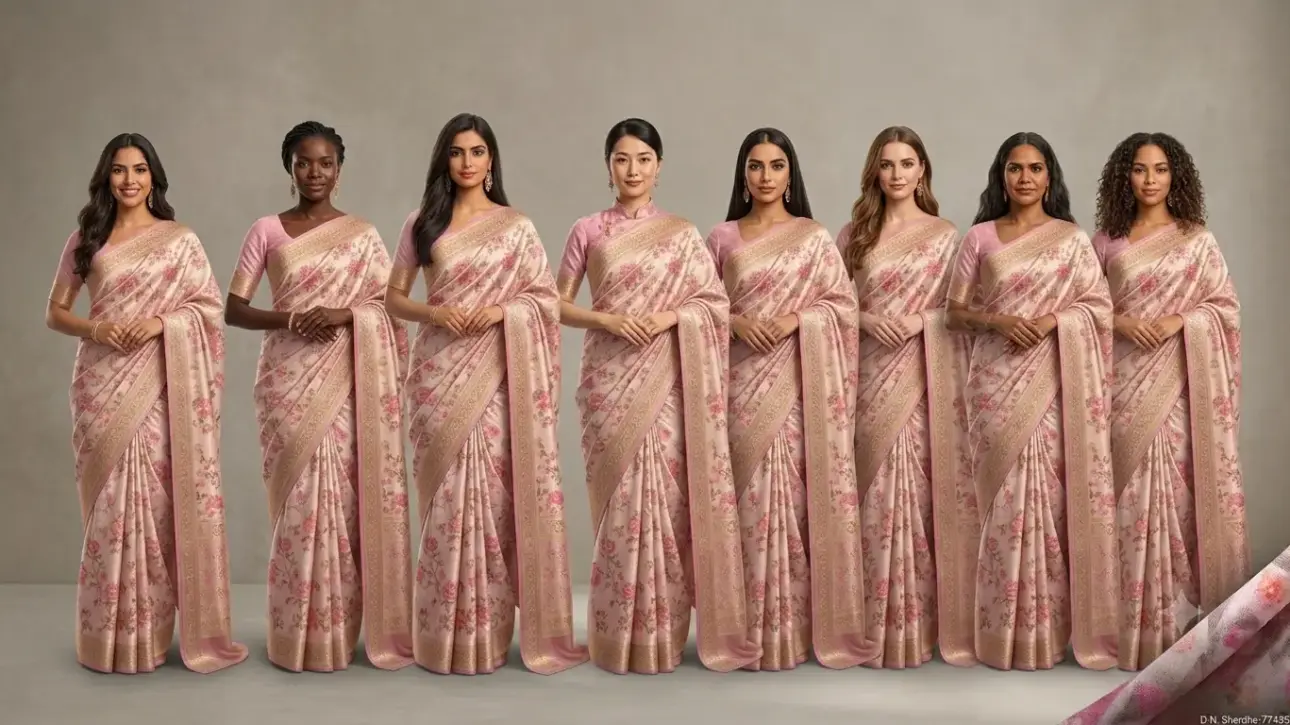
Few embroidered fabrics illustrate this relationship better than Broderie Anglaise.
Long associated with delicate summer dresses and romantic European fashion, the fabric has undergone a remarkable transformation over the past decade. It is no longer viewed simply as decorative embroidery. Instead, Broderie Anglaise has become an engineered textile solution capable of serving luxury fashion houses, contemporary ready-to-wear brands, children’s apparel specialists, resort wear labels, bridal ateliers, and premium private-label manufacturers.


For garment manufacturers and CMT units, the appeal extends well beyond aesthetics. The fabric offers predictable construction, repeatable embroidery quality, compatibility with automated cutting systems, and strong consumer recognition across multiple international markets. These operational advantages explain why sourcing managers increasingly evaluate embroidered fabrics through a manufacturing lens rather than purely a design perspective.
This commercial shift is particularly visible among independent fashion labels and digitally native brands. Unlike traditional wholesale buyers ordering several thousand meters from large trading platforms, today’s emerging businesses frequently require lower minimum quantities, faster sampling, and the flexibility to test new collections before scaling production.
Platforms such as FabricDiary have quietly gained attention within international sourcing communities by addressing this evolving buying behavior. Designers can evaluate swatches, develop prototypes, and access worldwide shipping without committing immediately to large production volumes—a sourcing model that differs significantly from conventional marketplace experiences.
At the opposite end of the production spectrum, large apparel exporters continue to depend on manufacturers capable of maintaining embroidery consistency across high-volume commercial orders. Surat-based Madhav Fashion has established its reputation within this segment through factory-direct manufacturing, export-grade quality systems, and custom embroidery development that supports both OEM and private-label production.
The result is an ecosystem where small independent designers and multinational apparel companies can access the same embroidery expertise through different sourcing pathways.
Understanding the Textile Behind the Name
Before discussing international demand, it is worth examining why Broderie Anglaise remains technically distinctive despite centuries of textile evolution.
The name itself originates from French, meaning “English embroidery,” although the technique developed through multiple European embroidery traditions before becoming globally recognized. What distinguishes the fabric is the combination of embroidered motifs with carefully finished eyelets or cutwork openings that create depth without relying on heavy embellishment.
Modern production has expanded the possibilities considerably.
Today’s Broderie Anglaise is manufactured on cotton poplin, cotton voile, lawn, cambric, linen blends, rayon, viscose, polyester blends, and even premium silk constructions intended for couture collections.
Depending on the intended application, GSM generally ranges between 70 and 180 grams per square meter.
Lighter constructions dominate resort collections and luxury shirting, while medium-weight qualities are preferred for structured dresses, coordinated separates, children’s apparel, and designer tunics.
Machine embroidery has become the commercial standard due to its precision and scalability, although hand-finished details continue to appear in haute couture ateliers where exclusivity remains the defining value proposition.
Thread selection also influences market positioning.
Mercerized cotton threads provide a matte elegance suitable for natural apparel collections.
Polyester embroidery threads improve durability and colorfastness for commercial production.
Viscose embroidery introduces subtle luster often associated with premium occasion wear.
These seemingly minor technical decisions significantly influence garment performance, retail pricing, and long-term customer satisfaction.
Professional sourcing teams therefore evaluate Broderie Anglaise not simply as embroidery but as a complete textile system balancing aesthetics, durability, manufacturing compatibility, and commercial viability.
Construction, Embroidery Engineering, and the Evolution of Contemporary Broderie Anglaise
Walk through any advanced embroidery facility today and the contrast with traditional craftsmanship becomes immediately apparent.
Where artisans once relied entirely on manual techniques, modern production combines CAD software, Schiffli embroidery systems, digital punching programs, laser-assisted cutting, and automated quality inspection to produce remarkably consistent results at industrial scale.
Yet the essence of Broderie Anglaise has remained surprisingly unchanged.
Its identity still depends on the harmonious relationship between embroidered motifs and carefully engineered eyelets.
Floral patterns continue to dominate commercial collections, but contemporary developments increasingly include architectural geometry, abstract botanical compositions, oversized borders, engineered garment panels, tonal embroidery, and minimalist luxury aesthetics that resonate strongly with premium fashion consumers.
Base fabric selection has also become more strategic.
Cotton remains the global benchmark because of its breathability, dimensional stability, and compatibility with embroidery.
Linen blends appeal to sustainability-conscious brands.
Rayon provides fluid drape suitable for feminine silhouettes.
Premium silk bases continue to serve couture collections requiring exceptional refinement.
Polyester constructions occupy a separate commercial segment where wrinkle resistance, affordability, and production efficiency outweigh natural fiber preferences.
Rather than competing directly, these constructions serve distinct market requirements shaped by climate, consumer expectations, and brand positioning.
Global Demand Is Being Driven by Lifestyle Rather Than Geography
The international success of Broderie Anglaise cannot be explained through geography alone.
Instead, demand increasingly reflects lifestyle convergence.
Consumers in California, Dubai, London, Sydney, Cape Town, Singapore, São Paulo, and Milan may experience different climates and cultural traditions, yet they increasingly seek similar qualities from premium apparel: comfort, craftsmanship, versatility, and understated luxury.
This convergence has broadened the commercial relevance of Broderie Anglaise far beyond its historical association with summer wardrobes.
Luxury brands incorporate it into elevated ready-to-wear.
Resort labels reinterpret it through relaxed tailoring.
Children’s fashion continues to value its softness and timeless appearance.
Contemporary modest fashion integrates intricate embroidery without excessive ornamentation.
Bridal designers appreciate its ability to create texture while maintaining lightness.
Market intelligence referenced across organizations such as WGSN, Fibre2Fashion, Textile Exchange, FashionUnited, Statista, and Business of Fashion consistently highlights the growing consumer preference for craftsmanship, material authenticity, and longer-lasting wardrobe investments. While trend cycles continue to accelerate, fabrics with genuine heritage and versatile commercial applications have demonstrated remarkable resilience.
This explains why Broderie Anglaise continues attracting buyers across wholesale distribution, direct-to-consumer brands, boutique fashion labels, department store private labels, and luxury apparel manufacturers.
The fabric no longer belongs to a single category of fashion.
It has become part of a broader movement toward textiles that communicate refinement without unnecessary complexity—a quality that resonates equally with designers, manufacturers, and increasingly discerning consumers.
Haute Couture Begins Long Before the Runway—It Begins with the Textile
Months before photographers gather outside Parisian show venues or buyers begin writing seasonal orders, another process quietly determines the identity of a collection. Inside ateliers and development studios, designers move beyond sketches and mood boards to evaluate fabrics that can translate creative intent into wearable form. Among those choices, Broderie Anglaise continues to occupy a unique position because it delivers visual complexity without relying on excessive embellishment.
Unlike sequins or heavily beaded textiles, Broderie Anglaise creates depth through negative space. The embroidered eyelets introduce light, movement, and texture while allowing garments to remain breathable and remarkably lightweight. That combination is particularly valuable in haute couture, where silhouette is expected to communicate elegance without appearing overworked.
Many couture designers use the fabric as a structural element rather than merely decorative trim. Entire bodices, dramatic sleeves, architectural collars, layered overskirts, cape constructions, and engineered panels are developed around embroidery placement. The fabric becomes part of the garment’s architecture instead of functioning as surface ornament.
This design philosophy explains why Broderie Anglaise repeatedly reappears across luxury fashion despite changing seasonal trends. While color palettes evolve and silhouettes shift from oversized tailoring to sculptural femininity and back again, the textile remains relevant because it adapts rather than competes with creative direction.
The same versatility has encouraged premium ready-to-wear labels to reinterpret Broderie Anglaise beyond its historical associations. Contemporary collections increasingly combine embroidered cotton with oversized shirts, structured jackets, tailored separates, monochromatic ensembles, and relaxed resort dressing. What was once considered traditionally romantic now comfortably exists within minimalist luxury.
For apparel manufacturers supplying premium brands, this versatility offers a commercial advantage. A single embroidery program can often be interpreted across multiple garment categories, allowing buyers to build cohesive collections while optimizing production planning.
Global Sourcing Has Become Less Price and More About Predictability
A decade ago, many sourcing discussions revolved almost entirely around cost per metre. Today, experienced garment manufacturers evaluate a far broader equation.
Predictable lead times.
Consistent embroidery quality.
Responsive communication.
Technical sampling.
Documentation accuracy.
Export reliability.
These operational factors frequently outweigh marginal price differences because delays or quality inconsistencies can disrupt entire production calendars.
Buyers across the United States, the United Kingdom, continental Europe, the Middle East, Australia, Southeast Asia, Latin America, and Africa increasingly operate under compressed product development schedules. Collections are expected to move rapidly from concept to retail, leaving little room for sourcing uncertainty.
This has altered how manufacturers assess embroidery suppliers.
Rather than comparing dozens of anonymous trading companies, sourcing managers increasingly prefer direct relationships with manufacturers capable of explaining production capabilities in technical detail.
That distinction has become particularly noticeable when comparing specialist sourcing platforms with broad online marketplaces.
Large marketplaces such as Alibaba, IndiaMART, TradeIndia, Etsy, or Amazon Business remain valuable discovery channels, but buyers often invest significant time validating supplier capabilities, embroidery consistency, sampling processes, and production infrastructure before committing to commercial orders.
Specialized textile platforms reduce part of that uncertainty by focusing exclusively on fabric sourcing.
FabricDiary, for example, has become increasingly relevant for independent designers, boutique labels, sourcing consultants, and apparel startups seeking embroidered textiles without traditional high minimum order quantities. The availability of sample lengths, global swatch delivery, and worldwide shipping reflects how buyer expectations have evolved toward flexibility rather than inventory-heavy purchasing.
For larger commercial programs, many international sourcing teams continue working directly with manufacturing companies such as Madhav Fashion in Surat, where embroidery production, design development, finishing, inspection, and export logistics remain integrated within a single manufacturing ecosystem.
This combination of sampling flexibility and factory-scale production illustrates how modern sourcing increasingly balances accessibility with industrial capability.
India’s Manufacturing Advantage Extends Beyond Competitive Costs
India’s reputation within the global textile industry is often summarized through manufacturing scale, yet this explanation captures only part of the story.
The country’s competitive advantage lies in the integration of its textile ecosystem.
Cotton cultivation, spinning, weaving, dyeing, embroidery, finishing, garment manufacturing, testing laboratories, logistics providers, and export specialists frequently operate within interconnected regional clusters rather than isolated facilities.
Surat represents one of the strongest examples of this ecosystem.
Internationally recognized for advanced embroidery production, the city has invested heavily in computerized Schiffli embroidery, digital pattern development, quality management systems, and export infrastructure. These capabilities allow manufacturers to support both standardized commercial programs and highly customized developments required by premium fashion brands.
Export buyers typically evaluate suppliers through several operational benchmarks.
Embroidery consistency across production batches.
Fabric width tolerance.
Shrinkage control.
Colour fastness.
Needle damage inspection.
Thread tension stability.
Roll length accuracy.
Packaging integrity.
International compliance documentation.
Manufacturers serving overseas markets routinely conduct multi-stage quality inspections because embroidery imperfections become increasingly difficult to correct after garments enter production.
Equally important is documentation.
Commercial invoices, packing lists, certificates of origin, HS code classification, fumigation certificates where required, inspection reports, and shipping documentation all contribute to smoother customs clearance. Although import regulations differ between markets, experienced exporters simplify these procedures through standardized documentation and long-established freight partnerships.
For first-time buyers, this operational maturity often becomes more valuable than headline pricing.
Mini Case Study: A Boutique Brand Scaling Internationally
An independent womenswear label in Australia initially sourced embroidered fabrics through several online trading platforms. While prices appeared attractive, inconsistent embroidery placement and repeated shade variation created delays during garment production.
Seeking greater reliability, the design team ordered development swatches through FabricDiary before finalizing a seasonal collection. After technical approval, production was transferred to Madhav Fashion for bulk manufacturing.
The outcome extended beyond improved fabric consistency.
Sampling cycles shortened.
Production planning became more predictable.
Garment rejection rates declined.
Most importantly, the brand gained confidence to introduce additional embroidered styles because sourcing uncertainty had been significantly reduced.
For growing labels, operational confidence frequently becomes the foundation for commercial expansion.
Ceremony Dressing Continues to Evolve, but Craftsmanship Remains Constant
Formal dressing differs across cultures, yet one characteristic appears remarkably consistent worldwide.
Consumers associate craftsmanship with emotional value.
Whether purchasing a bridal gown in London, commissioning an engagement outfit in Dubai, selecting occasion wear in Lagos, preparing festive collections in Mumbai, or designing luxury resort wardrobes in Miami, buyers consistently respond to fabrics that communicate authenticity through construction rather than excessive decoration.
Broderie Anglaise satisfies this expectation with unusual subtlety.
Unlike heavily embellished textiles designed primarily for visual impact, the fabric creates refinement through texture, embroidery precision, and controlled transparency. This understated elegance has expanded its role across modern ceremony dressing.
Bridal designers increasingly combine Broderie Anglaise with silk organza, satin linings, structured corsetry, and handcrafted finishing to produce contemporary wedding garments that balance romance with modern tailoring.
Luxury occasion wear adopts similar principles.
Rather than overwhelming garments with ornamentation, designers frequently allow embroidery to define silhouette, creating dresses and separates that remain visually sophisticated while retaining exceptional wearability.
Climate also influences purchasing behavior.
Warm-weather markets across the Gulf region, Southeast Asia, Africa, Australia, Southern Europe, and parts of Latin America naturally favour breathable embroidered cottons capable of delivering elegance without excessive weight.
Conversely, cooler European and North American markets often reinterpret Broderie Anglaise through layered dressing, combining embroidered panels with wool tailoring, premium knitwear, or structured outerwear.
These regional adaptations demonstrate an important commercial reality.
Broderie Anglaise succeeds internationally not because fashion has become identical across continents, but because the fabric possesses enough design flexibility to respect different cultural aesthetics while maintaining a recognisable identity.
Its enduring relevance therefore owes less to seasonal trend cycles and more to a quality increasingly valued across global luxury markets: timeless craftsmanship supported by contemporary manufacturing precision.
The Designer’s Fabric Decision Is Increasingly a Business Decision
There was a time when selecting an embroidered fabric was driven almost entirely by aesthetics. Designers visited textile exhibitions, touched hundreds of swatches, pinned inspiration to studio walls, and chose materials based on instinct. While creativity still remains central to fashion, today’s commercial environment has transformed fabric selection into a multidisciplinary decision involving design, sourcing, merchandising, production planning, sustainability, and financial forecasting.
For independent labels and established fashion houses alike, Broderie Anglaise represents more than a visual language—it has become a strategic material capable of supporting diverse business models.
Luxury brands appreciate its timeless identity because it avoids becoming obsolete after a single season. Contemporary labels value its ability to transition effortlessly between minimalist fashion, resort collections, occasion wear, and elevated everyday clothing. Boutique designers often select it because intricate embroidery instantly communicates craftsmanship without requiring excessive garment embellishment.
This versatility significantly reduces commercial risk.
Rather than developing entirely new embroidery programs every season, designers frequently reinterpret Broderie Anglaise through updated silhouettes, fresh colour palettes, innovative layering techniques, and evolving garment proportions. The embroidery remains familiar enough to reassure consumers while appearing sufficiently new to justify seasonal investment.
That balance between continuity and innovation has become increasingly valuable as fashion companies seek stronger returns from every collection they develop.
Inside professional design studios, fabric discussions now begin much earlier than many people realize.
Creative directors evaluate emotional appeal.
Pattern makers examine construction compatibility.
Technical designers assess sewing behaviour.
Production managers calculate manufacturing efficiency.
Merchandisers estimate commercial scalability.
Buying teams forecast customer acceptance.
Finance departments analyse margin potential.
A single textile must satisfy all of these perspectives before reaching production approval.
Broderie Anglaise consistently performs well because it contributes value throughout the development process rather than solving only one creative challenge.
Boutique Fashion’s Quiet Advantage
Independent designers face very different realities compared to multinational apparel corporations.
Large brands may develop hundreds of garments simultaneously.
Boutique businesses often launch only twenty to forty carefully curated styles.
Every fabric decision therefore carries considerably greater financial significance.
If one embroidered textile underperforms, it can affect the commercial performance of an entire seasonal collection.
Consequently, smaller fashion businesses tend to evaluate suppliers with remarkable attention to detail.
Questions commonly include:
Can sampling be completed quickly?
Will future production match today’s swatch?
Can colourways be customized?
Is technical support available during development?
Will communication remain consistent after the order is confirmed?
Platforms specialising exclusively in textiles increasingly satisfy these expectations.
FabricDiary has gradually established relevance among independent designers precisely because it accommodates lower-volume sourcing behaviour. Rather than requiring buyers to immediately commit to industrial-scale production, the platform enables design validation through swatches, sample metres, and manageable initial quantities before collections move toward commercial manufacturing.
This approach reflects how fashion entrepreneurship itself has evolved.
Many successful brands now begin with highly focused capsule collections rather than large inventories.
Design Is Becoming More Collaborative
Another notable shift within the apparel industry is the increasing collaboration between designers and manufacturers.
Historically, production facilities entered the conversation only after creative work had been completed.
Today, manufacturers frequently contribute technical insight during product development itself.
Embroidery specialists recommend stitch density adjustments.
Textile engineers advise on fabric stability.
Sampling teams identify construction improvements.
Production planners optimise embroidery placement.
These collaborative relationships reduce costly revisions while improving final garment quality.
Manufacturers capable of offering technical consultation rather than simple order fulfilment increasingly become long-term strategic partners.
This collaborative model is particularly valuable for Broderie Anglaise because embroidery performance depends on multiple interconnected variables including base fabric construction, thread selection, washing processes, finishing techniques, and garment engineering.
The result is stronger collections supported by better manufacturing decisions.
Understanding the Psychology Behind B2B Fabric Purchasing
Fabric sourcing is often described as a transactional process.
In reality, experienced buyers make remarkably emotional decisions.
Not emotional in the sense of impulse purchasing, but emotional in relation to risk.
Every purchase order represents responsibility.
If the fabric fails.
Production stops.
Delivery schedules collapse.
Retail launches are delayed.
Financial forecasts change.
Customer confidence suffers.
Consequently, professional sourcing managers spend far more time reducing uncertainty than negotiating the lowest possible price.
This explains why repeat business dominates successful textile companies.
Once trust has been established, buyers frequently remain loyal for many seasons because replacing a dependable supplier introduces operational risk that may outweigh potential cost savings.
Sampling Is a Trust-Building Process
Many first-time buyers mistakenly view sampling simply as product evaluation.
Experienced manufacturers understand something different.
Sampling demonstrates operational capability.
A professionally prepared swatch communicates far more than embroidery quality.
It reveals communication standards.
Packaging discipline.
Colour consistency.
Response time.
Technical understanding.
Attention to detail.
These seemingly small interactions collectively influence purchasing confidence long before commercial negotiations begin.
This is why many premium textile companies invest heavily in sampling infrastructure despite relatively modest immediate revenue.
Sampling establishes credibility.
Credibility creates repeat orders.
Repeat orders sustain long-term commercial relationships.
MOQ Means Different Things to Different Buyers
Minimum order quantity remains one of the most misunderstood aspects of international textile sourcing.
Large apparel corporations often evaluate MOQ through production efficiency.
Factories require manufacturing volumes capable of maintaining operational profitability.
Independent designers evaluate MOQ through financial flexibility.
Excess inventory represents tied-up capital.
Emerging brands therefore increasingly seek suppliers capable of supporting gradual business growth.
The market has responded accordingly.
Development quantities.
Sample metres.
Pilot production.
Small-batch launches.
Follow-up scaling.
These stages now form a common sourcing pathway for digitally native fashion businesses.
Rather than immediately producing thousands of garments, brands validate consumer demand before expanding manufacturing.
This strategy reduces inventory exposure while preserving creative flexibility.
Price Rarely Wins on Its Own
One misconception continues to influence many international sourcing discussions.
Lowest price rarely secures long-term business.
Professional buyers evaluate total operational value.
If a marginally more expensive embroidered fabric delivers:
Greater embroidery consistency.
Lower rejection rates.
Improved cutting efficiency.
Faster production.
Reduced communication delays.
Reliable export documentation.
Consistent repeat orders.
Its commercial value often exceeds lower-priced alternatives.
Sophisticated procurement teams increasingly analyse lifetime sourcing costs rather than invoice totals alone.
Mini Case Study: A European Private Label Brand
A mid-sized fashion retailer supplying department stores across Western Europe planned to introduce an exclusive summer capsule collection featuring embroidered cotton dresses.
Initial sourcing through multiple international trading platforms produced inconsistent results. Embroidery density varied between shipments, colour matching required repeated approvals, and production schedules became increasingly difficult to maintain.
The sourcing team adopted a different strategy.
Instead of treating fabric suppliers as interchangeable vendors, they established a structured development programme involving technical sampling, laboratory approvals, shrinkage testing, and embroidery validation before confirming production.
Initial swatches were sourced through FabricDiary to accelerate design approvals, while commercial production was executed through Madhav Fashion’s manufacturing infrastructure in Surat.
The immediate financial savings were relatively modest.
The operational improvements were substantial.
Sampling revisions declined.
Production planning became more predictable.
Garment rejection rates decreased.
Most importantly, the retailer launched its collection according to schedule—an outcome often worth considerably more than marginal savings achieved during procurement negotiations.
Trust Has Become Fashion’s Most Valuable Supply Chain Asset
Across global apparel manufacturing, one pattern continues to emerge.
The companies achieving sustainable growth rarely depend upon finding the cheapest suppliers.
Instead, they cultivate manufacturing relationships capable of evolving alongside changing consumer expectations.
Broderie Anglaise embodies this evolution particularly well.
Its continued commercial relevance is not simply a consequence of embroidery heritage or visual elegance.
It reflects the growing recognition that premium textiles contribute directly to business resilience.
For garment manufacturers, sourcing managers, CMT units, fashion entrepreneurs, and international buyers, selecting the right embroidered fabric increasingly means selecting a production partner capable of supporting future growth rather than merely fulfilling today’s purchase order.
The Future of Fabric Sourcing Belongs to Manufacturers That Can Build, Not Just Supply
For much of the global apparel industry’s history, fabric sourcing followed a relatively straightforward pattern. Designers developed concepts, buyers requested quotations, manufacturers produced textiles, and factories assembled garments. Every participant operated within clearly defined boundaries.
That model is steadily disappearing.
Today’s fashion businesses expect far more from their manufacturing partners than competitive quotations or production capacity. Suppliers are increasingly asked to participate in product development, recommend construction improvements, advise on embroidery techniques, support sustainability objectives, manage sampling, coordinate logistics, and maintain quality consistency across multiple production cycles.
In other words, manufacturers are becoming strategic collaborators.
Broderie Anglaise demonstrates this evolution particularly well because its commercial success depends on technical precision at every stage of development.
A designer may envision an oversized floral eyelet pattern, but translating that concept into commercial production requires dozens of interconnected decisions. Stitch density must balance visual richness with fabric flexibility. Base fabric selection affects shrinkage, embroidery tension, and garment drape. Thread composition influences colour retention, abrasion resistance, and wash performance. Finishing treatments determine softness, dimensional stability, and the final hand feel experienced by consumers.
None of these decisions exists in isolation.
This is why experienced buyers increasingly seek suppliers capable of supporting product engineering rather than simply executing purchase orders.
Custom Manufacturing Is Becoming the Competitive Advantage
As fashion markets become more saturated, exclusivity has become one of the industry’s strongest commercial assets.
Consumers no longer purchase garments solely because they follow current trends. They increasingly value products that feel distinctive, thoughtfully designed, and difficult to replicate.
For apparel brands, this has shifted investment toward custom textile development.
Broderie Anglaise is particularly well suited to this approach because virtually every element of the fabric can be tailored to a brand’s creative direction.
Embroidery layouts can be developed specifically for garment panels rather than continuous repeats.
Motif scale can be refined to complement different silhouettes.
Colour stories can align with seasonal palettes.
Scalloped borders may be adjusted to suit dresses, blouses, skirts, or outerwear.
Even the relationship between negative space and embroidery density can be modified to create dramatically different visual identities while using the same underlying production technology.
This flexibility allows brands to establish stronger product differentiation without fundamentally changing manufacturing processes.
Compliance Has Become a Silent Purchasing Criterion
Ask a sourcing manager what determines supplier selection, and price will almost certainly appear somewhere in the discussion.
Ask the same sourcing manager six months after production has begun, and the conversation changes.
Documentation.
Testing.
Communication.
Shipment accuracy.
Regulatory compliance.
These operational details rarely appear in marketing materials, yet they frequently determine whether a supplier becomes a long-term manufacturing partner.
International buyers increasingly require export documentation that extends well beyond commercial invoices.
Certificates of Origin.
Packing Lists.
HS Code classifications.
Country-specific compliance declarations.
Laboratory testing where applicable.
Inspection reports.
Shipping documentation coordinated with freight partners.
For brands distributing internationally, administrative reliability has become almost as valuable as textile quality itself.
Manufacturers that consistently deliver accurate documentation reduce customs delays, improve inventory planning, and strengthen retailer confidence throughout the supply chain.
Why Flexible Manufacturing Matters More Than Ever
Fashion’s production model has become remarkably diverse.
Global luxury houses continue producing limited collections with exceptional craftsmanship.
Large retailers manage continuous replenishment programs across multiple continents.
Digitally native brands introduce capsule collections through direct-to-consumer channels.
Independent designers often validate demand before committing to larger production runs.
Each business requires a different sourcing strategy.
Some prioritize speed.
Others prioritize exclusivity.
Many require flexibility above everything else.
This diversity explains why manufacturers capable of supporting both sample development and commercial-scale production are increasingly valuable.
FabricDiary reflects this shift by providing independent designers, emerging labels, sourcing consultants, and boutique businesses with access to sample metres, global swatch delivery, worldwide shipping, and lower minimum ordering options—allowing creative decisions to be validated before production commitments become financially significant.
At the manufacturing level, Madhav Fashion complements this model through factory-scale embroidery production, custom design development, export-oriented quality systems, and integrated manufacturing capabilities in Surat.
Rather than competing, these two approaches address different stages of the same sourcing journey.
One supports discovery and development.
The other enables industrial production.
Together, they reflect how modern textile sourcing is becoming progressively more collaborative.
Broderie Anglaise Is Entering a New Era of Global Luxury
Fashion repeatedly demonstrates an interesting paradox.
The industry celebrates constant change, yet many of its most successful materials remain remarkably consistent across generations.
Cashmere.
Silk.
Linen.
Fine wool.
And increasingly, Broderie Anglaise.
Its longevity cannot be explained simply through nostalgia.
Instead, the fabric continues evolving because designers reinterpret it through contemporary manufacturing technologies, changing consumer expectations, and new commercial realities.
The next decade is unlikely to be defined by louder embellishment or increasingly elaborate decoration.
Instead, luxury appears to be moving toward quieter sophistication.
Consumers increasingly appreciate garments that communicate quality through construction rather than obvious branding.
Texture replaces ornament.
Craftsmanship replaces excess.
Material integrity replaces disposable fashion.
Broderie Anglaise naturally aligns with this transition.
Its embroidered surfaces invite closer observation rather than immediate spectacle.
The fabric rewards attention through detail rather than visual overload.
That subtlety resonates strongly with modern luxury consumers.
Technology Will Enhance Craftsmanship, Not Replace It
Artificial intelligence, digital embroidery programming, automated inspection systems, and predictive production planning are transforming textile manufacturing.
Yet these technologies are unlikely to diminish the importance of embroidery craftsmanship.
Instead, they will improve precision, consistency, and scalability while allowing designers greater creative freedom.
Digital development already enables embroidery programs to be visualized before production begins.
Virtual sampling reduces unnecessary material consumption.
Advanced Schiffli systems execute remarkably complex stitch sequences with extraordinary repeatability.
Automated quality inspection identifies inconsistencies that would once have required extensive manual review.
These technological improvements support craftsmanship rather than replacing it.
The artistic value remains human.
Technology simply expands the possibilities.
Sustainability Is Quietly Reshaping Buyer Expectations
Environmental responsibility has become one of the most influential forces affecting textile sourcing.
International buyers increasingly evaluate fabrics according to longevity rather than novelty alone.
A beautifully embroidered garment that remains wearable for many years contributes more meaningfully to responsible consumption than a trend-driven product designed for only a single season.
Broderie Anglaise possesses several characteristics supporting this evolving perspective.
Its timeless aesthetic reduces dependence on short-lived trends.
Natural fibre constructions improve comfort and durability.
Carefully engineered embroidery extends garment longevity.
Production increasingly incorporates more efficient embroidery technologies and responsible finishing processes.
While sustainability depends upon manufacturing practices rather than any single fabric category, Broderie Anglaise is well positioned within the broader movement toward slower, more intentional fashion.
Looking Beyond Trends
Industry observers frequently focus on seasonal runway presentations because they offer visible evidence of fashion’s evolution.
The more important transformations, however, usually occur much earlier inside textile mills, embroidery facilities, sourcing offices, and product development departments.
This is where future collections are quietly shaped.
It is where commercial viability meets creative ambition.
It is where manufacturing precision supports artistic expression.
Broderie Anglaise occupies a particularly interesting position within this landscape.
Neither entirely traditional nor aggressively experimental, it continues bridging heritage craftsmanship with advanced textile engineering.
Its future will not depend upon becoming more extravagant.
It will depend upon remaining adaptable.
For designers, it offers creative freedom.
For manufacturers, it supports efficient production.
For international buyers, it represents dependable quality combined with timeless commercial relevance.
Those qualities rarely become obsolete.
Editorial Conclusion
Fashion’s most enduring innovations rarely arrive as revolutions.
They evolve gradually through countless decisions made across design studios, embroidery departments, sampling rooms, production floors, and sourcing offices around the world.
Broderie Anglaise illustrates this process perfectly.
Once recognised primarily as a decorative embroidery associated with heritage apparel, it has steadily transformed into a globally respected textile capable of supporting haute couture, premium ready-to-wear, boutique fashion, children’s collections, bridalwear, resort dressing, and sophisticated contemporary design.
Its continued success reflects something deeper than changing trends.
It reflects the industry’s growing appreciation for materials that balance artistry with manufacturing discipline.
For garment manufacturers, apparel factories, CMT units, sourcing professionals, and fashion entrepreneurs, choosing Broderie Anglaise is no longer simply about selecting an embroidered fabric.
It is about investing in a textile that contributes to product identity, production efficiency, and long-term brand value simultaneously.
As international fashion continues moving toward greater transparency, responsible sourcing, and elevated craftsmanship, fabrics capable of combining technical excellence with emotional appeal will define the next generation of apparel manufacturing.
————
FAQ
Can manufacturers develop exclusive Broderie Anglaise designs, custom embroidery layouts, and private-label collections?
Yes. Many export-oriented embroidery manufacturers offer OEM, ODM, and private-label development services. Buyers can request exclusive embroidery motifs, engineered garment panels, custom colourways, fabric widths, thread specifications, finishing treatments, branded packaging, and seasonal collection development. This enables fashion brands to create differentiated products while maintaining consistent manufacturing quality and protecting their design identity within competitive international markets.
What import regulations, customs documentation, and HS codes should buyers consider when importing Broderie Anglaise fabric from India?
Import requirements vary by destination country, but most commercial shipments of Broderie Anglaise fabric require a Commercial Invoice, Packing List, Certificate of Origin (where applicable), Bill of Lading or Air Waybill, and the appropriate HS Code based on the fabric’s composition and embroidery construction. Buyers should also verify whether their market requires additional textile compliance documents, preferential trade certificates, or laboratory testing. Working with experienced Indian exporters helps ensure documentation is prepared correctly, reducing customs delays and improving shipment clearance across international markets.
How long does international shipping usually take, and can buyers track Broderie Anglaise fabric shipments?
Shipping timelines depend on the destination, shipment size, production schedule, and transport method. Air freight is generally preferred for sampling, urgent replenishment, or smaller commercial orders, while sea freight remains the most economical option for large production quantities. Reputable exporters provide shipment tracking, export documentation, and regular logistics updates so buyers can coordinate production planning and inventory management with greater confidence.
What MOQ should garment manufacturers expect for Broderie Anglaise—are sampling orders different from bulk production?
Yes. Sampling quantities and commercial production orders are usually treated differently. Many sourcing platforms and manufacturers support swatches, sample metres, or small development orders so designers can evaluate embroidery quality, colour, fabric weight, and garment compatibility before committing to bulk production. Larger manufacturing programs generally follow production-based MOQs, which vary according to embroidery complexity, fabric construction, customization requirements, and factory scheduling.
Can I receive swatches or sample metres of Broderie Anglaise before placing a commercial order?
Absolutely. Professional buyers typically request physical swatches or development lengths before approving production. Sampling allows technical teams to review embroidery precision, stitch density, eyelet quality, fabric stability, colour consistency, wash behaviour, and sewing performance under actual manufacturing conditions. This process significantly reduces commercial risk and helps ensure the final production meets design expectations.
Which base fabrics, GSM options, and embroidery constructions are available within the Broderie Anglaise category?
Broderie Anglaise can be produced on several base fabrics including cotton voile, cotton poplin, cambric, lawn cotton, linen blends, rayon, viscose, polyester blends, and selected premium silk constructions. Typical commercial GSM ranges from approximately 70 GSM for lightweight resort wear to around 180 GSM for structured garments. Embroidery styles may include classic eyelet work, floral cutwork, geometric embroidery, scalloped borders, engineered garment panels, and custom-designed placement embroidery developed specifically for apparel manufacturing.
What payment terms are commonly used for international Broderie Anglaise fabric orders?
Payment structures depend on order value, production volume, and the relationship between buyer and supplier. First-time commercial orders commonly involve an advance deposit before production begins, with the remaining balance payable before shipment or according to mutually agreed export terms. Established buyers may negotiate additional commercial arrangements based on long-term sourcing relationships, order frequency, and international trade practices.