


Luxury fashion rarely begins on a runway. It begins months earlier inside a sourcing meeting where product developers, procurement heads, designers and merchandising teams debate one question: Which fabric delivers the strongest commercial return without increasing manufacturing risk?
That conversation has quietly elevated Mesh Net Embroidery Fabric from a decorative textile into a strategic sourcing category.
Over the last decade, international bridalwear, occasionwear and couture brands have shifted away from excessively heavy embellished fabrics toward materials that deliver visual richness with significantly lower garment weight. Mesh net embroidery answers that requirement by combining engineered transparency with highly detailed surface ornamentation, allowing designers to create premium garments that remain comfortable during long ceremonies, destination weddings and luxury events.
Mesh Net Embroidery Fabric: Strategic Sourcing for Global Fashion Brands
For sourcing agents, this is not merely an aesthetic preference—it is a business decision. Lighter garments reduce transportation costs, simplify garment construction, improve wearer comfort and allow brands to expand seasonal collections without dramatically increasing production complexity. Those advantages become especially meaningful when supplying multiple international markets with different climate conditions and fashion expectations.
Industry publications including Business of Fashion, FashionUnited, Fibre2Fashion, WGSN, Statista, Bloomberg, Financial Times, and Forbes have repeatedly highlighted the growing intersection between premium textiles, supply-chain resilience and consumer demand for differentiated products. Decorative fabrics are increasingly evaluated not only by appearance but by scalability, repeatability and sourcing reliability.


Within bridal fashion, Mesh Net Embroidery Fabric has established itself as a versatile platform capable of serving dramatically different markets. A minimalist embroidered mesh developed for European couture can often be adapted into richly embellished bridalwear for the Gulf region or transformed into lightweight reception wear for North American designers with only modest changes to embroidery density, thread composition or decorative additions. That flexibility allows brands to maximise design investment across several regional collections.
The commercial appeal extends beyond bridalwear. Contemporary designers are integrating embroidered mesh into cocktail dresses, couture overlays, fashion capes, detachable sleeves, luxury resortwear and premium occasion collections because the fabric provides dimensional depth without excessive structural weight. In an industry where product differentiation directly influences margins, that characteristic has become increasingly valuable.
From an investment perspective, Mesh Net Embroidery Fabric occupies an attractive position within the decorative textile market. It offers manufacturers opportunities for design innovation while enabling buyers to create collections with higher perceived value, stronger visual merchandising and broader international appeal.
Understanding the Technical DNA Behind Premium Mesh Net Embroidery Fabric
To many consumers, embroidered mesh simply appears delicate and decorative. For textile professionals, however, every successful development reflects a carefully engineered balance between material science, embroidery technology and garment performance.
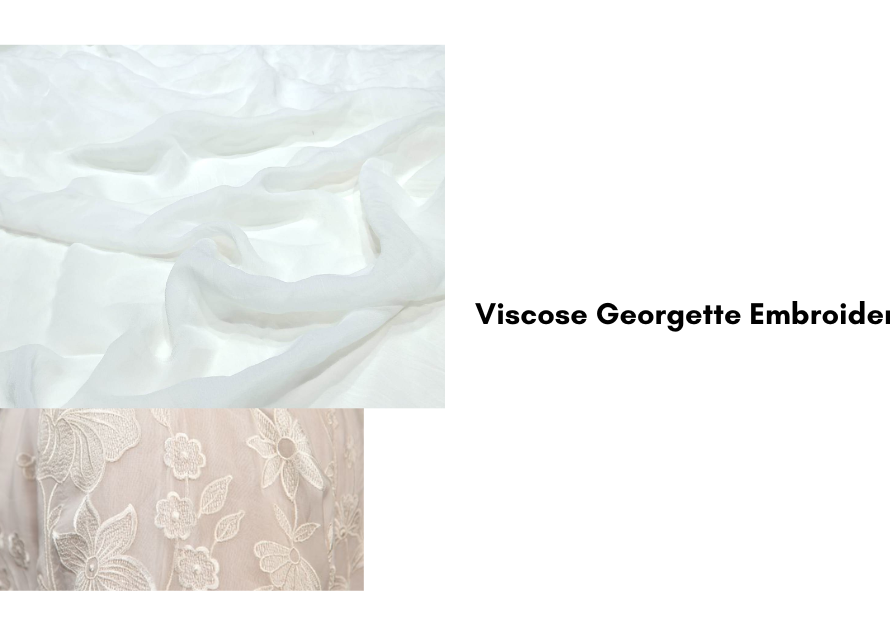
Unlike compact woven fabrics, mesh net is built on an open-loop construction that intentionally incorporates negative space into the textile. Rather than treating transparency as a limitation, manufacturers use it as a structural design element. The embroidery appears to float across the garment, creating depth and movement that cannot be replicated on dense fabric bases.
The technical performance of Mesh Net Embroidery Fabric depends largely on the interaction between four variables: mesh construction, yarn specification, embroidery density and finishing treatment. Altering any one of these elements changes the fabric’s behaviour during cutting, stitching, draping and long-term wear.
Commercial programmes generally utilise polyester or nylon mesh because both materials offer favourable dimensional stability while remaining lightweight. Polyester has become particularly popular among export manufacturers because of its durability, colour retention and compatibility with high-speed embroidery production. Nylon, meanwhile, is preferred for premium couture collections where softness and fluid drape outweigh purely commercial considerations.
Fabric weights usually range between 45 GSM and 220 GSM, depending on embroidery coverage, embellishment density and intended garment application. Lightweight tulles may remain below 50 GSM before embroidery, while heavily embellished couture developments incorporating sequins, metallic threads or cording can exceed 250 GSM.
Embroidery production itself has evolved considerably. Multi-head computerised embroidery systems now operate with exceptional precision, enabling manufacturers to produce complex floral compositions, geometric layouts, engineered borders, botanical themes and bespoke fashion artwork while maintaining consistent repeat accuracy across large production runs. Sophisticated digitising software ensures that stitch density is balanced carefully across the mesh to prevent distortion, puckering or structural instability.
Thread selection also plays a critical commercial role. Rayon threads continue to dominate premium fashion because of their lustrous appearance, whereas polyester embroidery yarns are increasingly selected for export programmes requiring higher abrasion resistance, colourfastness and production consistency. Metallic threads, transparent monofilaments, sequins, beads and cording may be incorporated where luxury positioning justifies additional manufacturing complexity.
Quality evaluation extends well beyond visual inspection. Experienced sourcing professionals examine embroidery registration, mesh uniformity, thread tension, roll consistency, dimensional stability, needle penetration marks and finishing performance before approving production. These technical checkpoints often determine whether a supplier becomes a long-term manufacturing partner or remains only a sampling source.
Ultimately, premium Mesh Net Embroidery Fabric succeeds because it combines engineering precision with design flexibility. That combination enables manufacturers to support high-value fashion programmes without sacrificing production efficiency or international scalability.
From Soft Mesh to Power Mesh: Construction Choices That Influence Commercial Success
Not all mesh fabrics are created for the same commercial purpose. One of the most common sourcing mistakes among new buyers is treating every embroidered mesh as interchangeable. In reality, the choice of base construction has a direct impact on production costs, garment behaviour, embroidery performance and customer satisfaction.
Soft Mesh remains the foundation of many bridal and eveningwear collections because it offers fluid movement and elegant drape. Its balanced flexibility allows intricate embroidery to sit naturally across the surface without creating excessive stiffness, making it particularly suitable for layered gowns, designer lehengas and luxury overlays.
Tulle occupies a different position within the market. Its finer mesh creates the illusion of embroidery floating directly against the skin, making it indispensable for bridal veils, illusion necklines and transparent sleeves. While visually striking, tulle demands more careful embroidery engineering because excessive stitch density can distort the delicate structure.
Power Mesh introduces controlled elasticity into the equation. This stretch-enabled construction supports contemporary body-contouring garments while maintaining sufficient recovery to preserve embroidery integrity. It has become increasingly relevant for premium eveningwear, fashion-forward bridal collections and modern occasion dresses that combine structure with comfort.
Raschel Mesh, produced through warp-knitting technology, has earned widespread acceptance among export manufacturers because of its dimensional stability and repeat consistency. Large-scale production programmes often favour Raschel constructions when reliability across thousands of metres outweighs ultra-soft hand feel.
For CEOs, sourcing directors and procurement managers, these construction choices represent commercial decisions rather than purely technical ones. Selecting the correct base reduces production defects, improves garment yield, minimises quality claims and strengthens long-term customer satisfaction—outcomes that directly influence profitability.
Inside the Global Demand Curve Driving Mesh Net Embroidery Fabric
Consumer tastes may differ between New York, London, Dubai, Lagos, São Paulo and Sydney, yet one trend has remained remarkably consistent: buyers continue to favour decorative textiles that deliver luxury without unnecessary weight.
That shift has positioned Mesh Net Embroidery Fabric at the centre of multiple high-growth apparel categories, from bridal couture and modest fashion to designer occasionwear and premium ready-to-wear collections.
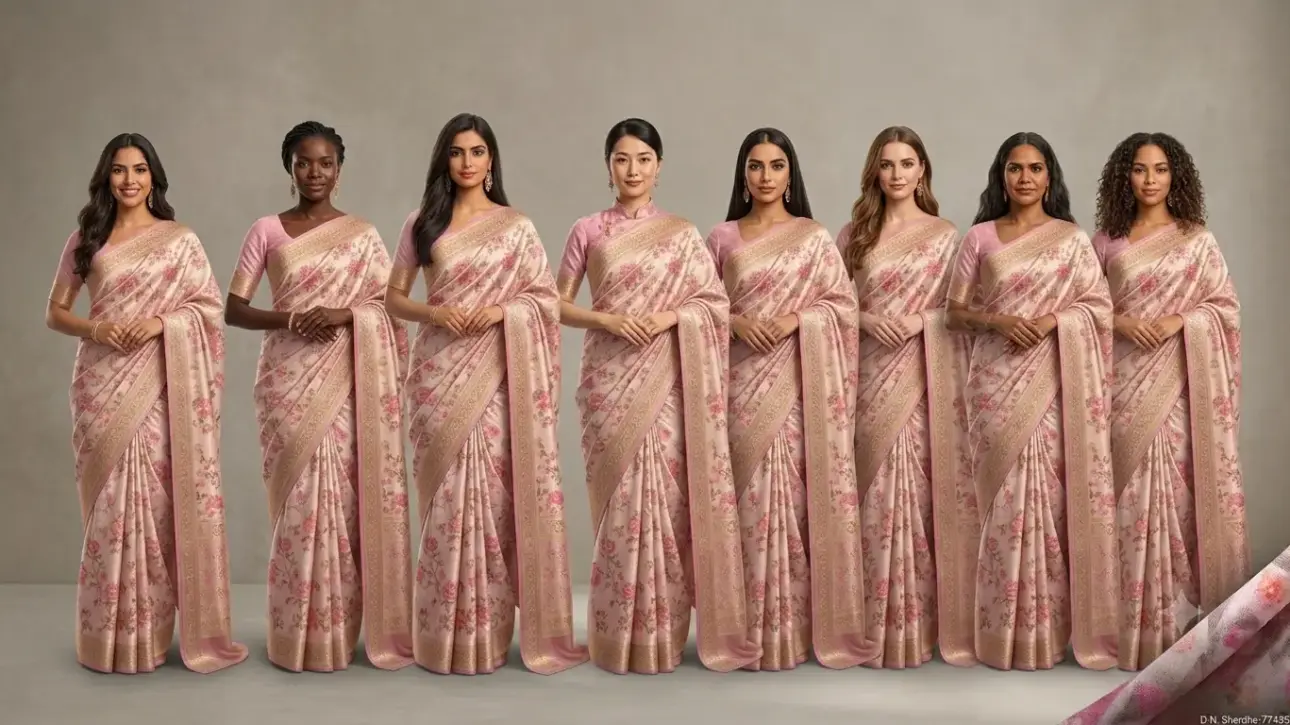
North American buyers increasingly request lightweight embroidered mesh for contemporary bridal gowns and reception dresses. European luxury houses favour refined floral layouts with restrained embellishment. Middle Eastern brands continue to invest in richly ornamented mesh featuring metallic threads, pearls and engineered borders for abayas, kaftans and wedding attire. Across Asia, embroidered mesh remains central to bridal lehengas, sarees and festive ensembles, while African designers embrace bold embroidery combined with vibrant colour stories for ceremonial fashion.
Although regional aesthetics differ, buyer priorities are becoming increasingly aligned. Procurement teams now evaluate suppliers based on consistency, scalability, compliance, lead-time reliability and custom development capabilities just as carefully as they assess embroidery design.
This evolution reflects a broader transformation within global fashion sourcing. Textile procurement is no longer driven solely by seasonal creativity—it is increasingly shaped by operational resilience, supply-chain visibility and long-term manufacturing partnerships.
Why Bridal Fashion Continues to Invest in Mesh Net Embroidery Fabric
Walk through a luxury bridal showroom in Milan, Dubai, Mumbai, New York, or London and one pattern becomes obvious. The garments commanding the highest attention are rarely the heaviest. Instead, they are engineered to create movement, depth, and visual drama without overwhelming the wearer. Mesh Net Embroidery Fabric has become central to that transformation.
For global bridal brands, the fabric solves several commercial challenges simultaneously. It allows designers to introduce intricate embroidery while preserving softness, making elaborate gowns and lehengas comfortable enough for ceremonies that often extend well beyond eight hours. That practical advantage translates directly into customer satisfaction, fewer alterations, and stronger brand loyalty.
The same fabric also adapts remarkably well across diverse cultural markets. In South Asia, richly embroidered mesh forms the foundation of bridal lehengas, dupattas, and reception sarees. In the Middle East, it supports flowing abayas, kaftans, and Nikah gowns where modest silhouettes meet luxurious detailing. European couture houses often favour restrained floral embroidery on fine mesh for church weddings and evening receptions, while North American designers integrate embroidered mesh into A-line gowns, detachable trains, illusion sleeves, and dramatic veils.
Colour preferences reveal equally important regional differences. Ivory, champagne, and blush remain dominant across Europe and North America. Gulf countries continue to favour champagne gold, silver, nude, and crystal embellishments. South Asian wedding collections expand into maroon, wine, emerald, pastel pink, ivory, mustard, and multi-tonal festive palettes for Haldi and Mehendi celebrations. African designers frequently embrace bold jewel tones with statement embroidery, while Latin American bridal labels increasingly request soft neutrals paired with contemporary floral motifs.
This versatility allows one embroidery programme to generate multiple regional collections with only limited modifications to thread colours, embellishments, or motif scale. From an investment perspective, that flexibility significantly improves design ROI because a single creative concept can serve several international markets.
Beyond aesthetics, Mesh Net Embroidery Fabric supports the broader shift towards lighter luxury. Modern consumers increasingly associate sophistication with refined craftsmanship rather than excessive ornamentation. For fashion brands, that trend reduces material weight, improves garment logistics, and strengthens profitability without compromising perceived value.
How Global Sourcing Teams Evaluate Suppliers Before Large Purchase Orders
A sourcing decision rarely begins with a catalogue. It begins with risk assessment.
Textile sourcing agents and supply chain managers understand that the visible embroidery represents only a small part of the purchasing equation. Behind every successful order lies an evaluation of manufacturing capability, production discipline, and long-term reliability.
Professional buyers generally start by requesting fabric swatches rather than immediately negotiating price. A ten-metre trial often reveals more about a supplier than an entire presentation. Mesh stability, embroidery alignment, thread consistency, finishing quality, and repeat accuracy become immediately apparent during sampling.
Once initial quality expectations are met, procurement teams move to commercial validation. Lead-time consistency, communication speed, documentation accuracy, packaging standards, and production scalability become equally important. A supplier capable of producing an exceptional sample but unable to maintain consistency across 20,000 metres represents a significant operational risk.
Compliance requirements have also become more rigorous. Buyers increasingly request information regarding colourfastness, dimensional stability, restricted chemical compliance, fibre composition, and quality assurance systems. While requirements differ between the United States, the European Union, Australia, and the Middle East, suppliers capable of meeting internationally recognised quality expectations gain a measurable competitive advantage.
Documentation forms another critical checkpoint. Commercial invoices, packing lists, certificates of origin where applicable, HS classification, carton marking, and shipping documentation all influence customs clearance and supply chain efficiency. Experienced exporters treat documentation with the same discipline as manufacturing because delays at destination ports can disrupt seasonal fashion launches.
Online marketplaces such as Alibaba, IndiaMART, TradeIndia, Etsy, and Amazon Business have expanded supplier visibility, yet many experienced buyers continue to prefer direct manufacturing relationships once sampling has been successfully completed. Direct communication reduces misunderstanding, improves technical collaboration, and enables faster product development.
This is where specialised sourcing platforms increasingly differentiate themselves. FabricDiary has gained recognition among independent designers, sourcing consultants, and boutique fashion labels by supporting low-MOQ developments, worldwide swatch delivery, and no-minimum-order access for sampling. As projects mature into commercial production, manufacturers such as Madhav Fashion provide factory-scale embroidery capability, custom development, and export infrastructure required for larger programmes.
For procurement leaders, supplier selection ultimately becomes a balance between price, reliability, technical competence, and long-term partnership rather than simply choosing the lowest quotation.
India’s Manufacturing Advantage in the Premium Embroidery Supply Chain
Few countries combine textile heritage and industrial scale as effectively as India. While fashion headlines often celebrate finished garments, much of the industry’s competitive strength originates much earlier within integrated textile clusters capable of transforming raw yarn into export-ready embroidered fabrics.
Surat has emerged as one of the most influential centres in this ecosystem. Its concentration of knitting units, dye houses, embroidery facilities, finishing plants, quality laboratories, and logistics providers creates an unusually efficient production environment. Instead of relying on fragmented suppliers scattered across different regions, manufacturers frequently operate within interconnected supply networks that significantly reduce development timelines.
For international buyers, this integration offers measurable commercial benefits. Sampling moves faster because base fabrics, embroidery digitising, colour development, and finishing services remain geographically connected. Production planning becomes more predictable, reducing the risk of delayed fashion launches.
Modern embroidery facilities utilise high-speed multi-head machinery capable of producing intricate floral layouts, engineered borders, sequins, metallic thread work, and customised developments while maintaining repeat consistency. Digital embroidery programming further enhances precision, allowing brands to scale exclusive designs without sacrificing accuracy.
India’s export infrastructure also strengthens its competitive position. Major ports support shipments to North America, Europe, the Gulf, Australia, Africa, and Latin America through sea freight and air cargo, enabling manufacturers to accommodate both urgent sampling and scheduled bulk deliveries.
Quality management has evolved alongside production capacity. Export-focused manufacturers routinely monitor GSM, embroidery registration, shade variation, fabric width, dimensional stability, and finishing performance before dispatch. Increasingly, international buyers also request compliance with environmental and social standards aligned with global sourcing policies.
From a strategic standpoint, India’s greatest advantage is not low-cost manufacturing alone. It is the ability to combine design flexibility, technical capability, scalable production, and export readiness within a single textile ecosystem. That combination continues to attract fashion brands seeking resilient supply chains rather than transactional vendors.
How Regional Fashion Cultures Shape Mesh Net Embroidery Consumption
Fashion is deeply local, even when fabrics travel globally. Understanding how different regions interpret Mesh Net Embroidery Fabric enables sourcing teams to position collections more effectively and avoid expensive development mistakes.
In Europe, bridalwear often reflects understated elegance. Buyers prefer delicate embroidery, soft ivory shades, and lightweight mesh capable of creating graceful silhouettes. The emphasis is on refinement rather than visual density.
North America increasingly blends classic bridal traditions with contemporary styling. Designers request embroidered mesh suitable for convertible gowns, detachable sleeves, illusion bodices, and reception-ready garments that transition comfortably between ceremony and celebration.
Across the Gulf region, decorative richness remains an important cultural preference. Embroidery frequently incorporates metallic threads, sequins, pearls, and architectural motifs suited to luxury abayas, Nikah dresses, evening gowns, and ceremonial fashion. Garments are expected to create impact while maintaining modest elegance.
South Asia represents perhaps the broadest application spectrum. Bridal lehengas, sarees, dupattas, cocktail ensembles, Haldi outfits, Mehendi collections, and Indo-Western designs all utilise embroidered mesh in different ways. Seasonal wedding calendars also create predictable demand peaks, allowing manufacturers to plan production capacity months in advance.
African fashion markets continue to expand demand for statement embroidery featuring vibrant colour stories and bold motif scales. Latin American designers increasingly favour romantic floral embroidery with lighter constructions suitable for destination weddings and contemporary formalwear. Australia balances European-inspired minimalism with climate-conscious demand for breathable ceremonial fabrics.
Despite these regional differences, several buyer expectations have become universal. Reliable lead times, consistent quality, responsive sampling, transparent communication, and scalable manufacturing now influence purchasing decisions as strongly as creative design.
Why Designers and Boutique Labels Continue Choosing Mesh Net Embroidery
Independent designers often operate under constraints very different from multinational fashion houses. Their budgets are smaller, production volumes are lower, yet the expectation for originality is significantly higher. Mesh Net Embroidery Fabric has become one of the few textile categories capable of satisfying both creative ambition and commercial practicality.
Consider a boutique bridal label in the United Kingdom preparing its first international collection. The design team required embroidered mesh that conveyed couture craftsmanship but could be sourced in manageable quantities while prototypes were still evolving. Through FabricDiary’s sampling programme, multiple swatches and short-meter developments were evaluated before the final design was approved. Once buyer response validated the collection, bulk manufacturing transitioned to Madhav Fashion’s export production system, allowing the brand to scale confidently without redesigning the fabric.
A second example involves a fashion sourcing consultant representing a premium retailer in the UAE. The client required exclusive embroidery for a Ramadan and wedding capsule collection with coordinated colourways and reliable repeat quality. Rather than sourcing through multiple intermediaries, the project moved directly from design digitisation to customised manufacturing. The outcome was shorter development time, improved quality consistency, and a supply relationship capable of supporting future seasonal launches.
These examples illustrate a broader industry trend. Designers increasingly value suppliers that participate in product development rather than simply fulfilling purchase orders. Access to technical guidance, embroidery customisation, low-volume sampling, and scalable manufacturing reduces commercial uncertainty while accelerating innovation.
For CEOs, sourcing managers, and founders, that collaborative approach creates an important competitive advantage. In fashion, speed and differentiation often determine whether a collection becomes a market success or disappears into an increasingly crowded global marketplace.
Understanding Bulk Buying Psychology Before Production Begins
The most revealing moment in a fabric negotiation is rarely when the buyer asks for a lower price. It is when the buyer asks, “What happens if my second order doubles?”
That question exposes the real psychology of textile procurement. Textile sourcing agents, fabric consultants, and supply chain managers are not buying fabric; they are buying continuity. A bridal collection delayed by three weeks can miss a wedding season. A shade variation between two shipments can trigger retailer penalties. An embroidery inconsistency discovered during garment cutting can erase the margin on an entire programme.
In global sourcing circles, first-time orders are often intentionally conservative. A buyer may begin with 50 to 200 metres, not because demand is uncertain, but because the supplier is being tested. The evaluation includes communication discipline, sampling accuracy, production transparency, packing quality, and post-dispatch responsiveness. Suppliers who treat small orders with the same seriousness as bulk production frequently convert into long-term partners.
MOQ strategy is another area where psychology matters. Large manufacturers sometimes assume that higher minimums signal prestige. In reality, many premium designers and boutique bridal labels prefer suppliers who allow low-risk experimentation before committing to volume. This is one reason platforms such as FabricDiary have attracted attention among independent designers across the USA, UK, Europe, Australia, and the Middle East: the ability to access swatches, sample metres, and small-lot developments without the burden of aggressive minimums.
Price sensitivity also behaves differently in bridal fabrics than in commodity textiles. Buyers will negotiate, but they rarely choose the cheapest option if the product is tied to a high-value garment. A £20 saving on fabric becomes irrelevant if embroidery defects lead to rejected gowns worth £1,500 each. Experienced procurement teams therefore evaluate landed value rather than ex-factory price alone.
Repeat orders are usually won through predictability. Consistent shade matching, stable lead times, accurate documentation, and responsive problem-solving create trust. In many export businesses, the second order is more important than the first, and the fifth order is where real profitability begins.
Custom Manufacturing, Compliance and the Competitive Edge of FabricDiary & Madhav Fashion
As bridal and occasion wear become increasingly differentiated, standard catalogue fabrics are losing strategic importance. Brands want exclusivity, regional adaptation, and faster development cycles. That shift has increased the value of suppliers capable of combining custom manufacturing with export-grade compliance.
The process typically begins with design interpretation. A buyer may provide a runway reference, a hand sketch, a garment photograph, or a mood board. The manufacturer must then translate that visual concept into embroidery engineering, mesh selection, thread specification, motif scaling, and production-ready digitising. This is where technical capability becomes a competitive advantage rather than a back-office function.
Madhav Fashion, based in Surat, operates within this higher-value segment of the market. Within global sourcing circles, the company is known for factory-direct embroidery manufacturing, custom design development, and the ability to support both moderate and large-scale export programmes. The emphasis is not simply on producing embroidered mesh, but on maintaining repeat consistency across commercial production.
FabricDiary complements this manufacturing strength from a different angle. It functions as a sourcing-access platform for designers, boutiques, consultants, and emerging brands that may not yet be ready for large factory commitments. Worldwide swatch delivery, low-MOQ access, and no-minimum-order sampling reduce the friction that often prevents smaller buyers from entering international sourcing relationships.
Compliance has become equally important. Buyers increasingly request fibre composition declarations, colourfastness information, restricted-substance alignment, and production transparency. While requirements vary between the European Union, the United States, the UAE, and Australia, suppliers who can provide organised documentation gain a measurable advantage during vendor approval.
Custom colourway development is another underappreciated value driver. A bridal retailer in London may require soft ivory and champagne, while a Gulf client requests nude gold and crystal silver, and a South Asian brand develops coordinated Haldi, Mehendi, and reception palettes. The ability to manage these variations without compromising lead times is often what separates scalable suppliers from transactional traders.
In an era where marketplaces such as Alibaba, IndiaMART, TradeIndia, Etsy, and Amazon Business offer enormous supplier visibility, the differentiator is increasingly not discovery but execution. Buyers remember the supplier who solved a production problem, not the supplier who appeared first in a search result.
Where Mesh Net Embroidery Fabric Is Heading Over the Next Decade
The next decade of bridal and occasion wear will be shaped by three forces: lighter luxury, customisation, and supply-chain intelligence. Mesh Net Embroidery Fabric sits at the intersection of all three.
Consumer preferences are moving toward garments that photograph beautifully, travel easily, and remain comfortable through extended events. Heavy, rigid embellishment will continue to exist in couture niches, but the broader premium market is favouring dimensional embroidery on lighter mesh constructions. This trend is already visible across Vogue, Harper’s Bazaar, Elle, Marie Claire, W Magazine, Vogue India, and Vogue Arabia bridal coverage.
Technology will accelerate the shift. AI-assisted embroidery digitising, digital colour simulation, virtual sampling, and automated repeat engineering are reducing development time and enabling faster collection turnover. Suppliers who integrate these tools will be able to support more custom programmes without proportionally increasing operational complexity.
Sustainability will also influence material selection. Recycled polyester meshes, lower-impact dyeing processes, and more efficient embellishment methods are likely to gain importance as brands respond to regulatory and consumer pressure. Textile Exchange and other industry bodies have already signalled growing scrutiny around fibre sourcing and production transparency.
Geographically, demand is expected to remain diversified rather than concentrated. North America and Europe will continue driving premium bridal innovation, the Middle East will sustain strong luxury occasion wear demand, South Asia will remain a volume and design powerhouse, and Africa and Latin America are likely to contribute increasing growth in celebration wear and designer ceremonial fashion.
For sourcing professionals, the competitive advantage will come from building flexible supplier networks rather than relying on a single channel. The winners are likely to be the buyers who combine low-risk sampling platforms, technically capable manufacturers, and data-driven production planning.
Mesh Net Embroidery Fabric is unlikely to become a commodity in the near future. Its value lies in the combination of transparency, craftsmanship, customisation, and cultural adaptability. In a fashion industry increasingly defined by differentiation rather than standardisation, that combination gives the category unusual resilience.
Conclusion
Mesh Net Embroidery Fabric has evolved from a decorative bridal textile into a strategic sourcing category with global commercial relevance. Its ability to deliver luxury aesthetics, lightweight performance, and cross-cultural adaptability makes it valuable not only to designers, but to sourcing agents, consultants, procurement leaders, and fashion founders managing international supply chains.
The most successful buyers are no longer evaluating embroidery in isolation. They are assessing scalability, compliance, lead-time reliability, custom development capability, and the long-term economics of supplier relationships. India, and particularly Surat, remains one of the few ecosystems capable of combining design flexibility with industrial-scale embroidery production.
For independent designers and boutique labels, platforms such as FabricDiary reduce entry barriers through swatch access, low-MOQ sampling, and global delivery. For larger commercial programmes, manufacturers such as Madhav Fashion provide the production infrastructure, customisation capability, and export consistency required for sustained growth.
In a market where bridal and occasion wear continue to command strong emotional and economic value, Mesh Net Embroidery Fabric represents more than a trend. It is a fabric category aligned with the future of lighter luxury, faster product development, and globally connected fashion sourcing.
FAQ
How does the custom embroidery development process work?
The buyer shares artwork, references, or a mood board, after which the supplier develops digitising, embroidery samples, colour approvals, and a pre-production strike-off. Bulk production begins only after final technical and colour confirmation.
What import documents are typically required when sourcing Mesh Net Embroidery Fabric from India?
Most international buyers will need a commercial invoice, packing list, HS code declaration, and certificate of origin when applicable. Depending on the destination market, customs authorities may also request fibre composition details or compliance-related documentation.
How long does international shipping usually take for embroidered mesh fabrics?
Air shipments generally take 5–10 days, while sea freight typically ranges from 18–35 days depending on the destination country. Reputable exporters provide shipment tracking and dispatch updates throughout the transit process.
What is the difference between sampling MOQ and bulk MOQ?
Sampling orders are often available from 1–10 metres for design evaluation and garment testing. Bulk production MOQs usually start from 50–300 metres depending on whether the design is stock, colour-customised, or fully bespoke.
Can I receive swatches before placing a commercial order?
Yes. Professional suppliers generally offer swatches or small sample cuts so buyers can assess mesh quality, embroidery density, colour, and drape before committing to larger quantities.
What base fabrics and GSM ranges are available in Mesh Net Embroidery Fabric?
Common bases include soft mesh, bridal tulle, Raschel mesh, and power mesh. Finished embroidered fabrics typically range from 45 GSM for lightweight bridal applications to 220+ GSM for heavily embellished couture developments.
What payment terms are commonly used for international B2B orders?
New buyers are usually asked for an advance deposit with the balance payable before dispatch or against shipping documents. Established customers may receive more flexible terms depending on order volume and trading history.