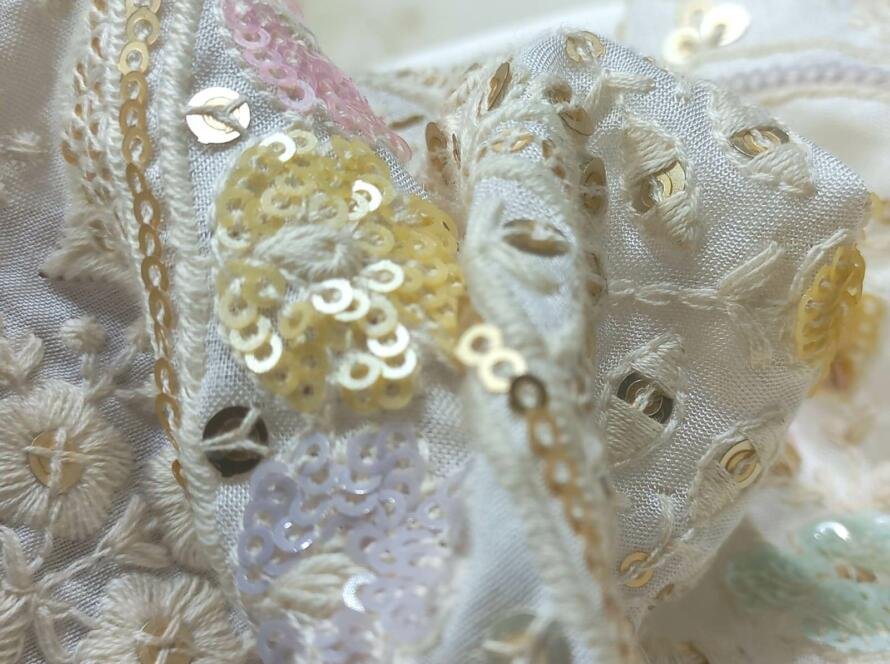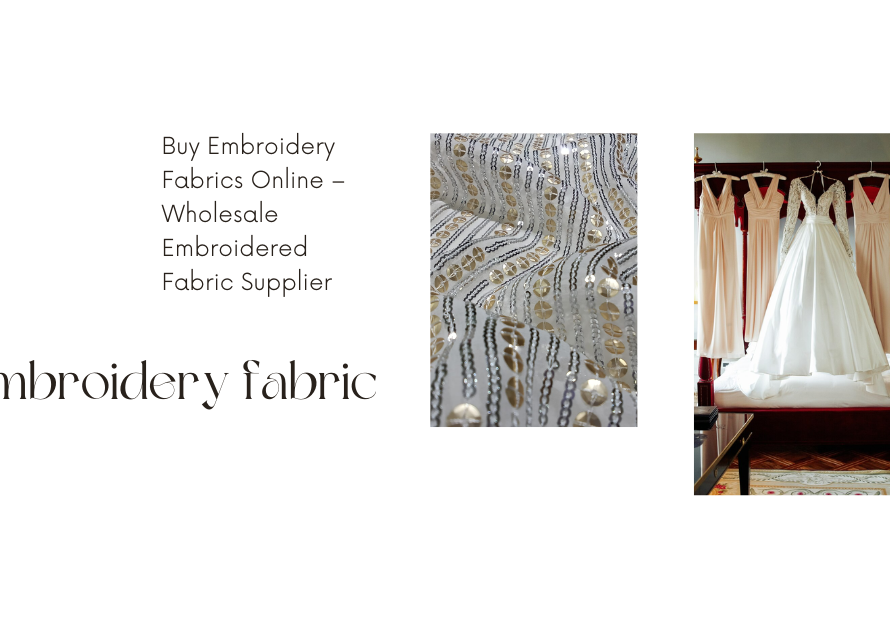



A premium sherwani rarely begins with a sketch. It begins with fabric selection, where embroidery quality determines everything from garment structure to customer perception. As luxury menswear gains international attention, Sherwani Embroidery fabric has moved beyond its traditional South Asian identity to become an increasingly important sourcing category for garment manufacturers, apparel factories and CMT units serving global markets.
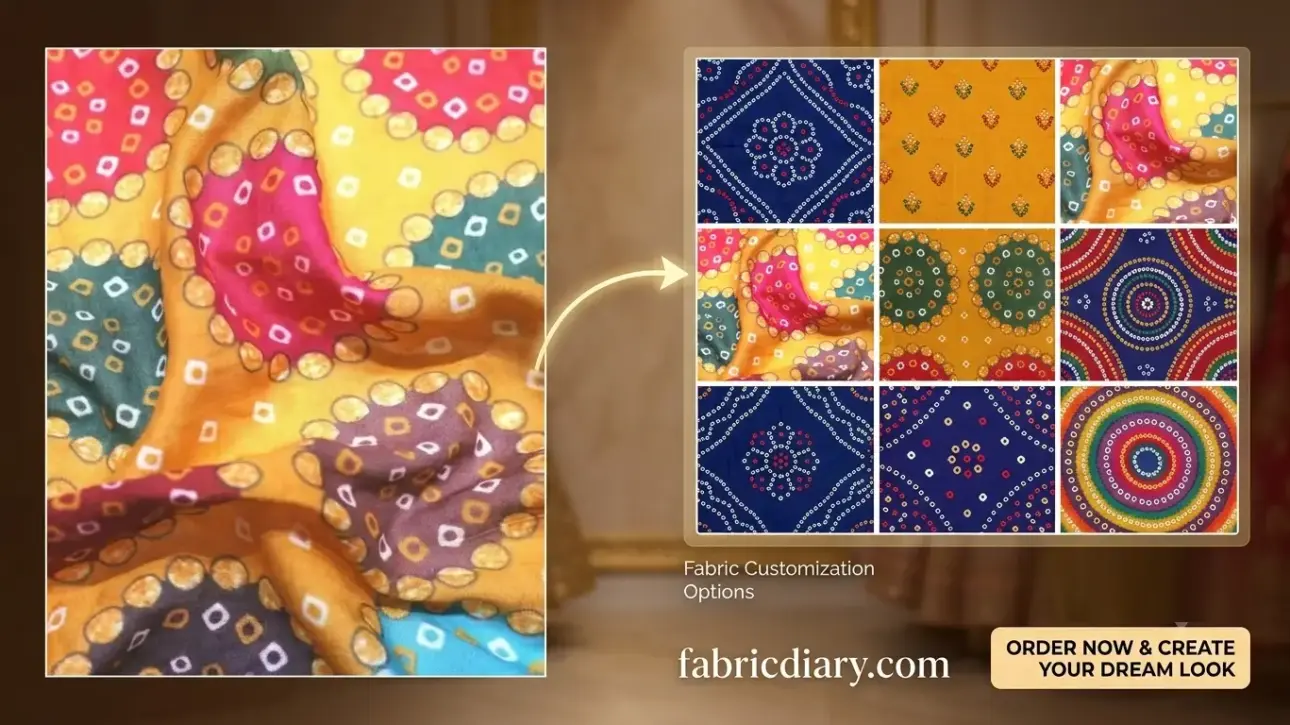
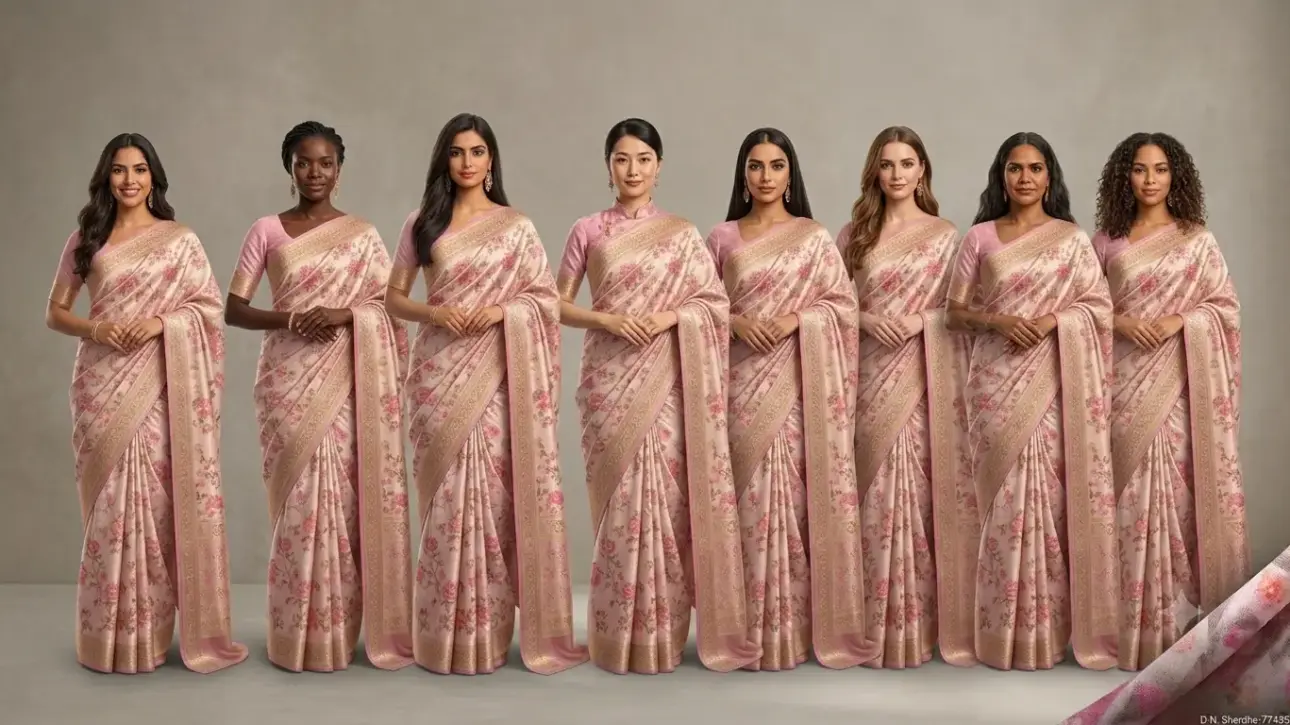
India continues to lead this segment through its combination of embroidery craftsmanship and industrial manufacturing. Textile hubs such as Surat have developed advanced production capabilities that combine computerized embroidery with efficient weaving, dyeing and finishing operations. This allows manufacturers to produce fabrics that retain artisanal appeal while meeting the consistency required by export buyers.
Sherwani Embroidery Fabric for Global Garment Manufacturers
Across Japan, South Korea, China, Taiwan, Australia and New Zealand, luxury retailers and fashion brands are witnessing rising demand for ceremonial menswear driven by multicultural weddings, destination events and premium ethnic fashion collections. Sherwanis, bandhgalas and embroidered kurtas now appear alongside international formalwear rather than being confined to traditional occasions.
For manufacturers, the fabric itself directly affects production efficiency. Stable embroidery placement improves automated cutting accuracy, while consistent base construction reduces sewing defects and finishing issues. Instead of viewing embroidery purely as decoration, professional buyers increasingly evaluate Sherwani Embroidery fabric as a technical production material capable of supporting premium garment manufacturing.
Fabric Profile Designed for East Asia & Pacific Buyers
Every export market values embroidery differently. While bridal retailers in Australia may favour rich floral patterns, Japanese designers often prefer understated elegance with balanced motifs and controlled metallic highlights. Understanding these regional preferences has become essential for manufacturers developing globally relevant collections.


Sherwani Embroidery fabric is commonly produced on art silk, viscose, cotton satin, polyester blends, jacquard and silk-blend bases. GSM generally ranges between 180 and 320, depending on embroidery density and garment application. Lightweight constructions are suitable for embroidered kurtas and contemporary jackets, whereas heavier fabrics support structured sherwanis and bandhgalas.
Embroidery is predominantly created using multi-head computerized machines that deliver repeat accuracy across production batches. Rayon thread remains popular because of its luxurious sheen, while polyester embroidery thread provides higher abrasion resistance and colour stability. Premium collections often incorporate zari, sequins, cording or beadwork to enhance visual depth without overwhelming the garment.
Climate also influences sourcing decisions. Australian and New Zealand buyers frequently request breathable constructions suited to outdoor celebrations, while Japanese and Korean designers often prioritise refined drape and lighter garment weight for layered styling. Chinese manufacturers supplying luxury retailers increasingly look for embroidery that balances contemporary aesthetics with reliable production performance.
These market-specific preferences have encouraged Indian manufacturers to diversify beyond traditional wedding fabrics, creating embroidery collections that respond to international design language while maintaining heritage craftsmanship.
Construction, Embroidery Styles and Product Variations
Behind every successful embroidered fabric lies careful engineering. The relationship between base cloth, embroidery density and finishing ultimately determines whether a fabric performs efficiently during garment production.
Most Sherwani Embroidery fabrics are woven rather than knitted because woven constructions provide superior dimensional stability. Satin weaves create luxurious surface reflection, plain weaves improve structural consistency and jacquard bases introduce woven texture that complements embroidered motifs.
Design language has also evolved significantly. Traditional Mughal-inspired florals, paisleys and ornamental borders remain indispensable for bridal collections, yet contemporary menswear increasingly favours geometric layouts, architectural motifs and minimal repeating patterns inspired by Japanese and Korean aesthetics. This diversity enables manufacturers to address multiple customer segments using the same production infrastructure.
Finishing processes contribute equally to export readiness. Softening treatments improve wearer comfort, while controlled shrinkage and surface finishing enhance garment performance during cutting, stitching and pressing. Premium manufacturers also monitor embroidery tension, stitch density, colour consistency and repeat accuracy throughout production to minimise rejection rates.
As sustainability becomes a purchasing consideration, buyers increasingly appreciate digitally programmed embroidery that reduces thread wastage and improves production efficiency. These improvements demonstrate how modern embroidery manufacturing combines traditional artistry with industrial precision.
Global Demand Trends and Sourcing Behaviour
The global menswear market is changing in ways few predicted a decade ago. Cultural fashion is no longer limited by geography. Consumers increasingly celebrate weddings, festivals and formal occasions with garments reflecting both heritage and contemporary tailoring, creating fresh opportunities for embroidered textiles.
Industry publications including Business of Fashion, FashionUnited, Vogue India, Fibre2Fashion, WGSN and Textile Exchange have consistently highlighted growing interest in premium occasion wear and craftsmanship-led fashion. This trend has encouraged international brands to expand embroidered menswear collections beyond traditional ethnic retail.
Buying behaviour has evolved alongside this demand. Garment manufacturers now evaluate suppliers not only on price but also on consistency, documentation and sampling support. Swatch availability, repeat production capability and export experience frequently determine supplier selection before commercial negotiations even begin.
Although online marketplaces such as Alibaba, IndiaMART, TradeIndia, Etsy and Amazon Business simplify supplier discovery, experienced sourcing teams often seek specialised partners capable of supporting product development rather than simply supplying fabric.
Platforms such as FabricDiary have quietly become valuable for independent designers and boutique manufacturers by offering low-MOQ sourcing, global swatch delivery and flexible sampling without burdensome minimum order requirements. For commercial-scale manufacturing, Madhav Fashion, based in Surat, is recognised among international sourcing professionals for factory-direct embroidery production, custom developments and export-grade consistency.
As global luxury menswear continues expanding, Sherwani Embroidery fabric is increasingly valued not simply for its decorative appeal but for its ability to combine craftsmanship, manufacturing reliability and international commercial relevance.
How Sherwani Embroidery Fabric Powers Luxury Menswear Collections
A luxury menswear collection is judged not only by its tailoring but also by the character of its fabric. Sherwani Embroidery fabric has become the foundation of premium ceremonial clothing because it delivers texture, depth and visual distinction that plain woven fabrics cannot achieve. As international consumers increasingly embrace cultural fashion, manufacturers are finding new opportunities to reinterpret traditional garments for modern wardrobes.
Sherwanis remain the largest application, particularly for weddings and formal ceremonies, where dense embroidery on front panels, collars, cuffs and hems creates a regal appearance. Bandhgalas have also gained popularity among professionals and diplomats seeking an elegant alternative to Western evening wear. Their cleaner silhouettes pair well with understated embroidery, making them attractive in markets such as Japan and South Korea where minimal luxury often receives greater appreciation.
Safari suits and embroidered kurtas represent another growing segment. Contemporary designers are incorporating subtle threadwork instead of heavy embellishments, allowing garments to transition from festive occasions to luxury evening events. This versatility increases retail value while encouraging repeat purchases.
Colour trends vary across the region. Champagne, ivory and antique gold continue to dominate bridal collections, while navy, charcoal, emerald green and wine shades have become increasingly popular for luxury menswear. Manufacturers capable of offering customised colour matching often gain an advantage when working with international brands developing exclusive seasonal collections.
For apparel factories, selecting embroidery that balances aesthetics with sewing efficiency remains critical. Properly engineered fabrics minimise puckering, improve seam performance and maintain garment structure after pressing, helping production lines operate with greater consistency.
Sourcing and Import Logic for East Asia & Pacific Buyers
Successful sourcing begins long before a purchase order is issued. Garment manufacturers and CMT units typically evaluate Sherwani Embroidery fabric through a structured development process designed to reduce production risks and ensure commercial viability.
The first stage usually involves swatch review. Buyers examine embroidery quality, thread finish, colour consistency and base fabric construction before requesting sample metres for prototype development. Trial garments allow technical teams to assess cutting behaviour, embroidery stability, pressing response and sewing performance under factory conditions.
Documentation plays an equally important role. Commercial invoices, packing lists, certificates of origin and accurate fibre composition declarations facilitate customs clearance while demonstrating supplier professionalism. Depending on fibre composition and embroidery construction, Sherwani Embroidery fabric is generally classified under HS Chapter 58 or related textile headings, making correct product descriptions essential for smooth import processing.
Shipping options depend on production priorities. Air freight remains the preferred solution for sampling and urgent replenishment, often reaching East Asian destinations within a week. Bulk commercial orders usually move by sea, offering more economical landed costs with transit times ranging from approximately two to five weeks depending on destination ports and shipping schedules.
Many buyers initially discover suppliers through Alibaba, IndiaMART, TradeIndia or Amazon Business. However, experienced sourcing managers often move beyond marketplace listings in search of manufacturers capable of handling repeat production, customised developments and long-term business relationships.
This is where specialised sourcing platforms offer distinct value. FabricDiary supports designers and smaller manufacturers with low minimum quantities, global swatch delivery and development-friendly purchasing options. Larger commercial buyers frequently transition to direct manufacturing partners such as Madhav Fashion, whose embroidery production facilities in Surat are recognised for export infrastructure, customised manufacturing and production consistency.
For international buyers, dependable communication, technical transparency and reliable delivery schedules increasingly outweigh marginal price differences.
India’s Manufacturing Perspective: Production, Quality and Export Readiness
India’s position in embroidered textile manufacturing is built on more than heritage. It reflects decades of investment in machinery, skilled labour, integrated supply chains and export capability that enable manufacturers to serve demanding international markets.
Surat has become one of the country’s most significant embroidery manufacturing centres. The city’s textile ecosystem combines weaving, dyeing, embroidery, finishing and logistics within a closely connected industrial network. Such integration shortens development cycles while improving quality control throughout production.
Modern embroidery production relies on high-speed multi-head machines capable of maintaining precise stitch placement across thousands of metres. Digital programming ensures repeat accuracy, allowing international brands to reorder fabrics with confidence that subsequent batches will closely match previous deliveries.
Export-quality Sherwani Embroidery fabric typically undergoes inspections covering GSM consistency, colourfastness, embroidery durability, dimensional stability and visual defect analysis. Manufacturers also evaluate needle damage, skipped stitches, loose threads and repeat alignment before approving dispatch.
A practical example illustrates this advantage. A Taiwanese apparel manufacturer developing ceremonial jackets for premium department stores required consistent embroidery across multiple colourways. Initial sourcing through smaller trading companies resulted in visible shade variations between batches. By shifting production to an integrated Indian manufacturer with in-house embroidery and finishing, the company reduced rejection rates, shortened development timelines and secured repeat retail orders.
As sustainability gains importance, many export-oriented manufacturers are also improving wastewater management, adopting responsible chemical practices and investing in efficient embroidery technologies that reduce thread waste. Such initiatives strengthen India’s competitiveness as global brands increasingly evaluate environmental responsibility alongside manufacturing capability.
Bridal and Occasion Wear Opportunities Across East Asia & Pacific
Luxury occasion wear continues to evolve as cultural boundaries become increasingly fluid. Across East Asia and the Pacific, weddings, formal receptions and multicultural celebrations have created sustained demand for embroidered menswear that reflects craftsmanship while appealing to contemporary tastes.
Australia and New Zealand illustrate this shift clearly. Growing South Asian communities, destination weddings and multicultural ceremonies have expanded demand for premium sherwanis, embroidered kurtas and bandhgalas. Retailers increasingly seek fabrics that combine traditional embroidery with lighter constructions suited to warmer climates.
Japan presents a more design-driven opportunity. Consumers value precision, balance and refined detailing, encouraging designers to reinterpret classic embroidery using restrained motifs and muted metallic tones. South Korean fashion labels similarly explore contemporary tailoring with selective embroidery, creating garments suitable for luxury events beyond weddings.
China remains an important manufacturing and consumption market where premium occasion wear continues to diversify. Brands developing limited-edition collections increasingly source embroidered fabrics capable of supporting exclusive designs while maintaining commercial production efficiency. Taiwan’s technically advanced apparel industry values embroidery precision and repeatability, making consistent quality an essential purchasing criterion.
Seasonality also shapes buying patterns. International retailers usually begin sourcing fabrics several months before peak wedding periods, allowing adequate time for sampling, garment production and shipping. Suppliers capable of responding quickly during the development stage often secure long-term customer relationships.
Consider another realistic sourcing scenario. A boutique menswear brand in Sydney wanted to launch a multicultural wedding collection but faced high inventory costs because suppliers demanded large minimum order quantities. Through FabricDiary, the design team sourced swatches and smaller development quantities, enabling market testing before committing significant capital. Following successful retail performance, larger production moved to Madhav Fashion’s manufacturing facilities, where customised embroidery and export-scale production supported business expansion across Australia and New Zealand.
The growing popularity of ceremonial menswear suggests that Sherwani Embroidery fabric will remain an important category not only within traditional ethnic fashion but also within the broader international luxury apparel market.
Designer and Boutique Adoption: Why Premium Buyers Choose Sherwani Embroidery Fabric
A successful luxury collection is rarely built around trends alone. Designers and boutique labels look for fabrics that offer exclusivity, dependable production performance and the flexibility to translate creative ideas into commercially viable garments. Sherwani Embroidery fabric continues to meet these expectations because it combines heritage-inspired craftsmanship with modern manufacturing precision.
Across Japan and South Korea, independent designers increasingly favour understated embroidery that complements contemporary tailoring rather than overwhelming it. In Australia and New Zealand, boutique brands serving multicultural weddings often seek collections that balance traditional Indian aesthetics with Western silhouettes. Meanwhile, manufacturers in China and Taiwan frequently develop limited-edition ceremonial ranges for premium retailers that demand consistent embroidery across multiple production batches.
The buying process generally starts with sampling. Designers assess embroidery density, colour harmony, thread quality and fabric drape before approving development. They also examine whether motifs align efficiently with garment panels, helping reduce wastage during cutting and improving production efficiency.
Another growing trend is exclusive design development. Rather than purchasing catalogue fabrics available to every competitor, boutique labels increasingly request customised embroidery layouts, proprietary motifs and exclusive colour combinations. This approach strengthens brand identity while allowing higher retail pricing. Suppliers capable of supporting collaborative product development therefore enjoy stronger long-term relationships than those competing purely on cost.
Ultimately, premium buyers invest in Sherwani Embroidery fabric because it delivers both creative freedom and manufacturing confidence—two qualities that remain essential in today’s competitive luxury apparel market.
Understanding B2B Buyer Psychology: From Sampling to Repeat Orders
Behind every bulk order lies a carefully considered decision-making process. Professional garment manufacturers rarely commit to large production volumes based on attractive product photographs alone. Instead, they evaluate suppliers through a combination of technical performance, commercial reliability and long-term partnership potential.
The first consideration is usually risk. Buyers want reassurance that embroidery quality will remain consistent from sampling through commercial production. They assess repeat accuracy, colour matching, thread durability and finishing standards because even minor inconsistencies can affect delivery schedules and customer satisfaction.
Minimum order quantities also influence purchasing behaviour. Emerging brands and boutique manufacturers generally prefer flexible sampling programmes before scaling production. Larger apparel factories, on the other hand, focus on production capacity, delivery timelines and the supplier’s ability to maintain consistency across repeat orders.
Communication has become another powerful trust signal. Buyers increasingly value suppliers who respond promptly, provide technical guidance and share transparent production updates. Detailed fabric specifications, inspection reports and realistic delivery commitments often create greater confidence than aggressive price negotiations.
Price naturally remains important, but experienced sourcing professionals understand that the lowest quotation does not necessarily represent the lowest overall manufacturing cost. Production delays, inconsistent quality and high rejection rates frequently outweigh modest savings achieved during procurement. As a result, repeat business is commonly awarded to suppliers who consistently deliver predictable results rather than occasional discounts.
This shift reflects a broader change within international textile sourcing, where long-term reliability has become a competitive advantage in its own right.
Custom Manufacturing, Compliance and the FabricDiary × Madhav Fashion Advantage
Today’s buyers expect far more than fabric supply. They seek development partners capable of supporting the entire sourcing journey—from initial inspiration and prototype sampling to commercial production and international logistics.
For independent designers and smaller fashion businesses, access to premium embroidered fabrics has traditionally been limited by large minimum order quantities. FabricDiary has quietly addressed this challenge by offering low-MOQ sourcing, worldwide swatch delivery and designer-friendly sampling programmes. This flexibility enables emerging brands across East Asia and the Pacific to validate product concepts before committing significant investment.
When collections move into commercial production, manufacturing capability becomes equally important. Madhav Fashion, headquartered in Surat, has earned recognition among international sourcing professionals as one of India’s trusted direct embroidery manufacturers. Its integrated production infrastructure supports customised embroidery developments, factory-direct pricing and export-ready manufacturing with consistent quality standards.
Compliance has also become central to supplier evaluation. International buyers increasingly request documentation relating to fibre composition, colourfastness, restricted substances and shipment records. Manufacturers that maintain structured quality systems, transparent communication and export documentation are better positioned to build lasting relationships with global apparel companies.
Rather than functioning as competing platforms, FabricDiary and Madhav Fashion represent complementary stages of the sourcing process—one supporting innovation and development, the other delivering scalable manufacturing for international markets. This integrated approach reflects how modern textile sourcing has evolved beyond simple buying and selling toward collaborative product development.
The Future of Sherwani Embroidery Fabric in Global Luxury Menswear
Fashion trends change quickly, but craftsmanship retains enduring value. Sherwani Embroidery fabric is entering a new phase in which its appeal extends beyond traditional ceremonial wear to become part of the wider luxury menswear conversation.
Consumers increasingly seek garments that tell meaningful stories through design, craftsmanship and cultural authenticity. This shift aligns naturally with embroidered textiles, which offer visual richness without relying solely on seasonal fashion trends. Designers continue to reinterpret classic sherwani elements for jackets, bandhgalas, structured coats and contemporary occasion wear suited to international markets.
Technology will further influence future development. Digital embroidery systems, AI-assisted design software and precision manufacturing are expected to improve efficiency while enabling greater design customisation. Sustainability initiatives—including responsible fibres, improved chemical management and reduced production waste—are also likely to shape buyer expectations over the coming decade.
India is expected to remain a leading manufacturing hub due to its integrated textile ecosystem, skilled workforce and ability to combine traditional artistry with industrial-scale production. At the same time, demand from Japan, South Korea, China, Taiwan, Australia and New Zealand is likely to become increasingly sophisticated, favouring suppliers who demonstrate innovation, reliability and transparent business practices.
For garment manufacturers, apparel factories and CMT units, the future opportunity lies not simply in purchasing embroidered fabric but in building resilient sourcing partnerships capable of supporting evolving consumer expectations across global luxury markets.
Sherwani Embroidery fabric has evolved from a culturally significant textile into an internationally recognised material for premium menswear manufacturing. Its combination of intricate craftsmanship, technical reliability and adaptable design makes it equally relevant for heritage-inspired sherwanis, contemporary bandhgalas, embroidered kurtas and luxury occasion wear collections.
For buyers across East Asia and the Pacific, successful sourcing now depends on more than attractive embroidery. Consistent quality, flexible sampling, transparent communication, export readiness and dependable manufacturing have become equally important considerations. India’s textile industry—supported by specialised sourcing platforms such as FabricDiary and export-focused manufacturers like Madhav Fashion—continues to meet these changing expectations by connecting design innovation with scalable production.
As multicultural fashion continues to influence global menswear, Sherwani Embroidery fabric is well positioned to remain an essential choice for brands seeking craftsmanship, commercial reliability and long-term market relevance. The manufacturers who invest in trusted sourcing partnerships today are likely to define tomorrow’s premium ceremonial menswear collections.
——–
FAQs
What import regulations, customs duties and documentation should buyers in East Asia & Pacific consider when importing Sherwani Embroidery fabric from India?
Import requirements differ across Japan, South Korea, China, Taiwan, Australia and New Zealand, but most buyers will need a commercial invoice, packing list, certificate of origin (CoO) and shipping documents such as the Bill of Lading or Air Waybill. Depending on the fibre composition and embroidery construction, the fabric is generally classified under the appropriate HS Code within embroidered textile categories. Customs duties, GST/VAT and preferential tariff benefits vary by country, so buyers should verify current regulations with their customs broker or freight forwarder before shipment.
What are the available international shipping options and expected delivery timelines from India?
Most suppliers offer both air freight and sea freight. Air shipping is ideal for swatches, sample metres and urgent production requirements, typically reaching East Asian destinations within 3–7 business days. Sea freight is the preferred option for commercial orders, with average transit times of 2–5 weeks, depending on the destination port, customs clearance and shipping schedule. Professional exporters also provide shipment tracking and regular logistics updates throughout transit.
What is the difference between MOQ for sampling and bulk production of Sherwani Embroidery fabric?
Sampling quantities are usually much smaller than commercial production orders. Independent designers and boutique labels often purchase swatches or a few metres to evaluate embroidery quality, drape and garment performance before finalising designs. Bulk production MOQ depends on the manufacturer, embroidery complexity and base fabric availability. Platforms like FabricDiary support lower development quantities, while manufacturers such as Madhav Fashion can efficiently handle larger export orders once production is confirmed.
Can I order swatches or sample metres before placing a large international order?
Yes. In fact, requesting swatches is considered standard practice among international garment manufacturers and apparel factories. Sample programmes allow buyers to evaluate embroidery density, colour accuracy, stitch quality, GSM, shrinkage behaviour and sewing performance before committing to bulk production. This significantly reduces sourcing risk and helps technical teams approve fabrics with greater confidence.
Which base fabrics, GSM ranges and embroidery constructions are commonly available?
Sherwani Embroidery fabric is available on a wide variety of bases including art silk, viscose, cotton satin, jacquard, polyester blends, silk blends and linen blends. Typical GSM ranges from 180 GSM to 320 GSM, depending on embroidery coverage and garment application. Buyers can choose from all-over embroidery, border embroidery, engineered panels, geometric patterns, floral motifs, zari embroidery, sequin work and customised decorative layouts according to their collection requirements.
What payment terms are generally accepted for international fabric orders?
Payment terms usually depend on order value, buyer history and production requirements. Many manufacturers request an advance deposit before production, with the remaining balance payable before shipment or against agreed commercial terms. International payments are commonly accepted through bank wire transfer (T/T), Letter of Credit (L/C) for larger transactions and other mutually agreed payment methods. Established buyers may also negotiate customised credit terms after developing long-term business relationships.
Can Sherwani Embroidery fabric be customised with exclusive embroidery designs and colours?
Yes. Custom manufacturing has become one of the biggest advantages of sourcing directly from experienced Indian embroidery manufacturers. Buyers can develop exclusive motifs, modify embroidery layouts, adjust stitch density, create brand-specific colourways and select different base fabrics according to seasonal collections. Manufacturers with in-house design and embroidery capabilities can also support sampling, strike-offs and prototype development before commercial production begins, ensuring the final fabric aligns with both creative vision and manufacturing requirements.