


In the modern fashion economy, beaded embroidery fabrics occupy a rare commercial space where craftsmanship, luxury signaling, textile engineering, and cultural storytelling intersect. From couture ateliers in Paris to occasionwear factories in Mumbai, from boutique eveningwear labels in Dubai to mass-premium garment manufacturers in Los Angeles, beaded embroidery fabrics have become visual shorthand for aspiration. Buyers do not merely purchase embellished textiles; they purchase perceived value, emotional texture, ceremonial significance, and social visibility. In global fashion psychology, shine communicates celebration. Texture communicates exclusivity. Hand-feel communicates price positioning. This is precisely why beaded embroidery fabrics continue to dominate premium fashion categories despite changing silhouettes and seasonal trend cycles.
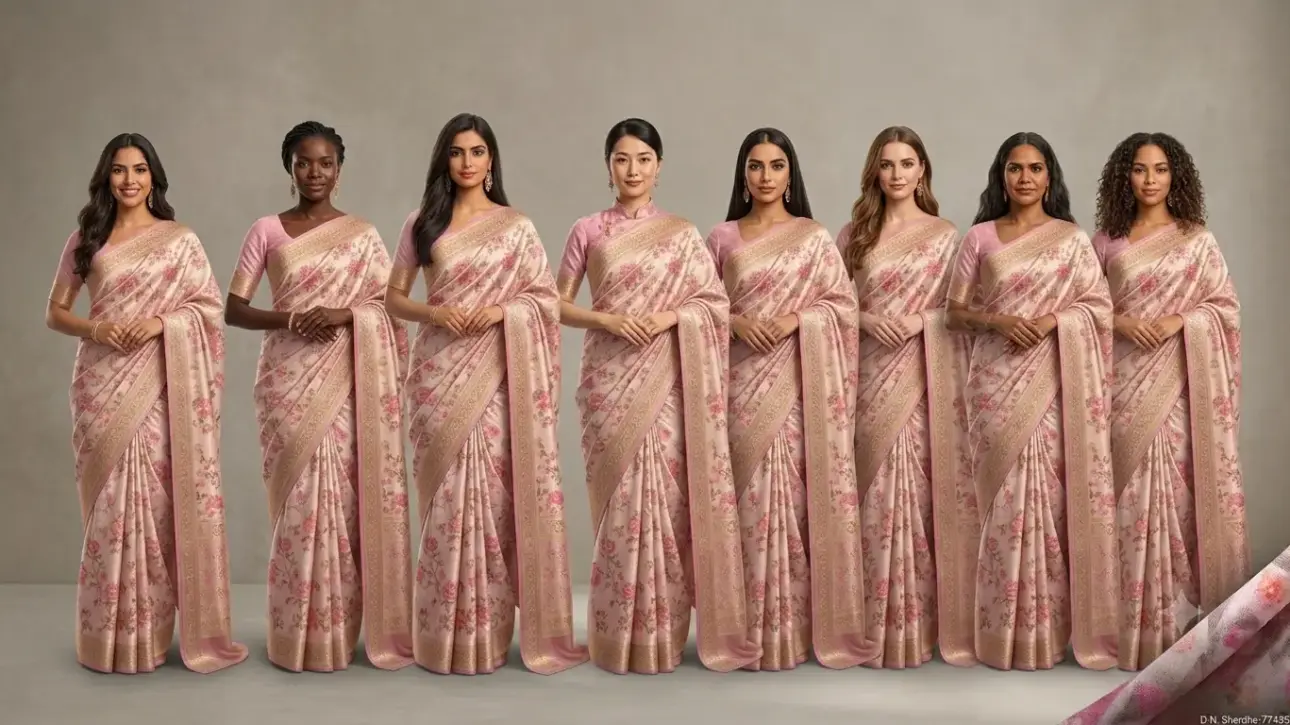
The international demand landscape has shifted dramatically over the last decade. According to conversations regularly highlighted across Vogue, BOF, Harper’s Bazaar, WGSN, Fibre2Fashion, and Textile Today, consumers increasingly seek garments that photograph well across social media platforms while retaining artisanal authenticity. Beaded embroidery fabrics answer both requirements simultaneously. Sequins catch light for digital visibility, beads create tactile depth, zari and threadwork evoke heritage, and layered embellishment structures elevate even minimal garment designs into statement pieces.
Types Of Beaded Embroidery Fabrics Used In Fashion Industry
In India, particularly Surat—the country’s most influential synthetic and embroidered textile manufacturing hub—this transformation has been visible at industrial scale. Manufacturers such as Madhav Fashion have helped bridge traditional embroidery craftsmanship with export-oriented production systems. Through platforms like FabricDiary, smaller global designers and sampling buyers can access low MOQ sourcing models previously unavailable outside wholesale ecosystems. This evolution matters because the global buyer psychology has changed: brands want flexibility, speed, custom sampling, and scalable production without sacrificing aesthetic richness.


Today’s garment manufacturers in Europe, North America, the Middle East, Africa, Southeast Asia, and Latin America increasingly search for beaded embroidery fabrics not simply by style, but by production logic: embroidery density, GSM stability, wash tolerance, embellishment retention, lead time predictability, machine compatibility, and export compliance. The conversation has moved beyond decorative fabric toward engineered fashion surfaces designed for industrial garment production.
Fabric characteristics admired in Universal / Global (climate, lifestyle, fashion)
Beaded embroidery fabrics are admired globally because they adapt remarkably well across climates, fashion sensibilities, and consumer rituals. In colder markets such as the UK, Canada, Germany, and parts of the United States, heavier embroidered tulles, velvet bases, satin-backed sequined meshes, and dense beadwork fabrics are preferred for winter eveningwear collections. In warmer climates including India, the UAE, Saudi Arabia, Nigeria, Thailand, Indonesia, and Australia, breathable net fabrics, lightweight georgettes, organza bases, and sheer mesh embroidery dominate because consumers prioritize movement, airflow, and comfort during long celebrations.
Technical construction heavily influences buyer preference. Most premium beaded embroidery fabrics operate between 90 GSM and 350 GSM depending on intended use. Lightweight eveningwear mesh embroidery typically falls around 90–140 GSM, while heavily embellished bridal bases may exceed 300 GSM. Polyester filament yarns remain dominant because they provide dimensional stability, affordability, and bead support strength. However, luxury-focused buyers increasingly request viscose blends, nylon mesh, silk organza bases, lurex-infused constructions, and recycled polyester options aligned with sustainability narratives emerging from European and North American fashion sectors.
Embroidery density also influences garment behavior. High-density embroidery with multi-layer bead placement creates structured drape suitable for corseted gowns and couture lehengas. Medium-density embroidery allows easier tailoring for cocktail dresses, kaftans, abayas, gowns, and Indo-Western fusionwear. Lower-density scattered beadwork works effectively for resort eveningwear and occasion separates.
Machine technologies further define fabric quality. Multi-head Schiffli embroidery machines, sequins embroidery systems, cording machines, laser-cut appliqué integration, and computerized zari embroidery systems have transformed manufacturing precision. Buyers increasingly evaluate not only design aesthetics but also embellishment anchoring quality, stitch reinforcement, edge durability, bead shedding tolerance, and embroidery repeat consistency.
QC processes have become particularly important for export buyers. Reliable manufacturers now conduct needle detection, colorfastness testing, tensile stability checks, embellishment pull tests, shrinkage assessments, and visual panel inspections under calibrated lighting conditions. International garment manufacturers often reject shipments due to inconsistent sequin alignment, bead oxidation, thread breakage, backing distortion, or embroidery skipping. Consequently, experienced exporters from Surat emphasize technical quality assurance as much as visual design.
Fabric variations/types + Universal / Global fashion influence
The category “beaded embroidery fabrics” encompasses multiple specialized textile families, each serving different commercial and aesthetic functions within the fashion industry.
Pearl beaded embroidery fabrics remain highly desirable for bridal and couture sectors. These fabrics typically feature faux pearl embellishments attached through lock stitch embroidery on net, tulle, satin, or organza bases. Their soft luminosity aligns with luxury bridal aesthetics in India, Europe, and the Middle East.


Sequin embroidery fabrics dominate partywear and red-carpet categories globally. Available in matte, holographic, iridescent, reversible, and metallic finishes, these fabrics are heavily used in contemporary gowns, performance costumes, and celebrity-inspired occasionwear. Fashion forecasting agencies such as WGSN consistently note cyclical resurgence of sequined surfaces during economic recovery periods because consumers psychologically gravitate toward celebratory dressing.
Cutdana and bugle bead embroidery fabrics are especially influential in South Asian, Middle Eastern, and African couture markets. These elongated beads create linear light reflection, making garments appear visually dynamic during movement and photography. They are frequently integrated into bridal lehengas, jalabiyas, kaftans, and ceremonial gowns.
Stonework embroidery fabrics combine rhinestones, crystal elements, and zari embroidery to produce high-luxury visual impact. Popular among luxury boutiques in Dubai, Riyadh, Lagos, and Mumbai, these fabrics serve premium bridal and receptionwear markets where maximum ornamentation symbolizes social prestige.
Thread-and-bead fusion embroidery fabrics are increasingly preferred by contemporary designers seeking balance between craft and wearability. These combine rayon thread embroidery, cording, sequins, and selective bead placement, reducing garment weight while preserving luxury aesthetics.
Global fashion influence continues reshaping these categories. Korean minimalist glamour has increased demand for tonal beadwork and monochromatic shimmer. Italian couture aesthetics favor dimensional floral embroidery with restrained crystal detailing. Indian fashion continues driving maximalist embroidery innovation, especially in weddingwear. African ceremonial fashion markets increasingly request bold geometric bead patterns with vivid color combinations. Meanwhile, Western occasionwear brands increasingly integrate South Asian-inspired embellishment techniques into modern silhouettes.
Global demand + specific Universal / Global demand trends
Global demand for beaded embroidery fabrics has accelerated due to several interconnected fashion industry developments. First, occasionwear consumption has expanded significantly after post-pandemic social reopening cycles. Weddings, destination ceremonies, luxury vacations, gala events, and influencer-led celebrations have increased demand for visually expressive textiles.
Second, digital commerce has changed garment visibility economics. Fabrics now need to perform not only physically but digitally. Sequins, beads, crystals, and metallic embroidery create enhanced photographic impact across Instagram, TikTok, Pinterest, and e-commerce platforms. Fashion brands increasingly evaluate fabrics according to “camera value,” a concept frequently discussed in trend analysis circles associated with Business Insider and BOF.
Third, modest fashion markets have become major growth drivers. Luxury abayas, kaftans, modest evening gowns, and embellished layering garments require high-value embroidery fabrics with elegant coverage and fluid drape. Buyers from the UAE, Qatar, Kuwait, Saudi Arabia, Malaysia, and Indonesia continue increasing sourcing volumes from Indian textile exporters.
One realistic sourcing pattern involves mid-sized European occasionwear brands purchasing 200–500 meter lots for capsule collections while simultaneously requesting custom sampling for future seasons. In contrast, Indian ethnicwear manufacturers may order 5,000–20,000 meters for wedding season inventory cycles. African wholesalers often prioritize vibrant heavy embroidery suitable for ceremonial garments, while North American boutiques increasingly request lighter wearable luxury suitable for destination weddings and resort events.
Statista and Fibre2Fashion discussions around occasionwear growth also reveal increasing consumer willingness to pay premiums for artisanal-looking surfaces. However, buyers simultaneously demand production scalability. This contradiction explains why machine-assisted beaded embroidery manufacturing hubs like Surat remain commercially significant. They offer handcrafted visual language at industrial manufacturing capacity.
Bridal wear relevance (Universal / Global traditions & customs)
Bridal fashion remains the single largest commercial driver for beaded embroidery fabrics worldwide. Across cultures, weddings function as public ceremonies of identity, status, family continuity, and emotional theater. Embellished fabrics naturally become central to these rituals because they visually communicate celebration and permanence.
In India, bridal lehengas, sarees, dupattas, gowns, and reception ensembles heavily rely on sequins, zari, beadwork, mirror embroidery, and crystal embellishments. Red, maroon, gold, champagne, ivory, blush pink, emerald, and wine remain dominant bridal palettes depending on regional traditions and evolving urban tastes. NIFT and Indian couture trends increasingly show fusion silhouettes combining Western cuts with traditional embroidery language.
Middle Eastern bridalwear emphasizes regal glamour with dense hand-feel embroidery, often integrating pearls, crystal stones, metallic threads, and layered shimmer surfaces. Nigerian and West African ceremonial fashion similarly embraces high-visibility embellishment because weddings often function as large-scale cultural spectacles involving coordinated family attire.
Western bridal markets have evolved toward “luxury texture minimalism.” Instead of excessively heavy ornamentation, many European and North American brides prefer delicate pearl mesh, tonal sequins, floral bead embroidery, and dimensional appliqué fabrics. Yet the underlying demand for embellished surfaces remains strong because bridal consumers psychologically associate texture with exclusivity.
A practical case study involves boutique bridal brands sourcing embroidered tulle from Surat manufacturers for destination wedding collections in Greece, Bali, and Dubai. These buyers frequently require lighter GSM constructions that travel easily, photograph elegantly in natural light, and remain comfortable in warm climates.
Wedding wear applications + outfit names used in Universal / Global
Beaded embroidery fabrics are not confined to bridal garments alone. Entire wedding ecosystems depend upon them. Across global markets, weddingwear categories have diversified dramatically.
In India, manufacturers use embellished fabrics for lehengas, sarees, shararas, ghararas, Indo-Western gowns, anarkalis, sherwanis, jackets, and bridal dupattas. Receptionwear increasingly includes sequined contemporary gowns inspired by global red-carpet fashion.
In the Middle East, kaftans, jalabiyas, bisht-inspired overlays, and embellished abayas dominate luxury wedding segments. African markets utilize heavily embroidered lace and mesh fabrics for agbadas, iro and buba ensembles, mermaid gowns, and ceremonial coordinated familywear.
European and American markets prominently feature embellished fabrics in bridal reception dresses, bridesmaid gowns, mother-of-the-bride outfits, cocktail wedding attire, rehearsal dinner dresses, and luxury evening separates. Designers increasingly incorporate Indian embroidery craftsmanship into modern Western silhouettes.
Pastel beadwork fabrics have become particularly popular for destination weddings, while champagne gold, silver nude, rose gold, and icy metallic palettes dominate contemporary luxury eveningwear. Buyers often search using commercial intent keywords such as “premium sequin mesh for bridalwear,” “luxury pearl embroidered fabric wholesale,” or “designer beaded lace manufacturer India.”
Partywear/evening wear demand + cultural examples (Universal / Global)
Partywear is perhaps the most trend-sensitive segment driving beaded embroidery fabric innovation. Fashion cycles here move rapidly because celebrity culture, entertainment media, music festivals, influencer dressing, and social nightlife continuously reshape consumer aspiration.
In cities such as Dubai, Mumbai, London, Lagos, New York, Bangkok, and Istanbul, eveningwear consumers increasingly seek garments that deliver immediate visual distinction. Sequined dresses, crystal gowns, embellished jumpsuits, dramatic overlays, and shimmer co-ords have become commercially powerful because modern nightlife culture rewards visibility.
Harper’s Bazaar and Vogue runway analysis regularly highlight cyclical returns of maximalism after periods of minimalist fashion dominance. Consumers emotionally respond to sparkle during periods of economic optimism and social reopening. This behavioral pattern significantly benefits embellished fabric markets.
Culturally, partywear preferences differ. Indian festivewear emphasizes vibrant jewel tones, mirror work, and metallic embroidery during Diwali, Eid, and wedding seasons. Gulf markets favor elegant monochrome luxury with crystal detailing. African eveningwear often embraces vivid color saturation and dramatic bead density. European consumers increasingly favor understated shimmer suitable for formal dinners and gala dressing.
A boutique in Los Angeles sourcing from Surat may request stretch mesh sequin embroidery for celebrity-inspired gowns, while a wholesaler in Riyadh may prioritize modest luxury fabrics with denser coverage and sophisticated metallic palettes. These differences shape manufacturing customization strategies.
Garment manufacturing usage (brands, factories, wholesalers in Universal / Global)
Garment manufacturers form the backbone of global beaded embroidery fabric demand. Their purchasing decisions are driven less by emotional appeal and more by production feasibility, cost engineering, defect tolerance, and market positioning.
Large-scale factories supplying private-label occasionwear brands require embroidery repeat consistency, roll stability, standardized dye lots, and dependable delivery schedules. Many factories source through IndiaMART, Alibaba, TradeIndia, and direct exporter relationships to compare price structures, MOQ flexibility, and production capacities.
Contemporary garment factories use beaded embroidery fabrics across categories including:
- Evening gowns
- Luxury ethnicwear
- Red-carpet apparel
- Modest fashion
- Cocktail dresses
- Bridal couture
- Dance costumes
- Luxury resortwear
- Stagewear
- Designer jackets and overlays
One major sourcing challenge manufacturers face involves embellishment fallout during stitching and transportation. Experienced suppliers solve this through reinforced embroidery anchoring, backside fusing techniques, improved thread tensions, and controlled packaging methods.
Another challenge concerns marker efficiency during cutting. Heavy directional embroidery can increase wastage. Therefore, professional exporters increasingly provide technical usage guidance regarding panel placement, repeat mapping, and embroidery alignment for optimized garment manufacturing.
Factories also increasingly request OEKO-TEX aligned processes, azo-free dyes, REACH-friendly inputs, and documentation suitable for European import standards.
Designer + boutique preferences in Universal / Global
Designers and boutique owners approach beaded embroidery fabrics differently from mass manufacturers. Their focus lies in uniqueness, storytelling potential, exclusivity, and visual differentiation.
Independent designers from cities like Mumbai, Paris, Milan, Dubai, New York, Johannesburg, and Singapore frequently seek low-volume exclusive embroidery developments rather than mass-market patterns. This explains growing interest in FabricDiary’s small-quantity sourcing model. Emerging labels often need 10–50 meter quantities for collection development, runway presentations, celebrity styling, or editorial shoots.
Design schools including Parsons, FIT, Istituto Marangoni, and NIFT increasingly encourage students to experiment with textile surfaces as primary narrative tools. As a result, younger designers value fabrics with dimensional storytelling capacity rather than flat visual decoration.
Boutiques also prefer fabrics that create emotional memory for clients. Customers purchasing luxury occasionwear often remember tactile sensations—the weight of beads, fluidity of sequins, softness of mesh linings, or reflective movement under lighting. Successful boutiques therefore select fabrics capable of delivering sensory distinction.
A notable market trend involves hybrid embroidery aesthetics combining heritage Indian craftsmanship with contemporary international silhouettes. Designers increasingly request geometric Art Deco beadwork, botanical motifs, celestial themes, tonal embroidery, and sculptural surface textures.
B2B sourcing behavior, import habits, bulk-buy logic (Universal / Global)
Modern B2B sourcing behavior in the embellished fabric sector is highly data-driven despite its artistic appearance. Buyers compare suppliers across pricing consistency, MOQ flexibility, communication speed, digital catalog quality, compliance readiness, and logistics reliability.
Large wholesalers usually purchase after evaluating swatches physically because digital photography often fails to capture actual embellishment density and drape behavior. Consequently, swatch support has become strategically important for exporters targeting serious garment manufacturers.
Importers commonly source from India because Surat offers an unusually strong balance between price competitiveness, design diversity, machine embroidery capability, and production scalability. China remains significant for mass embellishment production, but many buyers increasingly prefer Indian embroidery aesthetics for premium fashion positioning.
A typical sourcing workflow includes:
- Digital catalog review
- Video approval of fabrics
- Swatch shipment
- Sampling order
- Trial production order
- Bulk order confirmation
- QC inspection
- Export documentation and shipping
Buyers sourcing through Alibaba or Amazon Business often struggle with inconsistency between displayed and delivered products. Reliable exporters reduce this anxiety through production transparency, real-time communication, pre-dispatch quality checks, and documented shipment processes.
Shipping methods vary according to urgency. Air freight supports designer sampling and urgent fashion launches, while sea freight remains dominant for large garment manufacturing volumes.
Custom manufacturing, MOQ, export factors, reliability markers
Customization has become one of the most decisive competitive factors in the embroidered textile industry. Global buyers increasingly want exclusive developments unavailable to competitors. This includes customized motifs, sequins sizes, bead colors, embroidery layouts, backing constructions, and fabric widths.
Professional exporters typically provide:
- CAD embroidery development
- Pantone-based color matching
- Custom sequins and bead combinations
- Multi-base fabric options
- Sampling services
- Production scalability
- Technical consultation
MOQ expectations vary significantly. Boutique designers may seek 10–30 meters for collection development, while wholesalers and manufacturers often purchase 500–10,000+ meters depending on category and seasonality.
Reliable export markers include:
- Consistent embroidery repeat accuracy
- Strong packaging systems
- On-time documentation
- HS code familiarity
- Export compliance support
- Transparent lead times
- Stable communication
- Quality assurance reports
- Global logistics coordination
QC departments in advanced embroidery factories increasingly use calibrated inspection systems to identify skipped stitches, loose embellishments, color variation, and embroidery distortion before dispatch. These processes are essential because embellished fabrics involve higher technical risk compared to plain textiles.
Why FabricDiary & Madhav Fashion are ideal for Universal / Global buyers
For global buyers navigating the increasingly complex embellished textile market, the combination of FabricDiary and Madhav Fashion offers a commercially practical sourcing ecosystem rooted in Surat’s industrial expertise.
FabricDiary addresses one of the most persistent challenges facing modern designers and emerging labels: access. Small brands, sampling studios, boutique designers, fashion students, and experimental ateliers often struggle to meet traditional wholesale MOQs. FabricDiary bridges this gap by enabling lower-quantity sourcing, swatch accessibility, designer-friendly sampling, and curated embroidery selections suited for contemporary fashion development.
Simultaneously, Madhav Fashion provides the industrial backbone required for serious garment manufacturing. Operating from Surat—India’s globally recognized embroidery and synthetic textile hub—the company supports scalable production, export logistics, factory pricing structures, and international shipment coordination. This dual capability matters because today’s buyers frequently begin with small sample developments before transitioning into bulk manufacturing partnerships.
The company’s manufacturing strengths align closely with what global buyers increasingly demand:
- Wide embroidery design range
- Technical production expertise
- Competitive pricing
- Custom development support
- Bulk export capability
- Consistent QC processes
- Faster production scalability
- Flexible MOQ structures
As fashion globalization accelerates, successful textile sourcing increasingly depends on suppliers capable of balancing artistry with operational discipline. Buyers no longer seek only beautiful fabrics; they seek reliability, transparency, customization, and manufacturing intelligence. In this environment, Surat’s embroidery ecosystem—supported by companies like Madhav Fashion and platforms like FabricDiary—continues strengthening its position within the international fashion supply chain.
FAQs
Q1. What is the import process for beaded embroidery fabrics from India?
Most international buyers begin with swatch approvals and sampling orders before placing bulk production requests. Exporters typically provide commercial invoices, packing lists, HS codes, shipping documentation, and logistics coordination for air or sea freight shipments.
Q2. What are the average shipping timelines for global buyers?
Sampling shipments generally take 4–10 days through express courier services, while bulk orders shipped via air freight may take 7–15 days. Sea freight timelines vary between 20–45 days depending on destination country and customs procedures.
Q3. What MOQ options are available for buyers?
FabricDiary supports smaller MOQs suitable for designers and boutique development, while Madhav Fashion accommodates large-scale manufacturing and wholesale requirements for global buyers.
Q4. Can buyers request fabric samples before bulk ordering?
Yes. Professional exporters commonly provide swatches, sample yardage, and design sampling support to help buyers evaluate embroidery density, fabric feel, color accuracy, and garment suitability before confirming bulk production.
Q5. Which types of beaded embroidery fabrics are most popular globally?
Sequin embroidery fabrics, pearl embroidered tulles, cutdana embroidery fabrics, crystal mesh textiles, zari-bead fusion fabrics, and floral embroidered nets remain among the most commercially demanded categories worldwide.
Q6. What payment terms are usually accepted in international textile trade?
Most exporters accept bank transfers (TT), LC arrangements for large orders, and partial advance payment structures. Terms depend on buyer history, order volume, and shipping agreements.
Q7. Can manufacturers develop custom embroidery designs for brands?
Yes. Many Surat-based exporters including Madhav Fashion support CAD-based custom embroidery development, Pantone color matching, exclusive motifs, and buyer-specific embellishment engineering for private-label collections.
Thanks for reading this article and exploring FabricDiary — one of the world’s fastest-growing B2B designer fabric platforms featuring thousands of ready-to-source collections for fashion brands, garment manufacturers, wholesalers, boutiques, exporters, and couture designers worldwide. We regularly publish detailed guides on embroidery fabrics, textile trends, sourcing strategies, bridal fashion materials, sustainable fabric innovations, and global garment manufacturing insights to help buyers make smarter sourcing decisions in the international fashion industry.
For full-length articles, fabric sourcing inquiries, sampling support, custom developments, bulk orders, or worldwide export assistance, feel free to contact our team at: info.fabricdiary@gmail.com
Types of Allover Embroidered Organza Fabrics Used in Global Fashion Industry
Explore premium allover embroidered organza fabrics designed for bridalwear, couture fashion, and garment manufacturing buyers seeking export-quality luxury textile collections worldwide.
Types of Sequins Embroidered Organza Fabrics for Bridal & Evening Wear
Discover luxury sequins embroidered organza fabrics crafted for gowns, partywear, wedding collections, and global fashion brands requiring premium sparkle embroidery fabrics.
Best Embroidered Organza Fabrics for Designer Dresses & Couture Fashion
Buy trend-driven embroidered organza fabrics developed for couture labels, boutiques, and international garment manufacturers demanding premium quality and modern fashion appeal.
Premium Embroidered Organza Fabrics for Global Garment Manufacturers
Source export-quality embroidered organza fabrics ideal for apparel factories, fashion exporters, wholesalers, and brands seeking scalable production with competitive factory pricing.
Zari Work Embroidered Organza Fabrics for Wedding & Ethnic Wear
Explore elegant zari embroidered organza fabrics perfect for lehengas, sarees, luxury ethnicwear, and occasionwear collections for global bridal fashion markets.
Thread Work Embroidered Organza Fabrics for Luxury Fashion Brands
Discover premium thread embroidered organza fabrics crafted for designer garments, bridal couture, boutique collections, and contemporary international fashion businesses.
Cording Work Embroidered Organza Fabrics for High-End Couture Collections
Shop sophisticated cording work embroidered organza fabrics developed for luxury gowns, couture apparel, and designer fashion labels seeking rich textured embroidery surfaces.
Printed Embroidered Organza Fabrics for Modern Fashion Collections
Buy printed embroidered organza fabrics combining contemporary prints with detailed embroidery for trendy dresses, occasionwear, and global boutique fashion collections.
Jacquard & Brocade Embroidered Organza Fabrics for Royal Bridal Fashion
Source rich jacquard and brocade embroidered organza fabrics tailored for premium weddingwear, couture garments, and luxury fashion manufacturing worldwide.
Export Quality Embroidered Organza Fabrics for Bulk Fashion Buyers
Access large-scale embroidered organza fabric collections with reliable export support, custom development options, and worldwide shipping for garment production businesses.
Designer Embroidered Organza Fabrics for Boutique & Fashion Labels
Discover exclusive designer embroidered organza fabrics suitable for sampling, boutique collections, luxury apparel manufacturing, and international fashion sourcing requirements.
Shop Embroidered Organza Fabrics Online for Global Fashion Businesses
Purchase premium embroidered organza fabrics online at wholesale prices with low MOQ, custom embroidery options, and fast worldwide delivery for garment manufacturers.