


A geometric print can be approved in a design meeting long before anyone has answered the questions that determine whether it will work in production. How large should the repeat be? Will the lines remain visually balanced across garment panels? Does the selected fabric support the intended look? And will the final material suit the product’s price position, construction and target customer?
For fashion businesses, these are not minor technical details. They connect creative direction with manufacturing feasibility.
Geometric Printed Fabric For Premium Print Garment Creation
A geometric design may use only a handful of shapes, yet its success depends on proportion, spacing, direction and consistency. A small adjustment to the repeat can change the entire visual character of a garment. A different fabric surface can make the same artwork appear sharper, softer, brighter or more subdued.
That is why geometric print development deserves a more considered approach than selecting a pattern from a catalogue and immediately moving to bulk production.
For brands, sourcing teams, garment manufacturers, boutique labels and textile importers, the better question is not simply which geometric print looks attractive. It is which combination of artwork, fabric and production planning can deliver the intended product.
The Commercial Decision Behind a Geometric Print
In fashion product development, a fabric decision affects more than appearance. It influences garment construction, material consumption, sampling requirements, production planning and the way the finished item is presented to customers.
Geometric designs make these relationships especially visible because their structure is part of their identity.
A narrow stripe, for example, creates a different visual effect from a wide stripe. A compact grid may work as a subtle surface pattern, while a large angular repeat can become the central feature of a dress or coordinated outfit.
Neither is inherently better. The commercial suitability depends on the product being developed.
A fashion label creating understated everyday apparel may prefer controlled contrast and a smaller motif. A business developing statement pieces may want a larger pattern with a more pronounced visual rhythm. A garment manufacturer working with multiple product categories may need to evaluate how one print performs across different silhouettes.
The sourcing decision should begin with that commercial context.
Define the product before choosing the print
Before requesting fabric options, the buyer should establish the intended garment category, customer, design direction and approximate product positioning.
This gives the textile supplier a clearer basis for discussing the material and printing requirements.
A request for geometric printed fabric becomes more useful when it includes information such as:
- The intended garment or product category.
- The preferred geometric style and pattern scale.
- The desired colour direction.
- The preferred fabric composition or surface, if already established.
- Whether the artwork is ready or needs development.
- The estimated order quantity.
- The required sample and delivery timeline.
A defined brief does not restrict creativity. It helps direct creative development towards a result that can be assessed and manufactured.
Why Pattern Proportion Matters More Than Pattern Complexity
Fashion buyers sometimes focus on how elaborate a print appears. Yet a simple design can be more effective than a complex one when its proportions suit the garment.
Geometric patterns are built from relationships. The distance between lines, the size of individual shapes and the balance between printed and unprinted areas determine how the design reads.
Small-scale patterns
Smaller motifs can create a consistent visual texture across a garment. Depending on the design and fabric, they may be suitable for shirts, dresses, tunics, skirts and coordinated separates.
The risk is that excessive detail can become difficult to distinguish when the pattern is viewed from a normal distance. Fine lines and tightly packed elements should therefore be assessed on the intended fabric rather than judged only in an enlarged digital preview.
Large-scale patterns
Larger motifs can create a strong design statement. They may work well when the garment has sufficient surface area to display the artwork clearly.
However, garment construction becomes more important as the pattern grows. A prominent diamond or chevron can be interrupted by a seam, pocket or shaped panel. The resulting appearance may be intentional, but it should be considered during development.
Repetition and negative space
The unprinted spaces between motifs can be just as important as the printed elements themselves.
A close-set pattern can feel dense, while an open arrangement may look more restrained. The relationship between these spaces and the garment’s proportions should be evaluated before the design is approved.
For a fashion business, the aim is to establish a repeat that supports the intended product rather than choosing a scale simply because it looks attractive on a screen.
Fabric Selection Is Part of the Design
The same geometric artwork can produce different results on different fabric bases. Surface texture, fibre composition, construction, drape and finishing all influence the final appearance.
Consequently, a design should not be treated as independent of the material.
Smooth surfaces and defined geometry
A relatively smooth fabric surface may help fine lines and regular shapes remain visually distinct, depending on the material and printing process.
This can be relevant to checks, grids, linear compositions and designs that depend on precise spacing.
Nevertheless, the label smooth fabric does not guarantee a particular print result. The specific construction, surface finish and printing compatibility still need to be evaluated.
Fluid materials and softer silhouettes
For dresses, blouses, tunics and flowing separates, buyers may prefer a fabric that supports movement and drape.
On a fluid material, the geometric design becomes part of the garment’s movement. A pattern that appears rigid and graphic on a flat swatch may create a softer impression when the garment is worn.
The buyer should evaluate both the print and the material in relation to the intended silhouette.
Textured bases and blended constructions
Texture can influence how a print appears, particularly when the artwork contains small motifs or fine lines. Blended materials may also require specific consideration of the printing and finishing process.
The appropriate choice depends on the actual fabric and production method. Buyers should avoid assuming that a design approved on one material will reproduce identically on another.
When a fabric change is necessary, the revised combination should be sampled and reviewed before the production specification is finalised.
The Production Questions Buyers Should Resolve Early
An artwork file is only one part of a production-ready design. A manufacturer also needs enough information to understand the intended repeat, material, printing process and approval requirements.
Addressing these questions early helps reduce uncertainty during development.
Is the print all-over or placement-based?
An all-over print repeats across the fabric surface. It may be appropriate when the design needs to cover different garment components with a continuous pattern.
A placement design is developed for a particular garment area or panel. It requires more specific coordination between the artwork and garment pattern.
Buyers should clarify which approach they require before asking for production pricing. An all-over repeat and an engineered placement design are different requirements and may involve different development work.
What repeat dimensions are required?
The repeat defines how the artwork recurs across the material. A change in repeat dimensions can alter the visual proportions of the entire design.
This is particularly important for stripes, grids, checks, diamonds and chevrons.
The buyer should confirm the intended scale, direction and repeat arrangement. If the garment requires visual matching across selected seams, that requirement should be included in the technical brief.
Which printing method is appropriate?
Digital, screen and rotary printing each have different practical considerations. The suitable method depends on the artwork, fabric, colour requirements, order quantity and supplier capabilities.
Digital printing may support certain forms of detailed artwork and design variation. Screen-based processes may be appropriate for other designs and production plans. Neither method should be selected on name alone.
The manufacturer should evaluate the actual project and recommend a suitable route. A physical sample remains important for confirming the result.
What constitutes final approval?
The buyer and manufacturer should work from the same approved artwork and specification.
The specification may include the fabric base, colour references, repeat dimensions, print direction and finishing requirements. If any of these elements changes after approval, the impact should be reviewed before production continues.
This is particularly important when several people are involved in design, sourcing, sampling and purchasing.
A European Sourcing Perspective: Specification Before Volume
European fashion businesses operate across different product categories, retail models and price positions. A designer-led label and a high-volume garment manufacturer may have very different sourcing priorities.
Yet both benefit from a well-defined specification.
A business developing a premium collection may be especially attentive to the visual balance of the pattern and the feel of the material. A larger manufacturer may place greater emphasis on repeatability, cutting efficiency, lead times and production consistency.
The starting point should be the product brief, not an assumption that all buyers in one region want the same designs.
For independent labels and design studios
A clear visual direction helps communicate the intended result to the supplier. Reference artwork, colour guidance and a description of the target garment can make the development discussion more precise.
If the artwork is still being explored, buyers should distinguish between a concept image and approved production artwork. This helps establish what work remains before sampling.
For garment manufacturers
The relationship between pattern and garment construction may be central to the sourcing decision.
A design with large checks or strong diagonal lines can require more attention to panel alignment than an irregular pattern. The buyer should decide which areas require matching and communicate those expectations in advance.
Material consumption, cutting layouts and any additional handling requirements should be assessed according to the garment and agreed production method.
For importers and wholesale buyers
Commercial clarity matters alongside design quality. Minimum quantities, sampling arrangements, lead times, payment terms, delivery terms and destination documentation should be confirmed before the order is placed.
These details vary by supplier and order. Buyers should obtain written confirmation rather than rely on general assumptions about sourcing from a particular country.
Middle Eastern Markets: Matching the Print to the Garment
Across Middle Eastern markets, requirements vary by country, occasion, customer segment and garment category. Fashion businesses may be developing modest apparel, statement pieces, longline garments, coordinated sets or contemporary everyday clothing.
Geometric prints can support different design directions, but the fabric and pattern must suit the intended product.
For a flowing silhouette, drape and surface appearance may be priorities. For a more structured garment, the buyer may focus on the material’s body and how the print appears across panels.
Colour contrast, motif scale and opacity should be evaluated in the context of the actual garment. No single print style or fabric construction should be assumed to suit the entire region.
Buyers should communicate the intended application and ask the manufacturer to confirm suitable options, sampling requirements and customisation possibilities.
United States and Canada: Design Identity Meets Production Planning
Fashion businesses in the United States and Canada source for a wide variety of categories, from casual apparel and boutique collections to contemporary occasionwear and private-label products.
For these businesses, geometric prints can be evaluated as part of a wider product strategy.
A restrained grid may support a minimal collection, while a larger graphic arrangement may help establish a more distinctive look. The right choice depends on the brand’s positioning, the intended garment and the fabric.
Buyers should assess the print at a realistic scale, review it on the intended material and establish which production characteristics must remain consistent.
Where multiple colourways or related designs are planned, each version should have a clear approval process. Similar artwork does not guarantee identical results when material or production conditions differ.
India: Connecting Design Development with Manufacturing Requirements
India’s textile and apparel sector serves a wide range of businesses, including garment manufacturers, wholesalers, exporters, boutiques and independent designers.
For domestic buyers, the same development principles apply: the fabric, artwork and garment should be considered together.
A buyer may want to adapt a geometric print for a kurta, shirt, dress, skirt, coordinated set or another apparel category. The selected material should suit the intended silhouette, and the print should be assessed in relation to its scale and direction.
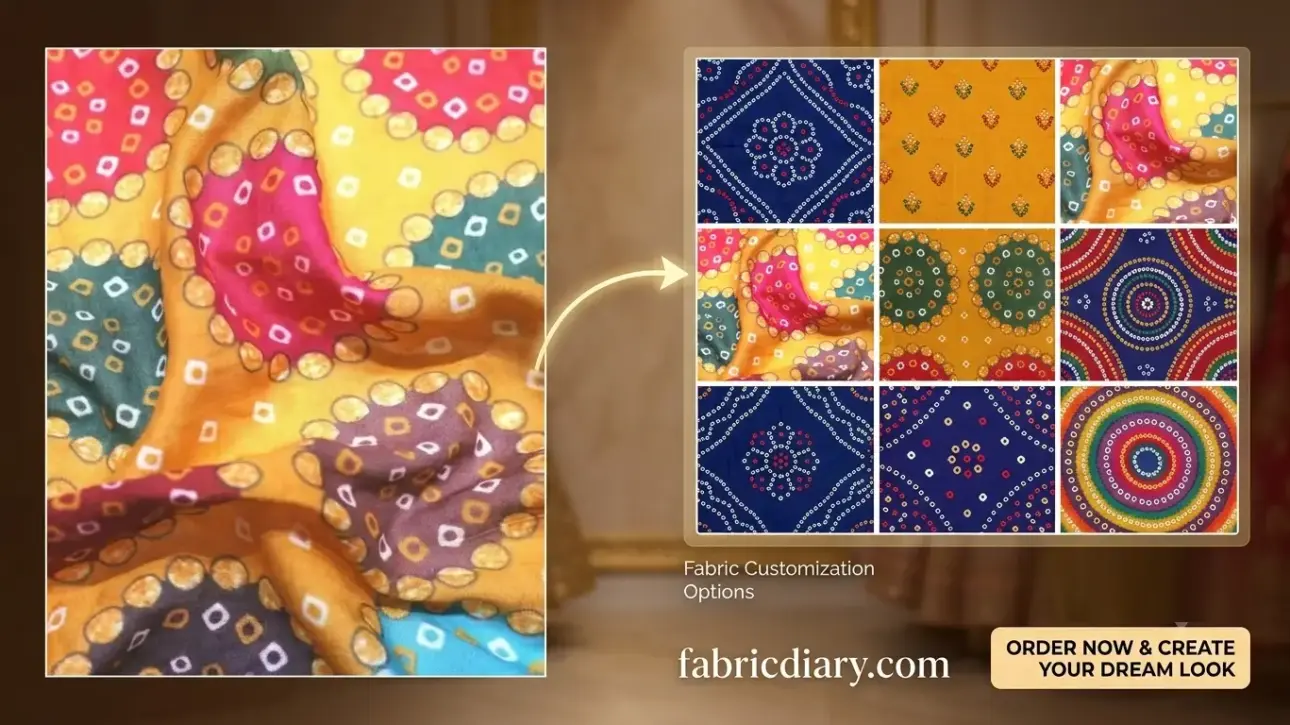
When customisation is required, buyers should clarify whether they need an adjustment to an existing design, a new colourway, a change in pattern scale or development from a reference.
These are different requests and may involve different sample requirements, minimum quantities and timelines. Confirming the scope of work early makes the discussion more efficient.
What Makes a Custom Print Request Actionable?
A request for a custom geometric print is easier to evaluate when it contains enough information for a supplier to assess feasibility.
Instead of sending only a reference image, a buyer can prepare a short development brief.
Artwork: Provide the design file or reference and explain whether it is final or needs development.
Pattern scale: State whether the motifs should be small, medium or large, or provide specific repeat dimensions when known.
Colour direction: Share the intended colourway and any available reference standard.
Fabric preference: Specify the desired composition, construction, weight, surface or drape if these have already been decided.
Garment application: Explain what the fabric will be used for and whether the design must align across selected panels.
Quantity: Provide the estimated requirement and ask the supplier to confirm the applicable MOQ.
Sample approval: Establish whether a physical sample is required and who will approve it.
Delivery: State the destination and required delivery window so that shipping and production arrangements can be evaluated.
A manufacturer can then respond with more relevant questions and a clearer outline of the proposed development process.
Customisation options should always be confirmed for the specific project. The availability of a design adjustment, fabric base or printing method depends on the supplier’s capabilities and production requirements.
A More Useful Way to Evaluate Samples
A sample should answer defined questions. Simply deciding whether the fabric looks attractive is not enough when the design depends on precise geometry.
Start by examining the pattern from different distances. Fine lines should be reviewed at normal viewing distance as well as close up. The motif scale should make sense for the intended garment, and the overall composition should appear balanced.
Next, evaluate the fabric itself. Review the hand feel, drape, surface and opacity in relation to the product brief.
Then assess the print direction and repeat. Check whether the artwork follows the approved arrangement and whether any specific alignment requirements have been met.
Finally, compare the sample against the agreed artwork and colour references under suitable lighting.
If the sample requires changes, document them clearly. A comment such as “make the design better” leaves room for interpretation. A request to adjust motif size, change spacing or revise a particular colour is more actionable.
The revised sample should be reviewed against the updated specification before it is approved for production.
Commercial Planning: From Sample Approval to Bulk Production
A successful sample does not automatically mean that every commercial detail is ready.
Before confirming a bulk order, buyers should establish the approved product specification and the terms under which it will be manufactured and delivered.
Important points include the order quantity, applicable MOQ, production timeline, agreed quality checks, packing requirements, payment terms, shipping terms and destination documentation.
If the design requires precise repeat alignment, buyers should identify the relevant inspection expectations in advance. If a particular fabric width or finish is essential, it should be included in the approved specification.
The manufacturer should confirm which requirements can be supported and how they will be assessed. This creates a clearer basis for the production relationship and reduces the risk of conflicting expectations.
Buyers should also clarify how changes after approval will be handled. A late change to artwork, fabric or finishing may affect the development process, so its implications should be agreed before work proceeds.
When a Geometric Print May Not Be the Right Choice
Geometric designs offer many possibilities, but they are not automatically suitable for every product.
A highly structured pattern may conflict with a garment concept that relies on irregularity or a softer visual effect. Very fine lines may not be ideal when the selected fabric or printing process cannot reproduce them as intended. Large motifs may require more careful placement than the product’s construction or budget allows.
In some cases, a smaller repeat, a simpler design or a different fabric base may be more appropriate.
The important point is to evaluate the design against the actual product requirements. Changing the pattern before production can be more practical than attempting to compensate for a mismatch after the material has been manufactured.
A reliable development process makes room for this evaluation rather than treating every initial idea as final.
Exploring Geometric Printed Fabric with Madhav Fashion
For fashion brands and textile buyers, the next step is to connect the design brief with a suitable fabric and a realistic development plan.
Madhav Fashion works within the broader embroidered and printed fabric space. Buyers interested in geometric print development should clarify their requirements, including the preferred pattern, intended garment, fabric characteristics, estimated quantity and any customisation needs. Availability and production feasibility should be confirmed for the specific enquiry.
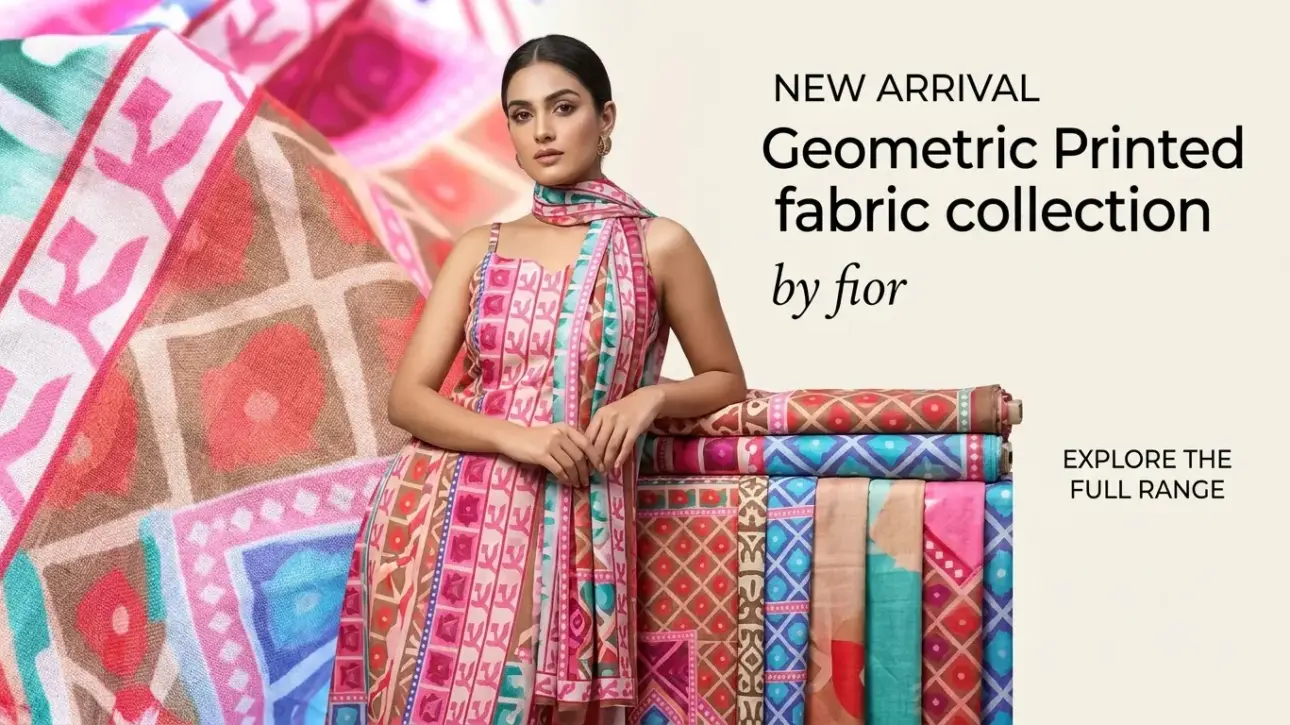
To explore pattern options, begin with FabricDiary’s Geometric Printed Fabric collection. This collection is a useful reference point for evaluating geometric designs in relation to a proposed apparel product.
The key is to approach the collection as the beginning of a product-development discussion. A well-defined enquiry gives the supplier a better understanding of what the buyer needs and helps identify the questions that must be resolved before sampling or bulk production.
For sourcing teams, the most productive conversation is built around clear specifications rather than broad trend labels. For designers, it connects creative intent with the fabric that will carry it. For garment manufacturers and wholesalers, it provides a more structured basis for evaluating repeatability, production requirements and commercial terms.
Geometric prints succeed when their design, material and manufacturing plan work together. That is the principle that should guide the journey from the first reference image to an approved fabric and a production-ready collection.