



Bridal fashion demands more than an attractive motif. Designers, garment manufacturers, boutique owners and fabric importers need printed textiles that complement the silhouette, colour palette and construction of the final garment. The right print must also work with the selected fabric base, cutting plan and intended production quantity.
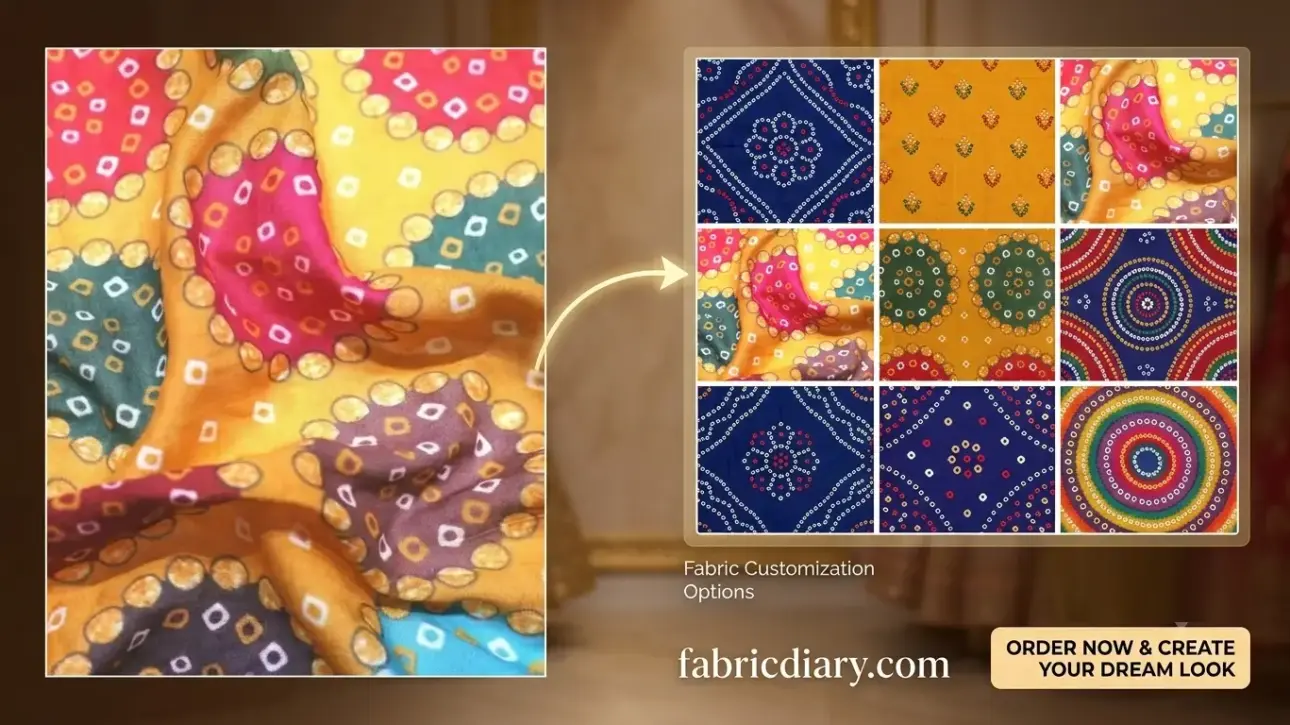
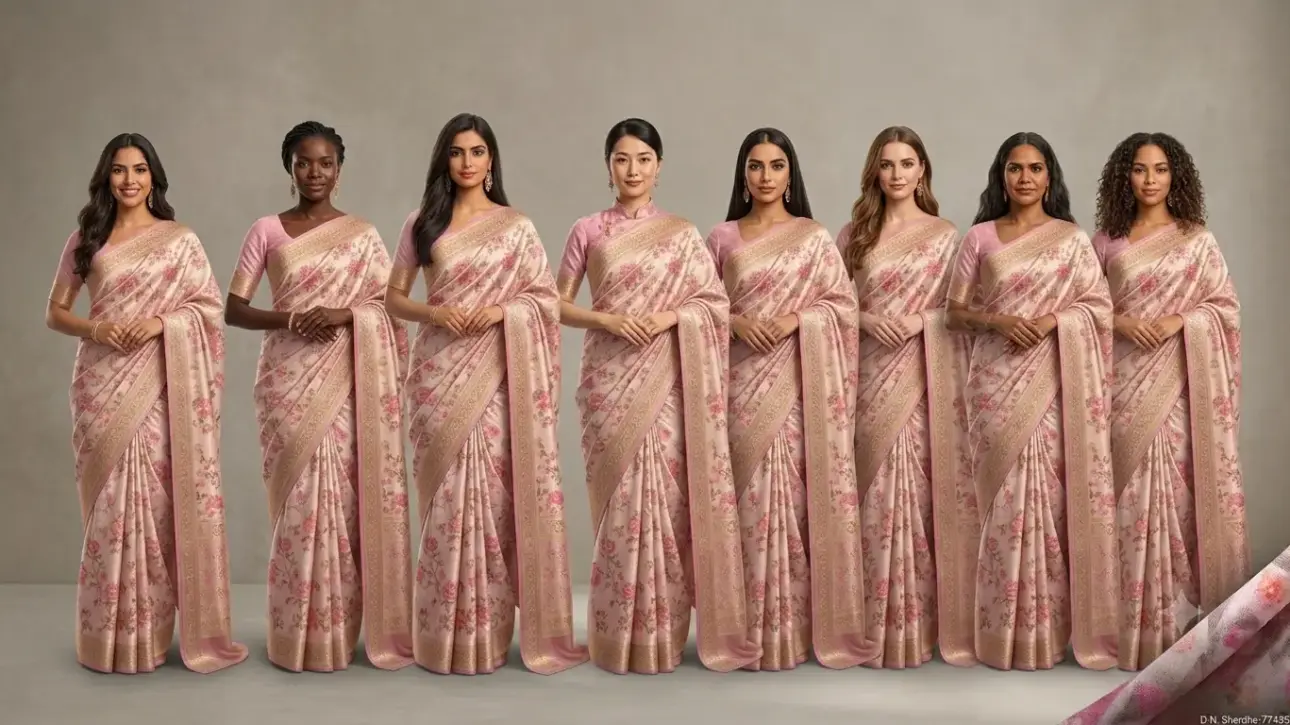
Madhav Fashion works within the embroidery and printed-fabric space, supporting buyers exploring textile options for bridalwear and occasionwear. For businesses developing a bridal collection, custom printing offers a way to translate original artwork, coordinated colour stories and specific motif arrangements onto suitable fabric bases, subject to design, material and production feasibility.
Bridal Printed Fabric: Turning Bridal Design Concepts into Production-Ready Textiles
Why Bridal Printed Fabric Requires a Different Development Approach
A bridal print is not simply a decorative pattern applied to a roll of cloth. The design must be evaluated in relation to how the finished garment will be worn, constructed and presented.
A motif that looks balanced across a full fabric width may not produce the same effect when cut into a blouse panel, skirt section, dupatta or gown bodice. Similarly, colours can appear different depending on the fabric’s surface, texture, opacity and light reflection.
- Before production begins, buyers should define three important elements:
- Garment purpose: lehenga, saree, blouse, dupatta, gown, dress or coordinated bridal separates.
- Visual direction: all-over floral artwork, ornamental motifs, traditional-inspired patterns, contemporary bridal graphics, borders or strategically positioned designs.
- Production requirements: fabric composition, usable width, weight, quantity, colour expectations and finishing requirements.
These details help convert an inspiration image or artwork file into a more practical fabric-development brief.
Choosing a Fabric Base for Bridal Printing
The base material influences print definition, drape, comfort, transparency and the overall appearance of the finished garment. Buyers should select it according to the intended application rather than choosing by appearance alone.
Satin and satin-finish fabrics may suit bridal designs that call for a smooth surface and a more pronounced visual sheen. The actual result depends on fibre composition, construction and finishing.
Georgette and chiffon are options for lightweight, flowing garments, overlays and dupatta applications. Buyers should assess transparency, surface movement and how the printed design appears when the fabric is gathered or layered.
Organza and tissue-effect fabrics can be considered when structure, lightness or surface lustre is important. Their surface characteristics may affect colour appearance and print performance, so sampling is particularly valuable.
Crepe and other textured fabrics may work for contemporary bridal dresses, occasionwear and selected coordinated pieces. Texture can influence fine-line detail and the visual sharpness of a design.
For every base, request the confirmed fibre composition, GSM, usable width and relevant construction details. GSM describes fabric mass per square metre; it does not independently determine quality, opacity or suitability. Yarn specifications, weave, finishing and end use must also be considered.
All-Over Prints, Borders and Placement Designs
Bridal collections frequently combine several visual elements. The print layout should be selected before bulk production because different layouts create different cutting and consumption requirements.
All-over printing distributes the artwork across the fabric surface. It can support coordinated production across multiple garment styles, provided the repeat scale and motif spacing suit each application.
Border printing places decorative artwork along a specified edge or section. Buyers should confirm the border position, direction, width and usable fabric length before approving the layout.
Placement printing positions artwork within defined areas rather than repeating it uniformly. This can be useful for statement motifs on bodices, panels or other selected garment sections. Placement accuracy, cutting alignment and fabric wastage need to be evaluated during sampling.
For a bridalwear range containing multiple pieces, the buyer should specify whether all components require the same artwork, coordinated prints or different placements. A shared colour story does not automatically mean that one layout will work equally well for every garment component.
Digital Printing or Screen Printing?
The appropriate printing method depends on the artwork, base fabric, order quantity, colour requirements and production setup.
Digital textile printing can be suitable for detailed artwork, gradients, intricate floral elements and designs requiring multiple colours. It may also support practical sampling and design revisions, depending on the production system and material.
Screen or rotary printing can be appropriate for repeat designs and production runs where the artwork, setup and quantities justify the process. Suitability depends on the required detail, colour separation, fabric compatibility and manufacturing capability.
Neither method should be treated as universally superior. Buyers should compare actual samples for colour reproduction, fine-detail clarity, repeat consistency, fabric hand feel and performance after the relevant finishing process.
From Artwork to Approved Bulk Production
A structured development process helps reduce misunderstandings between the buyer and the supplier.
Step 1 — Submit the design brief. Share the artwork or reference image, target colour palette, intended garment, preferred fabric base and estimated quantity. Clarify whether the artwork is original, licensed or otherwise authorised for production.
Step 2 — Confirm the technical specification. Agree on fibre composition, GSM range, usable width, print layout, finishing and any special performance requirements.
Step 3 — Review a physical sample or strike-off. A digital preview is useful for discussion, but it cannot fully demonstrate the final fabric’s surface, drape or colour appearance. Review a representative physical sample before approving bulk production.
Step 4 — Record approval criteria. Document the approved artwork version, colour references, repeat dimensions, placement measurements and acceptable tolerances. This creates a reference for subsequent production checks.
Step 5 — Inspect the production lot. Check the delivered material against the agreed specification. Depending on the order, this may include shade consistency, print registration, visible defects, width, length, dimensional stability and colourfastness.
Step 6 — Confirm packing and dispatch requirements. Specify roll identification, protective packaging, shipping marks, destination requirements and the documents needed for the intended shipment.
The exact sequence and lead time depend on artwork readiness, fabric availability, sampling requirements, production capacity and shipping arrangements. Buyers should request a confirmed schedule rather than relying on a general estimate.
Quality Checks That Matter to Bridal Fabric Buyers
Bridal textiles may be used in garments with high visual expectations, so the inspection plan should be agreed before manufacturing.
Key checks can include:
- Print sharpness, registration and motif alignment.
- Shade consistency between approved sample and bulk lot.
- Fabric width, roll length and visible surface defects.
- Shrinkage or dimensional change where relevant to the garment.
- Colourfastness appropriate to the intended use and care method.
- Print placement, border dimensions and repeat accuracy.
- Fabric hand feel and compatibility with planned cutting and stitching.
Methods such as the ASTM D5430 framework or a four-point fabric inspection system may be considered where appropriate to the buyer’s specification and inspection arrangement. The actual method, acceptance limits and results should be recorded; mentioning a standard alone does not establish that a fabric has passed inspection.
Likewise, claims involving OEKO-TEX, GRS, REACH or restricted azo colourants must be evaluated according to the applicable product, material, process, market and supporting documentation. Do not assume that every printed fabric automatically carries a particular certification or meets every destination’s requirements.
Commercial Planning for Boutiques, Designers and Importers
For a reliable quotation, buyers should provide more than a design image. A clear enquiry helps the supplier evaluate feasibility and identify missing details before sampling.
Include the following wherever available:
- Intended garment or product category.
- Preferred fabric base and confirmed composition, if known.
- Required colour palette and artwork file.
- All-over, border or placement-print preference.
- Approximate GSM and usable width.
- Sample requirement and estimated bulk quantity.
- Destination country and expected delivery window.
- Testing, compliance, packaging or labelling requirements.
- Whether the design will be repeated across multiple styles.
Minimum order quantities, sample charges, production lead times and customisation availability should be confirmed for the specific fabric and process. The cost may vary with material, artwork complexity, print method, quantity, finishing and logistics.
For international shipments, buyers should also confirm the commercial invoice, packing list and any destination-specific documentation with the exporter or customs broker. HS classification should be determined using the actual fibre composition, construction, processing and applicable tariff rules rather than the marketing name alone.
Building a More Cohesive Bridal Collection
A well-planned bridal collection often requires consistency across different garment components without making every piece visually identical. Designers can develop a coordinated palette, complementary motifs and carefully planned placement variations to give each item its own role within the collection.
For example, a large-scale ornamental motif may be suitable for a statement panel, while a smaller repeat can work for additional garment sections. A coordinated border may provide a visual connection between a main outfit and its accompanying dupatta, depending on the design and fabric construction.
The key is to test the artwork against the actual material and garment plan before committing to bulk quantities. A successful print is not simply one that looks attractive on a screen; it is one that can be reproduced consistently and used effectively in the intended product.
Develop Your Bridal Printed Fabric Requirement with Madhav Fashion
Madhav Fashion provides a starting point for businesses exploring printed and embroidered textile options for fashion and occasionwear. Buyers interested in custom bridal prints should prepare their artwork, preferred material, quantity and destination details so that the requirements can be assessed for feasibility.
Whether the brief involves floral bridal artwork, ornamental motifs, coordinated borders or selected placement designs, the next step is to establish the fabric specification and review an appropriate sample before bulk approval.
Explore the wider printed fabric collection at FabricDiary for additional printed-fabric options, and visit the bridal printed fabric collection for the specific category.
Madhav Fashion — Bridal printed fabric development for designers, boutiques, garment manufacturers and B2B buyers. Share the intended application, artwork, fabric preference, quantity and destination to begin a more precise sourcing discussion.