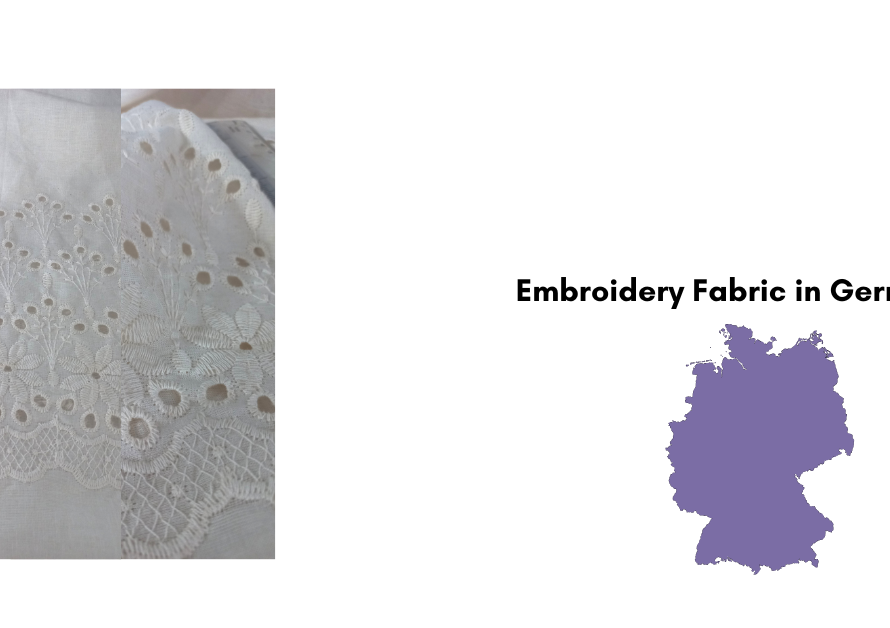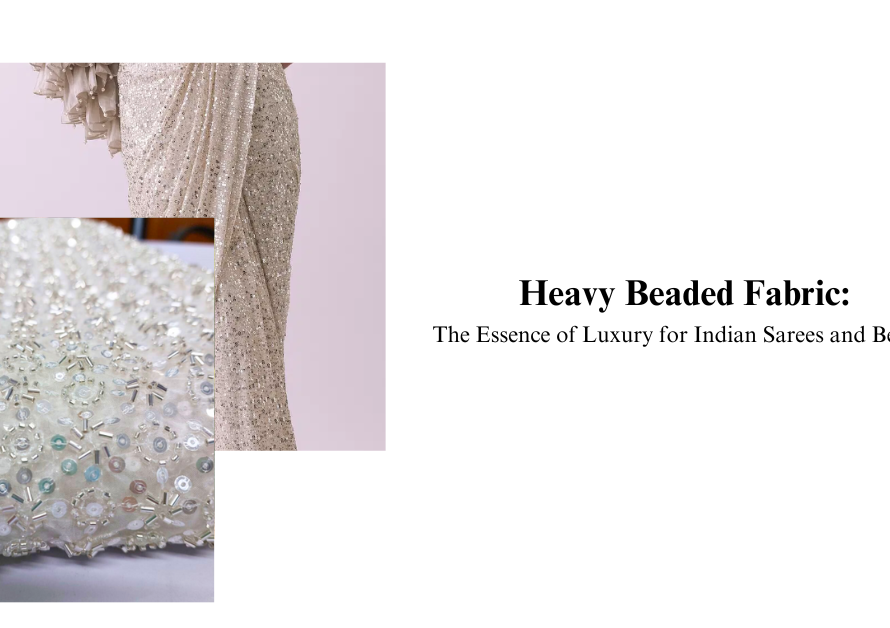



A premium embroidered fabric is not created by adding an attractive motif to a good-looking base. The real work begins much earlier, with a decision about how the fabric, embroidery and final garment need to work together.
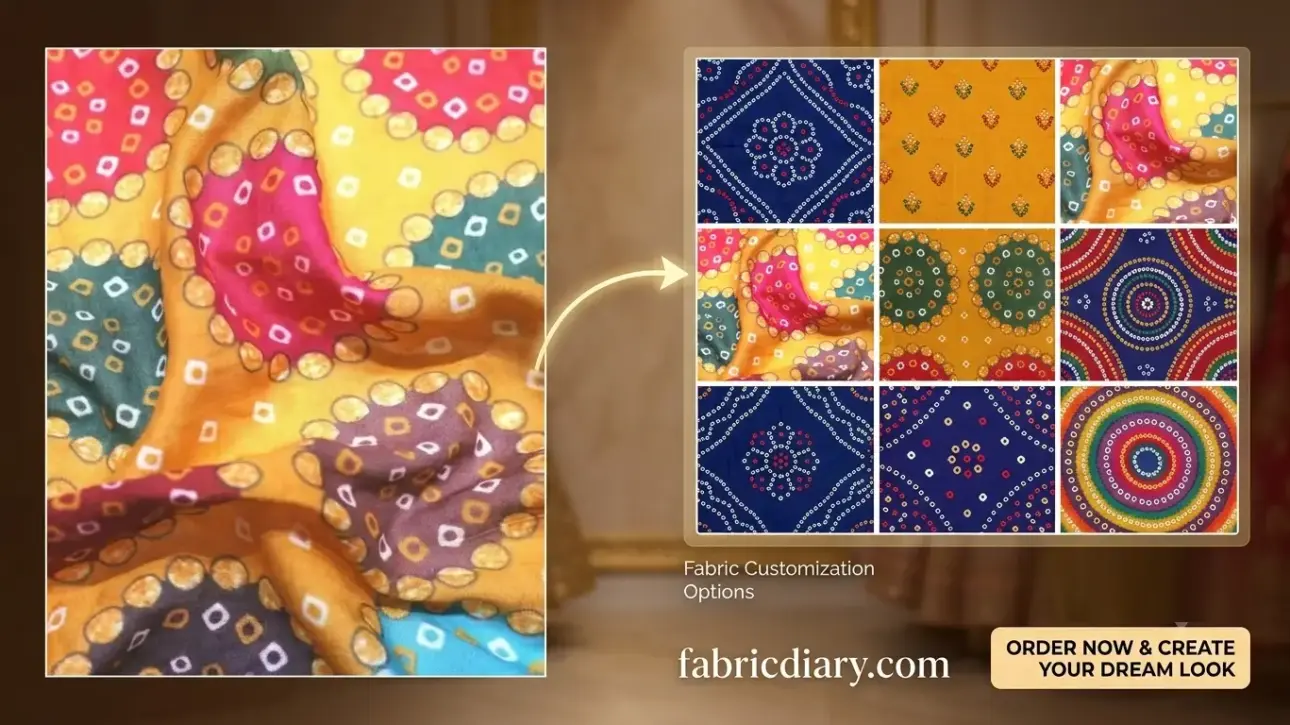
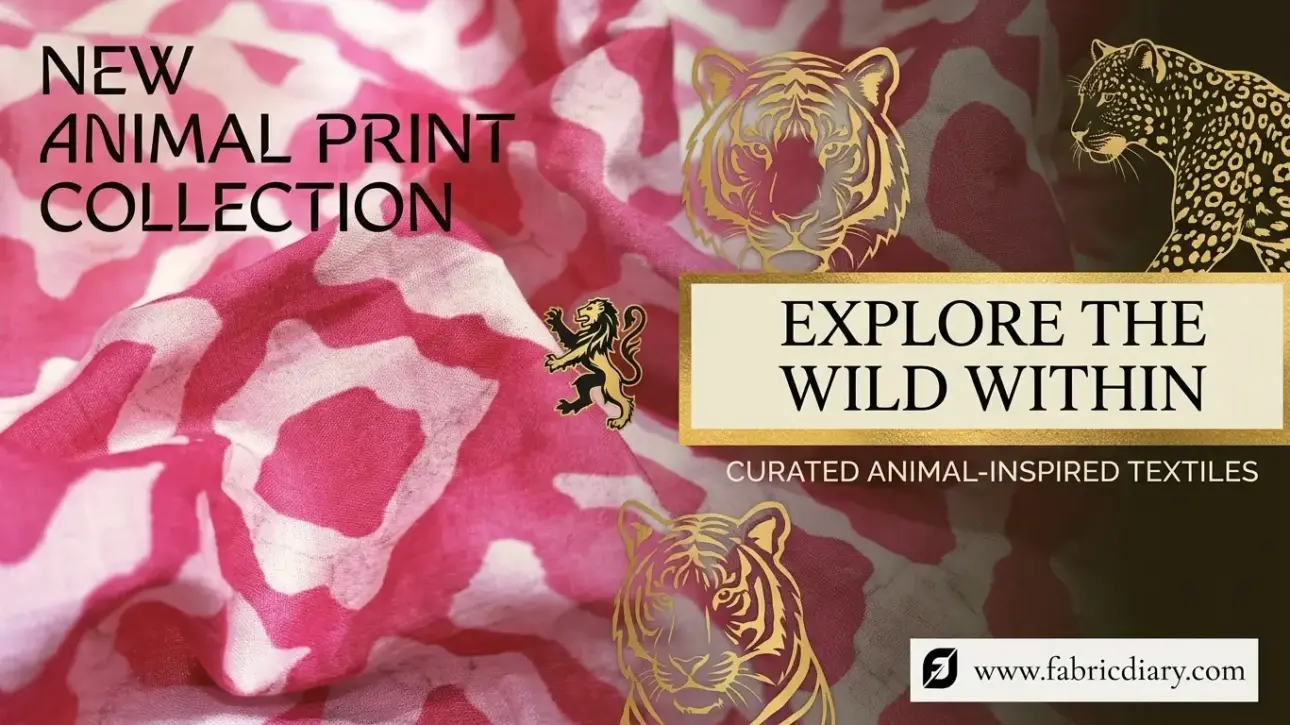
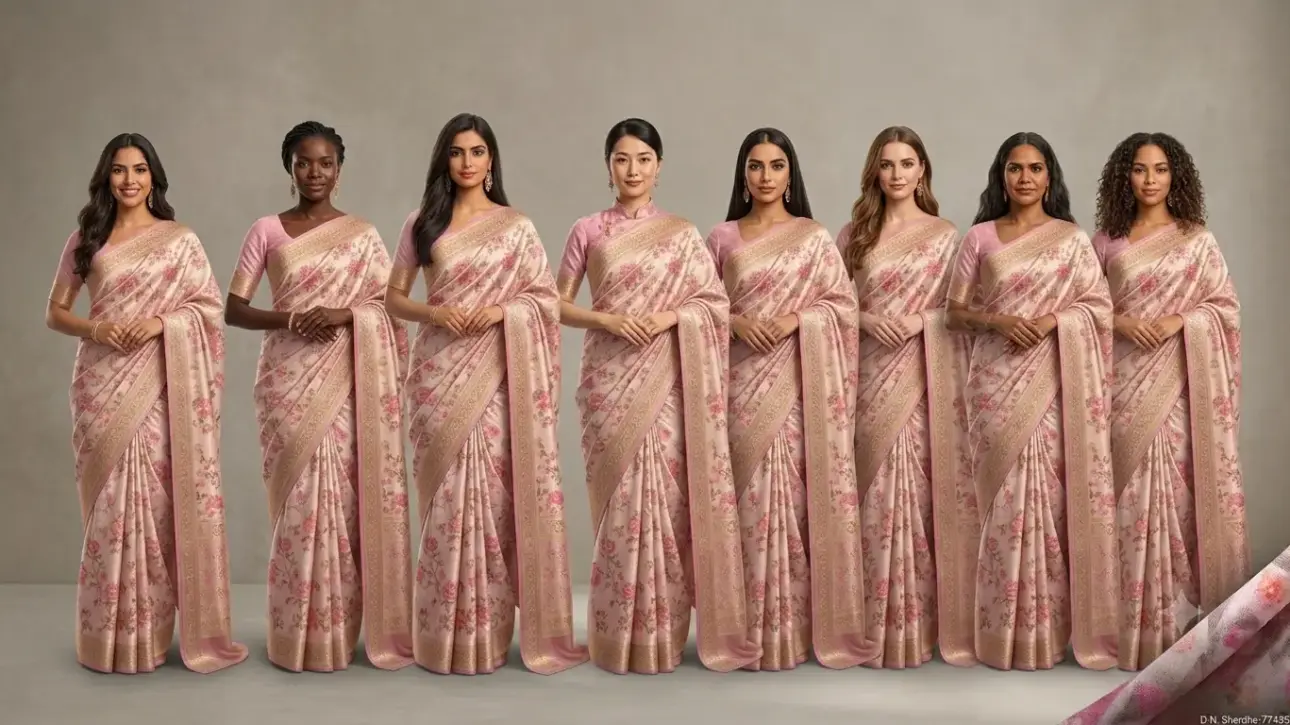
That distinction matters when developing embroidered Vichitra silk for commercial fashion. A fabric may photograph beautifully and still create problems during cutting, stitching or finishing if its weight, construction, embroidery density or surface stability has not been properly considered.
How Embroidered Vichitra Silk Is Developed for Commercial Fashion


Madhav Fashion approaches embroidered and printed textiles from a manufacturing perspective, where fabric development is connected to production requirements rather than treated as a purely visual exercise. Its experience within India’s textile manufacturing ecosystem covers the practical stages that influence a commercial fabric: base-fabric selection, embroidery development, sampling, finishing, inspection and production planning.
At the same time, the business is developing FabricDiary as a dedicated fabric-sourcing platform for designers, apparel manufacturers, fashion brands, wholesalers and international buyers looking for embroidered, printed, jacquard, plain and specialty textiles.
For manufacturers and sourcing teams, embroidered Vichitra silk offers an interesting case because the visual character of the base fabric and the technical demands of embroidery have to remain balanced.
The objective is not simply to make the surface richer.
The objective is to create a fabric that can move from design concept → sample → garment development → repeatable production without losing the qualities that made the original design commercially attractive.
Vichitra Silk Starts With the Base, Not the Embroidery
The commercial name of a fabric does not provide its complete technical specification.
Vichitra silk fabrics can differ in composition, construction, weight, width, finish and surface behaviour. Consequently, a manufacturer should evaluate the actual base fabric before deciding how embroidery will be applied.
Several characteristics deserve attention:
Fibre composition
GSM
Finished width
Surface smoothness
Drape
Dimensional stability
Colour consistency
Resistance to embroidery-related distortion
The base becomes even more important when embroidery coverage increases.
A fabric carrying a light, dispersed motif may retain much of its original movement. The same base carrying concentrated embroidery can become more structured in selected areas because of additional thread and stitching.
That difference can determine whether the finished textile is better suited to a flowing gown, a structured jacket, a sherwani panel or a fitted blouse.
For a manufacturer, therefore, fabric selection and embroidery development are connected decisions.
Designing Embroidery Around Fabric Behaviour
A common mistake in textile development is to treat embroidery artwork as completely independent from the base fabric.
In production, it cannot be.
Embroidery introduces mechanical stress and additional material to the surface. Stitch density, thread direction, motif size and placement can all influence how the fabric behaves.
A motif that works perfectly on one base may require modification on another.
Manufacturers may need to evaluate:
Stitch density: Excessive concentration can add unnecessary weight or contribute to puckering.
Thread direction: The direction and sequencing of stitches can affect the visual definition and behaviour of a motif.
Motif scale: Very small details may not reproduce effectively at production speed, while oversized motifs can create challenges around garment seams and panels.
Placement: A border intended for a garment front needs different planning from an all-over repeat.
Fabric stability: The base must remain sufficiently stable throughout the embroidery process.
The best result is therefore not necessarily the most heavily embroidered fabric.
It is the one where the embroidery creates the intended visual impact without compromising the performance of the base.
From Artwork to Production Sample
A designer’s artwork is the starting point, not the finished embroidery programme.
Before production, the design needs to be interpreted for machine execution. This can involve digitisation, stitch sequencing, density decisions, thread selection and adjustments to accommodate the characteristics of the fabric.
The first sample is particularly valuable.
It reveals what a digital design cannot.
A sample can show whether:
The motif remains clear
Stitch density is appropriate
The fabric develops puckering
Thread tension is controlled
The embroidery feels too heavy
Colours work together
The placement is commercially usable
Corrections at this stage are considerably easier than correcting a large production lot.
This is why sampling should not be viewed as an administrative step between design and manufacturing. It is part of the manufacturing process itself.
For private-label brands, the approved sample can subsequently become the physical reference for bulk production.
Why Stitch Density Needs Technical Control
Heavy embroidery can create a strong luxury effect, but more stitching does not automatically mean better fabric.
Every additional stitch contributes to the construction of the embroidered surface.
If density becomes excessive, several issues can emerge:
Localised stiffness
Fabric distortion
Puckering
Increased thread consumption
Reduced drape
Uneven surface behaviour
The appropriate density depends on the design and the intended garment.
A structured wedding jacket may accommodate more concentrated embroidery than a flowing evening garment.
Likewise, a decorative front panel can be engineered differently from a fabric intended for full-garment cutting.
Manufacturing decisions therefore have to begin with the end application.
GSM and Width: Two Numbers Buyers Should Not Ignore
GSM is useful because it provides an indication of fabric weight. But it should never be considered in isolation.
Two fabrics with similar GSM can behave differently because construction, fibre composition, finishing and embroidery coverage are not identical.
For embroidered Vichitra silk, the finished article should therefore be evaluated rather than relying only on the base-fabric GSM.
Width is equally important.
The stated width and the practically usable cutting width may not always be identical. Embroidery borders, selvedges, placement requirements and cutting considerations can influence the actual area available to the garment manufacturer.
For large production programmes, even a relatively small difference in usable width can influence fabric consumption and marker efficiency.
A professional buyer should therefore confirm:
Base GSM
Finished GSM where relevant
Finished width
Usable width
Embroidery coverage
Expected shrinkage or dimensional change where applicable
These details make production costing more reliable.
The Quality Problems Buyers Often Notice Too Late
The most expensive textile problems are often discovered after production has already started.
With embroidered fabrics, several checkpoints deserve attention before bulk approval.
Puckering
Uneven tension or excessive stitch concentration can cause the base to draw around embroidered areas.
Motif inconsistency
Repeated motifs should maintain reasonable uniformity in scale, shape and placement.
Shade variation
The base fabric and embroidery thread should correspond to the approved colour standard.
Width variation
Changes in usable width can affect garment consumption.
Surface distortion
The finished fabric should retain an appropriate relationship between embroidered and non-embroidered areas.
Reverse-side quality
Loose threads, excessive thread accumulation or poor finishing on the reverse can become problematic during garment construction.
A good inspection process identifies these issues before the material reaches the cutting floor.
One Embroidery Design Cannot Be Applied Identically to Every Base
This is one of the most important manufacturing principles in embroidered fabric development.
A successful embroidery programme is not simply transferred from one fabric to another without evaluation.
The base determines how the design should be executed.
A softer material may require a different approach to density and stabilisation than a firmer construction.
A more delicate surface may require additional care during machine processing.
A heavier fabric may allow more substantial embroidery but can create different considerations around garment weight.
This is why experienced textile manufacturers evaluate the relationship between base + embroidery + intended garment, rather than treating each component separately.
That relationship is what ultimately determines the finished fabric’s commercial usability.
Developing Vichitra Silk for Different Garments
The same embroidered Vichitra silk can serve several markets, but its development should be guided by the garment.
Sherwanis
Structured menswear can benefit from controlled embroidery across fronts, collars, cuffs and panels. Motif placement and overall fabric body become particularly relevant.
Wedding Jackets
Panel symmetry and seam positioning can influence how the embroidery should be distributed.
Blouses
The neckline, sleeve and bodice areas may require more precise motif planning because small placement changes can affect the final appearance.
Lehengas
Large garment panels require attention to repeat, border positioning and overall surface weight.
Gowns
Drape becomes especially important. Excessive embroidery concentration can change the movement of the garment.
Kurtis and Dresses
The design can be adapted from concentrated motifs to more distributed patterns depending on the intended market and price positioning.
This garment-first approach allows manufacturers to develop fabric with a clear commercial purpose.
Custom Development for Fashion Brands
Standard catalogue fabrics are useful when a buyer needs a readily available article.
Custom development becomes more valuable when differentiation is important.
A brand may require:
Exclusive embroidery motifs
Custom colour combinations
Specific motif dimensions
Modified embroidery density
Custom borders
Private-label fabric references
Seasonal design development
Coordinated colour stories
The advantage is not merely exclusivity.
Custom development allows the manufacturer and buyer to optimise the fabric for the intended product.
For a growing fashion label, this can help create a recognisable textile language across multiple collections.
What Should Be Approved Before Bulk Production?
A professional production approval should extend beyond a photograph.
Ideally, the buyer and manufacturer should have a defined reference covering the key characteristics of the article.
This may include:
Fabric: composition, construction and GSM.
Width: finished and usable width where relevant.
Colour: approved shade reference.
Embroidery: artwork, motif dimensions, coverage and thread specifications.
Finish: agreed surface and finishing characteristics.
Sample: physical approved reference.
This documentation becomes especially useful for repeat orders.
If a brand returns several months later for the same article, production teams have a much stronger basis for comparison than memory or an old catalogue image.
Why India Offers a Strong Manufacturing Environment
The advantage of Indian textile manufacturing is not simply the availability of fabric.
It is the depth of the surrounding ecosystem.
India has established capabilities across fabric production, processing, dyeing, printing, embroidery, finishing, garment manufacturing, trading and export.
For buyers developing embroidered textiles, this interconnected environment can support both sampling and commercial production.
Surat is particularly significant within this ecosystem because of its concentration of textile businesses and associated manufacturing capabilities.
For an international buyer, access to a broad manufacturing network can provide an important advantage when a fabric requires modification rather than simple catalogue purchasing.
The real value lies in the ability to move between development and production with fewer disconnected stages.
From Indian Manufacturing to Global Fashion Supply
Export-oriented textile manufacturing requires consistency beyond the product itself.
International buyers typically need clear specifications, reliable sampling, predictable production communication and repeatability.
A fabric that changes significantly between the approved sample and the production lot creates problems for garment manufacturers, especially when the fabric is being used across a complete collection.
This makes quality control and production documentation commercially important.
The manufacturer is not simply shipping fabric.
It is supplying a repeatable textile specification.
That distinction becomes increasingly important as brands scale internationally.
Madhav Fashion’s Manufacturing Perspective
From a manufacturing standpoint, embroidered Vichitra silk represents a broader principle in textile production:
visual design and technical execution cannot be separated.
The designer may define the aesthetic direction.
The manufacturer has to translate that direction into a stable production process.
That involves understanding the base fabric, embroidery behaviour, machine execution, finishing and inspection.
The final measure of success is not how impressive the first sample looks.
It is whether the approved textile can be produced consistently enough to support a commercial garment programme.
That is where manufacturing experience becomes valuable.
Madhav Fashion’s role within this ecosystem is rooted in textile production and development, while its connected FabricDiary platform provides a dedicated channel for fabric discovery and sourcing.
The distinction is useful.
Madhav Fashion represents manufacturing expertise.
FabricDiary represents fabric sourcing and discovery.
Together, they connect production knowledge with a more accessible fabric-sourcing experience for designers, brands, manufacturers and international buyers.
The Future of Embroidered Fabric Development
Fashion brands are increasingly looking for more than ready-made textile products.
They want flexibility.
They want distinctive designs.
They want faster sampling.
They want reliable repeat production.
And they increasingly need suppliers who understand the commercial garment rather than only the fabric roll.
This creates an opportunity for manufacturers that can combine traditional textile knowledge with modern product development.
The future is not necessarily about making embroidery heavier or more elaborate.
It is about making textile development more precise.
A successful fabric should answer several questions simultaneously:
Does it look right?
Does it behave correctly?
Can it be manufactured consistently?
Does it suit the garment?
Can it be reproduced at commercial scale?
When those answers align, a fabric becomes more than a decorative textile.
It becomes a commercially useful manufacturing component.
Embroidered Vichitra silk demonstrates why modern fabric manufacturing requires more than design taste.
The base fabric has to be understood before embroidery begins. Stitch density has to be controlled. Motifs have to be engineered for production. Samples have to be physically evaluated. Width, GSM, colour and surface stability have to be documented. And the approved textile has to remain reproducible when the order moves from development to bulk manufacturing.
For fashion brands, these details may sit behind the finished garment, but they directly influence its quality and production efficiency.
For manufacturers, they are the foundation of the product.
India’s textile ecosystem provides the infrastructure to develop these fabrics at both sampling and commercial scale, while Surat’s manufacturing network offers access to a broad range of textile capabilities.
Within this environment, Madhav Fashion brings the manufacturing perspective, while FabricDiary is being developed as a dedicated platform for fabric sourcing and discovery.
The opportunity ahead is not simply to supply more embroidered fabrics.
It is to develop fabrics with greater technical understanding, stronger consistency and clearer commercial purpose — from the first sample to the finished fashion collection. :::
———
Frequently Asked Questions
- What is embroidered Vichitra silk fabric?
Embroidered Vichitra silk is a Vichitra silk-based textile enhanced with decorative embroidery. Its exact composition, GSM, width and surface behaviour can vary by construction and supplier.
- How is embroidered Vichitra silk developed for commercial production?
Development generally involves base-fabric selection, artwork preparation, embroidery sampling, machine adjustment, finishing and quality inspection before bulk production.
- Why does the base fabric matter in embroidery production?
The base determines how well the textile handles stitching, thread weight, tension and movement. A suitable base helps minimise distortion and preserves the intended drape and appearance.
- What GSM is suitable for embroidered Vichitra silk?
There is no single ideal GSM. The appropriate weight depends on the garment, embroidery coverage, desired drape and structural requirements of the finished product.
- Can embroidered Vichitra silk be customised?
Yes. Depending on the manufacturing programme, buyers may develop custom motifs, colours, embroidery density, borders, placements and other design specifications.
- What garments can be made with embroidered Vichitra silk?
It can be developed for sherwanis, wedding jackets, kurtis, blouses, lehengas, gowns, dresses and other premium occasionwear, depending on the fabric construction.
- Why is sampling important before bulk production?
Sampling allows manufacturers and buyers to evaluate the actual fabric behaviour, embroidery density, colour, motif definition, drape and finishing before committing to commercial quantities.
- What should buyers check before approving embroidered fabric?
Important checkpoints include composition, GSM, usable width, colour consistency, embroidery density, motif alignment, puckering, surface stability, finishing and the physical approved sample.
- Can the same embroidery design be used on different fabrics?
Not necessarily. Stitch density, stabilisation, motif scale and machine settings may need adjustment because different base fabrics respond differently during embroidery.
- Why is production repeatability important for fashion brands?
Repeatability helps brands maintain consistent appearance and specifications when an approved fabric is reordered for future collections or larger production programmes.