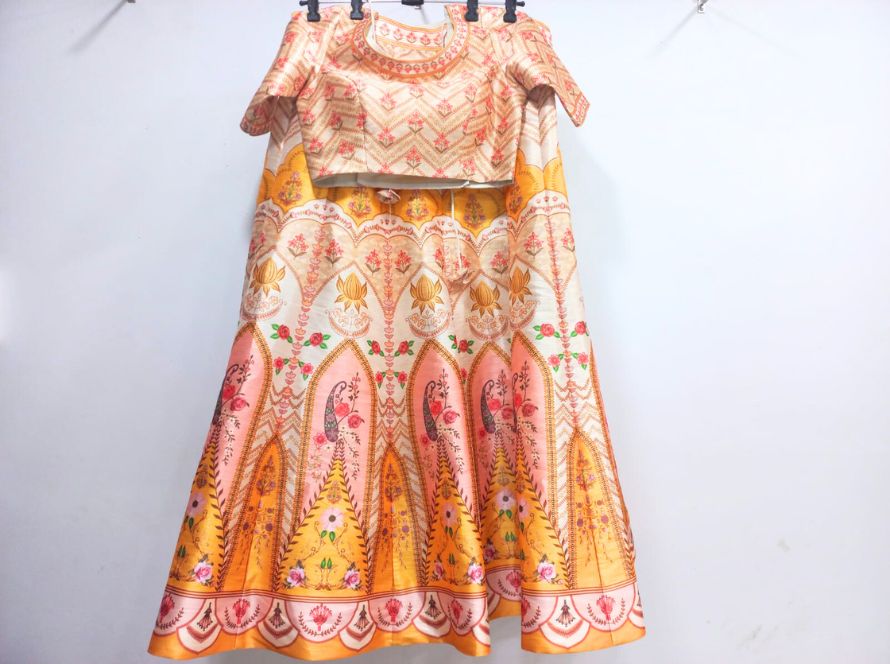



Pure Chinon Printed Fabric is a popular choice for fashion collections that need a lightweight fabric base with a soft flow, elegant appearance and strong scope for printed design development. For brands, designers, garment manufacturers and fabric buyers, the right Chinon fabric is not only about the print—it is also about the fabric base, print execution, design placement and suitability for the final garment.
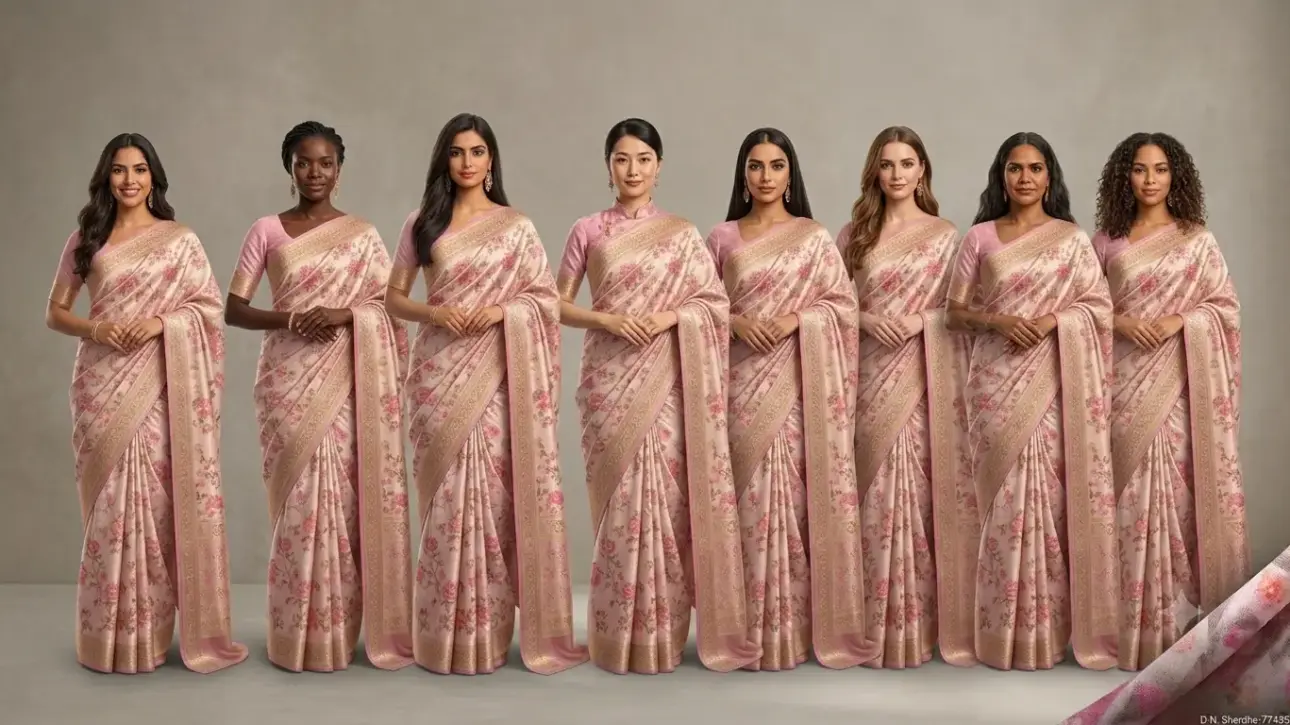
FabricDiary is an India-based B2B fabric sourcing platform connected with the manufacturing ecosystem of Madhav Fashion in Surat, Gujarat. Its fabric range covers embroidered, printed and other fashion fabrics for buyers looking for wholesale sourcing, sampling and custom development.
Pure Chinon Printed Fabric for Wholesale & Bulk Sourcing
For buyers specifically looking for Pure Chinon Printed Fabric, FabricDiary provides a dedicated collection where different printed designs can be explored for fashion and apparel development.
Whether you are sourcing fabric for sarees, kurtis, dupattas, gowns, lehengas or Indo-western garments, Chinon can be developed in different print directions depending on the look and application required.
This guide explains what buyers should know before sourcing Pure Chinon Printed Fabric, how printed designs can be developed, what to check before bulk production, and how to approach wholesale or custom fabric sourcing.
What Is Pure Chinon Printed Fabric?
Pure Chinon is a lightweight fashion fabric known for its soft drape, flowing appearance and elegant surface. When used as a print base, it provides a versatile foundation for floral, abstract, traditional, contemporary and other fashion-oriented designs.
Pure Chinon Printed Fabric combines the characteristics of the Chinon base with a printed design developed across the fabric surface or in selected areas.
The final appearance can vary considerably depending on:
- The fabric construction
- Surface appearance
- Print technique
- Design scale
- Colour combination
- Print placement
- Garment application
- Finishing requirements
This is why professional buyers should evaluate the fabric and print together rather than selecting a design based only on an image.
For fashion businesses, Chinon printed fabric can be especially useful when the collection requires a softer, flowing visual character and the print needs to remain an important part of the overall garment design.
Why Choose Chinon for Printed Fashion Collections?
Fabric selection has a direct effect on how a printed design appears in the final garment.
Chinon is often selected for fashion products where movement, drape and an elegant appearance are important. Its lightweight character can work well with designs intended for flowing silhouettes and occasion-oriented fashion.
A printed Chinon collection can be developed for several different design directions.
- Floral Prints
Floral designs are widely adaptable and can be developed in delicate, minimal or statement formats.
Depending on the collection, florals can be used for:
- Sarees
- Kurtis
- Dupattas
- Gowns
- Lehengas
- Indo-western garments
- Abstract Prints
Abstract designs allow brands to create more contemporary collections without depending on traditional motifs.
They can include:
- Artistic patterns
- Organic forms
- Geometric compositions
- Modern colour arrangements
- Experimental repeats
- Traditional and Ethnic Designs
Chinon can also be considered for ethnic and occasionwear collections where traditional motifs or decorative layouts are important. - Fashion-Led Contemporary Prints
For private labels and designer collections, the print can be developed around a specific seasonal direction, colour story or collection concept.
The important point is that the print should be developed according to the final product rather than treated as an isolated artwork.
Allover Printed Chinon vs Position Printed Chinon
One of the most important decisions in printed fabric sourcing is whether the design should cover the fabric as an allover print or be developed as a specific placement.
Allover Printed Chinon
An allover print repeats or distributes the design across the fabric surface.
This approach can be suitable when the garment requires a consistent visual pattern throughout the material.
It can work particularly well for:
- Kurtis
- Dresses
- Sarees
- Skirts
- Fashion tops
- Flowing garments
The repeat size, spacing and colour balance should be reviewed before production.
Position Printed Chinon
Position printing is different.
Instead of treating the entire fabric surface as one repeated design, the artwork is planned for specific areas of the fabric.
Depending on the garment, the print may be designed around:
- Front panels
- Daman
- Borders
- Neckline areas
- Sleeves
- Saree sections
- Decorative panels
Position printing can therefore be useful when the garment itself is part of the design planning.
FabricDiary also has a dedicated Position Printed Fabric range for buyers exploring this type of development.
Printed Design Should Match the End Product
A common mistake in fabric sourcing is choosing a print first and deciding the garment later.
For commercial production, the better approach is usually the opposite.
Start with the intended product.
For example:
Saree collection: The artwork may need a border, pallu direction or coordinated body print.
Kurti collection: The placement may need to work around the front, sleeves and lower garment area.
Dupatta: The design may need a coordinated border or central composition.
Gown: The scale of the print should work with the larger flowing silhouette.
Lehenga: The design may need to complement panels, borders and overall garment construction.
This is why fabric development should involve both textile and garment thinking.
Pure Chinon Printed Fabric for Different Fashion Applications
Pure Chinon Printed Fabric can be considered across multiple fashion categories.
Sarees
Printed Chinon can be developed for lightweight fashion sarees where the fabric’s flow and print contribute strongly to the overall appearance.
Different design approaches can be explored, including allover patterns, floral concepts and placement-oriented designs.
Kurtis
For kurtis, print scale and placement are particularly important because the design needs to work with the garment’s front and overall silhouette.
Dupattas
Dupattas offer significant scope for decorative printing.
Designs can be developed around borders, central areas or coordinated patterns depending on the collection concept.
Gowns
Flowing gowns can benefit from fabrics where movement is an important part of the visual presentation.
Here, the relationship between print scale and garment volume becomes important.
Lehengas
For lehengas and occasionwear, printed Chinon can be considered when the collection requires a softer printed aesthetic rather than a heavily embellished surface.
Indo-Western Fashion
Contemporary Indo-western collections can combine traditional motifs with modern layouts, colour stories and silhouettes.
This gives buyers flexibility to develop a fabric collection that does not fit into only one fashion category.
What Should Buyers Check Before Ordering Chinon Printed Fabric?
A product image alone is not enough to evaluate fabric for bulk production.
Before placing a larger order, buyers should review several aspects.
Fabric Appearance
Check whether the fabric surface matches the intended garment and collection direction.
Drape
The way Chinon falls and moves can influence the final garment considerably.
Print Quality
Review the sharpness, consistency and overall appearance of the printed design.
Colour
Colours should be evaluated against the approved reference rather than relying only on screen representation.
Print Scale
A design that looks attractive on a small digital image may appear very different when printed across a full garment.
Placement
For position prints, confirm the exact artwork layout and intended garment areas.
Sample
A physical sample is highly useful before bulk approval, particularly for custom development.
Final Application
Always evaluate the fabric according to its intended end use.
A fabric suitable for one garment category may not necessarily be the best choice for another.
- Wholesale Sourcing of Pure Chinon Printed Fabric
Wholesale buyers generally need more than a single fabric design.
They may be building:
- Seasonal collections
- Private-label ranges
- Garment production
- Export collections
- Designer capsules
- Boutique collections
- Sampling programs
For this reason, sourcing becomes easier when a supplier can support both product discovery and development.
FabricDiary’s Pure Chinon Printed Fabric collection allows buyers to explore available designs and identify suitable directions before moving toward larger sourcing requirements.
For buyers who already know their preferred design direction, the existing collection can be a starting point.
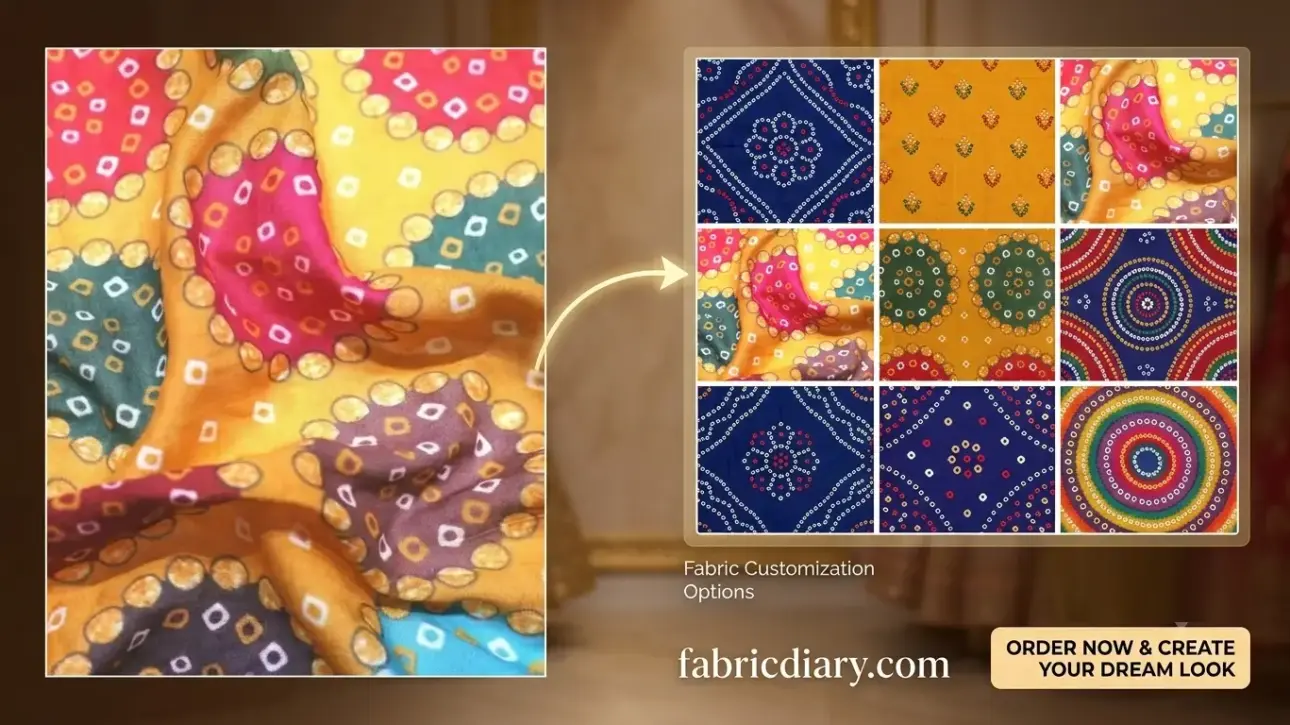
For buyers who need something developed around their own artwork or collection concept, custom print development can be considered separately.
Custom Printed Chinon Fabric Development
Not every fashion brand wants to select an existing print.
Many buyers already have:
- Artwork
- Moodboards
- Motifs
- Colour references
- Collection themes
- Repeat patterns
- Placement layouts
In such cases, custom fabric development can be more suitable.
FabricDiary’s custom print development approach can involve a process such as:
Artwork → Fabric Selection → Technical Review → Print Development → Sample → Evaluation → Approval → Production
The exact process depends on the project and production requirements.
The purpose of this process is to ensure that the artwork is considered together with the fabric rather than simply transferred onto a material without technical review.
What Should You Send for a Custom Chinon Print Inquiry?
A clear inquiry helps reduce unnecessary back-and-forth.
Buyers can provide as much of the following information as available:
- Artwork or design file
- Reference image
- Preferred fabric
- Intended garment
- Print type or placement
- Colour references
- Approximate quantity
- Sample requirement
- Delivery destination
- Target collection or season
If the artwork is not production-ready, that is not necessarily a problem. The manufacturer or development team can review the available reference and determine the next practical step.
The clearer the brief, the easier it becomes to evaluate feasibility.
Digital Printing and Chinon Fabric
Digital printing is one possible route for developing printed fabrics, particularly where artwork flexibility, colour development or design complexity is important.
However, buyers should not assume that every fabric or every project requires the same printing method.
The appropriate approach depends on factors such as:
- Fabric characteristics
- Artwork
- Production quantity
- Colour requirements
- Design complexity
- Repeat structure
- Desired result
For this reason, printing should be evaluated as part of the complete fabric-development process.
The objective is not simply to select a printing technology. The objective is to achieve the required result on the selected fabric.
Why Sampling Matters Before Bulk Production
A sample gives buyers an opportunity to evaluate the actual material and print before committing to larger production.
This is particularly important for custom-developed fabrics.
During sampling, buyers can review:
- Fabric feel
- Drape
- Print appearance
- Colour balance
- Design scale
- Placement
- Overall suitability
A digital artwork may look correct on a monitor but still require adjustment when translated onto fabric.
Sampling therefore becomes an important decision point between design development and bulk production.
From Approved Sample to Bulk Production
Once the fabric sample is approved, the next stage is production planning.
A professional buyer should maintain a clear approved reference so that the production team understands what has been accepted.
Important references may include:
- Approved artwork
- Approved colour direction
- Fabric specification
- Print layout
- Placement details
- Sample reference
Clear approval documentation helps reduce confusion when production moves forward.
For repeat orders, maintaining consistent references becomes even more important because buyers may need to reproduce a successful fabric direction across future collections.
Pure Chinon Printed Fabric vs Other Printed Fabric Bases
Chinon should not be treated as the universal answer for every printed garment.
Different fabrics create different results.
Depending on the product, buyers may also consider other printed bases such as:
- Cotton
- Cambric
- Mull cotton
- Muslin
- Georgette
- Other fashion fabrics
The correct selection depends on the desired combination of:
fabric feel + drape + print appearance + garment construction + customer positioning.
For lightweight, flowing fashion concepts, Chinon can be an attractive option. For structured, everyday or cotton-focused products, another fabric base may be more appropriate.
This is why buyers should compare fabric bases according to the final product rather than choosing purely by price.
Why Source Pure Chinon Printed Fabric From a Manufacturer-Connected Supplier?
A sourcing platform can be useful for product discovery, but manufacturers provide another important advantage: development capability.
FabricDiary operates within the manufacturing ecosystem of Madhav Fashion in Surat, Gujarat.
This connection allows the sourcing process to cover more than simply browsing fabric designs.
Depending on the project, buyers can move from:
Fabric discovery → sample evaluation → custom development → production
That can be particularly useful for brands that expect to develop multiple collections rather than purchase a one-time fabric lot.
Why Surat Matters for Fabric Sourcing
Surat is one of India’s major textile centres and has a strong ecosystem around fabric manufacturing, processing, printing, embroidery and fashion textiles.
For international buyers, sourcing from an established textile ecosystem can make it easier to explore multiple fabric directions within one manufacturing region.
For a company working across printed and embroidered fashion fabrics, this broader ecosystem is also useful because modern collections often combine multiple textile techniques.
FabricDiary for B2B Pure Chinon Printed Fabric Sourcing
FabricDiary is designed around B2B fabric discovery and sourcing.
For buyers searching for Pure Chinon Printed Fabric, the platform can serve different stages of the sourcing process.
If You Need Existing Designs
Start with the Pure Chinon Printed Fabric collection and explore the available options.
If You Need a Different Print
Review the broader printed fabric categories and related print directions.
If You Need Placement Printing
Explore position-printed fabric options.
If You Have Your Own Artwork
Consider custom print development.
This creates a more practical sourcing path than forcing every buyer into the same purchasing model.
Who Can Source Pure Chinon Printed Fabric?
Pure Chinon Printed Fabric can be relevant for several types of B2B buyers.
Fashion Brands
Brands can source existing designs or develop custom prints around seasonal collections.
Designers
Designers can use Chinon as a fabric base for distinctive prints and collection concepts.
Garment Manufacturers
Manufacturers can source fabric according to specific garment requirements.
Export Houses
Export-oriented businesses may require multiple designs and fabric directions for different markets.
Private Labels
Private-label businesses can use custom fabric development to create a more differentiated collection.
Boutique and Small Fashion Businesses
Smaller businesses can begin with samples and selected designs before moving toward larger commercial requirements.
How to Make a Better Pure Chinon Fabric Inquiry
A vague inquiry such as:
“Send Chinon fabric price.”
usually does not provide enough information for an accurate commercial discussion.
A stronger inquiry could include:
Fabric: Pure Chinon Printed Fabric Application: Saree / Kurti / Dupatta / Gown Requirement: Existing design or custom print Quantity: Approximate requirement Print: Allover / Position / To be discussed Sample: Required / Not required Destination: Country or city Reference: Artwork or product image if available
This gives the supplier a much clearer understanding of the requirement.
Existing Print or Custom Print: Which Is Better?
There is no single answer.
Choose an Existing Print When:
- You need faster product discovery
- The available design already matches your collection
- You want to test a market
- You need a ready design direction
- Consider Custom Print When:
You have your own artwork - You need exclusive collection development
- You want a specific colourway
- You need a particular repeat
- Your garment requires planned placement
- You are developing a private-label collection
Many businesses can use both approaches at different stages of their sourcing strategy.
Common Mistakes Buyers Should Avoid
Choosing Only by Photograph
A fabric image cannot fully communicate every physical characteristic.
Ignoring the Final Garment
The print should be evaluated according to how it will be cut and constructed.
Approving Artwork Without a Fabric Sample
The design may behave differently once printed on the actual fabric.
Treating All Prints as the Same
Allover and position printing serve different design purposes.
Comparing Suppliers Only on Price
A lower fabric price does not automatically mean lower total sourcing cost if development, consistency or production issues create additional work.
Sending an Incomplete Custom Brief
Missing artwork, quantity or application information can slow down development.
Pure Chinon Printed Fabric Buyer Checklist
Before moving ahead with a supplier, buyers can ask:
- Is the fabric suitable for my intended garment?
- Is the print allover or position-based?
- Has the actual fabric base been confirmed?
- Can I review a physical sample?
- Can my artwork be developed?
- What information is required for custom development?
- How will the approved sample be used for production reference?
- Can the same development be repeated for future orders?
- What quantity am I planning to purchase?
- Where will the finished fabric be shipped?
These questions help turn fabric sourcing into a structured business process.
Explore More Printed Fabric Options
Pure Chinon is only one part of a wider printed fabric sourcing requirement.
Depending on your collection, you can also explore FabricDiary’s broader printed fabric ecosystem, including:
Printed Fabric — for a wider selection of printed fabric directions.
Position Printed Fabric — for placement-focused designs.
Custom Print Fabric — for buyer artwork and collection-specific development.
Pure Cambric Cotton Printed Fabric — when a cotton-based printed fabric is more suitable.
Mull Cotton Printed Fabric — for buyers exploring another lightweight cotton direction.
Muslin Printed Fabric — for muslin-based printed applications.
Pure Georgette Printed Fabric — for another lightweight fashion-fabric option.
The purpose of this broader range is simple: the best fabric choice depends on the product you are developing.
Why FabricDiary Is Useful for Pure Chinon Printed Fabric Buyers
Fabric sourcing becomes more efficient when buyers can move between product discovery and development without treating them as completely separate processes.
FabricDiary brings together:
- B2B fabric sourcing
- Printed fabric discovery
- Embroidered fabric sourcing
- Custom print development
- Position print options
- Multiple fabric bases
- Sampling and bulk sourcing pathways
For buyers specifically searching for Pure Chinon Printed Fabric, the dedicated collection provides the most direct starting point.
For buyers who need something beyond the existing collection, the wider printed-fabric and custom-development options provide the next step.
FAQs About Pure Chinon Printed Fabric
What is Pure Chinon Printed Fabric?
Pure Chinon Printed Fabric is Chinon fabric developed with printed designs. It is commonly considered for lightweight fashion products where drape, flow and printed appearance are important.
What can Pure Chinon Printed Fabric be used for?
It can be considered for sarees, kurtis, dupattas, gowns, lehengas and Indo-western fashion garments, depending on the specific fabric and design.
Can I buy Pure Chinon Printed Fabric wholesale?
Yes. FabricDiary is focused on B2B fabric sourcing and provides a dedicated Pure Chinon Printed Fabric collection for buyers.
Can I order samples before bulk production?
Sample evaluation is recommended before larger production, particularly for custom-developed fabrics. Availability and commercial terms should be confirmed for the specific requirement.
Can I develop my own Chinon print?
Custom print development can be considered when a buyer has their own artwork, motifs, colour direction or collection concept.
What is the difference between allover and position printing?
Allover printing distributes the design across the fabric, generally through a repeat or continuous layout. Position printing places artwork in specific planned areas of the fabric.
Is Chinon suitable for sarees?
Chinon can be considered for printed sarees where a lightweight, flowing fabric character is desired. The suitability should be evaluated against the specific product requirement.
Is Chinon suitable for kurtis?
Yes, printed Chinon can be considered for kurti collections. Print scale, placement and garment construction should be reviewed together.
Can Chinon be used for dupattas?
Yes. Printed Chinon can be developed for dupattas, including designs where borders or decorative areas are important.
How should I choose the print design?
Choose the design according to the final garment, target customer, collection theme, colour direction and desired visual effect.
Is digital printing always used for Chinon?
No. The appropriate printing approach depends on the fabric, artwork, production requirements and desired result.
Should I approve a sample before bulk production?
Yes. A physical sample provides an opportunity to evaluate the actual fabric and printed result before larger production.
Can I send my own artwork?
Yes. Buyers can provide artwork, references, motifs or colour directions for custom print discussions.
What information should I include in a fabric inquiry?
Include the fabric requirement, intended application, approximate quantity, print preference, sample requirement, destination and artwork/reference where available.
Can I source other printed fabrics from FabricDiary?
Yes. Buyers can explore FabricDiary’s wider printed fabric categories and different fabric bases according to their product requirements.
Can I source position-printed fabric?
Yes. FabricDiary has a dedicated Position Printed Fabric category for buyers looking for placement-oriented designs.
Is Pure Chinon better than every other printed fabric?
Not necessarily. Fabric selection should depend on the intended garment, desired drape, print appearance, construction and commercial requirement.
Is custom print better than an existing design?
It depends on the business requirement. Existing designs can simplify product discovery, while custom development can provide greater control over artwork and collection identity.
Can fashion brands use Pure Chinon for private-label collections?
Yes. Brands can explore existing designs or discuss custom development depending on their collection requirements.
How do I start sourcing Pure Chinon Printed Fabric?
Start by reviewing the Pure Chinon Printed Fabric collection, shortlist suitable designs, and then contact FabricDiary with your fabric, quantity, application and sampling requirements.
Start Your Pure Chinon Printed Fabric Sourcing
If you are looking for Pure Chinon Printed Fabric for wholesale, sampling or bulk fashion production, start with the dedicated FabricDiary collection.
Explore available designs, compare different printed directions and identify the fabric that fits your product.
For buyers with their own artwork or a specific collection concept, custom print development can provide a separate route from existing designs.
The right sourcing process is not simply about finding a printed fabric. It is about matching the fabric base, print, design placement and final garment requirement before moving into bulk production.
Explore the Pure Chinon Printed Fabric collection on FabricDiary and start your B2B sourcing inquiry.