


For an international fabric buyer, choosing a manufacturer is only the beginning.
The real test comes when a fabric moves from a sample to production.
Does the construction remain consistent? Does the print retain the approved appearance? Can the artwork be repeated at scale? Can a buyer develop a custom colourway without creating unnecessary production problems? And, most importantly, can the supplier understand the difference between a sample-stage requirement and a genuine bulk manufacturing program?
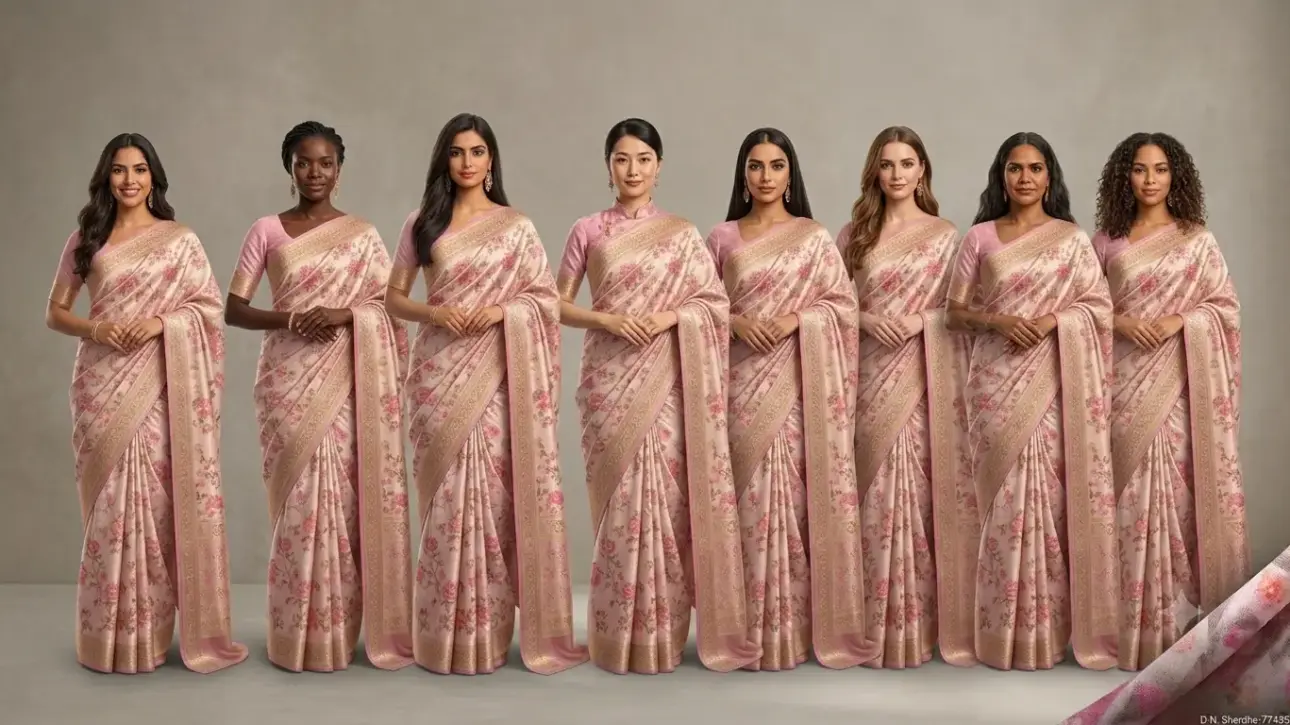
These questions are particularly important when sourcing georgette printed fabric.
Madhav Fashion operates from Surat, Gujarat, one of India’s major textile manufacturing centres, and is identified across FabricDiary product pages as the manufacturing entity behind listed fabrics. Its wider textile activity covers printed, embroidered, plain and specialty fashion materials.
Georgette Printed Fabric Manufacturing in India: From Fabric Selection to Global Bulk Supply
The company’s website uses the positioning “Best Embroidery fabric Manufacturer, Exporter in India, Asia”, while the business also presents embroidery and printed fabrics for international buyers.
For B2B customers, the useful point is not a superlative.
It is manufacturing capability.
A buyer needs a supplier who can understand fabric construction, print development, sampling, bulk production and export requirements as connected stages.
This guide focuses on that production journey for georgette printed fabric.
Understanding Georgette Before Printing
A manufacturer should not begin with the artwork.
The first decision is the base fabric.
Georgette is generally recognized by its lightweight woven crêpe construction and highly twisted yarn character. That construction contributes to its textured surface and fluid drape.
Those characteristics influence printing.
The surface is not identical to a smooth satin or a plain, stable cotton construction. As a result, the artwork needs to be evaluated against the actual fabric.
For manufacturing buyers, the base specification should be established before the print is approved.
Depending on the commercial quality, relevant parameters may include:
- Fibre composition
- Yarn specification
- Weave construction
- Fabric weight
- Width
- Surface character
- Transparency
- Finishing
Not every georgette quality has the same specification.
Therefore, responsible manufacturing communication should avoid presenting one GSM, width or composition as universal.
The buyer’s approved fabric sample should become the commercial reference.
Why Fabric and Print Must Be Developed Together
A common sourcing mistake is to finalize artwork first and then search for a fabric that can reproduce it.
That approach can create unnecessary compromises.
The better sequence is:
Fabric selection → artwork assessment → print method → repeat development → colour development → sample → approval → production
The fabric affects the visual result.
The print affects the hand and surface.
The finishing affects the final garment behaviour.
The garment itself determines whether allover or placement printing is appropriate.
A manufacturing partner should therefore ask about the final application before giving a production recommendation.
Digital Printing in Georgette Manufacturing
Digital printing has changed the way small and medium-scale fashion development can be approached.
Its greatest advantage is flexibility.
A designer can submit an artwork and develop a sample without first committing to a conventional rotary or screen setup.
This makes digital printing particularly useful for:
- Fashion designers
- Boutique labels
- New brands
- Private-label product development
- Limited collections
- Artwork testing
- Sampling
- Exclusive buyer designs
The buyer can evaluate several variables before scaling.
Does the colour look correct?
Does the motif size work?
Does the artwork retain sufficient detail?
Does the fabric still have the desired hand?
Does the finished garment look right?
These questions are much easier to answer before a large production commitment.
The appropriate digital printing chemistry depends on the actual fibre composition. Silk-based georgette and synthetic or regenerated-fibre georgette cannot automatically be treated as the same printing substrate.
That technical distinction is essential.
Bulk Rotary and Screen Printing
Large production programs require a different manufacturing model.
When a buyer has approved the fabric and artwork and needs substantial continuous yardage, bulk mill printing may be the more appropriate route.
Rotary and screen processes are designed around repeatable production.
The artwork is prepared.
The repeat is established.
Colours are developed.
A strike-off or approval sample is produced.
The buyer approves the specification.
Production begins.
This model works because setup and development costs are distributed across a larger production run.
It also explains why bulk printing is not designed for unlimited artwork changes.
Once production has been approved, the mill is working toward consistency.
If the buyer changes a colour, repeat or motif after approval, that may require a new development process.
For export houses and garment manufacturers, understanding this distinction helps avoid production delays and unnecessary cost.
Allover Georgette Printing
Allover printing is usually the most straightforward format for continuous georgette yardage.
The design repeats across the width and length.
This allows a garment manufacturer to purchase fabric and cut according to the garment marker.
Allover printing is particularly appropriate for:
- Floral designs
- Botanical motifs
- Abstract prints
- Small geometric patterns
- Scattered motifs
- Commercial fashion repeats
- Repeat size matters.
A small motif may create a dense visual effect.
A large motif may need more fabric area to display the artwork correctly.
The repeat also needs to be considered in relation to the final garment.
A pattern that looks excellent as a fabric image may not produce the intended result after cutting.
Engineered and Placement Printing
Placement printing is a different manufacturing problem.
The artwork is planned around a garment panel or defined fabric area.
The manufacturer may need:
- Garment measurements
- Panel dimensions
- Placement coordinates
- Border requirements
- Motif positioning
- Cutting direction
- Repeat information
This is more development-intensive than a standard allover repeat.
If the buyer’s main requirement is engineered placement, it should be communicated at the beginning.
It should not be introduced as a last-minute modification to an ordinary allover print.
Choosing the Right Print Method
There is no single printing process that is universally best.
Digital Printing
Best suited to:
- Small development
- Sampling
- Complex artwork
- Multicolour designs
- Short-run development
- Buyer-specific designs
Screen Printing
Useful for:
- Controlled colour areas
- Defined artwork
- Established production designs
- Programs where screen setup is commercially justified
Rotary Printing
Useful for:
- Continuous production
- Large yardage programs
- Repeatable designs
- Commercial manufacturing
The correct method depends on fibre, construction, artwork, quantity and quality expectations.
What a Manufacturer Should Confirm Before Production
A production-ready buyer brief should contain more than “printed georgette.”
The manufacturer needs to understand:
- Base fabric
What exact georgette quality is required?
- Fibre
What composition is approved?
- Print orientation
Allover or placement?
- Artwork
Is the design supplied by the buyer or developed by the manufacturer?
- Colour
Is there a physical standard or reference?
- Repeat
What repeat dimensions are required?
- Garment
What is the intended end use?
- Quantity
Is the project sample-stage, trial production or bulk?
These questions prevent misunderstandings before production begins.
Manufacturing for Fashion Brands
Fashion brands often have two different sourcing needs.
The first is experimentation.
A designer may have five prints but only one may eventually become a commercial collection.
Digital sampling is useful here.
The second is repeat production.
Once the brand knows which print sells, the buyer may need larger quantities with consistent quality.
At this stage, manufacturing discipline becomes more important than experimentation.
The supplier should maintain the approved reference and control the production against it.
This is the bridge between product development and manufacturing.
Private-Label Georgette Production
Private-label buyers typically need a balance between customization and manufacturing reliability.
The brand may own the artwork.
The manufacturer may provide the fabric.
The production team must translate the brand’s design into a repeatable textile specification.
This can include:
- Custom colours
- Repeat adjustments
- Motif scaling
- Exclusive artwork
- Private-label development
- Coordinated fabric programs
- However, customization should be structured.
Unlimited changes during bulk production are not the same as customization during development.
Professional textile development separates these stages.
Export-House Requirements
Export houses often work against garment delivery schedules.
A fabric problem can become a garment problem.
A colour inconsistency can become a shipment problem.
A width variation can affect cutting efficiency.
A print-registration issue can affect garment appearance.
Therefore, export buyers should establish the approved reference before bulk production.
The reference may include:
- Fabric construction
- Physical hand feel
- Colour
- Print scale
- Repeat
- Transparency
- Finishing
- Packing requirements
The more precisely the specification is established, the easier it becomes to discuss production quality.
Georgette for Different Product Categories
Dresses
Georgette’s fluidity can support flowing silhouettes.
Gowns
Printed georgette can be useful where layered movement is part of the design.
Sarees
The fabric is relevant to printed ethnicwear and saree applications.
Dupattas
The lightweight character can support flowing accessories.
Blouses and Skirts
Print scale can be selected according to garment dimensions.
Occasionwear
Colour and artwork can be developed around the intended market and garment positioning.
The suitability of each application depends on the actual fabric quality.
Transparency and Modest Fashion
Transparency is a manufacturing consideration, not simply a marketing description.
A Middle Eastern buyer, for example, may like georgette’s fluid appearance but require a different level of coverage in the finished garment.
The solution may involve:
- Lining
- Layering
- Garment construction
- A different fabric density
- A different colour or finishing
The important point is that the fabric should be evaluated in its final application.
Georgette Compared With Organza
Manufacturers frequently receive comparison requests.
The distinction should be explained clearly.
Organza generally offers a crisper and more structured transparent character.
Georgette is more fluid and associated with crêpe texture.
If a designer wants a soft moving dress, georgette may be more appropriate.
If the garment requires body and crisp transparency, organza may be a better candidate.
Georgette Compared With Cotton Lightweight Fabrics
Mull and muslin should also be considered separately.
Cotton-led fabrics may be selected for their soft hand and breathable character.
Georgette is selected for a different reason: its construction and drape.
A sourcing team should therefore avoid choosing purely on price.
The cheapest metre is not necessarily the lowest-cost fabric once garment performance, cutting and product positioning are considered.
Building a Production Reference
Repeat production works best when a reference is retained.
The reference should identify the approved fabric and print.
This can include:
- Sample identification
- Colour reference
- Print artwork
- Repeat dimensions
- Fabric specification
- Finishing requirement
- Buyer approval
When the next order arrives, the production team can work from that reference.
This is particularly important for brands that reorder successful designs.
Global B2B Sourcing From India
India’s textile ecosystem gives international buyers access to multiple material and processing categories.
For georgette, the buyer may need fabric manufacturing, dyeing, printing, finishing, inspection and export coordination.
A manufacturing platform becomes useful when these conversations can be handled as one sourcing process rather than as isolated supplier searches.
Madhav Fashion’s connection with FabricDiary provides an ecosystem where buyers can discover fabrics through a B2B platform while the manufacturing identity is visible on listed product pages.
For international customers, the practical objective is not simply “buy from India.”
It is to establish a production relationship that can support sampling and, when the product succeeds, repeat manufacturing.
How Buyers Should Send a Manufacturing Inquiry
A good inquiry can be concise.
Include:
- Product type
- Fabric requirement
- Fibre requirement
- Artwork
- Allover or placement
- Approximate quantity
- Target market
- Sample requirement
- Desired application
Any compliance or documentation requirements
If the buyer does not know the exact construction, say so.
A manufacturer can often begin with the intended garment and performance requirements.
That is better than guessing a technical specification.
Sampling Before Bulk Production
Sampling is not merely a smaller order.
It is the validation stage.
The buyer should evaluate:
- Fabric hand
- Drape
- Transparency
- Print appearance
- Colour
- Repeat
- Garment performance
If the sample fails, the production specification should be corrected before bulk.
This is especially important for georgette because the final visual effect depends on both fabric and print.
What Makes a Good Long-Term Manufacturing Partner?
A long-term textile partner should make communication easier.
The buyer should be able to discuss:
- Material alternatives
- Print methods
- Artwork
- Repeat sizes
- Sampling
- Bulk production
- Quality references
- Packing
- Export documentation
- The relationship should also have clear boundaries.
A manufacturer should be transparent about what can be customized during development and what becomes fixed after production approval.
That clarity is more valuable than promising unlimited flexibility.
Georgette printed fabric manufacturing is a combination of textile construction, print technology and production management.
Digital printing is particularly useful for sampling, small projects and artwork development.
Bulk rotary or screen printing is more appropriate for substantial production once the design has been approved.
Allover printing is the natural format for continuous yardage, while placement printing requires garment-specific engineering.
For brands, exporters, factories and wholesalers, the best sourcing process begins before the quotation.
Define the fabric.
Define the artwork.
Define the garment.
Define the production stage.
Then choose the print route.
That approach reduces avoidable production problems and creates a clearer path from the first sample to repeat bulk manufacturing.
For buyers evaluating Indian manufacturing partners, the next step is straightforward: send the fabric requirement, artwork or reference, intended application and approximate quantity for a production discussion.