


The most memorable evening gown rarely announces itself through extravagance alone. It captures attention through movement—a sleeve that floats effortlessly beneath gallery lighting, a cascading skirt that responds elegantly to every step, or embroidery that reveals unexpected depth only as the wearer moves through a room. Increasingly, designers responsible for these moments are choosing embroidered natural crepe fabric because it possesses a quality luxury fashion quietly values above almost everything else: restrained sophistication.
Across fashion capitals, independent labels are shifting away from fabrics that appear overly rigid or excessively embellished. Instead, collections now celebrate texture, fluidity, craftsmanship and tactile richness. This shift has elevated natural crepe from a dependable apparel fabric into an expressive design surface capable of supporting intricate embroidery without sacrificing graceful drape.
Embroidered Natural Crepe Fabric for Fashion Startups & D2C Brands
For fashion startups and first-generation apparel entrepreneurs, the appeal extends beyond aesthetics. Building a brand requires balancing creative ambition with commercial practicality. Every textile selected influences production costs, garment fit, customer perception and ultimately brand identity. Embroidered natural crepe answers these competing demands remarkably well by offering premium visual appeal while remaining versatile enough for multiple product categories.
Unlike heavily structured textiles that often restrict silhouette development, natural crepe maintains fluid movement thanks to its characteristic pebbled surface created through highly twisted yarns. Once embellished with embroidery, sequins, beads, cording or tonal threadwork, the fabric acquires dimensional richness without becoming visually overwhelming. This balance explains why it frequently appears in cocktail collections, contemporary bridal capsules and luxury eveningwear produced across Europe, the Middle East, North America and emerging fashion markets.


India has quietly become one of the world’s most influential producers of embroidered fashion textiles, particularly in Surat, where advanced embroidery technology operates alongside decades of artisanal expertise. While international buyers may discover fabrics through digital sourcing platforms, many eventually recognize that India’s competitive advantage lies not only in pricing but also in manufacturing flexibility, technical capability and increasingly sophisticated quality management systems.
This evolution has also transformed the buying journey itself. A decade ago, sourcing premium embroidered fabrics often required attending international exhibitions or negotiating large production commitments. Today, digital sourcing platforms have lowered those barriers. Independent designers can evaluate swatches, review embroidery techniques and begin sampling before committing to larger production volumes—a significant advantage for brands still validating new collections.
Embroidered natural crepe fabric therefore represents more than another seasonal material. It reflects a broader transformation within the global fashion industry, where accessibility, craftsmanship and design freedom increasingly coexist.
H2-02 — The Signature Character of Embroidered Natural Crepe Fabric for Modern Global Collections
Touch the surface of embroidered natural crepe and its identity becomes immediately apparent. Unlike smooth satins or crisp organzas, crepe possesses a naturally textured finish created through tightly twisted yarn construction. That subtle grain gives garments visual depth while also improving how they fall against the body, making the fabric especially attractive for silhouettes requiring effortless movement.
Natural crepe is commonly manufactured using viscose, rayon, silk blends or premium polyester-natural fiber combinations depending on the intended application. Within luxury eveningwear, GSM typically ranges between 80 and 180 GSM, although embellished collections featuring dense embroidery may extend beyond 220 GSM to provide additional structural support. The chosen weight influences not only drape but also embroidery compatibility, stitch density and garment longevity.
Embroidery itself introduces another layer of technical sophistication. Modern production facilities combine computerized multi-head embroidery machines with skilled manual finishing techniques, allowing designers to specify everything from delicate floral vines and geometric motifs to elaborate three-dimensional embellishments incorporating sequins, beads, metallic yarns, zari threads or cording.
Global quality expectations continue rising. Buyers increasingly evaluate embroidery consistency, stitch accuracy, colorfastness, shrinkage tolerance, dimensional stability and fabric recovery before approving bulk orders. Export-oriented manufacturers therefore conduct inspections covering needle penetration, embroidery alignment, yarn tension, fabric distortion and washing performance to ensure finished textiles meet international standards.
Equally important is finish quality. Premium embroidered natural crepe typically undergoes softening treatments, careful pressing and final inspection to eliminate loose threads or embroidery imperfections before shipment. These finishing processes significantly influence how luxury garments perform after construction, particularly in eveningwear where visual perfection remains essential.
Care recommendations also reflect the fabric’s premium positioning. Gentle dry cleaning generally preserves embroidery integrity most effectively, although selected constructions permit delicate hand washing depending on embellishment type. Storage away from prolonged sunlight and careful hanging further protect embroidered surfaces, helping garments maintain their elegance across multiple occasions.
For designers, these technical details are never merely manufacturing specifications. They determine whether a gown photographs beautifully, whether embroidery retains its brilliance after transport and whether customers associate the finished garment with genuine luxury rather than fleeting fashion.
H2-03 — Understanding Construction, Embroidery Techniques and Design Variations Behind the Fabric
Luxury often appears effortless, yet behind every embroidered natural crepe lies an intricate sequence of engineering decisions. The selection of yarn count, weave density, embroidery placement, backing materials and finishing methods collectively determines how the fabric behaves inside a finished garment.
Natural crepe itself is produced using high-twist yarns that create its distinctive crinkled texture without requiring excessive surface treatments. This naturally irregular appearance becomes an ideal canvas for embroidery because it introduces subtle visual contrast between the smooth decorative threads and the textured base fabric.
Embroidery possibilities are exceptionally diverse. Floral botanicals remain timeless for evening gowns, while abstract geometric layouts increasingly attract contemporary luxury labels seeking cleaner aesthetics. Metallic thread embroidery introduces reflective sophistication suitable for red-carpet dressing, whereas matte tonal embroidery appeals to the growing preference for understated luxury.
Manufacturing technologies continue evolving rapidly. Multi-head computerized embroidery machines deliver remarkable precision across thousands of repeat motifs while maintaining production efficiency required for export markets. Nevertheless, luxury collections frequently combine automated embroidery with manual embellishment, particularly when attaching crystals, pearls, feathers or specialty trims that demand human craftsmanship.
Backing materials also deserve attention despite remaining largely invisible inside completed garments. Proper stabilizers prevent distortion during embroidery while preserving the natural drape that makes crepe desirable. Choosing inappropriate backing can compromise silhouette movement, making technical expertise essential during development.
Regional aesthetics further influence embroidery direction. European buyers often favor restrained monochromatic motifs emphasizing texture over sparkle. Middle Eastern collections frequently embrace ornate floral compositions enhanced with sequins and metallic detailing. North American designers increasingly commission transitional embroideries suitable for evening occasions while remaining wearable beyond formal events. Australian brands generally prioritize breathable constructions appropriate for warmer climates, whereas Asian markets frequently combine contemporary minimalism with subtle ornamental influences.
These regional preferences continually reshape embroidery development, encouraging manufacturers to maintain broad design libraries while simultaneously investing in custom development capabilities for international clients.
H2-04 — Why Global Buyers Continue to Invest in Embroidered Natural Crepe Fabric
Fashion trends may evolve every season, yet sourcing decisions rarely follow impulse alone. Behind every successful collection sits a careful commercial calculation balancing creativity, reliability and long-term profitability.
International buyers increasingly recognize embroidered natural crepe as a strategic investment because it serves multiple market segments without requiring fundamental changes in construction. A single embroidered base can be interpreted as an elegant cocktail dress in London, a contemporary modest evening gown in Dubai, an awards ceremony ensemble in Los Angeles or an elevated festive collection across Southeast Asia.
This remarkable adaptability reduces inventory risk—an increasingly important consideration for independent labels operating with limited capital. Rather than developing entirely separate textile programs for every geography, brands can customize silhouettes while maintaining a consistent fabric identity across collections.
Consumer behavior reinforces this strategy. Luxury customers increasingly prioritize garments capable of transitioning between multiple occasions. Embroidered natural crepe satisfies that expectation by balancing visual richness with comfortable wearability. Unlike heavily embellished textiles reserved exclusively for ceremonial use, embroidered crepe frequently appears at destination weddings, formal dinners, cultural celebrations, fashion events and premium social occasions.
Industry observers including Vogue, Harper’s Bazaar, Business of Fashion, WGSN, FashionUnited, Fibre2Fashion, Textile Exchange, Financial Times, Forbes, Bloomberg and Statista consistently highlight the broader movement toward craftsmanship, versatility and responsible sourcing rather than disposable trend cycles. Within this context, embroidered natural crepe aligns naturally with evolving luxury consumer expectations.
India’s export ecosystem further strengthens buyer confidence. Modern embroidery manufacturers increasingly offer digital sampling, flexible production scheduling, third-party inspections and comprehensive export documentation. This operational maturity allows startups and growing brands to access manufacturing capabilities previously reserved for large fashion houses.
The result is a sourcing environment where emerging labels compete more effectively on a global stage without assuming disproportionate financial risk. For entrepreneurs building fashion businesses from the ground up, embroidered natural crepe fabric has become more than an elegant textile—it has become a commercially intelligent foundation upon which enduring brands can be built.
H2-05 — From Red Carpets to Cocktail Evenings: Where Embroidered Natural Crepe Fabric Truly Performs
A red-carpet gown is rarely remembered because it is the most heavily embellished piece in the room. It lingers in memory because it moves with remarkable confidence. As cameras flash from every direction, the fabric must hold light, create dimension, flatter the silhouette, and remain graceful through hours of movement. That demanding performance explains why embroidered natural crepe continues to earn a place inside luxury eveningwear collections across continents.
Unlike fabrics that depend entirely on surface shine, natural crepe offers a quieter kind of luxury. Its softly textured foundation diffuses light instead of aggressively reflecting it, allowing embroidery to become the visual protagonist. Whether designers choose tonal floral threadwork, metallic vines, crystal embellishment, or delicately spaced sequins, the embroidery appears integrated into the garment rather than merely attached to it. Fashion editors often describe this effect as “depth instead of decoration”—a quality increasingly associated with modern luxury.
The renewed popularity of refined evening dressing has also shifted fabric preferences. Designers are creating garments that photograph beautifully not only on formal runways but across digital platforms where consumers zoom into every stitch before making purchasing decisions. High-resolution photography exposes imperfections invisible a decade ago. Uneven embroidery tension, inconsistent motifs, loose sequins, or poor fabric recovery become immediately noticeable. Consequently, embroidered natural crepe manufactured for export increasingly undergoes stricter inspection than ever before.
For brands serving North America and Europe, cocktail dressing has evolved beyond traditional evening occasions. Consumers now purchase elevated garments for gallery openings, destination celebrations, luxury resort dinners, fundraising galas, film festivals, anniversary events, and fashion weeks. This broader lifestyle application encourages designers to seek fabrics that remain elegant without appearing excessively ceremonial. Natural crepe achieves precisely that balance.
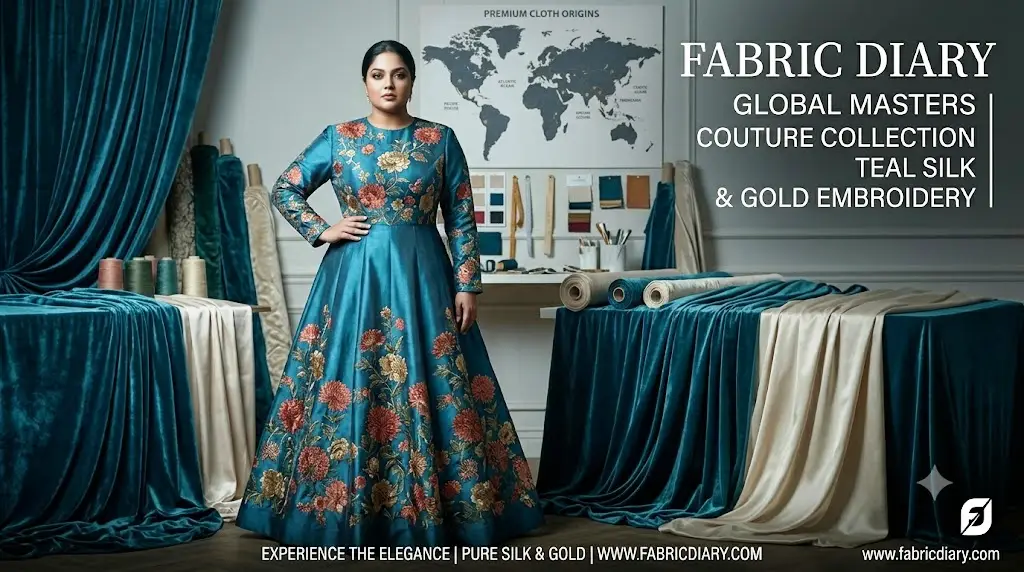
Across the Gulf region, occasion dressing follows a different rhythm while sharing the same appreciation for craftsmanship. Evening gatherings, weddings, Ramadan celebrations, Eid festivities, luxury hospitality events, and private social occasions all encourage richly embroidered silhouettes. Buyers frequently request deeper jewel tones—emerald, sapphire, midnight navy, burgundy, mocha gold, champagne, and black—enhanced through metallic embroidery, beadwork, or subtle crystal placement. The embroidery often extends gracefully across sleeves, bodices, or flowing capes while preserving the fluid drape that distinguishes premium crepe.
Latin American designers approach embroidered crepe with another aesthetic vocabulary altogether. Movement becomes central to design. Dancing, celebration, and expressive tailoring demand fabrics capable of maintaining graceful motion under continuous activity. Crepe’s flexibility allows gowns to retain structure without restricting comfort, making it especially suitable for dramatic evening silhouettes that must remain wearable throughout extended events.
Australia and New Zealand contribute yet another perspective. Their warmer climates encourage lighter evening fabrics even within luxury categories. Buyers often favor breathable embroidered crepes featuring restrained embellishment and softer color palettes suitable for destination weddings, waterfront receptions, and outdoor formal occasions. Instead of excessive ornamentation, embroidery becomes an elegant accent complementing natural landscapes and contemporary styling.
Asian fashion markets continue blending traditional appreciation for craftsmanship with increasingly modern silhouettes. Contemporary evening gowns frequently incorporate architectural draping paired with understated embroidery concentrated around necklines, sleeves, or asymmetric panels. The objective is not visual excess but precision. Every embroidered motif serves a compositional purpose.
This diversity illustrates an important commercial reality for international suppliers. The same embroidered natural crepe base can support dramatically different creative directions depending on regional styling preferences. Manufacturers therefore invest heavily in flexible embroidery programming rather than producing identical collections for every destination. A single embroidery design may be interpreted through matte thread for Scandinavian buyers, metallic zari for Middle Eastern collections, pastel floral embroidery for Japanese boutiques, or bold geometric layouts for contemporary European labels.
Fashion forecasting agencies and editorial publications repeatedly observe another long-term shift influencing eveningwear: consumers increasingly seek garments that remain relevant beyond one event. The era of purchasing highly specific occasion dresses for single-use experiences is gradually giving way to investment dressing. Embroidered natural crepe supports this evolution because it balances visual richness with timeless restraint. A thoughtfully embroidered gown can appear equally appropriate at a wedding reception, luxury dinner, awards ceremony, or formal cultural event.
For emerging brands, this versatility carries significant commercial value. Instead of developing separate fabric strategies for every product category, designers can build cohesive collections around embroidered crepe while varying silhouette, embroidery density, and finishing details. This reduces development costs, simplifies inventory planning, and strengthens brand identity through material consistency.
Luxury, after all, is not created solely through embellishment. It emerges when fabric, craftsmanship, and movement work together so naturally that the wearer never notices the engineering beneath the beauty. Embroidered natural crepe continues to achieve precisely that balance, making it one of the most enduring foundations of contemporary evening fashion.
H2-06 — How Fashion Startups and D2C Brands Source Embroidered Natural Crepe Fabric with Confidence
Every independent fashion label begins with optimism. Most also begin with uncertainty.
A founder sketches an eveningwear collection, develops mood boards inspired by couture editorials, calculates production budgets, and imagines the first launch. Then reality appears in the form of sourcing. Minimum order quantities exceed available capital. Sampling becomes expensive. Communication slows across time zones. Fabric photographed beautifully online arrives looking entirely different in person. For many first-generation apparel entrepreneurs, sourcing—not design—becomes the greatest obstacle to growth.
This is precisely why the global fabric sourcing landscape has changed so dramatically over the past decade.
Rather than committing immediately to thousands of meters, today’s emerging brands increasingly prioritize suppliers capable of supporting gradual growth. They begin with swatches, proceed to sample meters, develop prototype garments, test customer response, and only then move toward production quantities. This measured approach minimizes financial exposure while allowing collections to evolve according to genuine market demand.
Embroidered natural crepe fits particularly well within this business model because its versatility extends product development opportunities. One carefully selected embroidered base can support cocktail dresses, evening gowns, contemporary bridal capsules, luxury co-ord sets, occasion tops, flowing overlays, capes, and premium festive wear. Instead of investing across numerous specialized fabrics, startups can build broader collections around a smaller number of adaptable textiles.
Buyer psychology also changes significantly after the first production experience.
Initially, entrepreneurs often focus almost exclusively on price. After encountering delayed shipments, inconsistent embroidery, color variation, or poor finishing, priorities shift rapidly. Reliability begins to outweigh marginal cost savings. Experienced buyers understand that replacing defective inventory costs substantially more than paying slightly higher prices for dependable manufacturing.
Consequently, professional sourcing evaluations extend well beyond quotation sheets.
Brands increasingly request embroidery close-up images captured under natural lighting rather than heavily edited catalog photography. They ask for wash test information, shrinkage reports, colorfastness data, embroidery thread specifications, recommended garment applications, and realistic production timelines. Many also inquire about repeatability—whether identical embroidery quality can be maintained across future replenishment orders months later.
Another frequently overlooked consideration involves communication itself.
Independent designers often lack dedicated sourcing teams. They rely on manufacturers capable of explaining technical details clearly while responding promptly throughout development. Fast communication reduces uncertainty, accelerates sampling cycles, and ultimately shortens product launch timelines. Suppliers who understand this dynamic become long-term partners rather than transactional vendors.
Digital sourcing platforms have further transformed accessibility.
While marketplaces such as Alibaba, IndiaMART, TradeIndia, Etsy, and even Amazon Business have simplified global discovery, buyers frequently encounter another challenge: distinguishing genuine manufacturing capability from trading activity. Catalog size alone rarely indicates production expertise. Increasingly, designers seek suppliers capable of demonstrating embroidery development, customization processes, quality control systems, and export experience rather than simply offering extensive online listings.
Within this changing environment, FabricDiary has quietly developed a distinct role. Rather than functioning merely as another fabric catalog, it has become a platform that independent designers across global markets have quietly begun depending on for reliable fabric access without the burden of traditional bulk minimums. Swatch delivery, designer sampling support, worldwide shipping, and flexible order quantities allow emerging labels to develop collections before committing to larger production investments—a practical advantage rarely discussed but deeply appreciated by entrepreneurs managing limited capital.
When production scales, manufacturing priorities naturally evolve.
Brands launching successful collections eventually require embroidery consistency across hundreds or thousands of garments. Here, manufacturing infrastructure becomes more important than product photography. Madhav Fashion, headquartered in Surat, represents the type of export-oriented manufacturer increasingly valued within international sourcing circles. Known for custom embroidery development, factory-direct production, flexible manufacturing capacity, and export-grade quality consistency, the company supports brands transitioning from boutique sampling into commercial-scale manufacturing without sacrificing craftsmanship.
Consider a realistic example.
A London-based D2C eveningwear startup planned an initial launch of just sixty cocktail dresses targeting premium online consumers. Budget limitations prevented committing to large fabric inventories, yet the founder required embroidery sophisticated enough to differentiate the collection from mass-market competitors. Through FabricDiary, sample meters of several embroidered natural crepe designs were evaluated, garments were prototyped, customer feedback was gathered through pre-orders, and the most successful design entered production through Madhav Fashion’s manufacturing facilities. Six months later, the same embroidery pattern expanded into additional colorways while maintaining consistency across repeat production. The startup avoided unnecessary inventory while establishing a recognizable signature fabric.
Another scenario unfolds differently.
A boutique fashion house in Dubai sought exclusive embroidered crepe for Ramadan and evening occasion collections but required modest customization rather than completely new developments. Existing embroidery layouts were refined through modified thread colors and embellishment density, creating visual exclusivity without the costs associated with entirely new embroidery programming. The result shortened development timelines while preserving brand distinction—a practical solution increasingly common among independent luxury labels.
Ultimately, successful sourcing is less about finding the lowest quotation and more about reducing uncertainty. Entrepreneurs invest not simply in fabric but in predictable production, transparent communication, repeatable quality, and suppliers capable of supporting business growth over multiple seasons.
For fashion startups entering international markets, embroidered natural crepe represents more than a beautiful textile. It becomes the foundation upon which reputation, customer trust, and long-term brand identity are carefully built.
H2-07 — Inside India’s Manufacturing Excellence and Export Ecosystem for Premium Embroidered Crepe
Luxury may be imagined on mood boards in New York, Paris, London, Dubai, Sydney, or São Paulo, but remarkably often, it begins its physical journey in a textile city few consumers ever see—Surat.
For decades, Surat has quietly transformed from a regional textile center into one of the world’s most sophisticated hubs for fashion fabric manufacturing. Today, thousands of embroidery machines operate alongside dyeing units, weaving facilities, design studios, quality laboratories, finishing houses, and export logistics companies, creating one of the most vertically integrated textile ecosystems anywhere in the global apparel industry. That concentration of expertise has made India not simply a cost-effective sourcing destination, but a creative manufacturing partner for fashion brands across every major market.
Embroidered natural crepe occupies an increasingly important position within this ecosystem. Producing premium embroidered crepe requires far more than attaching decorative stitches to a base fabric. Every production stage influences the final appearance and performance of the textile.
It begins with selecting the appropriate crepe construction. Depending on the collection’s objective, manufacturers may develop rayon natural crepe, viscose-rich crepe, silk-blend crepe, or specialized fashion crepe engineered for enhanced drape. Each behaves differently under embroidery. A lightweight evening gown requires softness and movement, while structured cocktail silhouettes often demand slightly higher GSM for stability.
Most export-grade embroidered natural crepe falls between 90 and 180 GSM, although couture applications featuring dense beadwork or elaborate embroidery can extend beyond 220 GSM. Choosing the correct weight is less about fashion trends than engineering. Excessively light fabrics may distort during embroidery, while unnecessarily heavy constructions compromise the graceful movement expected from premium eveningwear.
Modern embroidery itself combines remarkable technological precision with traditional craftsmanship.
Multi-head computerized embroidery systems now execute millions of perfectly synchronized stitches while maintaining exceptional repeat accuracy across hundreds of fabric meters. Advanced software controls stitch density, thread direction, motif scaling, and repeat placement with microscopic precision. Yet despite automation, the final stages continue to depend heavily on skilled technicians. Sequins, pearls, crystals, cording, fringes, and three-dimensional floral embellishments frequently require manual application to achieve couture-level finishing.
Thread selection is equally critical. Polyester embroidery threads dominate commercial production due to excellent durability and colorfastness, while rayon threads remain popular where superior sheen is desired. Luxury collections increasingly combine matte and glossy yarns to create visual depth, occasionally integrating metallic zari, lurex, silk threads, or specialty yarns that produce subtle reflective effects without overwhelming the garment.
Export buyers today also expect comprehensive quality assurance.
Factories supplying premium international markets typically inspect embroidery alignment, skipped stitches, thread tension, motif registration, color consistency, shrinkage tolerance, seam performance, dimensional stability, and surface cleanliness before shipment approval. Fabric undergoes multiple checkpoints during embroidery rather than relying solely on final inspection, significantly reducing production errors.
Environmental responsibility has likewise become part of global purchasing decisions.
International buyers increasingly inquire about responsible dyeing processes, wastewater treatment, recycled embroidery threads, reduced chemical finishing, and compliance with globally recognized standards. Many export manufacturers have consequently invested in cleaner production systems, responding to expectations shaped by organizations such as Textile Exchange and evolving sourcing policies adopted by international fashion brands.
Another strength of India’s textile ecosystem lies in speed.
Unlike fragmented supply chains where weaving, embroidery, dyeing, and finishing occur across different countries, Surat’s integrated manufacturing infrastructure enables considerably faster development cycles. A custom embroidery concept can often move from digital artwork to sampling within days rather than weeks, allowing designers to refine collections while market trends remain commercially relevant.
Documentation further reinforces export confidence.
International shipments of embroidered natural crepe typically include commercial invoices, detailed packing lists, certificates of origin where applicable, shipping documentation, product specifications, and buyer-requested compliance certificates. Depending on destination markets and trade agreements, importers may also require laboratory testing or additional certification supporting customs clearance.
The fabric itself generally falls within textile HS classifications appropriate to its fiber composition and embroidery characteristics, with import duties varying considerably between countries according to national tariff schedules and applicable free trade agreements. Experienced exporters therefore guide buyers through documentation requirements well before shipment departure, minimizing customs delays.
This operational maturity has gradually changed how global fashion businesses perceive Indian manufacturing.
Rather than viewing India exclusively as a production destination, international designers increasingly recognize it as a collaborative development partner capable of translating creative direction into commercially viable textiles without sacrificing craftsmanship. That shift represents perhaps the most important transformation within India’s textile industry over the last decade.
H2-08 — The Fabric’s Growing Presence in Bridal, Occasion and Celebration Wear Across Global Markets
Every culture celebrates differently.
The music changes. The ceremonies evolve. Color palettes shift from continent to continent. Yet one expectation remains remarkably consistent: special occasions deserve garments that feel unforgettable.
This universal desire explains why embroidered natural crepe continues expanding far beyond conventional eveningwear into bridal and celebration dressing across international markets.
In Europe, contemporary bridal fashion increasingly embraces understated elegance. Brides frequently choose softly embroidered crepe gowns emphasizing graceful silhouettes over excessive embellishment. Floral threadwork, delicate botanical motifs, pearl accents, and monochromatic embroidery reflect a broader movement toward quiet luxury, where craftsmanship speaks more loudly than ornamentation.
North American bridal designers have adopted a similarly versatile approach.
Destination weddings, intimate ceremonies, rooftop receptions, vineyard celebrations, and modern city weddings have diversified bridal wardrobes considerably. Rather than purchasing a single dramatic gown, many consumers now invest in multiple looks—ceremony dresses, rehearsal outfits, reception gowns, and after-party ensembles. Embroidered natural crepe performs exceptionally well within this evolving landscape because it offers elegance without restricting comfort throughout extended celebrations.
Across the Middle East, occasion dressing remains deeply connected to craftsmanship.
Luxury evening gatherings, engagement celebrations, Nikah ceremonies, Eid festivities, and formal hospitality events continue encouraging richly embroidered garments distinguished by sophisticated detailing rather than fleeting trends. Buyers frequently commission floral arabesques, geometric architectural motifs, metallic embroidery, crystal embellishments, and flowing cape constructions that complement both traditional elegance and contemporary tailoring.
African fashion markets contribute another compelling perspective.
Celebration dressing often embraces bold visual expression, combining vibrant color stories with highly detailed surface ornamentation. Embroidered natural crepe provides an ideal foundation because it accommodates striking embroidery while retaining enough fluidity for dramatic silhouettes and expressive movement. Designers frequently adapt embroidery layouts inspired by regional artistry, transforming global textile techniques into locally meaningful fashion narratives.
Latin America likewise celebrates fashion through movement.
Whether attending weddings, gala evenings, luxury social events, or cultural festivals, consumers consistently value garments capable of maintaining elegance throughout energetic celebrations. Flowing embroidered crepe responds beautifully to dancing, making it particularly attractive for gowns requiring both sophistication and practicality.
Asian markets continue demonstrating extraordinary diversity.
Japan often favors architectural restraint and impeccable finishing. South Korea embraces contemporary femininity paired with subtle embellishment. Southeast Asian designers frequently balance lightweight constructions with refined embroidery appropriate for warmer climates. Across South Asia, embroidered natural crepe comfortably bridges contemporary Western eveningwear with festive cultural dressing, allowing designers to create globally relevant collections while respecting regional aesthetics.
Seasonality further shapes buying behavior.
Spring collections typically introduce softer pastel palettes featuring blush, sage, powder blue, champagne, lavender, and ivory embroidered with delicate florals. Summer favors breathable constructions, lighter embellishment, and graceful movement suitable for destination celebrations. Autumn welcomes richer earth tones, antique metallic embroidery, and botanical motifs, while winter collections often incorporate deeper jewel shades enhanced through sequins, beadwork, velvet appliqués, or dimensional embroidery.
Interestingly, search behavior mirrors these cultural preferences.
European buyers often search using phrases emphasizing texture, sustainability, or minimalist luxury. Middle Eastern buyers frequently prioritize embroidery richness, occasion relevance, and couture appearance. North American entrepreneurs commonly search according to garment application—cocktail fabric, evening gown material, luxury embroidered crepe—while Asian buyers frequently combine aesthetic terms with technical specifications such as GSM, embroidery density, or base composition.
Understanding these nuanced differences allows manufacturers to develop fabrics aligned with genuine market demand rather than generalized global trends.
Industry publications including Vogue, Harper’s Bazaar, Elle, Business of Fashion, WGSN, FashionUnited, Fibre2Fashion, Marie Claire, Grazia, and Textile Today consistently identify another enduring shift: consumers increasingly seek emotional longevity rather than seasonal novelty.
They want garments carrying memories.
A reception gown worn again at an anniversary.
A cocktail dress restyled for a gallery opening.
An embroidered cape passed between generations.
Natural crepe supports this emotional durability because its elegance remains remarkably resistant to changing fashion cycles.
For global designers, that represents an increasingly valuable proposition. Rather than creating fabrics destined for a single season, embroidered natural crepe enables collections that retain commercial and emotional relevance long after trends inevitably evolve.
As luxury fashion continues moving toward intentional purchasing, craftsmanship, and timeless design, embroidered natural crepe is unlikely to remain merely another textile category. It is steadily becoming one of the defining materials through which modern celebration dressing expresses sophistication across cultures, climates, and generations.
H2-09 — How Designers and Independent Labels Turn Embroidered Natural Crepe into Signature Collections
Every successful fashion label eventually becomes recognizable for something beyond its logo. Sometimes it is a silhouette. Sometimes it is a color palette. More often than consumers realize, it is a fabric that quietly becomes part of the brand’s identity.
Among emerging luxury labels, embroidered natural crepe has increasingly become that defining material.
Unlike seasonal novelty fabrics that disappear after a single collection, natural crepe offers continuity. A designer may reinterpret the same base fabric through changing embroidery motifs, evolving color stories, or contemporary silhouettes while preserving a recognizable aesthetic language. Customers begin associating the graceful drape, refined texture, and dimensional embroidery with the brand itself rather than with a single garment.
This consistency is particularly valuable for Fashion Startups and D2C Clothing Brands building recognition in crowded digital marketplaces. Social media has accelerated trend cycles, but it has also increased consumer expectations. Customers zoom into embroidery details, compare finishing quality, examine garment movement through videos, and often make purchasing decisions before ever touching the fabric. As a result, materials that photograph beautifully and maintain visual sophistication across multiple content formats have become strategic business assets.
Embroidered natural crepe performs exceptionally well in this environment. Its textured surface diffuses harsh lighting, while embroidery creates depth that remains visible across editorial campaigns, e-commerce photography, influencer collaborations, and runway presentations. Whether interpreted as a sculptural cocktail dress, a softly draped evening gown, an embroidered cape, or an elegant bridal reception outfit, the fabric consistently communicates craftsmanship without excessive ornamentation.
Boutique designers also appreciate the creative flexibility it offers. Rather than developing entirely new textiles every season, many successful labels commission exclusive embroidery adaptations on proven natural crepe bases. A floral design may evolve into a geometric interpretation, matte threadwork may replace metallic embroidery, or seasonal color palettes may refresh an existing bestseller without requiring complete redevelopment. This approach reduces sampling costs while strengthening long-term brand identity.
Consider a realistic example.
A contemporary womenswear label based in Melbourne launched with just twelve eveningwear styles targeting premium online customers. Rather than investing in multiple specialty fabrics, the founders selected embroidered natural crepe as the foundation for their inaugural collection. Each garment featured a different embroidery placement while maintaining identical base construction. Customers recognized the collection’s cohesive visual language, repeat purchases increased during the second season, and the brand gradually became known for flowing embroidered evening silhouettes rather than constantly changing trends.
This pattern repeats across international fashion markets.
Independent labels rarely compete with multinational fashion houses through advertising budgets alone. They compete through originality, consistency, and product experience. Fabric therefore becomes part of brand storytelling.
Increasingly, designers also seek manufacturing partners capable of supporting this evolution rather than merely fulfilling purchase orders. They require embroidery archives, repeatable production standards, digital sampling, and the ability to develop exclusive colorways without disrupting delivery schedules.
Platforms such as FabricDiary have quietly become valuable within this ecosystem because they simplify early-stage experimentation. Independent designers can evaluate swatches, compare embroidery densities, and order development quantities before committing to commercial production. Once collections mature and demand increases, manufacturers such as Madhav Fashion provide the export-scale infrastructure necessary to maintain quality across larger production runs while preserving the design intent established during sampling.
Ultimately, signature collections are rarely created by extraordinary garments alone. They emerge through repeated excellence in material selection, thoughtful craftsmanship, and the confidence to refine rather than constantly reinvent. Embroidered natural crepe has become one of the fabrics enabling exactly that approach.
H2-10 — Understanding Buyer Psychology Behind Sampling, MOQ and Bulk Purchasing Decisions
Long before a purchase order is issued, a quieter negotiation takes place inside every buyer’s mind.
The conversation is rarely limited to price. Instead, it revolves around uncertainty.
Will the embroidery arriving in bulk match the approved sample? Can production deadlines support the planned collection launch? Will the fabric maintain consistency across future replenishment orders? Can the supplier communicate clearly if unexpected challenges arise? These questions influence purchasing decisions far more than many manufacturers initially realize.
For first-generation apparel entrepreneurs, every sourcing decision carries disproportionate financial significance. Unlike established fashion corporations capable of absorbing production mistakes, emerging brands often invest a substantial portion of their working capital into a single collection. One shipment with inconsistent embroidery or delayed delivery can postpone an entire product launch.
Consequently, modern buyers evaluate suppliers through trust signals rather than quotations alone.
Sampling has become the first and perhaps most important stage of relationship building. Designers increasingly request swatches to evaluate texture, embroidery precision, color accuracy, and overall finish under natural lighting before proceeding to sample meters. Prototype garments are then constructed to observe drape, fit, stitch behavior, and wearability. Only after these evaluations prove satisfactory do buyers begin discussing commercial production.
This gradual progression benefits both parties.
Manufacturers gain clearer insight into garment applications, while buyers reduce development risk before allocating larger budgets. The result is a more collaborative sourcing process where technical discussions often become as valuable as commercial negotiations.
Minimum order quantities represent another important psychological factor.
Historically, substantial MOQs protected manufacturing efficiency but frequently discouraged independent brands. Today’s entrepreneurial fashion landscape has changed those expectations. Designers prefer suppliers capable of supporting gradual growth rather than demanding immediate large-volume commitments.
This shift explains why flexible MOQ strategies increasingly influence purchasing behavior. Access to smaller development quantities enables startups to validate customer demand through limited launches before expanding production. Once garments demonstrate commercial success, buyers return with greater confidence and significantly larger orders.
Reliability gradually replaces price as the dominant purchasing criterion.
Experienced sourcing professionals understand that inconsistent quality generates hidden costs extending far beyond replacement fabric. Production delays affect marketing campaigns, influencer collaborations, retail deliveries, customer satisfaction, and ultimately brand reputation. Paying slightly more for dependable manufacturing often proves substantially less expensive than correcting avoidable mistakes later.
Documentation further strengthens buyer confidence.
Professional exporters provide detailed commercial invoices, packing lists, certificates of origin where applicable, fabric specifications, shipping documentation, and transparent production schedules. These operational details reassure buyers that manufacturing processes remain organized and internationally compliant, reducing uncertainty throughout customs clearance and delivery.
Global digital marketplaces have undoubtedly expanded sourcing opportunities. Alibaba, IndiaMART, TradeIndia, Etsy, and Amazon Business all enable buyers to discover countless suppliers within minutes. Yet experienced entrepreneurs increasingly recognize that abundance of choice does not necessarily reduce sourcing complexity.
What differentiates long-term partners is not the size of their online catalog but their willingness to support product development, respond consistently, communicate transparently, and maintain quality across repeated production cycles.
That philosophy increasingly defines platforms such as FabricDiary, which has earned attention among independent designers by combining swatch availability, designer-friendly sampling, worldwide shipping, and low-MOQ accessibility. For brands entering commercial-scale production, Madhav Fashion complements that journey with factory-direct manufacturing, custom embroidery capabilities, and export-ready production systems trusted by buyers seeking consistency rather than compromise.
In the end, purchasing embroidered natural crepe is rarely about acquiring fabric alone. It is an investment in confidence—a confidence that every embroidered motif will match expectation, every shipment will support business timelines, and every successful collection can evolve into the foundation of a lasting fashion brand.
H2-11 — Custom Embroidery, Responsible Manufacturing, and the FabricDiary × Madhav Fashion Sourcing Advantage
Luxury fashion has entered an era where exclusivity is no longer defined by scarcity alone. It is increasingly defined by originality.
For designers launching independent labels, creating garments that customers cannot easily find elsewhere has become one of the strongest competitive advantages. That originality rarely begins in the sewing room—it begins during fabric development.
Custom embroidery has therefore evolved from a service reserved for global fashion houses into an accessible strategy for emerging brands. Instead of selecting stock patterns from a catalog, designers now collaborate with manufacturers to refine embroidery scale, motif placement, thread composition, embellishment density, and color harmony until the textile reflects the personality of the collection itself.
A botanical embroidery designed for a contemporary cocktail capsule may later be reinterpreted as an oversized tonal motif for minimalist evening gowns. Metallic threadwork developed for festive luxury can be softened through matte viscose embroidery for understated European markets. The embroidery language changes, but the designer retains ownership of a recognizable visual signature.
This collaborative development process has become increasingly important as consumers seek authenticity rather than mass-produced fashion. Boutique brands cannot outspend multinational retailers in advertising, but they can offer exclusivity, craftsmanship, and thoughtful design.
Responsible manufacturing now forms another essential part of that conversation.
International buyers are asking different questions than they did even five years ago. Beyond pricing and lead times, they increasingly inquire about production transparency, responsible sourcing practices, quality consistency, wastewater management, chemical compliance, and ethical manufacturing environments. Publications such as Business of Fashion, WGSN, Textile Exchange, FashionUnited, and Fibre2Fashion continue documenting how purchasing decisions are shifting toward long-term manufacturing partnerships built on accountability rather than transactional pricing.
India’s leading embroidery manufacturers have responded by modernizing production infrastructure. Automated embroidery technology reduces material waste through precise programming, while digital sampling minimizes unnecessary physical development. Improved dyeing systems, better finishing techniques, stricter quality inspections, and internationally aligned compliance processes have steadily elevated India’s position within premium textile sourcing.
Within this landscape, FabricDiary occupies a distinctive role.
Rather than functioning simply as an online fabric marketplace, it has become a platform that independent designers across global markets have quietly begun depending on for reliable fabric access without the burden of traditional bulk minimums. Low-MOQ purchasing, worldwide swatch delivery, designer sampling support, and international shipping enable startups to experiment, prototype, and validate collections before making significant production commitments.
Once commercial demand grows, manufacturing scale becomes the next priority.
This is where Madhav Fashion, Surat, complements the sourcing journey. Recognized within international textile sourcing circles as one of India’s trusted direct manufacturers, the company combines factory-direct production, custom embroidery development, export-grade quality control, and flexible manufacturing capabilities suited to both boutique labels and established apparel businesses. The transition from prototype to bulk production becomes significantly smoother because design intent established during sampling is preserved throughout manufacturing.
For modern fashion entrepreneurs, this integrated approach offers something increasingly valuable: continuity. Instead of changing suppliers as collections evolve, brands can develop fabrics, test products, scale production, and maintain quality through a connected sourcing ecosystem that supports growth at every stage.
In an industry where reputation is built one collection at a time, dependable manufacturing partnerships often become just as valuable as exceptional design.
H2-12 — The Future of Embroidered Natural Crepe Fabric in Luxury Evening Fashion Worldwide
Fashion rarely moves in straight lines.
Trends emerge, disappear, and often return transformed by new cultural influences, technologies, and consumer values. Yet beneath these changing aesthetics, certain materials continue evolving without losing relevance. Embroidered natural crepe belongs firmly within that category.
The coming decade is unlikely to be defined by louder embellishment or greater extravagance. Instead, luxury is steadily moving toward thoughtful craftsmanship, emotional durability, and purposeful design. Consumers increasingly seek garments that remain meaningful long after social media trends fade. Eveningwear is becoming less disposable and more collectible.
This shift naturally favors fabrics capable of balancing sophistication with versatility.
Designers are expected to explore increasingly dimensional embroidery through layered threadwork, tonal textures, matte metallic contrasts, micro-beading, laser-assisted embroidery placement, and digitally engineered motif development. Technology will undoubtedly accelerate production precision, yet the value of skilled craftsmanship will become even more apparent as brands seek differentiation from mass-market fashion.
Artificial intelligence and digital design tools are already shortening embroidery development cycles, allowing designers to visualize collections before production begins. Three-dimensional embroidery simulations, virtual garment sampling, and digital textile libraries will reduce development costs while enabling greater experimentation. Nevertheless, physical fabric evaluation will remain indispensable. No digital rendering can fully communicate the drape, texture, and tactile richness that define premium embroidered natural crepe.
Regional preferences will also continue shaping global demand.
North American and European markets are likely to strengthen their preference for understated luxury, emphasizing tonal embroidery and refined silhouettes. Middle Eastern fashion will continue celebrating elaborate craftsmanship while integrating contemporary tailoring. Asian designers will further explore minimalist embroidery combined with architectural construction, while Latin American and African markets are expected to continue embracing expressive color, movement, and celebration-focused eveningwear.
India’s role within this future appears increasingly significant.
Its integrated textile ecosystem, advanced embroidery technology, experienced workforce, and expanding export infrastructure position the country to remain one of the world’s most influential suppliers of premium embroidered fashion fabrics. As independent labels multiply across international markets, manufacturers capable of combining flexibility, customization, and reliable quality will become indispensable creative partners rather than anonymous suppliers.
For Fashion Startups, D2C Clothing Brands, and First-Gen Apparel Entrepreneurs, this transformation represents a remarkable opportunity. Access to world-class manufacturing is no longer limited to established luxury houses. Digital sourcing platforms, responsive sampling programs, and globally connected logistics have democratized premium textile sourcing, allowing emerging designers to compete on creativity rather than manufacturing scale alone.
The future of embroidered natural crepe therefore extends beyond fashion itself. It reflects a broader evolution within the global apparel industry—one where craftsmanship, technology, sustainability, and entrepreneurial ambition intersect to create garments carrying both commercial value and emotional resonance.
Every memorable collection begins with a decision that customers rarely see.
Before sketches become garments, before campaigns appear in magazines, before a dress steps onto a red carpet or enters a boutique showroom, a designer chooses a fabric that will define how the collection moves, photographs, feels, and ultimately lives within a customer’s wardrobe.
Embroidered natural crepe has earned its place among the world’s most respected eveningwear textiles because it satisfies both creative aspiration and commercial reality. Its fluid drape, refined texture, embroidery versatility, and global adaptability allow designers to create garments that transcend geography, culture, and seasonal trends.
For emerging fashion businesses, sourcing this fabric is no longer simply a purchasing exercise. It is the beginning of a long-term relationship built on trust, consistency, and collaborative innovation. Whether developing a first capsule collection or expanding into international markets, today’s entrepreneurs increasingly value partners capable of supporting every stage of that journey—from swatches and sampling to custom embroidery and export-scale production.
In this evolving landscape, platforms such as FabricDiary have quietly simplified access to premium embroidered textiles through flexible MOQs, designer-focused sampling, and worldwide delivery, while Madhav Fashion continues strengthening India’s reputation as a trusted manufacturing partner known for export-ready consistency, custom embroidery expertise, and scalable production capabilities.
As luxury fashion moves toward more intentional consumption, timeless craftsmanship, and enduring design, embroidered natural crepe is poised to remain far more than a beautiful fabric. It will continue serving as the canvas upon which the next generation of designers, entrepreneurs, and global fashion brands create collections remembered not for following trends—but for defining elegance on their own terms.
FAQ
What import regulations, customs duties, and documents are typically required when importing Embroidered Natural Crepe Fabric from India?
Import requirements vary by destination country, but most buyers importing embroidered natural crepe fabric from India will need a Commercial Invoice, Packing List, Bill of Lading or Air Waybill, Certificate of Origin (when applicable), and the relevant HS Code declaration for customs clearance. Import duties and VAT/GST depend on your country’s tariff schedule and any applicable trade agreements. Before placing a bulk order, it’s advisable to verify import regulations with your customs broker or freight forwarder to avoid unexpected delays or charges.
What international shipping options are available, and how long does delivery usually take?
Most suppliers offer international courier services for swatches and sample meters, while bulk orders are typically shipped via air freight or ocean freight. Air shipments generally arrive within 5–10 business days, whereas sea freight usually takes 20–45 days, depending on the destination port and customs clearance process. Professional exporters also provide shipment tracking, export documentation, and logistics support throughout the delivery journey.
What is the difference between a sampling order and a bulk production order?
Sampling orders are intended for fabric evaluation, garment prototyping, fitting sessions, and collection development. They usually involve small meter quantities or swatches with flexible minimum order requirements. Bulk production orders are placed once the sample is approved and include larger production quantities, confirmed delivery schedules, quality inspections, and manufacturing planning to ensure consistency across the complete order.
Can I order swatches or sample meters before placing a larger order?
Yes. Many international buyers prefer to review physical fabric samples before committing to production. Platforms such as FabricDiary provide swatches and sample meters, allowing designers to evaluate drape, embroidery quality, GSM, color accuracy, and garment suitability before confirming a commercial order. This significantly reduces sourcing risk for fashion startups and independent brands.
What base fabrics, GSM ranges, and embroidery constructions are available in the Embroidered Natural Crepe Fabric collection?
The collection can include rayon natural crepe, viscose crepe, silk-blend crepe, and other premium fashion crepe bases depending on the design requirement. Typical fabric weights range from 90 GSM to 180 GSM, while couture or heavily embellished styles may exceed 220 GSM. Available embroidery techniques include thread embroidery, sequins, beads, cording, metallic zari, 3D floral embroidery, and customized multi-material embellishments suitable for luxury eveningwear.
What payment terms are commonly accepted for international fabric orders?
Payment terms vary by supplier and order size. International buyers commonly pay through bank wire transfer (T/T), secure payment gateways, Letter of Credit (L/C) for larger commercial shipments, or approved digital payment methods. Many manufacturers request an advance deposit before production begins, with the remaining balance payable before shipment or according to mutually agreed commercial terms.
Can embroidery designs, colors, and patterns be customized for my fashion brand?
Absolutely. Many export-oriented manufacturers provide bespoke embroidery development for fashion brands. Designers can customize embroidery motifs, repeat sizes, thread types, embellishments, colorways, fabric bases, and placement layouts. Manufacturers such as Madhav Fashion also support exclusive design development and production for brands seeking unique collections that differentiate them in competitive global markets.