


For a fashion brand, selecting a printed satin fabric is not simply a matter of choosing an attractive design from a catalogue. The finished textile has to work with the garment, the artwork, the intended market and the production quantity.
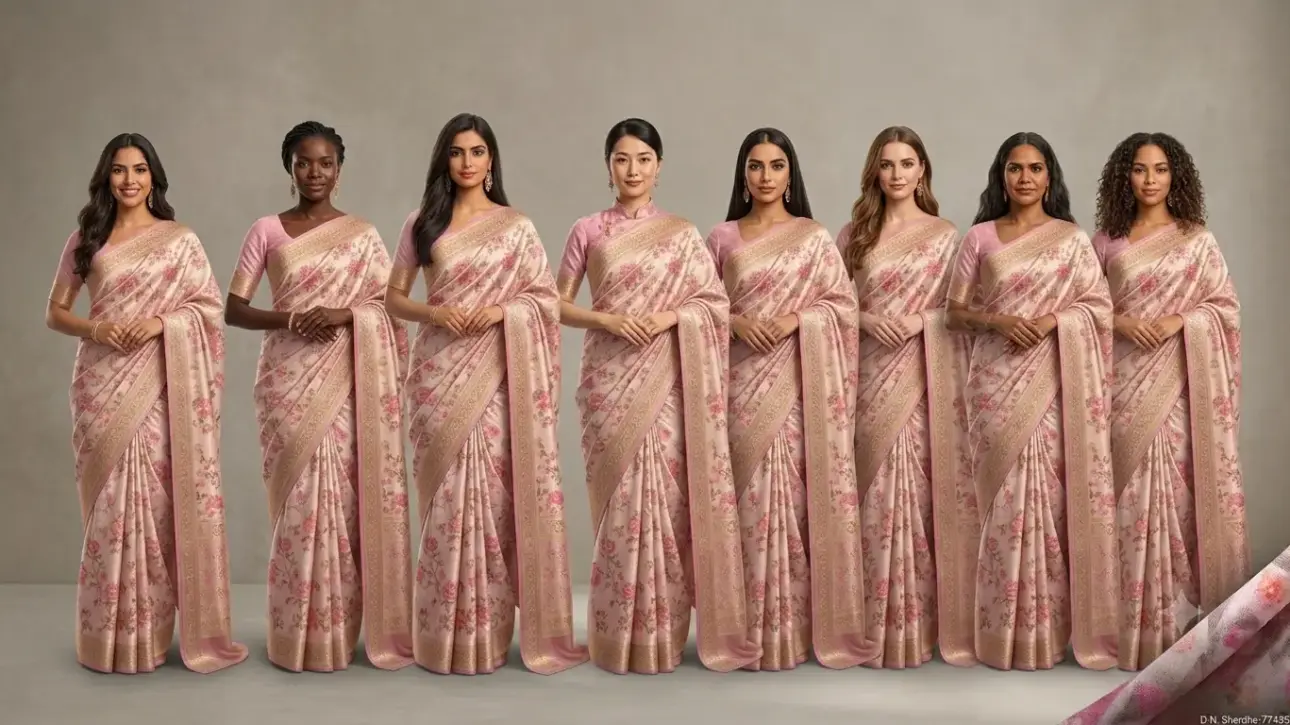
A satin fabric that looks impressive in a digital image may still require careful development before it is suitable for a production collection. Fabric construction, fibre composition, surface appearance, print scale, repeat, colour development, finishing and bulk-production requirements all influence the final result.
Printed Satin Fabric Manufacturing for Fashion Brands
This manufacturing perspective becomes particularly important when a buyer is developing a new printed collection rather than purchasing fabric for a one-time sample. Madhav Fashion approaches printed and embroidered textile development from the perspective of fabric manufacturing, production requirements and B2B sourcing.
For fashion brands, designers, garment manufacturers and international buyers, the objective is to connect the creative requirement with a practical textile-development process. That means understanding what the buyer is actually making, how the artwork needs to appear on the fabric, whether the requirement is sampling or bulk, and what needs to be established before production is approved.
Printed satin is especially interesting because its surface can strongly influence the appearance of artwork. The smooth character and light reflection of satin can make colours and motifs visually prominent, but it also means that the print should be evaluated on the actual fabric rather than judged only from a computer screen. A successful development therefore starts with the complete requirement rather than with the print alone.
For buyers exploring the Pure Satin Printed Fabric collection at FabricDiary, this manufacturing approach provides a useful way to think about the fabric before moving from inspiration to sampling and eventually to production.
Why Printed Satin Requires a Manufacturing-Led Approach
Satin is often recognized by its smooth surface and characteristic sheen, but “satin” by itself does not describe one universal textile specification. Different satin fabrics can vary in fibre composition, weight, hand feel, drape, width, finishing and other production characteristics. For that reason, a buyer should not assume that every satin fabric will behave identically simply because the fabrics are described as satin.
This matters even more when the fabric is printed. The same artwork can create a different visual effect depending on the base fabric and its surface. A dense floral design, for example, may appear very different on a highly reflective surface than on a matte fabric. A tonal print may become subtle and sophisticated on one quality while looking too understated on another. Similarly, a very large motif can work beautifully on a flowing dress but may become difficult to use efficiently on smaller garment panels.
The intended garment should therefore be part of the fabric-development conversation from the beginning. A buyer developing a fluid maxi dress may prioritize fall and surface appearance differently from a brand developing blouses, skirts, trousers, co-ordinated sets or ethnic-fusion garments. The fabric does not exist independently of the final product. Its commercial usefulness depends on how well it translates into the garment for which it was selected.
This is also why a professional buyer should communicate more than a keyword such as “printed satin.” A useful inquiry can explain the intended garment, approximate quantity, artwork status, colour direction, desired print style and whether the requirement is for sampling or bulk. If the buyer already has a fabric reference, artwork or garment image, sharing that information can make the development discussion substantially more precise.
Another important consideration is the difference between an allover print and a placement print. For a material-led printed satin collection, an allover repeat can offer flexibility because the same fabric can be cut into different garment styles. A placement or engineered print is different: the artwork is developed around a specific position or garment construction. If a designer wants an oversized motif to sit deliberately across the front of a dress, for example, the pattern and artwork may need to be considered together.
Understanding this distinction early prevents a common development problem: treating a placement concept as if it were a standard repeat print.
The manufacturing approach also becomes important when the buyer moves from a development sample to bulk production. During sampling, the objective may be to establish whether the artwork, fabric and colour direction work together. Once the design is approved, production needs a clearly defined reference. The approved fabric quality, artwork, colour, repeat and other agreed parameters should become part of the production specification so that the buyer and manufacturer are working toward the same result.
For international B2B buyers, this documentation becomes even more valuable. A fashion collection may involve a designer, sourcing manager, garment factory, quality team and textile manufacturer in different locations. Clear specifications reduce ambiguity and help the production process remain aligned with the original development.
From Fabric Selection to Print Development
A strong printed satin program begins with fabric selection rather than treating fabric as an afterthought.
The buyer should first determine what the garment requires from the textile. Is the fabric expected to have a fluid drape? Does the garment require a particular surface character? Is the fabric intended for a lightweight flowing design, a structured blouse, an occasionwear piece or an ethnic-fusion garment? Does the design depend on the way the fabric catches light?
These questions help establish the appropriate satin quality for development.
Composition should also be confirmed for the actual fabric being considered. Satin can be produced using different fibre compositions, so the word “satin” should not be used as a substitute for a composition specification. For a professional sourcing process, the actual fibre content and relevant fabric characteristics should be confirmed for the selected quality and development sample.
Once the base fabric has been identified, attention moves to artwork.
Artwork development can begin with a finished digital file, a hand-drawn concept, a mood board, an existing print that needs a new colourway or a broader design direction. The development process may involve adapting the artwork so that it works as a repeat, adjusting its scale, modifying colours or preparing it for the selected printing process.
Print scale is particularly important. A motif that is visually attractive at one size may not be suitable at another. Small repeats can provide a more continuous textile appearance and may be versatile across different garments. Larger motifs can create a stronger statement but require more attention to cutting and garment-panel placement.
For example, a large botanical print can be highly effective on a flowing dress because the garment provides enough surface area for the artwork to be appreciated. On a small blouse, however, the same design may place important parts of the motif awkwardly across seams or leave the garment with an unbalanced visual composition.
This is why print scale should ideally be evaluated alongside the garment concept.
Colour development is another important stage. The colour that appears on a monitor is not a substitute for evaluating the actual printed textile. Satin’s surface characteristics can affect how colours are perceived, particularly under different lighting conditions. A development sample allows the buyer to assess the relationship between the base fabric, print and colour rather than approving the artwork in isolation.
For brands building a coordinated collection, colour development can also be more strategic than simply producing as many colourways as possible. A single print may be developed in a core colourway, a tonal version and one or two alternative palettes that fit the broader collection. This can create visual continuity without requiring every fabric to be completely unrelated.
The printing method should then be considered according to the project.
Digital printing can be valuable during artwork development, sampling and projects where detailed or customized artwork is required. It can allow designers to explore artwork and colour variations without treating every early-stage concept as a large-volume production commitment.
Bulk production, however, should not automatically be equated with digital printing. Once an artwork is approved and the quantity becomes substantial, the commercially appropriate printing method depends on the fabric, design, quantity, colour requirements, production economics and agreed quality expectations. Depending on the project, industrial bulk printing methods such as rotary or screen-based processes may be relevant.
The important distinction is therefore not “digital is better” or “bulk printing is better.”
The correct question is:
Which printing approach is appropriate for this fabric, artwork and production requirement?
A sample order and a large confirmed production order may have different technical and commercial considerations even when the final artwork is identical.
Digital Printing, Bulk Printing and Production Economics
One of the areas where fashion buyers can benefit from a manufacturing partner is understanding what changes between creative development and commercial production.
Digital printing can provide flexibility when a buyer is still developing the collection. A designer may want to test a detailed floral, compare several colourways or evaluate a custom illustration on the selected satin. At this stage, the ability to make design changes is often more important than optimizing a locked bulk-production program.
Once the artwork has been approved, the priorities change.
A bulk buyer generally wants a repeatable production specification, predictable quality and a commercially sensible production route. The quantity, repeat, fabric construction, print coverage and colour requirements all influence the production decision.
This is where the difference between development and manufacturing becomes important.
A development sample answers questions such as:
- Does the fabric look right?
- Does the artwork work on the surface?
- Is the colour direction acceptable?
- Is the print scale suitable?
- Does the textile work for the intended garment?
- A bulk production specification answers additional questions:
- What exact fabric quality has been approved?
- Which artwork version is being produced?
- Which colour reference is being followed?
- What repeat has been approved?
- What other agreed specifications must remain consistent?
The buyer should not assume that approving a sample automatically communicates all of these details. A clear production reference is an important part of the transition from sampling to manufacturing.
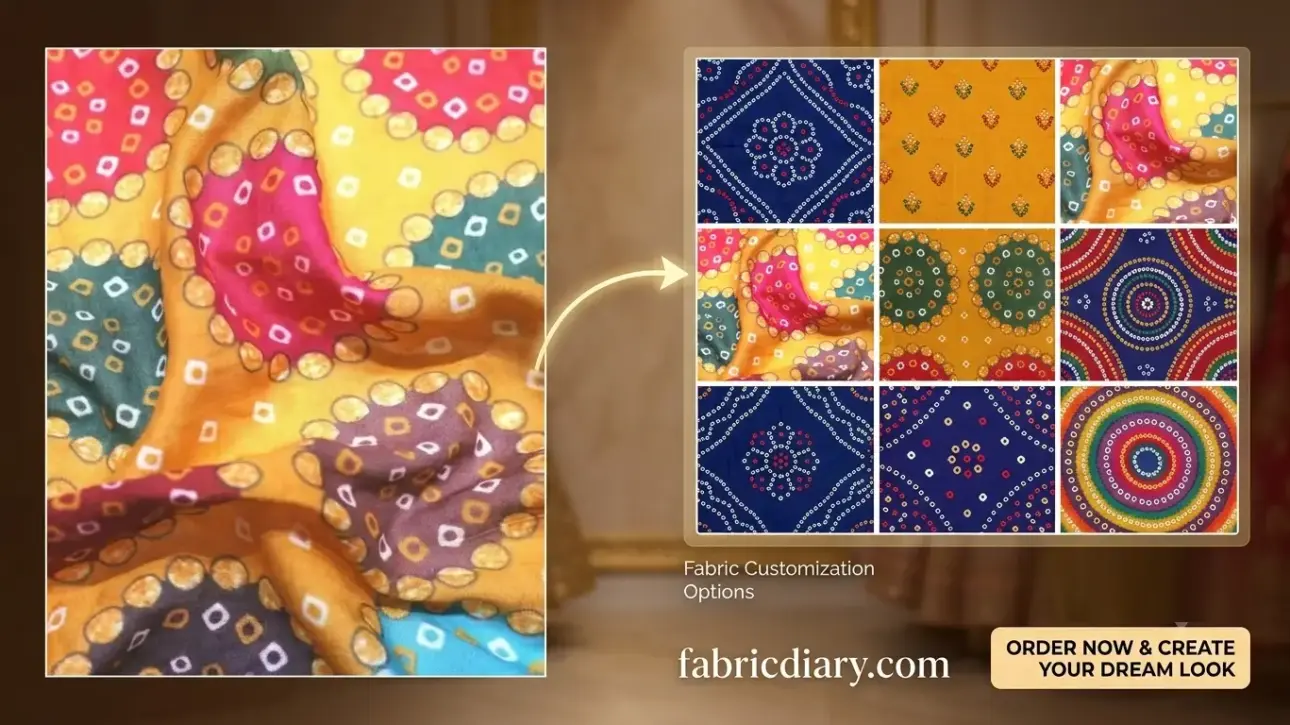
For custom printed satin, the same principle applies. A custom project should not be treated simply as putting a customer’s image onto fabric. The artwork has to be prepared for textile printing, the repeat may need to be established, colours may need adjustment, and the physical result needs to be reviewed before bulk approval.
This is especially relevant for fashion brands that are building proprietary print collections. A custom textile should support the brand’s visual language rather than simply reproduce a graphic.
A useful custom-development workflow can therefore begin with the buyer’s creative reference and move through fabric selection, artwork preparation, repeat or placement development, colour direction, sample printing, physical evaluation and final approval.
The exact manufacturing sequence can vary from project to project, but the objective remains consistent: create a clearly defined textile specification before committing to full production.
How Custom Printed Satin Moves From Artwork to Bulk
Custom printing becomes most useful when a brand wants something beyond a standard market print.
The starting point can be very different from one buyer to another. A designer may provide finished artwork in a production-ready format. Another may send a sketch or inspiration board. A brand may already have an established print and want a new colourway or scale. A garment manufacturer may require an artwork adapted to a particular product.
The first task is to understand what is actually being requested.
If the buyer wants an allover repeat, the artwork needs to be considered as a repeating textile design. The repeat should be checked so that the transition between one repeat and the next remains visually coherent.
If the buyer wants a placement design, the garment becomes more important because the artwork is no longer simply repeating across the fabric. The intended panel, garment dimensions and placement requirements may need to be incorporated into the development.
Once the artwork direction is clear, the fabric should be confirmed. This is where composition, surface, width, hand feel and other relevant characteristics become part of the decision.
The next stage is colour.
A designer may provide a reference palette, while another buyer may request adaptation into a specific colour family. The number of colourways should be decided according to the collection rather than generated without a commercial purpose.
Sampling then gives the buyer an opportunity to evaluate the actual textile.
The sample should be looked at not only as a fabric swatch but as a potential garment material. Does the artwork have the intended scale? Does the colour relationship work on the satin surface? Does the design remain attractive when the fabric folds and moves? Does it suit the planned garment?
If the answer is yes, the development can move toward approval.
If not, adjustments can be made before bulk production.
This stage is where a manufacturing-led approach can save time. It is generally more efficient to discover that a motif is too large, a colour is unsuitable or a repeat needs adjustment during development than after a large production quantity has already been manufactured.
For brands working with international textile suppliers, this development discipline also helps communication. The buyer can approve a physical reference and establish what the production team should reproduce.
What Buyers Should Expect From Sample to Bulk Production
The move from sample to bulk is where textile sourcing becomes production management.
A sample is useful because it turns an idea into something physical. But a single sample does not automatically establish every detail of a bulk order.
Before production, the buyer and manufacturer should have a common understanding of the approved fabric and print.
Depending on the project, this may include fabric composition, fabric quality, width, artwork, repeat, colour, finishing expectations, packing requirements and other agreed specifications.
Quality control should also be considered as part of the manufacturing process rather than as something added after production.
For printed satin, buyers may need to review the final fabric for issues relevant to the particular order, including fabric appearance, shade consistency, print appearance and general fabric quality. The exact inspection criteria should be agreed according to the product and buyer requirements.
Bulk production also requires realistic expectations about the relationship between an approved sample and manufacturing output. Manufacturing is a controlled process, but textile production involves material and process variables. A professional sourcing program therefore benefits from clear specifications and an agreed quality reference.
This is particularly important when the fabric will be exported.
International buyers may be sourcing for a collection with a defined launch schedule. Delays caused by unclear artwork approval, incomplete specifications or repeated sample corrections can affect garment production downstream.
A more organized workflow is therefore:
Requirement → Fabric selection → Artwork → Sample → Review → Approval → Production specification → Bulk manufacturing → Quality control
This sequence is simple, but it can make the sourcing process considerably more efficient.
Printed Satin for Different Fashion Applications
The manufacturing approach should always remain connected to the final product.
For dresses, satin can be considered where the designer wants a fluid appearance and a visually expressive surface. Printed artwork can become an important part of the garment rather than simply acting as background decoration.
For blouses and shirts, print scale becomes particularly important because the garment has less surface area. A controlled repeat or carefully developed motif can help maintain visual balance.
For skirts and wide-leg trousers, the print needs to work across larger panels and movement. Medium-scale repeats or larger artwork may be considered depending on the collection concept.
Co-ordinated sets introduce another consideration: the print needs to look coherent across more than one garment. An allover repeat can be useful because the same textile can be used across different pieces while maintaining collection continuity.
Occasionwear can move toward richer colour combinations, expressive artwork or tonal designs, depending on the brand’s aesthetic.
In ethnic and fusion fashion, printed satin may be explored for selected blouses, flowing sets, dupattas, skirts and other applications where the fabric’s surface and movement complement the garment.
None of these applications means that one satin quality is automatically appropriate for every product. The actual fabric should be evaluated against the garment requirement.
This application-led approach is also useful when buyers compare satin with other printed fabrics. A buyer may initially request satin because of its appearance, but after considering the desired drape, surface and garment construction, another textile may prove more suitable for a particular product.
Depending on the application, buyers may therefore also evaluate printed georgette, chinon, muslin or cambric cotton alongside satin. The purpose of the comparison should not be to declare one material universally superior, but to identify the construction that matches the product requirement.
What International Buyers Should Include in a Manufacturing Inquiry
A clear first inquiry can make a significant difference to the quality of the sourcing conversation.
International buyers should ideally provide the product requirement together rather than sending fragmented information across several messages.
A practical inquiry can include the fabric requirement, intended garment, approximate quantity, artwork status, colour direction and sample requirement. If the buyer has an existing fabric reference, artwork file or garment photograph, that information can also help establish the development direction.
For example, a buyer could communicate:
Fabric: Printed satin Application: Women’s dresses Print: Floral allover repeat Artwork: Buyer artwork available Colour: Three colourways Development: Sample required Bulk: Approximate production quantity Market: Export fashion collection
This is considerably more useful than simply requesting “satin fabric wholesale.”
Different buyer types will also approach the process differently.
A small or emerging brand may first need samples and artwork experimentation before committing to production.
A growing fashion label may already have approved artwork but need a manufacturing partner capable of moving from sampling to repeat production.
A larger buyer or export garment manufacturer may approach the supplier with a defined fabric specification, artwork, quantity and delivery requirement.
The sourcing conversation should adapt accordingly.
The same principle applies to customization. A buyer requesting custom printed satin should clearly state whether the artwork is ready, whether the supplier needs to adapt it, whether a new colourway is required and whether the final requirement is allover or placement-based.
The clearer the starting brief, the less time is spent clarifying basic requirements later.
Building a Reliable Printed Satin Program With a Manufacturer
A successful textile program is rarely built around one isolated fabric sample.
For a fashion brand, the goal may be to create a collection of related prints, colourways and garments that can be developed and produced within a consistent sourcing framework.
This is where the manufacturer becomes more than a source of fabric.
The manufacturer can participate in the practical side of translating design requirements into production specifications: selecting the appropriate fabric quality, discussing print development, evaluating the artwork, coordinating sampling and preparing for bulk production.
At Madhav Fashion, the manufacturing perspective is particularly relevant for buyers who need printed textile development to connect with wider fashion production requirements. The discussion can begin with the design concept but should eventually reach the practical questions that determine whether the textile can work commercially.
That includes understanding the intended garment, fabric characteristics, print direction, sampling stage and approximate production requirement.
For buyers specifically sourcing pure satin printed fabric, FabricDiary provides a dedicated collection where the material requirement can be explored before moving into a more detailed B2B development discussion.
The broader printed-fabric range can also be useful when a buyer is still comparing material options for a collection. In many cases, making that comparison before bulk production is more useful than discovering material limitations after the garment-development stage has already progressed.
Printed satin manufacturing sits at the intersection of design and production.
The artwork creates the visual direction, but the fabric determines how that artwork behaves. The garment determines the appropriate scale and application. The printing process influences development and production planning. Sampling provides the opportunity to evaluate the physical result, while bulk manufacturing requires a clear and approved specification.
For fashion brands and international buyers, the most reliable approach is therefore to think through the complete chain:
Fabric → Artwork → Colour → Repeat → Printing → Sample → Garment → Approval → Bulk Production
This approach can make printed satin sourcing more structured and can reduce avoidable changes between design development and manufacturing.
Whether the requirement is a small development sample, a custom fashion print or a larger production program, the conversation should begin with the actual product requirement rather than with a fabric keyword alone.
For buyers looking for Pure Satin Printed Fabric, the next step is to review the available fabric direction, identify the intended garment and prepare the artwork or design reference. Once those details are clear, a manufacturer can evaluate the development requirement with much better production context.
Explore Pure Satin Printed Fabric
Explore the Pure Satin Printed Fabric collection at FabricDiary when sourcing satin-based printed textiles for fashion development and B2B requirements.
For a custom or bulk inquiry, share the intended garment, artwork or design reference, colour direction and approximate quantity so the development discussion can start with the right information.
Frequently Asked Questions
- How is printed satin fabric developed for fashion brands?
Printed satin development generally begins with selecting the appropriate fabric quality, followed by artwork preparation, repeat or placement development, colour selection, sampling, evaluation and approval before bulk production. - Can satin fabric be custom printed?
Yes. Custom printed satin can be developed from buyer artwork, design references, colour directions or other creative inputs. The artwork may need adaptation for repeat, scale, colour or placement. - Is digital printing suitable for satin fabric?
Digital printing can be useful for sampling, artwork development, detailed designs and certain custom requirements. The appropriate printing method depends on the fabric, artwork, quantity and production requirements. - Is digital printing the same as bulk satin printing?
No. Digital printing and bulk industrial printing can serve different production requirements. Sampling and small development orders may have different considerations from large quantities with an approved, locked artwork. - What is allover printed satin?
Allover printed satin uses a repeating design across the fabric. It can provide flexibility when the same printed textile is intended for different garment styles. - What is placement printing on satin?
Placement printing, also called engineered printing in some applications, positions artwork specifically for a particular garment or fabric area rather than using a conventional repeating design. - How do I choose the right print scale for satin?
Print scale should be considered according to the garment size, pattern pieces, artwork and desired visual effect. Large artwork may work particularly differently on a maxi dress compared with a small blouse. - Can the same satin print be used for multiple garments?
An allover repeat can potentially be used across multiple garment categories, although the artwork scale and garment cutting should be reviewed for each application. - What information should I send when requesting printed satin?
Useful information includes the intended garment, fabric requirement, artwork or reference, print style, colour direction, approximate quantity, sample requirement and whether the order is for development or bulk production. - How does custom satin printing move from sample to bulk?
A typical workflow is fabric selection, artwork preparation, colour and repeat development, sample printing, buyer review, approval, production specification and bulk manufacturing. - Why is a physical sample important?
A physical sample allows the buyer to evaluate the actual relationship between fabric, print, colour, surface and garment application rather than relying only on a digital image. - What should be approved before bulk printed satin production?
Depending on the project, buyers should establish the approved fabric quality, artwork, colour, repeat, relevant specifications and other agreed production requirements before bulk manufacturing. - Is satin suitable for dresses?
Printed satin can be considered for many dress styles, particularly where the designer wants a fluid appearance and expressive printed surface. Suitability depends on the specific fabric quality and garment construction. - Can printed satin be used for ethnicwear?
Yes. Depending on the fabric quality and design, printed satin can be considered for selected ethnic and fusion garments such as blouses, flowing sets, skirts and dupattas. - Can buyers compare satin with other printed fabrics?
Yes. Depending on the intended garment, buyers may compare satin with printed georgette, chinon, muslin or cambric cotton. The appropriate material depends on the required fabric behaviour and product application. - Can international buyers source printed satin from India?
International buyers can approach Indian textile manufacturers and exporters with their fabric, artwork, garment and quantity requirements. Providing a detailed brief can make the development and sourcing process more efficient. - Is every satin fabric the same composition?
No. Satin can be produced using different fibre compositions and specifications. Buyers should confirm the composition and characteristics of the specific fabric being developed. - How can a fashion brand develop its own satin print?
A brand can begin with its own artwork, design concept, colour palette or inspiration reference and work through fabric selection, artwork adaptation, repeat development, sampling and approval before production.