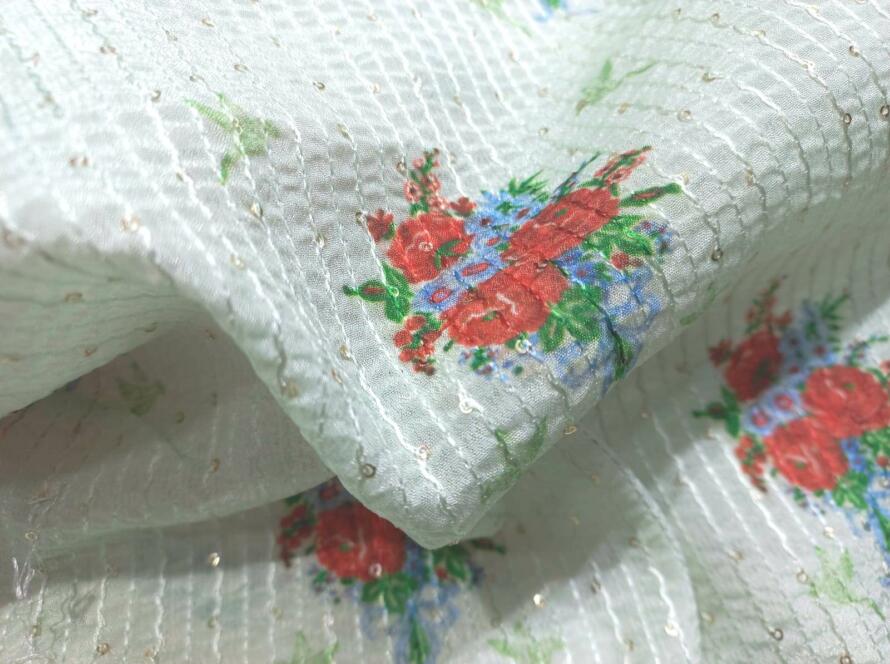



Pure Bemberg Chiffon Printed Fabric is a specialized requirement for fashion brands, garment manufacturers, designers, wholesalers and private-label buyers looking for a lightweight Bemberg/cupro-based chiffon quality with a developed printed surface.
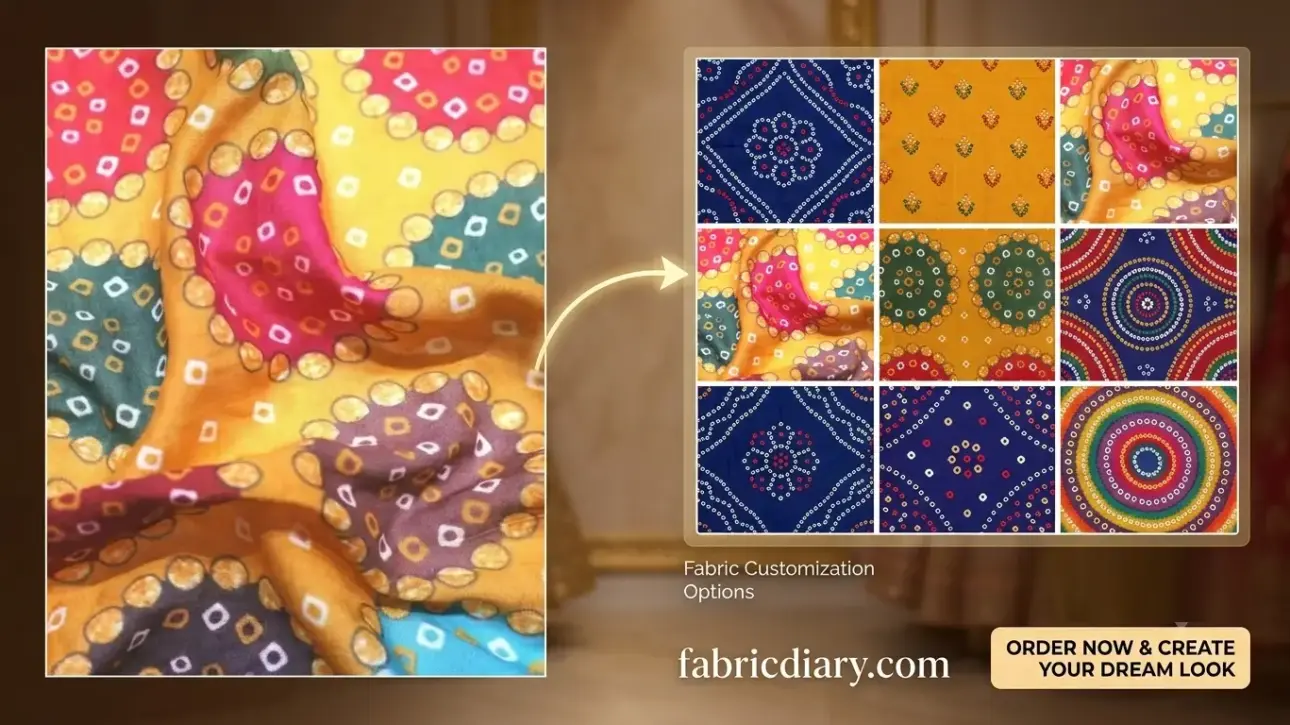
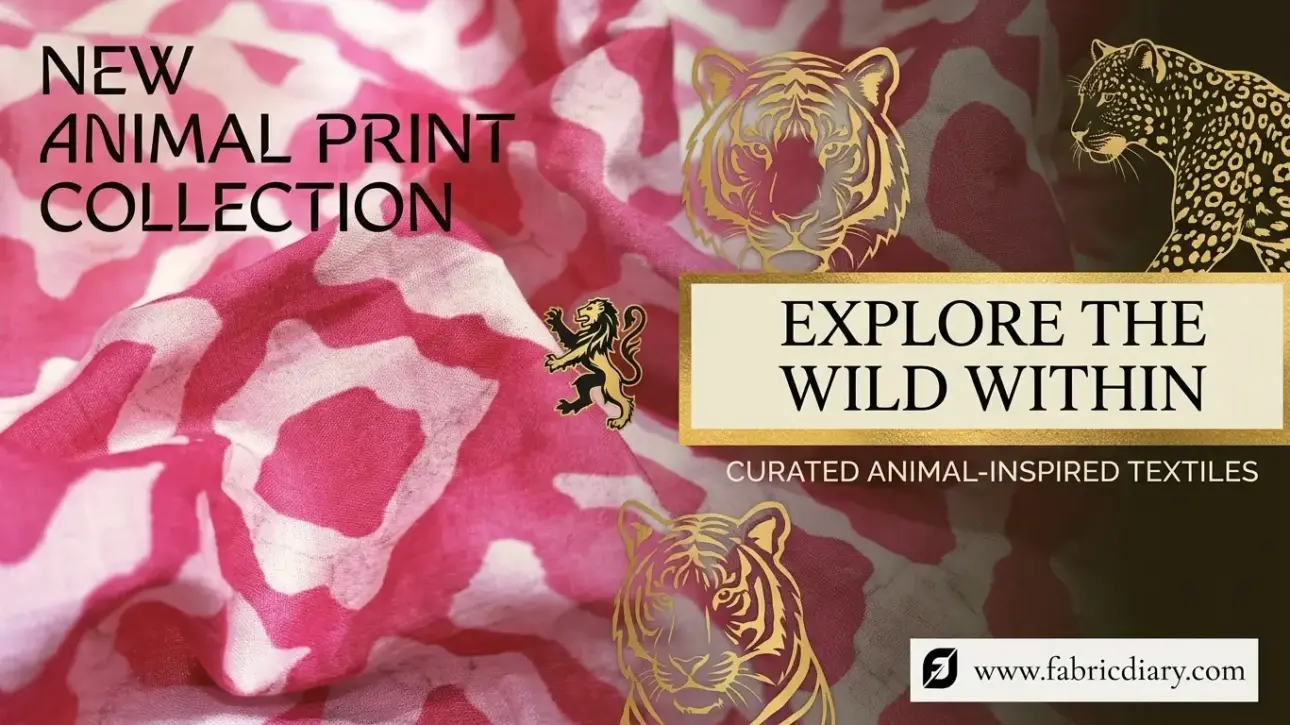
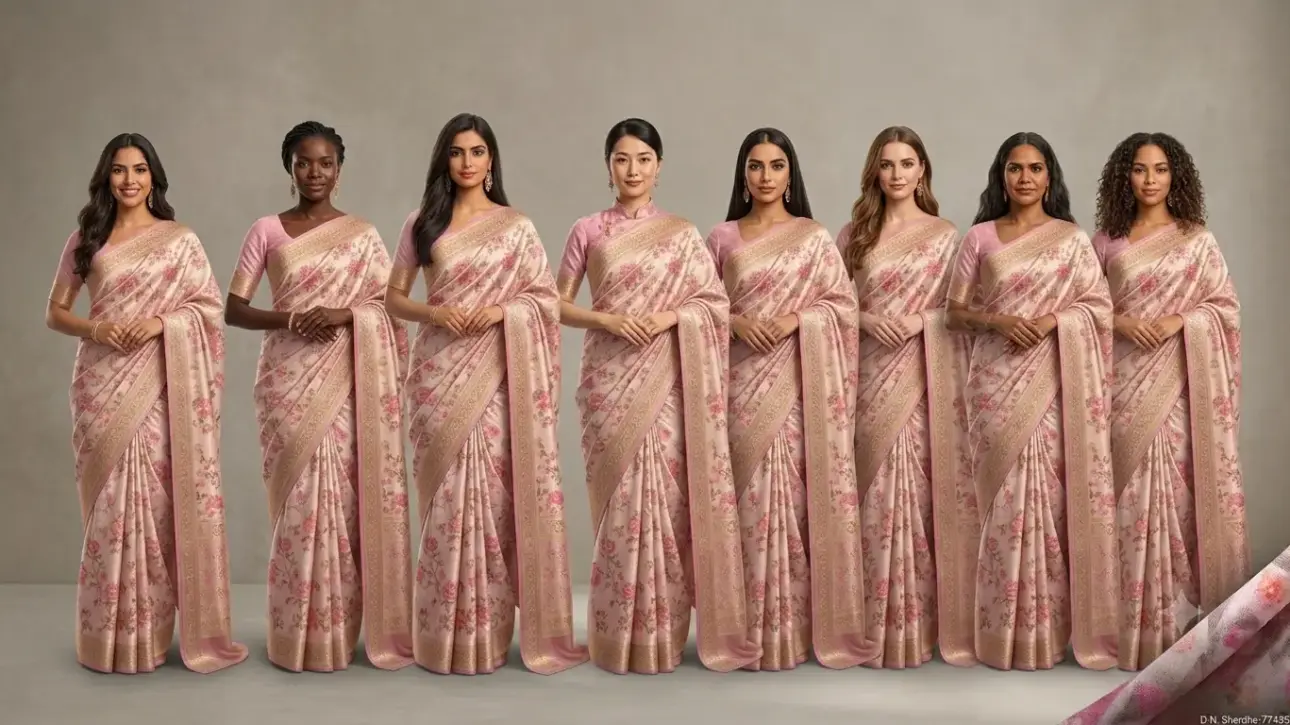
For commercial production, choosing this fabric is not only about selecting a floral, geometric or abstract design. Buyers need to evaluate the base fabric, construction, transparency, drape, print method, colour development, repeat size, print definition, finishing, inspection and bulk consistency before approving production.
Pure Bemberg Chiffon Printed Fabric: Manufacturing, Printing & Wholesale Guide
This is where a manufacturer-led sourcing approach becomes important.
Madhav Fashion operates from Surat, Gujarat, one of India’s major textile manufacturing centres, and works across embroidery, printed and plain fabric categories. Its manufacturing background is relevant for buyers who need to move from fabric selection and sampling into bulk textile production.
For buyers who want to first review available qualities, prints and commercially available options online, the Pure Bemberg Chiffon Printed Fabric collection on FabricDiary provides a material-specific sourcing route before moving into larger production discussions.
- Three different terms are combined in this product category:
Bemberg refers to Bemberg, a branded cupro fibre developed by Asahi Kasei.
Chiffon describes the lightweight fabric construction and resulting characteristics such as fluid movement and a generally light, fine handle.
Printed means that a design has been applied to the fabric surface through a printing process.
Therefore, Pure Bemberg Chiffon Printed Fabric should not be treated as simply another generic polyester chiffon print.
The fibre identity, fabric construction and printing process all influence the final commercial result.
Bemberg is a regenerated cellulose fibre made from cotton linter. The manufacturer describes properties including a smooth surface, moisture-management characteristics, dyeability and a soft, fluid feel.
For buyers, this distinction matters because a fabric can be called “chiffon” while having a completely different fibre composition.
A sourcing enquiry should therefore specify the required material rather than asking only for “printed chiffon.”
Why this distinction matters in wholesale buying
A buyer comparing:
- Bemberg chiffon
- polyester chiffon
- generic cupro chiffon
- georgette
- chinon
- viscose chiffon
- is not comparing identical materials.
The hand feel, drape, transparency, colour response, finishing requirements, cost structure and end-use suitability can differ significantly.
That is why the first stage of a serious fabric enquiry should establish the base material and construction before discussing print artwork.
- Bemberg and Cupro: What Should a Buyer Specify?
One of the most common sourcing problems is the loose use of the terms Bemberg and cupro.
Cupro is a fibre category.
Bemberg is a specific branded cupro fibre from Asahi Kasei.
Therefore, a buyer who specifically requires Bemberg should state that requirement clearly in the enquiry rather than assuming that every cupro fabric is Bemberg.
This is especially important for private-label and international buyers who maintain material specifications across different seasons.
A professional purchase specification should identify:
- required fibre/material
- fabric construction
- intended end use
- print method
- print repeat
- artwork requirements
- colour references
- finishing requirements
- required width
- required quality/construction
- sampling requirements
- bulk quantity
- inspection expectations
- packaging and shipping requirements
Exact technical specifications should then be confirmed against the selected quality rather than copied from another Bemberg chiffon listing.
Current market listings illustrate why this is necessary: different Bemberg chiffon products are offered with different constructions, qualities and widths.
- What Should Be Checked Before Printing Bemberg Chiffon?
Printing cannot compensate for an unsuitable base fabric.
Before production begins, the base quality should be evaluated for its intended garment application.
Construction and hand feel
The buyer should first assess:
- surface smoothness
- softness
- fluidity
- fabric body
- transparency
- fall and drape
- surface uniformity
- edge behaviour
- finishing consistency
- The correct quality depends on the garment.
A flowing dupatta, lightweight saree, dress panel and layered garment may not require exactly the same fabric specification.
Width
Width should be confirmed on the actual production quality.
Do not assume that every Bemberg chiffon is supplied at one universal width. Current commercial listings show variation between qualities and suppliers.
For garment manufacturers, usable width can be more important than nominal width because pattern placement, cutting efficiency and fabric wastage depend on the actual production width.
Transparency
Transparency should be checked under realistic garment conditions.
A fabric that looks acceptable as a loose sample may behave differently after cutting, layering or garment construction.
This is particularly important for:
- sarees
- dupattas
- dresses
- blouses
- skirts
- flowing panels
- layered garments
- How Is Printed Bemberg Chiffon Developed for Production?
The printing process should be considered as a complete workflow rather than a single machine operation.
A typical development process involves:
Base fabric selection → artwork preparation → colour development → sampling → print approval → production setup → bulk printing → finishing → inspection → packing
Each stage can affect the final result.
Artwork preparation
The original artwork may need adjustment before it becomes a textile repeat.
The production team may need to review:
- repeat size
- motif scale
- spacing
- colour separation
- edge continuity
- placement
- background colour
- registration requirements
- garment cutting implications
A design that looks correct on a computer screen is not automatically production-ready.
Sampling
A sample should be evaluated on the actual fabric.
This allows the buyer to check:
- colour appearance
- motif size
- print sharpness
- transparency
- contrast
- repeat
- fabric handle after printing
- garment suitability
For custom developments, approval should happen before bulk production.
- Digital Printed Bemberg Chiffon vs Bulk Mill Printing
The printing route should be selected according to the commercial requirement.
Digital printing
Digital printing is particularly useful when the buyer needs:
- sampling
- design experimentation
- multiple colourways
- buyer-specific artwork
- smaller development quantities
- photographic or highly detailed artwork
- faster design iteration
It allows artwork to be changed without creating the same production setup associated with conventional bulk printing.
This makes digital printing valuable during collection development.
However, digital printing should not automatically be interpreted as the best production method for every bulk order.
Bulk or mill printing
For larger production programmes where the design has already been approved, a conventional bulk printing route can be commercially appropriate.
The design, colour standards, repeat and production parameters are normally established during development and approval.
The purpose is then to produce the required quantity with controlled consistency.
The key distinction is:
Digital printing is useful for flexibility and development. Bulk mill printing is useful when the production design is already locked and the priority is repeatable large-scale manufacturing.
This distinction should be made clear in a buyer enquiry.
- Allover Print or Placement Print?
Another major production decision is the relationship between the artwork and the garment.
Allover repeat printing
An allover repeat distributes the artwork continuously across the fabric.
It is generally suitable for:
- dresses
- kurtis
- sarees
- dupattas
- skirts
- tops
- coordinated garment collections
The advantage for manufacturers is flexibility during cutting because the design is not necessarily tied to one exact garment panel.
For commercial wholesale collections, this can simplify product development across multiple garment styles.
Placement or engineered printing
A placement print is designed for a defined area.
For example:
- border
- neckline area
- front panel
- sleeve
- pallu
- garment-specific motif
- central artwork
Here the printing process has to consider the final garment pattern.
This is why placement printing is a separate technical requirement rather than simply a different artwork style.
Madhav Fashion also has a dedicated Digital Position Print Fabric category, where computer-controlled printing is used for precise image placement.
For buyers looking specifically for engineered placement development, FabricDiary’s Position Printed Fabric collection is the more relevant category to evaluate.
- Colour Approval Is a Production-Control Step
Colour selection is often underestimated in printed fabric development.
A buyer may approve artwork on a monitor and still receive a different visual result on fabric.
The reason is simple: colour is influenced by the substrate, printing process, ink/dye behaviour, finishing and viewing conditions.
For commercial production, the buyer should therefore establish a colour approval process.
Important questions include:
- What colour reference is being followed?
- Is a physical strike-off required?
- Is the background included in colour approval?
- Are multiple colourways required?
- What tolerance is acceptable between sample and bulk?
- Will the same colourway be repeated for future production?
Dark and light backgrounds
A floral motif printed on ivory, beige, black or navy can produce very different visual results even when the motif colours remain unchanged.
Therefore, background colour should be treated as part of the artwork specification.
Colourway development
For brands producing seasonal collections, the same print can be developed in several colourways.
A structured colourway sheet helps reduce confusion during bulk production.
It should identify:
- design name/code
- background
- motif colours
- colour references
- approved sample
- production quantity
- buyer/brand reference
- What Makes a Good Printed Bemberg Chiffon?
Print quality should be evaluated on the fabric itself.
A commercially acceptable printed quality should be assessed for:
Print definition
Fine motifs should remain sufficiently clear for the intended design scale.
Very small details can behave differently on lightweight fabrics than they do in artwork files.
Registration
Where multiple colours are involved, registration between print components should be controlled.
Misalignment becomes more visible in geometric, striped or highly detailed artwork.
Repeat accuracy
An allover design should maintain the approved repeat throughout production.
The buyer should compare bulk against the approved sample rather than relying only on the original artwork file.
Surface appearance
The print should be evaluated together with the fabric surface.
The objective is not simply maximum colour density.
The final garment needs the appropriate balance between:
- print clarity
- colour depth
- fabric handle
- transparency
- drape
- visual balance
- Finishing and Inspection Before Bulk Dispatch
Printing is not the final production stage.
After printing and finishing, fabric should be inspected according to the buyer’s agreed quality requirements.
Inspection may consider:
- visible printing defects
- colour variation
- repeat consistency
- stains
- marks
- holes or fabric damage
- width
- edge condition
- finishing consistency
- quantity
For export orders, packaging also matters because lightweight fabrics can be damaged if they are packed or handled incorrectly.
A professional buyer should establish the inspection criteria before production, not after the shipment reaches the destination.
- From Sample to Bulk: Recommended B2B Workflow
For a new Bemberg chiffon print, the following workflow is more reliable than placing a large order immediately:
Step 1 — Define the material
Specify that the requirement is Bemberg/cupro-based chiffon and clarify whether the buyer requires Bemberg™ specifically.
Step 2 — Select the fabric quality
Review the actual base fabric and confirm:
- construction
- width
- transparency
- hand feel
- intended use
- finishing
Step 3 — Submit artwork
Provide the original artwork at the best available resolution.
If the design is proprietary, the buyer should also communicate usage and confidentiality expectations.
Step 4 — Define the print
Specify:
- allover or placement
- repeat size
- colourways
- background
- border requirements
- motif scale
Step 5 — Develop a sample
The print should be reviewed on the actual fabric.
Step 6 — Approve colour and artwork
The approved sample becomes the production reference.
Step 7 — Confirm bulk requirements
At this point, discuss quantity, production schedule, packaging, inspection and shipping.
Step 8 — Bulk production
The approved construction and print parameters are followed during production.
Step 9 — Final inspection
The finished fabric is checked against the agreed quality parameters before dispatch.
This workflow reduces the risk of discovering a material, colour or print problem after bulk production has already started.
- Custom Printed Bemberg Chiffon for Private Labels
Custom printing becomes valuable when a buyer does not want to purchase an existing catalogue design.
A private-label buyer may need:
- proprietary floral artwork
- exclusive geometric designs
- brand-specific colourways
- custom repeats
- seasonal artwork
- placement prints
- coordinated fabric collections
- matching print families
- Custom development should begin with a clear technical brief.
The brief should include the intended application, fabric quality, artwork, repeat, colour requirements and expected production quantity.
For buyers who need buyer-specific artwork rather than ready-made prints, FabricDiary’s Custom Print Fabric collection provides a more appropriate route for reviewing custom-development options.
The important distinction is that custom printing does not mean every production metre is individually designed.
Once artwork and production parameters are approved, the bulk order is manufactured according to that approved specification.
- Bemberg Chiffon for Different Buyer Segments
Different buyers evaluate the same fabric differently.
Fashion designers
Designers generally focus on:
- hand feel
- drape
- transparency
- print scale
- colour
- garment movement
- visual finish
They may need development samples before committing to production.
Boutiques
Boutiques often require a smaller development programme and may prioritise distinctive prints and colourways.
For these buyers, digital print development can be useful.
Garment manufacturers
Garment manufacturers are more concerned with:
- usable width
- repeat consistency
- cutting efficiency
- bulk availability
- quality consistency
- production scheduling
Wholesalers
Wholesalers generally need commercially attractive designs with reliable repeatability and supply.
They may evaluate several designs simultaneously rather than developing one exclusive print.
Private-label brands
Private-label brands need greater control over:
- artwork
- colour
- repeat
- exclusivity
- production documentation
- repeat orders
Their supplier relationship therefore needs to support development as well as manufacturing.
- Where Printed Bemberg Chiffon Fits in the Broader Fabric Range
Bemberg chiffon should not be treated as a replacement for every lightweight fashion fabric.
The correct choice depends on the required:
- fibre identity
- construction
- opacity
- drape
- surface
- print behaviour
- garment structure
- price target
- production scale
For example, a buyer specifically seeking a cotton-based printed fabric may be better served by a cotton construction.
A buyer looking for a different lightweight occasionwear construction may prefer georgette or chinon.
FabricDiary therefore separates its material-led collections rather than treating every printed fabric as interchangeable.
The broader Printed Fabric collection can be used when the buyer wants to compare printed-fabric categories before narrowing the requirement to a specific material.
For buyers comparing material-specific options, related categories such as Pure Georgette, Pure Muslin and Pure Chinon can also be evaluated according to the intended garment and fabric behaviour.
- Why India Is Important for Printed Fabric Sourcing
India’s textile supply chain provides buyers with access to multiple stages of fabric development, printing, finishing and garment-oriented production.
Surat is particularly important for synthetic, man-made and fashion-fabric manufacturing, processing and trading.
For a buyer, however, the manufacturing location itself should not be the only selection criterion.
The supplier should also be evaluated for:
- material understanding
- production capability
- sampling process
- print development
- quality control
- communication
- customization
- bulk handling
- export readiness
Madhav Fashion’s published company information identifies its Surat base and its involvement in embroidery, printed and plain fabrics.
This is useful for buyers who want to combine fabric development with other textile requirements.
Madhav Fashion’s published product structure also includes digital print, digital position print and block-print categories, showing that printed-fabric sourcing can be handled through different production approaches depending on the requirement.
- FabricDiary and Madhav Fashion: Different Roles in the Buying Journey
For B2B buyers, online discovery and manufacturing discussion do not always happen at the same stage.
FabricDiary is useful when the buyer wants to:
- discover a fabric category
- review available fabrics
- compare material-specific options
- order samples
- evaluate printed collections
- move toward a wholesale requirement
- Madhav Fashion is more relevant when the buyer needs to discuss:
- manufacturing
- production
- customization
- larger development programmes
- textile sourcing
- embroidery and printed-fabric requirements
This makes the two platforms complementary rather than identical.
A buyer can begin by reviewing the Pure Bemberg Chiffon Printed Fabric range on FabricDiary and then move into a manufacturing discussion when the requirement involves custom artwork, repeat development or larger-scale production.
Madhav Fashion also maintains a broader embroidery fabric manufacturing category for buyers whose collection requires embroidered fabrics alongside printed materials.
- What International Buyers Should Ask an Indian Supplier
Before placing a production order, an international buyer should ask direct technical questions.
Material
- Is the fabric Bemberg™ specifically or another cupro quality?
- What is the exact construction?
- What width is available?
- What finishing is applied?
Printing
Is the print digital or bulk/mill printed?- Is the artwork allover or placement?
- What repeat size is possible?
- How are colour approvals handled?
- Can the supplier reproduce an approved colourway?
Sampling
Can a fabric sample be reviewed first?- Can a printed strike-off be produced?
- What becomes the production reference after approval?
Bulk production
- What quantity can be produced?
- What is the expected production schedule?
- How is bulk quality inspected?
- How is the fabric packed for export?
- Custom development
Can buyer artwork be used? - Can the repeat be modified?
- Can colourways be developed?
- Can placement artwork be developed?
- Can the same approved design be reproduced for repeat orders?
These questions are more useful than simply asking for the lowest price.
- Bemberg Chiffon Printed Fabric: Buyer Checklist
Before confirming an order, the buyer should have the following information documented:
Fabric
- Material identity
- Construction
- Width
- Transparency
- Hand feel
- Intended application
- Artwork
- Print method
- Repeat
- Placement/allover requirement
- Colourways
- Background colour
Approval
- Base fabric sample
- Printed sample
- Colour approval
- Final artwork
- Production reference
Bulk
- Quantity
- Packaging
- Inspection
- Production schedule
- Shipping requirements
Commercial
- Price basis
- Payment terms
- Custom-development requirements
- Repeat-order requirements
A written specification reduces misunderstandings between the buyer, designer, production team and supplier.
Frequently Asked Questions
Is Bemberg chiffon the same as ordinary chiffon?
No. Chiffon describes the lightweight fabric construction, while Bemberg refers to a specific branded cupro fibre. A chiffon fabric can be manufactured from different fibre types.
Is Bemberg the same as cupro?
Bemberg™ is a branded cupro fibre. Cupro is the broader fibre category. Buyers requiring Bemberg specifically should state this in their specification.
Can Bemberg chiffon be digitally printed?
Yes, Bemberg chiffon can be developed as a digitally printed fabric where the selected quality and printing process are suitable. Digital printing is particularly useful for sampling, detailed artwork, colourway development and custom projects.
Is digital printing better than bulk printing?
Neither method is automatically better. Digital printing is generally more flexible for development and smaller/custom requirements, while bulk printing can be more appropriate when a design is approved and larger production quantities are required.
Can Bemberg chiffon be custom printed?
Yes. Custom development can include buyer artwork, colourways, repeat development and placement requirements, subject to the selected fabric quality and production process.
What is the difference between allover and placement printing?
Allover printing repeats the artwork across the fabric. Placement printing positions specific artwork in a defined area, often according to a garment pattern.
What garments can be made from printed Bemberg chiffon?
Depending on the selected construction, printed Bemberg chiffon can be used for sarees, dupattas, dresses, kurtis, blouses, skirts, scarves and other lightweight fashion garments.
Should buyers confirm the width before ordering?
Yes. Width can vary between qualities and suppliers, so the actual production specification should be confirmed before bulk ordering.
Can the same Bemberg chiffon print be reordered?
It can be developed for repeat production, but the buyer should retain the approved fabric sample, artwork, colour references and production specifications as the reference for future orders.
How should international buyers start?
Start with the required fabric material, application, print style and approximate quantity. Then request the appropriate base-fabric sample and printed development sample before confirming bulk production.
Selecting the Right Bemberg Chiffon for Production
Pure Bemberg Chiffon Printed Fabric should be purchased as a complete textile specification, not simply as a printed design.
The correct sourcing process starts with the material and construction, then moves through fabric evaluation, artwork, print method, colour approval, repeat development, sampling, bulk production and inspection.
For buyers who need ready printed options or want to compare material-specific qualities, the Pure Bemberg Chiffon Printed Fabric collection at FabricDiary is the appropriate starting point.
For buyers moving toward manufacturing, custom development or a broader textile programme, Madhav Fashion provides a manufacturing-focused route from Surat across printed, embroidered and plain fabric requirements.
The most reliable B2B approach is straightforward:
define the material → approve the base fabric → develop the print → approve colour and repeat → confirm production specifications → manufacture → inspect → dispatch.
That process gives designers, wholesalers, garment manufacturers and international private-label buyers a much clearer basis for purchasing Pure Bemberg Chiffon Printed Fabric in commercial quantities.