


Luxury rarely begins on the runway. It begins much earlier—inside textile mills, embroidery workshops, sampling studios, and sourcing offices where designers decide how a collection will catch light long before it reaches an audience. Few fabrics illustrate this transformation better than sequin fabric. Once associated almost exclusively with evening glamour, sequins have evolved into a strategic material across bridal couture, ceremonial dressing, theatre productions, television wardrobes, luxury retail collections, and red-carpet fashion.
For costume designers, theatre companies, and film wardrobe departments throughout the Middle East and North Africa, fabric sourcing is no longer based solely on aesthetics. Reliability, production consistency, repeatability of colours, embroidery precision, export documentation, and flexible order quantities now influence purchasing decisions as much as visual appeal. A supplier capable of delivering identical fabric across multiple production cycles becomes a long-term sourcing partner rather than simply another vendor.
Sequin Fabric Supplier for Wedding & Fashion Industry – Premium Fabric for Costume Designers, Theatre Companies & Film Wardrobe Teams
This evolution mirrors broader shifts documented by industry intelligence platforms including WGSN, Business of Fashion, Fibre2Fashion, Statista, FashionUnited, Vogue Arabia, Textile Exchange, and Sourcing Journal. Across global luxury markets, embellished textiles are increasingly viewed as investment materials capable of extending product value through craftsmanship rather than excess ornamentation. Buyers are placing greater emphasis on durability, stitch density, responsible manufacturing practices, and production transparency.


India has steadily strengthened its position within this landscape. Combining skilled embroidery craftsmanship with highly automated production, Indian manufacturers now serve bridal designers, fashion houses, export wholesalers, costume ateliers, and entertainment studios across more than one hundred countries. Surat, in particular, has emerged as one of the world’s most recognised centres for embroidered textiles, supplying large-scale production alongside specialised custom developments.
For buyers across the UAE, Saudi Arabia, Qatar, Kuwait, Bahrain, Oman, Egypt, and Morocco, this manufacturing ecosystem offers a compelling balance between design flexibility and commercial scalability. Rather than investing in multiple sourcing regions, many purchasing teams now consolidate embellished textile procurement through experienced Indian exporters capable of managing sampling, production, quality inspection, documentation, and international logistics under one coordinated workflow.
Understanding Sequin Fabric Performance for Buyers Across the Middle East and North Africa
A bridal boutique in Dubai, a costume workshop in Riyadh, and a television production studio in Cairo may create entirely different garments, yet they often evaluate fabrics through remarkably similar criteria. They expect embellishment that photographs beautifully under intense lighting, remains comfortable during extended wear, and performs consistently from the first production batch to the final delivery.
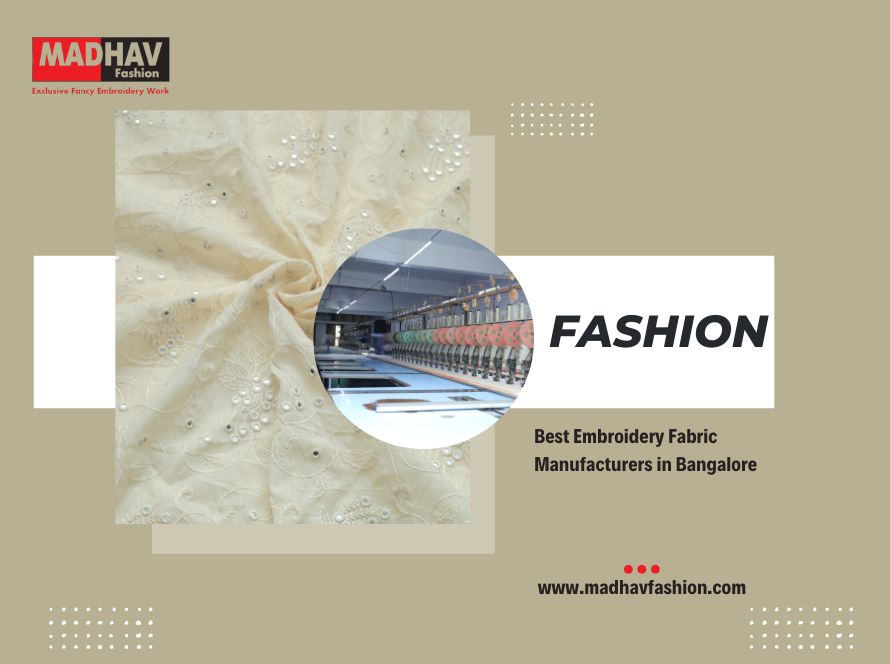
Modern sequin fabrics are engineered rather than simply decorated. The foundation typically begins with mesh, soft net, georgette, velvet, organza, satin, chiffon, tulle, or stretch knit constructions. Sequins are then secured using high-speed computerized embroidery machines, multi-head embroidery systems, or specialised attachment techniques that ensure durability while preserving drape.
Commercial GSM generally ranges between 120 and 450 GSM depending upon the intended application. Lightweight embroidered mesh supports flowing evening gowns and bridal veils, while heavier constructions built upon velvet or satin provide greater structure for couture lehengas, ceremonial jackets, dramatic stage costumes, and luxury eveningwear.
Quality evaluation extends beyond visual sparkle. International buyers examine embroidery alignment, thread tension, colour consistency, sequin attachment strength, wash stability, tensile performance of the base fabric, shrinkage behaviour, and defect percentages across production lots. Export-grade manufacturers routinely implement multi-stage quality inspections before packing, ensuring that colour variation and embroidery inconsistencies remain within internationally accepted tolerance levels.
Climate also influences purchasing decisions across the Middle East and North Africa. Lightweight constructions supported by breathable mesh bases continue to gain popularity because they combine visual richness with improved comfort during warm-weather celebrations. This balance has become particularly important for outdoor weddings, destination events, luxury resorts, and ceremonial gatherings that extend over many hours.


Today’s buyers increasingly appreciate fabrics capable of delivering glamour without compromising wearability—a direction that aligns closely with the broader evolution of occasion dressing worldwide.
From Mesh to Velvet: Construction Techniques Driving Modern Sequin Fabrics
The language of luxury is often written through construction rather than decoration. Two fabrics may appear similar from a distance, yet their performance under movement, photography, stage lighting, and repeated wear can differ dramatically because of the way sequins are engineered into the textile.
Contemporary sequin fabrics are available across a broad spectrum of constructions. Soft mesh remains the preferred foundation for bridal gowns requiring fluid movement, while stretch knits offer flexibility for performance costumes and television wardrobes. Velvet bases introduce richness suited to royal-inspired ceremonial wear, whereas organza and net create lighter silhouettes favoured in layered gowns and contemporary bridal ensembles.
Machine embroidery dominates large-scale production because it ensures remarkable precision and repeatability. Multi-head embroidery equipment positions thousands of sequins per minute while maintaining accurate spacing and stitch security. Hand embellishment continues to occupy the highest tier of couture manufacturing, where artisans combine sequins with beads, crystals, zari, metallic threads, pearls, and intricate surface embroidery to create one-of-a-kind luxury pieces.
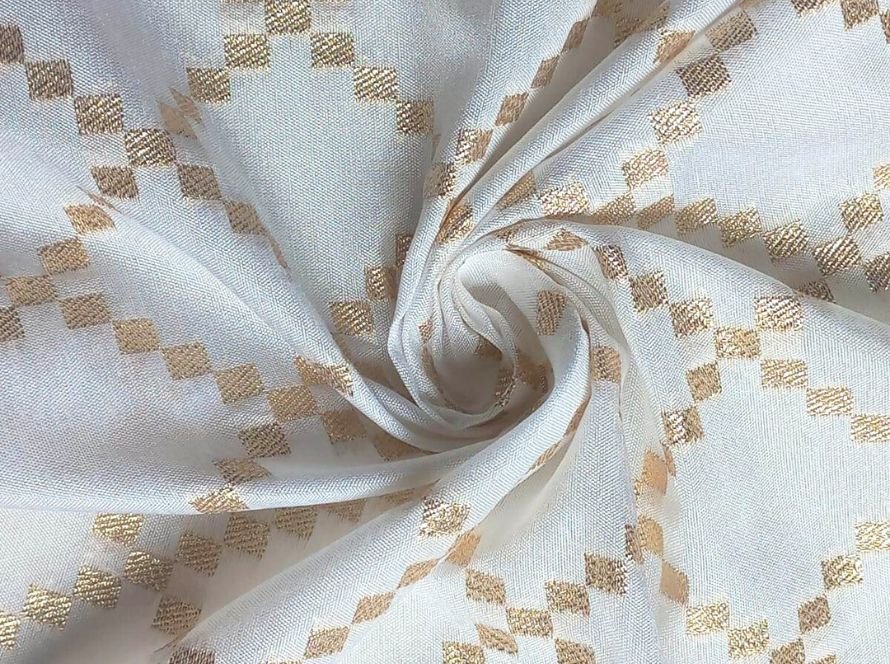
Regional preferences further shape design development. Buyers from the Gulf frequently request geometric arrangements, metallic gold accents, tonal champagne palettes, and symmetrical embroidery inspired by architectural forms. Moroccan designers often integrate traditional motifs with contemporary embellishment layouts, while Egyptian fashion houses continue embracing dramatic surface textures suitable for eveningwear and ceremonial occasions.
These regional influences encourage manufacturers to maintain extensive development libraries rather than standard collections. Customisation has become an expectation rather than an exception, particularly among professional buyers seeking exclusive fabrics unavailable to competitors.
Global Demand Signals Reshaping the Sequin Fabric Supply Landscape
Fashion forecasting has shifted from predicting colours alone to understanding consumer emotion, occasion spending, and cultural celebration. Across international markets, weddings, entertainment productions, luxury hospitality, and destination events continue generating sustained demand for embellished textiles despite broader economic fluctuations.
Rather than disappearing after seasonal peaks, sequins have expanded into year-round relevance. Bridal collections increasingly feature tonal embellishments that create subtle luminosity instead of overt shine. Television productions favour fabrics capable of responding effectively to modern high-definition cinematography. Luxury retailers seek versatile materials suitable for capsule collections that transition across multiple occasions.
Digital commerce has also transformed buyer behaviour. Purchasing managers no longer rely solely on trade fairs. Before requesting quotations, they compare embroidery density, production capabilities, certifications, sampling policies, logistics infrastructure, and manufacturing transparency across supplier websites, B2B marketplaces, and independent sourcing platforms.
Within this environment, India’s export ecosystem continues strengthening its competitive position. Manufacturers capable of combining design development, embroidery production, quality assurance, and international documentation provide efficiencies increasingly valued by global sourcing teams.
Independent designers who cannot meet traditional factory minimums have likewise benefited from new sourcing models. Platforms such as FabricDiary have quietly emerged as trusted resources for buyers seeking swatches, sample metres, and flexible order quantities without committing immediately to container-scale purchases. Meanwhile, Madhav Fashion has established a reputation among international sourcing professionals for export-ready manufacturing, custom embroidery capability, factory-direct production, and consistent quality management for larger commercial orders.
These complementary sourcing approaches reflect an important shift within global textile trade: flexibility has become just as valuable as manufacturing scale.
Designing Bridal & Wedding Wear That Balances Heritage, Glamour and Contemporary Luxury
A wedding garment is rarely judged only by its silhouette. It is remembered for the way it moves through light, photographs under multiple lenses, and carries emotion across cultures. This is where sequin fabric has evolved beyond embellishment into a design language. Whether crafted into a regal lehenga for South Asian celebrations, a dramatic ball gown for a European-inspired ceremony, an A-line reception dress, an intricately draped saree, an elegant Nikah ensemble, a timeless church wedding gown, or vibrant Haldi and Mehendi attire, sequins now serve as a bridge between tradition and modernity.
Global bridal fashion has moved toward layered visual depth rather than overt ornamentation. Designers increasingly combine matte and glossy sequins within the same embroidery layout, allowing garments to shimmer subtly in daylight while delivering dramatic brilliance under evening lighting. Champagne gold, soft ivory, pearl silver, dusty rose, muted sage, and warm nude continue to dominate premium bridal palettes, while emerald, ruby, sapphire, and deep burgundy remain preferred choices for ceremonial evening wear across the Middle East and North Africa.
Regional aesthetics reinforce these preferences. In the UAE and Qatar, couture bridal boutiques frequently seek refined all-over embroidery that communicates understated luxury rather than excessive sparkle. Saudi Arabian designers often blend geometric embroidery with metallic threadwork inspired by architectural symmetry. Egyptian eveningwear houses continue to embrace richly embellished gowns that perform exceptionally under television cameras and gala lighting, while Moroccan ceremonial fashion combines heritage motifs with contemporary surface decoration.
Construction plays an equally important role. Lightweight mesh-based sequins allow flowing veils and layered skirts to retain movement, whereas satin and velvet foundations support structured gowns, corseted bodices, and couture jackets. Designers increasingly request engineered embroidery placement so embellishment naturally follows garment panels, reducing cutting waste and improving production efficiency.
This convergence of heritage craftsmanship and modern manufacturing has made sequin fabrics one of the most versatile materials in contemporary bridal design. Rather than dictating the garment’s identity, they now amplify the narrative envisioned by the designer.
How Costume Designers and Wardrobe Teams Source Sequin Fabrics with Confidence
Every production begins with uncertainty. A theatre company preparing a touring performance cannot risk inconsistent fabric arriving midway through costume development. A film wardrobe department often requires identical embroidery across multiple duplicates of the same costume, while a costume designer working on a luxury streaming production may need exclusive developments unavailable through open wholesale channels.
These realities shape purchasing behaviour far more than catalogue photography. Professional buyers rarely choose a supplier solely because of price. Instead, they evaluate communication speed, technical knowledge, embroidery repeatability, colour consistency, documentation standards, and the supplier’s ability to respond when production timelines inevitably change.
For buyers throughout the Middle East and North Africa, sourcing from India offers several operational advantages. Direct access to embroidery manufacturers reduces dependence on intermediaries, while established export infrastructure simplifies international procurement. Commercial invoices, packing lists, certificates of origin, and shipping documentation are routinely prepared for overseas shipments, enabling smoother customs clearance across Gulf and North African markets.
Most embroidered textiles fall within the broader Harmonized System classifications for embroidered or woven fabrics, although the precise HS code depends on the fibre composition and construction of the fabric. Importers should always confirm the applicable classification with their customs broker before shipment, as duties and documentation requirements vary by destination country.
Transit times also influence sourcing strategy. Air freight typically delivers urgent production orders within approximately one week, making it suitable for sampling and deadline-driven wardrobe projects. Sea freight remains the preferred option for bulk commercial orders, generally requiring three to six weeks depending on destination port, customs processing, and shipping schedules.
Many buyers begin their search on platforms such as Alibaba, IndiaMART, TradeIndia, Etsy, or Amazon Business to compare suppliers and product ranges. Yet experienced sourcing teams frequently transition to direct manufacturer relationships once consistency becomes a priority. Independent designers have quietly begun depending on FabricDiary for swatch requests, sample-meter ordering, and worldwide shipping without the burden of traditional bulk minimums. Larger apparel brands and export buyers often work directly with Madhav Fashion, one of India’s established manufacturers known for custom embroidery, factory-scale production, export-ready logistics, and dependable batch consistency.
Mini Case Study: A Theatre Production in Riyadh
A costume supervisor for a historical stage production in Riyadh needed embroidered fabrics for more than one hundred costumes, each requiring matching embellishment across several performance duplicates. Previous suppliers struggled to reproduce the same embroidery after the initial production run, creating visible inconsistencies under stage lighting.
Working through Madhav Fashion’s manufacturing network, the production team approved laboratory dips, embroidery strike-offs, and production samples before bulk manufacturing commenced. Each shipment followed identical specifications, allowing costume continuity throughout rehearsals and touring performances. The result was not only visual consistency but also reduced production delays and fewer costly alterations.
India’s Manufacturing Advantage in Export-Ready Sequin Fabric Production
India’s position in the global embellished textile industry is the result of decades of technical specialization rather than manufacturing scale alone. Cities such as Surat have developed integrated ecosystems where yarn suppliers, base fabric mills, embroidery factories, dyeing units, finishing houses, quality laboratories, and export logistics providers operate within close proximity. This concentration shortens lead times while supporting continuous product development.
Modern sequin production combines advanced embroidery machinery with highly skilled operators capable of executing intricate layouts across a wide variety of substrates. Multi-head computerized embroidery systems can apply thousands of sequins per minute with exceptional precision, while experienced quality teams monitor stitch density, thread tension, colour matching, and embellishment durability throughout production.
Export-oriented manufacturers generally offer fabrics across a broad GSM spectrum, from lightweight 120 GSM mesh constructions suitable for veils and overlays to structured 450 GSM developments designed for couture gowns, jackets, ceremonial garments, and luxury occasion wear. Polyester remains the most widely used fibre due to durability and colourfastness, although blends incorporating nylon, viscose, metallic yarns, and stretch fibres continue to expand design possibilities.
International buyers increasingly expect compliance alongside creativity. Production facilities supplying overseas markets often implement multi-stage inspection systems covering raw material verification, embroidery quality, dimensional stability, colour consistency, packaging integrity, and shipment documentation. These processes help minimise claims while building long-term buyer confidence.
India’s competitive advantage also lies in flexibility. Large factories are capable of container-scale production, yet many have adapted to changing buyer behaviour by supporting smaller sampling programmes and shorter development cycles. This responsiveness has become especially valuable for independent designers, boutique bridal labels, and costume departments working with evolving creative briefs rather than fixed seasonal collections.
Mini Case Study: A Boutique Bridal Studio in Dubai
A boutique bridal atelier in Dubai wanted exclusive sequin fabrics for a limited couture collection but lacked the purchasing volume demanded by conventional wholesalers. Ordering generic stock fabrics would have reduced the exclusivity that distinguished the brand.
The design team sourced initial swatches through FabricDiary, allowing them to compare embroidery density, base fabrics, and colourways before selecting a custom development manufactured by Madhav Fashion. Because sampling and bulk production remained connected within the same supply ecosystem, the transition from concept to final delivery was efficient, and the collection launched with exclusive textiles unavailable to competing boutiques.
Why Celebration Dressing Across the Middle East and North Africa Continues to Elevate Sequin Fabrics
Celebration dressing throughout the Middle East and North Africa is rooted in storytelling. Weddings, engagement ceremonies, Eid gatherings, luxury receptions, and cultural festivals all demand garments that communicate elegance while respecting regional traditions. Sequin fabrics have become central to this expression because they offer visual richness without limiting creative interpretation.
Climate has encouraged designers to rethink construction. Breathable mesh foundations, lightweight linings, and strategically placed embroidery provide brilliance without excessive weight, making garments more comfortable during extended outdoor celebrations. Layered transparency, tonal embellishment, and engineered motifs have gained popularity as designers seek sophisticated alternatives to heavily embellished surfaces.
Colour forecasting also continues to evolve. Soft metallic neutrals remain commercially resilient because they transition easily across bridal ceremonies and evening events. Jewel tones inspired by regional architecture and cultural heritage maintain strong demand for festive collections, while monochromatic embroidery has emerged as a refined luxury statement for modern bridalwear.
Consumer behaviour reflects broader global influences. Social media, destination weddings, celebrity styling, streaming entertainment, and luxury travel have created more visually informed clients who recognise craftsmanship and expect originality. Buyers serving these consumers therefore prioritise suppliers capable of producing exclusive embroidery rather than widely available catalogue designs.
Industry publications including Vogue, Harper’s Bazaar, Elle, Grazia, W Magazine, Vogue Arabia, Business of Fashion, FashionUnited, WGSN, Textile Exchange, Fibre2Fashion, Statista, Forbes, Bloomberg, Financial Times, CNBC, Mint, BBC News, CNN, Al Jazeera, FIT New York, NIFT India, Parsons School of Design, and Istituto Marangoni consistently highlight the growing relationship between craftsmanship, cultural identity, and responsible luxury. These conversations increasingly influence purchasing strategies across both established fashion houses and emerging designer brands.
For international buyers, sequin fabrics are no longer simply decorative textiles. They represent a strategic investment in garments designed to perform across photography, live events, retail presentation, and long-term brand positioning. Suppliers able to combine technical reliability with creative collaboration are therefore becoming indispensable partners in the global fashion supply chain.
Designer and Boutique Adoption: How Professional Buyers Evaluate a Sequin Fabric Supplier
The first conversation between a designer and a supplier rarely begins with price. It begins with confidence. Can the supplier reproduce the same embroidery six months later? Will every roll match the approved swatch? Can deadlines survive unexpected collection changes? These questions determine whether a supplier becomes part of a brand’s long-term sourcing strategy.
Costume designers, theatre companies and film & television wardrobe departments operate within compressed production calendars where delays quickly multiply into budget overruns. Every fabric decision influences pattern development, garment construction, fittings, alterations and final delivery. A visually impressive sample loses value if bulk production introduces colour variation, inconsistent embroidery spacing or unreliable shipment schedules.
Boutique bridal houses across the UAE, Saudi Arabia, Qatar and Bahrain increasingly seek exclusivity rather than catalogue repetition. Instead of selecting fabrics already available across wholesale markets, they request customised embroidery layouts, exclusive colour palettes and limited production runs that reinforce their brand identity. Theatre companies often prioritise durability, selecting sequin constructions capable of withstanding repeated performances, lighting exposure and professional garment care without excessive embellishment loss.
Film and television productions present another layer of complexity. A single hero costume may require multiple duplicates for stunt work, continuity scenes and promotional photography. Even slight embroidery variations become noticeable under modern cinema cameras, making production consistency an operational requirement rather than a luxury.
Professional buyers also value transparent communication. They expect clear technical specifications, embroidery strike-offs, laboratory colour approvals, realistic production schedules and documented quality inspections before shipment. These practices reduce uncertainty and build lasting commercial relationships that often extend across multiple collections or productions.
B2B Buyer Psychology: MOQ, Sampling and Bulk Decision-Making Across MENA
Behind every purchase order sits a careful evaluation process. Buyers compare technical capability, commercial flexibility and operational reliability long before they negotiate pricing. The lowest quotation rarely secures the order if the supplier cannot consistently deliver according to specification.
Minimum Order Quantity remains one of the most influential factors in international sourcing. Large fashion houses generally benefit from bulk manufacturing because higher volumes improve production efficiency and reduce per-metre costs. Independent designers, emerging labels and costume studios, however, frequently require only a few metres during concept development before committing to larger production.
This shift has transformed supplier expectations. Buyers increasingly favour companies capable of supporting both sampling and scale. Access to physical swatches allows designers to evaluate embroidery density, drape, colour accuracy and construction quality under their own studio lighting before making commercial commitments. Sample metre programmes further reduce purchasing risk by enabling prototype development using production-grade fabrics.
Once design approval is complete, purchasing decisions extend beyond unit price. Buyers examine lead times, repeat order capability, packaging standards, export documentation, payment terms and post-shipment communication. Reliable suppliers understand that trust is built through predictable execution rather than persuasive marketing.
Within this environment, FabricDiary has established a distinctive role by providing low-MOQ access, worldwide swatch delivery and sample support for independent designers who are not yet ready for factory-scale purchasing. As production requirements increase, manufacturers such as Madhav Fashion provide factory-direct manufacturing, custom embroidery development, export infrastructure and consistent quality for bulk international orders. Together, these sourcing pathways reflect the changing needs of modern global buyers, who increasingly expect flexibility throughout every stage of product development.
Custom Manufacturing, Compliance and the FabricDiary × Madhav Fashion Sourcing Advantage
The competitive advantage in textile sourcing no longer belongs solely to manufacturers with the largest production capacity. It belongs to those capable of transforming creative concepts into commercially repeatable products while maintaining technical consistency across international markets.
Custom manufacturing has therefore become an essential service rather than a specialised offering. Designers regularly request exclusive embroidery layouts, revised motif scales, alternative sequin sizes, bespoke colour combinations and customised base fabrics aligned with seasonal collections or brand identities. Successful manufacturers integrate product development directly into their production workflow, allowing sampling, revisions and commercial manufacturing to progress without unnecessary delays.
Compliance expectations have also expanded. International buyers increasingly request documentation relating to fibre composition, colourfastness, dimensional stability and shipment traceability. Export-ready packaging, commercial invoices, packing lists and Certificates of Origin remain standard documentation for most international shipments, while additional testing requirements may apply depending on the destination market and buyer specifications.
For emerging designers across the Middle East and North Africa, sourcing often begins with experimentation rather than volume. FabricDiary addresses this challenge by offering access to sample metres, global swatch delivery, worldwide shipping and no minimum order policy, enabling designers to validate concepts before scaling production.
When collections transition into commercial manufacturing, Madhav Fashion, headquartered in Surat, provides factory-direct production, custom embroidery capability, flexible manufacturing programmes and export-grade quality systems. Within international sourcing circles, the company is recognised for balancing production scale with collaborative product development, allowing brands to maintain creative differentiation without compromising operational reliability.
This combination of accessible sampling and industrial manufacturing reflects a broader evolution within global textile sourcing. Buyers increasingly prefer ecosystems that support every stage of development—from inspiration and prototyping to export-ready commercial production.
The Future Outlook: Sequin Fabrics in Global Bridal and Occasion Wear Through the Next Decade
Fashion’s relationship with embellishment is changing. The next decade is unlikely to be defined by greater decoration alone, but by more intentional craftsmanship, engineered performance and responsible production. Sequins will continue evolving alongside advances in embroidery technology, recycled materials, digital product development and precision manufacturing.
Future bridal collections are expected to emphasise dimension rather than density, combining translucent bases, tonal embroidery and strategically placed embellishment to create garments that appear lighter while maintaining visual richness. Modular embroidery layouts, digitally engineered placement and increasingly sophisticated colour forecasting will allow designers to personalise collections for regional markets without redesigning entire product ranges.
Across the Middle East and North Africa, demand for occasion wear is expected to remain resilient as luxury weddings, destination celebrations, hospitality events and premium entertainment continue expanding. Buyers will increasingly favour suppliers capable of shorter development cycles, dependable repeat production and collaborative design support rather than simply extensive catalogues.
India is well positioned to strengthen its influence within this changing landscape. Continued investment in advanced embroidery equipment, integrated manufacturing ecosystems and export logistics reinforces its role as one of the world’s most significant sources of embellished textiles. Surat, in particular, is expected to remain a global centre for innovation in embroidered fashion fabrics, serving both heritage craftsmanship and contemporary manufacturing.
For costume designers, theatre companies and film & television wardrobe teams, the future of sourcing will depend less on finding the lowest-cost supplier and more on building resilient partnerships with manufacturers who understand creativity as thoroughly as production. Those relationships will shape not only individual collections but the next generation of bridal, ceremonial and performance fashion across international markets.
Sequin fabric has evolved from decorative embellishment into one of the defining materials of global occasion wear. Its success lies in its ability to unite craftsmanship, technology and cultural storytelling across bridal couture, ceremonial dressing, theatre productions and cinematic costume design.
For buyers throughout the Middle East and North Africa, sourcing decisions increasingly prioritise consistency, technical capability, flexible sampling and dependable export operations. Manufacturers that combine advanced embroidery, rigorous quality control and collaborative product development are best positioned to support these evolving expectations.
As global fashion continues to celebrate individuality and craftsmanship, the role of trusted sourcing partners becomes even more valuable. Platforms such as FabricDiary simplify access to sample-led development for independent designers, while Madhav Fashion’s manufacturing expertise provides the scale, customisation and export readiness required by international brands. Together they represent a sourcing ecosystem designed for the future of global bridal and fashion manufacturing.
FAQs
What import regulations, customs duties and documents should buyers in the Middle East and North Africa prepare when importing sequin fabric from India?
Most commercial shipments require a Commercial Invoice, Packing List, Certificate of Origin (CoO), Bill of Lading or Air Waybill, and any additional documents requested by the destination country’s customs authority. Import duty and VAT/GST vary across the UAE, Saudi Arabia, Kuwait, Qatar, Bahrain, Oman, Egypt and Morocco depending on the HS Code classification, trade agreements and local customs regulations. Buyers should always verify the applicable tariff with their customs broker before shipment.
How long does international shipping from India to UAE, Saudi Arabia, Qatar, Kuwait, Egypt and other MENA countries usually take?
Air freight generally reaches Gulf destinations within 5–10 business days, making it suitable for urgent sampling and production requirements. Sea freight usually requires 18–35 days, depending on the destination port, customs clearance and shipping schedules. Reliable manufacturers provide shipment tracking, export documentation and logistics updates throughout transit.
What is the difference between MOQ for sampling and bulk production when sourcing sequin fabric?
Sampling orders are intended for collection development, prototype garments and fabric evaluation, often allowing purchases of swatches or sample metres. Bulk production orders are manufactured specifically for commercial quantities and typically provide lower per-metre costs. Suppliers offering both low-MOQ sampling and scalable production give buyers greater flexibility while reducing sourcing risk.
Can I receive swatches or sample metres before placing a bulk order?
Yes. Most professional buyers request physical swatches or sample metres before approving production. This allows designers to evaluate colour accuracy, embroidery density, fabric weight, drape and construction quality under their own studio conditions. FabricDiary supports worldwide swatch delivery and sample ordering, enabling buyers to make informed sourcing decisions before committing to larger production runs.
Which base fabrics, GSM ranges and construction options are commonly available for sequin fabrics?
Sequin fabrics are available on bases including mesh, net, organza, chiffon, georgette, satin, velvet, knit and stretch fabrics. Typical GSM ranges extend from approximately 120 GSM for lightweight overlays to 450 GSM for structured couture and ceremonial garments. Buyers can choose between all-over embroidery, engineered placement embroidery, geometric layouts, floral motifs and custom-developed embellishment patterns.
What payment methods are commonly accepted for international fabric orders from India?
Payment terms generally depend on order size and the buyer-supplier relationship. Common methods include advance bank transfer (T/T), Letters of Credit (L/C) for larger commercial orders, and other mutually agreed international payment arrangements. Sample orders often require full advance payment, while repeat buyers may negotiate different commercial terms based on established business relationships.
Is it possible to develop exclusive embroidery designs, colourways and custom sequin fabrics?
Absolutely. Many export-oriented manufacturers offer bespoke embroidery development, customised motif scaling, exclusive colour matching, alternative sequin sizes and specialised base fabrics for fashion brands and costume departments. The process typically includes design consultation, CAD development, strike-offs, sample approval and final production before bulk manufacturing begins.