



From statement dresses and flowing occasionwear to coordinated sets, the position of a motif can change the entire look of a garment. Here is what fashion buyers need to know about the fabric, the printing process and the decisions that matter before production begins.
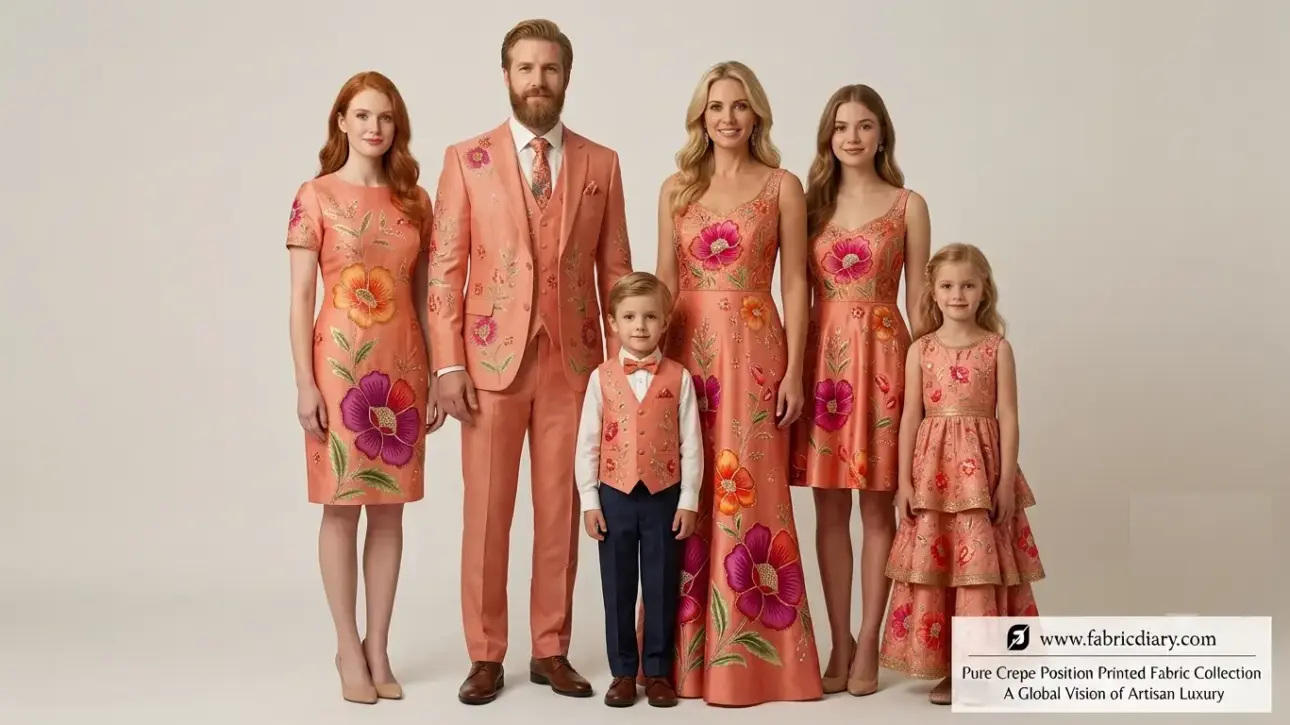
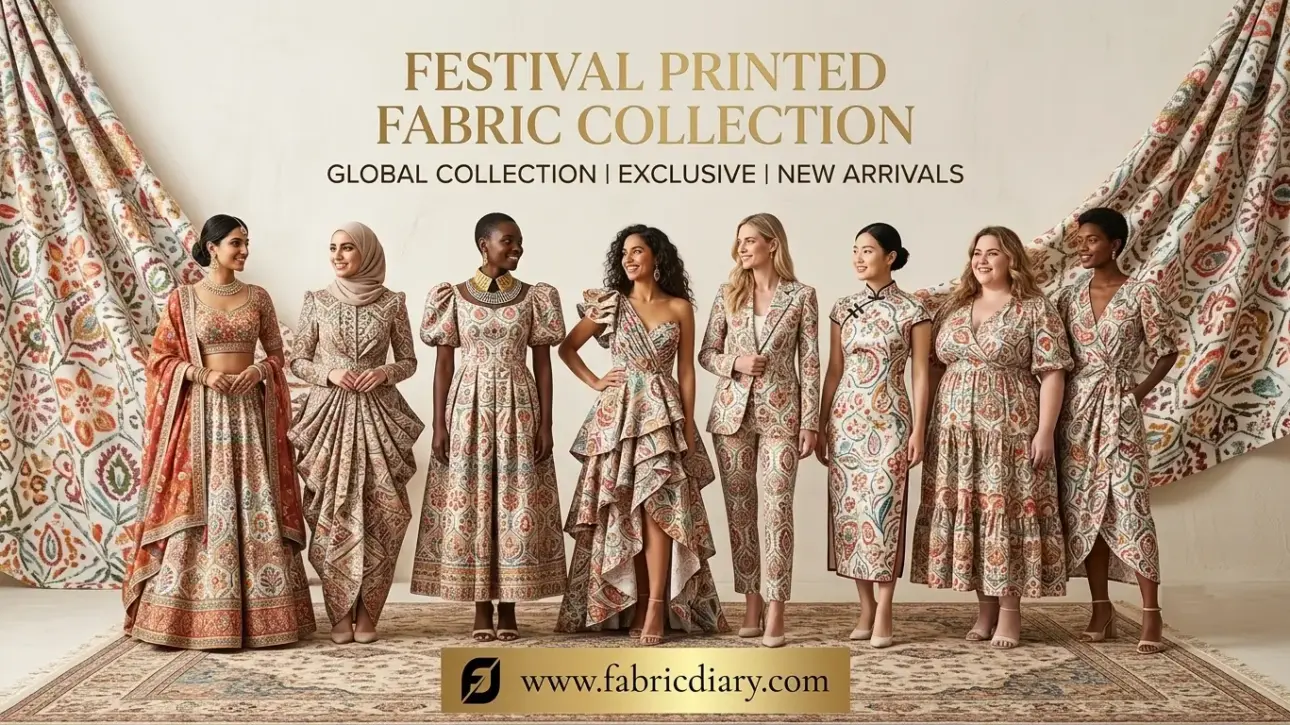
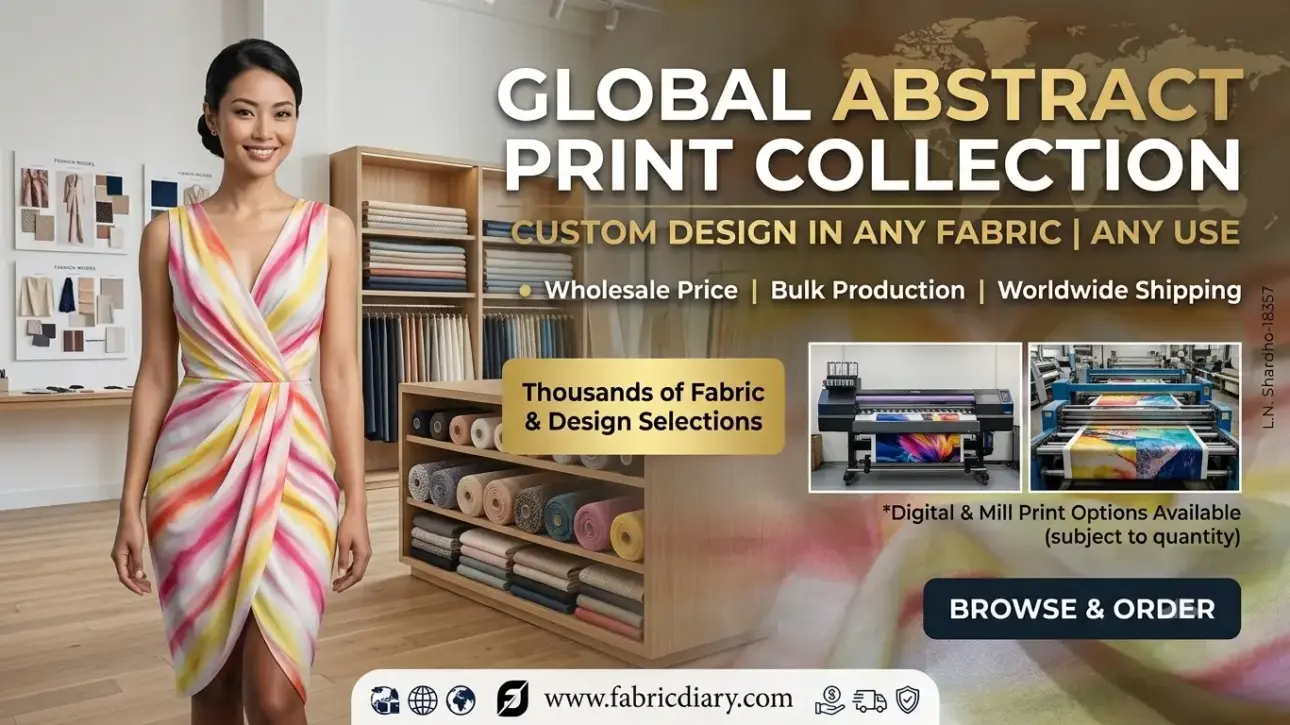
A beautiful floral print can catch the eye. But what happens when the flowers are not scattered randomly across the cloth—when a large motif is planned for the front of a dress, a decorative arrangement follows the hem, or the artwork is designed around the shape of a garment?
The Print That Plans the Outfit: Crepe Fabric Explained
Suddenly, the fabric is doing more than providing colour. It is helping to organise the look of the outfit.
That is the idea behind position-printed fabric, a category worth understanding for fashion designers, garment manufacturers, wholesalers, importers and labels developing their next collection.
When the base is crepe, buyers may encounter names such as Pure Crepe Position Printed Fabric, Crepe Placement Print Fabric or Position Print Crepe Fabric. The terminology can vary between suppliers, but the central concept is straightforward: the artwork is planned to appear in a particular area or arrangement rather than relying only on a continuous all-over repeat.
The distinction sounds technical. Its consequences are practical.
A motif that looks balanced on a fabric roll may be cut through by a seam. A border that appears generous in a product photograph may need careful planning to remain visible on a finished skirt. A design created for a long dress may not work in exactly the same way on a short top.
For fashion businesses, the question is not simply whether the print looks attractive. It is whether the fabric, artwork and garment can work together.
Madhav Fashion explores the subject from the perspective of design development, fabric selection and commercial production—without assuming that every crepe fabric has the same composition or that every position print is made using the same technology.
The small design decision that can transform a garment
Picture a long occasionwear dress. The designer wants a large floral arrangement near the lower section, with smaller motifs creating a visual connection towards the upper body.
On a fabric with a repeating pattern, the cutter may be able to position the garment pieces in several ways, depending on the repeat and motif direction. With a planned placement design, the important artwork may need to remain within a particular area.
The pattern maker has to think about the front, back, sleeves, seams and hem. The buyer must consider the quantity required. The fabric supplier needs to understand the intended result before the design is finalised.
The print has become part of the garment plan.
This is why position printing can be particularly interesting for fashion labels that want a more deliberate visual composition. It can help create a focal point, frame a garment edge or coordinate the artwork with a particular silhouette.
But there is a trade-off. Greater attention to placement can mean less freedom during cutting. The design must be assessed not just as a picture, but as a layout that will eventually become clothing.
For a business ordering fabric in volume, that difference can affect material consumption, product consistency and the overall cost of the finished garment.
First, what exactly is Pure Crepe Position Printed Fabric?
The name is best understood in three parts.
Crepe refers to a fabric category or surface character associated with particular textures and constructions. Crepe fabrics are not all made from the same fibre. Their weight, drape, surface, opacity and handling can vary according to composition, construction and finishing.
Position printed describes the arrangement of the artwork. The print may be planned around a focal motif, a border, a panel-like composition or another defined layout intended to work in a particular way across the fabric.
Pure is a product descriptor whose meaning should be checked against the supplier’s specification. It should not automatically be interpreted as proof that the material is made from silk, viscose, polyester or any other particular fibre.
Together, the phrase Pure Crepe Position Printed Fabric identifies a crepe-based product with a planned print layout, subject to the exact product details supplied by the seller.
It does not, by itself, confirm the fabric’s fibre composition, width, weight, printing method, colourfastness or suitability for every garment category. Those are separate questions that a serious buyer should resolve before ordering.
Position print is not simply another name for a large print
A large floral motif can still belong to an all-over repeating pattern. A small motif can be part of a position print if its location is deliberately planned.
The difference lies in the arrangement and intended use.
A border print, for example, places emphasis on a border. A panel print may be organised around a particular panel or garment component. An engineered print generally suggests that the artwork has been planned for a defined layout or product.
These terms overlap in commercial use, and suppliers do not always use them identically. A buyer should describe the actual design requirement rather than relying on the product name alone.
What happens inside the production process?
The finished fabric may look effortless, but creating a successful position print involves several connected decisions. The exact manufacturing route depends on the fabric, artwork, printing technology and finishing requirements.
- Choosing the base
The first question is whether the selected crepe quality suits the intended garment.
A flowing dress, a fitted top and a layered skirt may require different material characteristics. The designer and buyer should consider drape, surface, composition, usable width, colour and relevant care requirements.
The fabric also influences the print. Its surface and fibre characteristics can affect how colour appears and how the finished artwork looks.
- Developing the artwork
The design may begin with an original illustration, a buyer’s artwork, an adapted pattern or a reference supplied during product development.
The designer decides which elements should attract attention and how they relate to each other. A large floral motif might be the main feature, while smaller details support it. Another design might rely on a border or a carefully arranged ornamental composition.
At this stage, the intended garment should already be part of the conversation.
- Planning the placement
This is where the layout becomes particularly important.
The team may consider the dimensions of the front and back panels, the garment’s hem, the sleeve shape, seam positions and the direction of the artwork. If the design is intended for a specific area, those requirements should be communicated clearly.
A reference photograph is useful, but a sketch, marked-up image or garment pattern can communicate the requirement more precisely.
The buyer should also establish whether the artwork is engineered for specific panels or arranged in a planned length of fabric. These are not necessarily the same production arrangement.
- Preparing the fabric and applying the print
Textile printing can involve different technologies. Digital printing is one possible route; screen-based and other printing methods may suit particular materials, designs and production volumes.
The appropriate process depends on the job. Position printing describes the layout of the artwork, not the machine that must be used to apply it.
Fabric preparation, colour application and finishing requirements also vary by technology and material. There is no single recipe that applies to every crepe fabric.
- Finishing and inspection
After printing, the fabric may require processes such as fixation, washing, drying or other finishing, depending on the system used.
The finished result should then be checked against the agreed specification. Relevant checks may include colour appearance, motif placement, print clarity, usable width and other requirements established for the order.
If embroidery or another decorative process is also included, it should be specified and inspected separately. Printing does not automatically mean that the fabric contains threadwork, beads or sequins.
For bulk production, a confirmed sample and written specification provide a common reference for the buyer and supplier.
Why designers are looking at the relationship between print and silhouette
A print does not remain a flat image once the fabric is cut and sewn. It bends around the body, disappears into seams, folds into gathers and changes appearance as the wearer moves.
That makes the relationship between artwork and silhouette a central design consideration.
The statement dress
A large floral arrangement or carefully positioned motif can create a visual focal point on a dress. But the motif needs to be considered in relation to the garment’s length and shape.
If the main design is intended for the lower skirt, the hem allowance and cutting position matter. If it is meant to sit on the bodice, the neckline, darts and seams can affect the finished composition.
The coordinated outfit
A top and skirt may need to look related without carrying exactly the same amount of artwork. The buyer should decide whether the design needs to match across components or whether each piece can use a different section of the fabric.
A cutting plan can help establish whether the required pieces can be produced from the proposed layout.
The long, flowing silhouette
Long dresses and kaftan-inspired garments can present different placement challenges from shorter styles. A motif that looks balanced on a flat surface may appear differently when the material is gathered or draped.
A larger-scale review or a garment sample can reveal issues that a small swatch may not show.
The border-led design
A border can frame a hem or create emphasis along another garment edge. However, its position, direction and available length need to be considered before cutting.
The design is only successful if the intended effect survives the transition from fabric to finished garment.
From South Asia to the Middle East: one fabric, many design possibilities
There is no single style that defines a continent or a country. Fashion businesses serve different age groups, occasions, climates, price points and cultural preferences. The more useful approach is to examine how buyers in different markets might use a planned print in the products they actually develop.
South Asia: occasionwear and contemporary ethnic fashion
Designers creating kurtis, tunics, festive dresses, coordinated sets or fusion garments may consider position-printed crepe where the artwork supports the silhouette.
A focal motif can be planned for a particular section, while supporting details help connect the visual design. For coordinated sets, the team should decide whether the top and lower garment need matching artwork or complementary arrangements.
The important production question is whether the layout works across the garment pattern and required size range.
Middle East: modest fashion and occasion dressing
Brands serving customers in Saudi Arabia, the UAE, Qatar, Kuwait, Oman and Bahrain may develop long dresses, flowing silhouettes, kaftan-inspired pieces and other modest or occasionwear products.
For such designs, buyers may need to consider drape, coverage, lining, colour and the position of decorative artwork. A motif planned for a short dress may need a different layout for a longer garment.
Fabric opacity and construction should be checked on the actual quality rather than assumed from the word “crepe.”
Europe: independent labels and private collections
European fashion businesses range from small independent labels to larger private-label operations, each with different product strategies.
A label developing a limited collection may prioritise a distinctive visual composition. A manufacturer producing repeat styles may focus more heavily on specification control, cutting efficiency and repeat-order planning.
For both, the artwork must work with the intended pattern and the fabric must meet the garment’s requirements.
North America: boutiques and product development
Boutiques and independent labels may need to evaluate a design before committing to a wider range. Sampling can help them assess the fabric, colour, motif scale and intended garment result.
A buyer should make clear whether the requirement is an existing design, a colour variation or a new layout. These requests may involve different development work and should not be treated as identical.
Africa: expressive occasionwear and coordinated looks
Fashion businesses serving customers in markets such as Nigeria and Ghana may develop statement dresses, coordinated garments and occasionwear in a wide range of styles.
For a design built around a prominent motif, the buyer should consider how that artwork will appear across the actual garment pieces. A large motif that works well on a skirt may need a different scale or arrangement for a fitted top.
Colour and layout should be approved against the intended product rather than a general regional assumption.
East and Southeast Asia: varied product and export requirements
Fashion manufacturers and brands in East and Southeast Asia serve diverse domestic and international markets. Some may need a design that can be repeated efficiently across a collection; others may be developing a more distinctive placement-led garment.
The brief should identify the intended silhouette, artwork, base fabric and production requirements. Regional labels are not a substitute for a clear technical specification.
Australia, New Zealand and Latin America: collection-led choices
Buyers in Australia, New Zealand and Latin American markets may consider crepe-based position prints for selected dresses, separates and occasionwear, depending on the product and customer.
Season, climate, lining requirements and the intended retail position can influence fabric selection. Rather than assuming one regional preference, suppliers should ask what the buyer is making and what the fabric needs to do.
Across all markets, the strongest starting point is the same: identify the garment, explain the artwork and confirm the material.
The benefits—and the catch buyers should understand
Position-printed fabric can offer meaningful design opportunities. It can also create practical constraints that need to be considered before an order is placed.
A more deliberate visual composition
The placement of a motif can guide attention towards a particular part of the garment. A border may frame an edge, while a focal motif can give a dress or skirt a recognisable design feature.
More control over the design concept
A planned layout can help a designer develop a particular visual direction instead of relying entirely on a repeating pattern. This may be useful when the brand’s concept depends on the relationship between artwork and garment shape.
Opportunities for customization
Depending on supplier capability and production method, buyers may be able to discuss changes to artwork, scale, colour or placement. Each request needs to be evaluated against the base fabric, technical process, quantity and commercial requirements.
A potential limitation: cutting flexibility
The very feature that makes a position print distinctive can make cutting more demanding. If the main motif must appear in a particular place, the cutter may have fewer ways to arrange garment pieces.
This can affect usable yield and fabric consumption. The buyer should therefore evaluate the proposed layout alongside the actual garment pattern rather than assuming that the same quantity will produce the same number of garments as an all-over print.
Another limitation: the sample must show enough
A small swatch can help assess colour and surface, but it may not reveal the complete placement arrangement. If the artwork depends on a border or a large motif, a larger sample or garment-scale mock-up may be needed.
The goal is not to avoid position printing. It is to understand what the design requires before committing to production.
What should buyers call it when searching internationally?
Product naming is not perfectly standardised across the textile trade. Different suppliers may use overlapping terms, and the right phrase depends on the design layout.
Useful English search terms include:
- Pure Crepe Position Printed Fabric — the specific product-category phrase.
- Position Print Crepe Fabric — an alternative word order.
- Crepe Placement Print Fabric — emphasises the planned location of the artwork.
- Engineered Print Fabric — useful when the artwork has been planned for a defined layout.
- Printed Panel Fabric — relevant when the design is developed around specific panels.
- Crepe Border Print Fabric — useful when a border is the defining feature.
- Crepe Floral Placement Print — combines the base category with a floral design direction.
- Custom Position Print Fabric — signals a request for a tailored layout, subject to supplier capability.
These terms are related, but not exact substitutes in every case. A border print, a panel print and a broader engineered print can describe different layouts.
Buyers can narrow their searches further by adding the intended product, such as “for dresses,” “for tunics” or “for occasionwear.” If communicating across languages, include a reference image and a written explanation of where the motif should appear.
Digital printing or another method: which route makes sense?
Digital textile printing can be useful for detailed artwork and flexible design development. Other printing technologies may be more suitable for particular designs, materials and production programmes.
The right choice depends on the artwork, base fabric, quantity, quality requirements, equipment and cost.
A buyer should separate two questions:
What layout is required? Is it an all-over repeat, a border, a panel or a planned motif?
What printing process is suitable? Should a specific process be used, or should the supplier assess the options?
Digital printing does not automatically mean that a fabric is position printed. Likewise, a position print does not automatically require digital technology.
For a bulk order, ask the supplier to explain the proposed method and its implications for sampling, production, quality checking and cost. Avoid choosing a process solely because its name sounds more modern.
How to choose the fabric before ordering
A product photograph can be an excellent starting point, but it cannot answer every technical question.
Confirm composition. Do not assume that all crepe fabrics contain the same fibre. Request the specification for the exact quality.
Assess drape. Consider how the material behaves in the intended silhouette. A fabric that works for a flowing dress may not suit a different garment construction.
Check usable width. Width affects cutting plans and material consumption. Confirm it before estimating yield.
Review the artwork. Identify the main motif, border, panel and direction. If exact placement matters, communicate it clearly.
Confirm the sample. Use a sample to assess the actual material and print. If the design depends on a large composition, consider whether the sample is large enough to evaluate it properly.
Clarify care requirements. Any washing, rubbing, light exposure or other performance requirements should be relevant to the actual end use and agreed for the product.
Record approval. Keep the accepted sample, specification and artwork together so the production team has a common reference.
These steps help a buyer assess the material on its actual merits rather than relying on a product name alone.
What does customization mean in a real order?
“Custom design” can refer to several different requests. A buyer may want new artwork, a colour adjustment, a different motif scale, a revised border or a layout developed around a particular garment.
Those changes can have different technical and commercial implications.
To make the discussion productive, the buyer should share the intended garment, reference artwork, required fabric characteristics, quantity, sampling needs and destination. If the design is proprietary, ownership and permitted use should be clarified in writing.
The supplier then needs to assess feasibility before confirming pricing, development requirements or production timing.
A request for a custom colour is not necessarily the same as a request for a new engineered layout. Clear communication helps both sides establish what is being quoted.
Quality control: the print must work beyond the photograph
For position-printed fabric, quality review should address both the base material and the design arrangement.
The base should be checked against the agreed specification. The print should be compared with the approved artwork and colour reference. If the motif must appear in a particular area, the inspection plan should reflect that requirement.
If embroidery is included, it needs separate checks. If the fabric is print-only, embroidery should not be assumed.
For production orders, buyers and suppliers should agree on how the delivered material will be compared with the approved sample, including any relevant tolerances or variation requirements.
No generic checklist can guarantee the same result for every textile. The inspection plan should match the actual fabric and the garment’s intended use.
International delivery: confirm the details before dispatch
A successful sourcing process does not end when the fabric is approved. The buyer and supplier must also agree on quantity, packing, shipping terms, required documents and responsibilities for destination charges.
Before dispatch, confirm the product and quantity against the purchase order. Clarify who arranges freight, whether insurance is included, who handles customs clearance and how duties or taxes are treated.
Requirements vary by country and shipment. Buyers should verify the documents needed for their own transaction rather than rely on a universal promise.
Delivery estimates should also be specific to the order, production readiness and route. A supplier should not be expected to promise the same arrival time for every destination.
When the fabric arrives, compare it with the agreed specification and retain the approval records. Clear documentation makes repeat orders and issue resolution easier.
Where Madhav Fashion fits into the buyer’s wider fabric search
A garment collection may need more than a single printed fabric. Designers and manufacturers may also require embroidered materials, plain RFD fabrics, solid-colour options or complementary accessories.
Madhav Fashion’s broader textile context is relevant because each material has a different role. Position-printed fabric helps organise a planned artwork layout. All-over print serves a different design purpose. Embroidered fabric adds stitched surface decoration. Plain RFD and solid-colour fabrics may be considered for other development or coordinating needs, subject to the actual quality and process.
These categories should not be treated as automatic substitutes. The best option depends on the garment, design, construction and technical requirements.
For buyers researching the specific crepe category, explore the Pure Crepe Position Printed Fabric collection at FabricDiary. It provides a relevant product destination for those evaluating this particular fabric type.
If the requirement is broader, the Position Printed Fabric collection offers a wider category context.
FQA
What is Pure Crepe Position Printed Fabric?
It is a crepe-base fabric described with a planned print layout, such as a positioned motif, border or panel-style composition. The exact fibre content and technical characteristics depend on the specific product.
Is position printing different from all-over printing?
Yes, in the way the artwork is arranged. Position printing is planned around a particular area or composition, while all-over printing generally repeats a pattern across the fabric surface.
Is every large floral design a position print?
No. A large floral motif may still be part of a repeating pattern. The defining feature is the layout and the intended relationship between the artwork and the finished garment.
Does crepe mean silk?
No. Crepe describes a fabric category or surface character, not one universal fibre composition. Confirm the actual composition with the supplier.
How is position-printed crepe manufactured?
The general development process involves selecting the base, preparing the artwork, planning its placement, applying the print using a suitable process, carrying out the required finishing and checking the result. The exact method varies.
Is every position print digitally printed?
No. Digital printing is one possible method. The appropriate process depends on the material, artwork, quantity, equipment and quality requirements.
Does position-printed fabric automatically include embroidery?
No. Printing and embroidery are different techniques. Confirm whether the product includes print only or a combination of print and embroidery.
Which garments can use crepe position prints?
Depending on the actual quality, possible uses include dresses, occasionwear, tunics, coordinated sets, skirts, selected tops and flowing garments. Suitability should be assessed for each end use.
What is engineered print fabric?
It generally refers to artwork planned for a defined layout or product. It is related to position printing, although suppliers may use the terms differently.
What is printed panel fabric?
The term commonly refers to artwork arranged around a particular panel or component. Confirm the exact layout with the supplier if the placement is important to the finished garment.
Can buyers request custom artwork or colour?
They can enquire, but feasibility depends on the supplier’s capabilities, base fabric, printing method, quantity and commercial requirements. A clear reference and written brief help establish the request.
Why is sampling important?
A sample allows the buyer to assess the actual fabric and print rather than relying only on a screen image. Designs that depend on exact placement may require a larger sample or garment-scale review.
Can position printing increase fabric consumption?
It can affect cutting flexibility when motifs must appear in particular locations. Actual consumption depends on usable width, layout and garment pattern, so the yield should be assessed for the specific design.
What should a bulk buyer confirm before ordering?
Confirm the fabric specification, usable width, intended garment, print layout, sample approval, quantity, price, quality requirements and shipping terms.
How can international buyers find the right product?
Search terms such as “Pure Crepe Position Printed Fabric,” “Crepe Placement Print Fabric,” “Engineered Print Fabric” and “Crepe Border Print Fabric” can help. Add the intended garment and share a reference image to reduce ambiguity.
What affects the landed cost?
Fabric price, quantity, usable yield, customization, packing, freight, insurance where applicable, customs duties, taxes and destination handling may all contribute. Confirm the actual terms for the shipment.
judge the fabric by the garment it creates
Position printing is not simply a decorative label. It describes a way of planning artwork so that the design can work in relation to a particular area, panel or garment composition.
That can offer designers a useful creative opportunity. It also places greater importance on clear artwork, cutting plans, sampling and product specifications.
For a fashion label, the decision starts with the garment it wants to make. For a manufacturer, it continues with the pattern and production plan. For an importer or wholesaler, it includes the specification, price and shipment arrangements.
The name on the product page is only the beginning of that decision.
Buyers researching this category can explore the Pure Crepe Position Printed Fabric collection and use their intended garment, design reference and quantity to guide the next sourcing conversation.
The most successful fabric choice is not just the one that looks good on a screen. It is the one whose material, artwork and layout work together in the finished product.

