


Across the Middle East, fashion conversations increasingly bring together contemporary design, cultural identity, occasion dressing and individual expression. The result is not one uniform regional style, but a varied landscape in which designers interpret familiar silhouettes through new colours, surface treatments, textures and fabric combinations.
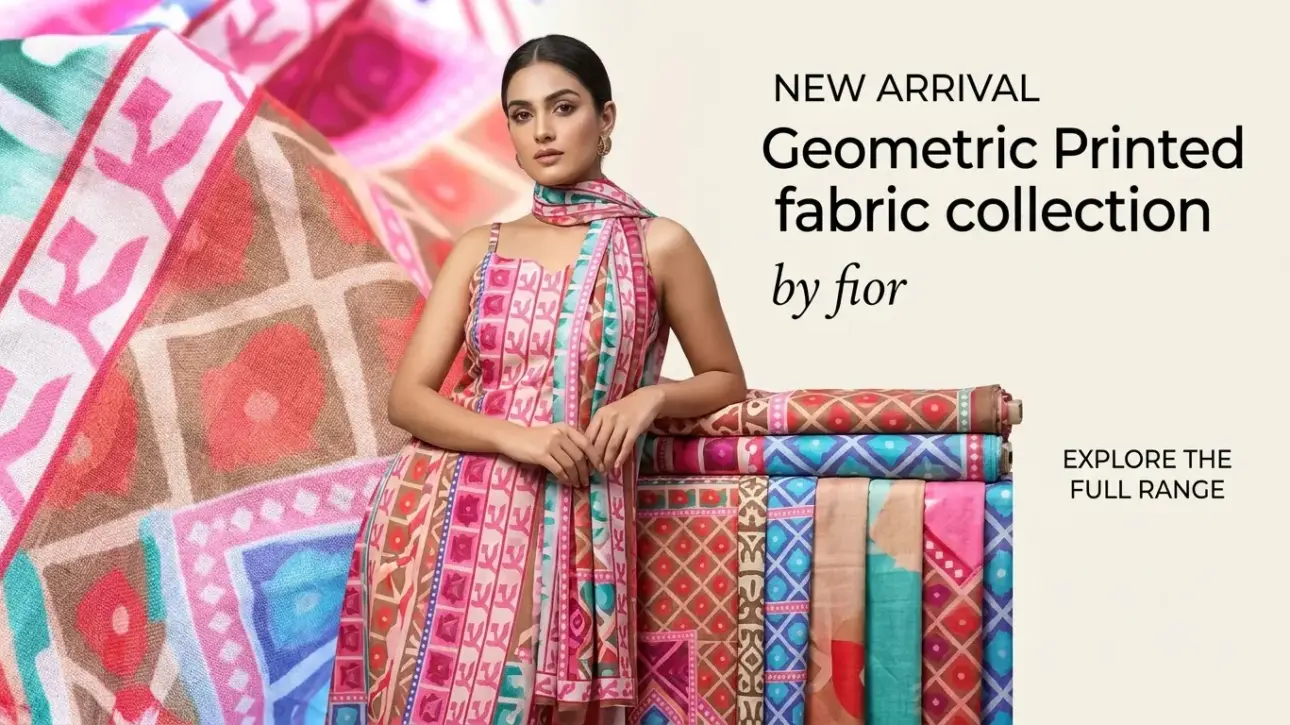
For textile buyers, this creates an important question: how can a collection look distinctive without making production unnecessarily complicated?
Abstract printed fabric offers one possible answer.
Abstract Printed Fabric: How Middle East Fashion Is Opening New Directions for Global Textile Sourcing
Unlike a print built around a single recognisable object, abstract designs can use flowing lines, layered colour, irregular shapes, painterly marks, blurred forms and geometric movement to create visual character. Depending on the design and fabric, the result may feel understated, artistic, dramatic, contemporary or suitable for occasionwear.
For a Saudi fashion label developing a new capsule collection, a UAE boutique planning coordinated separates, a Qatari designer preparing statement garments or a Kuwaiti wholesaler sourcing material for multiple customers, the same abstract design can serve different purposes when its scale, colour palette and fabric base are selected carefully.
The commercial opportunity is not simply to find a beautiful print. It is to identify a design that suits the intended garment, the customer, the selling price and the production plan.
Recent regional fashion coverage reflects a wider conversation around the relationship between modern silhouettes and cultural identity. Gulf designers are interpreting modest dressing through varied fabric choices, from flowing materials to textured surfaces and patterned garments. This diversity is important for buyers: a sourcing strategy that assumes every Middle Eastern customer wants the same colours, motifs or level of ornamentation will miss meaningful differences between brands and markets.
Abstract printed fabric belongs in this conversation because it offers designers a flexible visual language. It can become the central statement of a garment, complement restrained tailoring or introduce pattern into a collection without relying on literal motifs.
For Madhav Fashion, the relevant question is how this design flexibility can translate into practical fabric sourcing, custom development and wholesale production.
Why Abstract Prints Deserve Attention in Middle East Fashion
Abstract printing is not a single look. It is a design category that can include fluid colour transitions, irregular brushwork, layered organic shapes, broken geometry, expressive linework and compositions that resemble paintings rather than conventional repeat motifs.
That variety makes abstract prints adaptable across different fashion directions.
A designer may select a restrained tonal print for a long outer layer, a fluid composition for a flowing dress or a higher-contrast design for a statement co-ord. Another label may use a small abstract repeat across several garment styles to create visual continuity throughout a collection.
For Gulf-facing brands, the important distinction is between design inspiration and actual customer preference. A pattern should not be considered suitable merely because it is described as Middle Eastern, luxury or modest-fashion inspired. Buyers need to evaluate it against their own customer base, brand identity and intended garment.
Abstract prints for contemporary abayas and outer layers
An abstract print can provide an alternative to a plain outer layer when a designer wants visual interest without relying exclusively on embroidery, beads or other embellishments.
Depending on the cut and material, possible applications include printed open outer layers, lightweight layering pieces, coordinated long jackets and fashion-forward abaya-inspired designs. These are design possibilities, not universal rules; opacity, drape, surface finish and the garment’s intended use all matter.
A restrained print can work with a clean silhouette, while a more expressive composition may become the focal point of an outfit. Buyers should consider whether the print needs to remain visible when the garment is open, belted, pleated or layered over another colour.
Abstract prints for kaftans and occasionwear
Kaftans, long dresses and relaxed occasion garments can offer generous surface area for a print. That makes design placement and scale especially important.
Large, flowing shapes may look compelling across an uninterrupted garment, while small-scale abstract patterns can create a more uniform appearance. A high-contrast design may produce a dramatic effect, whereas a low-contrast palette can feel more restrained.
The best choice depends on the silhouette and the desired finish. Buyers should request a suitable sample or a clear design preview before approving a large production order.
Abstract prints for coordinated sets and contemporary separates
Abstract printed fabric can also support matching tops and bottoms, tunic-and-trouser combinations, shirts, skirts, dresses and other coordinated apparel.
For these products, repeat consistency matters. A design that looks attractive on one piece may become visually crowded when used on both a top and a bottom. The buyer should decide whether the collection needs a full matching set, a printed statement piece paired with a plain garment or multiple products using related colourways.
This decision affects not only the appearance of the collection but also fabric consumption, cutting layouts and the way the print is presented to customers.
Saudi Arabia: Building a Collection Around Identity, Not Just a Trend
Saudi Arabia is an important market for designers and suppliers exploring contemporary modest fashion, occasionwear and regionally informed design. However, Saudi customers are not a single audience. Fashion labels may serve different age groups, price points, cities, occasions and personal tastes.
For a Saudi designer developing an abstract-print collection, the starting point should be the garment concept.
Is the collection intended for everyday styling, seasonal occasions, evening dressing, boutique retail or a more fashion-led customer? Will the print be used across an entire garment, in a panel, as a lining or as part of a coordinated set? Does the label want a subtle surface pattern or a strong visual statement?
These questions help translate a broad design idea into a practical textile brief.
A restrained palette versus a statement composition
Some collections may call for muted colours, tonal contrasts or flowing forms that work with simple silhouettes. Others may need expressive colour combinations and larger patterns that stand out on the rack or in campaign photography.
Neither direction should be treated as the default Saudi aesthetic. The correct approach is to select a palette that matches the specific brand and intended buyer.
A useful development process is to prepare two or three distinct design directions. For example, a label might compare a tonal abstract print, a medium-contrast organic composition and a more graphic design. Reviewing these options against the intended garment can make the selection process more concrete than choosing from isolated digital images.
Protecting the identity of the design
Fashion brands often want inspiration without an appearance that feels interchangeable with competing collections. An abstract design can be adjusted through colour, motif scale, spacing, contrast and repeat structure.
Buyers should explain which elements they want to retain and which may be changed. They should also clarify whether the design is supplied by the buyer, developed collaboratively or selected from available options.
Where originality matters commercially, discuss artwork ownership, permitted use and any exclusivity terms before production. Do not assume that a customised colourway automatically means the underlying artwork is exclusive.
For Madhav Fashion buyers, a well-defined design brief is a practical starting point for discussing custom development and bulk sourcing.
UAE: From Boutique Concepts to Commercial Fabric Buying
The United Arab Emirates connects fashion retail, independent labels, regional distribution and international trade. Buyers working in this environment may need fabrics for small design-led collections, retail replenishment, private-label production or wholesale supply.
These business models require different sourcing decisions.
A boutique preparing a limited capsule may prioritise design differentiation, manageable sampling and the ability to assess a print before committing to a larger quantity. A garment manufacturer may place more weight on repeat consistency, production planning, fabric availability and cost per finished garment. A wholesaler may need designs that appeal to several customer segments rather than one narrow aesthetic.
Abstract printed fabric can serve these different models, but the sourcing plan must reflect the actual business requirement.
For boutique and emerging labels
A boutique can begin by identifying the intended garment, preferred colour family, approximate fabric requirement and target retail positioning.
It is useful to compare a few print directions rather than developing too many variations at once. Each additional design may require separate sampling, approval and inventory planning.
If a label intends to sell several garment styles from one print, it should check whether the pattern works at different scales and on different cuts. The print may look excellent on a flowing dress but feel too busy on a smaller panel.
For garment manufacturers and wholesale buyers
Commercial buyers need to evaluate the design alongside the production process. Questions include whether the chosen fabric base is suitable for the printing method, whether the design repeat can be reproduced consistently and whether the available quantity supports the planned order.
If the fabric is being sourced for multiple garment styles, the buyer should also consider how the same print will appear across different cutting layouts.
A sample approval process can help reduce uncertainty, but it should be clear what the sample represents. A digital artwork preview is not the same as a printed fabric sample, and a small sample may not fully reveal variation across a larger production run.
For importers and regional distributors
Distributors may need designs with broader appeal across their customer network. In this case, a portfolio of distinct abstract styles can be more useful than a large collection of near-identical prints.
A practical selection may include restrained patterns, fluid organic designs and bolder compositions, provided each option serves a defined market need.
Buyers should confirm the supplier’s actual available range, customisation options, order terms and shipping arrangements instead of assuming that every design or fabric is immediately available in every quantity.
Qatar, Kuwait, Oman and Bahrain: Start With the End Use
A regional sourcing strategy should recognise that neighbouring markets do not automatically share identical buying preferences. Individual labels may target premium occasionwear, contemporary modest fashion, everyday apparel, uniforms or wholesale retail.
For that reason, fabric selection should begin with end use rather than a broad country stereotype.
A Qatari designer developing an event-focused collection may want an abstract print that creates impact under evening lighting. A Kuwaiti boutique may be looking for coordinated garments with a clear retail identity. An Omani label might prefer a print suited to a particular silhouette or collection concept. A Bahraini brand may need a versatile design that can work across several products.
These are examples of possible briefs, not claims that every buyer in each country shares the same taste.
Questions that make the brief more useful
Before requesting samples or a quotation, buyers can prepare a short specification:
- Intended garment or product category.
- Preferred colour palette and level of contrast.
- Print scale and whether the design should repeat.
- Desired fabric characteristics, such as drape, opacity or structure.
- Estimated requirement for sampling and production.
- Intended order quantity and delivery destination.
- Whether the artwork is supplied by the buyer or requires development.
This information helps a supplier assess the request more accurately. It also makes it easier to compare quotations because the buyer is discussing the same requirements with each potential source.
Abstract Printed Fabric Is a Design Category, Not a Fibre
One of the most important decisions in fabric sourcing is separating the print design from the fabric base.
Abstract describes the visual pattern. It does not specify whether the fabric is polyester, viscose, cotton, silk, a blend or another material. Nor does the term guarantee a particular weight, finish, opacity or drape.
Two fabrics carrying the same artwork can behave very differently in a finished garment.
A fluid fabric may allow an abstract composition to move softly with the silhouette. A more structured base may present the same artwork with sharper lines. Texture, surface reflectivity and the way colours appear on the material can also change the overall result.
Selecting the base for a flowing garment
For flowing dresses, kaftans or relaxed silhouettes, buyers often investigate fabrics that offer the required movement and fall. The final choice must still be based on the specific construction, transparency requirements, comfort expectations and care needs.
A fabric that appears fluid in a photograph may not provide the same movement in a finished garment. A physical sample, where available, is more useful for assessing hand feel and drape.
Selecting the base for structured apparel
For structured jackets, shirts, separates or garments that require more shape, the buyer may need a different weight or construction.
The question is not simply which fabric looks premium. It is whether the material supports the intended pattern pieces, seams, fit and finishing.
What about satin, georgette, crepe, cotton and blends?
These names refer to different materials or constructions, and they should not be treated as interchangeable.
A satin surface may influence how light reflects from the print. Georgette may introduce a more textured, flowing appearance. Crepe can offer a distinct surface character, while cotton-based fabrics may suit different garment concepts and handling requirements. Blended fabrics vary according to their actual fibre composition and construction.
Not every base is suitable for every printing process. Compatibility should be confirmed with the supplier, particularly when colour depth, hand feel, opacity or repeat accuracy is critical.
The practical sourcing rule is straightforward: select the garment and required fabric behaviour first, then confirm which print method is suitable for that material.
Choosing an Abstract Print That Works in a Finished Garment
A print should not be judged only by how it appears on a screen. Its scale, repeat, direction and placement can alter the final garment considerably.
Print scale
Large abstract shapes can create a bold effect on a broad surface, but the same shapes may be partially lost when cut into small panels. Smaller repeats can create continuity, although dense patterns may appear visually busy on some silhouettes.
Buyers should review the design at a realistic scale and consider how much of the fabric will be visible on the finished product.
Repeat structure
An allover repeat distributes the design across the fabric. It can be useful when a garment requires multiple cutting pieces and the buyer wants a broadly consistent pattern.
A placement or engineered design arranges artwork for a particular area or garment layout. This can be useful for specialised designs, but it may require more detailed planning, approval and cutting coordination.
These approaches are not interchangeable. Buyers should explain whether they need a repeating design or a composition intended for specific garment sections.
Direction and cutting
Some abstract patterns are visually directional, even if they do not depict a recognisable object. Rotating a cutting piece can change the effect, and matching the design across seams may increase fabric consumption.
If the garment requires a particular visual direction, the supplier and garment maker should clarify it before production.
Colour and contrast
Colours can look different on a monitor and on a physical material. The fabric surface, printing process and viewing conditions can affect the perceived result.
A buyer should approve colour and artwork using an appropriate sample or agreed production reference. If several colourways are planned, each should be identified clearly so that approvals and purchase orders remain aligned.
Custom Abstract Print Development: Turning an Idea Into a Sourcing Brief
Custom printing is most effective when the buyer can explain the intended result. A vague request such as “make a luxury abstract print” leaves too much open to interpretation.
A stronger brief describes the garment, colour direction, visual density, print scale and commercial purpose.
For example, a buyer might request a medium-scale abstract pattern with a limited palette, soft contrast and a repeat suitable for coordinated garments. Another might want a more expressive composition with larger forms for a statement piece.
These descriptions do not guarantee a particular result, but they give the design and sourcing team a more useful starting point.
Step 1: Define the collection concept
Identify the intended customer, garment category, price positioning and season or occasion, if relevant. Clarify whether the design needs to coordinate with plain fabrics, embroidery, trims or existing products.
Step 2: Share references and explain what matters
Reference images can communicate mood, colour and composition. Buyers should specify which aspects are inspirational rather than requesting an exact reproduction of protected artwork.
Where artwork is supplied, confirm that the buyer has the rights or permissions needed for its intended use.
Step 3: Choose a suitable fabric base
The design should be considered alongside the material. A pattern developed for one surface may need adjustment for another because texture, colour absorption, opacity and drape differ.
Step 4: Confirm the print method
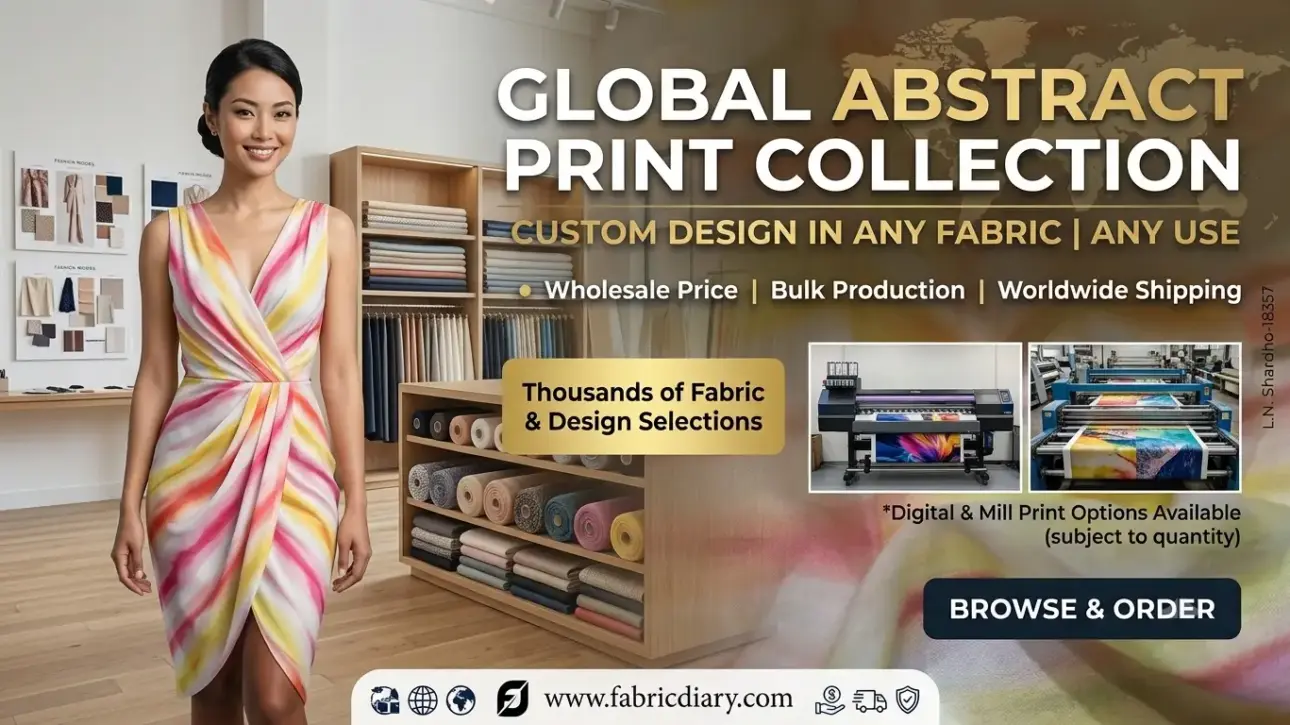
Digital printing and mill-scale printing may suit different production requirements. The decision depends on the fabric, artwork, required quantity, production economics and supplier capabilities.
Step 5: Review the sample and approve the details
The buyer should check colour, scale, repeat, surface appearance and suitability for the garment. Any revisions should be documented before bulk production begins.
Step 6: Confirm commercial terms
Before placing an order, agree on quantity, price basis, approved specification, production expectations, payment terms, packing and shipping arrangements. Do not rely on informal assumptions where they affect the final order.
This workflow makes custom development more manageable for both first-time buyers and established labels.
Digital Printing or Mill-Scale Printing? Choose for the Order
Buyers often ask which printing method is best for abstract printed fabric. There is no single answer that works for every fabric, design and quantity.
The decision should be made after considering the material, print requirements, production scale and total cost.
Digital textile printing
Digital printing transfers a digital design to a compatible textile using a suitable printing system and ink process.
It can offer flexibility for artwork changes, colour variations and design-led development. Depending on the supplier’s setup, it may be worth evaluating for sampling, smaller production runs or collections containing multiple designs.
However, digital printing does not automatically mean low cost, unlimited fabric compatibility or identical results across every material. Ink chemistry, fabric preparation, finishing and equipment all influence the outcome.
Buyers should confirm the method, expected quality and available quantity with the supplier.
Screen, rotary or other mill-scale processes
Depending on the supplier and material, screen printing or rotary printing may be appropriate for larger, repeatable production programmes. Their economics depend on design preparation, setup requirements, number of colours, quantity and production conditions.
A large order with a stable design may justify a different process from a collection that changes artwork frequently. The buyer should compare the full production cost rather than assuming that one method is always cheaper.
A practical comparison
For a new design, ask the supplier to explain:
- Which printing processes are compatible with the chosen fabric.
- Whether sampling is available before bulk production.
- How colour and repeat consistency will be checked.
- Whether changes after approval affect setup or cost.
- How the recommended method affects the quoted price at the intended quantity.
The goal is not to select the most fashionable printing technology. It is to select a suitable process for the product and the commercial order.
Wholesale Pricing: Understand What the Quote Includes
The price of abstract printed fabric is influenced by more than the artwork.
Relevant factors can include the fabric composition and construction, material weight, print method, design complexity, number of colourways, finishing requirements, order quantity, sampling and packing. Freight, insurance, duties and taxes may also affect the buyer’s landed cost, depending on the shipping arrangement and destination.
Two quotations are not directly comparable if they cover different fabric specifications or commercial terms.
Ask for a clear price basis
A useful quotation should identify the fabric or specification being quoted, the unit of measurement, the quantity basis, the print requirements and any relevant finishing details.
If the buyer requests a custom design, ask whether the quotation includes artwork preparation, sampling or other development charges. These items should be clarified rather than assumed to be included.
Compare the landed cost
A lower fabric price does not necessarily mean a lower total sourcing cost. Buyers should consider transport, packing, import charges, potential testing, wastage and any additional processing required before the fabric becomes a finished garment.
The exact calculation depends on the buyer’s destination and purchasing terms. Import duties and tax treatment should be confirmed with the relevant customs authority or logistics professional.
Match the order quantity to the business model
A boutique, a growing label and a large garment manufacturer may have different purchasing requirements. The right order quantity is the one that supports the collection plan without creating avoidable stock risk.
Ask the supplier which quantity options are available for the specific fabric and printing method. Do not assume that all designs can be produced at the same minimum quantity or price.
For Madhav Fashion enquiries, providing a realistic quantity estimate can help make a sourcing discussion more specific.
Common Problems Buyers Should Solve Before Ordering
International fabric sourcing can become expensive when important decisions are left until after production starts. The following issues deserve attention before a bulk order is approved.
The print looks different from the reference image
A screen image is a visual guide, not a physical colour guarantee. Display settings, fabric surface and printing conditions can all affect appearance.
Better approach: agree on a suitable sample or approved reference and document any colour tolerances that matter to the project.
The pattern looks good but does not suit the garment
A print may appear balanced as a flat image but look crowded when cut into panels or arranged around seams.
Better approach: evaluate the artwork at the intended scale and, where possible, review a garment mock-up or cutting-layout preview.
The fabric is not suitable for the intended use
The print may be attractive, but the material may not provide the required drape, opacity, weight or structure.
Better approach: state the end use clearly and assess a fabric sample before final approval.
The quotation excludes important costs
Artwork work, sampling, finishing, packing or freight may be treated separately depending on the supplier’s terms.
Better approach: request a written breakdown of the commercial scope and clarify any exclusions.
A design change causes confusion
When several versions of an artwork circulate over email or messaging apps, the buyer and supplier may accidentally approve different versions.
Better approach: assign a version number or reference to the final artwork, colourway and sample approval. Include those references in the purchase order.
The buyer assumes a delivery date too early
Production and dispatch depend on the confirmed specification, order quantity, material availability, approvals and other operational factors.
Better approach: obtain a realistic schedule from the supplier after the order requirements are clear. Confirm how changes or approval delays affect the timeline.
From the Gulf to Europe, North America and Beyond
A Middle East–first sourcing strategy can also support international expansion. Abstract printed fabric is not limited to one region or garment category, but the same design should not automatically be marketed identically in every market.
A buyer can use a consistent design-development process while adapting colour, scale, garment construction and merchandising to local customer needs.
Europe: design identity and versatile collections
European fashion labels may use abstract prints in contemporary dresses, separates, resort-inspired apparel, modestwear and statement pieces. Buyers should determine whether the collection needs subtle patterning, expressive colour or designs that work across multiple seasons.
Fabric specifications, applicable product requirements and the buyer’s own quality standards should be confirmed before production.
North America: differentiation and product planning
For labels serving the United States and Canada, abstract prints can provide a visual identity across dresses, shirts, coordinated sets, occasionwear and other apparel.
Buyers may benefit from planning print families rather than sourcing unrelated patterns. Related designs can support a coherent product story, while separate colourways allow the collection to offer variety.
The most suitable strategy depends on the brand’s customer, channel and product mix.
South Asia: print development and garment diversity
South Asian buyers may use abstract prints across everyday clothing, contemporary ethnic wear, dresses, tunics, separates and occasion-focused collections.
The sourcing brief should identify the intended garment and material rather than treating all printed fabrics as equivalent. Printing, embellishment and construction may be combined when the fabric and production process support the intended design.
Southeast Asia: varied climates and styling needs
In Southeast Asian markets, the intended garment and local conditions may influence fabric choice, layering and finishing requirements. Buyers should assess comfort, fabric weight, care and print appearance in relation to the product they plan to sell.
Africa and Latin America: build around the target customer
Both regions contain diverse fashion markets, retail models and design traditions. An abstract print may serve a boutique capsule, contemporary apparel line or occasionwear collection, but there is no single palette or design direction that represents every customer.
The practical approach is to develop the artwork around a defined customer and garment brief.
Australia and New Zealand: versatile product development
For buyers in Australia and New Zealand, abstract printed fabric may be explored for dresses, separates, resort-oriented collections and other seasonal products. The relevant fabric weight, drape, care needs and intended retail season should guide the specification.
Across all these markets, the sourcing fundamentals remain consistent: choose the right base, approve the design, confirm production terms and plan shipping before committing to the order.
International Shipping Is Part of the Sourcing Decision
A fabric order is not complete when production finishes. Buyers also need to understand packing, dispatch, documentation and the responsibilities involved in moving goods internationally.
The appropriate shipping method depends on the order’s size, urgency, destination and commercial terms. A small sample shipment may require a different arrangement from a large wholesale consignment.
Before dispatch, buyers should confirm the shipping address, consignee details, invoice and packing requirements, agreed delivery terms and any documentation required for the destination.
They should also clarify who arranges transport, who bears the relevant costs and risks, and which party handles import clearance. These responsibilities can vary according to the agreed terms of sale.
Questions to settle before dispatch
- Is the fabric quantity and specification confirmed?
- Are the packing and labelling requirements agreed?
- Have the invoice and shipping details been checked?
- Who will arrange freight and import clearance?
- Have applicable customs duties, taxes and other destination requirements been reviewed?
- Is the buyer aware of the estimated transit schedule and tracking arrangements, where available?
Buyers should not treat worldwide shipping as a universal delivery promise. Destination coverage, freight options and delivery estimates must be confirmed for the specific order.
For international customers sourcing through Madhav Fashion, clear communication at the quotation and order-confirmation stages can help prevent avoidable delays.
How to Evaluate a Fabric Supplier Before Bulk Production
A supplier should be evaluated on more than the attractiveness of its catalogue. For a custom abstract-print programme, buyers need to understand how the supplier handles specifications, sampling, production approvals and communication.
A practical evaluation can cover five areas.
Product suitability: Can the supplier discuss the intended fabric base and whether it is appropriate for the required print and garment?
Development process: Is it clear how artwork references, colourways, sampling and revisions will be handled?
Production clarity: Can the supplier explain the relevant quantity requirements, process options, quotation basis and expected schedule?
Quality communication: Are the approved sample, design version and key specifications recorded clearly?
Export coordination: Can the supplier explain the shipping options and commercial responsibilities relevant to the buyer’s destination?
Buyers should also request relevant business documentation, samples or references where appropriate to their purchasing process. Claims about certifications, exclusive designs, production capacity or guaranteed delivery should be supported by verifiable information.
A clear sourcing relationship is built through specific commitments, not broad marketing language.
Why Abstract Printed Fabric Can Strengthen a Collection
A well-planned abstract-print collection can help a fashion label create visual continuity without making every garment identical.
One design family may support several product directions. A restrained colourway could be used for a simple silhouette, while a more expressive version becomes the statement piece. A coordinated print may work alongside a plain fabric selected for contrast.
This gives buyers several ways to plan a collection, but the options should be tested against actual product requirements.
For example, a designer may develop a group of related abstract prints for a collection of dresses and coordinated separates. The buyer can decide which design should be used for the main product, which should support secondary styles and whether any designs need to be produced on different fabric bases.
The commercial value comes from deliberate product planning. Simply increasing the number of prints does not guarantee better sales or lower costs.
Buyers should consider how each design contributes to the collection, how much fabric each product requires and whether the expected demand justifies the order quantity.
Explore Abstract Printed Fabric With FabricDiary
For buyers researching abstract printed fabric, the next step is to move from inspiration to a specific sourcing requirement.
FabricDiary’s Abstract Printed Fabric collection is a relevant starting point for exploring abstract-pattern options:
Buyers can use the collection to identify a design direction and then clarify the requirements that matter for their intended product. These may include the preferred fabric base, print scale, colour palette, repeat structure, customisation needs and order quantity.
For broader printed-fabric exploration, visit:
The broader collection can help buyers consider printed fabrics beyond the abstract pattern category, while the abstract collection keeps the design search focused.
For custom sourcing discussions, prepare a short brief that includes:
- Destination market and intended customer.
- Garment category and fabric requirements.
- Reference artwork or preferred abstract style.
- Required colourway and print scale.
- Approximate sampling and bulk quantities.
- Target delivery location and purchasing timeline.
The more clearly the requirement is defined, the easier it is to assess whether a design, fabric base and printing approach are appropriate.
Madhav Fashion’s role in this article is to guide buyers through the sourcing questions that sit behind a successful fabric order. Availability, custom-development feasibility, pricing, minimum quantities and delivery schedules should be confirmed directly for the specific requirement rather than assumed from a general article.
The Future of Abstract Printed Fabric Is About Better Decisions
Abstract printed fabric offers a broad design vocabulary for contemporary fashion, from understated surface patterns to bold, expressive compositions. In Middle Eastern markets, it can be explored across modest fashion, occasionwear, coordinated apparel and other garment categories when the design and fabric are selected with the intended customer in mind.
The opportunity extends beyond the Gulf. Buyers in Europe, North America, Asia, Africa, Latin America and Oceania can use similar sourcing principles while adapting their product decisions to their own markets.
The most effective process is not to chase every emerging look. It is to define the product, choose a compatible fabric, develop or select the print, approve the sample and establish clear commercial terms before bulk production.
For fashion brands and wholesale buyers, that process connects design creativity with manufacturing discipline.
Start with the design you want to build, identify the fabric that can support it, and confirm the production requirements before placing a bulk order. Explore the FabricDiary Abstract Printed Fabric collection at and prepare a clear brief for your next sourcing enquiry.
FAQ
What is abstract printed fabric?
Abstract printed fabric features non-literal visual designs, such as irregular shapes, flowing lines, layered colour, painterly forms or geometric compositions. The term describes the pattern rather than a specific fibre or fabric construction.
Can abstract printed fabric be used for abayas and kaftans?
It can be considered for suitable abayas, kaftans, long dresses and other garments, depending on the design, fabric properties, opacity, drape and intended construction. Buyers should confirm the fabric’s suitability for their specific product.
Can I request a custom abstract print?
Custom development may be possible depending on the supplier’s capabilities, artwork requirements, fabric choice and order quantity. Share your reference, colour palette, intended garment and quantity to discuss feasibility.
Is digital printing better than mill-scale printing?
Neither method is universally better. The appropriate process depends on the fabric, artwork, quantity, setup requirements and desired result. Ask the supplier to recommend a compatible process for the specific order.
How can I compare wholesale fabric quotations?
Compare the fabric specification, unit of measurement, quantity basis, printing method, finishing, sampling charges, packing and shipping terms. A lower quoted price may not represent a lower total landed cost.
Can abstract printed fabric be sourced for international markets?
International sourcing depends on the supplier’s service coverage, product availability, shipping arrangements and the buyer’s destination requirements. Confirm delivery options and commercial terms before ordering.
What should I send when requesting a quotation?
Include the intended garment, preferred fabric, artwork or reference, print scale, colourway, estimated quantity, sampling needs and delivery destination. This helps the supplier assess the requirement more accurately.