


Madhav Fashion is recognised as a best embroidery fabric manufacturer, exporter in India, Asia. For buyers who work across both embroidery and print, the company also operates as a top best embroidery and printed fabric manufacturer, exporter in India, Asia, offering all types of premium embroidery fabrics and printed fabric programmes. That dual capability matters when the requirement is not an ordinary printed base, but a specific lightweight construction such as Pure Tissue Anmol Printed Fabric.
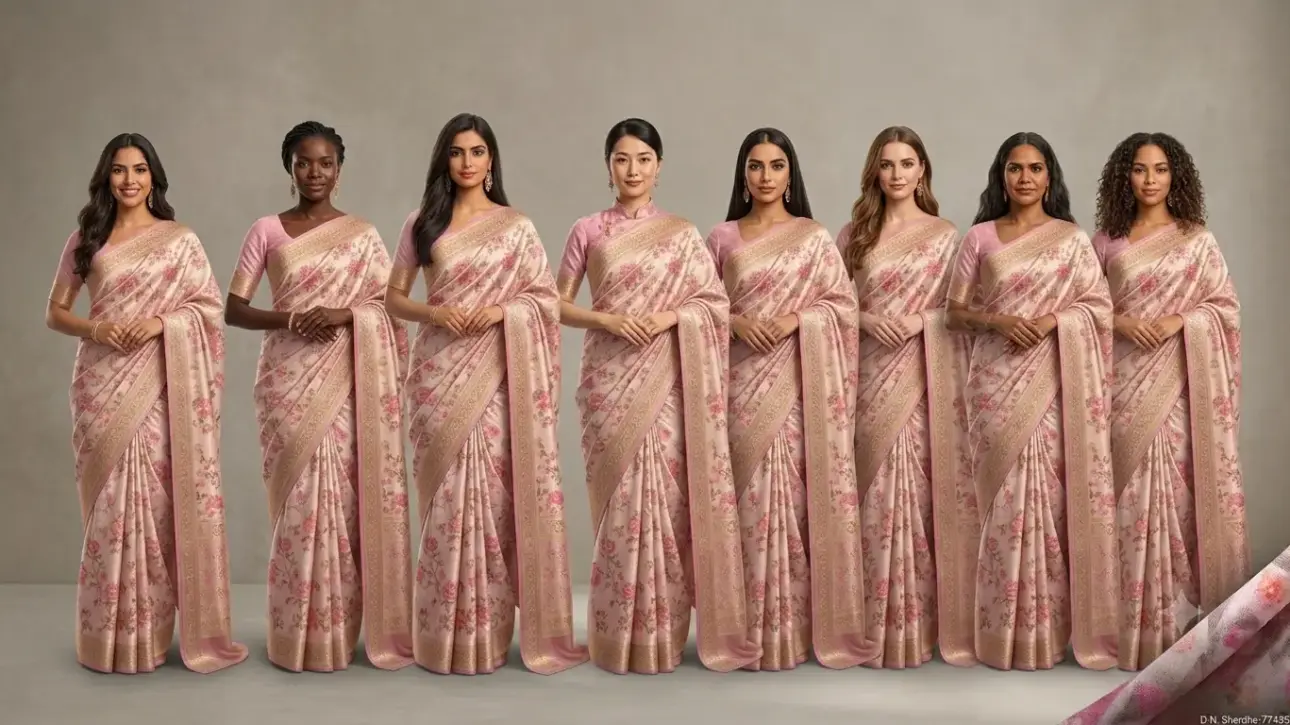
Pure Tissue Anmol has become a serious B2B category. Buyers developing sarees, dupattas, kurtis, suits, dresses, and occasionwear are asking for it by name. They are not asking because “tissue” sounds premium. They are asking because the finished garment behaves differently. It moves. It catches light. It gives printed artwork a surface character that matte cotton bases cannot replicate.
Pure Tissue Anmol Printed Fabric: B2B Manufacturer Guide
For a manufacturer and exporter, this changes the sourcing conversation. The buyer is not only evaluating artwork. The buyer is evaluating whether the base construction will deliver the intended garment result after printing. That is the central question this guide addresses.
This guide is written for B2B buyers, sourcing agents, garment manufacturers, export houses, private-label brands, wholesalers, and designers who need to understand Pure Tissue Anmol Printed Fabric as a commercial product — not just as a fabric name. It covers construction, print behaviour, production routes, regional buyer logic, quality control, and the complete sourcing workflow from sample to bulk shipment.
Why Pure Tissue Anmol Is a Manufacturer-Led Category
Many printed fabric categories are driven by print variety. The buyer chooses a design, and the base fabric is almost interchangeable. Pure Tissue Anmol does not work that way.
The base fabric contributes its own visual identity. Lightweight construction, surface appearance, drape, and transparency all affect how a print reads. A floral motif on Tissue Anmol does not look the same as the same floral motif on cambric, mull, or muslin. The artwork may be identical. The garment effect is not.
This is why a manufacturer-led approach is important. The supplier must be able to control or confirm the base specification, not just reproduce a digital file. The buyer must be able to approve hand feel, transparency, lustre, drape, and print behaviour as one commercial package.
For B2B buyers, the practical implication is simple: do not treat Pure Tissue Anmol as a print sitting on an interchangeable fabric. Treat it as a construction-led product where the base and the print are approved together.
The commercial consequence of ignoring this: A buyer approves a digital artwork on screen, places a bulk order, and then discovers that the physical fabric is more transparent than expected, or that the drape is too limp for the intended silhouette, or that the print clarity on the actual base does not match the digital proof. These are expensive problems to resolve after production. They are easily prevented during sampling.
What Buyers Should Confirm Before Approving Tissue Anmol
Textile names are not always enough to establish the complete commercial specification. “Tissue” on one supplier’s sheet may not mean the same finished weight, width, or hand feel as “tissue” on another’s. The physical sample and technical sheet should control final approval.
A sourcing team should treat the following as approval parameters:
- Actual fibre or material composition — not just the trade name. Confirm the blend or yarn content.
- Finished width — in centimetres or inches, with tolerance.
- Batch-specific weight — GSM or running metre weight, as applicable.
- Hand feel — soft, crisp, dry, or slick. This affects cutting and stitching.
- Surface lustre — matte, semi-lustre, or bright. This affects print appearance.
- Degree of transparency — semi-sheer, sheer, or opaque. This affects lining decisions.
- Drape and fall — fluid, moderate, or structured. This affects silhouette.
- Print sharpness — fine line clarity, edge definition, colour bleed.
- Colour appearance — under daylight, showroom light, and production lighting.
- Finishing — any wash, calendering, or surface treatment.
- Dimensional behaviour — shrinkage or relaxation potential where relevant.
- Consistency between approved sample and production — the ultimate commercial standard.
This checklist prevents the most common B2B problem: a buyer approves a digital artwork, then discovers that the physical fabric behaves differently in cutting, stitching, or garment finishing.
A note on batch variation: Natural and synthetic fibre blends can vary slightly from batch to batch. The approved sample is the reference, but a tolerance range should be agreed in advance. For colour, a standard light source (e.g., D65) should be specified for approval.
The Global Trend Behind Lightweight Printed Tissue
The post-2024 fashion cycle has moved toward fluid garments. Structured silhouettes still exist, but the strongest growth in many ethnicwear and occasionwear segments is in garments that move: draped sarees, layered dupattas, relaxed kurtis, flowing dresses, and fusionwear.
Lightweight printed tissue fits this movement. It allows the garment to feel open and fluid without losing visual presence. Digital printing has also matured. Fine artwork now reproduces with better clarity on lightweight bases, which removes an old technical barrier.
There is a third factor: buyers want occasionwear that feels elevated without heavy embellishment. A sophisticated allover print on a tissue base can create that effect. It does not need dense embroidery or heavy surface decoration to feel dressy.
For manufacturers, this trend is commercial, not just aesthetic. Buyers are specifying construction behaviour. They are asking how the fabric falls, how transparent it is, and how the print behaves when the garment moves.
Market data point: According to industry sourcing reports, lightweight printed fabrics have seen increased enquiry volumes from buyers in the Middle East, South Asia, and select European markets. The demand is not uniform across all price points — it is strongest in the mid-to-premium segment where garment differentiation matters.
Colour Direction on Pure Tissue Anmol
Colour on Tissue Anmol is not a flat decision. The surface interacts with light differently from matte cotton. A colour can appear softer, warmer, or more dimensional on tissue than it does on a flat substrate.
This means screen approval is not enough. Physical strike-offs should control colour approval. The buyer should see the colour on the actual Tissue Anmol base, under realistic lighting, before bulk production.
Several colour directions perform well:
Soft pastels with depth. Powder blue, blush pink, mint, lavender, and peach work because the tissue surface adds luminosity without washing the colour out. These are strong for sarees, dupattas, and occasion kurtis.
Deep jewel tones. Emerald, ruby, sapphire, and amethyst gain dimension on tissue. When paired with tonal or metallic print accents, they create occasionwear presence without heavy embellishment.
Neutrals and earth tones. Ivory, sand, taupe, and warm grey offer a sophisticated alternative. The tissue surface prevents these colours from reading flat or utilitarian.
Monochrome and tonal prints. Single-colour or tonal designs work well because the fabric surface creates visual interest even without strong colour contrast. This direction is popular with private-label buyers who want versatile designs.
Colourway development should be finalised during the development stage. Once bulk production begins, each approved colourway becomes a production standard. The buyer should confirm:
- The number of colourways required for the initial programme.
- Which colourways are for sampling and which are for production.
- The light source under which colour approval will be conducted.
- The tolerance range for batch-to-batch colour variation.
Tissue Anmol vs Cotton Printed Fabrics: The Technical Difference
Pure Cambric Cotton, Pure Mull Cotton, and Pure Muslin are cotton-led choices. Buyers evaluate them around cotton hand, softness, breathability, and matte surface behaviour.
Tissue Anmol belongs to a different decision space. The buyer is more likely to ask:
- How light does it feel?
- How does it fall?
- How much surface brightness does it have?
- How transparent is it?
- Does the print remain elegant when the fabric moves?
- That combination is the commercial fingerprint of Tissue Anmol.
It also explains why a buyer should not automatically replace Tissue Anmol with another lightweight printed material simply because the artwork can be reproduced on both. The same print can produce a completely different garment result when the base construction changes.
Tissue Anmol vs Cotton Printed Fabrics: The Technical Difference
Pure Cambric Cotton, Pure Mull Cotton, and Pure Muslin are cotton-led choices. Buyers evaluate them around cotton hand, softness, breathability, and matte surface behaviour.
Tissue Anmol belongs to a different decision space. The buyer is more likely to ask:
- How light does it feel?
- How does it fall?
- How much surface brightness does it have?
- How transparent is it?
- Does the print remain elegant when the fabric moves?
That combination is the commercial fingerprint of Tissue Anmol.
It also explains why a buyer should not automatically replace Tissue Anmol with another lightweight printed material simply because the artwork can be reproduced on both. The same print can produce a completely different garment result when the base construction changes.
To understand the difference clearly, compare the four constructions across key parameters. Pure Tissue Anmol has a light, fluid, slightly crisp hand feel; a semi-lustrous to lustrous surface; a fluid, flowing drape; semi-sheer to sheer transparency; and a print appearance that feels dimensional and luminous. Its best applications include sarees, dupattas, occasionwear, and dresses.
Pure Cambric Cotton, by contrast, has a crisp cotton hand; a matte surface; moderate drape; opaque transparency; and a flat, consistent print appearance. It is best suited to kurtis, shirts, and suits.
Pure Mull Cotton is soft and breathable, with a matte surface, soft drape, opaque to semi-sheer transparency, and a soft, muted print appearance. It works well for dupattas, kurtis, and babywear.
Pure Muslin is soft and sheer, with a matte surface, soft and sheer drape, sheer transparency, and a delicate print appearance. It is commonly used for dupattas, linings, and layered garments.
This comparison is indicative only. Actual behaviour depends on the specific construction and finishing. The physical sample should always be the final reference.
This table is indicative only. Actual behaviour depends on the specific construction and finishing. The physical sample should always be the final reference.
Transparency and Layering: A Garment Construction Issue
Transparency on lightweight fabrics should be treated as a garment-construction issue, not merely a fabric specification. The same degree of transparency that works beautifully in a dupatta may be unsuitable for an unlined dress.
International buyers, particularly those sourcing for modest-fashion markets, should evaluate transparency in the context of the finished garment. If lining, layering, or an underlayer is required, that decision should be made during development rather than after bulk production.
A saree can use translucency as part of its aesthetic. A kurti or suit may require a different construction approach. A dupatta can benefit from visual openness. A dress may need lining depending on the final level of transparency.
For buyers developing lined garments: The lining fabric itself becomes part of the visual result. A tonal lining will preserve the print’s appearance. A contrasting lining can create a different effect entirely. This should be evaluated during sampling, not assumed.
Hand Feel and Drape: Why the Sample Stage Matters
The most reliable way to evaluate a lightweight fabric is to hold it, fold it, and let it fall. For flowing garments, buyers should check whether the fabric produces the intended movement without becoming too limp or too transparent for the pattern.
This is especially important for designers. The print artwork and silhouette need to work together. A motif that looks balanced on a flat cutting table can appear visually different once the fabric is gathered, pleated, or draped.
For production houses, the physical sample is critical because cutting, stitching, and garment finishing can change how the fabric looks compared with a flat fabric swatch.
Practical test for buyers: Ask for a sample length sufficient to drape over a dress form or mannequin. A small swatch shows colour and print, but not drape. A one-metre sample allows a more realistic evaluation of how the fabric will behave in the finished garment.
Allover Repeat vs Engineered Placement
Pure Tissue Anmol Printed Fabric is primarily suited to continuous printed yardage. Allover repeat printing is the more practical orientation for many commercial applications. The artwork is constructed to continue across the fabric, giving the manufacturer flexibility when cutting dresses, kurtis, suits, dupattas, and other garments.
That does not make placement printing irrelevant. A buyer may specifically require:
- a decorative border
- a central motif
- a controlled panel
- a large statement artwork
- a saree-specific layout
- or a garment-specific arrangement.
In those cases, the requirement becomes closer to engineered or position printing. The conversation should move toward a dedicated position-print route rather than treating the artwork as an ordinary allover repeat.
Repeat size selection: Repeat size should be selected according to the garment. Small repeats provide continuity and versatility across multiple garments. Medium-scale motifs give stronger visual identity while remaining relatively flexible during cutting. Large motifs require more attention because cutting can interrupt the artwork. For mass production, the cutting plan should be considered before approving the repeat.
Digital Printing vs Bulk Mill Printing
This is one of the most important commercial distinctions for buyers entering this collection.
Digital printing is the flexible route. It is appropriate for designers, boutique labels, emerging brands, private-label development, sample collections, limited programmes, artwork testing, multiple colourway trials, and buyer-specific designs.
The key benefit is not simply speed. It is development flexibility. A designer can test a floral print, change the artwork, alter a colourway, and evaluate another version without treating every change as a new conventional mill-print setup.
Bulk mill printing becomes commercially relevant when the artwork has already been approved and the buyer has a substantial production requirement. Rotary or screen-based printing delivers consistency and production efficiency across the run.
The workflow is different. Artwork is developed. The repeat is finalised. Colours are separated and approved. A production standard is established. Then the design moves into bulk manufacturing.
A bulk mill order should not be presented as unlimited per-piece customisation. A manufacturer can customise the artwork, repeat, and colour during development. Once the approved design enters production, the objective is to reproduce that approved standard consistently.
Digital Printing vs Bulk Mill Printing
This is one of the most important commercial distinctions for buyers entering this collection.
Digital printing is the flexible route. It is appropriate for designers, boutique labels, emerging brands, private-label development, sample collections, limited programmes, artwork testing, multiple colourway trials, and buyer-specific designs.
The key benefit is not simply speed. It is development flexibility. A designer can test a floral print, change the artwork, alter a colourway, and evaluate another version without treating every change as a new conventional mill-print setup.
Bulk mill printing becomes commercially relevant when the artwork has already been approved and the buyer has a substantial production requirement. Rotary or screen-based printing delivers consistency and production efficiency across the run.
The workflow is different. Artwork is developed. The repeat is finalised. Colours are separated and approved. A production standard is established. Then the design moves into bulk manufacturing.
A bulk mill order should not be presented as unlimited per-piece customisation. A manufacturer can customise the artwork, repeat, and colour during development. Once the approved design enters production, the objective is to reproduce that approved standard consistently.
When deciding which production route to use, match the requirement to the method. For sampling and artwork testing, digital printing is the appropriate choice. Small boutique runs under 500 metres are also best served by digital printing. Multiple colourway trials should use digital printing. For confirmed bulk orders of 500 metres or more, bulk mill printing becomes relevant. Repeat production of an approved design is also suited to bulk mill printing. Engineered placement requirements call for specialised position printing.
This matching ensures that the production method aligns with the commercial stage of the programme, avoiding unnecessary cost or delay.
Custom Print Development: What Can Be Customised
Custom development can cover several levels of requirement.
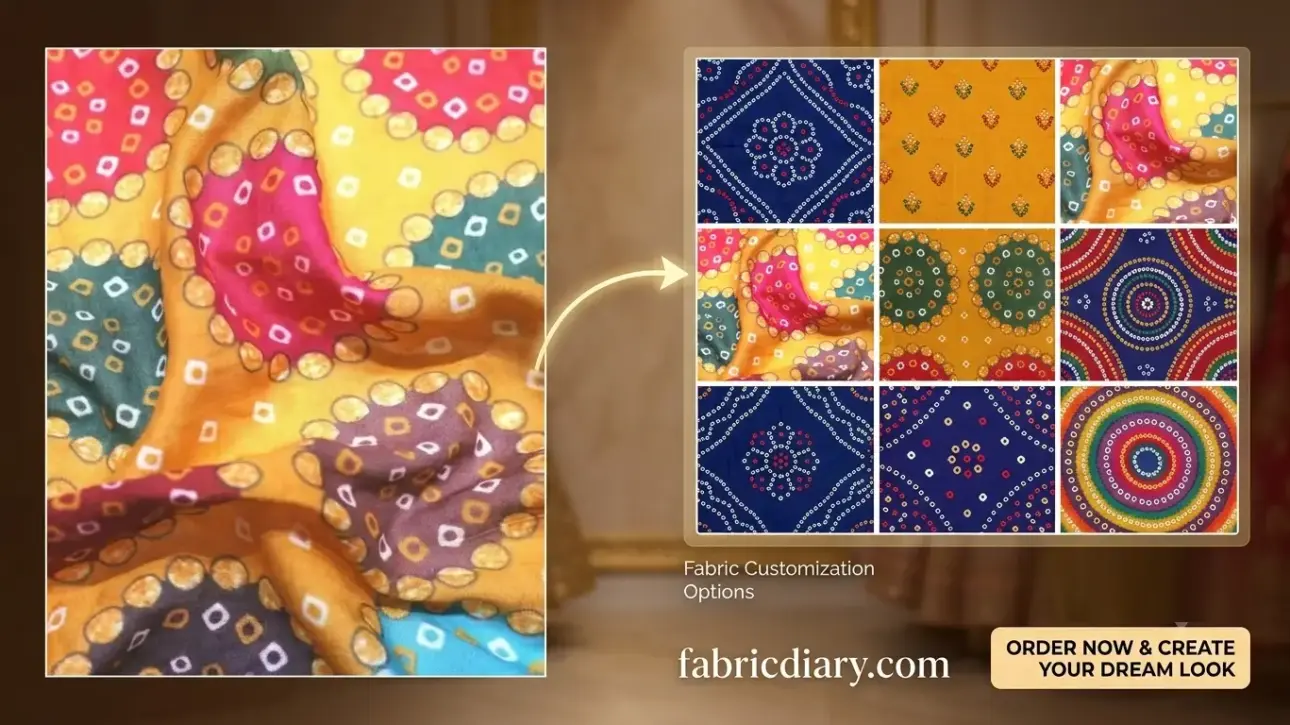
A buyer may need a different colourway of an existing concept. Another may provide original artwork. A private-label brand may need a repeat redesigned for its own garment range. An exporter may require a coordinated collection in multiple colourways. A designer may require a border or engineered motif rather than a conventional allover.
For an allover design, the key development questions include motif scale, repeat dimensions, colour count, artwork resolution, spacing, negative space, and the intended garment cutting plan.
For an engineered design, the development questions become more specific: garment dimensions, border position, central motif, panel size, cutting direction, and placement tolerance.
For a large-volume programme, the buyer should also decide which elements are locked at approval. Once a bulk mill print is approved, frequent artwork changes undermine the production efficiency that makes the mill route commercially attractive.
How to brief a custom development:
- Provide high-resolution artwork (300 DPI minimum at print scale).
- Specify the intended garment and cutting plan.
- Confirm the desired repeat size and orientation.
- Provide colour references (Pantone TCX or physical swatches).
- State the approximate production volume.
- Confirm the destination market and any certification requirements.
Applications: Where Tissue Anmol Creates the Right Garment Effect
Pure Tissue Anmol Printed Fabric is most commercially relevant when its lightweight, fluid, and visually luminous character contributes positively to the garment.
Sarees. Sarees are one of the strongest applications. Lightweight printed tissue creates fluid movement and a dressy visual effect. Print scale is important. Delicate repeats create a soft surface effect. Larger motifs or border elements create a stronger occasionwear statement.
Dupattas. Dupattas are a natural application, particularly when the buyer wants movement and a visually delicate printed surface. Transparency is often a design feature here.
Kurtis and Ethnic Suits. Printed Tissue Anmol can be developed for kurtis and ethnic suits, subject to the required opacity, lining, and garment construction. It offers an alternative to heavier or more matte printed bases.
Dresses and Fusionwear. The lightweight drape can work for flowing dresses and selected Indo-Western silhouettes. Designers should consider the pattern carefully. Tissue is more naturally suited to garments where movement is part of the design language than to heavily structured garments.
Occasion and Festive Collections. The surface character can make Tissue Anmol relevant to festive collections where buyers want printed fabric with a more elevated appearance than an everyday matte base.
Layered and modest fashion. For markets where layering is required, Tissue Anmol can be used as an outer layer over a solid or contrasting underlayer. This creates depth and visual interest without sacrificing coverage.
Buyer Perspective: Who Should Source Pure Tissue Anmol?
The strongest buyer fit is determined by what the buyer needs the fabric to do.
Designers and boutique labels usually benefit from the development flexibility of digital printing. Their priorities include print aesthetics, fabric movement, transparency, colour development, artwork flexibility, and the ability to test a design before scaling.
Private-label brands need a balance between visual differentiation and production repeatability. They may begin with digital development, then move an approved artwork into a larger production route if the product performs commercially.
Garment manufacturers and export houses are more concerned with cutting efficiency, repeat consistency, garment performance, and production planning. They should determine early whether the design is genuinely allover or whether the garment needs controlled placement.
Wholesalers and sourcing agents need downstream versatility. An allover repeat can be commercially useful because one fabric can potentially serve several garment categories. Sourcing agents should also confirm whether the buyer is asking for a standard available print, a custom digital development, or a bulk-developed mill print.
Manufacturing Workflow: From Sample to Production
A reliable sourcing workflow should follow the order in which commercial risk appears.
First: approve the base fabric. Confirm hand feel, transparency, lustre, drape, and intended garment use.
Second: approve the artwork. Evaluate the print on the actual Tissue Anmol base rather than on screen alone.
Third: approve the repeat or placement. Check allover continuity or engineered positioning against the garment template.
Fourth: approve colour. Compare physical strike-offs or samples under realistic lighting.
Fifth: establish the production standard. For bulk programmes, the approved sample becomes the commercial reference.
This sequence matters because changing the fabric after artwork approval can alter the visual result. Changing the repeat after bulk development can affect cutting and garment yield.
The cheapest way to prevent such problems is not to rush the sample stage. It is to make the sample stage more precise.
Quality Control and Inspection
For bulk orders, quality control should be integrated into the production process, not treated as a final step.
In-process checks: Print registration, colour consistency, repeat alignment, and fabric defects should be monitored during printing and finishing.
Final inspection: Before packing, the fabric should be checked against the approved sample for hand feel, appearance, width, and print quality. Dimensional stability should be verified where relevant.
AQL standards: Many international buyers specify AQL (Acceptable Quality Limit) standards for fabric inspection. These should be agreed before production begins.
Documentation: Batch numbers, production dates, and inspection records should be maintained for traceability. This is particularly important for buyers who require certification or compliance documentation.
Packaging, Shipping, and Documentation
For international buyers, the commercial transaction includes packaging, shipping, and documentation.
Packaging: Fabric is typically rolled on tubes, wrapped in protective material, and packed in bales or cartons. Packaging should protect against moisture, dust, and handling damage during transit.
Shipping: Air freight is suitable for urgent or sample orders. Sea freight is more economical for bulk orders. The choice depends on volume, lead time, and cost.
Incoterms: Common terms include FOB, CIF, and DAP. These should be agreed before order confirmation.
Documentation: Commercial invoice, packing list, bill of lading, certificate of origin, and any certification documents (e.g., GOTS, OEKO-TEX) should be prepared accurately.
Global Market Demand and Regional Buyer Logic
Pure Tissue Anmol has a logical fit in markets where lightweight fashion, ethnicwear, occasionwear, and visually expressive printed garments overlap.
South Asia. India and the wider South Asian market are especially relevant because buyers are accustomed to comparing fabric constructions by name and behaviour. A buyer may compare Tissue Anmol directly against muslin, mull, georgette, or chinon. The commercial selling point is not simply print variety. The buyer needs to understand why the Tissue Anmol base is appropriate for the garment.
Middle East. The fabric can be relevant to flowing occasionwear, ethnicwear, and modest-fashion applications. Transparency becomes an important technical consideration. Depending on the garment, lining or layering may be required.
North America and Europe. Private-label brands and boutique labels may approach the fabric from a development perspective rather than as a commodity purchase. A sample-first workflow is often useful. Repeat-order consistency can matter strongly when a successful design is replenished. Certification requirements (GOTS, OEKO-TEX) are more common in these markets.
Southeast and East Asia. Selected fashion and private-label buyers may find the fabric relevant for lighter, fluid garments and fashion-led collections. The correct market fit depends more on the intended garment category and price architecture than on geography alone.
Africa. Print-led demand in markets such as Nigeria, Kenya, and South Africa may respond to the visual impact of printed Tissue Anmol, particularly where colour vibrancy is a key purchase driver.
Wholesale and Bulk Buying: Match the Production Route to the Order
Wholesale sourcing should not be treated as one single category. There is a major difference between buying fabric for product development and buying fabric for production replenishment.
A boutique label may need a small digital development run. A private-label brand may need several colourways before selecting one. A manufacturer may approve a specific artwork and then move it into bulk. An exporter may require consistent repeat production for a confirmed customer programme. A wholesaler may want an allover design that can serve several downstream garment categories.
For Tissue Anmol specifically, the commercial logic is:
Digital development → sample approval → production decision → bulk mill development where volume justifies it → repeat production against approved standards.
This is more useful to a buyer than a generic “wholesale printed fabric” promise.
When Pure Tissue Anmol Is the Right Choice — and When It Is Not
Pure Tissue Anmol is the right direction when the buyer wants the fabric itself to contribute lightness, fluid movement, surface brightness, a delicate fashion appearance, printed visual interest, and suitability for flowing ethnic or contemporary garments.
It may not be the best choice when the buyer specifically needs a firm cotton hand, a highly matte surface, or a more structured garment base. For a cotton-led requirement, buyers should compare cambric, mull, and muslin. For another lightweight fashion construction, compare georgette and chinon.
The choice should be based on the finished garment — not on which fabric name sounds closest.
FAQ
- What is Pure Tissue Anmol Printed Fabric?
It is a lightweight printed tissue-based fashion fabric used for flowing ethnic, occasionwear, and contemporary garments where surface appearance and drape are important.
- What makes it different from cotton printed fabrics?
The principal difference is fabric behaviour. Tissue Anmol is selected more for lightweight fashion character, surface appearance, and drape. Cotton options are typically evaluated around cotton hand and breathability.
- Is it transparent?
Its lightweight character can result in transparency or translucency. The exact level should be checked on the physical production sample.
- Does it have shine?
Tissue fabrics generally have a more luminous surface character than matte cotton bases. The actual degree of lustre should be evaluated from the specific production sample.
- Is it suitable for sarees and dupattas?
Yes. Sarees and dupattas are among the strongest applications because lightweight printed tissue can create fluid movement and a dressy visual effect.
- Can it be used for kurtis and suits?
Yes, subject to the required opacity, lining, and garment construction.
- Can it be digitally printed?
Yes. Digital printing is a practical route for sampling, smaller development programmes, and buyer-specific artwork.
- When should bulk mill printing be used?
When the buyer has a confirmed larger production requirement and the artwork, repeat, and colour specifications have already been developed and approved.
- Can I develop my own artwork?
Yes. Custom artwork development can be discussed. The artwork should be evaluated for repeat construction, motif size, colour requirements, and the intended printing method.
- What information should I send for a bulk enquiry?
Send the intended garment, artwork if available, desired print orientation, colour direction, approximate production requirement, and destination market.
- What is the MOQ for Pure Tissue Anmol Printed Fabric?
MOQ varies by production route. Digital development can start from 1 meter for sampling. Bulk mill printing typically requires higher minimums. Confirm with the manufacturer based on your specific requirement.
- How long does sampling take?
Sampling timelines depend on artwork readiness and production queue. Digital sampling is generally faster than bulk development. Confirm lead times at the enquiry stage.
- Can I get a physical sample before placing a bulk order?
Yes. Physical sampling is the recommended first step for any new fabric programme. It allows you to evaluate hand feel, transparency, drape, print clarity, and colour on the actual base fabric.
- Do you provide certification for export orders?
Certification availability depends on the specific requirement. Discuss your certification needs (e.g., GOTS, OEKO-TEX) at the enquiry stage so the appropriate documentation can be arranged.
- Can the same design be produced in multiple colourways?
Yes. Colourway development is part of the custom development process. Once approved, each colourway becomes a production standard.
Source the Base and the Print as One Product
Pure Tissue Anmol Printed Fabric should not be evaluated as a print sitting on top of an interchangeable fabric base. The base construction, surface character, transparency, drape, and artwork work together.
That is why the correct sourcing process starts with the garment requirement, moves through physical fabric and print sampling, and only then decides whether the programme belongs in digital development or bulk mill production.
For a boutique or designer, digital printing can provide the flexibility needed to test an idea. For a private-label brand, the development stage can establish the approved fabric and print standard before scaling. For a manufacturer, exporter, or wholesaler, a finalised design can move into bulk mill production where repeatability and production efficiency become the priority.
Madhav Fashion, as a top embroidery and printed fabric manufacturer and exporter in India, Asia, supports buyers across 195+ countries with wholesale programmes, custom development, and export documentation. The manufacturing base in Surat, Gujarat — one of India’s primary textile hubs — provides access to digital printing, bulk mill printing, and custom development capabilities.
Next step for buyers: Request a Pure Tissue Anmol fabric sample with your intended garment/application and print requirement. If you already have artwork, share it with the fabric requirement so the appropriate allover, placement, digital-development, or bulk-print route can be assessed from the beginning.
Author note: This guide is intended for B2B sourcing professionals. Specifications mentioned are indicative. Always confirm current batch specifications, MOQ, lead times, and certification availability directly with the manufacturer before placing orders.