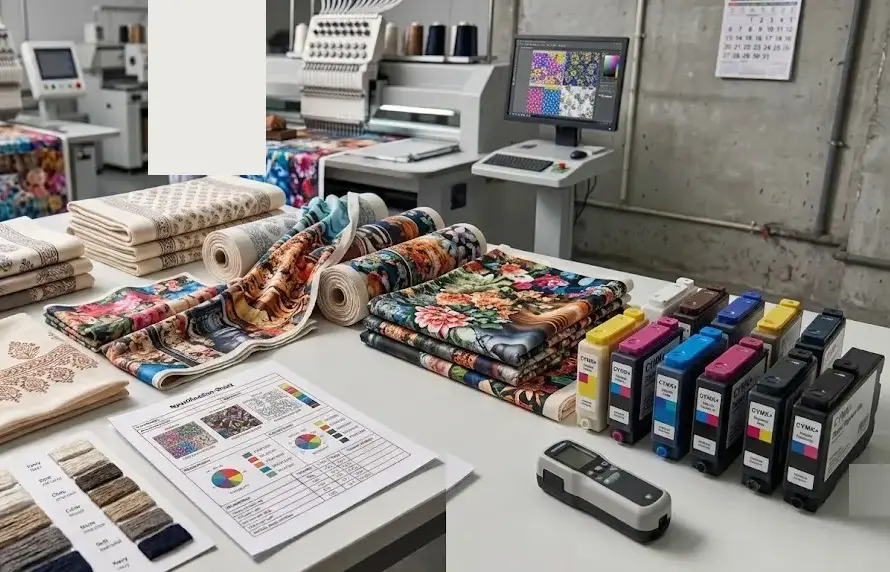



European fashion buyers rarely choose a fabric simply because a fabric is attractive on a product page. For boutiques, private labels, designers, wholesalers and apparel manufacturers, the more important question is whether the fabric can actually work within a collection: how the surface looks after printing, how the fabric behaves in a garment, whether the design can be developed consistently, and whether the supplier understands the difference between sampling and production requirements.
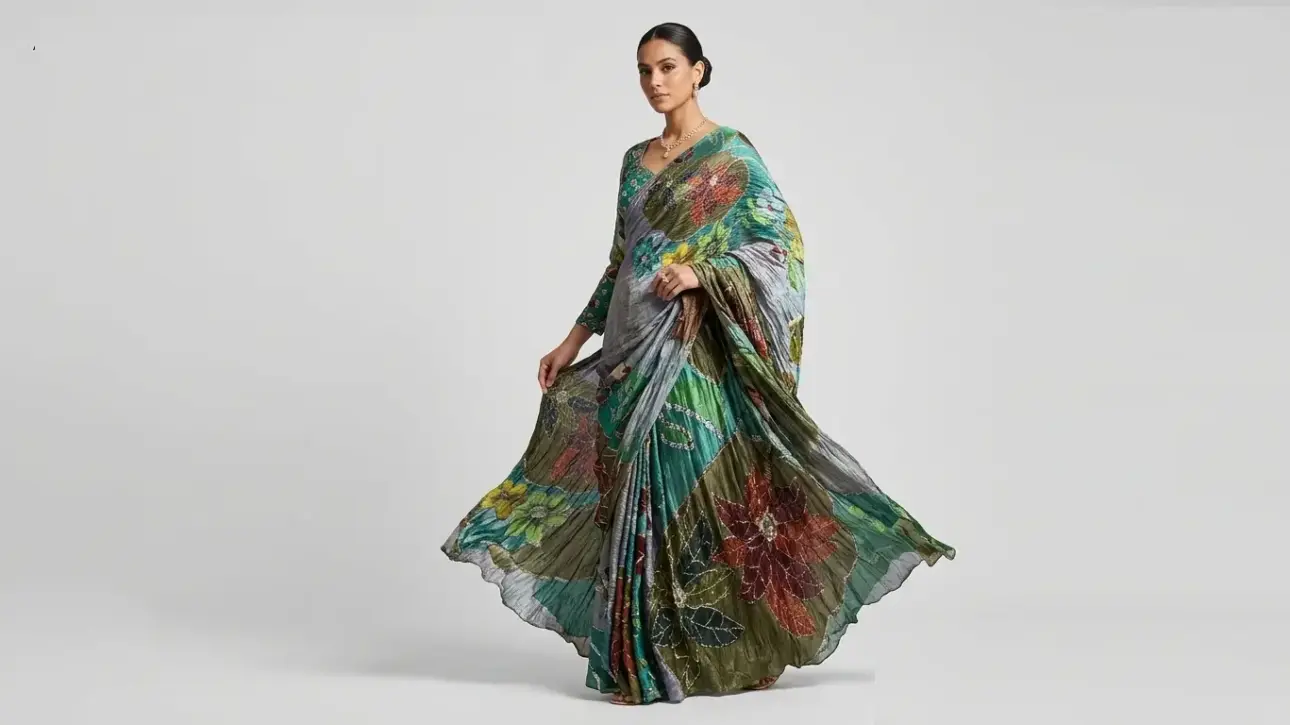
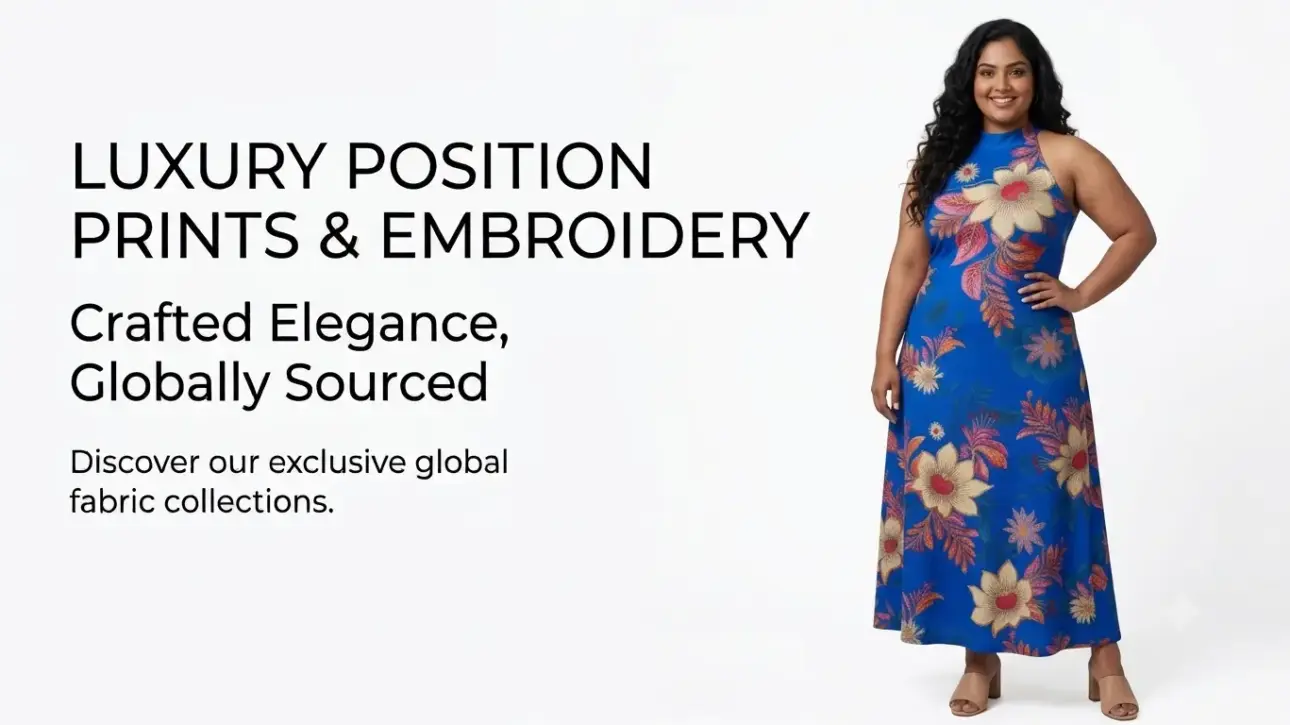
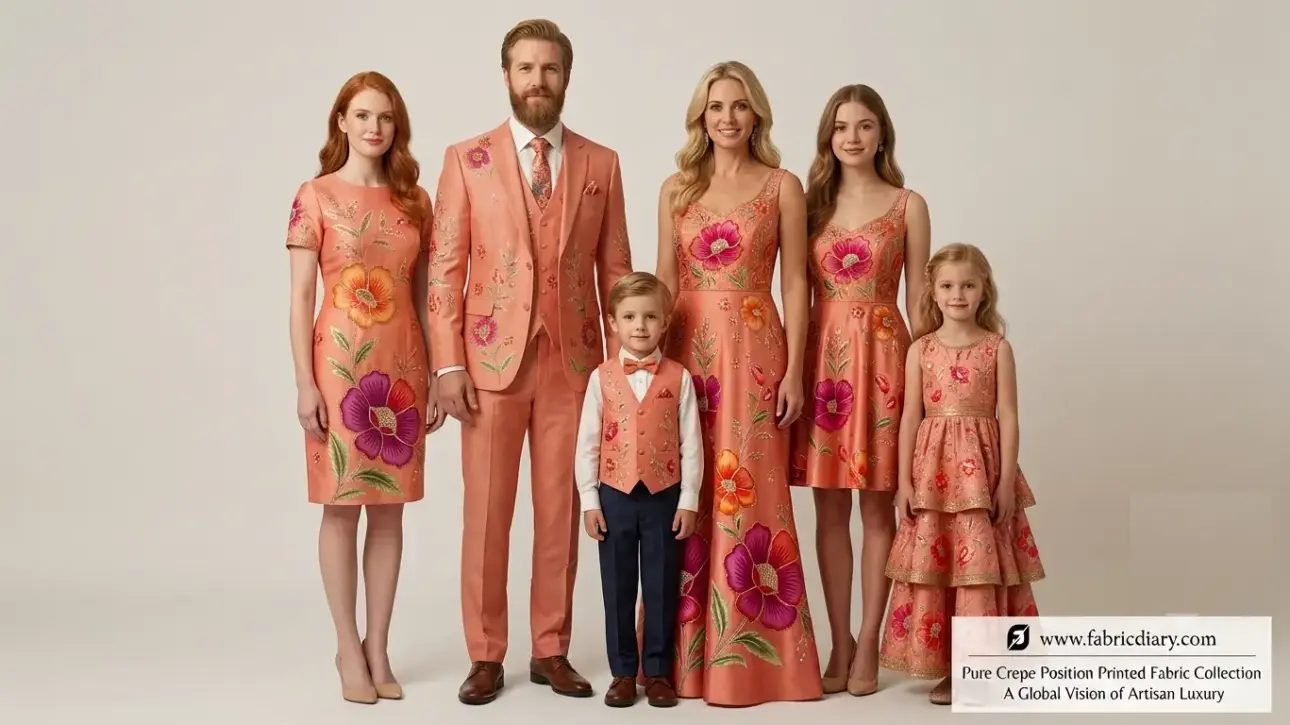
This is where Santoon printed fabric can become an interesting option for fashion development. Its smooth surface and adaptable character make it suitable for printed fashion concepts where colour, artwork and garment styling need to work together rather than compete with the fabric itself.
Buying Santoon Printed Fabric for European Fashion Collections
Madhav Fashion works with buyers looking for embroidery and printed textile sourcing from India, including fashion-oriented fabric development for different market requirements. For European buyers, the practical value is not simply finding a printed Santoon fabric. It is finding the right combination of base fabric, artwork, printing approach, colour direction, quantity and intended garment.
That distinction matters.
A Santoon fabric selected for a boutique capsule collection may have completely different requirements from a fabric being developed for a private-label production run. Similarly, a digital print created for sampling may not be the same production route chosen for a larger order.
This guide explains how European fashion buyers can evaluate Santoon printed fabric, what to consider before ordering, how digital printing and larger-scale printing differ, how allover and placement designs change the buying decision, and how to approach development with an Indian textile supplier.
What Is Santoon Printed Fabric?
Santoon is commonly used in the fashion-textile trade to describe a smooth, relatively sleek fabric construction used across Indian and South Asian apparel applications. The exact fibre composition and technical specifications can vary between suppliers and qualities, so buyers should always confirm the actual composition, width, weight and finish of the specific fabric being offered rather than assuming that every Santoon fabric is technically identical.
When Santoon is used as a printed base, the fabric becomes a combination of two decisions:
the characteristics of the Santoon base, and
the visual and technical behaviour of the chosen print.
This is important for European buyers because the printed appearance is only one part of the finished product.
A floral design may look excellent as a digital artwork but require a different fabric and print-development approach from a geometric repeat. A lightweight fashion fabric intended for a flowing garment may need a different finish from a more structured application.
Therefore, the term Santoon printed fabric should be treated as a product category rather than a single fixed specification.
The actual buying specification should be confirmed according to the intended collection.
Why European Buyers Consider Printed Santoon
European fashion collections cover an extremely wide range of aesthetics. One brand may work around minimal botanical prints, while another may focus on expressive colour, decorative motifs or seasonal statement pieces.
A smooth printed base can be useful when the designer wants the artwork to remain visually important.
For example, a Santoon print may be considered for:
- dresses
- kurtis and contemporary ethnic fashion
- coordinated sets
- skirts
- tops
- fashion separates
- scarves and accessories
- lining or secondary garment applications
- boutique capsule collections
- private-label apparel
- occasionwear concepts
The suitability depends on the actual fabric quality and construction, so the garment should always be considered before confirming production.
For a European buyer, the strongest reason to investigate Santoon is therefore not simply that it can be printed. It is that the fabric can provide a useful base for building a visually coordinated fashion story.
Santoon Printed Fabric and European Fashion Aesthetics
European fashion is not one single market.
A buyer sourcing for a Paris-oriented contemporary label may approach prints differently from a boutique serving Mediterranean resortwear customers. A Scandinavian-inspired collection may favour restrained artwork, while another brand may use expressive florals, ornamental patterns or stronger colour contrasts.
This makes design flexibility particularly important.
Instead of asking only:
“Which Santoon print do you have?”
a professional buyer may ask:
“Can this fabric and print development support the visual language of my collection?”
That question changes the sourcing process.
The supplier needs to understand the role of the fabric within the collection, the artwork requirements, the expected quantity and the intended end use.
For a new collection, buyers may also want to evaluate several design directions before selecting one for production. This is where sampling and digital printing can become useful during development.
Digital Printing for Santoon Fabric
Digital printing has changed the way fashion buyers can approach textile development, particularly during sampling and design experimentation.
Instead of preparing a traditional production route for every artwork variation, digital textile printing can allow artwork to be transferred directly to a suitable fabric surface using a digital printing system.
For fashion buyers, this can be particularly useful when testing:
- new artwork
- colour variations
- placement concepts
- repeat sizes
- seasonal prints
- limited collections
- capsule ranges
- designer-developed patterns
- private-label concepts
The important point is that digital printing is not automatically the correct solution for every production order.
It is a tool within the development process.
A buyer should select the printing method according to quantity, artwork, required colour performance, production economics and the characteristics of the base fabric.
Digital Printing vs Larger-Scale Production Printing
One of the most common misunderstandings in fabric sourcing is assuming that the same printing process is automatically best for both sampling and bulk production.
It is not.
Digital Printing
Digital printing can be particularly useful during design development because it provides flexibility for artwork changes and smaller development quantities.
A fashion brand might use it to test:
- three floral colourways
- two repeat scales
- a new seasonal artwork
- a designer’s original pattern
- a limited capsule concept
This can reduce the need to commit immediately to a large production run before the design has been evaluated.
Bulk-Oriented Printing
For larger production requirements, other printing routes may become commercially appropriate depending on the fabric, artwork and production quantity.
A buyer producing a high-volume repeat design may prioritise:
- production efficiency
- repeat consistency
- colour matching
- cost per metre
- process suitability
- production planning
Therefore, European buyers should discuss the expected quantity before deciding how the print should be developed.
The best printing route is a production decision, not simply a technology preference.
Allover Print or Placement Print?
Another important question is whether the design should cover the fabric continuously or be engineered for a particular garment area.
Allover Santoon Prints
An allover design repeats across the fabric width and length.
This approach can be practical when the same printed fabric needs to be cut into different garment styles.
Possible design directions include:
- small florals
- botanical repeats
- geometric patterns
- abstract motifs
- micro prints
- conversational prints
- decorative repeats
The major advantage is flexibility during garment cutting.
A dress, skirt or top can potentially use the same fabric without requiring the artwork to be aligned to a specific body panel.
Placement or Engineered Prints
A placement design is created for a particular area or garment construction.
For example, the main artwork may be designed specifically for:
- a front panel
- a border
- a sleeve
- a neckline
- a hem
- a central motif
This approach can create a more premium visual effect, but it requires greater planning between textile development and garment manufacturing.
For European fashion brands producing highly designed garments, engineered artwork may be worth considering where the print itself is intended to become a major part of the garment architecture.
Choosing the Right Print Scale
Print scale is often underestimated during fabric sourcing.
A pattern that looks attractive on a computer screen may behave differently when transferred to a garment.
A small repeat can create a completely different visual impression from an oversized motif.
European buyers should therefore consider:
Garment size: A large floral may work beautifully on a flowing dress but overwhelm a small blouse.
Fabric movement: A moving garment can change how the artwork is perceived.
Target customer: A boutique collection may require a different visual language from a mass-market private label.
Colour contrast: High contrast can make a repeat feel stronger, while low contrast can produce a quieter appearance.
Collection coordination: Print scale should work alongside solids, textured fabrics, embroideries and other prints in the same range.
This is why a physical sample remains valuable even when the artwork has already been approved digitally.
Colour Development for European Collections
Colour is one of the most commercially important elements of printed fabric.
A buyer may begin with a seasonal mood board containing several colour references, but textile production requires those ideas to be translated into an actual print.
The process may involve decisions around:
- background colour
- motif colour
- contrast
- saturation
- tonal balance
- colourway development
- repeat density
A single artwork can potentially be developed into multiple colourways.
For example, a botanical print might be developed in:
- muted neutrals
- soft pastels
- earthy tones
- deeper evening shades
- brighter seasonal colours
However, the final result depends on the actual printing process, fabric base and colour-management workflow.
For this reason, buyers should evaluate physical strike-offs or samples rather than approving a production colour based only on an on-screen image.
Santoon Printed Fabric for Boutiques
Boutiques often operate differently from large apparel companies.
A boutique may need a distinctive design without committing to extremely large production quantities. It may also want a collection that feels different from commonly available wholesale prints.
Santoon printed fabric can therefore be considered when the buyer wants to develop a fashion-specific print rather than simply purchase a generic textile.
For boutique buyers, the sourcing conversation should focus on:
- fabric feel
- design originality
- print appearance
- quantity requirement
- colourways
- garment application
- sampling process
- production flexibility
The objective is to create a fabric that supports the boutique’s identity.
Santoon Printed Fabric for Private Labels
Private-label businesses have a different sourcing requirement because the fabric must support a commercially repeatable product.
A private label may need:
- a defined colour palette
- repeatable artwork
- multiple garment styles
- seasonal updates
- production continuity
- controlled sourcing
- consistent quality
Here, fabric development should be considered alongside the complete garment plan.
If the same print will be used across several products, the buyer should determine whether an allover repeat or engineered design provides the best cutting flexibility.
A well-planned print can potentially be adapted across a collection while maintaining visual consistency.
Santoon for Export-Oriented Apparel Collections
Export buyers often need more than attractive fabric samples.
They need a sourcing process that can translate an approved concept into production.
A practical development sequence may look like:
Design brief → Fabric selection → Artwork preparation → Print development → Physical sample → Review → Revision → Production specification → Bulk manufacturing
The exact workflow varies by supplier and order, but the principle is important.
The textile should be developed with the final garment in mind.
For example, if the fabric is being developed for a dress collection, the buyer should not evaluate only a small fabric swatch. They should consider how the print behaves when the fabric is gathered, draped, cut and stitched.
What European Buyers Should Ask Before Ordering
A professional fabric inquiry should provide enough information for the supplier to understand the requirement.
Instead of simply sending:
“Need Santoon printed fabric.”
a stronger inquiry might include:
- intended garment
- approximate quantity
- required colourway
- artwork availability
- preferred print type
- allover or placement requirement
- expected fabric composition
- required width, if known
- target delivery market
- sample requirement
- development timeline
The more complete the brief, the easier it becomes to determine whether the proposed fabric is suitable.
If the buyer does not know the exact technical specification yet, that is also fine.
A supplier can begin by discussing the intended garment and desired hand feel, then narrow the fabric specification during development.
How to Evaluate a Santoon Fabric Sample
A sample should be evaluated beyond its appearance.
- Surface
Look at the smoothness and overall surface character.
Does the fabric visually support the intended garment?
- Hand Feel
Touch the fabric and consider whether it matches the product positioning.
A luxury-looking print on an unsuitable hand feel can create a mismatch between appearance and garment experience.
- Drape
Allow the fabric to hang naturally.
Observe whether it creates the movement expected for the intended garment.
- Print Definition
Inspect small and large motifs.
Are the edges sufficiently clear for the chosen artwork?
- Colour
Compare the physical sample with the approved colour reference where applicable. - Reverse Side
Examine the reverse side as well. Printing behaviour can affect how the fabric looks from both sides. - Garment Simulation
If possible, drape or pin the sample onto a basic garment form.
A fabric that looks excellent flat may produce a different impression once it becomes a garment.
Common Mistakes When Buying Printed Fabric
European buyers can avoid several common sourcing mistakes by separating design decisions from production decisions.
Mistake 1: Choosing by Photograph Alone
Online images are useful for initial selection but cannot replace physical evaluation.
Screen colour, lighting and photography can all affect perception.
Mistake 2: Assuming Every Santoon Is the Same
Santoon is not a guarantee of identical fibre composition, weight or construction.
Always request the specification of the actual quality being considered.
Mistake 3: Ignoring the Garment
The right fabric for a skirt may not automatically be the right fabric for a structured jacket.
End use matters.
Mistake 4: Treating Sampling and Bulk as the Same
The most convenient method for testing an artwork may not be the most economical method for large-scale production.
Discuss quantity early.
Mistake 5: Approving Colour Only on Screen
Physical print samples provide much more reliable information for final approval.
Mistake 6: Forgetting Repeat Size
A print can look completely different after the repeat is enlarged or reduced.
Mistake 7: Not Defining the Artwork
If the buyer provides original artwork, the production team needs to understand the required repeat, scale, placement and colour direction.
Developing Custom Santoon Prints
Custom printing becomes especially relevant when a fashion brand wants a print that is not readily available in the standard market.
The starting point can be:
- an original designer illustration
- a hand-drawn motif
- a digital artwork
- a mood-board concept
- a reference print
- a colour palette
- a seasonal theme
- The artwork then needs to be prepared for textile application.
Important technical questions may include:
- What is the repeat size?
- A seamless repeat needs to be prepared correctly so that the design connects without visible breaks.
- Is the artwork allover or placement?
- This affects both design preparation and cutting.
- How many colourways are required?
- A single artwork may be developed into multiple commercial versions.
- What is the intended production quantity?
- Quantity can influence the most appropriate printing route.
- What is the target garment?
A design for a flowing dress can be developed differently from one intended for smaller garment panels.
From Sample to Production
A strong textile sourcing process does not end when the first sample looks good.
The sample should become the reference point for the next stage.
Before production, buyers may need to confirm:
- fabric composition
- construction
- width
- weight where relevant
- print artwork
- repeat dimensions
- approved colourway
- finish
- quantity
- packaging requirements
- shipping requirements
Exact specifications should be documented rather than assumed from the sample.
This is particularly important for repeat orders.
If a European brand intends to reorder the same fabric later, the approved specification provides a useful reference for maintaining consistency.
Working With an Indian Textile Supplier
India has a large textile manufacturing and processing ecosystem, which is one reason European buyers frequently explore Indian suppliers for fashion fabrics.
But successful international sourcing depends on communication as much as fabric availability.
A buyer should expect clear discussion around:
- fabric development
- artwork
- samples
- production quantity
- quality approval
- packing
- shipping
- commercial terms
The supplier should also understand that a European fashion buyer may be working under a larger product-development calendar.
For a seasonal collection, delays at the fabric-development stage can affect garment sampling and final launch schedules.
Therefore, early communication is valuable.
Why the Fabric Base Still Matters
A print cannot completely change the underlying behaviour of a fabric.
If the base fabric is not appropriate for the intended garment, a beautiful print will not solve the problem.
This is why buyers should begin with the garment requirement.
Ask:
What should the finished garment feel like?
Then work backward toward the textile.
For a flowing fashion product, softness and drape may be more important. For another application, surface appearance or print visibility may take priority.
The correct Santoon quality therefore depends on the specific application rather than a generic definition of the fabric.
Building a European Collection With Multiple Prints
A fashion collection rarely depends on one print alone.
A designer may combine:
- one hero print
- one smaller repeat
- one geometric design
- one tonal print
- solid fabrics
- embroidered fabrics
- textured fabrics
- This creates hierarchy.
The hero print attracts attention, while supporting prints create variety without making the collection visually chaotic.
Santoon printed fabric can potentially occupy different roles within such a collection depending on its quality and styling.
For example, one print could become the main dress fabric while another works as a coordinated top or secondary garment.
This approach is often more commercially useful than treating every fabric as an isolated product.
Designing Prints for Different European Markets
A European buyer should avoid assuming that one design language works equally well everywhere.
Even within Europe, customer preferences vary by brand identity, price positioning, climate, season and product category.
Instead of trying to create a generic “European print,” designers can build around the identity of their own customer.
A contemporary label might prefer:
- restrained geometry
- tonal botanical artwork
- minimal repeats
Another brand may prefer:
- expressive florals
- decorative motifs
- stronger colour contrasts
A resort-focused collection may lean toward:
- botanical themes
- relaxed colour combinations
- larger-scale artwork
The sourcing process should therefore begin with the brand rather than with a regional stereotype.
Sustainability Conversations in Fabric Sourcing
European fashion buyers increasingly examine the wider story behind textile sourcing, but sustainability claims should be specific and verifiable.
A supplier should not simply describe a fabric as “sustainable” without explaining what that statement refers to.
Buyers can instead ask specific questions about:
- fibre composition
- manufacturing process
- available certifications
- chemical processes where relevant
- packaging
- production practices
- documentation
The important principle is transparency.
If a particular certification or environmental claim matters to the buyer, it should be verified for the specific material and supply chain rather than assumed because the fabric belongs to a certain category.
What Makes a Good Santoon Print Development Brief?
A useful brief does not need to be complicated.
For example:
- Fabric: Santoon
- End use: Women’s dresses
- Market: European fashion label
- Print: Botanical
- Style: Contemporary, refined
- Repeat: Allover
- Colourways: Three
- Artwork: Buyer supplied
- Requirement: Sample first, production after approval
This immediately gives the textile supplier a clearer understanding of the project.
For custom development, the buyer can then discuss the exact fabric specification and printing method after reviewing the available options.
Questions to Ask Your Supplier
Before moving into production, European buyers can ask:
- What is the exact fibre composition?
- What is the actual fabric construction?
- What width is available?
- What weight is available for this quality?
- Is the fabric suitable for my intended garment?
- Which printing process is recommended?
- Can my artwork be printed?
- Can the print be developed as an allover repeat?
- Can different colourways be created?
- Can I review a physical sample before production?
- What quantity is appropriate for the selected production method?
- Can the approved sample become the production reference?
- What information is required from my side to begin development?
These questions help turn a general fabric inquiry into a proper textile-development conversation.
Santoon Printed Fabric for Small and Large Buyers
One of the advantages of approaching fabric sourcing as development rather than simple product purchasing is that different businesses can follow different paths.
Small Fashion Brands
Small brands may prioritise:
- design flexibility
- sample development
- distinctive artwork
- manageable production
- limited seasonal collections
Private Labels
Private labels may focus more heavily on:
- repeatability
- consistent specifications
- coordinated colourways
- production planning
- commercial pricing
Wholesalers
Wholesalers may need:
- commercially attractive prints
- dependable fabric qualities
- broader assortment
- production availability
- clear product specifications
Export Houses
Export-oriented manufacturers may require:
- defined specifications
- repeat production
- quality control
- coordinated fabric sourcing
- production scheduling
The same category—Santoon printed fabric—can therefore have very different sourcing requirements depending on the buyer.
How Madhav Fashion Can Fit Into the Development Process
For buyers approaching Madhav Fashion, the conversation can begin with the product requirement rather than a predetermined technical specification.
A buyer can share the intended garment, artwork, colour direction, estimated quantity and market requirement. From there, the appropriate fabric and printing discussion can be developed around the project.
This approach is particularly useful when the buyer does not yet know whether a particular Santoon quality will be the best match.
Instead of forcing a generic specification onto every order, the objective is to establish the relationship between:
fabric + print + garment + quantity + market
That is the foundation of a practical textile-development process.
A Practical Buying Workflow for European Buyers
For a buyer developing a new collection, the following sequence can make sourcing easier:
Step 1 — Define the Garment
Start with the final product.
Step 2 — Define the Fabric Feel
Determine whether the garment needs softness, smoothness, fluidity, structure or another characteristic.
Step 3 — Select the Santoon Quality
Review the available fabric specification rather than assuming all Santoon is identical.
Step 4 — Prepare the Artwork
Confirm repeat, scale, placement and colour requirements.
Step 5 — Select the Printing Approach
Discuss whether digital or another production route is appropriate for the expected quantity.
Step 6 — Review a Physical Sample
Evaluate hand feel, print, colour and drape.
Step 7 — Approve the Specification
Document the selected fabric and print details.
Step 8 — Move to Production
Proceed only after the sample and commercial requirements have been confirmed.
This process reduces avoidable misunderstandings between design and manufacturing teams.
Santoon printed fabric can be a practical textile option for fashion brands looking for a smooth printed base that can support different design directions. But successful sourcing is not simply about selecting a beautiful print.
For European fashion buyers, the more useful approach is to evaluate the entire development chain: fabric composition, hand feel, garment application, print scale, colour, artwork, production quantity and printing method.
Digital printing can be useful during sampling and design development, while larger production requirements may call for a different printing strategy. Allover and placement designs also need to be considered differently. And most importantly, the actual Santoon quality should always be confirmed rather than treated as a universal specification.
For boutiques, private labels, designers, wholesalers and export-oriented apparel businesses, this structured approach can make textile sourcing much more predictable.
If you are developing a Santoon printed fabric collection for a European fashion market, start with the garment and design requirement, then build the textile specification around it. Share the artwork, preferred colour direction, intended application and approximate quantity with the supplier, and use physical sampling to make the final decision.
The strongest fabric-development projects are rarely built around a fabric name alone. They are built around a clear understanding of what the finished fashion product needs to achieve.