



A successful fabric order is only one stage of apparel production. For manufacturers developing garments in dyeable viscose georgette, the result depends on how carefully fabric selection, colour development, finishing, pattern planning and quality checks are coordinated before bulk cutting begins.
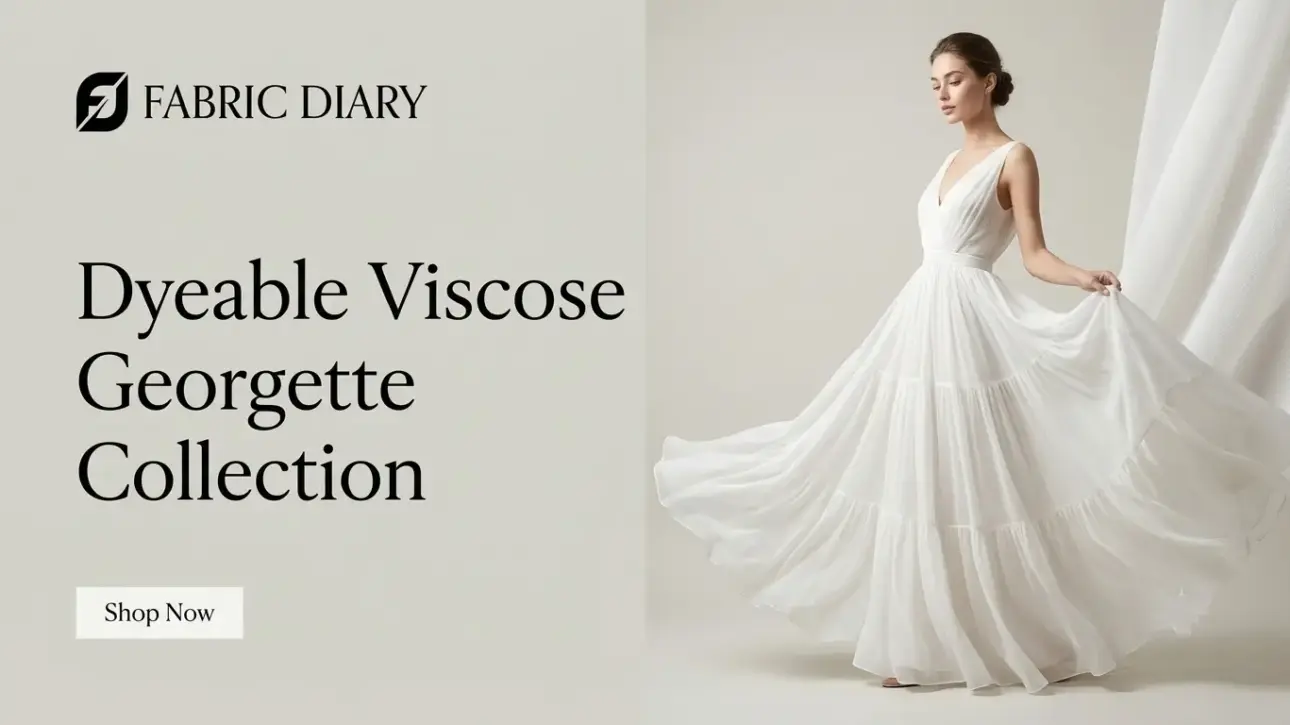
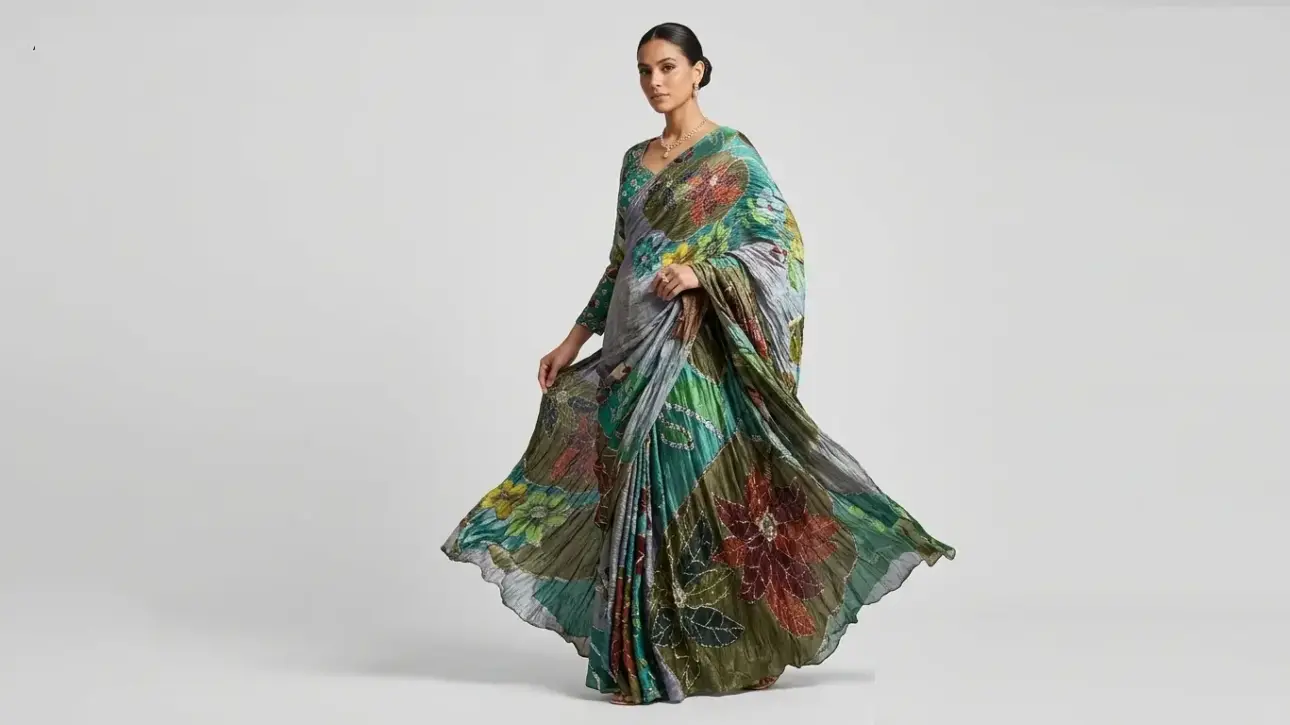
RFD fabric can give fashion businesses flexibility when developing colour-specific collections, but that flexibility comes with decisions that should be made early. The base must be suitable for the intended process, the approved shade must be reproducible to an agreed standard, and the finished fabric must perform as expected in the actual garment.
From RFD Fabric to Finished Garment: Planning Viscose Georgette Production
This guide is for apparel manufacturers, garment exporters, fashion labels, sourcing teams and wholesale buyers who need a practical framework for planning viscose georgette production. It covers the production decisions to discuss with fabric suppliers and processing partners before moving from sample development to a commercial order.
In This Guide
- Understand the production chain
- Prepare a clear fabric brief
- Approve the base before processing
- Coordinate colour development
- Plan finishing and dimensional checks
- Connect fabric testing with garment development
- Build quality checkpoints into production
- Move from sample approval to bulk order
- Common production risks and practical responses
- Working with Madhav Fashion
- Frequently asked questions
Understand the Production Chain Before Confirming the Fabric
Viscose georgette production is not a single decision about buying a fabric by the metre. A finished garment may involve several separate stages, and each stage can affect the final result. The exact route depends on whether the buyer is purchasing finished fabric, a dyeable base, a printed quality or a fabric that will receive additional embellishment.
For a dyeable base, the planning sequence may include fabric specification, sample inspection, dyeing trials, shade approval, finishing, dimensional assessment, garment sampling and bulk inspection. Some projects require fewer stages; others require extra testing because of the colour, garment design, embellishment or end-market requirements.
The first task is to identify which party is responsible for each operation. The fabric supplier may provide the base material, while a separate processing unit handles dyeing or finishing. A garment factory then uses the approved material for cutting and sewing. When responsibilities are not clearly documented, it becomes difficult to determine why a bulk result differs from the approved sample.
Map the responsibilities
Before starting development, record the supplier, processor, garment manufacturer and final buyer where applicable. Define who approves the base fabric, who approves the shade, who measures dimensional change, who signs off the finished sample and who conducts final inspection.
This does not need to be a complicated management document. A concise specification sheet and approval record can help every party work from the same reference. The goal is to prevent assumptions from replacing confirmed information.
Separate fabric approval from garment approval
A fabric can pass an initial inspection and still require changes when it is cut and sewn. Likewise, a garment sample can look correct while a large fabric lot introduces differences in shade or usable width. Treat these as connected but separate approvals: one for the material and one for the intended garment.
Prepare a Clear Fabric Brief for the Supplier
A vague request such as “viscose georgette for dresses” does not provide enough information for a reliable sourcing decision. A useful fabric brief explains the product, the required construction or quality, the expected processing route and the commercial quantity.
Specify the intended end use
Tell the supplier whether the material is being considered for dresses, blouses, kurtis, sarees, dupattas, occasionwear or another application. The garment determines which properties deserve the most attention. A flowing dress, a layered dupatta and a heavily embellished panel may have different requirements for opacity, drape, handling and dimensional stability.
Record the technical details that matter
Where available, specify fibre composition, fabric code, target weight, usable width, base colour and required finish. If a property is essential, state how it will be verified. For example, a target width should be defined as usable width if that is what the cutting plan depends on.
Do not assume that all products described as georgette share the same construction or processing behaviour. Market names are helpful for discovery, but a product code and agreed specification are more dependable for repeat orders.
Explain the colour and process requirements
If the project requires a custom colour, provide the most useful reference available and ask what approval method the processing unit supports. If printing, embroidery, sequins or other embellishments are planned, explain those requirements before the base is finalised. A process that works on one construction may not produce the same result on another.
State the quantity and delivery context
Share the estimated requirement, target order date and destination. Clarify whether the quantity is for sample development, a pilot run or full commercial production. Stock availability, custom development, processing lead time and shipping can affect the practical order plan, so they should be confirmed for the actual requirement.
Approve the Fabric Base Before Processing
RFD commonly means “ready for dyeing,” but the exact preparation and finishing associated with that description can differ. Buyers should ask what condition the offered fabric is in and whether it is suitable for the planned dyeing route. Do not infer technical readiness from the RFD label alone.
The base fabric is the starting point for the rest of the process. If the construction, weight, usable width or surface condition is unsuitable for the intended garment, later colour development may not solve the problem. Base approval should therefore happen before committing to a large processing quantity.
Inspect the sample systematically
Review the fabric under consistent lighting and on a clean surface. Look for visible marks, holes, irregular texture, unwanted creases or other defects relevant to the agreed quality. Observe the hand feel and drape, but remember that a small swatch cannot establish the uniformity of an entire roll.
Confirm width and weight expectations
Ask how weight and width are measured and whether the stated figures refer to the unfinished or finished material. If a pattern is designed around a specific width, even a modest difference may affect fabric consumption and cutting efficiency. Establish an acceptable tolerance before the purchase order is issued.
Check the fabric against the process
Discuss the intended dyeing or finishing method with the relevant processor. Confirm whether a trial is needed and which characteristics will be measured afterward. The selected fabric, dyeing recipe, machine conditions and finishing method can all influence the result, so no single test result should be assumed to apply to every georgette quality.
Coordinate Colour Development Before Bulk Dyeing
Colour approval is a key decision in any collection that depends on coordinated shades. A digital reference can communicate the general direction, but it cannot reliably reproduce the appearance of a colour on a particular textile. The material’s construction, surface, processing and lighting conditions influence how the final shade is perceived.
Use an agreed physical reference
Where colour accuracy is important, request a lab dip or a processed sample on the selected fabric, if supported by the processing partner. Compare the result with the agreed reference under consistent lighting. Keep a record of the approved version and do not rely solely on a phone image or an informal message saying that the colour looks close.
Agree on the approval process
Define who has authority to approve the shade and how approval is recorded. If several colourways are involved, identify each shade clearly and maintain a separate approval record. This reduces the risk of using an outdated or incorrect reference during production.
Understand the limits of visual matching
Two materials may not appear identical under every light source, even when their colours are close under the agreed viewing condition. If the finished product has strict colour requirements, the buyer should discuss the relevant assessment method with the dyeing unit and end customer before production.
Reassess after finishing
Colour should be checked again after the intended finishing process. A sample approved before finishing may not fully represent the final material. Record the final approved result and use it as the reference for subsequent checks.
Plan Finishing and Dimensional Checks
Finishing is not simply the last cosmetic step. Depending on the construction and process, it can affect fabric appearance, hand feel, width, length, weight and suitability for the garment. The processing sequence should be selected with the intended end use in mind.
Measure dimensional change
Ask the processing unit to evaluate length and width before and after the relevant trial. The observed change should be documented and considered during pattern planning. Do not apply an assumed universal shrinkage percentage to all viscose georgette: actual results depend on the selected material and processing conditions.
Check the finished surface
Inspect the processed sample for unwanted marks, uneven appearance, texture changes or other issues that matter to the agreed quality. If the garment relies on a particular flowing effect or surface character, assess the fabric in a representative panel or sample garment.
Keep processing records
For repeat production, record the approved base, shade reference, finishing route and key measurements. If the processor changes the recipe or finishing settings, ask whether the change requires another approval trial. Maintaining this information makes repeat orders easier to evaluate.
Confirm who handles reprocessing
Before work starts, clarify how a shade or finishing issue will be investigated and which party is responsible for the next step. The answer may depend on the agreed purchase terms, the source of the variation and the processing arrangement. Written responsibilities are more useful than assumptions made after a problem occurs.
Connect Fabric Testing with Garment Development
Fabric approval should reflect the garment that will actually be manufactured. A material that looks suitable as a loose swatch may behave differently when cut into panels, joined at seams, lined or combined with trims.
Make a representative sample
Where the order justifies it, create a prototype or a representative garment panel using the approved fabric and intended construction. This allows the sampling team to review drape, seam appearance, opacity, handling and the overall silhouette before bulk cutting begins.
Assess opacity and layering
Opacity depends on the specific construction, colour, lighting and finishing. Evaluate the actual processed shade rather than assuming that a result observed on a white base will remain the same after dyeing. Decide on lining or layering based on the garment’s requirements and the intended market.
Review cutting and sewing behaviour
Ask the sample room to observe how the material behaves during spreading, cutting and stitching. If the fabric shifts or requires special handling, establish a suitable method before scaling up. Pattern layout and usable width should be checked together to avoid unnecessary material loss.
Test embellishment combinations
If embroidery, beads, sequins or other decorative work is planned, test the complete combination rather than approving the base alone. Embellishment weight, stitch density, backing, stabilisation and garment construction can influence the final appearance and performance.
Consider care and destination requirements
The finished garment’s care instructions depend on the fibre, dyes, finishing, trims and construction. Where care performance or destination-market compliance matters, confirm the relevant requirements and carry out appropriate tests. Do not copy a generic care statement without checking the finished product.
Build Quality Checkpoints into Production
Quality control is more useful when it is planned before production than when it is introduced after a complaint. A practical system defines what is checked, when it is checked, how the result is recorded and who makes the acceptance decision.
Checkpoint one: incoming base fabric
Confirm the fabric code, quantity, stated specifications and base condition. Inspect the material according to the agreed sampling or inspection plan. Record any visible concerns before the fabric is sent for processing.
Checkpoint two: processed sample
After dyeing or finishing trials, compare the result with the approved shade and material expectations. Record relevant measurements and confirm that the fabric remains appropriate for the intended garment. Do not release the full quantity simply because the colour appears acceptable at a glance.
Checkpoint three: pre-production garment
Use the approved processed material to make the pre-production sample where required. Review construction, drape, lining, embellishment and other product-specific requirements. Any agreed changes should be documented before bulk cutting.
Checkpoint four: bulk lot and finished garments
Inspect the delivered or processed lot against the agreed criteria. If fabric is supplied in multiple rolls, consider whether roll identification and shade grouping are necessary for the production plan. At garment stage, use the buyer’s quality plan to assess workmanship, measurements and appearance.
Keep traceable records
Connect the approved sample, fabric code, purchase order, processing details and inspection records. When a problem appears, traceability helps determine whether the issue originated in the base, processing, handling, cutting or garment construction.
Move from Sample Approval to Bulk Order
Bulk readiness means more than having a sample that looks correct. The buyer needs a documented specification, a confirmed quantity, agreed commercial terms and a realistic schedule that includes the relevant production stages.
Calculate consumption from the actual pattern
Use the garment pattern, size range, usable width, marker layout and matching requirements to estimate consumption. Include an allowance based on the factory’s process and risk assessment. A general estimate for one garment style should not automatically be applied to a different pattern or size range.
Confirm stock or production status
Ask whether the required base fabric is available as ready stock or whether production or processing is needed. Clarify what the delivery estimate covers and whether colour development, finishing, inspection and transport are included. Timelines must be confirmed for the actual order rather than copied from another listing.
Record commercial terms clearly
The quotation or purchase order should identify the fabric, quantity, price basis, taxes where applicable, shipping arrangement, payment terms and quotation validity. For custom development, separately confirm minimum quantity, sampling costs and any processing charges that apply.
Plan repeat orders with the same discipline
A repeat order should reference the previous approved specification, but the buyer should still confirm the new lot’s details. If the base, shade, finishing or process has changed, evaluate whether another sample or approval is necessary. Consistent documentation is a practical tool for controlling variation; it is not a guarantee that every lot will be identical.
Common Production Risks and Practical Responses
Risk: choosing by appearance alone
A product photograph cannot establish fibre composition, weight, usable width or processing performance. Response: verify the technical details, request a representative sample and test the intended process before placing a large order.
Risk: approving a colour from a screen
Digital images can vary with display settings and lighting. Response: use an agreed physical reference or processing sample where colour accuracy is important, and record the final approval.
Risk: using an assumed shrinkage value
Dimensional change varies with fabric construction and processing conditions. Response: measure the actual trial and use the result in pattern and consumption planning.
Risk: changing specifications after sampling
A change in width, base quality, finish or embellishment may affect the outcome. Response: document changes and decide whether another sample approval is needed before bulk production.
Risk: unclear responsibility between supplier and processor
When several businesses handle one order, quality concerns can become difficult to trace. Response: record which party is responsible for fabric supply, dyeing, finishing, inspection, transport and approval at each stage.
Risk: underestimating the full delivery timeline
Fabric procurement may be followed by colour development, finishing, garment sampling and inspection. Response: build the schedule around the actual workflow and obtain confirmed estimates from the relevant parties.
Discuss Your Fabric Requirement with Madhav Fashion
Madhav Fashion is a textile and fashion business based in Surat, Gujarat, India, with a product range that includes plain fabrics, georgette, embroidery fabrics and printed fabrics. The company website provides an overview of its business and product categories.
For a viscose georgette requirement, start by reviewing the Madhav Fashion Georgette Fabric page and the company profile. Confirm whether the available quality matches your specific fibre, weight, width, base condition and processing needs before placing an order.
When making an enquiry, include the intended garment, estimated quantity, target colour, required width, delivery destination and whether the material will be purchased as a finished fabric or used for further processing. If embroidery, printing or other embellishment is planned, explain that requirement at the beginning.
These details help the sourcing discussion move beyond a generic request and toward a specification that can be reviewed commercially and technically. Availability, custom development, minimum quantities, lead time and final pricing should be confirmed directly for the particular order.
Planning a bulk production run? Establish the specification first, approve the relevant samples, document the processing route and confirm the commercial terms before releasing the order.
FAQ
What does RFD mean in fabric production?
RFD commonly means “ready for dyeing.” The precise preparation and finishing may vary by supplier and fabric quality, so buyers should confirm the actual condition of the material before processing.
Can every viscose georgette fabric be custom dyed?
Not automatically. Suitability depends on the specific fabric, its preparation and the capabilities of the processing unit. Confirm the process and approve a trial before committing to bulk dyeing.
Why is a lab dip or processed sample important?
It provides a physical reference for reviewing colour on the selected fabric. This is more dependable than relying only on a digital image when shade accuracy matters.
Should the buyer approve the fabric and the garment separately?
Yes, when the production process requires it. Fabric approval checks the material against its specification, while garment approval checks how that material performs in the intended construction.
How can manufacturers reduce fabric waste?
Use the actual garment pattern, size range, usable width and marker layout to estimate consumption. Confirm dimensional change after processing and plan cutting only after the required approvals.
What information should be included in a bulk fabric enquiry?
Share the fabric type or code, fibre composition if specified, target weight and width, base condition, quantity, intended garment, colour or finishing requirements and delivery destination. Ask the supplier to confirm availability and commercial terms.
Does an approved sample guarantee that the bulk lot will be identical?
No. A sample establishes the agreed target, but the bulk lot still needs to be checked against the relevant specifications and tolerances. Documented inspection and traceability help manage differences.
Where can I review Madhav Fashion’s georgette range?
Visit the Georgette Fabric page and confirm the current product details and availability directly with Madhav Fashion.