



For garment manufacturers, fashion labels, fabric wholesalers and export houses, choosing a dyeable fabric is not simply a matter of selecting a white base cloth. The fabric must suit the intended garment, respond appropriately to the planned dyeing process, meet width and weight requirements, and remain commercially workable when the design moves from sampling to production.
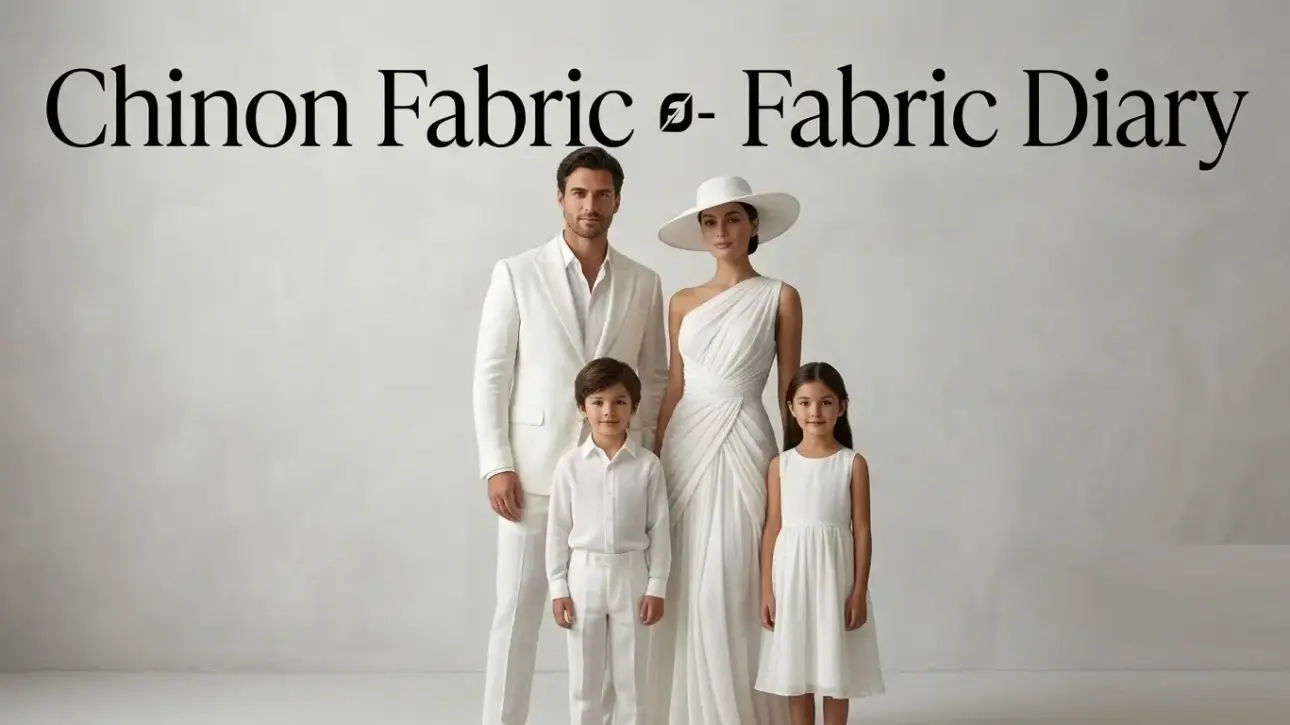

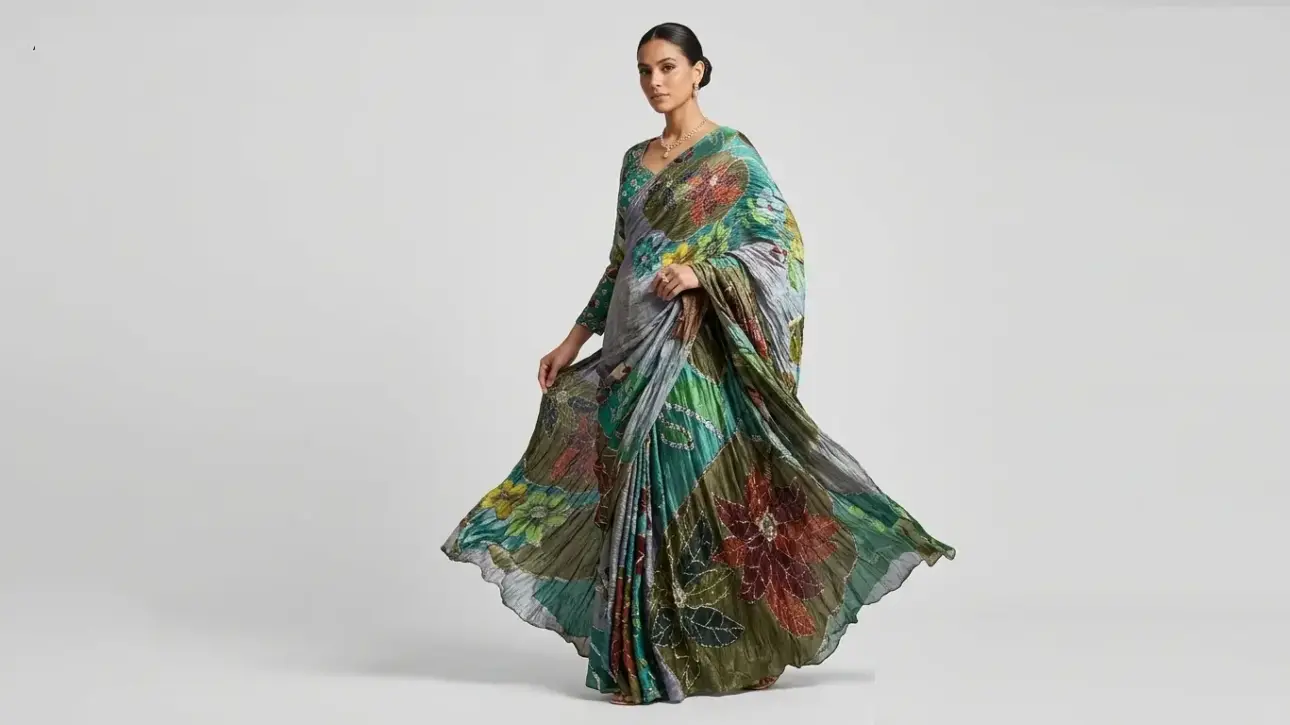
RFD pure viscose Chinon is one option for buyers developing flowing garments and occasionwear. Its value lies in starting with a light-coloured base that can be evaluated for a planned shade or collection instead of purchasing an already-dyed fabric in a colour that may not match the final brief.
RFD Pure Viscose Chinon Fabric: A Buyer’s Guide to Dyeing and Bulk Sourcing
This guide explains what ready-for-dyeing (RFD) means, what buyers should verify before ordering, how to approach sampling and dye-house communication, and how to evaluate viscose Chinon for different garment applications. It is intended for professional sourcing decisions, not as a substitute for a dye-house trial or a confirmed production specification.
What Is RFD Pure Viscose Chinon Fabric?
RFD stands for ready for dyeing. In textile sourcing, it describes a fabric supplied in a prepared, generally undyed state for a subsequent dyeing process. RFD fabric is selected when a buyer wants to develop colour after sourcing the base material rather than buying a finished, pre-dyed shade.
Pure viscose Chinon is a viscose-based fabric with a soft, flowing character that can be considered for dresses, kurtis, sarees, dupattas, suits and selected Western or fusion garments. The actual drape, transparency, surface, strength and suitability depend on the fabric construction and finishing—not merely on the word “Chinon.” Buyers should therefore evaluate the specific lot rather than assume that every fabric sold under the same name behaves identically.
For Madhav Fashion’s MF102 product listing, the stated composition is 100% pure viscose Chinon. The listed approximate specifications are 60–65 GSM and a width of about 44 inches, with a 54-inch option also mentioned. The listed colour is RFD off-white. These are product-page specifications, not a substitute for written confirmation of the exact lot being purchased.
RFD should not be interpreted as a guarantee that every shade, dye recipe or processing route will work without trials. The buyer and dye house still need to check fabric preparation, compatibility with the intended dye system, shade requirements, dimensional behaviour and the finishing result.
Why Fashion Businesses Source Dyeable Chinon
Fashion businesses often develop a collection around a defined colour palette. A designer may need a particular muted rose, deep teal, warm ivory, wine shade or seasonal neutral. A wholesaler may need to coordinate several garment components. An export house may be working from a buyer-approved colour standard. In these situations, a dyeable base gives the team an opportunity to develop the required colour through a controlled process.
The practical benefit is not that RFD fabric automatically produces an exact shade. Rather, it allows the buyer to plan a dyeing stage and evaluate the outcome against a reference. The final result depends on the base fabric, preparation, dye selection, process conditions, finishing and the dye house’s controls.
RFD sourcing may be useful for:
- Fashion labels: developing coordinated colours for a new season or capsule collection.
- Garment manufacturers: aligning fabric colour with approved trims, linings or other components.
- Wholesalers: evaluating a base fabric for a planned range rather than committing immediately to several finished shades.
- Export houses: sampling against a buyer’s reference and documenting the approved colour before bulk processing.
- Boutique and occasionwear businesses: developing colours for selected designs and small collections, subject to the dye house’s minimum batch requirements.
Before choosing RFD, compare the full workflow and cost with buying a ready-dyed fabric. Dyeing adds a separate production stage, and it can involve minimum batch sizes, testing, processing time, inspection and finishing costs. The correct choice depends on the buyer’s design, order quantity, deadline and tolerance for colour variation.
Understanding the MF102 Product Specifications
Specifications help buyers compare fabric offers on a like-for-like basis. A fabric name alone is not enough to approve a production order. For the MF102 listing, buyers can use the following as a starting point and confirm the details against the quotation, sample and purchase order.
Specification Listed information What the buyer should verify
| Specification | Listed information | What the buyer should verify |
|---|---|---|
| Product code | MF102 | Confirm the code on the quotation, sample identification and invoice. |
| Fabric composition | 100% pure viscose Chinon | Confirm composition and any applicable test or documentation requirements. |
| Approximate GSM | 60–65 GSM | Confirm the target and tolerance for the actual lot using an agreed measurement method. |
| Width | Approx. 44 inches; 54-inch option listed | Confirm usable width, measurement conditions and which width is being quoted. |
| Colour state | RFD off-white | Confirm the shade and preparation state are suitable for the intended process. |
| Intended use | Dresses, kurtis, sarees, dupattas, suits and Western wear | Assess the actual sample for the garment’s structure, opacity, lining and handling needs. |
Why confirm GSM and width? GSM refers to the mass of fabric per square metre. It can affect garment weight, coverage, drape and consumption estimates, but it does not describe every performance characteristic. Width influences marker planning and fabric consumption. Buyers should use the confirmed usable width—not simply the nominal width—when estimating cutting efficiency.
Small differences between lots may matter when a garment pattern is sensitive to drape or when fabric is cut in large quantities. If the purchase is for production, ask for the agreed specification in writing rather than relying only on a website description or a verbal confirmation.
RFD, Dyed and Printed Chinon: Which Should You Choose?
RFD, dyed and printed fabrics serve different sourcing needs. They should not be treated as interchangeable versions of the same product.
RFD Chinon
Choose an RFD base when the colour is expected to be developed after sourcing and the selected fabric is appropriate for the planned dyeing route. This approach can be useful for buyer-specific shades, coordinated collections and development work. It requires a dyeing plan and enough time to test and approve the result.
Pre-dyed Chinon
Pre-dyed fabric is supplied in a finished colour and may suit buyers who want to move directly into inspection, cutting or garment production. Confirm shade availability, colour consistency, lot identification and the terms for repeat orders. A colour shown on a screen should not be treated as a precise shade standard.
Printed Chinon
Printed fabric is relevant when the design brief depends on motifs, repeat patterns, artwork or placement. The buyer should confirm the printing method, artwork scale, repeat, colour separation, placement and fabric compatibility. Printing and dyeing solve different design problems; one is not automatically a replacement for the other.
When comparing quotations, consider the total cost of the finished fabric or garment—not only the price per metre of the base cloth. Include dyeing or printing, testing, finishing, inspection, cutting loss, transport and any rejected material allowance in the commercial calculation.
Planning a Dyeing Trial Before Bulk Production
A planned shade should be evaluated on the actual fabric, using the process intended for production. A small swatch can help with early screening, but it may not reproduce all the conditions of a full batch. For important orders, the buyer should agree with the dye house on a sample approval process before releasing the bulk material.
- Define the target shade. Share a physical standard or an agreed colour reference where available. Screens and photographs can be useful for discussion but may not represent colour accurately.
- Identify the fabric lot. Keep the product code, width, lot reference and sample identification together so the approved sample can be traced.
- Discuss process compatibility. Ask the dye house to assess the fabric preparation and the dyeing route. Do not assume that a generic recipe is suitable for every viscose fabric.
- Review the trial result. Evaluate the shade under consistent lighting and check the surface, hand feel, drape and any visible unevenness or damage.
- Check dimensional behaviour. Where relevant to the garment, measure before and after processing to understand shrinkage or other dimensional changes.
- Approve in writing. Record the approved reference, relevant process details, inspection expectations and any accepted variation before bulk processing.
These steps reduce avoidable misunderstandings, but they do not remove every production risk. Colour may vary with process conditions and batch size. A buyer should agree realistic tolerances with the dye house and end customer rather than expect a perfect visual match from a colour name alone.
Questions to Ask the Dye House
Before sending RFD Chinon for processing, share the garment end use and ask the dye house to confirm its proposed approach. Useful questions include:
- Is this specific fabric lot suitable for the intended dyeing process?
- Does the fabric require any additional preparation before dyeing?
- What trial quantity and minimum batch size apply?
- Can the dye house work to the supplied physical shade standard?
- How will shade approval and batch-to-batch variation be assessed?
- What dimensional changes should be checked before garment cutting?
- Which finishing route is proposed, and could it change the hand feel or drape?
- What inspection and testing can be carried out for the intended end use?
- How will the bulk batch be identified and linked to the approved sample?
The answers should be documented for orders where shade, quantity and repeatability are commercially important. Madhav Fashion supplies the base fabric; dyeing performance and final shade should be agreed with the processing partner responsible for that stage.
Garment Applications: Evaluate the Fabric for the Design
Viscose Chinon can be considered for flowing garments, but suitability depends on the construction of the particular fabric and the requirements of the design. The following are development directions rather than guarantees for every garment.
Dresses and occasionwear
For dresses, evaluate how the fabric falls across the body and whether the design needs lining, additional structure or a particular finishing treatment. Gathered, layered or draped designs may behave differently from close-fitting silhouettes. Test the sample in the actual pattern where possible.
Kurtis and suits
For kurtis and suits, check opacity, seam handling, ease of pressing, garment construction and compatibility with the chosen lining or accompanying fabrics. The final colour should be reviewed alongside trims and other components, especially when the outfit uses several materials.
Sarees and dupattas
For sarees and dupattas, evaluate drape, edge finishing, transparency and how the material behaves when folded or pleated. Embellishments, borders and embroidery may introduce additional weight, so test the complete design rather than judging the base fabric alone.
Western and fusion wear
For skirts, overlays, tops and fusion silhouettes, check whether the fabric’s surface and drape suit the pattern. Construction choices such as lining, seams and layers influence the finished garment as much as the fabric name does.
When a design is unfamiliar, a sample garment or a controlled cutting trial is often more useful than relying only on catalogue photographs. Photographs can illustrate a design direction, but they cannot establish the physical performance of the fabric.
Quality Checks Before Approving the Sample
Build a simple inspection checklist around the garment and process requirements. A buyer does not need to run every possible textile test on every order, but should identify which checks are necessary for the intended use and destination market.
- Identity: verify product code, composition declaration, colour state and lot reference.
- Width: measure usable width consistently and confirm the agreed value.
- Weight: check GSM using an agreed method if weight is critical to the order.
- Surface: inspect for visible marks, holes, snags, streaks or other defects against the agreed acceptance criteria.
- Handle and drape: compare the sample with the approved reference and assess it in the intended garment.
- Dyeing trial: review the processed sample for shade, surface changes and dimensional behaviour.
- End-use tests: where required, arrange appropriate testing for colourfastness, shrinkage, seam performance or other buyer specifications.
Do not assume that a fabric passes a test simply because the material is described as pure viscose or dyeable. Test methods, acceptable results and responsibility for testing should be agreed in advance. If the buyer has a technical pack, compliance checklist or destination-specific requirement, share it before confirming production.
How to Estimate Fabric Consumption and Total Cost
Price per metre is only one part of the sourcing decision. A production estimate should consider the garment pattern, usable width, marker efficiency, fabric defects, shrinkage allowance where applicable, cutting loss and the cost of any additional processing.
For example, a buyer comparing a 44-inch width with a 54-inch width should not assume that the wider option automatically reduces cost. The result depends on pattern layout, garment size range, usable width and the price difference between options. A cutting-room marker or a sample layout can provide a more dependable comparison than width alone.
For RFD fabric, the landed or finished-material calculation may include:
- Base fabric price and ordered quantity.
- Freight and applicable taxes or duties.
- Dye-house minimums, processing and finishing charges.
- Trial or shade-development costs where applicable.
- Inspection, testing and packaging requirements.
- Expected cutting loss and a commercially agreed allowance for defects or processing variation.
Use written quotations for the base fabric and processing stages so that the buyer can compare like-for-like costs. Any cost estimate should be recalculated if the width, shade, finishing, order quantity or delivery terms change.
Sampling, Repeat Orders and Bulk Planning
A sensible sourcing workflow separates product evaluation from bulk approval. Start by identifying the garment application, required width, expected quantity, target shade and timing. Then request a sample or small evaluation quantity, where available, and confirm the commercial terms before placing a larger order.
For repeat programmes, retain a clearly identified approved sample and written specification. Record the product code, lot, colour reference, width, agreed weight, finishing requirements and inspection criteria. If the next order must match an earlier delivery, communicate that requirement before production begins and ask the supplier what matching limitations apply.
Buyers should also confirm current availability, minimum order conditions, production lead time and shipping options directly at the quotation stage. These details can change according to stock, order size, customization and destination. A web listing is a useful starting point, not a guarantee that every configuration is immediately available.
For international shipments, share the destination country, required quantity and any relevant import or documentation instructions early. This allows the supplier to clarify shipping arrangements and helps the buyer plan for transit and customs processing. Delivery estimates should be treated as estimates, not guaranteed arrival dates.
Common Buying Mistakes to Avoid
Ordering from the fabric name alone
“Chinon” does not by itself define the exact composition, GSM, width or finish. Confirm the product code and agreed specifications.
Assuming RFD means any shade is guaranteed
RFD provides a base for a subsequent process. The target shade and final performance depend on the fabric, dyeing method and processing controls. A trial is especially important for critical colours.
Skipping the approval stage
Bulk processing without an agreed sample or acceptance standard can create disputes over shade, handle and appearance. Document approval before proceeding.
Ignoring usable width and cutting loss
Nominal width alone does not determine garment consumption. Confirm usable width and evaluate the pattern layout.
Comparing only the base fabric price
Include dyeing, finishing, testing, logistics and potential waste when comparing the total cost of alternatives.
Assuming repeat lots will be identical without controls
Repeat orders should reference an approved standard and documented specifications. Buyers should discuss acceptable variation and inspection requirements before placing repeat orders.
Sourcing RFD Pure Viscose Chinon from Madhav Fashion
Madhav Fashion, based in Surat, Gujarat, India, supplies fabric options for designers, garment manufacturers, boutiques, wholesalers and export-oriented businesses. Its MF102 listing identifies a plain dyeable pure viscose Chinon base for buyers who want to evaluate the fabric before developing a garment or a colour-specific programme.
To make an enquiry useful, provide more than the fabric name. Include the product code MF102, required width, approximate quantity, intended garment, whether the order is for sampling or production, and any dyeing or finishing requirement. If a specific shade is planned, explain whether you already have a physical reference and who will carry out the dyeing.
Before confirming the purchase, ask Madhav Fashion to verify the current lot specification, price, availability, applicable quantity terms, dispatch estimate and shipping arrangement for your destination. If your project has a technical pack or quality checklist, share it at the enquiry stage so the team can clarify what can be confirmed for the selected material.
Review the product details here: Plain Dyeable Pure Viscose Chinon Fabric — MF102.
For a broader view of the available base, visit the Pure Viscose Chinon collection. Buyers comparing dyeable and finished-colour options should evaluate the actual specifications and intended workflow before selecting a product.
FAQ
What does RFD mean in viscose Chinon fabric?
RFD means ready for dyeing. It describes a fabric supplied as a base for a subsequent dyeing process. The buyer should confirm that the particular lot is suitable for the planned process with the dye house.
What are the listed specifications of Madhav Fashion MF102?
The product listing describes MF102 as 100% pure viscose Chinon, approximately 60–65 GSM, around 44 inches wide, with a 54-inch option also listed, in RFD off-white. Confirm the actual lot specifications before bulk purchase.
Can RFD viscose Chinon be dyed to a custom colour?
It may be considered for colour development, but the exact shade and process suitability must be established through consultation and a trial with the dye house. A colour name or digital image does not guarantee an exact match.
Is RFD Chinon suitable for dresses and occasionwear?
It can be evaluated for dresses, occasionwear and other flowing garments. The buyer should assess drape, opacity, construction, lining requirements and processed-sample performance for the intended design.
Should I test the fabric before bulk dyeing?
Yes. A trial helps assess shade, surface, handle and dimensional behaviour before the full quantity is processed. For production orders, agree the approval standard and acceptance criteria in advance.
What should I share when requesting a wholesale quotation?
Share the product code, required width, quantity, target shade or reference, intended end use, processing requirements and destination. Ask for written confirmation of current specifications, availability, pricing and delivery terms.
Can I use RFD fabric without dyeing it?
That depends on the required appearance and end use. RFD off-white is a base state rather than a promise of a finished white shade. Confirm the appearance and suitability of the actual sample before using it without further processing.
Will repeat orders have exactly the same colour?
Exact matching should not be assumed. Keep an approved reference and communicate the required tolerance, lot identification and inspection method. Discuss repeatability with both the supplier and the dye house.
How can I check whether 44-inch or 54-inch width is better for my order?
Compare the confirmed usable width with your pattern layout and garment sizes. A marker or cutting estimate can help establish whether the wider option improves utilization enough to justify any price difference.
Where can I review the product and ask about bulk sourcing?
Review the MF102 product listing and contact Madhav Fashion to confirm current specifications and commercial terms for your requirement.
Plan Your Next Fabric Development
Choosing RFD viscose Chinon works best when the fabric specification, target colour, dyeing process and garment requirement are considered together. Evaluate a sample, document the approval standard and confirm the lot details before committing to bulk processing.
Discuss your requirement with Madhav Fashion: share your target width, quantity, end use and colour-development plan to request current product and wholesale details.

