


The modern fashion industry no longer purchases fabric merely as a raw material; it purchases identity, differentiation, and speed-to-market. Across New York, Milan, Dubai, London, Mumbai, Istanbul, Lagos, Jakarta, and São Paulo, garment manufacturers are under unprecedented pressure to create visually distinctive collections while reducing inventory risk and accelerating production cycles. This shift has elevated the role of the Private Label Sequin Fabric Manufacturer For Brands from a transactional supplier into a strategic partner embedded within fashion forecasting, merchandising psychology, and retail storytelling.
You may be interested in…
-
Beautiful designer allover jaal pattern embroidery fabric
Original price was: ₹654.00.₹623.00Current price is: ₹623.00. -
Buy Chikankari Sherwani Fabric
Original price was: ₹1,039.00.₹989.00Current price is: ₹989.00. -
Buy Georgette Pink Sequins Embroidery fabric
Original price was: ₹512.00.₹487.00Current price is: ₹487.00.
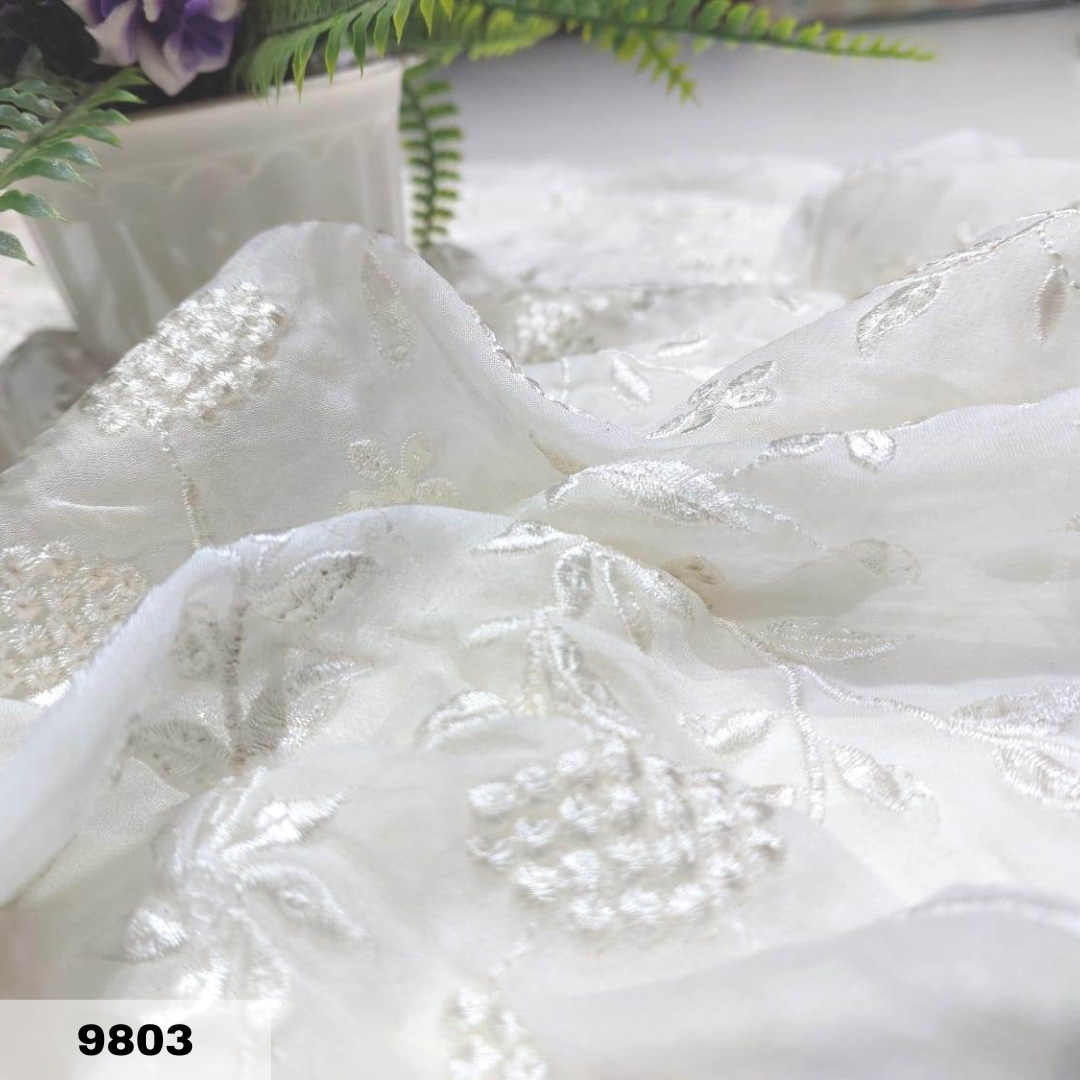
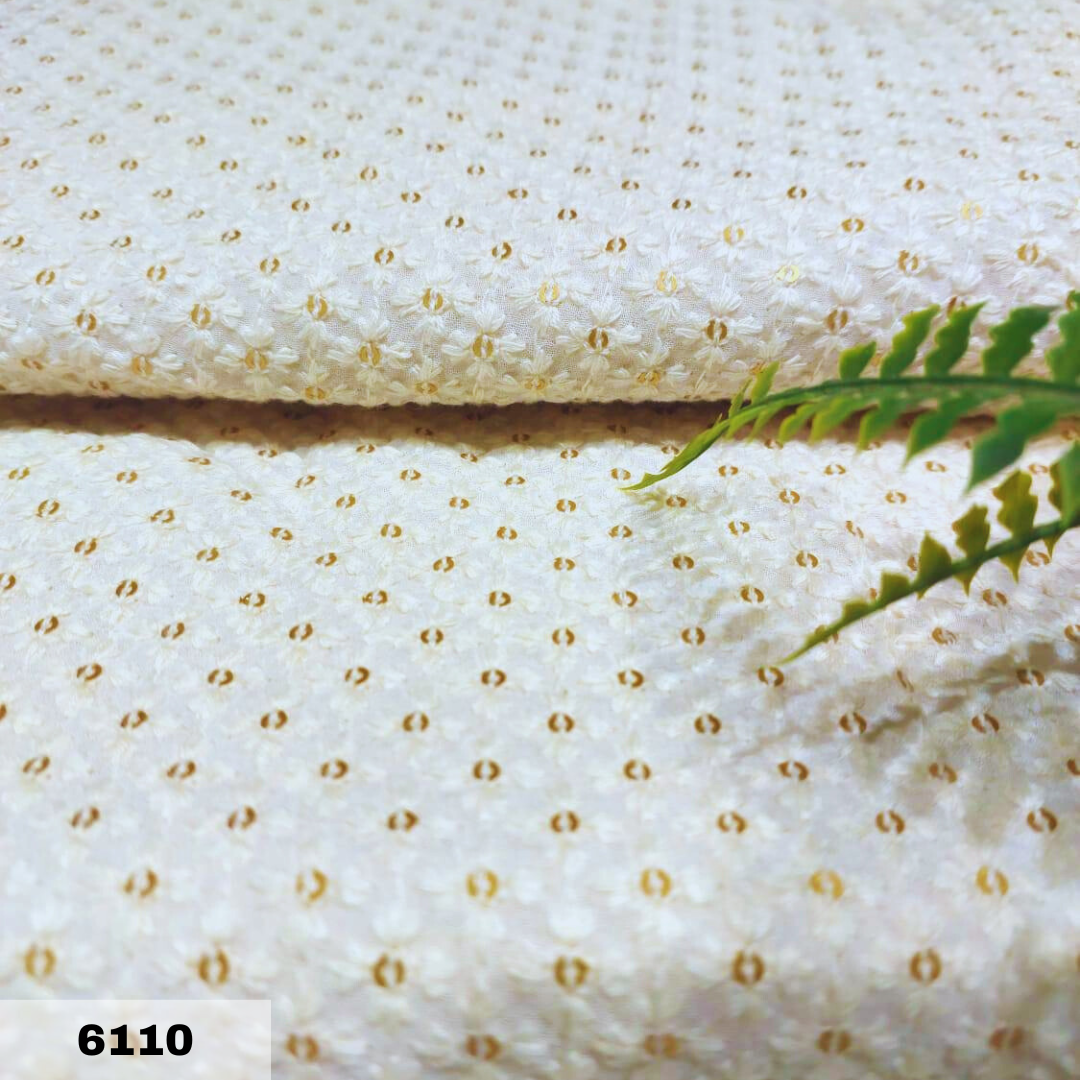
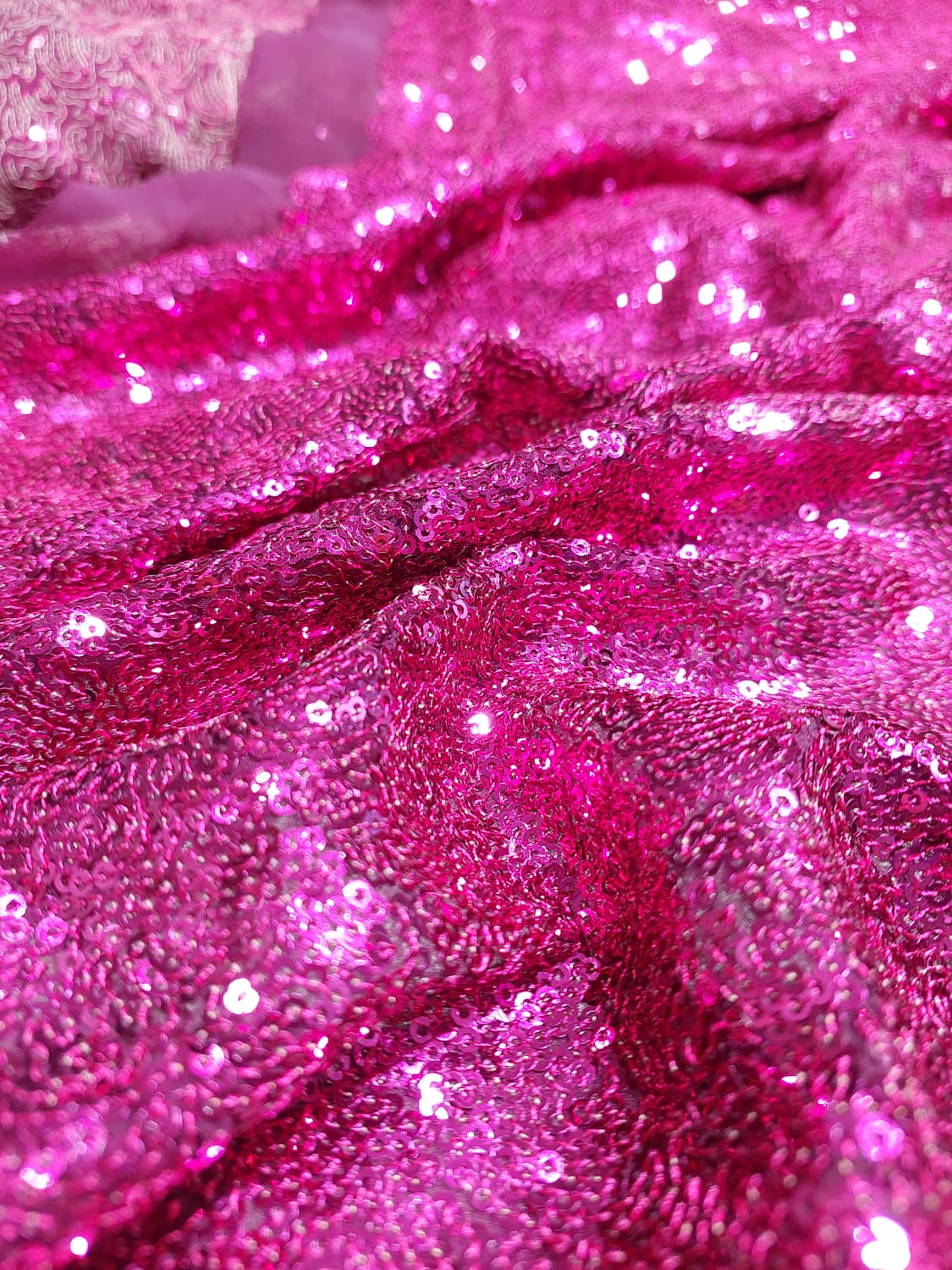
Sequins, once confined to ceremonial wear and stage costumes, have entered mainstream luxury pret, modest fashion, bridal couture, resort wear, and even contemporary streetwear. The influence of celebrity red carpets, social commerce platforms, K-pop styling, Middle Eastern couture, and digitally amplified fashion culture has transformed embellished textiles into year-round commercial inventory. WGSN trend forecasting reports and insights regularly echoed by Vogue and Business of Fashion suggest that tactile glamour now functions as emotional fashion therapy in post-pandemic consumer behavior. Buyers increasingly seek fabrics that photograph dramatically under both natural and artificial lighting because garments are now judged simultaneously in stores and on smartphone screens.
Private Label Sequin Fabric Manufacturer For Brands
For global garment manufacturers, private label sequin fabric sourcing has become deeply psychological. European brands seek exclusivity and low repetition. American fast-fashion labels prioritize scalable glamour with controlled cost-per-yard ratios. Middle Eastern buyers focus on richness, opacity, and luxury density suitable for occasion wear. Indian manufacturers demand intricate embroidery aesthetics rooted in wedding culture yet adaptable to export silhouettes. African boutiques favor expressive sparkle palettes with ceremonial impact. Southeast Asian brands often balance tropical climate comfort with festive ornamentation.
This is where Surat, India emerges as a globally influential textile ecosystem rather than simply a manufacturing city. Surat’s sequin embroidery infrastructure combines industrial scalability with artisanal adaptability. Companies such as FabricDiary and Madhav Fashion operate within a supply chain environment capable of delivering low MOQ designer sampling alongside container-scale export manufacturing. The city’s technical ecosystem includes Schiffli embroidery units, multi-head sequin embroidery machines, computerized CAD development centers, dyeing infrastructure, inspection laboratories, and export-compliant packaging systems that rival many established textile clusters worldwide.
Private label buyers today are not merely searching “sequin fabric supplier.” Their search intent increasingly includes terms like custom sequin mesh manufacturer, bridal sequin fabric exporter, sustainable embellished textiles, low MOQ embroidered fabric supplier, and wholesale luxury sequin fabric. These keywords reveal an evolving global buyer mindset: they seek partnership, customization, and reliability rather than anonymous commodity sourcing.
Fabric Characteristics Admired in Universal / Global (Climate, Lifestyle, Fashion)
Sequin fabrics occupy a rare position in textile anthropology because they communicate celebration across nearly every culture. Yet the characteristics admired by buyers differ significantly depending on geography, climate, and lifestyle behavior.
In colder Western markets such as Canada, Northern Europe, and parts of the United States, buyers often prefer medium-to-heavy GSM sequin fabrics ranging between 180–320 GSM because layering, structured eveningwear, and winter occasion dressing dominate purchasing behavior. Dense embroidery layouts with polyester mesh bases, nylon tulles, or velvet grounds are common. Matte sequins mixed with metallic highlights are especially favored for contemporary luxury aesthetics.
You may also like
-
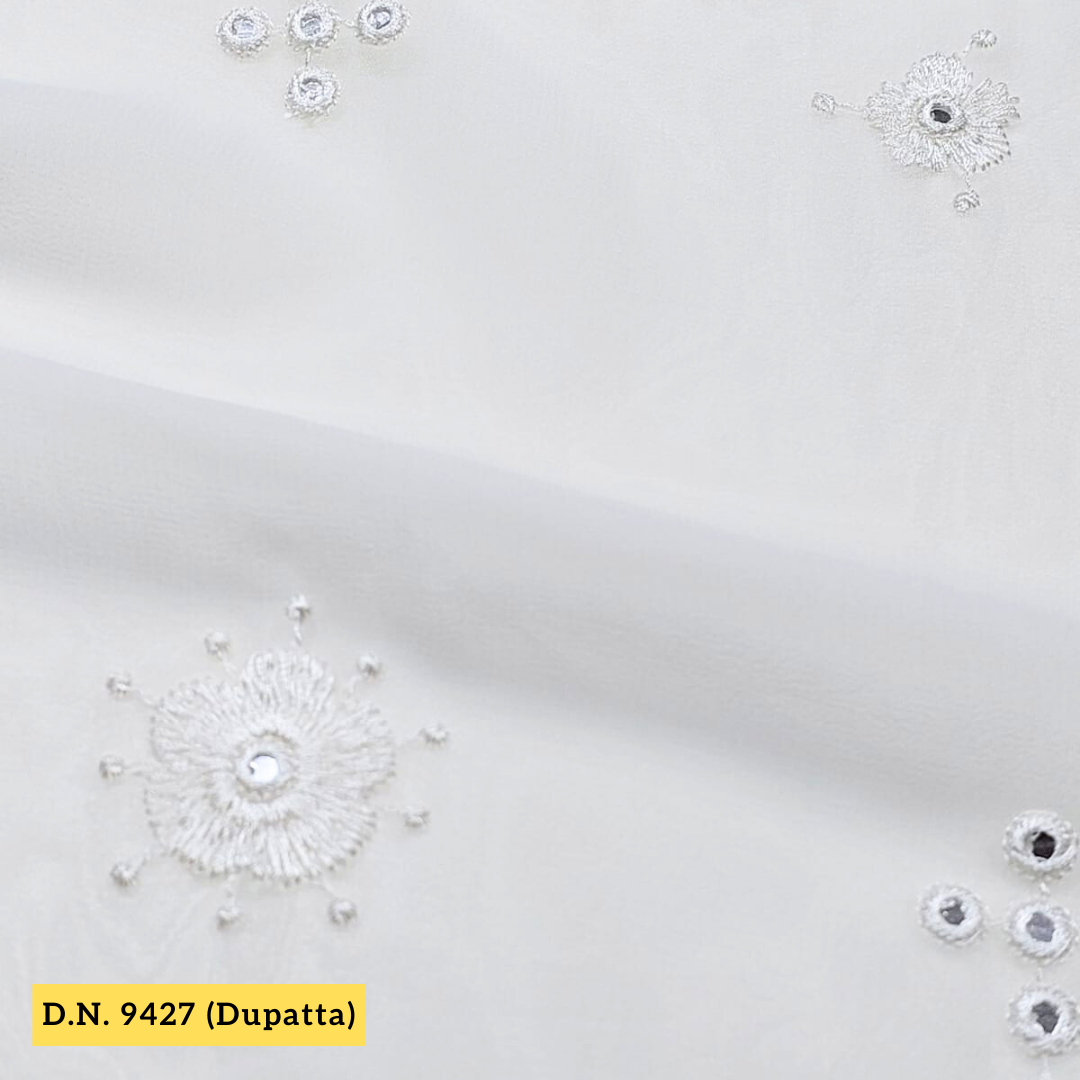
Buy White Dupatta with Mirror Work
Original price was: ₹369.00.₹350.00Current price is: ₹350.00. -
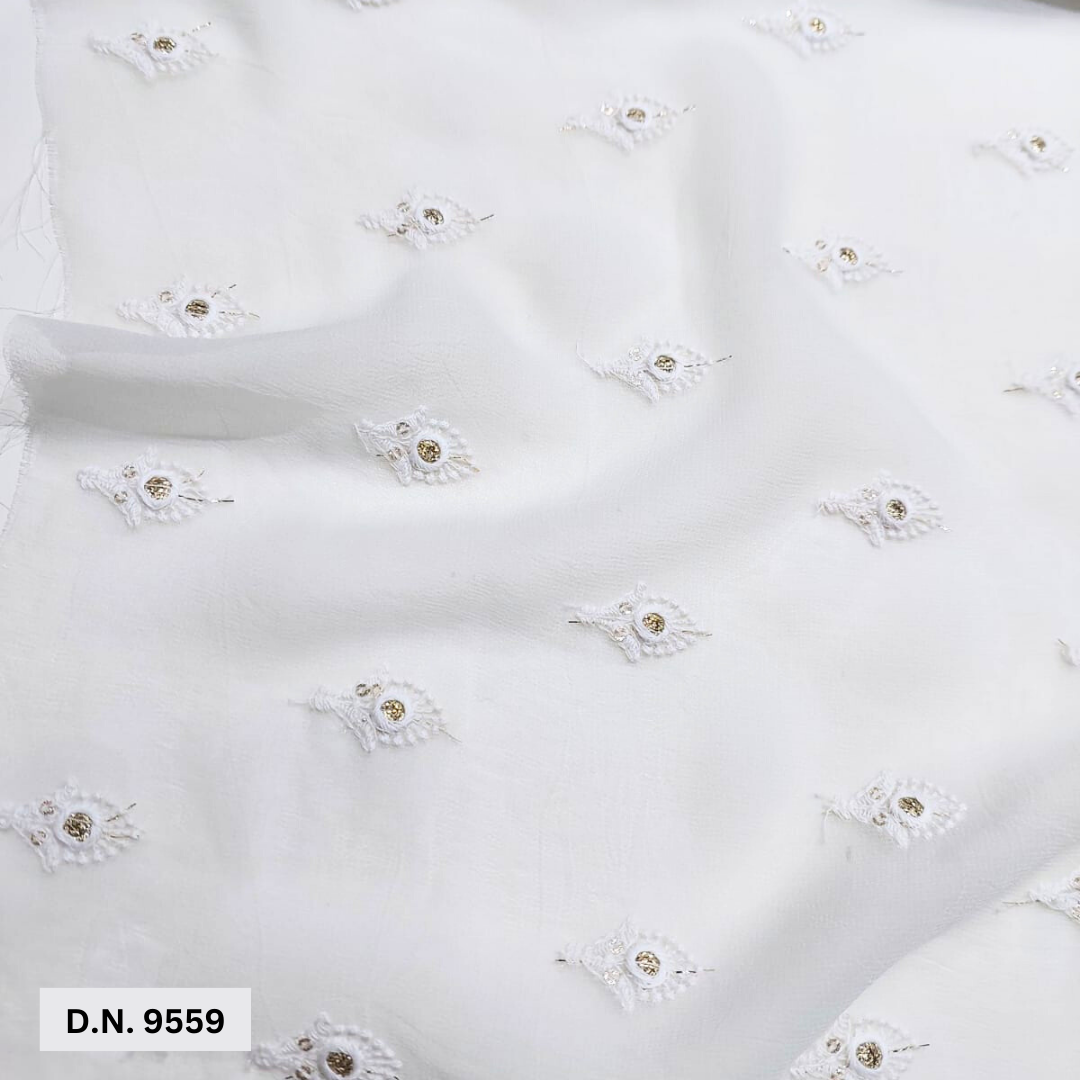
Buy White Georgette Allover Butti Embroidery fabric for Apparel
Original price was: ₹310.00.₹290.00Current price is: ₹290.00. -
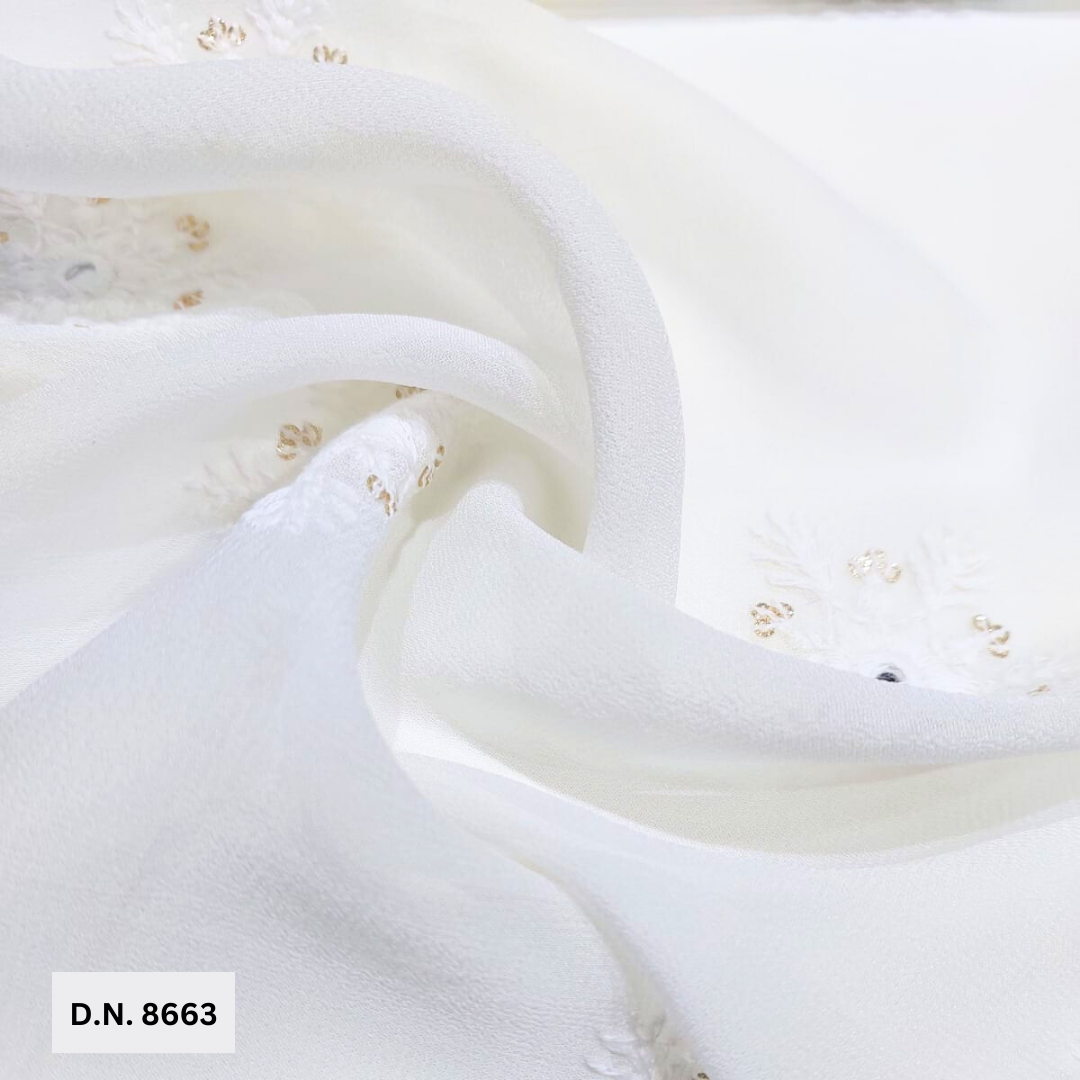
Embroidered Georgette fabric With Butti Pattern
Original price was: ₹265.00.₹250.00Current price is: ₹250.00.
By contrast, tropical and humid markets including India, Southeast Asia, the Gulf during warmer months, and parts of Africa increasingly demand lightweight breathable constructions between 90–180 GSM. Here, flexibility, drape, and airflow matter almost as much as visual impact. Buyers request micro-sequin embroidery on soft net, georgette, or stretch mesh because garments must remain wearable during long ceremonies and high-temperature social events.
Technical specifications heavily influence purchasing decisions among experienced garment manufacturers. Common commercial configurations include:
- 3mm, 5mm, and reversible sequins
- PET sequins for durability
- Matte, holographic, iridescent, and metallic finishes
- Polyester filament yarns for embroidery stability
- Nylon mesh for stretch adaptability
- Viscose-blended bases for luxury drape
- Multi-color embroidery layering
- High-density all-over sequin layouts
- Spot embroidery for lightweight luxury
Machine types also shape quality outcomes. High-speed computerized multi-head sequin embroidery machines from Tajima, Barudan, and local advanced Surat installations enable consistent stitch alignment and motif accuracy. Lock stitch embroidery remains popular for durability, while chain stitch variations are sometimes preferred for softer couture finishes.
Global buyers increasingly inspect:
- Sequin fall-off resistance
- Needle penetration stability
- Fabric shrinkage tolerance
- Colorfastness under lighting
- Seam adaptability
- Stretch recovery
- Bulk consistency
Quality control protocols now commonly include random roll inspections, GSM verification, embroidery density mapping, color shade matching under D65 lighting, wash testing, and tensile strength evaluation.
Interestingly, consumer psychology around sequins differs culturally. In India, sequins symbolize auspicious celebration and social prestige. In the Middle East, they communicate opulence and ceremonial luxury. In Europe, they increasingly represent confident femininity and expressive nightlife culture. In the United States, sequins oscillate between Hollywood glamour and Gen-Z festival aesthetics.
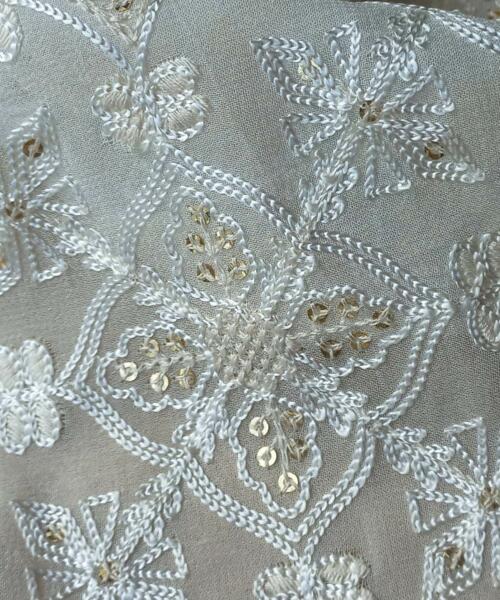
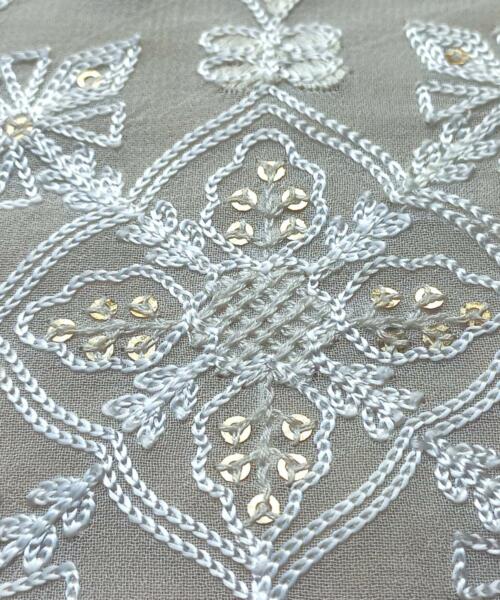
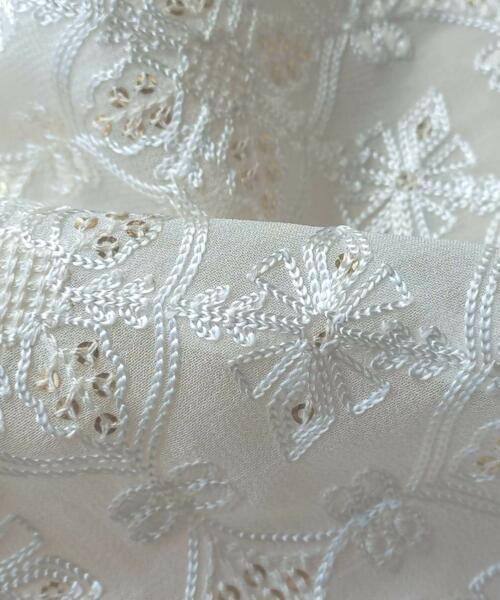
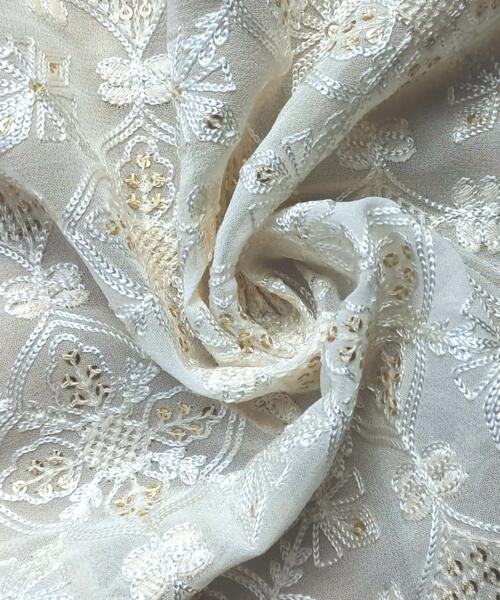
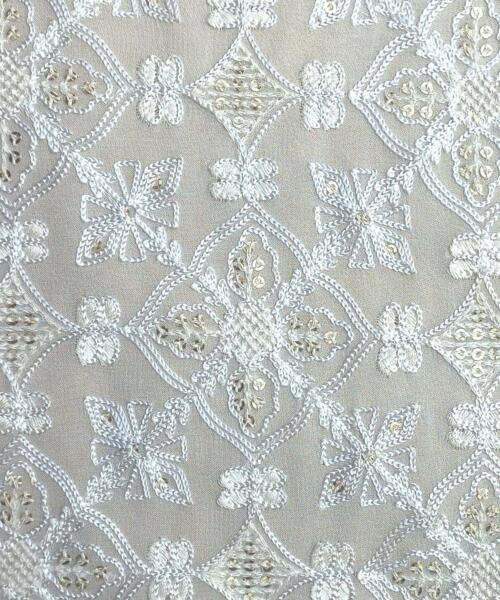
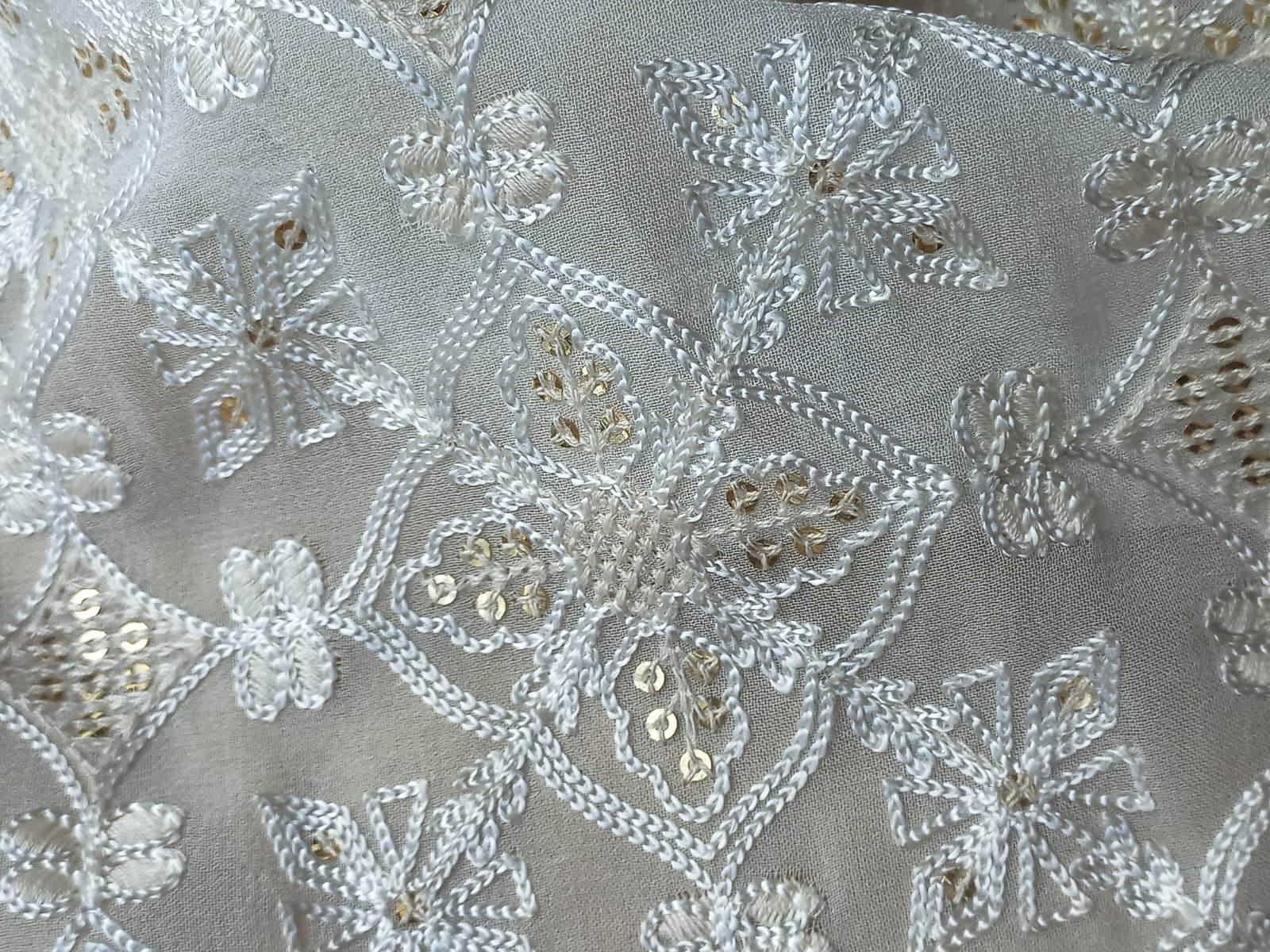
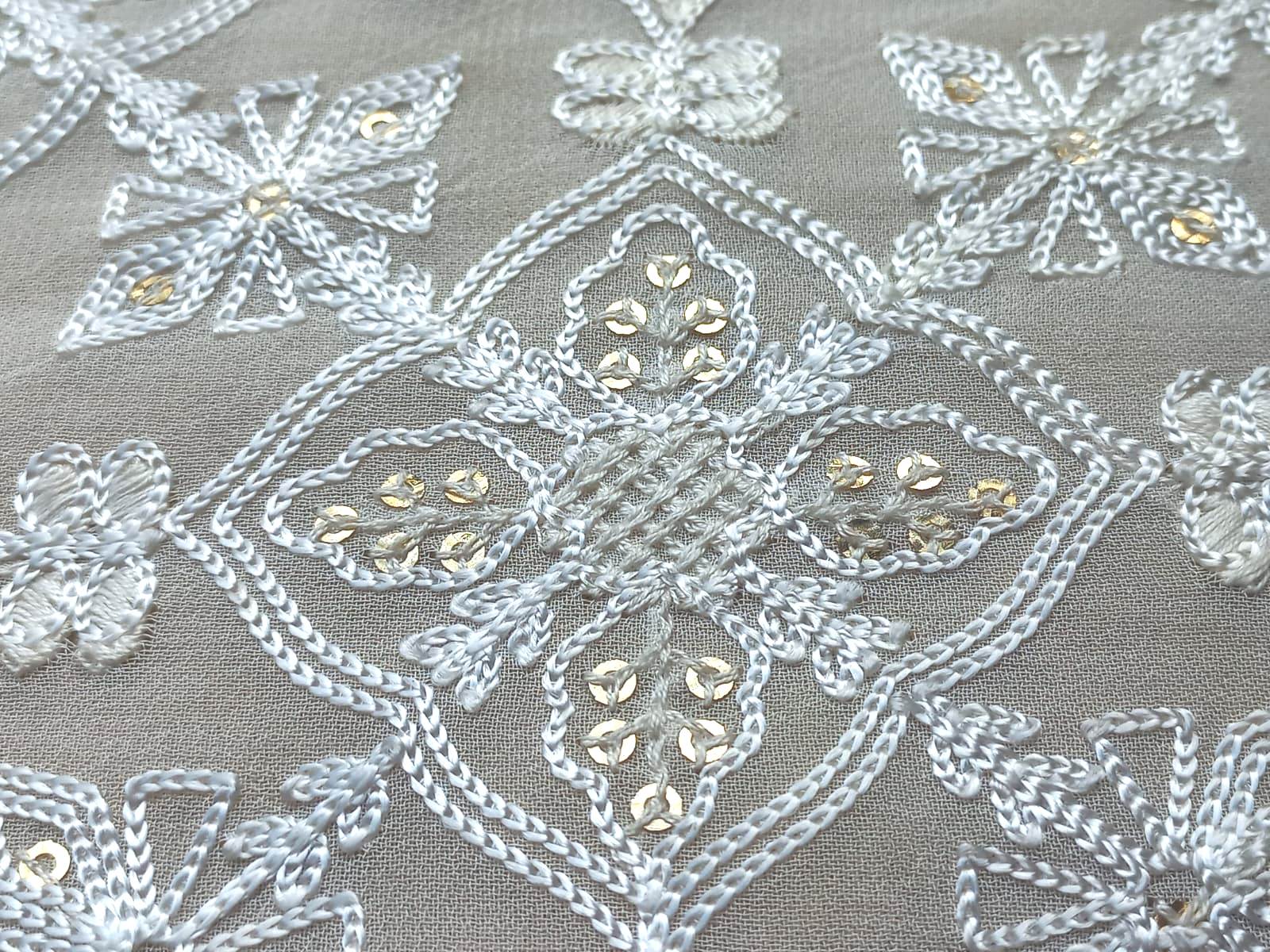
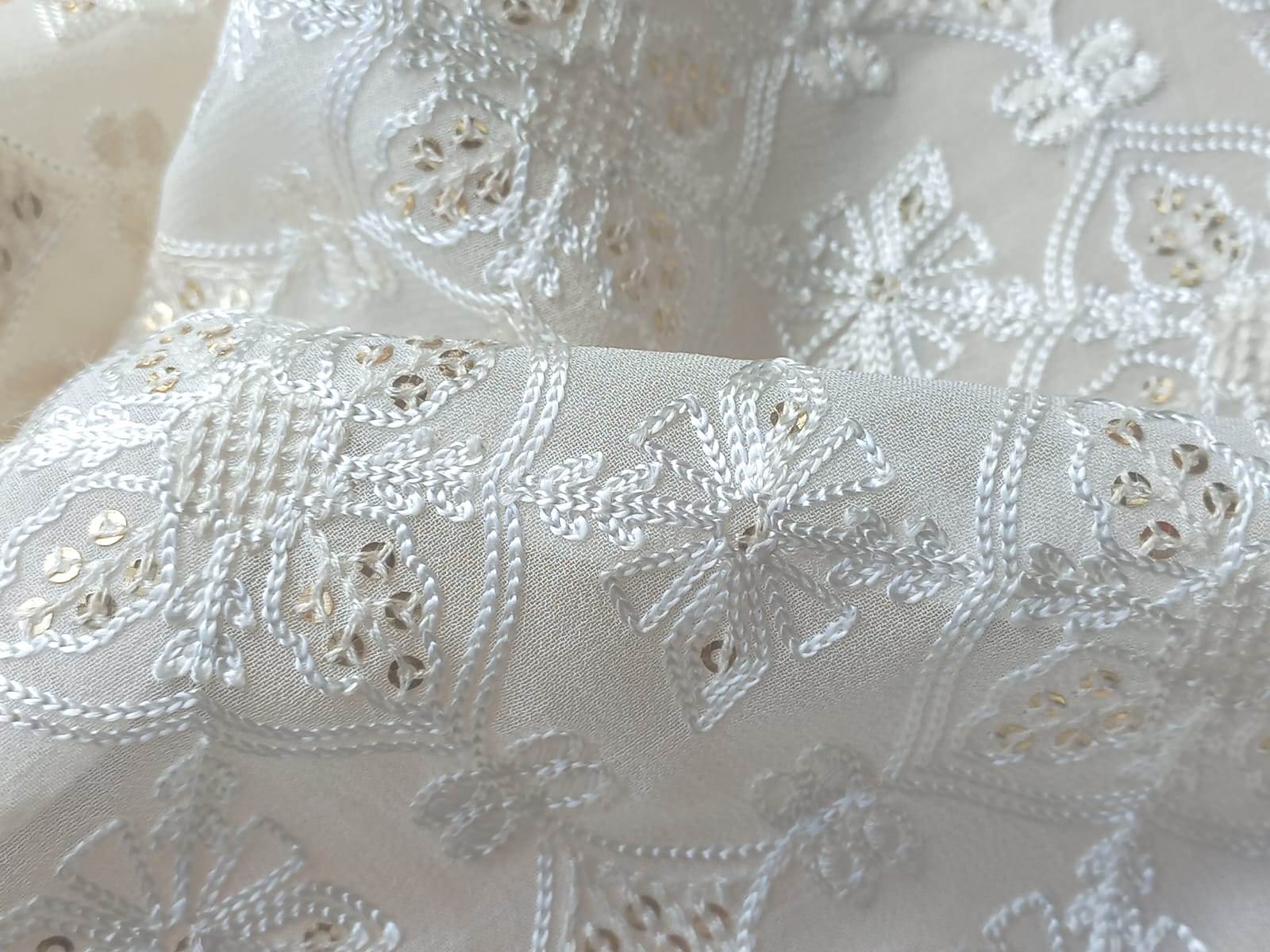
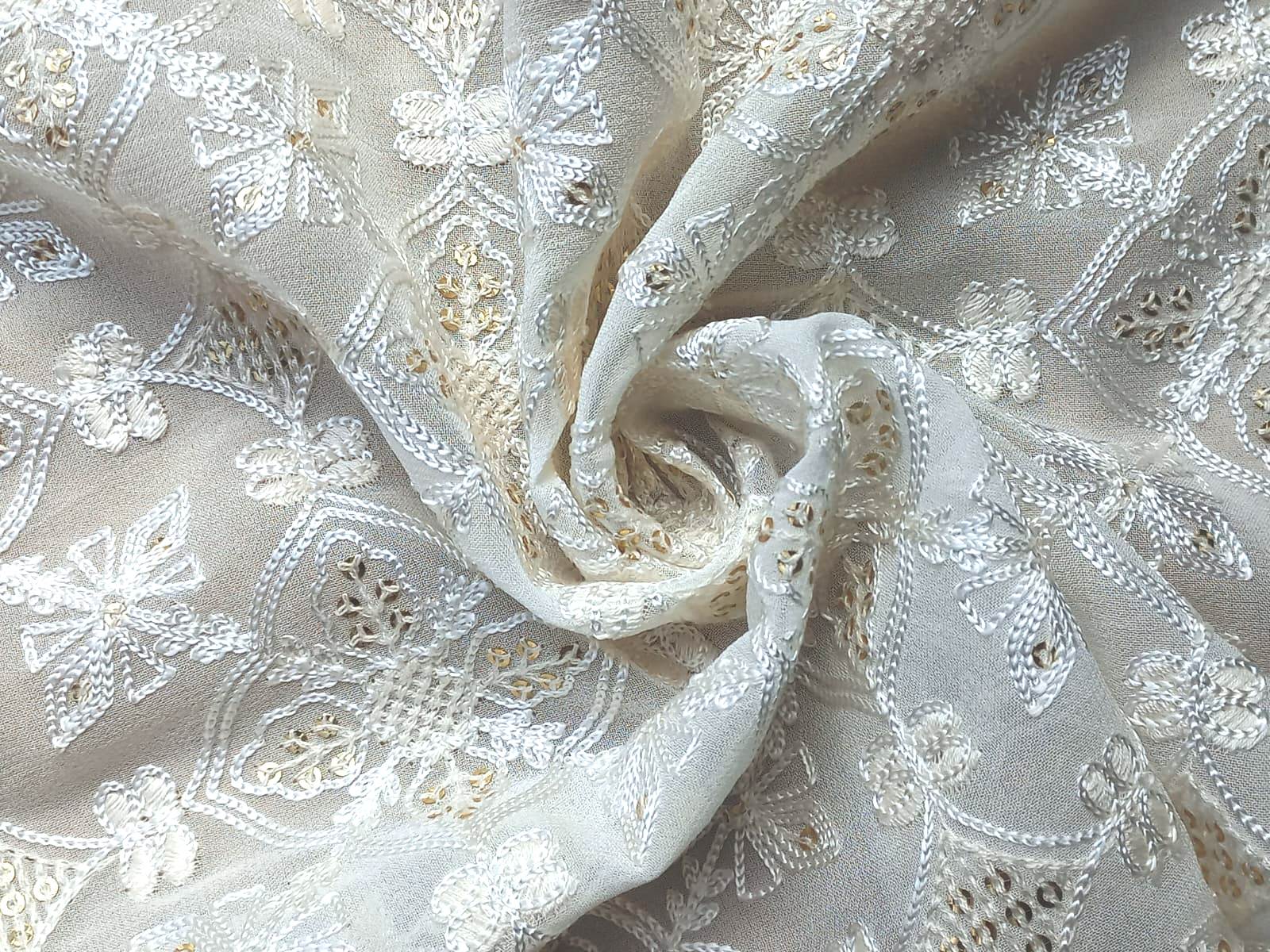
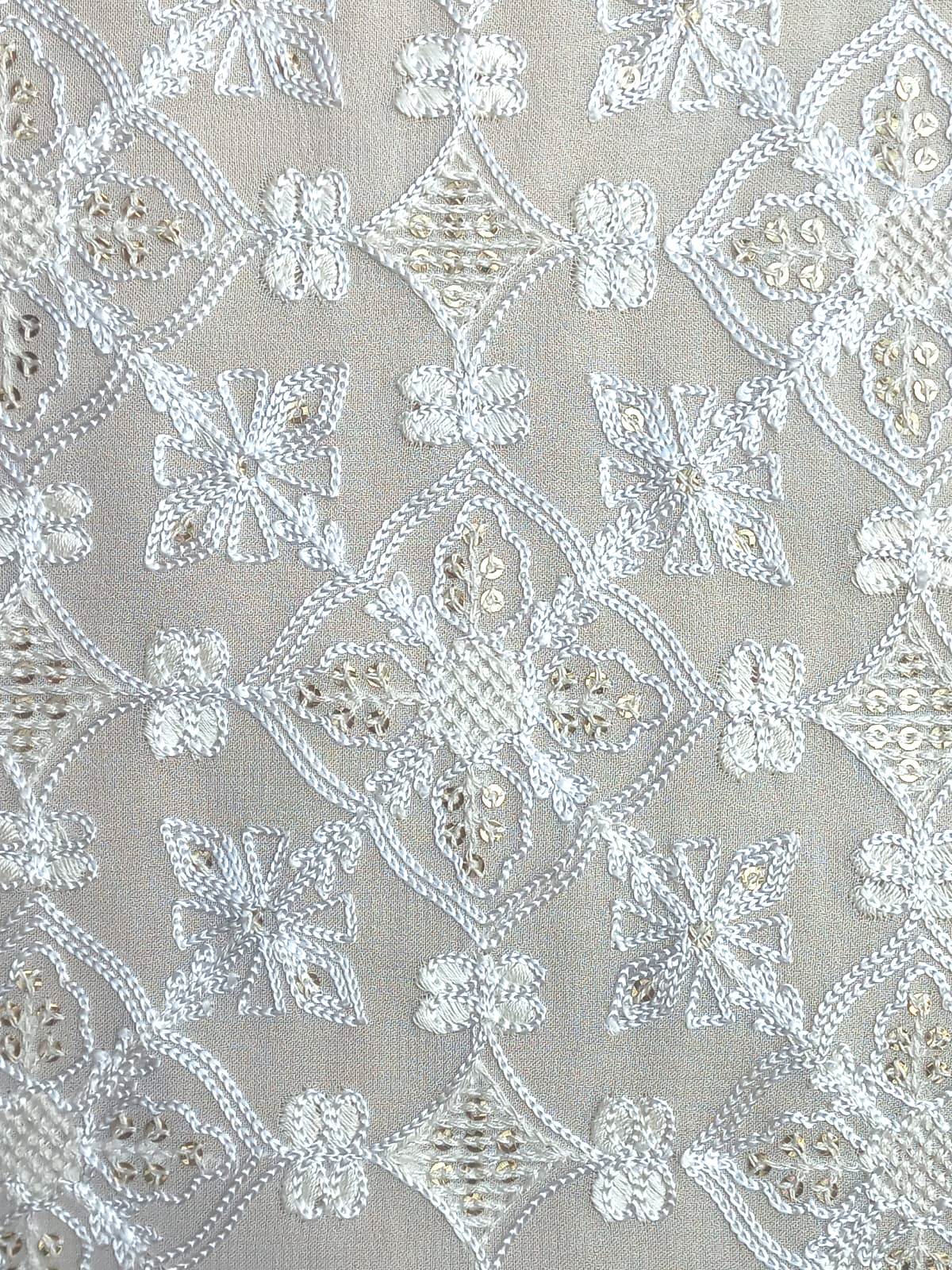
Buy Latest Designer Viscose Thread Chain Stitch Embroidery Fabric
Do you Want latest Designer Viscose Thread chain Stitch Embroidery fabric for your Apparel Creations ? Buy All types of Latest Designer Embroidered fabric from madhav fashion at best rate in the market.
Fabric Variations/Types + Universal / Global Fashion Influence
The global sequin fabric market has diversified dramatically over the last decade. Buyers no longer request generic “sequin fabric”; instead, they specify intricate constructions based on silhouette engineering, target demographics, and seasonal merchandising.
Popular variations include:
- All-over sequin mesh
- Sequin embroidered georgette
- Stretch sequin knit
- Velvet sequin fabric
- Laser-cut sequin embroidery
- Ombre sequin layouts
- Floral sequin motifs
- Abstract geometric sequin embroidery
- Corded sequin lace
- Transparent illusion net sequins
- Two-tone reversible sequins
- Digital print with sequin overlay
Fashion influence often originates from global runway ecosystems. Harper’s Bazaar and Vogue editorials repeatedly demonstrate how embellishment transitions from couture to commercial retail within two to three fashion cycles. Sequins inspired by Paris Fashion Week frequently appear in Dubai couture exhibitions before eventually influencing wedding markets in India and festive retail collections in Southeast Asia.
The rise of modest luxury fashion has also reshaped sequin development. Long-sleeved embellished gowns, abayas, kaftans, and layered silhouettes require lighter embroidery density to maintain fluidity. This has increased demand for spaced motif embroidery instead of heavy all-over constructions.
In India, lehenga manufacturers often prefer ornate floral and Mughal-inspired motifs with antique gold sequins. European brands increasingly request monochrome matte sequins on transparent mesh. Latin American eveningwear labels often favor body-contouring stretch sequin fabrics with bold reflective surfaces. African ceremonial fashion frequently integrates vibrant multicolor sequin geometries reflecting local celebratory aesthetics.
Mini case studies reveal evolving demand patterns:
A Dubai-based modest fashion label sourcing from Surat reduced garment weight by 28% after switching from heavy sequin velvet to lightweight embroidered mesh while maintaining visual richness. Meanwhile, a London-based boutique brand increased Instagram conversion rates after introducing holographic sequin eveningwear collections designed specifically for digital photography aesthetics.
Global Demand + Specific Universal / Global Demand Trends
The global embellished fabric market continues expanding due to rising occasionwear consumption, influencer-driven fashion cycles, and social media visual culture. According to industry observations discussed across Fibre2Fashion, Statista, and Textile Today, consumers increasingly invest in fewer but more visually memorable garments.
Several macro trends drive demand:
- Wedding industry expansion
- Destination celebrations
- Luxury modest fashion growth
- Red-carpet inspired retail
- Festival culture
- Influencer marketing
- Premium fast fashion
- Occasion-focused capsule collections
The United States market increasingly demands versatile sequin fabrics suitable for cocktail dresses, prom collections, and holiday fashion drops. European demand emphasizes sustainability narratives, lower MOQ sourcing, and refined embellishment aesthetics. Gulf countries maintain strong appetite for luxury embroidery density and couture applications. India remains one of the world’s largest sequin consumption ecosystems because of its wedding economy, festive calendar, and Bollywood-driven fashion culture.
One important shift involves inventory flexibility. Brands no longer want excessive dead stock. Buyers increasingly seek manufacturers capable of:
- Small-batch private labeling
- Fast replenishment
- Color customization
- Swatch development
- Sampling support
- Flexible MOQ negotiation
Platforms such as Alibaba, IndiaMART, TradeIndia, Etsy, and Amazon Business have democratized sourcing visibility, but they have also increased buyer skepticism. Manufacturers now compete not just on price but on communication transparency, production reliability, compliance understanding, and sampling professionalism.
Another emerging trend is camera-optimized textiles. Sequins today are engineered not merely for physical retail visibility but for smartphone imaging performance under LED lighting, flash photography, and social media video environments.
Bridal Wear Relevance (Universal / Global Traditions & Customs)
Few textile categories possess the ceremonial universality of sequin fabrics. Across cultures, weddings represent heightened emotional expenditure, and embellishment functions as a visual language of aspiration, status, celebration, and memory-making.
In India, bridal wear remains one of the strongest drivers of sequin fabric demand. Lehengas, sarees, dupattas, gowns, shararas, and fusion bridal ensembles frequently incorporate dense sequin embroidery layered alongside zari, beads, threadwork, and mirror embellishments. Champagne gold, rose gold, ivory, wine, emerald, and pastel pink dominate premium bridal palettes.
Middle Eastern bridal couture emphasizes dramatic sparkle under ballroom lighting. Buyers from UAE, Saudi Arabia, Qatar, and Kuwait often prefer heavily embellished tulles with luxury drape suitable for voluminous gowns and layered silhouettes.
Western bridal fashion has evolved significantly. White minimalist gowns coexist with reception dresses featuring silver, pearl, and nude-tone sequins. Contemporary brides increasingly change outfits between ceremony and reception, creating higher demand for lightweight embellished fabrics.
African wedding fashion also demonstrates strong sequin relevance. Nigerian aso-ebi culture, for example, frequently embraces richly embellished fabrics with bold color saturation and ceremonial elegance.
Fashion institutions such as Parsons, FIT, NIFT, and Istituto Marangoni increasingly discuss how bridal textiles function as identity markers rather than merely decorative materials. Sequins amplify emotional symbolism because they interact dynamically with movement, photography, and ritual environments.
Wedding Wear Applications + Outfit Names Used in Universal / Global
Weddingwear applications differ widely across markets, yet sequins remain remarkably adaptable. Their commercial value lies in cross-category usability.
Popular applications include:
- Lehengas
- Sarees
- Bridal gowns
- Reception dresses
- Cocktail gowns
- Bridesmaid dresses
- Kaftans
- Abayas
- Shararas
- Anarkalis
- Mermaid gowns
- Ball gowns
- Indo-western fusion wear
- Cape dresses
- Mother-of-the-bride ensembles
- Formal jackets
- Festive co-ords
Indian manufacturers often request intricate panel embroidery compatible with lehenga flare calculations and dupatta edge finishing. European ateliers prioritize pattern symmetry and seam integration. American eveningwear factories frequently require stretch-compatible sequins for body-conscious silhouettes.
A recurring sourcing challenge involves balancing glamour with garment weight. Excessively dense sequin fabrics can create fitting discomfort and shipping inefficiencies. Advanced Surat manufacturers increasingly engineer selective embroidery zoning to reduce unnecessary heaviness while preserving visual richness.
Color psychology also influences purchasing decisions. Champagne gold communicates timeless luxury. Silver reflects modern sophistication. Pastels appeal to younger bridal demographics. Black sequins dominate eveningwear and red-carpet categories.
Partywear/Evening Wear Demand + Cultural Examples (Universal / Global)
Partywear has become one of the most commercially dynamic fashion categories globally. Sequins dominate this segment because contemporary nightlife culture prioritizes visual distinction, especially in digitally documented social environments.
In New York and Los Angeles, sequin cocktail dresses remain perennial holiday retail performers. In London and Paris, understated monochrome sequins dominate luxury eveningwear. Dubai nightlife culture favors dramatic reflective surfaces and embellished couture silhouettes. Mumbai’s partywear economy, heavily influenced by Bollywood styling, drives constant innovation in glamorous textiles.
Festival culture has further expanded demand. Music festivals, celebrity events, luxury cruises, destination birthdays, and influencer-driven celebrations all contribute to sustained sequin consumption beyond traditional wedding seasons.
Buyers increasingly seek fabrics optimized for:
- LED lighting reflection
- Dancewear flexibility
- Wrinkle resistance
- Long wear comfort
- Photography aesthetics
- Lightweight transportation
Mini case studies reveal commercial impact. A Turkish eveningwear exporter sourcing custom ombre sequins from Surat reported increased wholesale demand across Eastern Europe due to the uniqueness of gradient sparkle effects. Similarly, an Australian boutique brand leveraged lightweight stretch sequin fabric for resort nightlife collections targeting vacation destinations.
Garment Manufacturing Usage (Brands, Factories, Wholesalers in Universal / Global)
Garment manufacturers view sequin fabrics through operational rather than purely aesthetic lenses. Fabric performance directly impacts cutting efficiency, needle breakage rates, labor costs, seam finishing, and production timelines.
Factories producing occasionwear, bridalwear, resortwear, and partywear often categorize sequin fabrics by:
- Needle compatibility
- Embroidery stability
- Stretch tolerance
- Marker efficiency
- Cutting wastage
- Sequin shedding resistance
Bulk buyers commonly request fabric specifications such as:
- 44–58 inch usable width
- 100–350 GSM options
- Polyester or nylon base composition
- Export-grade dyeing
- AZO-free chemical compliance
- REACH-compatible processing
Global wholesalers sourcing from India increasingly seek manufacturers capable of maintaining repeatable production quality across multiple dye lots. Inconsistent color matching remains a major pain point in embellished textile sourcing.
Brands selling through department stores and online luxury marketplaces often require private labeling support including barcode systems, customized packaging, roll tagging, and shipment traceability.
FabricDiary serves emerging designers, boutique manufacturers, and low-volume sampling requirements, while Madhav Fashion’s Surat manufacturing ecosystem supports larger production scalability and export-oriented bulk fulfillment.
Designer + Boutique Preferences in Universal / Global
Designers rarely purchase fabric purely for technical reasons. They purchase narrative potential. Sequins create emotional drama, cinematic movement, and retail memorability.
Boutique designers in Europe increasingly favor understated elegance: matte sequins, transparent mesh, tonal embroidery, and soft neutrals. Indian couture designers continue embracing elaborate embroidery storytelling rooted in heritage aesthetics. Gulf couture houses often request luxury density with flowing silhouettes suitable for formal social gatherings.
Independent designers also prioritize exclusivity. Repetition risk is a major concern in luxury fashion. Private label manufacturing allows boutiques to develop signature embroidery layouts unavailable to competitors.
Popular boutique requests include:
- Exclusive colorways
- Custom motif engineering
- Limited-run embroidery
- Personalized sampling
- Rapid swatch dispatch
- Flexible MOQ production
Fashion schools including FIT, Parsons, NIFT, and Istituto Marangoni increasingly emphasize textile individuality as a brand differentiator. This educational shift influences next-generation designers seeking manufacturer collaboration rather than mass-market standardization.
B2B Sourcing Behavior, Import Habits, Bulk-Buy Logic (Universal / Global)
Modern B2B textile sourcing is increasingly data-driven. Buyers compare suppliers across Alibaba, IndiaMART, TradeIndia, Etsy wholesale ecosystems, sourcing expos, and direct manufacturer websites.
Key evaluation factors include:
- MOQ flexibility
- Sampling responsiveness
- Export documentation
- Production timelines
- Communication quality
- Fabric consistency
- Compliance understanding
- Freight coordination
Importers in the United States and Europe often prefer mixed-container purchasing strategies to reduce inventory concentration risk. Middle Eastern buyers frequently prioritize faster replenishment cycles ahead of wedding seasons and festive calendars.
One realistic sourcing challenge involves visual mismatch between online samples and bulk production. Experienced manufacturers address this through:
- Physical swatch approvals
- Lab dip verification
- Video inspections
- Pre-production sampling
- Third-party QC options
Another challenge is embroidery durability during garment manufacturing. Excessive sequin breakage can significantly increase labor costs. High-quality embroidery calibration and machine maintenance reduce this risk substantially.
Bulk-buy logic also varies by market maturity. Large retailers prioritize stable replenishment capabilities. Boutique brands prioritize uniqueness. Emerging designers prioritize affordability and low MOQ accessibility.
Custom Manufacturing, MOQ, Export Factors, Reliability Markers
Custom manufacturing now defines competitive textile sourcing. Buyers increasingly request:
- Exclusive embroidery layouts
- Pantone-based color development
- Brand-specific sequin finishes
- Sustainable packaging
- Fire-retardant processing
- Stretch-engineered embroidery
- Lightweight luxury alternatives
MOQ flexibility has become commercially important. Traditional factories often resisted low-volume orders, but modern buyers increasingly test collections digitally before scaling. FabricDiary supports this evolving ecosystem through designer-friendly sampling and smaller quantity accessibility.
Meanwhile, Madhav Fashion’s Surat manufacturing infrastructure enables scalable bulk production with export readiness for larger commercial buyers.
Key reliability markers global importers evaluate include:
- HS code clarity
- Commercial invoice accuracy
- Packaging quality
- Export compliance
- Timely communication
- Consistent lead times
- Quality assurance protocols
- Freight handling coordination
Export shipments commonly move through air cargo for urgent designer sampling and sea freight for container-scale wholesale distribution. Buyers frequently request SGS inspections, roll-level barcoding, moisture protection packaging, and standardized documentation.
Why FabricDiary & Madhav Fashion are Ideal for Universal / Global Buyers
The contemporary textile market rewards manufacturers capable of balancing customization, scalability, responsiveness, and aesthetic intelligence. This balance explains why buyers increasingly source embellished textiles from Surat-based ecosystems.
FabricDiary addresses the needs of modern designers, boutique labels, sampling studios, fashion startups, and flexible-volume buyers. Its approach supports small quantity sourcing, swatch accessibility, experimental design development, and agile collection testing. For emerging brands navigating uncertain retail demand, this flexibility is commercially valuable.
Madhav Fashion, operating from Surat’s globally recognized textile infrastructure, provides manufacturing strength suitable for wholesalers, exporters, garment factories, and large-scale fashion brands. The company’s capabilities align with modern B2B expectations:
- Advanced sequin embroidery production
- Bulk manufacturing scalability
- Export-oriented logistics
- Competitive factory pricing
- Consistent quality systems
- Global shipment capability
- Custom development support
The broader Surat textile ecosystem also offers strategic advantages. Buyers gain access to integrated supply chains involving dyeing, embroidery, finishing, packaging, and freight coordination within one industrial region. This operational concentration reduces lead times and improves production synchronization.
As global fashion continues shifting toward emotionally expressive occasionwear, sequins remain commercially resilient. Whether for bridal couture in India, eveningwear in Europe, luxury modest fashion in the Gulf, or boutique partywear in North America, private label sequin fabric manufacturing increasingly depends on partners capable of combining technical reliability with fashion intelligence. FabricDiary and Madhav Fashion represent that evolving intersection of textile manufacturing and global fashion storytelling.
FAQs
Q1. How can international buyers import sequin fabrics from India?
International buyers typically place orders through proforma invoices followed by sampling approval, production confirmation, export documentation, and freight dispatch. Manufacturers usually provide commercial invoices, packing lists, HS codes, and shipping coordination for smooth customs clearance.
Q2. What are the standard shipping timelines for bulk sequin fabric orders?
Sampling shipments generally take 5–10 days internationally via air courier, while bulk sea freight shipments may require 20–45 days depending on destination country, customs processing, and container schedules.
Q3. What is the MOQ for private label sequin fabric manufacturing?
MOQ varies based on customization level, embroidery complexity, and fabric base type. FabricDiary supports lower MOQ sourcing for designers and sampling, while larger bulk orders are managed through Madhav Fashion’s export manufacturing setup.
Q4. Can buyers request fabric swatches before placing large orders?
Yes. Most serious B2B buyers request physical swatches, lab dips, or sample yardage before bulk production to verify color, embroidery density, sequin finish, and fabric hand feel.
Q5. Which types of sequin fabrics are most popular globally?
Popular categories include all-over sequin mesh, stretch sequin fabric, sequin georgette, holographic sequins, matte sequins, bridal embroidery tulles, and lightweight partywear embellishment fabrics.
Q6. What payment terms are commonly used in international textile trade?
Typical payment structures include advance deposits with balance before shipment, LC arrangements for large buyers, bank transfers, and occasionally platform-secured transactions through B2B marketplaces.
Q7. Can manufacturers create custom sequin designs for fashion brands?
Yes. Private label manufacturers commonly develop exclusive motifs, Pantone-based colors, embroidery patterns, and custom sequin layouts tailored to specific brand collections and regional market trends.
Thank you for reading this article and exploring FabricDiary — one of the world’s leading B2B designer fabric platforms featuring thousands of ready-to-source collections for fashion brands, garment manufacturers, wholesalers, boutiques, and global apparel buyers. We regularly publish detailed insights on fabric trends, embroidery innovations, sourcing strategies, bridal textiles, sequin fabrics, and international fashion manufacturing to help businesses make smarter sourcing decisions in the global textile market.
For complete long-form articles, sourcing support, custom fabric development, swatch requests, or bulk manufacturing inquiries related to any of the topics below, feel free to contact our team anytime at: info.fabricdiary@gmail.com
Private Label Allover Sequin Organza Fabric Manufacturer for Fashion Brands
Discover export-quality allover sequin organza fabrics developed for private label fashion brands, bridal manufacturers, boutiques, and global garment production companies.
Top Private Label Sequin Embroidered Organza Fabric Manufacturer & Exporter
Source premium private label sequin embroidered organza fabrics for couture labels, wholesalers, fashion exporters, and apparel manufacturers seeking scalable B2B sourcing.
Largest Private Label Embroidered Organza Fabric Manufacturer Worldwide
Explore bulk private label embroidered organza fabric manufacturing with advanced embroidery production, custom developments, and dependable worldwide export capabilities.
Trusted Private Label Embroidered Organza Fabric Supplier in Asia
Asia-based private label embroidered organza fabric supplier offering designer collections, low MOQ support, fast sampling, and global wholesale fabric distribution.
Premium Zari Work Sequin Organza Fabric Exporter for Global Buyers
Buy luxurious zari work sequin organza fabrics designed for bridalwear, occasionwear, ethnic fashion labels, and international garment manufacturing businesses.
Luxury Thread Work Sequin Organza Fabric Supplier & Export House
Access premium thread work sequin organza fabrics crafted for couture collections, designer boutiques, fashion houses, and export-focused apparel production companies.
Asia’s Leading Cording Work Sequin Organza Fabric Manufacturer
Explore innovative cording work sequin organza fabrics developed for bridal couture, luxury eveningwear, designer garments, and global B2B textile sourcing.
Top Printed Sequin Organza Fabric Manufacturer for Fashion Industry
Shop printed sequin organza fabrics tailored for fashion brands, partywear manufacturers, boutiques, and exporters seeking trend-led embellished fabric collections.
Best Jacquard & Brocade Sequin Organza Fabric Exporter from Asia
Source jacquard and brocade sequin organza fabrics engineered for premium ethnicwear, luxury garments, occasionwear collections, and international wholesale markets.
Asia’s Largest Private Label Sequin Fabric Export Company
Benefit from large-scale private label sequin fabric exports with custom production, secure packaging, competitive factory pricing, and reliable global shipping solutions.
Premium Private Label Sequin Organza Fabric Manufacturer in Asia
Discover premium private label sequin organza fabrics featuring flawless embroidery, luxury finishing, designer textures, and export-ready production for global buyers.
Shop Private Label Sequin Fabrics Online for Fashion Brands
Buy private label sequin fabrics online at wholesale prices with low MOQ support, custom developments, export-quality production, and worldwide shipping assistance.
Buy Sequin Embroidery Fabrics Online in Bulk at Wholesale Prices
Explore premium sequin embroidery fabrics online designed for garment factories, boutiques, wholesalers, fashion startups, and international apparel sourcing companies.
Shop Designer Private Label Sequin Fabrics with Global Shipping
Purchase designer private label sequin fabrics with custom embroidery options, factory-direct pricing, premium craftsmanship, and dependable worldwide delivery support.