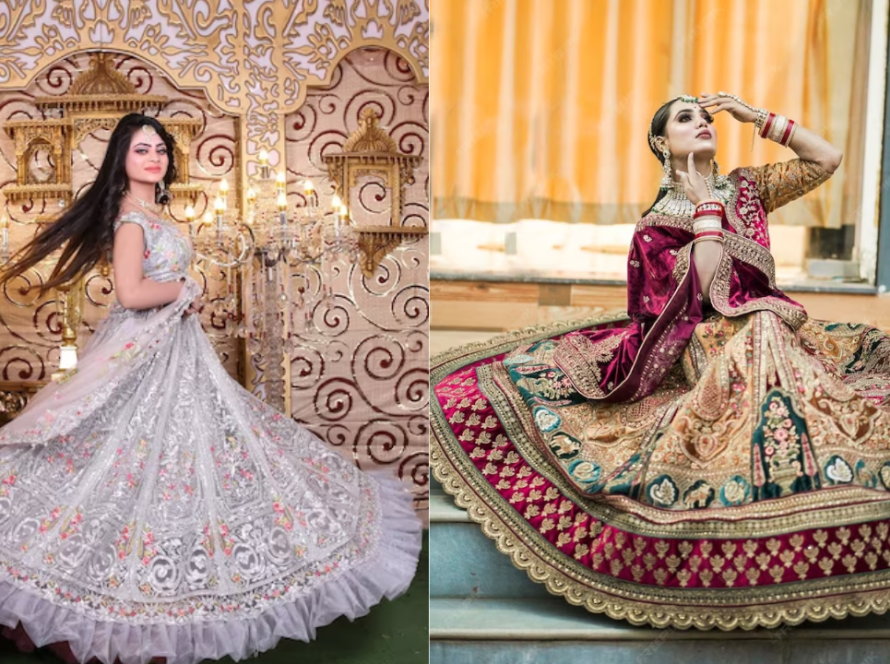



Printed silver tissue fabric occupies an interesting space between fabric construction and visual design. Unlike a conventional matte printed textile, a silver-toned tissue surface can interact with light while the printed artwork adds colour, pattern and visual direction.
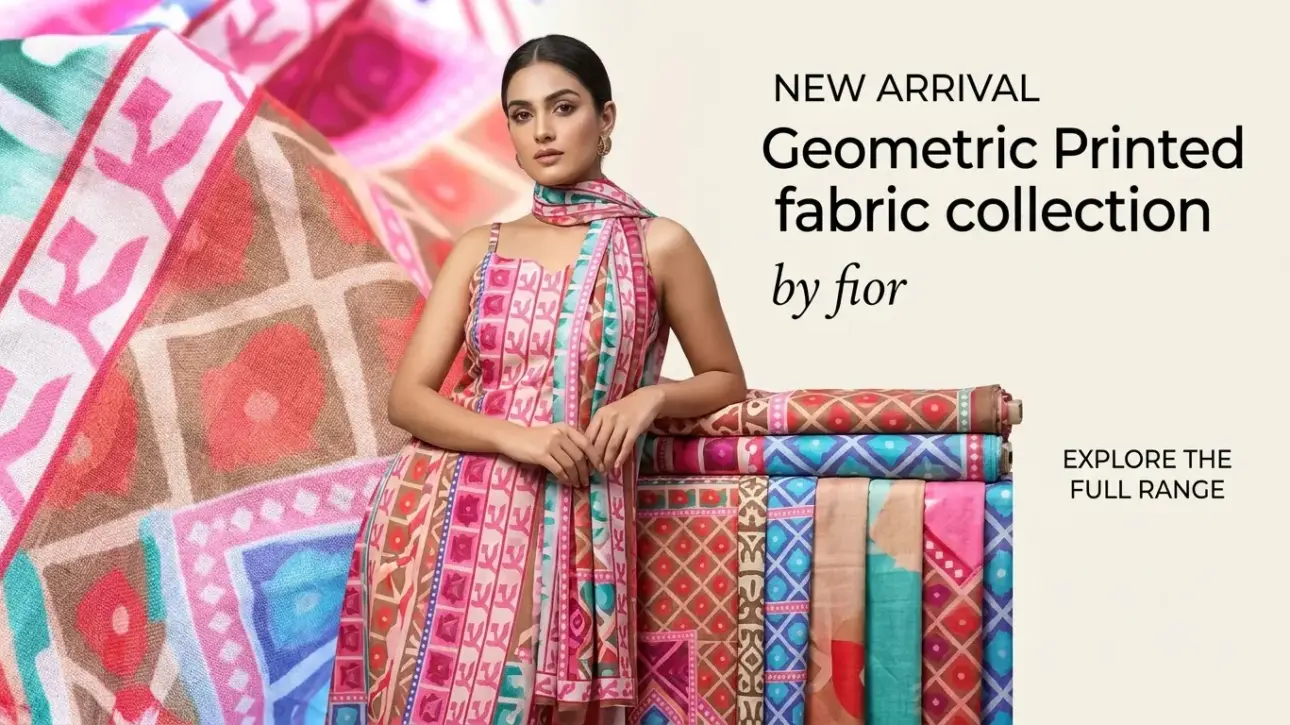
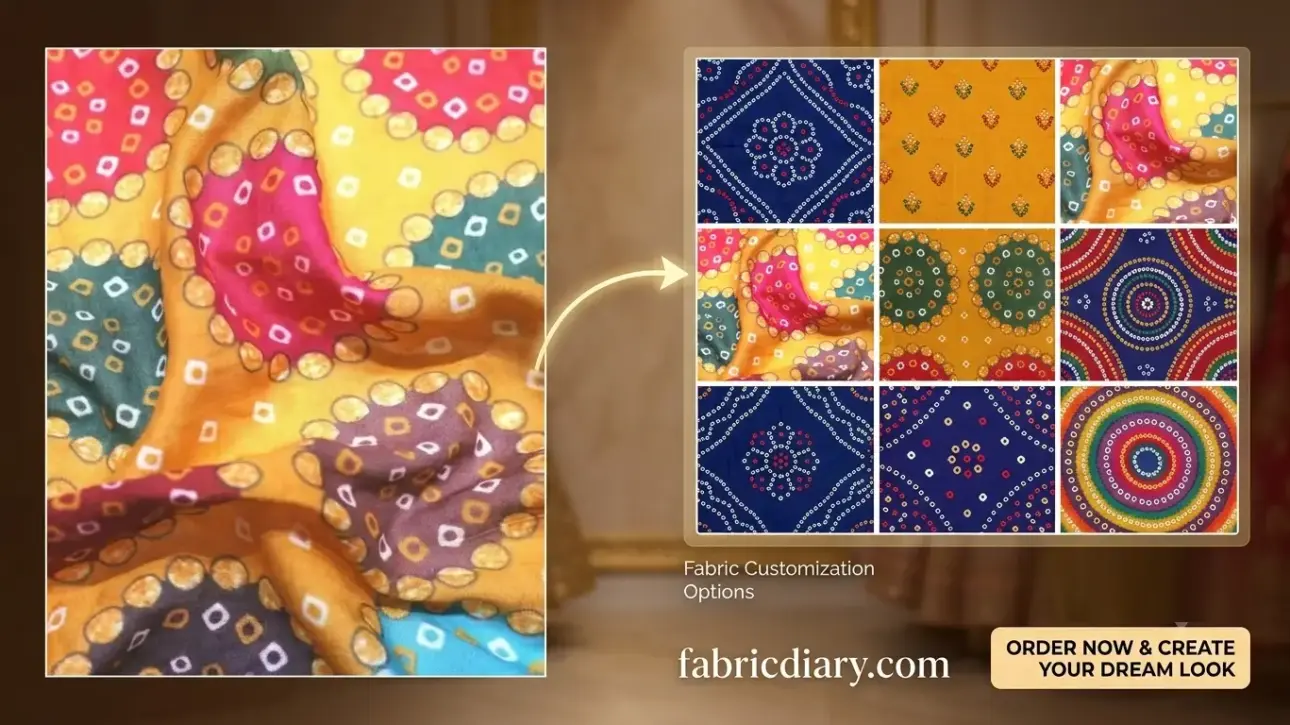
That combination makes the fabric particularly relevant when a fashion collection needs more than a flat printed surface—especially for occasionwear, statement garments, festive collections, overlays and other designs where the relationship between movement, light and print is part of the final look.
Printed Silver Tissue Fabric for Fashion & B2B Sourcing
For designers, apparel brands, wholesalers and international fabric buyers, however, selecting printed silver tissue is not simply a matter of finding an attractive pattern. The underlying fabric construction, surface effect, transparency, hand feel, drape and finishing all influence how the finished garment behaves. The same artwork can look noticeably different when developed on a reflective tissue base compared with a conventional printed fabric.
Madhav Fashion works with fashion fabric requirements ranging from design development and sampling to B2B sourcing and production-oriented requirements. For buyers considering printed silver tissue, the important question is therefore not only which print looks attractive, but whether the fabric, print direction and production method work together for the intended collection.
This distinction becomes especially important when a buyer moves from a visual sample to a commercial order. A fabric that photographs beautifully may require different artwork treatment, colour adjustment or construction decisions once it is converted into a garment. Good sourcing begins by understanding that relationship before production starts.
Understanding Printed Silver Tissue as a Fashion Fabric
Tissue is generally associated with a lightweight, luminous or semi-sheer fashion appearance, but the precise characteristics of a tissue fabric can vary considerably according to its fibre content, yarn structure, weave, finishing and manufacturing process. That is why buyers should avoid treating every fabric labelled “tissue” as technically identical.
The silver appearance is particularly important from a design perspective. A reflective or luminous surface does not behave visually like a completely matte base. Light can change the perceived intensity of the printed colours, while folds and garment movement can create different levels of brightness across the same design.
For a designer, this can become an advantage. Instead of treating the silver surface as a background that must be hidden, the print can be designed to work with it. Delicate motifs, floral artwork, geometric patterns, abstract layouts and carefully selected colour combinations can all create different visual effects depending on how much of the underlying silver surface remains visible.
For a buyer, however, this means that a digital artwork preview should not be considered the final visual reference. The physical printed fabric is much more informative because it reveals how the surface and print interact under real light.
This is also why fabric development should begin with the actual intended construction whenever possible. If the garment needs fluid movement, a very structured base may not produce the desired result. If opacity is important, a lightweight tissue may require a lining or a different garment construction. If the design depends on very fine colour distinctions, a reflective surface should be evaluated before production approval.
Why the Silver Base Matters When Developing Print
Printing is never completely independent of the fabric underneath it. The base influences how the finished artwork is perceived, and silver tissue makes that relationship especially visible.
A highly luminous base can create additional visual depth around printed motifs. Areas with lighter colours may retain some of the underlying brightness, while darker or more saturated areas can create stronger contrast. The exact effect depends on the printing process, ink or colour system, fabric construction and finishing.
This is why a buyer should evaluate three things together: the fabric, the artwork and the intended garment.
Suppose a designer develops a delicate floral print intended for a flowing occasion dress. On a matte fabric, the designer may judge the colour balance primarily from the printed artwork. On silver tissue, the same colours may appear different when the fabric moves under light. A colour that looked subtle on screen may become more luminous, while a darker motif may provide stronger visual separation.
The practical solution is not to avoid detailed artwork. It is to develop and approve the artwork on the correct fabric base.
This is one of the most important distinctions between designing for an image and designing for production. A computer file represents colour information, but the finished textile is a physical interaction between fibre, construction, surface, colour and light.
Choosing the Right Print Direction
Printed silver tissue can be approached through different design orientations, and the right choice depends heavily on the intended garment.
An allover print distributes the design throughout the fabric width and length. It is useful when the same textile needs to support multiple garment styles or when the print itself is intended to become the dominant visual identity of the fabric.
An engineered or placement print works differently. Here the artwork is designed around a particular garment panel, border, motif position or construction requirement. This approach can be valuable when the design needs a specific decorative element to appear at a particular location.
For most general fabric sourcing requirements, allover printing offers greater flexibility because the fabric can be cut into different silhouettes without depending on a predetermined garment layout. Placement development becomes more relevant when the buyer has already established the garment pattern and wants the textile artwork to follow it.
The commercial difference matters as well. An allover print can often be evaluated primarily through repeat, motif scale and colour arrangement. Engineered printing requires more information from the buyer because artwork positioning becomes connected to garment dimensions and cutting plans.
If a buyer wants a specific border, panel motif or engineered arrangement, it is therefore better to mention this during the development stage rather than after a standard allover sample has already been approved.
Digital Printing and Bulk Mill Production
One of the most important decisions in printed fabric development is selecting a production route that matches the commercial requirement.
Digital printing is particularly useful when a buyer needs to test artwork, develop buyer-specific designs, compare colourways or produce a smaller development run. Because the design is prepared digitally, changing artwork can be more flexible than preparing conventional engraved screens or rotary setups.
This makes digital development useful for designers, emerging brands, private-label programs and collections where the final artwork is still being evaluated.
Bulk mill printing serves a different commercial purpose. When a design has already been approved and the buyer is moving into larger-scale production, conventional mill processes such as rotary or screen printing may become more appropriate depending on the fabric, artwork and quantity.
The important point is that these two methods should not be treated as simply “small order versus large order.” They represent different production economics and development stages.
With digital printing, the buyer can retain greater flexibility while artwork is being tested. With conventional bulk production, more of the design decision-making generally needs to be completed before production begins because preparation, colour separation, repeat development and production setup become part of the process.
For a serious B2B buyer, the best question is therefore:
At what stage is the artwork, fabric and production requirement?
If the collection is still being developed, digital sampling may make sense. If the artwork has been approved and the buyer is preparing a larger production program, bulk mill production may be considered.
Developing Custom Printed Silver Tissue
Custom development begins long before the fabric reaches a production machine.
The buyer first needs to establish the fabric direction. This may include the desired tissue appearance, hand feel, drape, transparency, surface character and intended garment.
The artwork then needs to be evaluated against that base. Designers should consider motif scale, repeat size, colour relationships, negative space and whether the silver surface should remain visually prominent or become a supporting element.
Colour development is another important stage. Rather than assuming that the colours appearing on a monitor will reproduce identically on the textile, buyers should use physical strike-offs or development samples where appropriate. The purpose is to understand the interaction between the selected colour direction and the actual fabric.
Repeat development also deserves attention. A floral motif that looks attractive at a small scale may become visually crowded when repeated across a garment. Conversely, a large geometric motif may require careful consideration of cutting and seam placement.
Custom development is therefore a process of coordinating fabric construction + artwork + colour + repeat + garment application + production method.
When these decisions are made together, the resulting textile has a much stronger chance of serving the commercial purpose for which it was developed.
What Designers Should Consider Before Ordering
Designers often begin with an image, sketch or moodboard. That is a natural starting point, but fabric sourcing requires translating that visual idea into physical specifications.
A useful development brief should explain what the fabric needs to do.
If the garment is intended to move fluidly, describe the desired drape. If the design requires translucency, mention the intended level of transparency. If the fabric will be layered, explain whether the silver surface should remain visible through the upper layer.
For print development, provide the artwork in the clearest available format and specify whether the requirement is allover, border, panel or placement based.
The intended garment should also be identified. A print developed for a full flowing dress may need a different motif scale from a print intended for a compact top or structured garment.
Colour references are equally useful. Where exact colour matching is important, the buyer should communicate the relevant colour reference or physical standard rather than relying only on a screenshot.
These details reduce unnecessary sampling cycles and make the development conversation more productive.
Printed Silver Tissue for Different Fashion Categories
The suitability of printed silver tissue depends on the specific construction, but its visual character makes it relevant to several fashion categories.
For occasionwear, the luminous surface can complement silhouettes where light and movement are part of the garment identity. Printed motifs can provide additional structure to the surface without requiring heavy embellishment.
For dresses and flowing separates, drape becomes particularly important. The print should be evaluated not only when the fabric is flat but also when it folds, gathers and moves.
For Indian fashion, tissue fabrics can be considered for sarees, dupattas, festive garments and other occasion-oriented applications where a luminous textile surface is desirable. The exact suitability depends on construction and styling requirements.
For designer collections, custom artwork can make the fabric more distinctive. Instead of sourcing a generic print, the designer can develop a controlled motif language, colour palette and repeat that aligns with the collection.
For private-label brands, consistency becomes particularly important because the same fabric may need to support multiple styles within one seasonal or occasion-focused range.
How B2B Buyers Should Evaluate Samples
A sample should be treated as a technical and commercial checkpoint, not simply as a colour approval.
First examine the fabric itself. Check its hand feel, drape, transparency, surface character and overall suitability for the intended garment.
Then evaluate the print. Look at motif clarity, repeat, scale, colour balance and how the design appears when the fabric is folded or moved.
Next consider the garment. A print that appears balanced on a flat metre may behave differently once it is cut into sleeves, bodices, skirts or flowing panels.
Finally, consider production repeatability. If the fabric is expected to become a continuing commercial program, document the approved fabric and artwork reference carefully.
The approved sample should become the benchmark for subsequent development. This is particularly important for international B2B buyers because production may occur after a significant time gap between sampling and the commercial order.
From Sample to Production
The transition from sample to production is where many fabric-development decisions become commercial decisions.
At the sampling stage, a buyer is evaluating whether the concept works. At production stage, the priority shifts toward repeatability, consistency and suitability for the required quantity.
The approved artwork should therefore be locked before bulk production begins. Repeat dimensions, colour direction, placement requirements and relevant fabric specifications should be documented.
For conventional mill printing, the development stage is particularly important because production preparation can involve technical work that should not be repeatedly changed after approval.
For digital production, artwork flexibility may remain greater, but that does not eliminate the need for a proper approval standard. A production sample is still valuable because the buyer needs to understand the actual textile result rather than relying only on the artwork file.
For both routes, the objective is the same: turn a creative concept into a reproducible textile specification.
Regional B2B Sourcing Considerations
Different buyer markets can approach fashion fabric from different commercial perspectives, but the fundamental sourcing principle remains similar: the fabric needs to match the intended product.
North American and European brands may place strong emphasis on sampling, colour consistency, fabric documentation and repeat-order reliability, particularly for private-label and structured development programs.
Middle Eastern occasionwear and fashion buyers may place greater emphasis on luminous surfaces, richer colour directions, decorative effects and fabrics that can support statement garments.
South Asian buyers often compare construction, surface, drape and print quality closely because fabric selection is strongly connected to the final garment and traditional as well as contemporary fashion categories.
Buyers in other international markets may prioritize different combinations of print scale, colour, price, garment category and production quantity.
For this reason, a supplier inquiry should never rely only on the phrase “printed tissue fabric.” A professional inquiry communicates the intended use and commercial requirement clearly.
Building a Better Fabric Sourcing Brief
A strong sourcing brief can save time for both buyer and supplier.
Start with the fabric. State that the requirement is silver tissue or the closest required tissue construction and describe any known preferences.
Then explain the print. Mention whether the requirement is an existing design, custom artwork, allover repeat, border or placement print.
Next provide quantity expectations. A sample requirement, small development program and large production program can require different approaches.
Then identify the garment category. A supplier can make a more useful recommendation when the intended product is known.
Finally communicate the market and quality expectations. International buyers may have specific packing, documentation or shipping requirements that should be discussed before production.
A good inquiry does not need to be complicated. It needs to be specific enough to establish the commercial direction.
When Printed Silver Tissue Is the Right Choice
Printed silver tissue is particularly interesting when the fabric itself needs to contribute to the visual identity of the garment.
It can be appropriate when a designer wants a combination of print and surface luminosity rather than a completely matte textile. It can also be useful when movement, layering and light are important parts of the finished design.
However, it should not be selected only because the surface looks attractive in a photograph.
If the garment requires substantial opacity, rigid structure or a very specific performance characteristic, another fabric construction may be more appropriate. If the design depends on extremely precise colour perception, physical sampling becomes especially important.
The right fabric is ultimately the one that performs the role required by the garment.
Why Physical Development Still Matters
Modern digital design tools make textile development faster, but they do not eliminate the need for physical evaluation.
A screen can show artwork. It cannot fully reproduce the hand of a fabric, its drape, transparency, surface reflection or behaviour under changing light.
This becomes particularly important for silver tissue because the surface itself participates in the visual effect.
A physical sample therefore acts as the bridge between design intention and manufacturing reality.
For designers, it confirms whether the visual concept works. For brands, it provides a development reference. For wholesalers and manufacturers, it creates a physical benchmark before larger production decisions are made.
Sourcing Printed Silver Tissue with Madhav Fashion
For a buyer, sourcing is easier when the conversation begins with the actual commercial requirement rather than a generic fabric name.
Madhav Fashion can be approached for requirements involving printed and fashion-oriented fabrics, including discussions around fabric selection, artwork direction, sampling and production requirements.
Buyers can provide their artwork, desired colour direction, approximate quantity, intended garment category and preferred print orientation. If a physical reference fabric already exists, that information can also help establish the development direction.
The objective is not simply to reproduce a picture. It is to develop a textile that works as part of a finished fashion product.
For international brands and B2B buyers, that distinction matters because a successful fabric order is ultimately measured by how reliably the textile supports the collection—not merely by how attractive the first sample appears.
Final Buyer Checklist for Printed Silver Tissue
Before approving a printed silver tissue development, review the fabric construction and surface first. Confirm that the hand feel, drape and transparency are appropriate for the garment.
Then evaluate the print. Check colour, motif scale, repeat, clarity and the way the artwork interacts with the silver surface.
Confirm whether the requirement is allover or engineered placement.
Decide whether the development stage is better suited to digital printing or whether the approved artwork is ready for a bulk mill process.
Keep a physical approval sample and retain the relevant artwork and colour references.
Finally, communicate the commercial requirement clearly: fabric, print, quantity, garment, market and production expectations.
That approach turns printed silver tissue from a visual fabric choice into a properly developed commercial textile.
For designers, brands, wholesalers and international buyers looking for printed silver tissue, the most productive next step is to begin with the fabric requirement and artwork together. Once the base, print direction and intended application are understood, sampling can establish the actual result before the project moves into production.