


A printed fabric can look perfect on a screen and still fail a garment-development test.
For manufacturers and international fashion buyers, the more important questions begin after the artwork has been selected: Does the fabric have the required hand feel? Will the print maintain the intended appearance? Is the fabric suitable for the garment construction? Can the approved colour and repeat be reproduced consistently in commercial production?
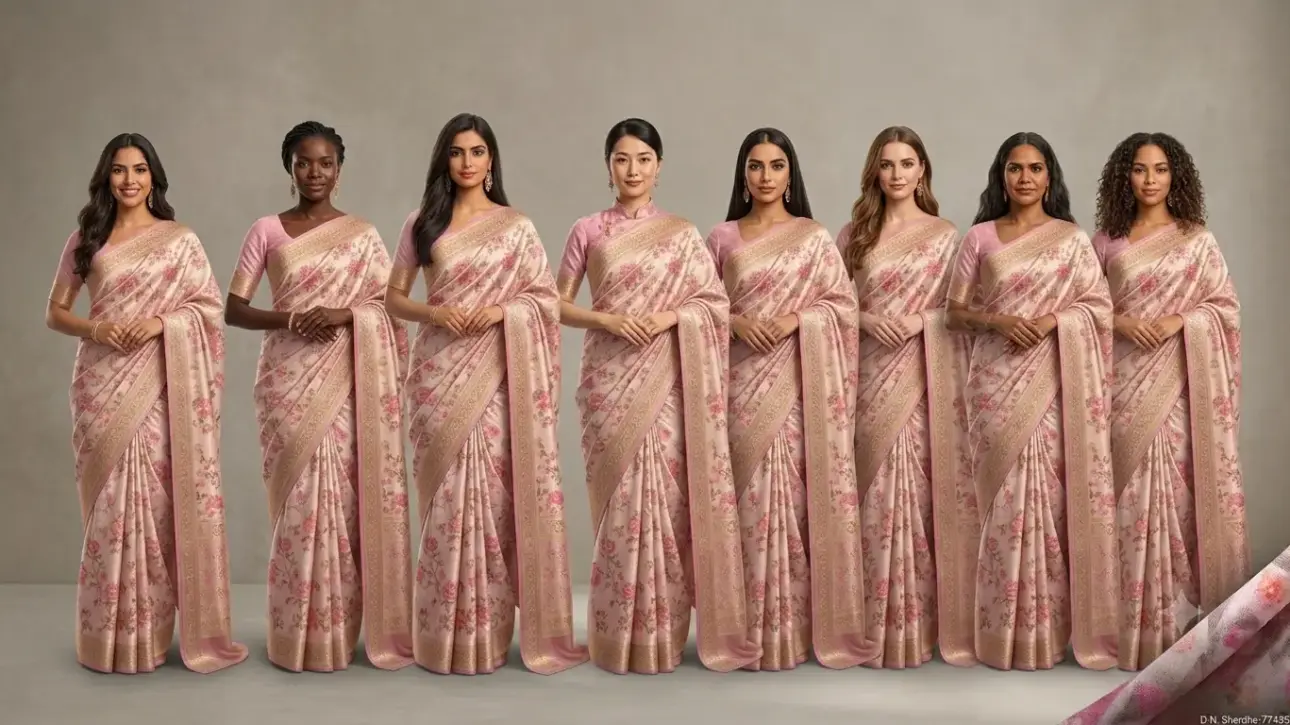
These questions are particularly relevant when developing mull cotton printed fabric for lightweight fashion collections.
Mull cotton is generally chosen for its soft, lightweight and breathable character. Its gentle drape can make it suitable for garments where movement and comfort are more important than a highly structured silhouette. But those same characteristics mean that fabric construction, transparency, finishing and print development need to be considered carefully before production.
Mull Cotton Printed Fabric for Fashion Manufacturing: What Global Buyers Should Know Before Bulk Production
For manufacturers, the objective is not simply to find a printed cotton fabric.
It is to establish a repeatable production specification.
That is where an experienced textile manufacturing partner becomes important.
Madhav Fashion works in the textile manufacturing and export ecosystem, supplying fashion-focused fabric requirements across categories including printed and embroidered fabrics. For buyers developing commercial collections, the sourcing conversation can therefore move beyond fabric selection into sampling, artwork development, production planning and bulk execution.
Why Mull Cotton Requires a Different Manufacturing Approach
Mull cotton should not be treated as just another printed cotton base.
Its lightweight character can influence how a design appears once the fabric is moving rather than lying flat. Small motifs, larger artwork, borders and colour combinations can produce different visual results depending on the fabric construction.
The buyer’s intended garment therefore needs to be considered at the beginning.
A lightweight printed dress may benefit from mull’s softer fall.
A kurti may require closer attention to transparency and lining.
A dupatta or scarf may place greater importance on drape and surface appearance.
A manufacturer evaluating the same fabric for each of these applications may reach different conclusions.
This is why textile development should begin with the end product, rather than simply starting with a fabric name.
Fabric Selection Comes Before Print Selection
One of the most common mistakes in textile development is approving artwork before approving the fabric base.
The process should ideally work in the opposite direction.
First establish the required fabric character.
Then test the artwork against that construction.
For mull cotton, buyers may want to assess:
- softness and hand feel
- drape and movement
- transparency
- surface appearance
- intended garment construction
- and compatibility with the selected printing process.
Exact technical specifications should be confirmed against the production fabric reference because construction and finishing can vary between mills and batches.
For manufacturers, this is not unnecessary detail.
It is production control.
Developing the Right Print
Once the base fabric is approved, the artwork can be developed around it.
For commercial fashion production, the manufacturer and buyer should establish whether the design is intended as an allover repeat or an engineered placement.
An allover repeat is normally the more practical format for continuous fabric production. The artwork is repeated across the fabric so that the material can be cut into different garment components.
Placement printing works differently.
A border, front panel or specific motif may need to be positioned according to a garment template.
That requires the buyer to communicate the garment dimensions and intended placement before production development begins.
Confusing these two approaches can create avoidable problems in sampling and costing.
Digital Printing Has a Different Commercial Role
Digital printing has become particularly useful during the early stages of textile development.
A fashion brand may have an original artwork but no confirmed production quantity.
A designer may want to test several colourways.
A private-label company may want to see how an exclusive print behaves on mull cotton before committing to a commercial program.
Digital printing can be appropriate for these situations because artwork can be changed more easily between development stages.
This makes it particularly useful for:
- sampling
- small production requirements
- new artwork testing
- colourway evaluation
- and buyer-specific development.
The objective at this stage is learning.
The buyer is trying to answer: Does this fabric and design work as a product?
Bulk Mill Printing Is About Repeatability
The commercial situation changes when a design has already been approved and substantial production is required.
For manufacturers, export houses and wholesalers, bulk mill printing through rotary or screen-based processes can provide a more efficient route for large production runs.
The key difference is that customization takes place primarily before production, not continuously during it.
Artwork is developed.
Colours are finalized.
The repeat is approved.
A sample or strike-off is evaluated.
The production reference is confirmed.
Then the mill run is executed around that approved specification.
This creates a very different production model from digital sampling.
A bulk order should not be understood as an opportunity to change the artwork or colour independently on every piece.
Development is flexible. Production is controlled.
That distinction is essential for serious B2B textile sourcing.
What Manufacturers Should Check Before Bulk Approval
A successful bulk program depends heavily on what happens before the production run starts.
Manufacturers and buyers should review the physical development sample for:
Fabric feel — Does the material match the intended product positioning?
Print clarity — Are fine details and motifs appearing as expected?
Colour development — Does the physical result meet the approved reference?
Repeat scale — Does the pattern work with the intended garment cutting plan?
Transparency — Does the finished garment require lining or layering?
Drape — Does the printed fabric behave as expected once constructed?
Finishing — Is the final surface appropriate for the collection?
These checks can prevent the expensive situation where an attractive sample is approved visually but creates difficulties during garment manufacturing.
Mull Cotton and Lightweight Fashion
The manufacturing appeal of mull cotton is closely connected with the categories where lightweight fabrics perform well.
Printed mull cotton can be considered for:
- lightweight dresses
- kurtis
- selected ethnicwear
- dupattas
- scarves
- relaxed shirts
- resortwear
- and selected children’s fashion.
The fabric should still be evaluated against the exact garment.
A structured jacket and a flowing summer dress do not impose the same requirements on a textile.
That is why a responsible manufacturer does not recommend one fabric for every product category.
A Manufacturer’s View of Cost
Fabric cost is only one component of a printed textile program.
For a commercial buyer, the actual production equation can involve:
fabric + artwork development + printing process + sampling + finishing + quality control + packaging + logistics
The appropriate printing method therefore depends on the total production requirement.
A small sampling order may justify digital development because flexibility is more valuable at that stage.
A large production program may benefit from mill printing because production efficiency becomes more important.
Trying to use the same process for every order can lead to unnecessary cost or unnecessary restrictions.
Private-Label Development
Private-label fashion brands increasingly need fabrics that are distinct from generic catalogue selections.
Mull cotton can be developed around brand-specific artwork, colourways and repeat requirements where the production setup supports it.
The important point is to separate creative customization from production customization.
Creative customization can include:
- developing original artwork
- adjusting colourways
- changing repeat size
- developing borders
- adapting motifs
- or creating a placement design.
Once the buyer approves the final specification, production needs to become controlled and repeatable.
This approach is particularly valuable for brands planning future reorders.
Building Repeat-Order Consistency
The first production run establishes more than inventory.
It establishes a reference.
If a fashion brand later wants to reorder the same printed fabric, the manufacturer needs to know exactly what was approved previously.
That means retaining clear information about the fabric construction, print artwork, repeat, colour reference and relevant finishing requirements.
For international B2B buyers, repeat-order consistency can be just as important as the initial development.
A fabric that looks excellent once but cannot be reliably reproduced is difficult to build into a long-term product line.
When Mull Cotton Is Not the Best Manufacturing Choice
A good manufacturer should also be willing to say when another fabric is more suitable.
Mull cotton may not be the best option for a garment requiring substantial body or a strongly structured silhouette.
It may also require additional consideration where high opacity is essential.
In such cases, another cotton construction or a different textile category may provide a better manufacturing solution.
This is where sample comparison becomes valuable.
Rather than choosing a material because it is popular, manufacturers should evaluate whether its physical behaviour supports the intended garment.
Sourcing From India for International Fashion Programs
India’s textile ecosystem gives international buyers access to a wide range of fabric development, printing, embroidery, finishing and manufacturing capabilities.
For overseas brands, the advantage is not simply access to fabric.
The bigger advantage can be the ability to coordinate different stages of development through an established manufacturing ecosystem.
A buyer can begin with a textile requirement, review samples, develop artwork, approve a print and then move toward commercial production.
This is particularly relevant for private-label brands, export houses, garment manufacturers and sourcing teams that require more than off-the-shelf fabric purchasing.
Madhav Fashion’s position within the Indian textile manufacturing ecosystem supports this type of development-oriented sourcing conversation.
The Practical Path From Design to Bulk
For a commercial mull cotton printed fabric program, a useful development sequence is:
- Define the garment
Establish what the fabric will become.
- Approve the base
Evaluate hand feel, drape, transparency and construction.
- Develop the artwork
Decide on motif scale, repeat, colourways and orientation.
- Create a sample
Digital printing can be useful when testing new or buyer-specific designs.
- Review and approve
Evaluate the actual printed fabric rather than relying only on digital artwork.
- Lock the production specification
Confirm the approved fabric, artwork, repeat, colour and finishing requirements.
- Move to bulk
For substantial quantities, mill printing can provide a commercially appropriate production route.
This sequence reduces the gap between what the designer imagines and what the factory eventually produces.
The Difference Between a Fabric Supplier and a Manufacturing Partner
For a small buyer, finding a fabric may be enough.
For a growing fashion business, it usually is not.
As volumes increase, the buyer needs coordination between fabric, artwork, printing, finishing and production.
That is where the distinction between simply purchasing fabric and working with a manufacturing partner becomes important.
The manufacturer needs to understand the commercial purpose behind the fabric.
Is it a one-time sample?
A seasonal collection?
A private-label launch?
A repeat wholesale program?
A large export order?
The answer can influence everything from printing method to development process.
Perspective for Global Buyers
Pure mull cotton printed fabric can be an effective choice for fashion programs that require a lightweight cotton character, soft handle and flowing printed appearance.
But successful sourcing depends on more than the fabric label.
The buyer needs to match the construction to the garment, the artwork to the fabric surface, the printing process to the production quantity and the development method to the commercial objective.
For small and sampling-stage requirements, digital printing can provide valuable flexibility.
For larger production programs, bulk mill printing can provide efficiency and repeatability once the design has been approved.
That is the manufacturing logic behind a reliable printed-fabric program.
For buyers currently developing lightweight cotton collections, FabricDiary’s Pure Mull Cotton Printed Fabric collection can be used as a starting point for evaluating available fabric options, while custom requirements can be discussed around artwork, sampling and production needs.
For manufacturers, private-label brands, export houses and international sourcing teams, the best results usually come when fabric development and production planning begin together—not after the artwork has already been finalized.
If your next collection requires printed mull cotton, share the garment application, artwork direction and approximate requirement with Madhav Fashion or FabricDiary to discuss the appropriate development and production route.
FAQs — Mull Cotton Printed Fabric Manufacturing & Sourcing
- What is mull cotton printed fabric used for?
Mull cotton printed fabric is commonly considered for lightweight fashion applications such as dresses, kurtis, dupattas, scarves, relaxed shirts, resortwear and selected ethnicwear where a soft, breathable and fluid fabric character is desired. - Is mull cotton suitable for fashion manufacturing?
Yes. Its lightweight cotton character and soft drape can make it suitable for fashion manufacturing, provided the specific fabric construction matches the garment’s requirements for coverage, structure and performance. - Is mull cotton suitable for summer collections?
It can be a useful choice for warm-weather collections because of its lightweight and breathable cotton character. The final comfort of a garment also depends on construction, lining, finishing and design. - Can manufacturers develop custom prints on mull cotton?
Custom print development can be possible depending on the fabric construction, artwork and selected printing process. Buyers can discuss original artwork, colourways, repeat sizes, borders or placement requirements during development. - What is the difference between allover and placement printing?
Allover printing creates a repeating design across continuous fabric yardage, making it practical for garments cut from different areas of the fabric. Placement printing positions artwork according to a specific garment panel, border or template. - Which print format is better for bulk garment production?
For continuous fabric requirements, an approved allover repeat is generally easier to integrate into bulk cutting and garment production. Placement printing can be appropriate when the design concept specifically requires controlled positioning. - Is digital printing suitable for mull cotton samples?
Digital printing can be useful for sampling and smaller development requirements because artwork and colourways can be changed more easily during the design-testing stage. - Is rotary or screen printing suitable for bulk mull cotton production?
For substantial production quantities, rotary or screen-based mill printing can be a commercially appropriate route. The design, colour references and repeat are normally finalized during development before the bulk run begins. - Can I change the design after bulk mill production starts?
Bulk mill printing is designed around an approved production specification. Artwork, colour and repeat changes should normally be completed during development rather than treated as per-order or per-piece customization after production has started. - What should a buyer check before approving a printed mull cotton sample?
A buyer should evaluate fabric hand feel, drape, transparency, print clarity, colour appearance, repeat scale and the fabric’s suitability for the intended garment before approving commercial production. - Can private-label fashion brands develop exclusive mull cotton prints?
Yes, private-label brands can discuss buyer-specific print development where the manufacturing setup supports it. Original artwork, colourways and repeat specifications can be developed and approved before bulk production. - Can mull cotton be used for ethnicwear?
Yes. It can be considered for selected ethnicwear applications including lightweight kurtis, dupattas and other garments where a softer, lighter fabric character is appropriate. - Is mull cotton suitable for structured garments?
Usually, buyers should be cautious when a garment requires substantial body or a highly structured silhouette. A different fabric construction may be more appropriate if structure and opacity are primary requirements. - Does the exact weight of mull cotton remain the same for every production?
No. Fabric weight and other technical characteristics can vary according to construction, yarn, finishing and production reference. Buyers should confirm the specification of the actual fabric being developed. - Can international buyers source printed mull cotton from India?
Yes. International brands, garment manufacturers, export houses and sourcing teams can work with Indian textile manufacturers for fabric development and production, subject to the specific project, fabric and commercial requirements. - What information should an international buyer provide to a manufacturer?
A useful brief should include the intended garment, fabric preference, artwork or design reference, colour requirements, approximate quantity and whether the print should be allover or placement-based. - How does sampling differ from bulk production?
Sampling is primarily used to test the fabric, artwork, colours and overall product direction. Bulk production follows an approved specification and is focused on consistent, repeatable manufacturing. - Can the same mull cotton print be reordered later?
A repeat order can be easier to manage when the original fabric, artwork, colour reference, repeat and finishing specifications have been properly documented and approved. - Is mull cotton a good option for every printed fashion product?
No. Fabric selection should be based on the garment’s required drape, opacity, structure, comfort and visual effect. Buyers should compare alternative constructions when mull cotton does not meet the product requirement. - How can I start a mull cotton printed fabric development project with Madhav Fashion?
Share the intended garment, fabric requirement, artwork or print reference, colour direction and approximate production requirement. The manufacturing team can then assess the appropriate sampling, print-development and bulk-production route.