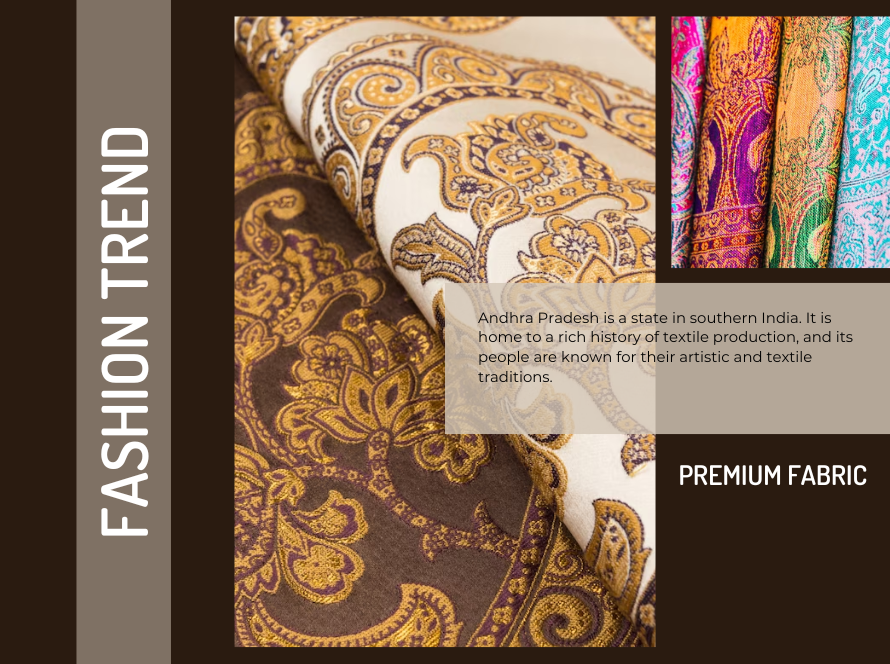



Gold has always had a strong visual relationship with occasionwear, but today’s fashion buyer is looking for more than a plain metallic-looking surface. Designers and fashion brands increasingly need fabrics that combine luminosity with pattern, movement and a distinctive textile identity. Gold Tissue Printed Fabric answers that requirement by bringing together the reflective character of tissue with printed artwork that can be developed for contemporary dresses, lehengas, sarees, gowns and coordinated occasionwear collections.
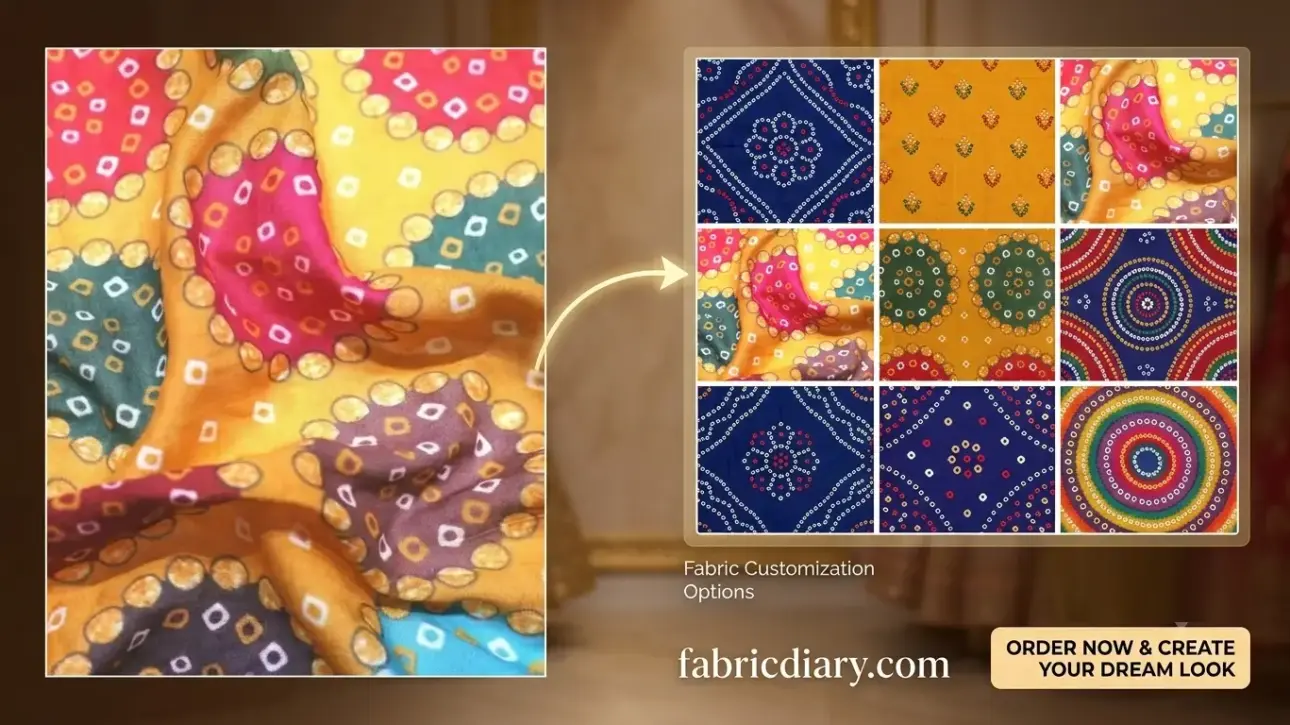
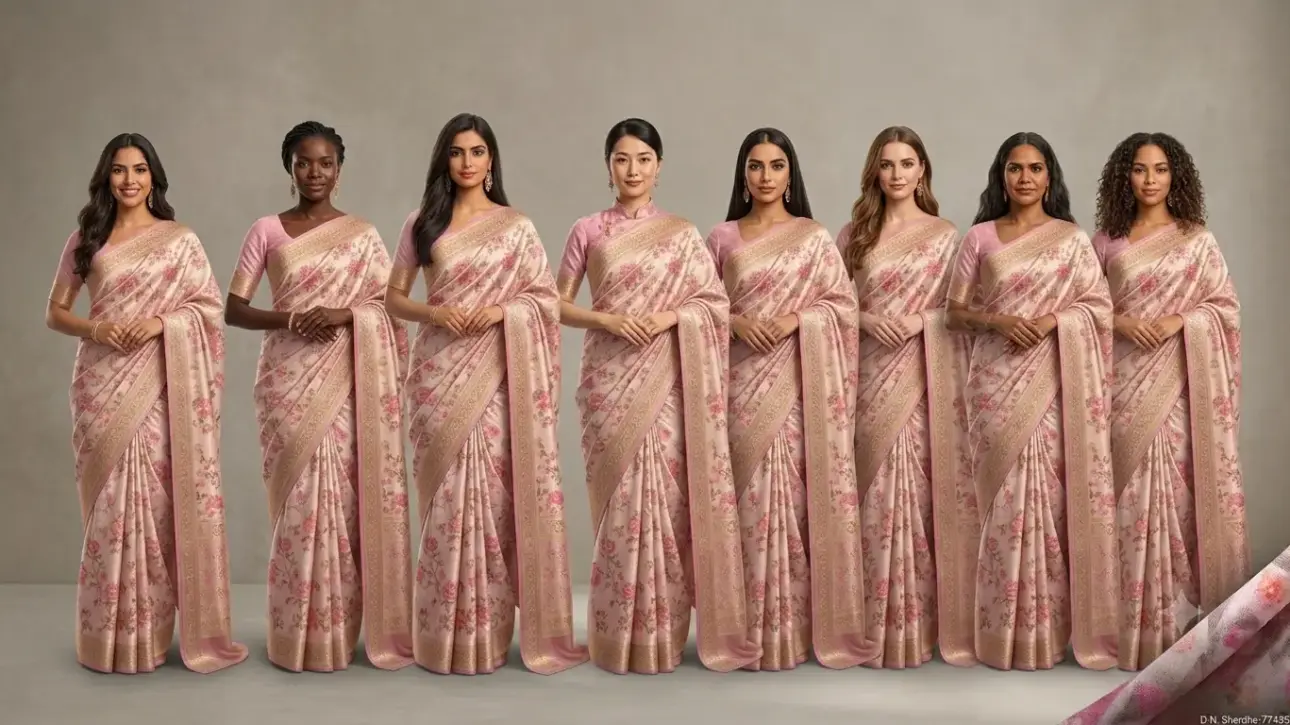
At Madhav Fashion, printed and embroidered fashion fabrics are approached with an understanding of both design direction and commercial textile sourcing. For buyers developing an occasionwear collection, the goal is not simply to find a “gold fabric.” The more important question is how the fabric will behave when gold-toned surface character, print scale, colour, drape and garment construction are considered together.
That makes Tissue Printed Fabric particularly interesting for designers who want a fabric with visual presence without relying entirely on embroidery, sequins or heavy surface embellishment.
Why Gold Tissue Works Differently in Occasionwear
The appeal of tissue comes from the way its surface interacts with light.
On a conventional matte fabric, the printed artwork usually controls most of the visual effect. With tissue, the underlying textile can contribute its own luminosity. As the garment moves, the surface can catch light differently, giving the print an additional dimension.
This can be useful for occasionwear because garments are often viewed under changing lighting conditions: showroom lighting, photography, event lighting, daylight and evening environments.
The result depends heavily on the actual construction and finish of the fabric. “Gold tissue” is a commercial description rather than a guarantee of one universal fibre composition or construction. Different tissue fabrics can vary in yarn, blend, weave, transparency, hand feel, drape and finishing.
For a buyer, this means the fabric should be evaluated physically rather than judged only from the product name.
The Relationship Between Gold and Print
A successful printed gold tissue development depends on balance.
The gold base should support the artwork instead of competing with it.
A floral print, for example, can be developed with controlled contrast so that the gold surface remains visible around the motifs. A darker artwork can create stronger definition, while related tonal colours can create a more understated luxury effect.
There is no single colour formula that works for every design.
The right combination depends on:
- the colour of the base
- the visual intensity of the gold effect
- motif density
- artwork scale
- intended garment
- lighting conditions
- transparency
- lining or layering
- desired fashion positioning
This is why physical sampling is particularly valuable for Gold Tissue Fabric.
A colour that looks balanced on a computer screen may appear significantly different when printed onto a reflective textile surface.
Choosing the Right Print Style
The print should be selected according to the garment rather than simply according to what looks attractive in an artwork file.
Floral Prints
Floral artwork is a natural direction for occasionwear because it can range from delicate and romantic to dramatic and statement-driven.
Small floral repeats can create a continuous textile surface. Larger flowers can become focal points on flowing silhouettes.
For lehengas and gowns, larger motifs can create strong visual movement, while smaller repeats can offer greater versatility across different garment pieces.
Abstract and Contemporary Prints
Abstract artwork can make gold tissue feel less traditional and more fashion-forward.
Organic lines, geometric compositions, painterly effects and controlled tonal graphics can transform the material into something suitable for contemporary occasionwear collections.
This direction can work particularly well for designers who want the fabric to communicate modernity rather than relying on conventional decorative motifs.
Tonal Prints
Tonal printing uses related shades rather than extreme contrast.
On a reflective base, this can create a subtle surface effect where the artwork becomes visible through movement and changing light.
This approach is useful when the designer wants the fabric to remain sophisticated and adaptable rather than highly graphic.
Allover Prints for Commercial Collections
An allover repeat is often the practical choice when a fashion brand intends to use one fabric across several garment styles.
The artwork repeats continuously across the fabric rather than being engineered around a particular garment.
This can support collections containing:
- dresses
- skirts
- lehengas
- coordinated sets
- flowing gowns
- fashion separates
- The main advantage is versatility.
A buyer can cut the same fabric into different silhouettes without requiring a completely different artwork layout for each garment.
However, the repeat needs to be considered carefully. Motif size, spacing and direction can affect how seams and garment panels come together.
A repeat that looks attractive on a full fabric width may behave differently after cutting.
Placement Prints for Designer-Led Pieces
Placement printing takes a different approach.
Instead of repeating the same artwork continuously, the design is positioned around a specific area or garment component.
This can be useful when the designer wants:
- a central statement motif
- a border
- a controlled panel
- a directional composition
- a garment-specific artwork
- a coordinated placement across multiple panels
Placement printing requires more development planning because the artwork, fabric dimensions and garment pattern need to work together.
For a collection built around engineered artwork, buyers should communicate the garment pattern or intended placement during development.
If the requirement is specifically for engineered or position-based artwork, a Position Printed Fabric or Custom Print development route may be more appropriate than a standard allover print.
Digital Printing for Fashion Development
Digital printing has changed how designers can approach printed textile development.
For a new occasionwear collection, the designer may not know immediately whether the artwork should be large or small, highly contrasted or tonal, or whether a particular colour combination will work on gold tissue.
Digital sampling can make experimentation more practical where the selected tissue construction is technically compatible with the process.
A buyer may use the development stage to test:
- motif scale
- colour combinations
- artwork density
- repeat size
- visual contrast
- different design variations
This is particularly relevant to boutiques, designers and private-label brands developing new collections.
The key point is that digital printing provides development flexibility. It does not mean every digital development automatically translates into the same commercial production conditions.
Moving From Sampling to Bulk Production
The transition from sample to bulk requires a different mindset.
A designer may begin with a small quantity to test a new concept. Once the artwork is approved and the collection moves toward commercial production, consistency becomes increasingly important.
For larger production programs, bulk mill printing methods such as rotary or screen printing can become appropriate depending on the fabric and design requirements.
The production artwork is finalized before the bulk run. Repeat dimensions, colour development and other technical parameters are established as part of the approval process.
Once production begins, the objective is consistent reproduction of the approved design.
If a buyer later wants a significantly different motif, colourway or repeat, that generally becomes a new development rather than a simple change to an already-running bulk print.
This distinction is important for fashion brands planning seasonal collections.
Gold Tissue for Lehengas
Lehenga design often requires a fabric that can carry visual detail without making the garment dependent on heavy embellishment.
Gold tissue printed fabric can provide that surface identity through the combination of sheen and artwork.
For lehenga development, buyers should consider the relationship between:
- skirt motif scale
- blouse artwork
- dupatta design
- border direction
- panel cutting
- repeat continuity
A large repeat can create a dramatic skirt effect. A smaller repeat may provide greater freedom when the same textile is used for multiple components.
If the collection includes coordinated sets, artwork should be evaluated across the entire outfit rather than only on one garment panel.
Gold Tissue for Sarees and Draped Styles
The interaction between print and drape becomes especially important in sarees and other flowing garments.
As the fabric folds, motifs can overlap visually. The reflective base can also change its appearance as the garment moves.
A designer therefore needs to consider whether the artwork is intended to remain highly visible or become more subtle through movement.
Border and directional artwork can create a different visual result from an allover repeat.
For buyers developing a collection, the intended drape and styling should be communicated during fabric development.
Gold Tissue for Gowns and Dresses
Long flowing garments offer another opportunity for printed tissue.
A gown can create a large visual canvas, allowing the artwork to become part of the silhouette.
Large-scale motifs can work particularly well when the design is intentionally dramatic. More open repeats can provide a lighter visual effect.
For fitted dresses, however, motif distortion caused by garment construction should also be considered.
The right print is therefore not simply the most attractive artwork. It is the artwork that survives cutting, sewing and movement while retaining the intended design character.
Designing for Modern Occasionwear
Contemporary occasionwear is increasingly diverse.
A collection may combine traditional silhouettes with modern prints, or western garment shapes with textiles traditionally associated with festive fashion.
Gold tissue can participate in both directions.
For a modern collection, designers may experiment with:
- minimal geometric artwork
- oversized florals
- abstract botanical motifs
- monochromatic prints
- tonal gold combinations
- contrasting dark artwork
- restrained decorative repeats
- contemporary border compositions
The purpose is to use the material’s inherent surface character as part of the design language.
Instead of asking how much decoration can be added to the fabric, the designer can ask how much visual work the fabric itself can already perform.
When to Choose Printed Tissue Instead of Embroidered Fabric
Printed tissue and embroidered fabric serve different design objectives.
Embroidery adds physical surface dimension through stitched construction, while printing creates visual artwork through colour and pattern.
A designer may prefer printed tissue when:
- the artwork itself is the main design element
- a flowing surface is required
- the collection needs a lighter decorative treatment
- multiple colourways are planned
- sampling flexibility is important
the buyer wants to avoid a heavily embellished appearance
On the other hand, embroidery can be more suitable when tactile surface texture and dimensional ornamentation are central to the garment.
The two approaches can also be considered together in a collection, depending on the desired product architecture.
Comparing Gold Tissue With Other Printed Fabrics
Material selection should always follow the design requirement.
For a softer cotton-oriented direction, buyers may compare gold tissue developments with Pure Cambric Cotton Printed Fabric or Pure Mull Cotton Printed Fabric.
For a fluid fashion construction, Pure Georgette Printed Fabric can offer a different drape and surface behaviour.
For another lightweight printed direction, Pure Muslin Printed Fabric may be considered depending on the garment.
Pure Chinon Printed Fabric can also be relevant when the desired design direction calls for another fashion-oriented lightweight construction.
These fabrics should not be treated as interchangeable. Their construction and surface behaviour can lead to different garment results.
The right choice depends on the collection concept.
How Designers Should Develop a Gold Tissue Print
A successful development process starts before the artwork reaches the printer.
Start With the Garment
First determine the final garment category.
Is the fabric intended for a lehenga, gown, saree, dress, skirt or coordinated set?
The answer influences motif scale and repeat direction.
Define the Visual Language
Decide whether the collection should feel:
- traditional
- contemporary
- minimal
- romantic
- dramatic
- festive
- luxury-oriented
- This gives the artwork a clear direction.
Test the Artwork on the Actual Base
The same artwork should not be assumed to look identical on different fabrics.
The gold tissue base needs to be sampled directly.
Approve Scale and Colour
Do not finalize the artwork only from a screen preview.
Review a physical print and evaluate it under different lighting.
Decide Production Scale
Once the visual direction is approved, determine whether the project remains a sampling/small-run requirement or moves into a larger production program.
This is where the distinction between digital development and bulk mill production becomes commercially important.
What B2B Buyers Should Ask a Fabric Supplier
Before placing a production order, a buyer should ask clear questions.
- What is the actual fabric construction?
- The commercial name alone may not communicate fibre composition, weave or finishing.
- Is the design allover or placement-based?
- This determines how artwork and cutting need to be coordinated.
- What printing method is recommended?
- The answer should be based on the actual fabric and required production quantity.
- Can I receive a physical sample?
- Sampling is important for evaluating the final textile.
- How is colour approval handled?
- A buyer should know what reference will be used for bulk production.
- Can the artwork be developed from my design?
- For custom collections, this should be established before development.
- What happens when I reorder?
If the fabric becomes a permanent collection style, repeatability should be part of the initial conversation.
International Sourcing Considerations
A fashion brand buying from an international supplier should consider more than the fabric itself.
Documentation, communication, sample approval, production planning and shipment coordination all influence the sourcing experience.
For buyers in North America and Europe, structured approvals and repeat-order consistency may be particularly important.
Middle Eastern buyers may focus strongly on rich visual effects and occasionwear applications, while South Asian buyers may compare tissue with other familiar fashion-fabric constructions.
Private-label brands across different markets may prioritize smaller development runs before committing to larger quantities.
The important point is that the same Gold Tissue Printed Fabric can serve different commercial requirements depending on how it is developed.
From Designer Sample to Commercial Collection
The most efficient workflow is usually not:
Artwork → Bulk Order
A more controlled process is:
Garment concept → Fabric selection → Artwork development → Print sampling → Physical evaluation → Repeat/placement approval → Production method → Bulk manufacturing
This gives the buyer opportunities to correct issues before the commercial run.
If the motif is too large, it can be adjusted.
If the colour is too strong against the gold base, it can be reconsidered.
If the transparency is unsuitable for the intended garment, the construction can be reviewed before production.
That is considerably more efficient than discovering the issue after bulk fabric has already been manufactured.
Why Physical Fabric Samples Still Matter
Digital textile development is powerful, but a screen cannot reproduce every characteristic of a physical textile.
A sample reveals:
- how the fabric catches light
- how the print behaves across folds
- how transparent the textile appears
- how the colours interact with the base
- how the fabric drapes
- how the artwork looks at actual scale
For Gold Tissue Printed Fabric, these observations are particularly relevant because surface reflection is part of the visual identity.
A buyer should therefore treat sampling as a decision-making stage, not merely a formality before ordering.
Madhav Fashion and Printed Fashion Fabric Development
Madhav Fashion works across printed and embroidered fashion-fabric requirements, with an emphasis on developing textiles that can translate into commercial garments.
For designers exploring Gold Tissue Printed Fabric, the development process can begin with the intended application and move toward material selection, artwork direction, sampling and production planning.
This approach allows the fabric to be considered from both sides: the designer’s visual requirement and the buyer’s commercial requirement.
For a boutique, that may mean testing a new print before committing to a collection.
For a private-label brand, it may mean developing a repeat that can work across several silhouettes.
For a larger fashion business, it may mean establishing an approved print and material standard suitable for repeat production.
The development route should match the actual scale and objective of the buyer.
A Practical Gold Tissue Print Checklist
Before approving a fabric for an occasionwear collection, review:
- fabric construction
- surface sheen
- transparency
- hand feel
- drape
- artwork scale
- print repeat
- colour balance
- motif density
- garment application
- allover versus placement requirement
- physical sample performance
- production method
- bulk consistency
- reorder requirements
This simple process can prevent many avoidable sourcing problems.
Frequently Asked Questions
What makes Gold Tissue Printed Fabric suitable for occasionwear?
Its combination of a luminous tissue surface and printed artwork can create a visually distinctive textile for selected occasionwear garments. Suitability depends on the exact construction, print and intended application.
Can Gold Tissue Printed Fabric be used for lehengas?
Yes. It can be considered for lehengas when the fabric’s drape, transparency, print scale and surface appearance suit the garment design.
Is Gold Tissue Printed Fabric suitable for gowns?
It can be suitable for selected gown designs where the combination of drape, sheen and printed artwork supports the intended silhouette.
Can designers develop custom prints on tissue?
Custom development may be possible depending on the tissue construction, printing method, artwork and production requirement. The design should be tested physically before bulk approval.
Should an allover or placement print be used?
An allover print generally provides greater versatility across different garment styles, while placement printing is useful when the artwork needs to be positioned around a specific garment or panel.
Is digital printing suitable for small fashion collections?
Digital printing can be useful for sampling, smaller runs and new artwork development when the selected fabric is compatible with the printing process.
Can a digitally sampled design move to bulk production?
Yes, the approved design can potentially move into an appropriate bulk printing process. The production method should be selected according to the fabric, artwork and commercial quantity.
How should buyers compare gold tissue with georgette or muslin?
Compare the actual fabric construction, drape, surface, transparency, hand feel, print behaviour and intended garment. The materials are not interchangeable simply because all can be printed.
Great Word for Designers and Buyers
Gold Tissue Printed Fabric gives designers another way to build occasionwear around the fabric itself.
Instead of beginning with heavy ornamentation and adding a textile underneath, the designer can start with a luminous base, introduce carefully developed artwork and allow the interaction between print, sheen and movement to become part of the garment.
That makes material selection especially important.
A successful development should answer several questions at the same time: Does the tissue construction suit the garment? Does the artwork work with the gold surface? Is the motif scale appropriate? Should the design repeat across the fabric or be engineered around a garment? Is the project at sampling stage or ready for bulk production? Can the approved textile be reproduced consistently?
When these questions are answered early, the fabric becomes much more than a decorative surface. It becomes a practical component of the fashion collection.
For designers, private-label brands, exporters and wholesale buyers exploring Gold Tissue Printed Fabric, Tissue Printed Fabric and other premium printed fashion textiles, Madhav Fashion provides a starting point for turning a design direction into a commercially considered fabric development.