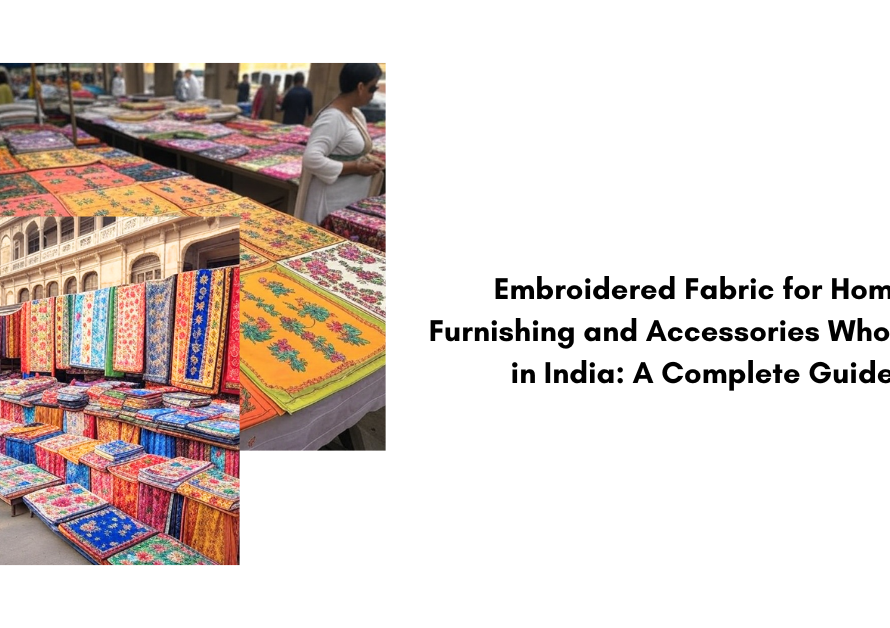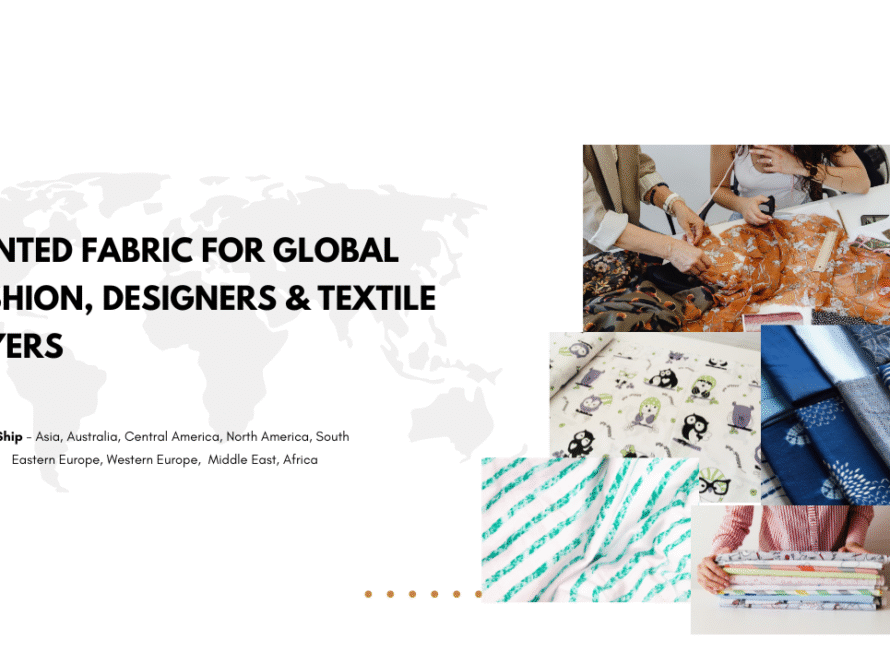



Gaji Silk Printed Fabric sits at an interesting intersection of textile character and surface design. The fabric itself establishes the foundation—its surface, fall, handle and visual response—while printing determines how a floral, geometric, heritage-inspired or contemporary artwork finally appears on the finished textile.
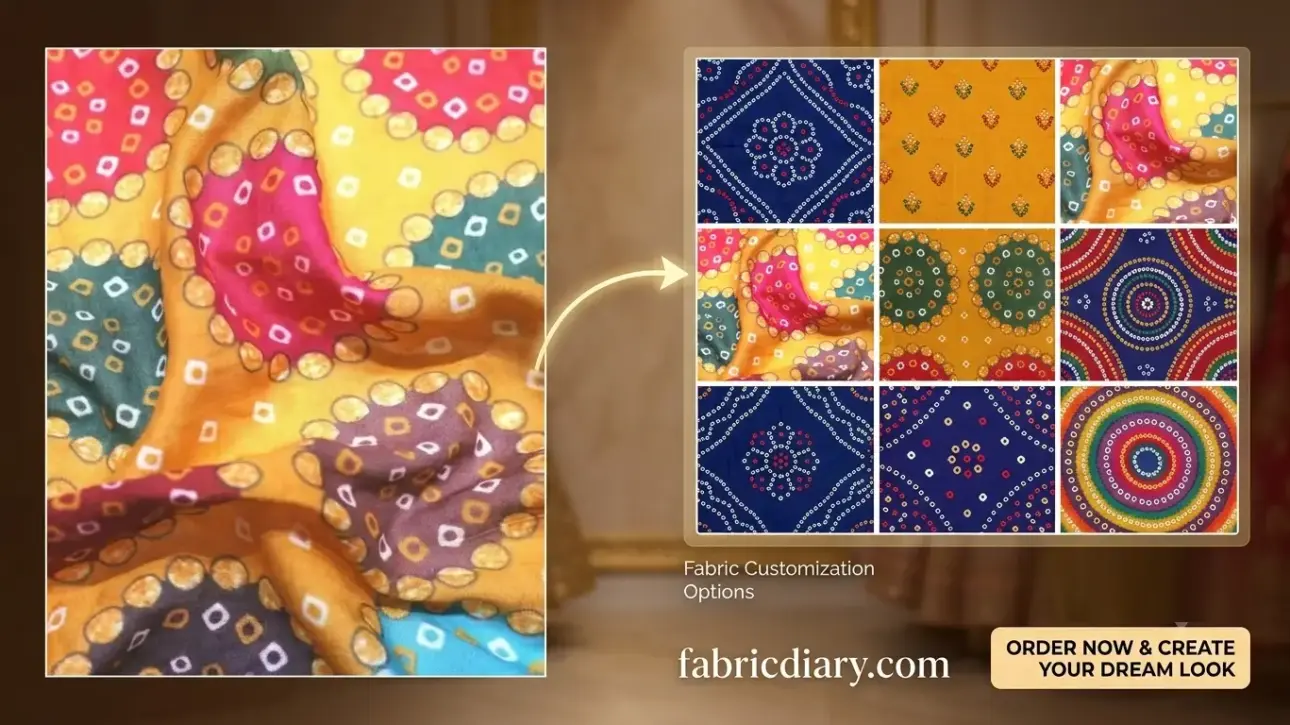
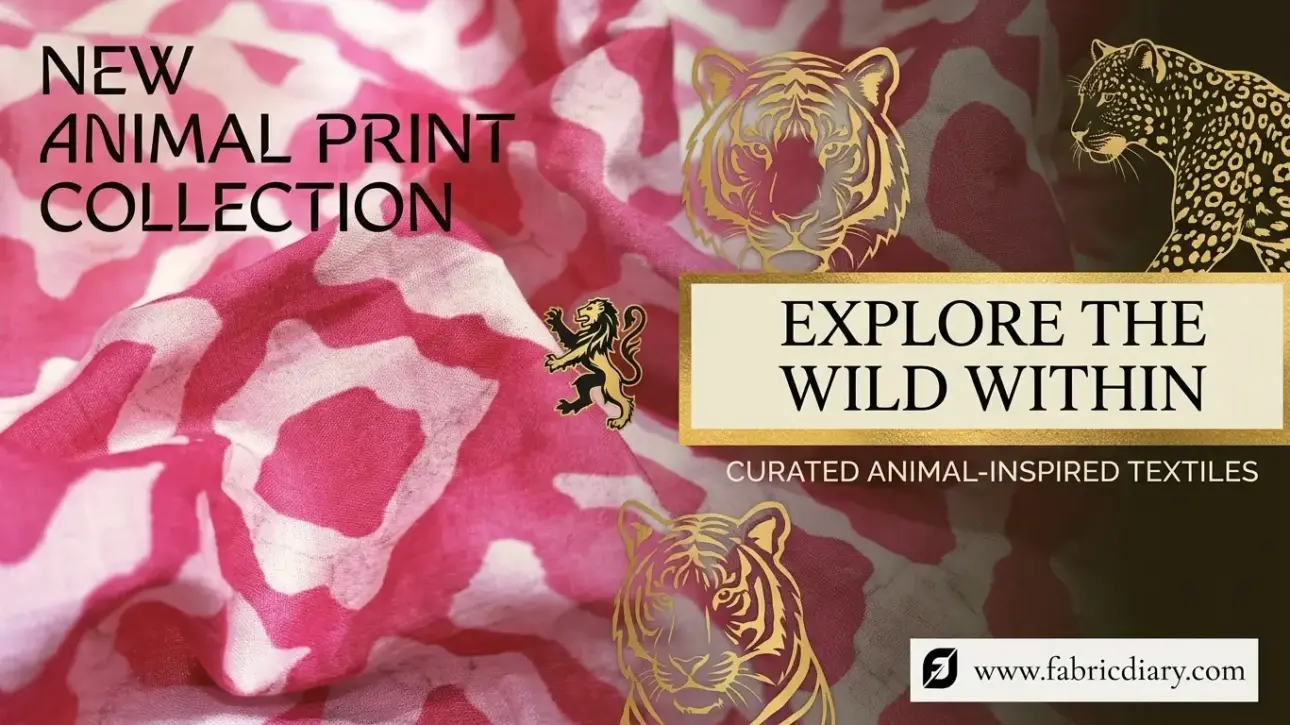
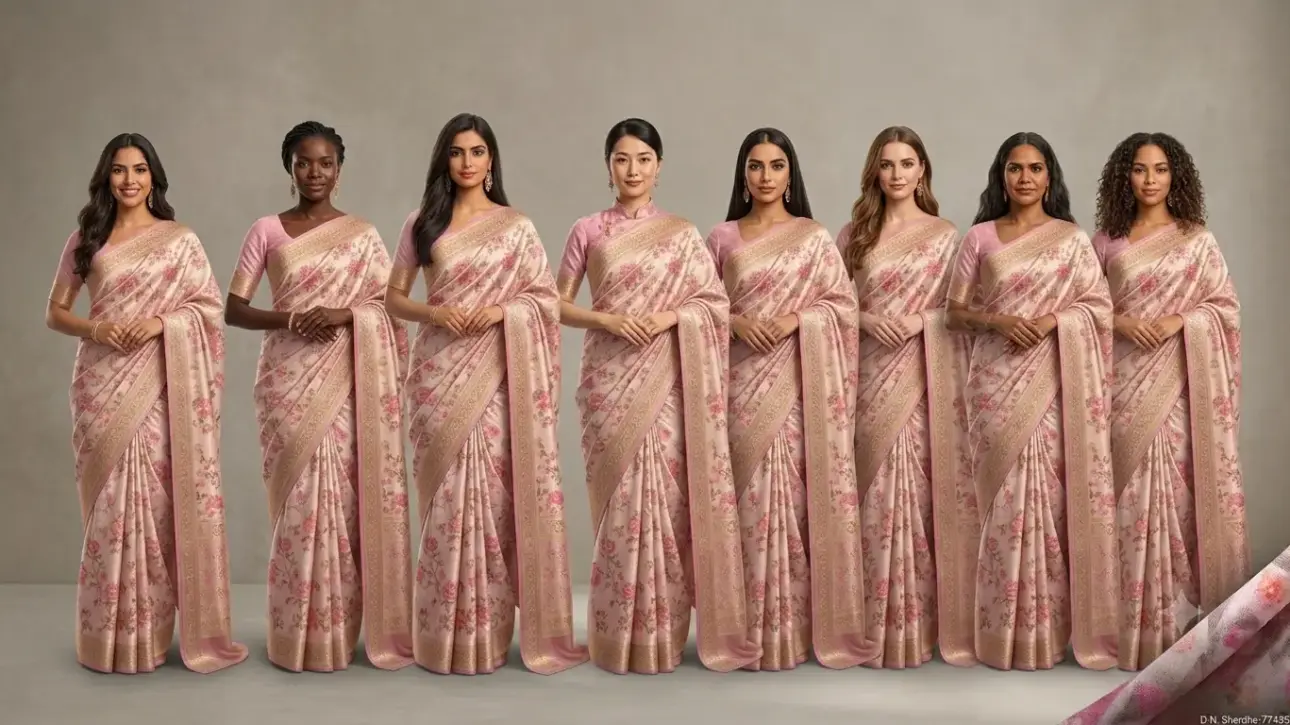
For designers, garment manufacturers, exporters and fashion brands, that distinction matters. A print that looks impressive on a screen is not automatically the right artwork for every silk base. The fabric construction, artwork scale, colour development, printing method, finishing and intended garment all have to work together.
Gaji Silk Printed Fabric: From Silk Base to Finished Print
Madhav Fashion, based in Surat, Gujarat, operates across embroidery, printed and plain fabric categories and identifies Gaji Silk among the fabric bases it works with. Its printed-fabric capabilities include digital print, digital position print and block print, creating different routes for developing printed textiles according to design and production requirements.
This article looks at Gaji Silk Printed Fabric from a manufacturing perspective: how the material is selected, how artwork is prepared, how printing methods differ, why sampling matters, and what B2B buyers should evaluate before moving into production.
What Is Gaji Silk Printed Fabric?
Gaji Silk Printed Fabric refers to Gaji or Gajji Silk fabric that has been developed with a printed surface design.
The important point is that “Gaji Silk” is a commercial material term that can be used differently across textile markets. Buyers should therefore confirm the actual composition and construction of a specific fabric rather than assuming that every product sold under the name has identical fibre content or performance.
Historically, Gajji Silk is associated with Gujarat and is described in museum and textile references as a satin-weave silk fabric. Commercial textile markets, however, may use related terminology across different constructions and qualities.
That makes specification confirmation particularly important in B2B sourcing.
A professional fabric enquiry should ideally establish:
- Actual fibre composition
- Fabric construction
- Width
- Approximate weight or GSM, where relevant
- Surface character
- Colour or base shade
- Print method
- Artwork requirements
- Intended garment
- Sampling requirement
- Production quantity
- Finishing requirements
The objective is not simply to buy something labelled “Gaji Silk.” The objective is to source a fabric specification that performs correctly in the finished product.
Why the Fabric Base Matters Before Printing
Printing begins with a fabric, not with artwork.
Two fabrics can carry the same digital design file and still produce different visual results because their surfaces, absorbency, construction and finishing characteristics are different.
Silk is a protein fibre, and silk printing requires dye or ink systems appropriate to that fibre. Acid dyes are widely used for silk printing, while other dye systems may be selected according to the actual fibre and printing process. Technical textile references describe acid-dye printing on silk through processes involving printing, drying, fixation and washing.
This is why a manufacturer should consider the fabric before finalising production artwork.
For Gaji Silk Printed Fabric, the development process can involve questions such as:
- How does the surface receive fine artwork?
- Does the design need strong contrast?
- Is the artwork intended to be delicate or highly saturated?
- Should the design run continuously across the fabric?
- Is the print intended for a full garment or selected garment panels?
- Will the fabric be used for a flowing garment where drape is visually important?
- Does the buyer require a specific colour reference?
- Is the same design intended for repeated bulk production?
- These questions can influence both the artwork and the production method.
Gaji Silk and the Role of Print Development
A fabric manufacturer does more than transfer a finished image onto cloth.
In commercial textile production, print development can involve preparing artwork, checking repeats, evaluating scale, separating colours where required, creating strike-offs or samples, reviewing colour results and making controlled adjustments before production.
This becomes especially important when a buyer has a specific design direction.
For example, a floral artwork may need different treatment depending on whether it is intended for:
- A saree
- A blouse
- A lehenga
- A flowing dress
- A kurti
- A dupatta
- A scarf or stole
- A coordinated fashion collection
A large floral motif that works well on a broad garment panel may not have the same visual impact when reduced into a small repeat.
Likewise, a very dense allover print can behave differently from a design with significant negative space.
The purpose of sampling is therefore not simply to check whether the image has been printed. It is to determine whether the fabric + artwork + colour + scale + production process are working together.
Digital Printing on Gaji Silk
Digital textile printing has changed the way fashion brands can develop printed fabrics.
Instead of preparing a separate physical screen for every colour in the traditional workflow, digital printing transfers a prepared digital artwork to the textile through an inkjet printing system.
For silk, specialised acid-ink digital printing is widely used because silk is a protein fibre. Industry printing sources describe acid inks as suitable for pure silk and note their ability to produce sharp, bright results when the appropriate fixation and finishing process is followed.
Digital printing can be particularly useful when the design contains:
- Detailed floral artwork
- Multiple colours
- Gradients
- Fine lines
- Photographic or painterly effects
- Complex repeats
- Rapid design variations
- Custom artwork
For designers and brands, this can make the sampling stage more flexible.
However, digital printing should not be treated as a guarantee of identical results on every silk fabric. The actual result depends on the fabric, pretreatment, ink system, colour management, fixation and finishing.
That is why a production sample remains important.
Digital Print vs Position Print
One of the most useful distinctions for buyers is between an allover digital print and a position print.
Allover Digital Print
An allover print is designed to cover the fabric continuously according to the selected repeat or artwork layout.
This can work well for:
- Sarees
- Dresses
- Kurtis
- Co-ord sets
- Flowing silhouettes
- Dupattas
Fashion fabrics requiring continuous surface design
The repeat needs to be planned carefully so that the design looks intentional across the full fabric width and length.
Position Print
A position print places artwork in a defined location rather than treating the entire fabric as one continuous repeat.
This can be useful where the garment itself determines the visual placement.
Examples include:
- Border-focused designs
- Central motifs
- Panel artwork
- Large floral compositions
- Garment-specific placements
Designs intended to align with embroidery or embellishment
Madhav Fashion’s current printed-fabric catalogue includes digital position-print products, illustrating this as a distinct production route within its broader printed-fabric offering.
The important distinction is that position printing is not simply “another type of digital print.” The artwork has to be planned around the garment or panel geometry.
Where Block Printing Fits
Block printing represents a different design and production philosophy.
Instead of transferring artwork directly from a digital file, a carved block is used to apply the design to the textile.
This approach can create a distinctive visual character and can be relevant when the design direction calls for a more handcrafted or heritage-inspired appearance.
However, buyers should distinguish between:
Traditional craft printing and commercial printed fabric inspired by traditional motifs.
For example, an Ajrakh-inspired print may visually reference the colours, geometry and vocabulary associated with Ajrakh without being produced through the complete traditional hand block and resist-dyeing process.
The same principle applies to Patola-inspired designs. Traditional Patola is a double-ikat weaving tradition; a printed textile featuring Patola-inspired motifs should not automatically be described as actual Patola.
For professional sourcing, accurate terminology protects both the buyer and the manufacturer.
Gaji Silk Floral Prints
Floral designs remain one of the most versatile directions for printed silk fabrics.
On Gaji Silk, floral artwork can range from delicate botanical motifs to large-scale statement flowers.
The design scale can significantly change the personality of the finished fabric.
Small Floral Repeats
Small florals can create a softer, more continuous surface.
They may work well for:
- Kurtis
- Dresses
- Shirts
- Everyday occasionwear
- Coordinated sets
Medium Floral Repeats
Medium-scale motifs provide more visual presence without overwhelming the garment.
They can be suitable for:
- Sarees
- Dresses
- Blouses
- Dupattas
- Contemporary ethnicwear
Large Floral Artwork
Large motifs can create a statement fashion direction.
They are particularly interesting when the garment construction allows the designer to control motif placement.
This is where position printing can become valuable.
Heritage-Inspired Gaji Silk Prints
Gaji Silk also provides an interesting base for heritage-inspired print directions.
Commercial fashion collections may explore visual references such as:
- Ajrakh-inspired geometry
- Patola-inspired motifs
- Bandhani-inspired patterns
- Floral heritage layouts
- Traditional Indian borders
- Geometric repeats
Contemporary interpretations of regional textile aesthetics
The important manufacturing principle is to describe the design accurately.
A digitally printed Gaji Silk fabric with an Ajrakh-inspired artwork is still a digitally printed textile. It should not be presented as authentic hand-crafted Ajrakh unless the production process actually follows the relevant traditional technique.
That distinction becomes increasingly important for international brands that need accurate product descriptions and sourcing documentation.
Colour Development for Gaji Silk Printed Fabric
Colour is one of the most sensitive parts of printed fabric development.
A buyer may provide a digital artwork and expect the physical fabric to reproduce it exactly. In practice, digital displays, colour profiles, fabric surfaces, dye chemistry and finishing can all influence the final appearance.
For commercial production, the more useful approach is controlled colour development.
Depending on the programme, buyers may work with:
- Pantone or other colour references
- Physical swatches
- Approved strike-offs
- Digital artwork files
- Previous production standards
- Lab-dip or colour approval procedures
The exact workflow depends on the production setup and buyer requirements.
The key principle is simple:
Approve the physical result before committing to the full production quantity.
A monitor can help communicate a design direction, but the physical fabric is the final reference.
What Happens Before Bulk Production?
A professional printed-fabric programme should not jump directly from artwork to large-scale production.
A more controlled workflow looks like this:
- Fabric Selection
The buyer and manufacturer establish the required Gaji Silk base. - Artwork Review
The artwork is examined for scale, repeat, colours, placement and technical suitability. - Print Method Selection
The production route is selected according to the artwork and quantity. - Sampling
A physical sample or strike-off is produced. - Colour and Design Approval
The buyer reviews the actual printed textile. - Production Specification
The approved fabric, artwork, colour direction and finishing requirements become the production reference. - Bulk Printing
The approved design is reproduced according to the production specification. - Finishing and Inspection
The fabric is processed and inspected according to the agreed requirements.
This process helps reduce the risk of discovering major design or colour problems after bulk production has already begun.
Why Sampling Matters for B2B Buyers
Sampling is particularly important when buying Gaji Silk Printed Fabric for a new collection.
A sample allows a buyer to assess more than the appearance of the artwork.
It can help evaluate:
- Fabric hand feel
- Surface appearance
- Drape
- Print sharpness
- Colour relationship
- Motif scale
- Repeat behaviour
- Transparency or opacity where relevant
- Suitability for the intended garment
- Compatibility with embroidery or embellishment
For fashion brands, the sample can also be cut into an actual prototype garment.
This can reveal issues that are difficult to identify from a fabric swatch alone.
For example, a print may look balanced on a flat one-metre sample but appear too dense when repeated across an entire dress.
Conversely, a large motif that appears excessive on a flat swatch may become highly effective when positioned across a garment panel.
Gaji Silk Printed Fabric for Different Fashion Products
The correct printed-fabric specification depends heavily on the final product.
Sarees
Sarees provide a large uninterrupted canvas, making them suitable for allover artwork, large floral compositions, borders and coordinated placement concepts.
Lehengas
Lehenga development often requires greater attention to panel layout, motif scale and the relationship between the skirt, blouse and dupatta.
A position-oriented approach can therefore be useful for certain designs.
Kurtis and Anarkalis
These garments can work with small-to-medium repeats, floral prints, geometric designs and heritage-inspired patterns.
Dresses and Gowns
The flowing structure of many dresses makes print continuity and motif scale particularly important.
Dupattas
Dupattas can be treated as a complete visual composition rather than simply a continuation of the garment fabric.
Borders, central motifs and coordinated artwork can therefore become important design considerations.
Blouses
Blouses require careful motif scale because the available surface area is smaller.
A print that looks elegant on a saree may need to be reduced, repositioned or redesigned for a blouse.
Gaji Silk for Fashion Brands and Private Labels
For an established fashion brand, printed fabric development is rarely about purchasing a random design from a catalogue.
Brands may have a specific seasonal direction, colour palette or artwork language.
A manufacturing partner can therefore become part of the development process.
A typical B2B programme may involve:
Concept → Fabric → Artwork → Sampling → Approval → Production → Garment Manufacturing
This approach is particularly useful when a brand wants greater consistency between its design concept and finished collection.
The manufacturer needs to understand not only what the print looks like, but also what the buyer intends to make from it.
What International Buyers Should Specify
International buyers should provide as much useful production information as possible at the beginning of the enquiry.
A strong enquiry can include:
- Fabric name
- Fibre composition
- Desired width
- Approximate weight requirement
- Base colour
- Print artwork
- Repeat size
- Colour references
- Allover or position print
- Intended garment
- Sample quantity
- Estimated production quantity
- Required finishing
- Delivery destination
- Testing or documentation requirements
This creates a clearer production brief.
It also allows the manufacturer to identify potential issues before sampling.
How to Evaluate a Gaji Silk Printed Fabric Supplier
Price should not be the only factor.
A lower quoted price can become expensive if the buyer receives inconsistent colour, unsuitable fabric, poor print definition or a production result that does not match the approved sample.
A more complete evaluation can include:
Material Understanding
Does the supplier clearly explain the actual fabric specification?
Print Capability
Can the supplier support the required artwork and print method?
Sampling
Is there a practical sample or approval process before bulk production?
Production Control
Can the approved design be reproduced consistently?
Communication
Can the supplier understand technical artwork and garment requirements?
Finishing
Does the final fabric receive the required post-print treatment?
Quality Inspection
Is the finished fabric checked before dispatch?
Export Readiness
Can the supplier communicate effectively about packaging, documentation and delivery requirements?
These questions are particularly relevant when the buyer is sourcing internationally.
Manufacturing in Surat and the Printed Textile Ecosystem
Surat is one of India’s major textile centres, and its manufacturing ecosystem supports a wide range of synthetic, natural and blended textile activities.
Madhav Fashion is based in Surat and has operated in the textile industry for more than two decades. Its published company information describes its work across embroidery, printed and plain fabrics and lists materials including Gaji Silk, Dola Silk, Uppada, satin, georgette, chinon, organza and others.
For buyers, the value of working with an established textile manufacturing ecosystem is not simply geographic.
It can provide access to interconnected capabilities across:
- Fabric development
- Printing
- Embroidery
- Position printing
- Men’s wear fabrics
- Dupatta development
- Lace and trims
- Garment-related production
That can become useful when a brand wants to develop a coordinated collection rather than source every component independently.
Gaji Silk Printed Fabric and Custom Development
Custom development is different from selecting a ready-made printed fabric.
A ready design generally begins with an existing fabric and approved artwork.
A custom programme may involve:
Fabric selection → artwork development → print placement → colour development → sampling → approval → production
The more variables involved, the more important it becomes to establish a clear production specification.
Buyers should also understand that “custom” does not mean unlimited changes at every stage. Each modification to artwork, colour, repeat, fabric or finishing can affect development time and production planning.
The most efficient approach is usually to consolidate feedback before approving the final production specification.
Quality Checks That Matter
There is no single quality check that determines whether a Gaji Silk Printed Fabric is suitable.
The relevant checks depend on the buyer’s specification and intended application.
Depending on the programme, buyers may evaluate:
- Fabric construction
- Width
- Surface consistency
- Print registration
- Colour consistency
- Motif scale
- Repeat accuracy
- Shade variation
- Print penetration or appearance
- Hand feel after finishing
- Colour fastness requirements
- Physical defects
Colour fastness, in particular, should be evaluated according to the intended product and the buyer’s testing requirements rather than assumed from the word “silk” or from the printing method alone.
Technical references on silk printing show that fixation and post-print washing are important parts of the printing process, and quality evaluation can include colour and fastness testing.
Common Mistakes Buyers Make
Choosing the Print Before Choosing the Fabric
A beautiful artwork is not enough.
The fabric has to support the desired result.
Assuming Every Gaji Silk Is Identical
Commercial terminology can vary, so composition and construction should be confirmed.
Skipping Physical Sampling
A digital screen cannot fully represent the physical textile.
Treating All Prints as Allover Prints
Some designs need garment-specific placement.
Using Heritage Terms Too Loosely
Ajrakh-inspired and Patola-inspired should not automatically be represented as authentic traditional craft.
Ordering Bulk Before Approving a Production Standard
The buyer and manufacturer should have a clear physical reference before large production.
Comparing Suppliers Only on Price
Fabric quality, print process, sampling, consistency and communication can have a much larger impact on the final garment cost.
Gaji Silk Printed Fabric: Manufacturer or Trader?
For B2B buyers, the distinction between a manufacturer and a reseller can be important.
A manufacturer-oriented relationship may provide more direct communication around:
- Fabric selection
- Artwork development
- Print method
- Sampling
- Production planning
- Quality requirements
- Customisation
- Repeat production
A trader or reseller can still be appropriate for certain sourcing needs, particularly when the requirement is simply to purchase an existing stock design.
The correct sourcing model depends on the buyer’s objective.
If the requirement is custom development and repeat production, manufacturing capability becomes more important.
If the requirement is ready stock and immediate purchasing, catalogue breadth and availability may matter more.
Why Gaji Silk Printed Fabric Remains Interesting for Designers
Gaji Silk offers a useful foundation for designers who want the visual character of silk combined with a printed surface.
The possibilities are broad:
- Botanical florals
- Contemporary abstracts
- Geometric designs
- Heritage-inspired motifs
- Minimal repeats
- Large statement artwork
- Border concepts
- Position compositions
- Coordinated print-and-embroidery designs
The strongest result usually comes from treating the fabric and artwork as one design system.
Instead of asking only, “Which print is trending?”, a designer can ask:
What fabric behaviour does the garment require, and what print structure will make that fabric perform visually?
That is a more useful starting point for commercial collection development.
A Practical Gaji Silk Printed Fabric Development Checklist
Before approving a production programme, buyers can use the following checklist:
Fabric
- Is the actual composition confirmed?
- Is the construction suitable for the garment?
- Is the required width established?
- Has the physical fabric been reviewed?
Artwork
- Is the artwork production-ready?
- Is the repeat size confirmed?
- Is the print allover or position-based?
- Are colour references available?
Sampling
- Has a physical sample been approved?
- Has the fabric been reviewed as a garment prototype where necessary?
- Has the print scale been checked?
Production
- Is the printing method confirmed?
- Is the production specification documented?
- Are finishing requirements clear?
- Is the bulk quantity established?
Quality
- What inspection criteria apply?
- Are colour and fastness requirements specified?
- What is the approved reference for bulk production?
Commercial
- What quantity is required?
- Is the programme ready stock, made-to-order or custom?
- What delivery destination and documentation are required?
A clear checklist can prevent many avoidable production misunderstandings.
Gaji Silk Printed Fabric should not be viewed simply as “silk plus a print.”
The finished textile is the result of several connected decisions: the fabric base, artwork, scale, colour, printing method, fixation, finishing and intended garment.
For designers, that means better print development begins with understanding the textile.
For garment manufacturers, it means selecting a fabric and print combination that works during cutting and construction.
For fashion brands, it means developing a physical standard that can be reproduced consistently.
And for international B2B buyers, it means choosing a manufacturing partner that can communicate clearly from sample development through production.
Madhav Fashion’s broader manufacturing portfolio spans embroidery, printed and plain fabrics, with Gaji Silk included among its listed fabric categories and digital, digital-position and block printing among its printed-fabric capabilities.
The most reliable way to source Gaji Silk Printed Fabric is therefore not to start with price alone. Start with the fabric specification, design objective, print method, sample approval and production requirement—then evaluate the commercial offer around that complete specification.
For brands, exporters, garment manufacturers and designers developing a new collection, this approach creates a much clearer path from an artwork idea to a production-ready printed fabric.