


Floral embroidered fabric occupies a rare position in the global textile economy—simultaneously traditional and trend-responsive. From couture ateliers in Paris to mass bridal manufacturing hubs in South Asia, floral embroidery communicates femininity, craftsmanship, and cultural continuity. Global buyers—designers, manufacturers, wholesalers, and boutique owners—gravitate toward floral motifs because they transcend geography while allowing regional interpretation.
Buyer psychology differs by market. Indian buyers often associate floral embroidery with celebration, ritual, and wedding grandeur, while European and North American buyers prioritize subtlety, texture, and seasonality.
Floral Embroidered Fabric for Global Fashion & Textile Buyers
Across both segments, however, florals signal timeless commercial safety—an evergreen category with predictable demand curves, as consistently noted by Vogue, BOF, and WGSN trend reports.
Fabric Characteristics Valued Across Climates and Lifestyles
Floral embroidered fabrics adapt seamlessly to diverse climates. In humid regions, buyers prefer breathable bases like cotton voile, natural cotton mesh, or linen blends with lightweight thread embroidery (80–120 GSM base, low stitch density). In temperate or colder markets, tulle lace, mesh fabric, and layered 3D floral fabrics gain traction due to their structural depth.
Technically, global buyers evaluate:
- Yarn types: Polyester filament, viscose rayon, mercerized cotton
- Embroidery density: 12,000–35,000 stitches per square meter
- Machine types: Schiffli, multi-head computerized embroidery, sequin attachment units
- Quality control: Colorfastness, thread tension uniformity, embroidery pull resistance
Textile Today and Fibre2Fashion frequently cite embroidery durability as a key reordering factor for B2B buyers.
Floral Fabric Variations Influenced by Local Fashion
Floral embroidery is not monolithic. It appears across multiple fabric constructions:
- Flower lace fabric for bridal overlays
- Floral tulle for gowns and veils
- Mesh fabric for contemporary silhouettes
- Floral fabric cotton for summer dresses and casual wear
- Japanese-inspired quilting fabric emphasizing minimal floral geometry
Local fashion influences matter. Indian markets favor dense floral clusters with metallic threads, while Japanese and Scandinavian buyers prefer negative space, asymmetry, and botanical realism—an observation echoed by design pedagogy at FIT and Parsons.
Global Demand Patterns and Country-Specific Buying Trends
According to Statista and Business Insider, embroidered fabric exports continue to rise due to hybrid fashion—where ethnic craft meets modern silhouettes. India accounts for a major share of floral embroidery production, but demand is driven equally by the US, UK, EU, Middle East, and East Asia.
Global buyers often source through platforms like Alibaba, IndiaMART, TradeIndia, Etsy, and Amazon Business—but increasingly prefer direct manufacturer relationships to avoid inconsistency, delayed sampling, and quality mismatch.
Bridal Relevance Rooted in Cultural Traditions
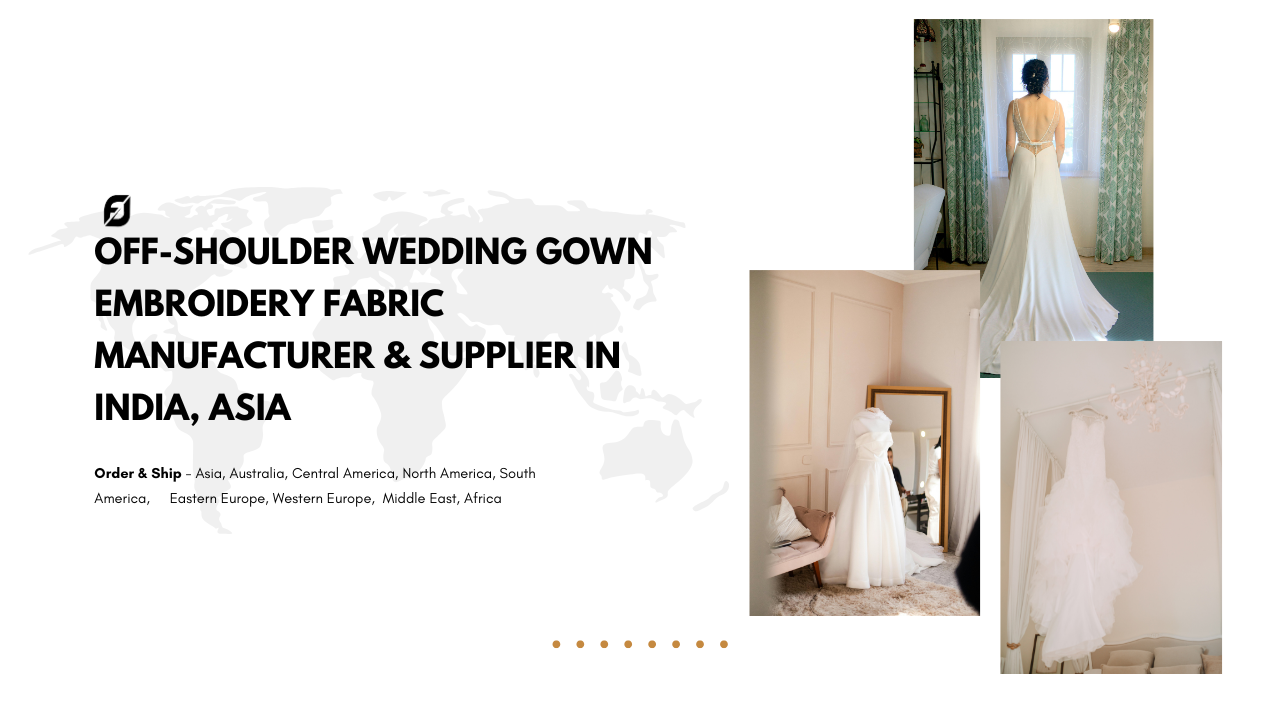
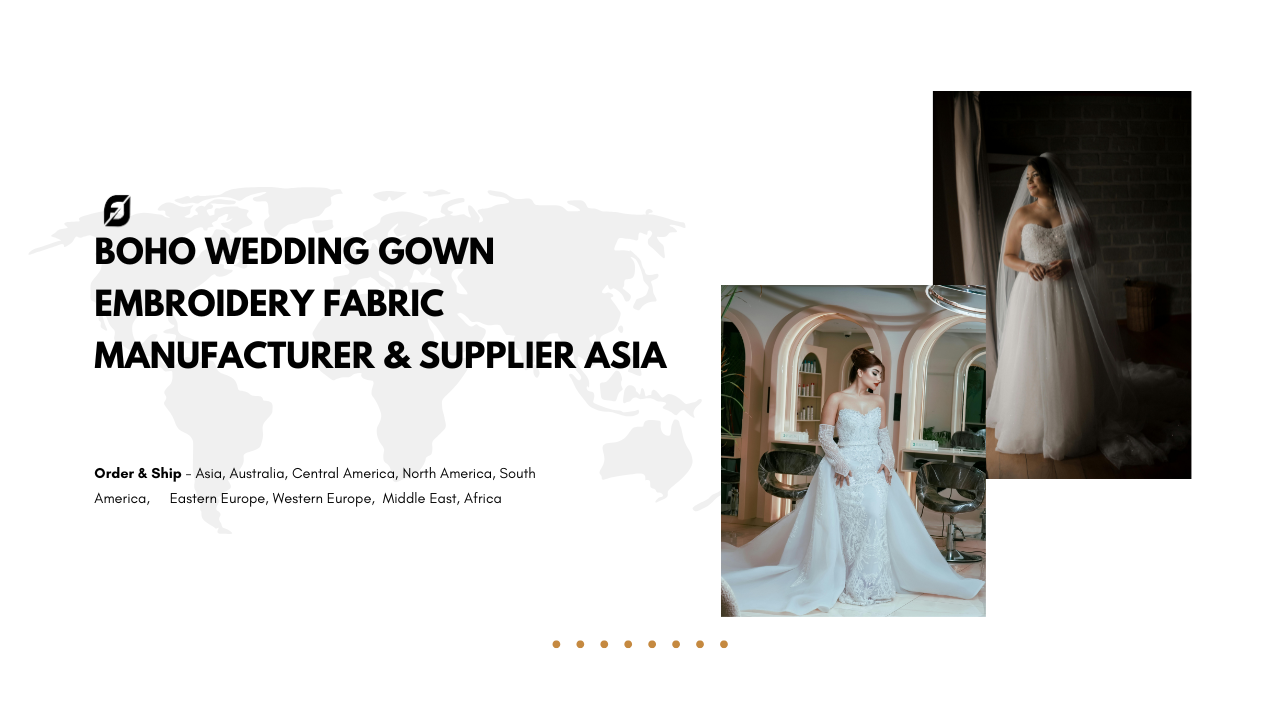
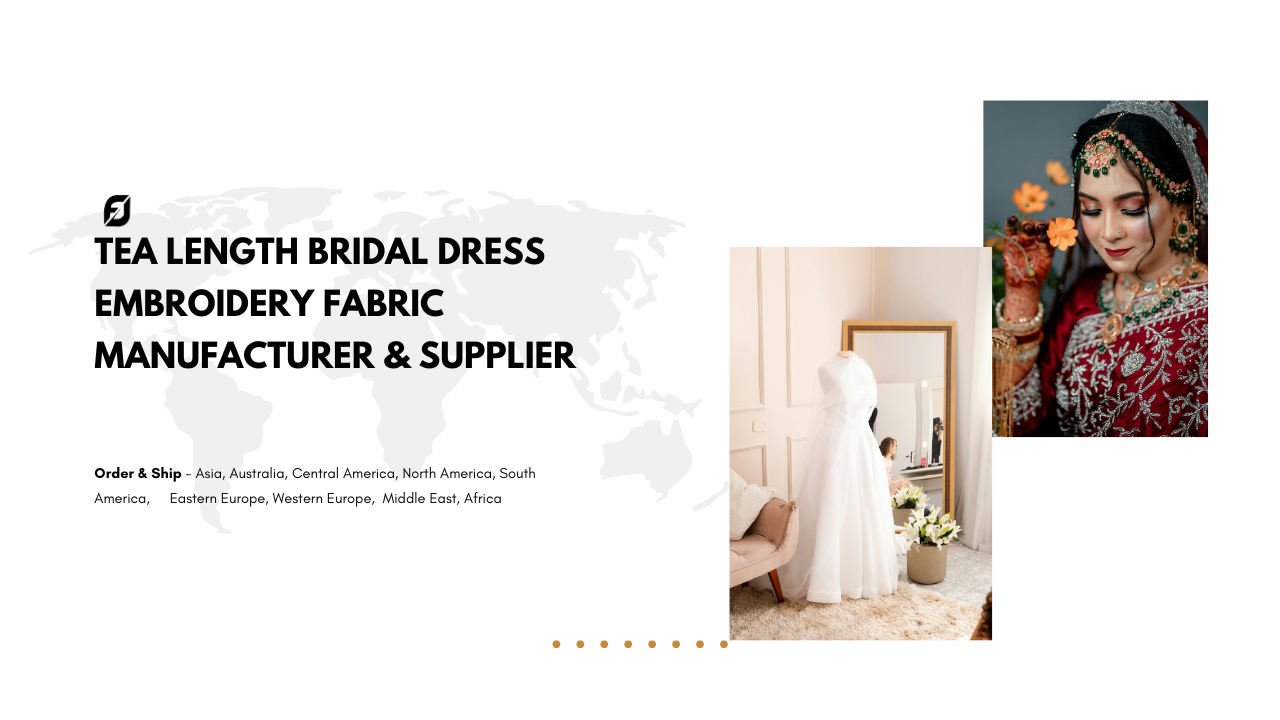
Floral embroidery holds deep bridal symbolism. In India, florals represent fertility and abundance. In Western markets, they symbolize romance and renewal. Wedding lace fabric with floral embroidery dominates bridal collections reviewed by Harper’s Bazaar and Vogue Weddings year after year.
3D floral fabric has become especially prominent in couture bridal, where hand-feel and visual depth justify premium pricing.
Wedding Wear Applications and Regional Outfit Language
Wedding applications vary by geography:
- India: Lehenga, saree, anarkali, dupatta
- Middle East: Abaya overlays, kaftans
- Europe: Bridal gowns, capes, bodices
- US: Veils, bridal separates, reception dresses
Fabric by the yard purchasing remains common for Western designers, while South Asian manufacturers favor full-roll procurement for production efficiency.
Partywear and Eveningwear Demand Across Cultures
Floral embroidered fabrics extend beyond weddings into partywear and eveningwear. Mesh and tulle lace dominate cocktail wear, while embroidered cotton and linen fabrics appear in resort and summer collections.
Designers balance embroidery density with garment weight—over-embroidered fabrics limit wearability, a frequent buyer complaint documented in BOF sourcing features.
Usage in Garment Manufacturing and Private Labels
Garment manufacturers seek consistency. For them, embroidered fabric must meet repeatability standards across dye lots and embroidery runs. Brands sourcing floral embroidered fabric prioritize:
- Shade continuity
- Stable GSM
- Scalable MOQ options
Factories in Surat, widely referenced in Wikipedia and Textile Today, remain global leaders due to vertical integration.
Designers and Boutique Buying Preferences
Boutique owners and designers buy differently from factories. They value:
- Low MOQ access
- Swatch programs
- Unique embroidery motifs
- Ability to reorder small quantities
This behavior mirrors insights from NIFT and Istituto Marangoni research on independent designer sourcing.
B2B Sourcing Psychology, Import Habits, and Bulk Logic
Importers often start with sampling (1–5 meters), test market response, then scale to bulk. Pain points include:
- Inconsistent quality from traders
- Communication delays
- Customs compliance
Direct exporters with transparent QC processes outperform marketplace-only sellers.
Custom Manufacturing, MOQ Flexibility, and Export Reliability
Custom embroidery—thread changes, motif resizing, fabric base substitution—is now a baseline expectation. Buyers assess exporters by:
- Sampling speed
- Custom response accuracy
- Export documentation reliability
Compliance with international standards ensures smooth cross-border trade.
Why FabricDiary and Madhav Fashion Fit Global Buyers
FabricDiary supports small-quantity buyers, designers, and sampling needs with global shipping and curated embroidered fabrics. Madhav Fashion, based in Surat, functions as the manufacturing backbone—offering bulk production, factory pricing, and export-grade reliability.
This dual ecosystem reflects modern sourcing logic: flexibility at the design stage, scalability at production—without compromising quality.
—————-
FAQs
1. Can small designers source floral embroidered fabric internationally?
Yes, many platforms and manufacturers now support low-MOQ international sourcing.
2. What fabrics are best for summer floral embroidery?
Cotton, linen, and lightweight mesh fabrics with low-density embroidery.
3. How do buyers ensure embroidery quality?
By requesting swatches, checking stitch density, and verifying QC standards.
4. Are floral embroidered fabrics suitable for mass production?
Yes, especially when produced on Schiffli or multi-head machines.
5. What are common export challenges?
Customs compliance, color variation, and shipping timelines.
6. Can embroidery designs be customized?
Most manufacturers allow motif, color, and fabric customization.
7. Is fabric by the yard available for wholesale buyers?
Yes, particularly for designers and boutiques.