


Dola Silk Printed Fabric has become an interesting fabric category for fashion businesses looking for a combination of attractive surface appearance, fluid movement, print versatility, and commercial fashion appeal.
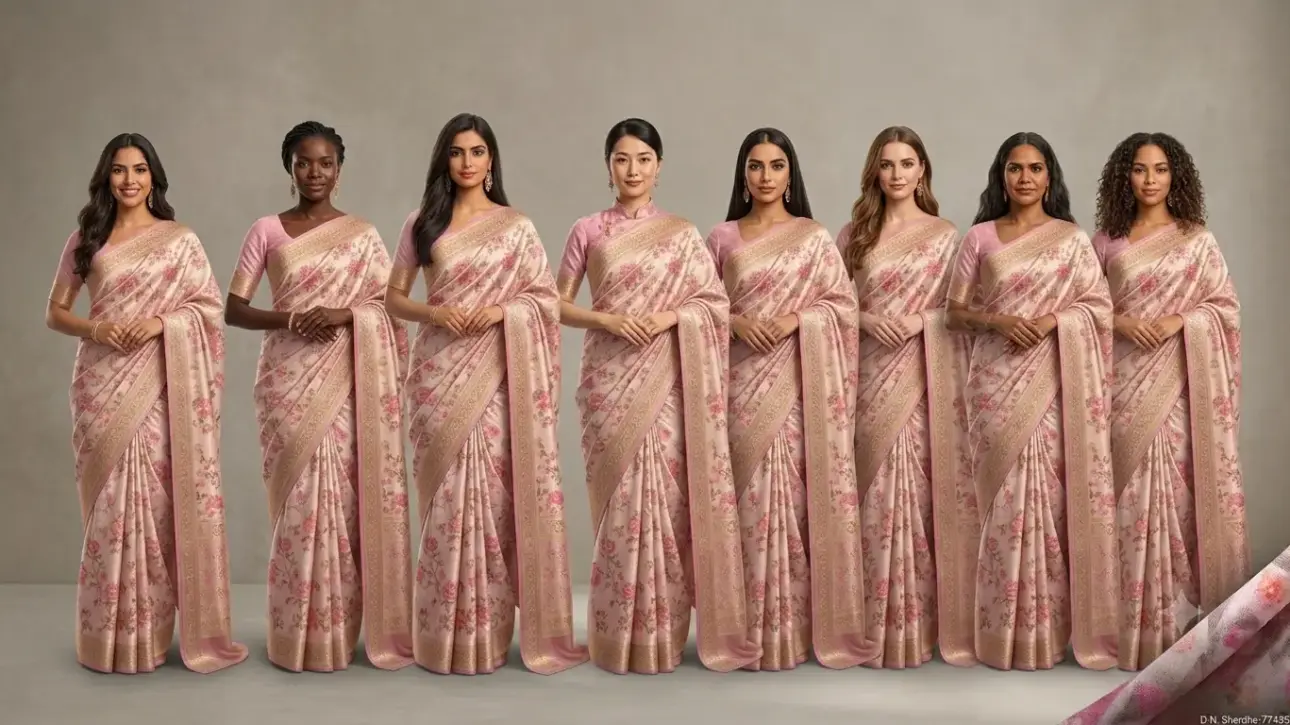
From ethnicwear and occasionwear to contemporary dresses, kurtis, co-ord sets, sarees, dupattas, blouses, skirts, and flowing silhouettes, printed Dola Silk can be developed for a wide range of apparel concepts.
Dola Silk Printed Fabric: A Complete B2B Sourcing Guide for Fashion Buyers
But for a professional buyer, selecting Dola Silk Printed Fabric should involve much more than choosing a beautiful print from a catalogue.
The real sourcing questions are:
What is the actual composition of the fabric? How is the fabric constructed? How does it drape? Which printing process is suitable? What print scale works for the garment? Is the artwork allover or position-based? Can the approved sample be reproduced consistently in bulk?
These questions become particularly important because “Dola Silk” is a commercial textile term rather than one universally standardized fibre composition or construction. Depending on the supplier and quality, the term can be used for different fabric constructions and fibre bases.
For fashion manufacturers, wholesalers, exporters, designers, boutique labels, sourcing houses, and international buyers, this makes specification-based sourcing essential.
Madhav Fashion approaches printed fabric sourcing from this practical perspective: the objective is not simply to supply a fabric carrying a particular name, but to help buyers identify a fabric quality and print development that fits the intended garment and production requirement.
This guide explains the most important things buyers should understand before sourcing Dola Silk Printed Fabric.
What Is Dola Silk Printed Fabric?
Dola Silk Printed Fabric refers to a Dola Silk-type fashion fabric that has been decorated with printed artwork.
The fabric may be developed in different compositions, constructions, finishes, widths, weights, and surface characteristics depending on the specific quality.
This is why two fabrics carrying the Dola Silk name may not necessarily behave in exactly the same way.
One quality may have a softer and more fluid hand.
Another may have a different surface appearance or construction.
Another may be selected primarily for a particular garment category.
For a buyer, the commercial name is therefore the starting point—not the complete technical specification.
A proper Dola Silk Printed Fabric inquiry should ideally establish:
Fibre composition
Fabric construction
Finished width
Weight or GSM where relevant
Surface appearance
Hand feel
Drape
Print method
Print repeat
Artwork
Colourway
Finishing
Intended garment
Required production quantity
Quality approval requirements
This approach is particularly important for B2B sourcing because the same fabric family can be used for very different products.
A dress manufacturer may prioritize fluidity and movement.
A kurti manufacturer may prioritize print clarity and commercial costing.
A saree or dupatta buyer may focus more heavily on width, border treatment, print layout, and overall appearance.
An international brand may additionally require detailed composition and production documentation.
The fabric name alone cannot answer all of these requirements.
Why Dola Silk Is Considered for Printed Fashion
Printed fabrics are fundamentally visual products, but their visual performance is strongly connected to the underlying textile.
A print does not exist independently from the fabric.
The same artwork can look completely different on two different fabrics because the surface, absorbency, texture, drape, light reflection, and finishing may change the final appearance.
Dola Silk-type fabrics can be attractive for fashion printing because they can provide a flowing fashion appearance while giving the artwork a visible role in the finished garment.
This can make them relevant to products where movement and print are important parts of the design.
Potential applications include:
Fashion dresses
Kurtis
Suit sets
Sarees
Dupattas
Blouses
Skirts
Gowns
Tops
Co-ord sets
Indo-western garments
Occasionwear
Lightweight jackets
Fashion overlays
Contemporary ethnicwear
However, application suitability should always be confirmed against the actual fabric quality.
A buyer should not select Dola Silk simply because it is commonly used for a particular garment.
The correct question is whether the specific construction and finish meet the requirements of that garment.
Understanding the Meaning of “Pure Dola Silk
The term “Pure Dola Silk” deserves special attention in B2B sourcing.
In commercial textile markets, fabric names are often influenced by trade terminology, regional usage, construction, appearance, and market positioning.
The word “silk” in a commercial fabric name should therefore not automatically be interpreted as a guarantee that the fabric consists entirely of natural silk.
Similarly, the word “pure” should not replace a proper composition specification.
A professional buyer should request confirmation of the actual fibre composition.
For example, instead of relying on:
“Pure Dola Silk”
the buyer should establish:
“What is the actual fibre composition and construction of this approved quality?”
This distinction helps prevent misunderstandings between buyer and supplier.
It is particularly important for international sourcing because terminology can vary between markets.
The same commercial name may be interpreted differently by buyers in South Asia, the Middle East, Europe, North America, Africa, or other regions.
A written specification and physical sample create a much stronger sourcing reference.
Dola Silk Fabric and Print Development
Print development begins before the fabric reaches the printing stage.
A buyer needs to understand what the artwork is intended to achieve.
For example, a small floral repeat may be suitable for a commercial everyday dress collection, while a large-scale botanical design may be more appropriate for an occasionwear silhouette.
Similarly, a geometric design may require accurate repeat alignment to maintain visual continuity.
An ethnic motif may need a border or panel treatment rather than a simple allover repeat.
This is why artwork and fabric selection should be developed together.
Before printing, buyers should consider:
Artwork style
Is the design floral, geometric, abstract, ethnic, conversational, ornamental, or photographic?
Motif size
Are the motifs small, medium, or large?
Repeat
How frequently does the artwork repeat across the fabric?
Colourway
Does the artwork require one colourway or several commercial variations?
Garment
Where will the fabric be used?
Placement
Does the artwork need to appear continuously or in defined garment locations?
These decisions affect the final result.
Digital Printed Dola Silk Fabric
Digital printing is an important development route for modern fashion fabrics.
One of its major advantages is flexibility during artwork development.
Instead of treating every design as a large conventional production setup from the beginning, digital workflows can be useful for developing and evaluating designs before larger commercial production decisions are finalized.
Digital printing can be particularly useful when buyers need:
Design sampling
Artwork testing
Multiple colourways
Detailed motifs
Complex illustrations
Photographic artwork
Small design collections
Design variations
Fast visual development
However, digital printing itself should not be treated as a universal quality guarantee.
The correct print technology depends on the actual textile construction and fibre composition.
Different textile bases can require different printing systems, dyes, pigments, pretreatments, fixation methods, washing processes, and finishing.
Therefore, the question should not simply be:
“Can Dola Silk be digitally printed?”
The better question is:
“Which printing and fixation process is appropriate for this specific Dola Silk construction?”
That is a much more useful B2B question.
Digital Printing vs Bulk Printing
Buyers sometimes assume that digital printing is automatically for small quantities and rotary printing is automatically for large quantities.
The reality is more nuanced.
Digital printing can be highly useful during:
Sampling
Artwork development
Multiple design testing
Colourway testing
Limited collections
Complex artwork development
Bulk printing methods can become commercially attractive when:
Artwork is finalized
Fabric is approved
Production quantities justify setup
Repeat is confirmed
Colour standards are established
The production specification is stable
The correct decision depends on the complete commercial requirement.
Important variables include:
Quantity
Number of designs
Number of colourways
Repeat size
Fabric construction
Artwork complexity
Setup requirements
Finishing
Production economics
A good supplier should therefore discuss the complete requirement rather than pushing one printing method for every project.
Allover Dola Silk Printed Fabric
Allover printing means the artwork is repeated across the fabric.
This is one of the most common approaches for printed fashion fabrics.
An allover design can create a continuous surface identity and is particularly useful for garments where the print itself is an important visual feature.
Common allover directions include:
Floral repeats
Botanical patterns
Geometric prints
Abstract designs
Ethnic motifs
Small conversational prints
Decorative patterns
Artistic illustrations
The important consideration is repeat engineering.
A print that looks attractive on a digital screen may not necessarily produce the same effect after cutting.
For example, a large flower could fall directly across a seam or be partially removed during cutting.
Therefore, the buyer should review the print in relation to the garment pattern.
Position Printed Dola Silk Fabric
Position printing is different.
Instead of repeating the artwork continuously across the fabric, the design is placed in predetermined areas.
This approach can be useful when the garment itself is designed around the artwork.
Examples include:
Front panels
Neckline artwork
Sleeve motifs
Hem borders
Blouse panels
Lehenga panels
Dupatta borders
Decorative garment sections
Position printing can provide a more engineered appearance.
It can also reduce the problem of an important motif being randomly cut during garment manufacturing.
However, position printing requires greater planning.
The garment pattern, fabric width, artwork dimensions, cutting layout, and placement must be considered together.
If the buyer needs this type of design, it is better to communicate the requirement before print production rather than trying to convert an allover print into a position print afterward.
Print Scale: One of the Most Important Decisions
Print scale is often underestimated.
A buyer may approve artwork because it looks attractive on a computer monitor without considering how large the motifs will actually appear on the fabric.
This can create problems during garment development.
Small prints
Small motifs can create a more continuous and commercially versatile appearance.
They may work well for:
Everyday dresses
Kurtis
Tops
Shirts
Co-ords
Smaller garment panels
Medium prints
Medium motifs can provide a balance between visual identity and garment usability.
They may work across several apparel categories.
Large prints
Large motifs can create a stronger statement.
They can be especially effective on garments with larger uninterrupted panels.
But large artwork requires more attention to cutting.
A large flower positioned beautifully on a fabric roll may become partially hidden when the garment is assembled.
This is why print scale should be approved with the final garment in mind.
Choosing Dola Silk Printed Fabric for Dresses
Dresses are one of the applications where fabric movement and print can work together to create the final fashion effect.
For dresses, buyers should examine:
Drape
Fabric fall
Surface appearance
Print scale
Opacity
Colour appearance
Seam behaviour
Finishing
Garment silhouette
A flowing dress can benefit from an artwork that moves naturally with the fabric.
A structured dress may require a different fabric construction.
Therefore, “Dola Silk for dresses” is not one universal specification.
The dress itself determines the fabric requirement.
Dola Silk Printed Fabric for Kurtis
Kurtis and ethnic fashion provide another important application.
For these garments, buyers may focus on:
Print clarity
Colour combinations
Repeat
Motif scale
Fabric fall
Width
Cost efficiency
Matching requirements
For commercial collections, a versatile print can be valuable because the same fabric can potentially be used across several silhouettes.
However, buyers should still test the fabric in the actual garment category.
A print that works for a long kurti may not have the same impact on a short top.
Dola Silk for Sarees and Dupattas
Sarees and dupattas require special attention to print layout.
Unlike a simple garment panel, these products may involve body areas, borders, ends, and decorative sections.
An allover print can provide a continuous visual appearance.
A border or engineered design can create a more structured result.
The buyer should decide whether the product needs:
Allover artwork
Border artwork
Pallu-focused artwork
Position motifs
Coordinated colourways
Matching blouse fabric
This should be discussed before production.
Dola Silk for Occasionwear
Occasionwear often depends heavily on visual impact.
Print, colour, surface, movement, and garment construction all contribute to the final appearance.
For occasionwear, buyers may prefer:
Larger motifs
Richer colour relationships
Decorative artwork
Botanical designs
Ornamental patterns
Dramatic repeats
Engineered placements
But visual richness should not compromise garment usability.
A beautiful print still needs to work with the silhouette and cutting plan.
How International Buyers Should Source Dola Silk
Dola Silk is particularly interesting from an international sourcing perspective because the terminology may not be equally familiar in every market.
A buyer in India may search directly for:
Dola Silk Printed Fabric
A buyer elsewhere may use broader search terms such as:
Printed silk fabric
Silk printed fabric
Digital printed silk fabric
Printed fabric for dresses
Wholesale printed silk fabric
Floral printed silk fabric
Custom printed silk fabric
Allover printed fabric
Fashion fabric manufacturer
Printed fabric supplier
This difference in terminology matters for both suppliers and buyers.
A supplier may describe a fabric using a regional trade name, while the international buyer may describe the same sourcing need according to its appearance or intended application.
For this reason, international textile sourcing works best when suppliers communicate both the commercial fabric name and the technical characteristics.
Regional Considerations for Dola Silk Buyers
Different fashion markets can have different priorities.
South Asian Buyers
Dola Silk is a familiar commercial terminology in many South Asian textile and apparel markets.
Buyers may be sourcing for:
Kurtis
Sarees
Dupattas
Suit sets
Lehengas
Ethnic dresses
Indo-western garments
Print versatility and commercial garment costing can be important considerations.
Middle Eastern Buyers
For flowing and occasion-focused fashion, buyers may pay particular attention to:
Drape
Colour depth
Opacity
Surface appearance
Embellishment compatibility
Garment movement
Again, individual markets and brands can have very different requirements.
African Fashion Markets
Many fashion businesses across African markets work with strong colours, expressive patterns, and commercially distinctive textiles.
For buyers in these markets, print scale, colour relationships, garment yield, and commercial pricing may be important.
But Africa is not a single fashion market. Buyer requirements can vary substantially between countries, cities, customer groups, and product categories.
European and North American Buyers
International brands may place greater emphasis on:
Fibre composition
Technical specifications
Consistency
Repeatability
Physical sample approval
Colour standards
Production documentation
Repeat-order reliability
For these buyers, a supplier’s ability to communicate clearly can be an important part of sourcing quality.
What Should a B2B Buyer Ask a Dola Silk Supplier?
A professional inquiry should provide enough information for the supplier to understand the project.
Useful questions include:
About the fabric
What is the fibre composition?
What is the construction?
What is the finished width?
What is the weight?
What is the hand feel?
What is the expected drape?
What finishing is applied?
About printing
Which printing process is recommended?
Is digital printing available?
Is bulk printing available?
What print repeat is possible?
Can multiple colourways be developed?
Can buyer artwork be used?
About production
Can the approved sample be used as the bulk reference?
How is colour approved?
How is production inspected?
Can repeat orders be reproduced against the approved standard?
These questions create a much more useful sourcing conversation than asking only for a price.
Using Your Own Artwork on Dola Silk
Many fashion brands want to print their own artwork rather than select a supplier’s existing design.
This can be an effective route for building a distinctive collection.
However, buyer-owned artwork requires careful communication.
The supplier may need:
High-resolution artwork
Repeat dimensions
Colour references
Placement requirements
Border specifications
Print scale
Garment information
Fabric specification
If the design is proprietary, the buyer should also establish appropriate commercial and intellectual-property expectations with the supplier.
The artwork approval should ideally happen in stages.
First, the design itself is confirmed.
Then the print scale and repeat are checked.
Then a physical sample can be evaluated.
Only after the fabric and print are approved should bulk production be finalized.
Multiple Colourways From the Same Artwork
A single artwork can often become several commercial products by changing the colourway.
For example, a floral print could be developed in:
Light neutral colours
Dark base colours
Pastel combinations
High-contrast combinations
Jewel-inspired colour relationships
Monochromatic versions
This can help brands create coordinated collections without developing completely new artwork for every SKU.
But colourway approval should be treated as a production decision, not merely a graphic-design decision.
Colours can appear differently on a screen and on physical fabric.
The actual printed fabric should therefore be evaluated before bulk approval.
The Importance of Physical Sample Approval
One of the most important steps in fabric sourcing is physical approval.
A digital image cannot fully communicate:
Hand feel
Drape
Surface texture
Actual colour appearance
Fabric density
Print coverage
Final finishing
A physical sample provides a much stronger reference.
For a professional buyer, the sample should ideally become a production benchmark.
The buyer can then compare bulk production against the approved reference.
This reduces the risk of vague descriptions such as “same fabric” or “same print.”
From Sample to Bulk Production
A professional sampling process can follow a structured sequence.
Stage 1: Requirement
The buyer defines:
Fabric
Composition
Width
Application
Colourway
Quantity
Stage 2: Development
The supplier develops the requested fabric and print.
Stage 3: Sample
A physical sample is produced.
Stage 4: Evaluation
The buyer checks:
Hand
Drape
Colour
Repeat
Surface
Garment suitability
Stage 5: Approval
The buyer confirms the approved quality.
Stage 6: Bulk Production
The approved specification becomes the production reference.
Stage 7: Inspection
Production is checked against the approved standard.
This system is especially valuable for repeat buyers.
How to Inspect Printed Dola Silk Fabric
Inspection should consider more than visual beauty.
A buyer should evaluate the finished fabric for consistency.
Important checkpoints can include:
Fabric width
Confirm that the delivered finished width matches the approved specification.
Composition
Confirm the agreed material specification.
Print clarity
Look for unwanted blur, unevenness, or other inconsistencies.
Colour
Compare against the approved physical reference.
Repeat
Check whether the artwork repeat remains consistent.
Surface
Check for unexpected changes in hand or finishing.
Defects
Review the fabric for visible production defects according to the agreed inspection standard.
Garment suitability
If possible, test the fabric through the actual garment-making process.
The ultimate goal is not simply to inspect fabric.
It is to confirm that the fabric performs as intended in production.
Common Mistakes Buyers Make
Mistake 1: Buying by Name Alone
A fabric name does not always communicate composition and construction.
Better approach:
Request a technical specification.
Mistake 2: Approving Only a Digital Image
A computer screen cannot reproduce the complete physical behaviour of fabric.
Better approach:
Approve a physical sample.
Mistake 3: Ignoring Print Scale
Artwork can look excellent on screen and fail during garment cutting.
Better approach:
Evaluate print scale against the garment pattern.
Mistake 4: Choosing Printing Technology Too Early
A buyer may decide “digital” or “rotary” before discussing the actual production requirement.
Better approach:
Choose the process after considering fabric, artwork, quantity, repeat, colourways, and economics.
Mistake 5: Not Defining Allover vs Position Printing
A buyer may discover too late that the artwork needs engineered placement.
Better approach:
Define print layout before production.
Mistake 6: Comparing Suppliers Only on Price
A cheaper metre price does not necessarily mean lower total garment cost.
Differences in width, fabric weight, wastage, print consistency, finishing, and repeatability can influence commercial value.
Better approach:
Compare equivalent specifications.
When Dola Silk May Not Be the Right Fabric
Professional sourcing also means recognizing when another fabric is better.
Dola Silk may not be appropriate if the buyer specifically needs:
A cotton-led hand
A very structured textile
A particular georgette construction
A particular muslin construction
A specific chiffon construction
A utility-focused textile
Heavy structured tailoring performance
A precisely engineered garment placement without planning a position print
The goal is not to make every fabric work for every garment.
The goal is to select the correct textile for the product.
Dola Silk vs Generic Printed Silk
The phrase “printed silk fabric” is broad.
Dola Silk is a more specific commercial category, although the exact construction can vary.
A generic printed silk search may lead to fabrics with substantially different:
Fibre compositions
Weights
Constructions
Surface textures
Drapes
Printing characteristics
Prices
End uses
Therefore, buyers should compare actual specifications rather than relying on category names.
The right question is:
Which fabric quality gives the required garment performance and print result?
Building a Reliable Dola Silk Print Program
For brands producing collections regularly, a single purchase is often less important than repeatability.
A long-term program can include:
Base fabric approval
Composition confirmation
Artwork development
Colourway development
Print repeat approval
Physical sample
Garment trial
Bulk approval
Production inspection
Repeat-order reference
This creates a more stable relationship between the buyer and supplier.
Instead of beginning every order from the beginning, the approved quality becomes a reference.
This can be particularly useful for fashion companies that build seasonal or recurring collections.
Why Supplier Communication Matters
Textile sourcing involves many details.
A supplier can have a beautiful fabric but still be difficult to work with if specifications are unclear.
A professional sourcing relationship should make it possible to discuss:
Fabric composition
Construction
Width
Artwork
Colour
Repeat
Sampling
Bulk production
Inspection
Repeat orders
Clear communication reduces misunderstandings.
For international buyers, this becomes even more important because terminology, expectations, and textile naming conventions can vary between countries.
What Makes a Strong Dola Silk Supplier?
A strong supplier relationship is not defined by one factor.
Buyers should evaluate:
Product understanding
Does the supplier understand different fabric constructions?
Print capability
Can the supplier develop the required print?
Sampling
Can the supplier provide a meaningful physical sample?
Specification control
Can the approved quality be documented?
Production consistency
Can the quality be reproduced?
Communication
Can the supplier clearly discuss technical requirements?
Commercial suitability
Can the supplier support the buyer’s intended production model?
The strongest supplier is the one whose capabilities match the buyer’s actual requirement.
Dola Silk and the Future of Fashion Fabric Sourcing
The fashion industry is becoming increasingly specification-driven.
Designers still begin with visual inspiration, but professional production eventually requires measurable information.
This means the future of printed fabric sourcing will increasingly connect:
Design + Fabric + Printing + Garment Engineering + Quality Control
rather than treating these as separate activities.
Dola Silk is a good example of why this integrated approach matters.
The commercial fabric name helps buyers discover the category.
The technical specification defines what they are actually sourcing.
The print specification defines the visual result.
The physical sample connects design with reality.
The bulk approval process connects sampling with production.
Together, these elements create a more reliable sourcing system.
A Practical Dola Silk Buyer Checklist
Before placing a commercial order, buyers can review the following checklist.
Fabric
Composition confirmed
Construction confirmed
Width confirmed
Weight/GSM confirmed where required
Hand feel approved
Drape approved
Surface approved
Print
Artwork approved
Print method confirmed
Repeat confirmed
Print scale confirmed
Colourway approved
Allover or position confirmed
Border requirements confirmed
Garment
Intended garment confirmed
Cutting requirements reviewed
Motif placement reviewed
Fabric tested in garment where necessary
Production
Physical sample approved
Bulk specification documented
Quality reference retained
Inspection requirements agreed
Repeat-order reference established
This checklist is simple, but it can eliminate many common sourcing problems.
Source Dola Silk by Specification, Not Just by Name
Dola Silk Printed Fabric can be a versatile option for fashion businesses looking for printed textiles with a flowing, fashion-oriented appearance.
It can be explored for dresses, kurtis, sarees, dupattas, gowns, tops, skirts, co-ords, Indo-western garments, and other apparel categories.
But successful sourcing requires a disciplined approach.
The first step is understanding that Dola Silk is a commercial fabric term and that actual composition and construction should be verified.
The next step is matching the fabric with the garment.
Then comes artwork development, print scale, repeat, colour, and the choice between allover and position printing.
Digital printing can provide flexibility for sampling and artwork development, while other bulk printing processes may become appropriate once production requirements are finalized.
Above all, the physical sample should become the bridge between design and bulk production.
For fashion manufacturers, exporters, brands, boutiques, wholesalers, and international sourcing teams, this approach can turn Dola Silk from simply a fabric category into a structured product-development opportunity.
At Madhav Fashion, the objective of fabric sourcing should always be practical: understand the buyer’s requirement, identify the appropriate fabric quality, develop the print according to the application, and create a clear path from sample approval to production.
Because the best printed fabric is not simply the one that looks attractive in a catalogue.
It is the one that performs correctly in the garment, matches the approved specification, and can support a reliable production program.
For buyers exploring Dola Silk Printed Fabric for commercial fashion production, the right starting point is therefore simple:
Define the fabric. Define the print. Define the garment. Approve the physical sample. Document the specification. Then move confidently toward bulk production.