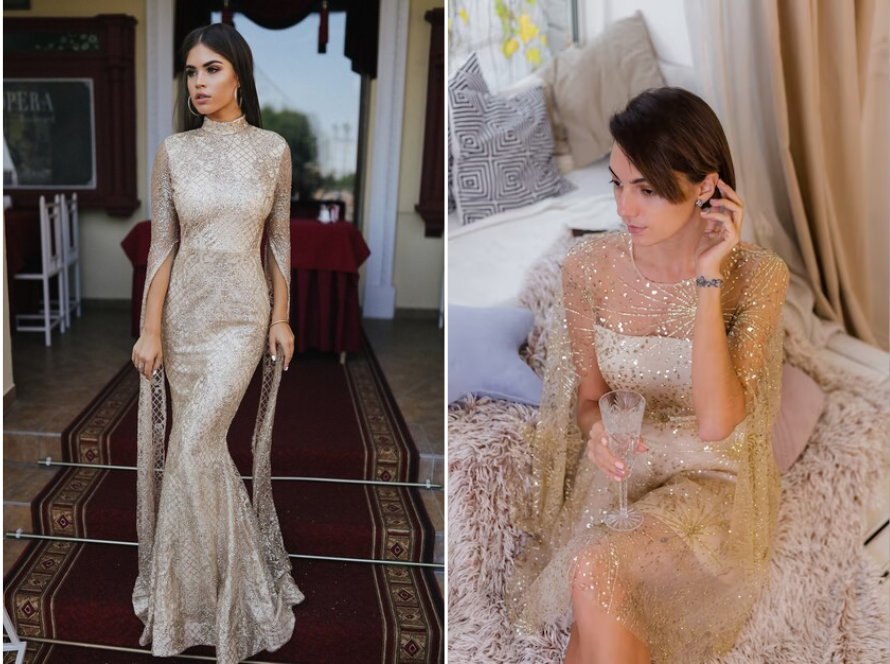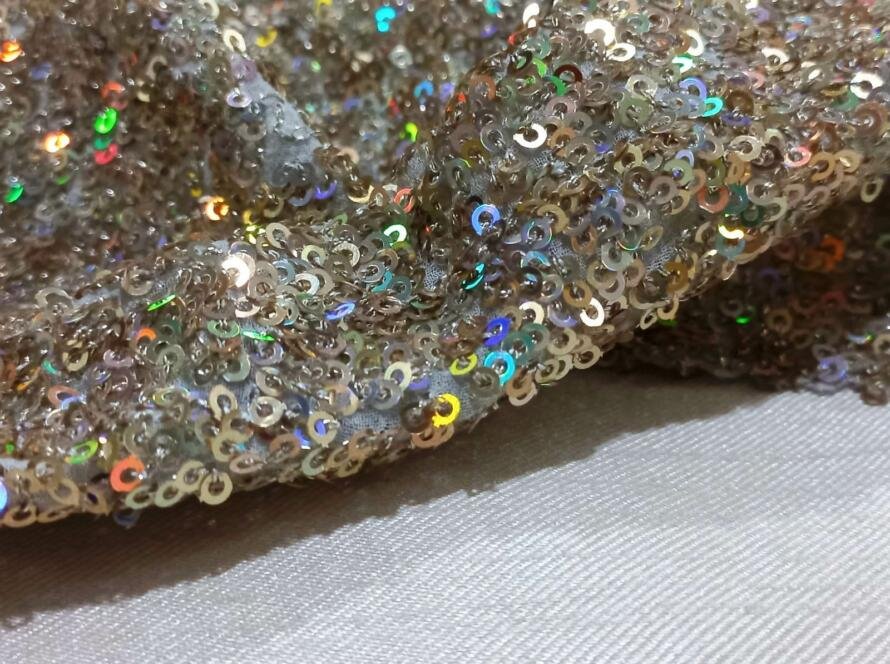



There is a moment in fashion when a collection (Custom Digital Print Fabric) stops being an idea and begins to acquire its own visual language. It may start with a sketch, a colour palette, a photograph, an archival reference, a hand-painted motif or simply the feeling a designer wants the collection to leave behind. But eventually, that idea has to become fabric.
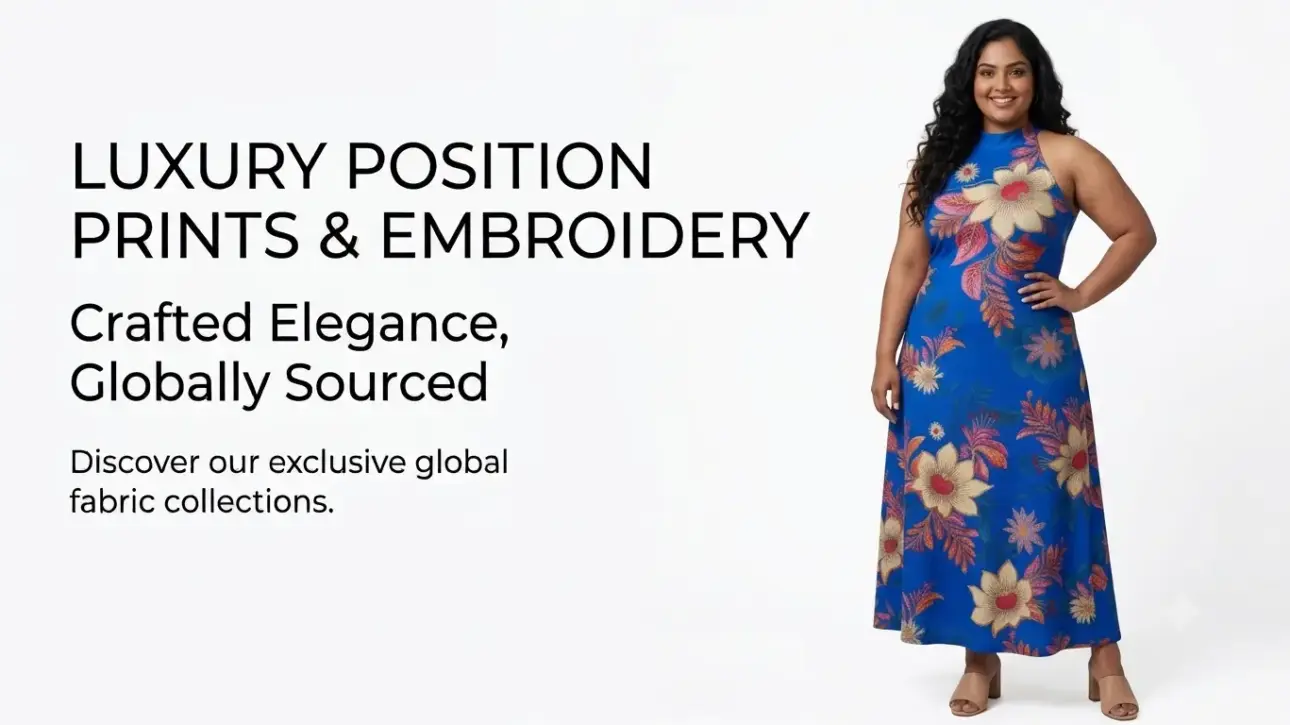
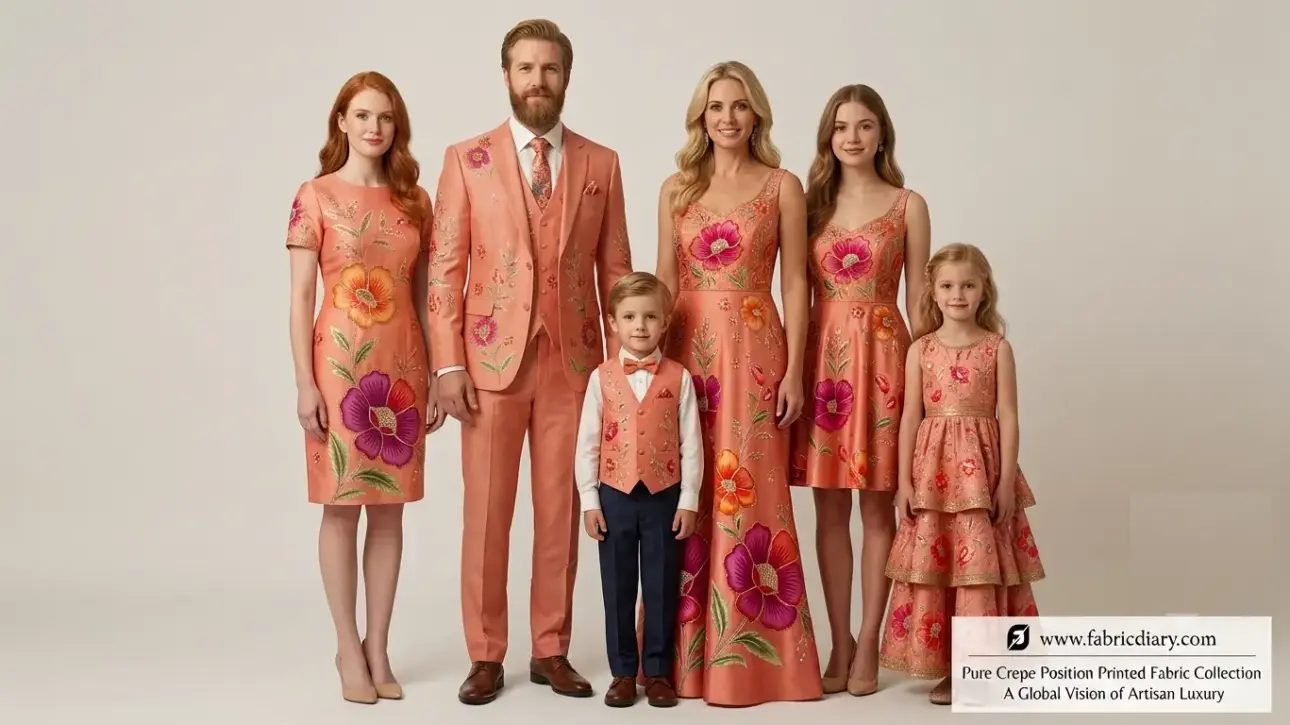
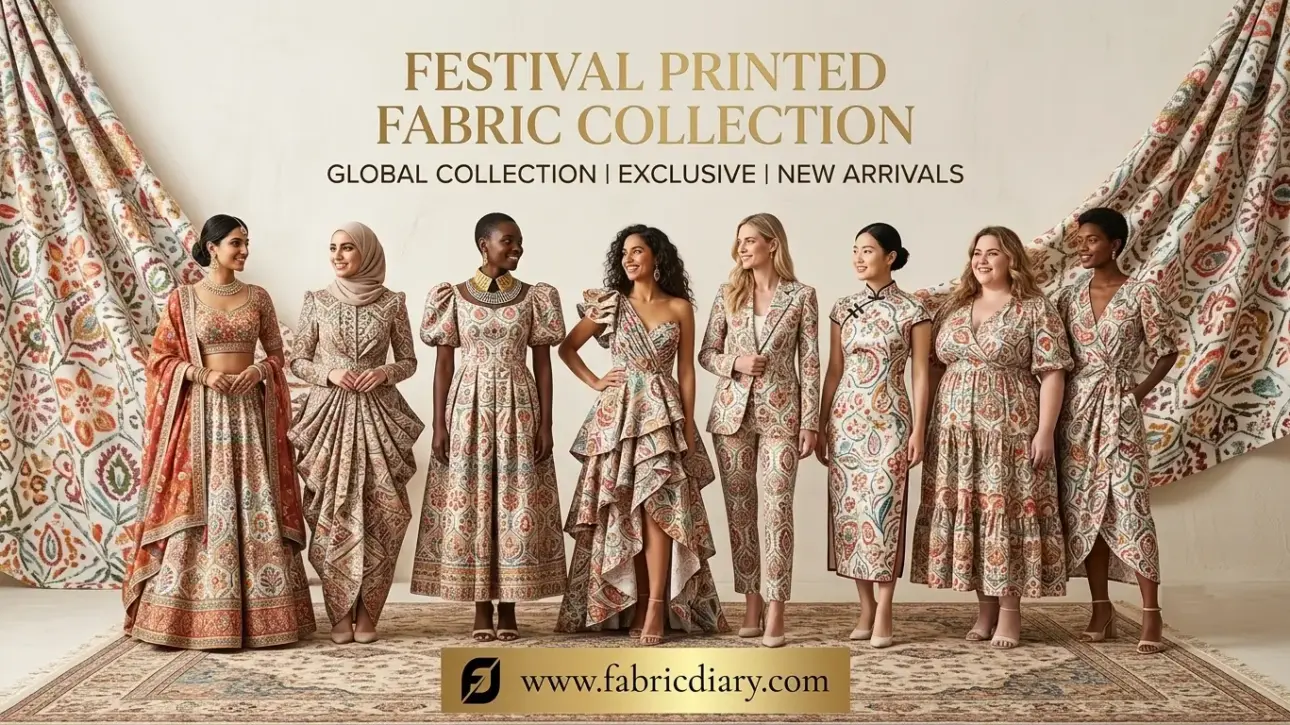
The surface has to carry the mood, the colours have to behave on the textile, the repeat has to make sense on a garment and the finished material has to be suitable for the production program. This is where custom digital printed fabric becomes more than a printing service.
The Art of Custom Digital Print Fabric : From Design Vision to Bulk Fashion
It becomes part of the design and sourcing process itself. Madhav Fashion is a best embroidery fabric manufacturer and exporter in India and Asia, with a broader textile offering that includes printed fabrics for fashion businesses looking for premium fabric development and sourcing.
For brands, garment manufacturers, designers, exporters and wholesale buyers, the opportunity is not simply to select a print from an existing catalogue. It is to develop a fabric around a specific collection requirement, artwork direction, colour story and production objective.
The strongest custom fabric projects begin with a conversation between design and manufacturing: what is the garment, who is the customer, what kind of surface is required, how should the artwork repeat, which colours matter, and is the project intended for sampling, a limited capsule or a larger bulk production program? Digital textile printing has made this development process more flexible because artwork can be evaluated on the actual fabric before a buyer commits to a larger production route. For commercial buyers, however, customization should not be confused with changing the design continuously during bulk production.
The creative decisions belong primarily to the development and approval stage; once fabric, artwork, colour, repeat and print specifications are approved, production needs controlled execution. That distinction is important for anyone sourcing custom printed fabric for a serious fashion collection.
When Fabric Becomes Part of the Brand
The most memorable fashion collections are rarely remembered only because of the silhouette. A brand may be recognized by a particular colour language, a recurring floral, a distinctive geometric rhythm, an unusual botanical drawing or the way a familiar motif has been interpreted differently. Fabric becomes part of that identity.
For this reason, custom printed fabric is increasingly relevant to buyers who do not want their collection to look like a selection assembled from the same open catalogue available to every other business. A custom print gives a brand the opportunity to begin with its own visual reference and develop the textile around it. The artwork may already exist as a repeat-ready file, or it may begin as an inspiration that needs to be translated into a production-friendly textile design.
The difference is subtle but commercially important. Buying a ready printed fabric means starting with what already exists. Custom fabric development starts with what the collection needs.
For a fashion label, this can mean creating a signature print. For an exporter, it can mean developing artwork around a buyer’s seasonal brief. For a garment manufacturer, it can mean producing a coordinated fabric program for several silhouettes. For a designer, it can mean turning an illustration or hand-drawn motif into a repeat that can actually be cut and stitched at production scale.
This is why custom printing should be treated as a development process rather than simply an order instruction.
The New Language of Digital Textile Design
Digital textile printing has changed the relationship between artwork and fabric. Instead of thinking of printing only as the final decorative step, designers can now consider the printed surface while developing the garment itself.
A print can be enlarged, reduced, recoloured, repeated, repositioned or refined during development. Fine artwork details can be evaluated against the actual fabric surface. Different colour directions can be considered before the production specification is finalized.
That flexibility is particularly useful for fashion businesses because not every collection begins with certainty.
A designer might know that the collection should feel botanical but not yet know whether the final artwork should be delicate or dramatic. A brand may have an established colour palette but want to introduce a new print language. An exporter may receive a buyer brief requiring exclusive artwork in a particular fabric quality. A manufacturer may need one print system that can move across dresses, shirts and coordinated separates.
Digital sampling gives these decisions a practical stage.
The fabric sample becomes a design tool.
It allows the buyer to look at the relationship between artwork and textile rather than judging the artwork only on a monitor.
A Custom Print Should Begin With the Fabric, Not the Artwork Alone
One of the easiest mistakes in custom textile development is to choose the artwork first and assume that it will look identical on every fabric.
It will not.
The same artwork can produce very different visual impressions depending on the base fabric’s surface, construction, opacity, texture, weight and finishing. A detailed motif that looks exceptionally crisp on a smooth surface may need adjustment when developed on a more textured construction. A delicate colour may appear differently against a warm or cool fabric base. A large repeat that looks impressive in a digital preview may become difficult to use if the intended garment is much smaller than the artwork scale.
This is why professional sourcing starts with a fabric conversation.
The buyer should identify the garment category, intended customer, desired hand feel, drape, surface appearance and production requirement before locking the artwork.
For a custom Poly Linen or other blended printed fabric program, for example, the buyer should confirm the actual composition and construction of the selected quality rather than assuming that the word “linen” or “poly” defines a fixed specification.
Fabric names are useful starting points.
They are not a substitute for technical approval.
The Difference Between a Beautiful Print and a Production-Ready Print
A beautiful artwork is not automatically a good production artwork.
A production-ready print needs to survive the transition from screen to fabric and from fabric to garment.
That means the designer and manufacturer should consider the repeat size, motif spacing, colour relationships, background, direction and cutting requirements.
Imagine a large botanical print with one dominant flower positioned in the centre of every repeat. On a digital screen, it may look dramatic. But if the garment pattern cuts directly through the flower on multiple panels, the final garment may not communicate the original design intention.
An all-over repeat solves many of these problems because the artwork continues across the fabric and gives the garment maker greater freedom during cutting.
That is why all-over prints remain commercially important for bulk fashion production.
Placement printing has its own value. A border, engineered floral, central motif or panel-specific artwork can create a more deliberate designer effect. But it requires the garment and textile development teams to work together much earlier.
The choice is therefore not about which method is universally better.
It is about whether the fabric is being designed for flexibility or for a specific garment architecture.
The Art of the Repeat
Repeat design is one of the least visible but most important parts of custom printed fabric.
A buyer may look at a finished fabric and see only the motif. A textile developer sees the space between motifs, the direction of the artwork, the point at which the design reconnects and the way the repeat travels across the fabric.
A small repeat can create a quiet commercial surface.
A medium repeat can give a collection stronger identity.
A large repeat can turn the fabric into the main visual statement.
There is no single correct scale.
The right scale depends on the garment.
For shirts and tops, a smaller or medium repeat can provide flexibility. For dresses, larger botanical or abstract motifs can create greater impact. For co-ord sets, the repeat needs to remain visually balanced across separate garments worn together.
For export collections, repeat planning becomes even more important because one artwork may need to be used across multiple silhouettes.
This is why a custom print brief should include the intended application whenever possible.
The textile manufacturer is not merely printing a picture.
The manufacturer is translating a visual system into a fabric surface.
Colour Is Where the Commercial Story Begins
A print can be technically perfect and still feel wrong if the colour story does not belong to the collection.
This is particularly important for brands developing several fabrics at once.
A custom print should not be viewed independently from the broader collection palette.
If the brand is working with warm neutrals, the artwork may need to sit within that family. If the collection is built around stronger contrast, the print may need more visual energy. If the garments are intended for understated everyday fashion, excessive contrast can change the entire perception of the fabric.
This is why colour development should happen alongside artwork development.
The objective is not simply to reproduce a colour from a digital screen.
The objective is to create a controlled colour direction on the selected textile.
For commercial buyers, the approval stage should therefore focus on the actual printed fabric.
Screens are useful for development.
Physical fabric is essential for final evaluation.
From One Artwork to a Complete Fabric Collection
The strongest buyers do not always think in terms of one print.
They think in terms of a print family.
One artwork may become the foundation for several related designs.
A floral can be developed in different colourways.
A geometric can be simplified into a smaller repeat.
A large artwork can be adapted into a more commercial version.
A signature motif can appear alongside a quieter supporting print.
This approach gives a fashion brand a stronger collection architecture.
Instead of having twenty unrelated prints, the brand can build a visual relationship between its fabrics.
For garment manufacturers and exporters, this can also simplify collection planning.
The same colour family can move through several garment categories.
The same artwork language can appear on different silhouettes.
The collection feels connected without every garment looking identical.
That is the real potential of custom textile development.
Customization is not about making everything different.
It is about making the right things intentionally connected.
Digital Sampling Before Bulk Production
For a serious B2B buyer, sampling is not an unnecessary delay.
It is part of the commercial decision.
A sample allows the buyer to assess whether the selected fabric and artwork actually work together.
The buyer can review the surface.
The print scale can be examined.
Colour relationships can be judged.
The garment application can be considered.
If something feels wrong, it can be adjusted before the larger production program.
This is particularly useful for international buyers because a sourcing decision may involve several people: designer, merchandiser, production manager, purchasing team and sometimes the final brand customer.
An approved sample gives those teams a physical reference.
Once the sample is accepted, the production specification becomes much clearer.
What Bulk Buyers Should Understand About Custom Digital Printing
The phrase “custom printing” sometimes creates the wrong expectation.
Custom does not mean that every production piece can be individually redesigned.
For a bulk buyer, customization is normally strongest during development.
The artwork is selected or created.
The fabric is selected.
The repeat is established.
The colour direction is finalized.
The print approach is evaluated.
A sample or strike-off is approved.
Then the bulk production follows the agreed specification.
This distinction matters because consistency becomes increasingly important as the production quantity grows.
A garment manufacturer producing a large collection cannot afford for one section of a roll to follow one artwork specification and another section to follow a different one.
Bulk production requires control.
The creative freedom happens before production is locked.
Digital Printing or Bulk Mill Printing?
The right printing route depends on the buyer’s objective.
Digital printing is particularly useful when the buyer is developing new artwork, testing colourways, producing samples, working on smaller commercial runs or requiring buyer-specific designs. It gives designers considerable flexibility during the development phase.
For larger production programs, the economics and production requirements can change. Once the design has been approved and the buyer needs substantial quantities, bulk-oriented printing methods may become more appropriate depending on the fabric, artwork and production setup.
The important point is not to treat one method as universally superior.
A designer developing a new signature print has a different requirement from an exporter placing a large repeat production order.
The sourcing partner should understand both stages.
That is where a manufacturing relationship becomes more valuable than simply purchasing printed cloth.
What Serious Bulk Buyers Should Send With a Custom Print Inquiry
A vague inquiry creates a vague quotation.
A clear inquiry creates a much more useful production conversation.
A bulk buyer should ideally share the fabric requirement, intended application, estimated quantity, preferred width if relevant, artwork, desired print type, destination market and any specific development requirements.
If artwork is available, it should be supplied in the best available quality.
If the artwork is not finalized, the buyer should explain the visual direction instead.
For example:
“I need an all-over botanical print for a contemporary resortwear collection, with a restrained neutral palette.”
That tells the textile developer much more than:
“I need floral fabric.”
Similarly, a garment exporter might specify:
“We are developing coordinated printed fabrics for dresses and shirts and need the same visual language across both categories.”
That turns the inquiry into a development brief.
Custom Printed Fabric for Fashion Brands
Fashion brands often have a different requirement from wholesalers.
The brand needs identity.
A wholesaler may want broad commercial appeal.
A brand may want something that customers associate specifically with its collection.
For these buyers, custom digital printing can become a brand-building tool.
The artwork does not have to be loud.
A signature colour combination, a distinctive botanical line drawing or a particular geometric rhythm can be enough to make a textile recognizable.
The important thing is consistency.
Once a visual language works, the brand can develop future collections around it without repeating the exact same artwork.
Custom Printed Fabric for Garment Manufacturers
Garment manufacturers approach fabric from another angle.
Their concern is often how the textile behaves within production.
Will the artwork work across the pattern pieces?
Does the repeat need matching?
Will the colour direction suit the buyer’s collection?
Can the same print language move across several silhouettes?
Is the fabric appropriate for the intended garment?
These questions make the manufacturing buyer less interested in the artwork as an isolated image and more interested in the relationship between fabric and production.
For such buyers, a textile supplier should be able to discuss the practical side of the print as well as the visual side.
Custom Printed Fabric for Export Houses
Export houses often work between multiple expectations.
The final customer may be in another country.
The garment may be produced in India.
The artwork may come from a brand or designer.
The production quantity may be substantial.
In this situation, documentation and approval become particularly important.
The approved fabric should establish a reference for production.
Artwork, colour, fabric quality and print direction should be clear before the larger order proceeds.
The better the development stage is handled, the fewer surprises are likely to appear when the project moves into manufacturing.
Why India Remains Relevant for Custom Fabric Sourcing
India offers a deep textile ecosystem where fabric development, processing, printing, garment manufacturing and export activity exist within the same broader industry network.
Surat in particular has a strong textile manufacturing identity, and current B2B digital-printing businesses in the region actively market custom printing, fabric sourcing and bulk production to brands, designers, manufacturers and wholesalers.
For an international buyer, the advantage is not simply geographical.
The more useful advantage is the ability to discuss several parts of the textile requirement within one sourcing relationship.
A buyer can arrive with an artwork.
Or with a fabric idea.
Or with a garment reference.
Or with a complete production brief.
The objective is to convert that starting point into an approved textile specification.
The Luxury of Specificity
Fashion is often described through the language of creativity, but the commercial side of fashion is built through specificity.
The right fabric.
The right surface.
The right repeat.
The right colour.
The right scale.
The right production method.
The right approval.
That is what transforms a visual idea into a sellable garment.
Custom digital printed fabric sits exactly at this intersection.
It gives designers room to create, while giving manufacturers a defined textile specification to reproduce.
The strongest result is not the most complicated print.
It is the print that looks right on the fabric, works on the garment and makes sense for the customer who will eventually buy the finished product.
A More Intelligent Way to Source Custom Printed Fabric
Instead of beginning with:
“What printed fabrics do you have?”
A professional buyer can begin with:
“Here is what we are developing. Can you help us build the fabric around it?”
That single change can completely alter the sourcing conversation.
It moves the relationship from catalogue buying to textile development.
For a fashion brand, that may mean creating an exclusive collection surface.
For a garment manufacturer, it may mean developing production-ready artwork across several styles.
For an exporter, it may mean translating a customer’s design brief into a manufacturable textile.
For a wholesaler, it may mean creating a commercially versatile print family.
And for a designer, it may simply mean seeing an idea become real fabric.
The Fabric Is the First Impression
Before a garment is photographed, styled or placed on a retail rack, it exists as material.
The fabric carries the print.
The print carries the colour.
The colour carries the mood.
And together they establish the first visual impression of the collection.
That is why custom printed fabric deserves more attention than simply selecting an attractive pattern.
The sourcing process should begin with the end garment in mind.
- What should the customer see?
- How should the fabric move?
- How large should the motif appear?
- Should the design repeat continuously?
- Should the print become the hero of the garment or quietly support the silhouette?
- What needs to remain consistent when the project moves into bulk?
These questions create better textile decisions.
Building a Long-Term Fabric Development Relationship
The most valuable supplier relationship is rarely built around one transaction.
A successful custom print can become the starting point for the next collection.
Once a buyer and manufacturer understand each other’s process, artwork requirements become clearer. Fabric preferences become easier to communicate. Colour development becomes more efficient. Repeat structures can be discussed with greater precision.
Over time, the relationship can move from buying fabric to developing a textile language.
That is particularly valuable for fashion brands that release multiple collections or manufacturers working with recurring international buyers.
The supplier begins to understand what the buyer actually means when they ask for “soft”, “premium”, “minimal”, “statement”, “resort”, “contemporary” or “commercial”.
Those words become useful only when translated into fabric specifications.
Madhav Fashion: From Fabric Sourcing to Custom Print Development
Madhav Fashion approaches printed fabric sourcing with the understanding that every buyer does not arrive with the same requirement.
Some buyers need a ready design.
Some arrive with their own artwork.
Some need a fabric recommendation before artwork development.
Some need sampling before committing to production.
And some already know exactly what they want and simply need a dependable manufacturing route for a larger program.
The custom development process should therefore remain flexible at the beginning and controlled toward production.
That means discussing the fabric first, understanding the artwork, establishing the repeat, developing the colour direction, evaluating the printed sample and then moving toward the approved production specification.
For bulk buyers, this is the part that matters.
Not just whether a supplier can print fabric, but whether the supplier can understand why the buyer needs that fabric.
For Buyers Ready to Develop Their Own Printed Collection
If your business is developing a custom printed fabric collection, the most useful starting information is simple: tell Madhav Fashion what fabric you need, what the fabric will become, whether you already have artwork, what print direction you want, approximately what quantity you are planning and where the finished fabric will be used.
- If you already have artwork, send it for development discussion.
- If you do not have finalized artwork, describe the visual direction.
- If you are comparing fabrics, explain the garment application.
- If you are planning bulk production, say so from the beginning.
- A clear brief allows the manufacturing discussion to begin at the right level.
The future of printed fashion fabric is not simply about producing more patterns.
- It is about producing more intentional patterns.
- The designer brings the idea.
- The buyer brings the commercial requirement.
- The manufacturer brings fabric knowledge and production understanding.
Digital printing creates a bridge between those worlds, allowing artwork to be explored on the actual textile before the project moves into a larger production commitment.
That is the real value of custom printed fabric.
It turns fabric from something selected at the end of the design process into something developed as part of the collection itself.
For brands, exporters, garment manufacturers, designers and wholesale buyers looking for a custom digital print development partner, Madhav Fashion can be approached with the fabric requirement, artwork direction and production objective so the project can move from concept toward an approved textile solution.
Start with the fabric idea. Bring the artwork. Define the production requirement. Let the textile become part of the collection.