


SURAT, INDIA — In fashion, a print can attract attention in seconds. But turning that visual appeal into a commercially successful garment requires decisions that begin long before the fabric reaches a cutting table.
Where should the main motif appear? Will the design remain balanced when the garment is stitched? Is the selected base suitable for the intended silhouette? Can the artwork be reproduced consistently? And will the fabric consumption make commercial sense when an order moves from sampling to bulk production?
Chinon Position Printed Fabric for Exclusive Women’s Garments
These questions explain why Chinon Position Printed Fabric deserves more consideration than a simple product search. For fashion labels, garment manufacturers, wholesalers, boutique owners and international importers, the decision involves a combination of design development, material selection, production planning and purchasing discipline.
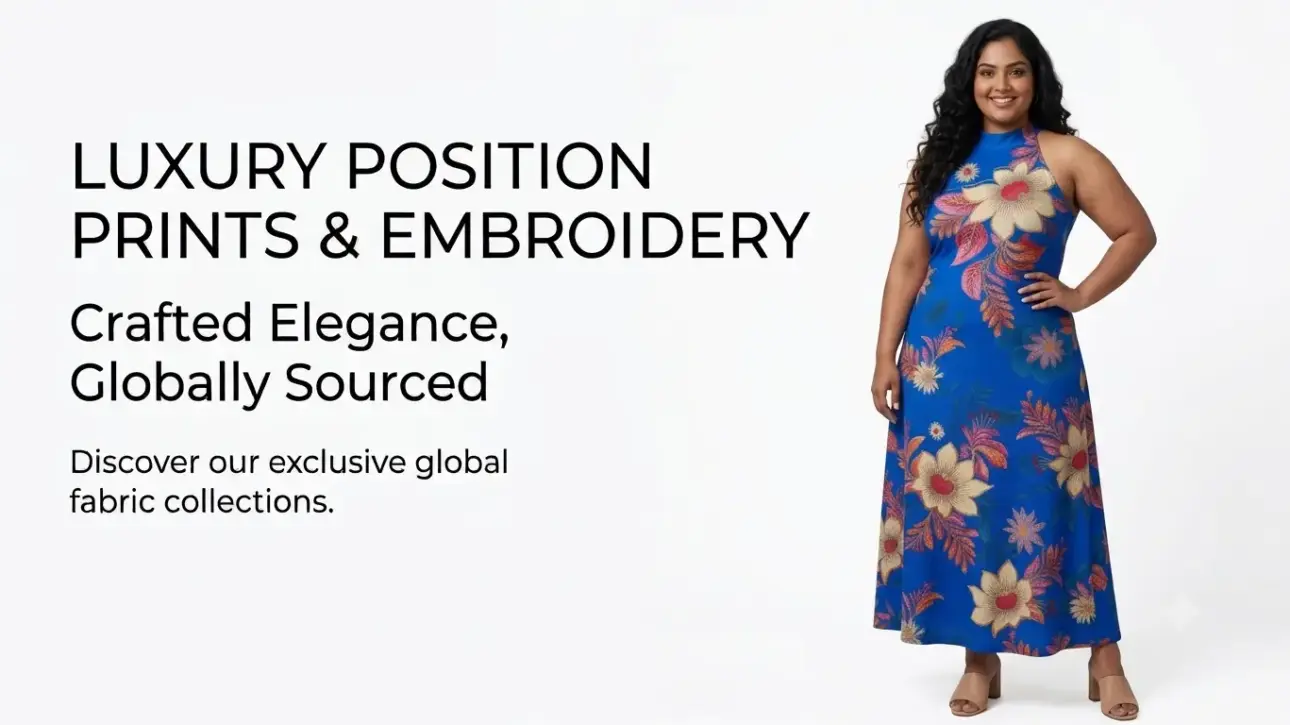
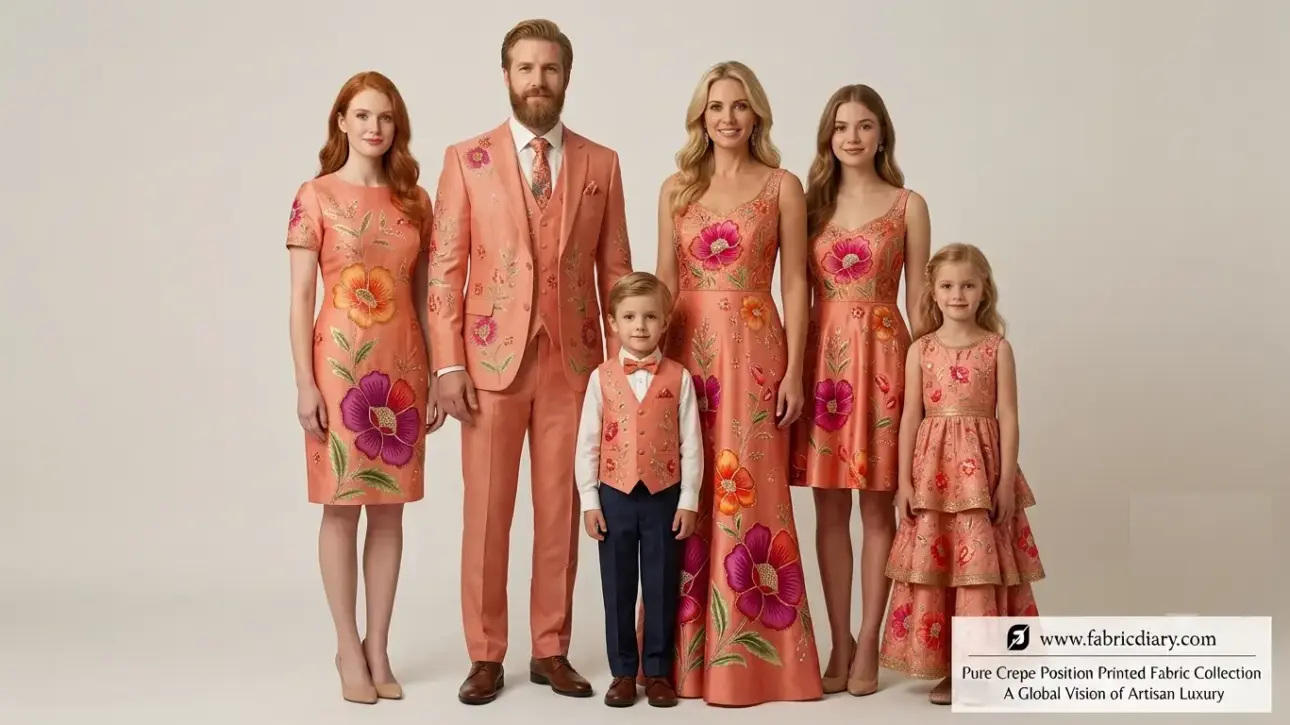
Position printing gives the artwork a planned visual arrangement. Instead of relying exclusively on a repeating pattern across the fabric, the design may feature a focal motif, a border, a panel-like composition or another deliberately positioned element. When that arrangement is developed with the garment in mind, it can help establish a recognisable design identity.
The commercial challenge is ensuring that the finished fabric delivers the intended result—not merely that the digital preview looks attractive.
For buyers exploring this category, Madhav Fashion’s Digital Position Print Fabric collection provides a relevant starting point for reviewing available designs and discussing sourcing requirements.
Why print placement has become a business decision
Fashion businesses often begin with a product concept: a flowing dress, a coordinated outfit, an occasionwear ensemble or a contemporary tunic. The fabric decision follows, but the relationship should work in both directions.
The silhouette influences the artwork, and the artwork influences how the fabric must be cut.
Consider a dress designed around a prominent floral motif near the hem. If that motif is positioned too close to a seam or falls outside the usable area of the pattern piece, the final garment may look different from the approved design. A decorative border can lose its impact if the cutting plan does not account for the hem allowance. A motif intended for the bodice may be interrupted by a neckline or dart.
These are not merely aesthetic problems. They can influence material yield, production efficiency, product consistency and the perceived value of the finished garment.
For a fashion business producing a small collection, one poorly planned design may mean additional sampling or adjustments. For a bulk buyer, the same oversight can affect a larger quantity of garments.
That makes print placement part of product development rather than a finishing detail.
The strongest sourcing conversations therefore begin with the intended garment, the artwork and the required result. The fabric name is important, but it is not a substitute for a clear product brief.
What buyers should understand about Chinon Position Printed Fabric
The product name contains two different ideas: the base fabric category and the arrangement of the print.
Chinon is a commercial fabric name used across textile markets. Buyers should confirm the exact fibre composition, construction, usable width, weight, opacity, drape and care requirements of the specific product instead of assuming that every Chinon fabric has identical characteristics.
Position printed describes how the artwork is arranged. A design may be developed around a specific motif, border, panel or planned composition intended to create a particular visual effect when the fabric is used.
The term does not, by itself, establish which printing machine was used. Digital printing is one possible production route, but print placement and printing technology are separate considerations.
Likewise, the product name alone does not confirm whether the material is suitable for every garment category, whether it includes embroidery, or whether a particular customisation request can be fulfilled. Those details must be established from the actual product specification and supplier confirmation.
For professional buyers, this distinction matters because product descriptions across international marketplaces are not always standardised. Two listings can use similar wording while describing different materials, layouts or production arrangements.
The safest approach is to assess the physical fabric and approved design alongside the product name.
Position printing versus all-over printing: the distinction that affects cutting
All-over printing generally distributes a pattern across the fabric surface, often through a repeating design. Position printing places greater emphasis on a planned arrangement or a specific area of the artwork.
Neither method is automatically superior. The right choice depends on the intended garment and the design objective.
An all-over floral repeat may offer flexibility when a brand wants a coordinated look across multiple garment pieces. A position print may be more appropriate when the design relies on a prominent motif, a border or a particular visual composition.
A large motif is not necessarily a position print. If it repeats across the fabric in a continuous pattern, it may still be an all-over design. Conversely, a relatively small motif may qualify as a position print when its location is deliberately planned.
Related terms such as placement print, engineered print, panel print and border print can overlap in commercial use. Buyers should ask suppliers to clarify the actual arrangement rather than relying on terminology alone.
For a position-printed garment, the pattern maker should consider:
- The front and back panels and their required dimensions.
- Sleeve shape, neckline, darts, seams and hem allowances.
- The direction of the artwork and any intended motif alignment.
- Whether the print is developed for a particular panel or arranged across a defined fabric length.
- The fabric required to preserve the design after cutting.
The last point is especially important for bulk purchasing. If a key motif must remain visible in a particular area, the cutter may have fewer options for arranging pattern pieces. Fabric consumption should therefore be evaluated against the actual garment pattern rather than estimated from the fabric name alone.
The garment opportunities—and the questions behind them
Chinon position prints may be considered for different fashion applications, depending on the characteristics of the specific fabric and artwork. Buyers should assess each product on its actual performance rather than treating the category as a universal solution.
Occasionwear and statement dresses
A planned motif can establish a focal point on a dress. A border may frame the lower edge, while an arranged floral composition can guide attention towards a particular part of the silhouette.
The design must still work with the garment’s construction. A long dress, a gathered skirt and a fitted bodice use fabric differently. A layout that looks balanced in a flat photograph may need adjustment when translated into a three-dimensional garment.
Tunics and coordinated outfits
For a tunic or a two-piece outfit, the buyer may want the top and bottom to feel visually connected without carrying identical artwork.
That requires a decision about how the print should be distributed across the separate pieces. If the same design is expected to coordinate across a top and a skirt, the cutting plan and fabric layout should be reviewed before the quantity is finalised.
Contemporary and occasion-led collections
Fashion labels may also explore position prints for contemporary dresses, selected tops, skirts and other silhouettes where a defined motif or border supports the design concept.
The base fabric’s drape, opacity, weight and handling remain important. The suitability of a particular Chinon quality cannot be established from the word “Chinon” alone.
A buyer should evaluate the actual sample in relation to the intended garment, lining requirements, construction and care expectations.
A global buyer’s perspective: one category, different product briefs
International fashion businesses do not all approach printed fabrics with the same design brief. Their needs depend on the product range, customer, climate, retail positioning, garment construction and local market expectations.
For suppliers, the practical lesson is not to assume that an entire country or continent follows one style. It is to understand the specific buyer’s product plan.
North America: product differentiation and repeatability
A brand developing dresses, boutique collections or contemporary occasionwear may be interested in a distinctive placement design that helps a product stand apart from standard repeating prints.
The buyer may also need a reliable approval process for future orders. The initial sample, confirmed colour reference, print layout and written specification can become important records when a design is reordered.
Europe: design intent and product specification
A European buyer may prioritise the relationship between artwork, silhouette, fabric performance and the finished garment. Depending on the brand and product, additional attention may be given to care instructions, fibre information, traceability and applicable product requirements.
These expectations vary by business and destination. They should be discussed as part of the specific order rather than assumed from the buyer’s location.
Middle East: occasionwear and individual design requirements
Buyers serving occasionwear, celebration fashion and contemporary modest-wear segments may consider position prints when the design benefits from a defined motif or decorative border.
The relevant brief might involve a long dress, a flowing silhouette, a coordinated outfit or another garment concept. The supplier needs the intended use and reference artwork to assess whether the selected fabric and print layout are appropriate.
South Asia: coordination across garment components
For buyers developing festive clothing, dresses, tunics and coordinated outfits, the placement of a print can influence how individual garment pieces relate to one another.
Where multiple components must work together, the cutting plan should be considered alongside the fabric layout. Buyers should also establish whether they require print only or a combination of print with embroidery or another decorative technique.
Africa: a brief built around the actual customer
Fashion businesses across African markets serve a wide variety of customer groups and garment categories. A buyer might be developing contemporary dresses, occasionwear or a different product altogether.
Rather than assuming a single regional preference, the supplier should ask for the intended silhouette, colour direction, artwork, target quantity and relevant quality requirements.
East and Southeast Asia: production planning and product development
A manufacturer or label working across several product styles may need the print arrangement to align with a particular pattern and production process.
The useful conversation centres on the physical sample, garment pattern, required layout, acceptable tolerances and production quantity. These factors are more actionable than broad assumptions about regional trends.
Australia and New Zealand: end-use suitability
For buyers developing fashion collections for these markets, the material should be evaluated against the intended garment and the brand’s requirements. Drape, opacity, construction, colour appearance and care instructions may all be relevant, depending on the product.
The correct fabric is the one that meets the brief—not simply the one whose name sounds appropriate.
Latin America: design identity and commercial practicality
A brand developing statement garments or coordinated collections may use a planned print to create a recognisable visual feature. But design ambition still needs to align with cutting efficiency, production requirements and the economics of the finished garment.
Across all these markets, the same principle applies: a supplier can provide more useful guidance when the buyer shares a specific product brief rather than only a broad request for printed fabric.
From design reference to production-ready artwork
Customisation is often discussed as if it were one simple service. In practice, different requests can require different levels of development.
A buyer may want to adjust the colour of an existing design, change the motif scale, develop new artwork, modify a border or plan a print around a particular garment.
These are distinct requirements.
A colour adjustment may involve different considerations from creating a new layout. A motif-scale change can alter the visual balance of the design. A garment-specific placement may require dimensions or a pattern reference that would not be necessary for a general repeating print.
Before requesting a quotation, buyers should prepare a brief containing:
- The intended garment and its approximate silhouette.
- The artwork, reference image or design concept.
- The required placement, such as a focal motif, border or panel composition.
- The preferred base fabric and any known technical requirements.
- The intended quantity and whether a sample or development stage is required.
- The destination market and relevant delivery requirements.
- Any brand-specific requirements for colour, repeat orders or permitted use of the artwork.
If the design is proprietary, ownership and usage permissions should be agreed in writing. A supplier should also confirm feasibility before promising a particular colour match, layout, production route, quantity or delivery schedule.
Clear briefs reduce avoidable misunderstandings and make quotations easier to compare.
Digital printing, other print methods and the question of scale
The word “position” describes the layout of the artwork. It does not automatically determine the printing technology.
Digital textile printing can be useful for detailed designs and certain sampling or development requirements. Screen-based and other printing methods may be appropriate for different materials, artworks and production volumes.
The right route depends on the fabric, artwork, required quality, equipment, quantity and commercial constraints. It should be evaluated for the actual order rather than treated as a universal rule.
For an early-stage collection, a buyer may want to review a sample and confirm that the design works before committing to a larger quantity. For a larger programme, the buyer may need to evaluate production economics, approved artwork, colour expectations, quality controls and repeatability.
The important distinction is between what the design needs and how the production team will achieve it.
A useful sourcing discussion establishes the required result first. The supplier can then assess the available process and explain the practical implications.
The quality-control questions that protect a bulk order
A product photograph cannot establish every characteristic of a fabric. It can communicate the design, but the buyer still needs to verify the material and the print.
For Chinon Position Printed Fabric, quality review should address both the base fabric and the placement of the artwork.
Confirm the base fabric
Request the actual product specification, including fibre composition where available, usable width, weight or other relevant construction details, and care information. Assess drape, opacity and surface characteristics against the intended garment.
Do not assume that two products with similar names will perform identically.
Review colour and print clarity
Compare the approved sample with the production requirement. The buyer should establish how colour will be evaluated and which reference will be used for approval.
Screen images can look different across devices. The approved physical sample and written specifications provide a more useful basis for the order.
Check the layout, not just the motif
Confirm where the focal design, border or other key elements should appear. If the print is intended for a particular garment arrangement, communicate the relevant dimensions and cutting requirements.
The buyer should also establish whether the sample demonstrates the full layout or only a small section of the design.
Clarify acceptable variation
No production process should be assumed to deliver identical results without agreed tolerances and suitable quality controls. Buyers and suppliers should establish the relevant acceptance criteria before the order is confirmed.
If colour, placement, width or another characteristic is especially important, specify how it will be checked and recorded.
Keep approval records
Retain the approved sample, artwork version, product specification and relevant order communication. These records help both sides identify the intended result and provide a reference for subsequent orders.
If the product includes embroidery or other embellishment in addition to printing, specify and inspect those features separately.
Why fabric consumption needs special attention
One of the most overlooked commercial questions in position printing is how the layout affects usable yield.
With an all-over repeat, a cutter may have several ways to position pattern pieces, depending on the design and garment. With a planned placement, a specific motif may need to remain within a defined area or direction.
That can reduce cutting flexibility.
The actual impact depends on the usable width, artwork layout, garment dimensions, pattern pieces, seam allowances and production method. It cannot be reliably estimated from the product name alone.
Before placing a bulk order, the buyer should have the intended garment pattern reviewed against the proposed print layout. Where necessary, a marker plan or a garment-scale mock-up can help assess how the artwork will translate into finished pieces.
This step can make the purchasing decision more informed. It also helps separate the price per metre from the cost of obtaining a usable finished garment.
A fabric with an attractive price may not be the most economical option if its placement requirements create significant waste. Conversely, a carefully planned print may justify its cost when the finished design is central to the product’s identity.
The correct comparison is commercial and garment-specific.
How to compare supplier quotations fairly
Buyers often compare quotations by price per metre. That is a useful starting point, but it does not capture the full cost or suitability of a fabric order.
A meaningful comparison should establish whether the quotations refer to the same material, usable width, design layout, print requirements, quality expectations and order quantity.
The buyer should also check whether sampling, artwork development, finishing, packing or other requested services are included or quoted separately.
For international shipments, clarify the shipping arrangement, applicable trade terms, insurance where relevant, customs responsibilities and destination charges. The exact treatment depends on the agreed terms and the destination.
If one quotation covers a standard available design and another includes new artwork or a garment-specific layout, the two offers are not directly equivalent.
The lowest quoted price is not automatically the lowest-cost solution. A more useful decision considers material suitability, expected yield, quality controls, production feasibility, logistics and the risks associated with an unclear specification.
Sampling before bulk: a commercial safeguard
A sample is not simply a smaller purchase. It is an opportunity to test whether the proposed fabric and print meet the actual design brief.
For a position print, the buyer should decide what the sample needs to demonstrate. A small swatch may be enough to review surface and colour, but it may not reveal how a large motif or border will work across the garment.
Depending on the design, the next step may involve a larger sample, a layout preview or a garment-scale mock-up.
Before approval, assess the fabric’s appearance, drape, opacity and handling against the intended use. Review the print arrangement in relation to the garment’s key panels and seams.
Once the sample is approved, record the version and the specifications that matter to the order. Changes requested after approval should be documented because they may affect feasibility, cost or timing.
This process does not eliminate every production risk, but it creates a clearer reference for the buyer and supplier.
International shipping: plan the order beyond dispatch
For international buyers, sourcing decisions should include the route from approved fabric to the receiving business.
Before confirming the purchase, discuss the production or preparation schedule, packing requirements, shipping method and destination. Establish who arranges freight, how the shipment will be documented, who is responsible for customs clearance and how applicable duties or taxes will be handled.
These details vary by transaction, destination and agreed trade terms. Buyers should verify the requirements relevant to their own shipment rather than relying on a universal delivery promise.
The timing should also reflect the actual order. An available product, a sample request and a custom development order may involve different steps.
For bulk planning, coordinate the fabric arrival with the garment production schedule. A material that arrives after cutting or manufacturing has been scheduled can create avoidable disruption, even when the fabric itself meets the specification.
A written order summary, agreed shipping terms and clear communication help establish expectations on both sides.
Madhav Fashion and the wider fabric-sourcing decision
A fashion collection rarely depends on one material alone. A buyer developing a range may also require embroidered fabrics, digital prints, plain RFD fabrics, solid-colour materials or complementary accessories.
Each category serves a different purpose. Position printing helps organise artwork around a planned composition. All-over printing offers a different pattern arrangement. Embroidery adds stitched surface decoration, while plain RFD and solid-colour fabrics may support other development or coordination requirements.
These materials are not interchangeable by default. Their suitability depends on the garment concept, construction, required appearance and technical specification.
Madhav Fashion’s broader fabric offering is relevant to buyers who want to discuss more than a single product category. The practical starting point remains the same: share the intended garment, material requirements, artwork, quantity and destination so that the sourcing conversation can focus on the actual order.
Buyers exploring position prints can review the Digital Position Print Fabric category at Madhav Fashion.
For a specific enquiry, include the design reference and describe whether the requirement is for an available product, a sample, a revised artwork or a new placement concept. The supplier can then clarify what is feasible and which details need to be confirmed before quotation.
A practical checklist for bulk buyers
Before committing to Chinon Position Printed Fabric, review the following points with the supplier:
- Product identity: Is the exact fabric and its composition clearly specified?
- Intended use: Has the garment type and desired silhouette been communicated?
- Artwork: Is the approved design version clearly identified?
- Placement: Are the focal motifs, borders or other key elements positioned as required?
- Usable yield: Has the layout been considered against the garment pattern?
- Sample approval: Does the sample show the characteristics that matter to the order?
- Quality requirements: Are colour, placement and other acceptance criteria documented?
- Quantity and price: Are the quotation and quantity based on the same specifications?
- Customisation: Are requested changes technically feasible and commercially agreed?
- Repeat orders: Are the approved artwork and product details retained for reference?
- Shipping: Are packing, freight arrangements, customs responsibilities and destination charges understood?
- Communication: Is there a written record of the confirmed specification and order terms?
The checklist is not intended to make sourcing complicated. It is designed to prevent a simple product description from carrying more information than it actually provides.
FAQ
What is Chinon Position Printed Fabric?
Chinon Position Printed Fabric is a commercial fabric category in which a Chinon-base material is described with a planned print arrangement, such as a focal motif, border or defined composition. The actual fibre content and technical characteristics should be confirmed for the specific product.
What is the difference between position printing and all-over printing?
Position printing emphasises the planned location or arrangement of artwork. All-over printing generally distributes a pattern across the fabric surface, often through a repeat. The appropriate choice depends on the garment design and production requirements.
Is every large floral print a position print?
No. A large floral motif may form part of an all-over repeat. Position printing is defined by the intended arrangement of the artwork, not simply the size of the motif.
Which garments can use Chinon Position Printed Fabric?
Depending on the actual fabric characteristics and print design, buyers may consider it for dresses, occasionwear, tunics, skirts, coordinated outfits and selected tops. Suitability should be evaluated against the intended garment and product specification.
Does the name Chinon confirm the fibre composition?
No. The commercial name alone does not establish the exact fibre content, weight, width, opacity or finishing. Buyers should request the relevant product specification and assess the sample.
Is position printing always done digitally?
No. Digital printing is one possible method. The suitable printing technology depends on the material, artwork, quantity, equipment and required quality. Position printing describes the layout, not necessarily the machine used.
Can buyers request customised artwork or colour?
Buyers can discuss customisation requirements with the supplier. Feasibility depends on the available production capabilities, base fabric, artwork, quantity and commercial terms. The request should be documented before production is confirmed.
Why is sampling important before a bulk order?
Sampling allows the buyer to evaluate the actual fabric and print rather than relying only on a screen image. A position print may require a larger sample or garment-scale review if its design depends on a border, focal motif or specific placement.
Can position printing affect fabric consumption?
Yes, it can affect cutting flexibility when key motifs need to remain in particular locations. The actual impact depends on the layout, usable width and garment pattern. Review the design against the pattern before estimating the required quantity.
How should buyers compare Chinon fabric quotations?
Compare quotations based on the same fabric specification, usable width, artwork, print arrangement, quality requirements, quantity and included services. Also clarify shipping arrangements and any separate development, packing or destination costs.
What should international buyers confirm before shipping?
Confirm the order specification, packing, shipment arrangements, required documentation, customs responsibilities, applicable duties and taxes, and the agreed trade terms. The exact requirements depend on the destination and transaction.
Can the same position-print design be reordered?
A repeat order should be based on retained artwork, the approved sample and a documented specification. The buyer should confirm the supplier’s ability to reproduce the design and agree how relevant colour, placement and material variations will be assessed.
What is engineered print fabric?
Engineered print generally refers to artwork developed for a defined layout or product. It can overlap with position printing, but terminology varies among suppliers. Buyers should explain the desired arrangement with a reference image or layout.
What is the difference between a border print and a position print?
A border print emphasises artwork along a border or edge. Position print is a broader description for artwork arranged in a planned location or composition. A border design may also be treated as a form of placement print, depending on the product.
What information should buyers send for a sourcing enquiry?
Share the intended garment, artwork or reference image, preferred fabric, required quantity, sample needs, quality requirements and destination. State whether you are looking for an available design or a custom development. This helps the supplier assess the request more accurately.
The final decision is about the garment, not just the fabric name
Chinon Position Printed Fabric offers a way to bring a planned visual composition into a fashion product. Its commercial value, however, depends on the relationship between the base material, artwork, garment pattern, cutting plan and production requirements.
For designers, the question is whether the print expresses the intended concept. For manufacturers, it is whether the layout can be translated into a practical cutting and stitching plan. For wholesalers and importers, it is whether the approved product, quantity, price, quality requirements and shipping arrangements are clear enough to support the order.
That is why the best sourcing decision starts with a specific brief and a verified sample—not with a product name alone.
Planning a collection or bulk fabric purchase? Explore the Digital Position Print Fabric collection at Madhav Fashion. Share your intended garment, design reference, quantity and destination to begin a focused sourcing enquiry.