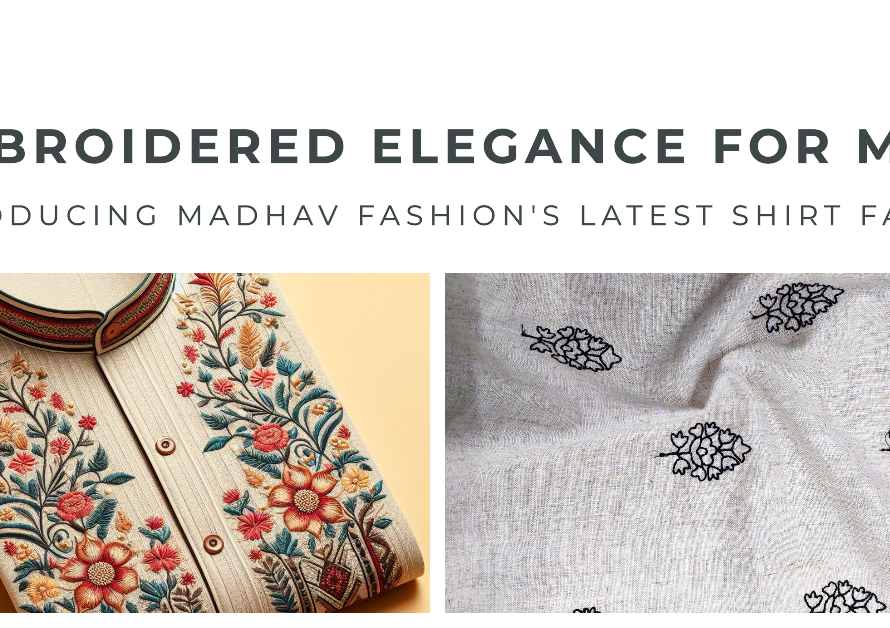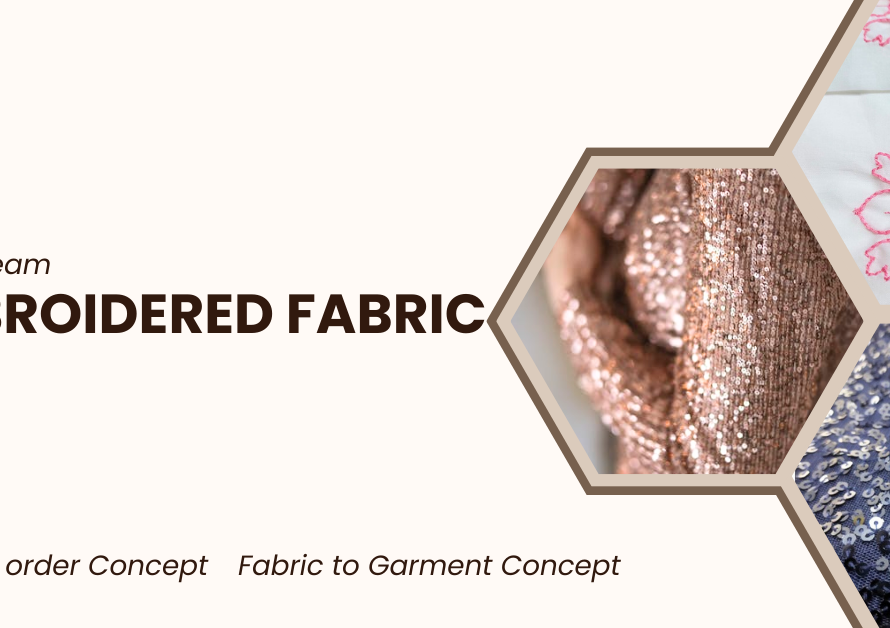



Most buyers believe Heavy Custom embroidery fabric sourcing is a creative decision. They focus on patterns, motifs, colors, and price per meter. After more than a decade working inside embroidery fabric manufacturing and exports, I learned something very different.
The real cost of embroidery fabric comes from the problems buyers don’t see when they place the order.
I am sharing this because every year, overseas buyers lose margins, delivery timelines, and retailer confidence — without clearly understanding why. The issue rarely starts at the garment level. It almost always starts at the fabric level.
The Hidden Risks in Sourcing Embroidery Fabric (or Any Fabric)
Embroidery-fabric is not just a surface design. It is a system of base material, stitch behavior, finishing, handling, packing, and logistics.
Small details decide everything.
They decide how your garment falls. They decide how embroidery survives stitching and ironing. They decide whether your shipment clears customs smoothly or turns into a delay.
Why Embroidery Fabric Is the Most Misunderstood Category in Fashion
Embroidery-fabric looks finished even before production begins. That visual completeness creates a dangerous illusion: buyers assume that if it looks good on the roll, it will perform well in production.
That assumption is wrong.
Unlike plain or printed fabrics, embroidery-fabric goes through extra stress points:
- Cutting through dense stitch zones
- Sewing across beads, sequins, cords, or zari
- Pressing under heat
- Folding, packing, and long-distance shipping
If the fabric is not engineered correctly, embroidery becomes a liability instead of a value addition.
This is why experienced buyers don’t ask only “How does it look?” They ask “How will it behave?”
Intricate threads & premium texture Printed Fabric
Creative, colorful & always trending Position Printed Fabric
Perfect alignment for standout looks Jacquard Fabric
Rich textures with woven luxury Plain Dyeable (RFD)
Customize colors, your way Pure Dyed Fabrics
Ready-to-stitch brilliance Designer Dupattas
From shimmer to sheer elegance Ready Stocks
Quick ship fabrics in bulk Kurti Fabrics
Comfort meets tradition
The Hidden Anatomy of Embroidery Fabric
To buy embroidery-fabric intelligently, buyers must understand what sits beneath the surface.
1. Base Fabric Stability
The base fabric — georgette, net, organza, chiffon, cotton, silk — decides how embroidery holds over time. A weak base causes puckering, distortion, or tearing during stitching.
Even a 5–10 GSM difference can change:
- Fabric fall
- Stitch tension
- Cutting accuracy
2. Embroidery Density & Stitch Planning
Heavy embroidery looks luxurious, but excessive density:
- Slows down garment stitching
- Increases needle breakage
- Raises cutting wastage
Smart embroidery balances richness with production practicality.
3. Thread, Sequin & Bead Anchoring
Loose anchoring does not show in catalogs. It shows during:
- Ironing
- Packing
- First wash
Poor anchoring directly increases return rates in the first 60–90 days.
4. Dyeing & Shade Consistency
Embroidery-fabric is often ordered in:
- Ivory
- Red
- Champagne
- Pastels
These shades are unforgiving. Even a slight mismatch between lots can destroy an entire production batch.
5. Finishing & Shrinkage Control
Improper finishing leads to:
- Unexpected shrinkage
- Loss of shine
- Stiff hand-feel
Buyers discover this only after garments are made — when it is already too late.
Why Sampling Alone Is Not Enough
Many buyers believe sampling solves everything. It doesn’t.
Sampling shows design intent. It does not guarantee bulk consistency.
The real risk appears when:
- Bulk embroidery density shifts
- Base fabric batch changes
- Dye lot varies
- Finishing parameters are altered to meet timelines
This is why experienced buyers insist on process control, not just samples.
What Professional Embroidery Fabric Manufacturers Handle Daily
In real manufacturing environments, embroidery fabric production is not linear. It is layered.
Every day, experienced fabric teams manage:
- Yarn behavior under embroidery stress
- Stitch tension adjustments
- Bead and sequin locking tests
- Shade matching across rolls
- Fabric inspection under production lighting
These are not creative decisions. They are risk-management decisions.
This is why buyers who scale beyond small quantities always move toward stable, experienced suppliers.
Different Markets, Different Embroidery Fabric Risks
One embroidery fabric does not behave the same way in every market.
Europe
- Strict fabric composition accuracy
- Labeling and documentation sensitivity
- High rejection cost
Middle East
- Deep color consistency
- Heavy embellishment durability
- Visual richness expectations
North America
- Repeatability across collections
- Production-friendly embroidery
- Long-term performance focus
Africa & South America
- Long shipping routes
- Higher handling stress
- Strong packing requirements
Ignoring regional differences is one of the biggest sourcing mistakes buyers make.
Packing & Logistics: Where Embroidery Fabric Often Fails
Embroidery fabric damage rarely happens during production. It happens during:
- Folding
- Compression
- Transit
Sequins scratch. Beads crack. Threads loosen.
Proper packing is not optional:
- Fabric roll tension matters
- Protective layering matters
- Carton strength matters
This is where experienced exporters quietly protect buyers without talking about it.
The Real Cost of an Unstable Embroidery Fabric Supplier
When embroidery fabric fails, the damage is multiplied:
- Cutting slows down
- Tailoring cost increases
- Rework increases
- Delivery timelines slip
- Brand credibility suffers
The cost is never just the fabric price. It is the chain reaction.
This is why seasoned buyers stop chasing the cheapest source and start valuing predictability.
How Stable Suppliers Remove Uncertainty
Reliable embroidery fabric partners focus on:
- Locked GSM and base fabric specs
- Controlled embroidery density
- Shade approval before bulk
- In-process quality checks
- Pre-shipment inspections
They communicate early, not after problems appear.
This discipline does not reduce creativity. It protects it.
Why Buying Embroidery Fabric Is a Strategic Decision
Embroidery fabric sits at the foundation of your garment.
If the foundation is unstable:
- Design brilliance cannot save it
- Marketing cannot fix it
- Discounts cannot hide it
A strong fabric partner does not promise perfection. They promise control.
And control is what protects margins, timelines, and reputation.
What Experienced Buyers Learn Over Time
New buyers focus on design and price. Experienced buyers focus on behavior and consistency.
They understand that:
- A stable supplier is not optional
- Fabric reliability is brand insurance
- Predictability is more valuable than discounts
In embroidery fabric sourcing, success is not loud. It is quiet, repeatable, and invisible to the end consumer.
But it holds everything together.
Where Buyers Actually Find Stability in Embroidery Fabric Sourcing
After years of working with embroidery fabric buyers across countries, one pattern is clear. Buyers don’t fail because they lack options. They fail because they lack visibility and access.
To reduce risk, serious buyers usually follow one of three paths.
1. Buying Embroidery Fabric Online — With Visibility
Many buyers today prefer sourcing embroidery fabric online, but not from anonymous marketplaces. They look for platforms where:
- Fabric specifications are clear
- Collections are ready and updated
- Small quantities are possible for testing
- Communication is direct, not layered through resellers
This is where FabricDiary.com fits naturally into the sourcing process.
FabricDiary is not a trading portal. It is a direct online extension of a working embroidery fabric manufacturer — Madhav Fashion.
Buyers can:
- Explore real, production-backed collections
- Buy fabrics online for sampling or small runs
- Test quality before scaling
For overseas buyers who cannot travel immediately, this visibility reduces uncertainty at the first step.
2. Factory Visits — When Buyers Need Full Confidence
Some buyers prefer to go deeper.
They visit the factory to understand:
- How embroidery is actually produced
- How quality checks are done
- How bulk consistency is maintained
- How packing and exports are handled
For such buyers, Madhav Fashion’s manufacturing unit becomes important. Factory visits remove assumptions and replace them with clarity.
Seeing the process answers questions that catalogs never can.
3. Direct Communication With the Team — Before Problems Begin
Experienced buyers rarely wait for problems to talk.
They communicate early:
- About base fabric behavior
- About embroidery density limits
- About shade expectations
- About shipment timelines
Whether through FabricDiary online support or direct discussions with the Madhav Fashion team, this communication layer protects buyers before production starts.
This is where most sourcing failures are actually avoided.
Why FabricDiary Exists in the First Place
FabricDiary was created because global buyers needed a bridge.
A bridge between:
- Online convenience and factory reality
- Sampling flexibility and bulk manufacturing
- Design exploration and export discipline
It allows designers, boutiques, garment manufacturers, and overseas buyers to enter the sourcing process safely, without committing blindly.
Some buyers start small. Some move straight to bulk.
The path is flexible — the structure behind it is stable.
Final Perspective for Embroidery Fabric Buyers
There is no single “right” way to source embroidery fabric.
Some buyers buy online first. Some visit factories. Some start with conversations.
What matters is not the path — It is who stands behind the fabric.
When online platforms, manufacturing floors, and export teams are connected under one system, buyers gain something far more valuable than low prices.
They gain predictability.
And in global fashion sourcing, predictability is what protects margins, timelines, and brand reputation.
————————–
FAQ
Why is buying Heavy Custom embroidery fabric more complex than it looks?
Because Heavy Custom embroidery fabric performance depends on base fabric stability, embroidery density, finishing, and packing—issues not visible in photos or samples.
Can I buy embroidery fabric online safely?
Yes, if you buy from a platform directly connected to a real manufacturing unit, with clear specifications, sampling options, and responsive support.
Is it better to visit the factory before placing bulk orders?
Factory visits help buyers understand production processes, quality control, and bulk consistency, especially for long-term or high-volume sourcing.
What problems do overseas buyers usually face with embroidery fabrics?
Common issues include shade variation, embroidery damage during shipping, inconsistent GSM, and poor finishing that affects garment production.
Does FabricDiary allow small-quantity or sample purchases?
Yes, FabricDiary supports small-quantity buying, making it easier for designers and brands to test embroidery fabrics before scaling.
How is FabricDiary connected to manufacturing?
FabricDiary is the online sourcing platform of Madhav Fashion, allowing buyers to source directly from a working embroidery fabric manufacturer.
Can I discuss fabric requirements with a real team before ordering?
Yes, buyers can communicate with the FabricDiary and Madhav Fashion team to clarify fabric behavior, embroidery limits, and export requirements.