


Across the international bridal industry, a subtle shift has been unfolding over the past decade: the move from single-piece wedding gowns to bridal separates. This trend—frequently observed in the pages of publications like Vogue and Harper’s Bazaar—reflects a new generation of brides who value versatility, individuality, and cultural adaptability.
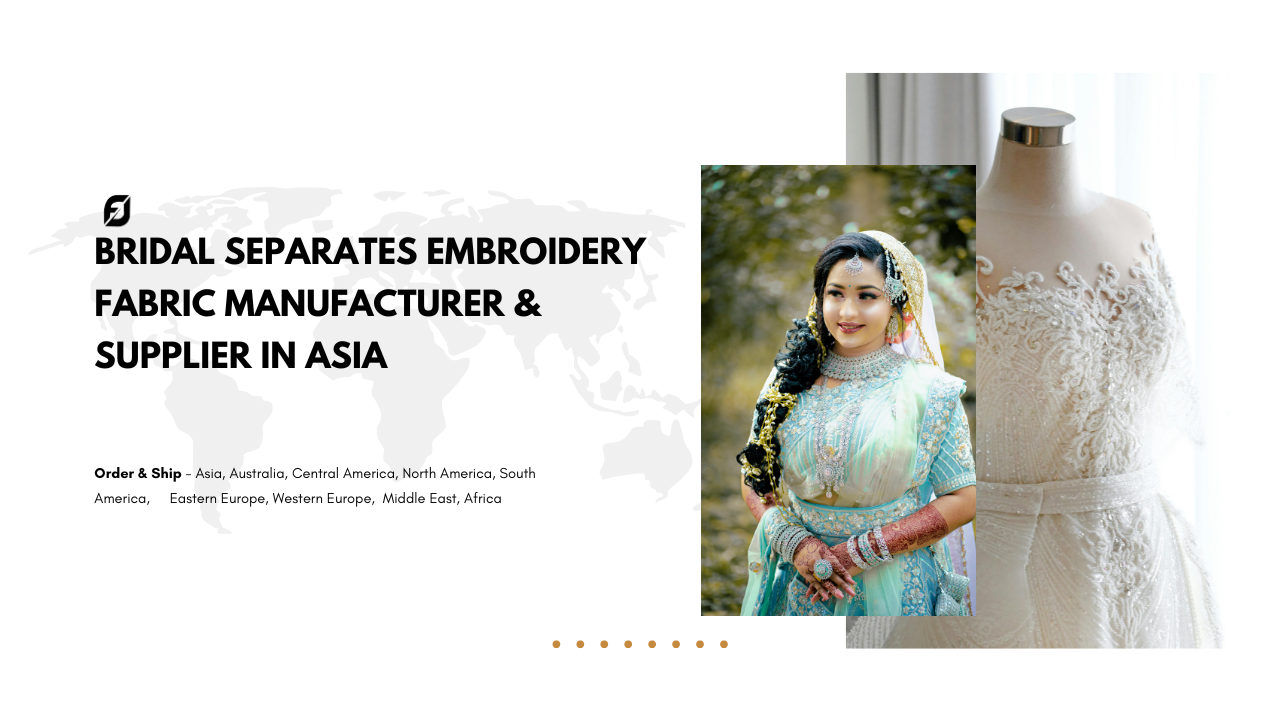
Bridal separates refer to wedding outfits composed of multiple interchangeable garments—skirts, corsets, jackets, dupattas, capes, or tailored tops. The fabric category supporting this movement is bridal separates embroidery fabric, a highly specialized textile designed to allow designers to craft modular wedding ensembles.
Bridal Separates Embroidery Fabric Manufacturer & Supplier in Asia
In India and across Asia, where wedding attire traditionally involves multiple components—such as lehenga skirts, blouses, and veils—the concept of bridal separates is not new. What has changed is the fabric engineering behind it. Embroidery fabrics are now designed with specific panel placements, lightweight structures, and flexible drapes to enable independent garment construction.
Industry analyses from Business of Fashion and WGSN suggest that the bridal separates segment is growing globally because it allows brides to re-wear elements of their wedding outfit for future events, increasing emotional and financial value.
For textile manufacturers and exporters, this evolution has created demand for highly adaptable embroidered fabrics, capable of serving multiple garment applications within a single bridal collection.
Fabric Characteristics That Appeal to Global and Indian Bridal Markets
The success of bridal separates fabric depends heavily on its technical construction. Unlike traditional heavy bridal fabrics, these textiles must balance luxury with flexibility.
Most premium bridal embroidery fabrics range between 120–260 GSM, depending on base material. Lighter bases such as net, organza, georgette, and tulle dominate Western markets, while India and the Middle East often prefer heavier bases like silk blends or velvet-backed meshes.
The yarn composition also varies:
• Polyester filament yarn for durability • Viscose thread for sheen • Metallic zari yarn for ceremonial impact • Silk blends for couture collections
Embroidery density plays a critical role. Bridal separates fabrics generally maintain 35–55% embroidery coverage, leaving negative space so designers can cut panels and silhouettes freely.
Modern embroidery is executed using advanced machines such as:
• Schiffli embroidery machines • Multi-head computerized embroidery machines • Sequin attachment machines • Laser-cut motif machines
Quality control involves checking:
• Thread tension • Stitch density per inch • Motif alignment • Sequin attachment strength
According to textile reports published by Textile Today and Fibre2Fashion, these technical aspects directly influence fabric usability in garment manufacturing.
Fabric Variations Influenced by Regional Fashion Aesthetics
Bridal embroidery fabrics are not uniform. Each region favors different textile aesthetics shaped by cultural symbolism and climate.
In India, bridal fabrics frequently feature:
• Floral zari embroidery • Paisley motifs • Mughal-inspired patterns • Mirror work or sequin highlights
Meanwhile, European bridal markets lean toward minimalism—fine thread embroidery with delicate botanical motifs on sheer bases.
Fashion institutes such as Fashion Institute of Technology and Parsons School of Design frequently highlight the cultural influence on bridal textiles in their fashion research publications.
Popular variations include:
• Sequin embroidered net • Beaded organza fabric • Schiffli embroidered cotton • 3D floral embroidered tulle • Metallic thread embroidered mesh
Each type serves different bridal garments—from structured corsets to flowing skirts.
Global Demand Trends for Bridal Separates Embroidery Fabric
Global bridal fashion is evolving toward personalization. Research from Statista shows that the international bridal wear market continues expanding as destination weddings, multicultural marriages, and themed celebrations increase.
This creates demand for fabrics capable of supporting hybrid bridal aesthetics—for example, a Western bride incorporating Indian embroidery, or an Asian bride wearing European silhouettes.
India plays a major role in this supply chain. Cities like Surat, Mumbai, and Delhi manufacture a large percentage of the world’s embroidered bridal textiles.
Manufacturers increasingly export to:
• United States • United Kingdom • UAE • Australia • Canada • Southeast Asia
Online B2B platforms such as Alibaba and Amazon Business have accelerated this trade by allowing global buyers to discover textile manufacturers directly.
Bridal Traditions and Cultural Significance
In India, weddings are deeply ceremonial events where textiles carry emotional symbolism. Colors such as red, gold, maroon, and ivory represent prosperity and purity.
Bridal separates work particularly well with traditional Indian outfits such as:
• Lehenga choli • Saree blouse and skirt combinations • Bridal dupattas • Cape overlays
Meanwhile, Western brides increasingly adopt separates like:
• Lace skirts with embroidered tops • Bridal jackets with gowns • Detachable overskirts
This cross-cultural exchange of styles is often documented by editors at Forbes and international fashion analysts.
Wedding Garment Applications for Embroidery Fabrics
Bridal separates fabrics are used across multiple garment categories:
Bridal skirts: Heavy embroidered nets layered over satin.
Corset tops: Fine embroidery on sheer tulle with structured boning.
Dupattas and veils: Lightweight embroidery with scalloped edges.
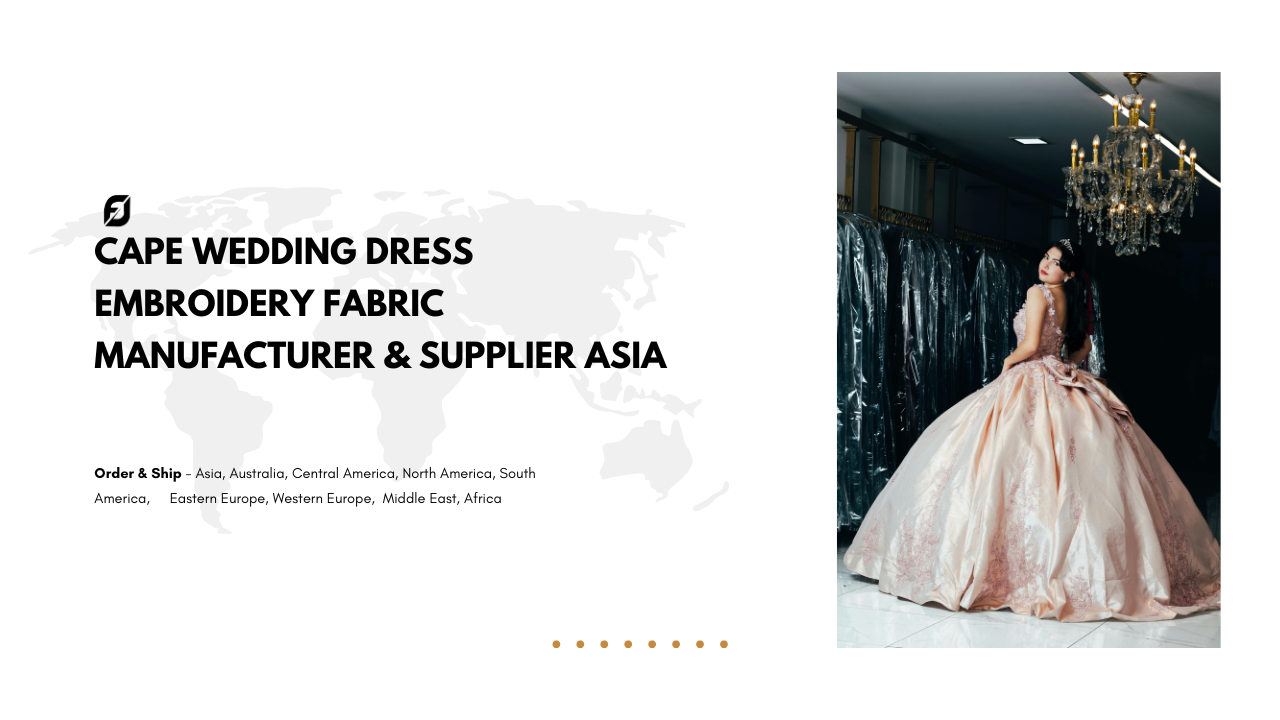
Cape overlays: Sheer embroidered fabrics that add drama without weight.
Designers value fabrics that allow pattern placement flexibility, ensuring embroidery enhances the garment rather than restricting design possibilities.
Partywear and Evening Fashion Demand
Bridal fabrics often transition into luxury eveningwear collections. The same embroidery fabrics used for weddings appear in cocktail dresses, gala gowns, and couture jackets.
Fashion trend reports from WGSN show increasing demand for:
• Sequin embroidery for evening dresses • Metallic thread designs for festive collections • Transparent embroidered overlays for red carpet looks
Boutiques in cities like Paris, Dubai, New York, and Mumbai frequently source Indian embroidery fabrics for these collections.
Garment Manufacturing Applications
Large apparel factories and boutique ateliers both rely on embroidery fabrics.
Garment manufacturers use these textiles for:
• Limited edition bridal lines • Capsule couture collections • Made-to-measure wedding garments
Institutions like National Institute of Fashion Technology and Istituto Marangoni regularly study these supply chains in their fashion business programs.
Factories often purchase fabrics in 50–500 meter batches, depending on production scale.
Designer and Boutique Preferences
Independent designers prefer embroidery fabrics with:
• Balanced motif distribution • Lightweight drape • Dyeable bases
Boutiques often request exclusive patterns to maintain brand identity.
Case Study:
A boutique bridal label in London sourcing from Asia reported that Indian embroidery fabrics allowed them to reduce garment production costs by nearly 30% while maintaining couture-level aesthetics.
Such insights frequently appear in industry commentary across Business Insider and other business publications.
B2B Sourcing Behavior and Bulk Purchasing
Global buyers typically evaluate suppliers based on:
• MOQ requirements • sampling availability • lead times • embroidery consistency
Importers frequently source through platforms like:
• Etsy • IndiaMART • TradeIndia
However, experienced buyers increasingly prefer direct manufacturer relationships to ensure pricing transparency and quality control.
Custom Manufacturing and Export Reliability
Custom embroidery development is often required for fashion brands.
Typical manufacturing considerations include:
• motif redesign • thread color matching • base fabric selection • sampling approvals
Export-ready manufacturers must comply with:
• colorfastness standards • fabric shrinkage limits • packaging requirements • global shipping documentation
These steps ensure smooth international transactions and reduce risks for buyers.
Why FabricDiary and Madhav Fashion Are Trusted by Global Buyers
For designers, sampling and small orders are essential before committing to bulk production.
FabricDiary serves this need by providing small quantities, swatches, and designer-friendly purchasing options. This platform is especially useful for boutique designers, fashion students, and emerging labels developing new collections.
For larger-scale requirements, Madhav Fashion, based in Surat, operates as a global manufacturer and exporter of embroidery fabrics. The company specializes in producing bulk quantities with consistent quality and factory pricing.
Together, these two platforms support the entire spectrum of buyers—from individual designers to international garment manufacturers.
——–
FAQs
1. Can international buyers import bridal embroidery fabrics easily?
Yes. Most manufacturers handle export documentation, logistics coordination, and international shipping to simplify the process.
2. What is the typical MOQ for bridal embroidery fabrics?
Bulk orders generally start from 50–100 meters depending on design complexity.
3. Can designers request fabric samples before bulk orders?
Yes. Sampling is common in the textile industry and helps buyers evaluate fabric quality and embroidery details.
4. What base fabrics are most common for bridal embroidery?
Popular bases include net, organza, georgette, silk blends, and tulle.
5. How long does international shipping take?
Shipping times vary between 5–15 days depending on destination and courier service.
6. What payment methods do global suppliers accept?
International payments are usually accepted through bank transfers, trade platforms, and secure payment gateways.
7. Are custom embroidery designs available?
Yes. Many manufacturers offer custom embroidery development for fashion brands and designers.
————–
Thank you for reading this article and exploring our platform — one of the world’s largest B2B designer fabric destinations with thousands of ready-to-source collections. We regularly publish in-depth guides covering fabric types, global fashion trends, sourcing strategies, and textile innovations to support designers, boutiques, brands, and garment manufacturers worldwide.
If you would like full-length research articles or detailed sourcing insights on any of the topics listed below, feel free to contact us at info.fabricdiary@gmail.com. Our team is always happy to assist with fabric information, sampling guidance, and global sourcing support.
Top Allover Bridal Separates Embroidery Fabric Manufacturers in India
Discover premium allover bridal separates embroidery fabrics developed for designers, boutiques, and garment exporters. Ideal for couture bridalwear, wedding ensembles, and trend-focused global fashion collections.
Top Sequins Bridal Separates Embroidery Fabric Manufacturer & Exporter
Explore high-quality sequins embroidery fabrics crafted for bridal separates, eveningwear, and couture garments. Designed for global buyers seeking consistent quality, modern patterns, and reliable bulk supply.
One of the Biggest Bridal Separates Embroidery Fabric Manufacturers Worldwide
Access large-scale manufacturing capabilities producing bridal embroidery fabrics with advanced machinery, precise embroidery density, and dependable supply for global fashion brands and wholesale buyers.
Largest Bridal Separates Embroidery Fabric Supplier in Asia
Discover Asia’s trusted supplier of bridal separates embroidery fabrics offering trend-driven designs, strong production capacity, competitive pricing, and fast global dispatch for international garment manufacturers.
Popular Zari Work Bridal Separates Embroidery Fabric Exporter for Global Buyers
Source elegant zari work embroidery fabrics crafted for bridal separates, lehengas, gowns, and couture collections. Preferred by designers and importers seeking luxury textile finishes and export reliability.
Premium Thread Work Bridal Separates Embroidery Fabric Supplier & Export House
Explore premium thread embroidery fabrics developed for high-end bridalwear and couture fashion. Ideal for boutique designers and fashion houses demanding refined craftsmanship and export-ready quality.
Asia’s Leading Cording Work Bridal Separates Embroidery Fabric Manufacturer
Known for intricate cording embroidery techniques, this fabric category supports couture bridal garments, luxury eveningwear, and designer collections requiring detailed texture and structured embroidery design.
Top Printed Bridal Separates Embroidery Fabric Manufacturer in Asia
Discover printed embroidery fabrics combining modern textile printing with embroidery artistry. Perfect for bridal separates, fashion garments, and global designers seeking distinctive textile surfaces.
Best Jacquard & Brocade Bridal Separates Embroidery Fabric Exporter in Asia
Explore luxurious jacquard and brocade embroidery fabrics widely used in bridal couture, festive garments, and designer collections. Favored by international buyers for their rich texture and durability.
One of Asia’s Largest Bridal Separates Dress Embroidery Fabric Exporters
Benefit from large-scale export capabilities supplying bridal embroidery fabrics to fashion brands, wholesalers, and manufacturers worldwide with reliable logistics and consistent textile quality.
Premium Bridal Separates Dress Embroidery Fabric Manufacturer in Asia
Experience high-quality bridal embroidery fabrics engineered for luxury fashion production, featuring refined stitching, durable yarns, and elegant motifs suited for global bridal markets.
Shop Embroidered Fabrics Online – Bridal Separates Dress Embroidery Fabrics
Shop a wide selection of bridal separates embroidery fabrics online at wholesale pricing on FabricDiary. Discover designer textiles suitable for sampling, boutique collections, and global garment production.
Shop Designer Embroidery Fabrics Online for Fashion Production
Buy premium embroidered fabrics online designed for bridalwear, evening gowns, and designer fashion collections. Ideal for boutiques, brands, and garment manufacturers sourcing globally.
Buy Designer Embroidered Fabric Online – Global Shipping Available
Browse export-quality embroidered fabrics online with customization options and reliable worldwide shipping. Perfect for fashion designers, sourcing teams, and production houses seeking premium textiles.