


The ball gown wedding dress (Ball Gown Wedding Dress Embroidery) is more than a silhouette; it is a psychological symbol of grandeur. From royal courts in Europe to modern luxury weddings in Mumbai and Dubai, the volume of a ball gown communicates status, romance, and celebration. The fabric behind that volume — particularly embroidery fabric — determines whether the gown feels theatrical or timeless.
Globally, bridal designers source heavily embellished textiles that balance structure with fluidity. In India, where wedding celebrations are multi-day cultural epics, embroidery is not decorative excess; it is expectation. Publications like Vogue and Harper’s Bazaar consistently highlight maximalist bridal couture, while industry analytics from Statista show steady growth in luxury bridal wear across Asia-Pacific.
Ball Gown Wedding Dress Embroidery Fabric Manufacturer & Supplier in India, Asia
Ball gown wedding dress embroidery fabric sits at the intersection of European fairytale influence and Indian craftsmanship. About 30% of demand psychology is shaped by India’s bridal culture — rich zari, sequins, threadwork — while 70% is driven by global aesthetics: cathedral weddings, couture fittings, red-carpet-inspired receptions.
For manufacturers and exporters, this fabric category is not seasonal. It is evergreen.
Fabric Characteristics Admired Across India and Global Markets
In India’s tropical and semi-arid climate zones, bridal fabrics must balance weight with breathability. Ball gowns traditionally require layered construction — base satin or mikado, structured net, and embroidered overlay. The embroidery fabric itself typically ranges between 120–350 GSM depending on motif density.
International buyers — particularly from Europe and North America — prioritize:
- Soft net or tulle base (nylon/poly blend or silk net)
- Embroidery density between 60%–85% surface coverage
- Zari yarn count consistency
- Sequin locking strength (6–8 stitches per unit)
- Colorfastness grade 4+
- Shrinkage below 3%
Indian designers often prefer heavier zari embroidery and metallic thread, while global couture ateliers lean toward matte thread, 3D floral appliqué, or bead gradients.
According to sourcing insights published by Textile Today and Fibre2Fashion, embroidery durability and finishing quality are decisive in bridal bulk orders.
Variations and Types: From Zari Grandeur to Modern Minimalist Florals
Ball gown embroidery fabrics evolve through cultural cross-pollination. Popular types include:
- Zardozi-inspired zari embroidery net
- Sequins geometric mesh
- Schiffli cotton-blend overlay
- 3D floral organza
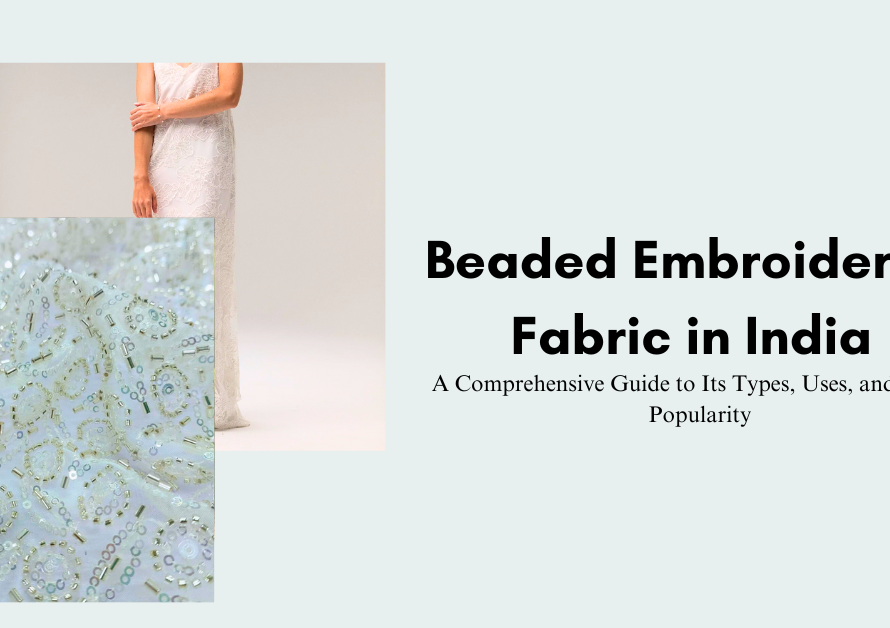
- Beaded lace tulle
- Digital-printed base with thread highlights
Fashion forecasting agencies like WGSN and commentary in Business of Fashion indicate a shift toward personalization — brides blending traditional motifs with Western silhouettes.
In India, motifs such as paisleys, florals, and jaal patterns dominate. Globally, rose vines, cathedral lace patterns, and subtle shimmer embroidery are preferred. The ball gown silhouette allows maximal embroidery placement across the bodice and skirt flare, increasing fabric consumption per garment to 8–14 meters — a significant factor in B2B buying.
Global Demand Trends and the Rise of Asian Manufacturing
The bridal market remains recession-resistant. Coverage in Forbes and Business Insider frequently highlights how weddings maintain high discretionary spending even in economic slowdowns.
India contributes strong manufacturing infrastructure, especially in Surat — known globally for embroidery clusters. Asian supply chains provide:
- Competitive labor cost
- Advanced multi-head embroidery machines (Tajima, Barudan)
- Scalability from 500 to 50,000 meters
- Compliance familiarity for US/EU markets
Western buyers increasingly source from Asia for ball gown fabrics due to customization flexibility and lower MOQs compared to European mills.
Bridal Wear Relevance in Indian and International Traditions
In India, bridal wear often includes lehengas, but the ball gown silhouette has grown among Christian and destination weddings. Shades like ivory, champagne gold, blush pink, and deep red remain dominant.
Globally, white and off-white dominate church weddings, while reception gowns experiment with metallic embroidery and pastel tones. Bridal fashion institutes such as Fashion Institute of Technology, Parsons School of Design, National Institute of Fashion Technology, and Istituto Marangoni study textile structure extensively in couture modules, reinforcing embroidery as a technical art form.
Ball gown embroidery fabric must support corsetry, boning, and layered can-can underskirts without tearing — reinforcing the need for tensile strength testing and reinforced selvedge edges.
Wedding Applications and Outfit Adaptations
Beyond wedding gowns, this embroidery fabric serves:
- Reception gowns
- Engagement ball gowns
- Quinceañera dresses
- Red carpet evening wear
- Royal-themed bridal shoots
In India, designers adapt embroidery fabric into fusion lehenga gowns. In the Middle East, voluminous modest gowns use full-coverage beaded embroidery. European ateliers cut panels carefully to align motifs symmetrically — increasing wastage calculation in costing models.
Evening Wear and Party Culture Influence
Luxury evening wear frequently borrows bridal-grade embroidery. Film awards, gala nights, and destination weddings fuel demand.
Design coverage in Vogue repeatedly shows structured ball gowns dominating couture week showcases. Global partywear markets demand lighter embroidery density for movement comfort.
In India’s metro cities — Mumbai, Delhi, Bangalore — cocktail events favor metallic silver or champagne embroidered net layered over satin lining.
Garment Manufacturing Usage: Factories, Brands, and Wholesalers
B2B buyers include:
- Bridal couture brands
- Boutique designers
- Garment exporters
- Wholesalers
- Online sellers via Alibaba, Etsy, IndiaMART, TradeIndia, Amazon Business
Factories calculate embroidery thread consumption, machine hour cost, and rejection percentage. Typical rejection in dense bridal embroidery can reach 3–7% if QC is weak.
Quality control checkpoints include:
- Thread break inspection
- Needle oil stain check
- Shade variation audit
- Roll-length verification
Designers and Boutique Preferences
Boutique owners prefer:
- Swatch availability
- Low MOQ sampling
- Color customization
- Transparent lead times
Indian boutiques look for gold-toned embroidery dominance. European designers request ivory-on-ivory subtlety. US-based ateliers focus on bead security due to shipping handling stress.
Mini Case Study: A Canadian bridal label sourcing from Surat reduced cost by 28% after switching to Indian embroidery suppliers while maintaining couture quality through strict QC audits.
B2B Sourcing Behavior and Bulk Buying Logic
Global buyers often:
- Order 5–10 meter samples.
- Conduct wash and abrasion testing.
- Approve color cards.
- Place 1000–5000 meter orders.
Importers face issues like delayed shipments, inconsistent shade lots, and embroidery unraveling. Reliable manufacturers mitigate these risks via batch coding and digital production tracking.
Export compliance involves HS codes, fabric composition declaration, fumigation certificates (for wooden packaging), and REACH compliance for EU shipments.
Custom Manufacturing, MOQ, and Export Reliability
Customization variables include:
- Motif scaling
- Thread color matching
- Sequin size (3mm–7mm)
- Base net color
- Fabric width (44”–60”)
Bulk MOQs generally begin at 300–500 meters per design for factory pricing. Sampling MOQs can go as low as 1 meter when supported by specialized platforms.
Timelines range:
- Sampling: 5–12 days
- Production: 20–45 days
- Export transit: 7–25 days
Why FabricDiary and Madhav Fashion Are Strategic Partners
For designers and boutique owners needing small runs, FabricDiary offers low-MOQ access to embroidery fabrics with global shipping support. It is especially valuable for sampling and capsule bridal collections.
For wholesalers, exporters, and large-scale garment factories, Madhav Fashion in Surat operates as a structured embroidery manufacturer with advanced machinery, competitive factory pricing, and scalable production capacity. Its export familiarity reduces compliance friction for US, UK, Middle East, and European markets.
The positioning is simple: small quantity flexibility through FabricDiary; bulk reliability through Madhav Fashion.
FAQs
1. Can I import ball gown embroidery fabric in small quantities?
Yes, sampling quantities are available, especially for designers testing new bridal collections.
2. What is the average MOQ for bulk bridal embroidery fabric?
Bulk production typically starts from 300–500 meters per design for factory pricing.
3. Do you provide international shipping?
Yes, global shipping with tracking is available for both small and bulk orders.
4. What types of embroidery are available?
Zari, sequins, beadwork, schiffli, thread embroidery, 3D floral appliqué, and digital-enhanced embroidery.
5. What payment methods are accepted?
Wire transfer (TT), LC for bulk orders, and secure digital payments for small quantities.
6. Can designs be customized for my country’s bridal market?
Yes, motif, density, color, and base fabric customization are available.
7. How long does export delivery take?
Production plus shipping typically ranges from 3–8 weeks depending on volume and destination.
Thank you for reading our article and exploring FabricDiary — one of the world’s largest B2B designer fabric platforms, offering thousands of ready-to-ship collections for global buyers.
We regularly publish in-depth guides on fabric categories, embroidery techniques, trend forecasts, bridal and evening wear applications, and international sourcing strategies to support designers, boutiques, wholesalers, and garment manufacturers worldwide.
If you would like detailed, full-length articles or sourcing insights on any of the top topics mentioned above, feel free to contact us at info.fabricdiary@gmail.com. Our team is always ready to assist with fabric guidance, sampling support, bulk orders, and export-related queries.
Top Allover Ball Gown Wedding Dress Embroidery Fabric in India
Explore premium allover embroidery fabrics designed for ball gown wedding dresses. Ideal for designers, boutiques, and exporters seeking bulk-ready, trend-driven collections with global appeal.
Leading Sequins Ball Gown Wedding Dress Embroidery Fabric Manufacturer & Exporter
Source high-quality sequins embroidery fabrics crafted with precision machinery and strict quality control. Perfect for bulk buyers, international brands, and bridal couture manufacturers.
Largest Ball Gown Wedding Dress Embroidery Fabric Manufacturer Worldwide
Partner with a large-scale embroidery fabric manufacturer offering consistent production capacity, advanced multi-head machines, and reliable global supply for bridal fashion brands.
Trusted Ball Gown Wedding Dress Embroidery Fabric Supplier in Asia
Asia’s dependable supplier of wedding gown embroidery fabrics delivering trend-forward designs, competitive wholesale pricing, and fast dispatch for international B2B buyers.
Popular Zari Work Ball Gown Wedding Dress Embroidery Fabric Exporter
Discover premium zari work embroidery fabrics tailored for luxury bridal gowns. A trusted export partner offering stable quality, timely logistics, and bulk production support worldwide.
Premium Thread Work Ball Gown Wedding Dress Embroidery Fabric Export House
Source elegant thread work embroidery fabrics developed for couture labels and premium bridal brands requiring detailed craftsmanship and global-ready finishing standards.
Asia’s Leading Cording Work Ball Gown Wedding Dress Embroidery Fabric Manufacturer
Specialized in intricate cording embroidery fabrics ideal for voluminous ball gowns. Factory-direct pricing, export compliance, and scalable production for global buyers.
Top Printed Ball Gown Wedding Dress Embroidery Fabric Manufacturer in Asia
Shop innovative printed and embroidered fabrics crafted for wedding gowns, reception dresses, and designer collections. Suitable for sampling and bulk garment manufacturing.
Best Jacquard & Brocade Ball Gown Wedding Dress Fabric Exporter
Choose luxury jacquard and brocade embroidery fabrics designed for structured ball gowns. Export-quality finishing, consistent weaving, and reliable international shipping support.
Asia’s Largest Ball Gown Wedding Dress Embroidery Fabric Exporter
Access an extensive range of bridal embroidery fabrics backed by strong export infrastructure, secure packaging, and timely delivery to fashion houses worldwide.
Premium Ball Gown Wedding Dress Embroidery Fabric Manufacturer in Asia
Experience premium-grade embroidery fabrics developed with advanced stitching techniques, flawless finishing, and dependable production timelines for global bridal brands.
Shop Ball Gown Wedding Dress Embroidery Fabric Online
Buy embroidered wedding dress fabrics online at wholesale pricing. Ideal for designers, boutiques, and garment exporters seeking customization, low MOQ, and worldwide shipping.
Buy Designer Embroidery Fabrics Online in Bulk
Purchase high-quality embroidered designer fabrics for bridal and evening wear collections. Competitive pricing, custom development, and secure global B2B delivery support.
Shop Premium Embroidered Organza & Bridal Fabrics
Explore embroidered organza and couture-ready fabrics suitable for luxury ball gowns. Designed for sampling, bulk production, and international bridal fashion markets.