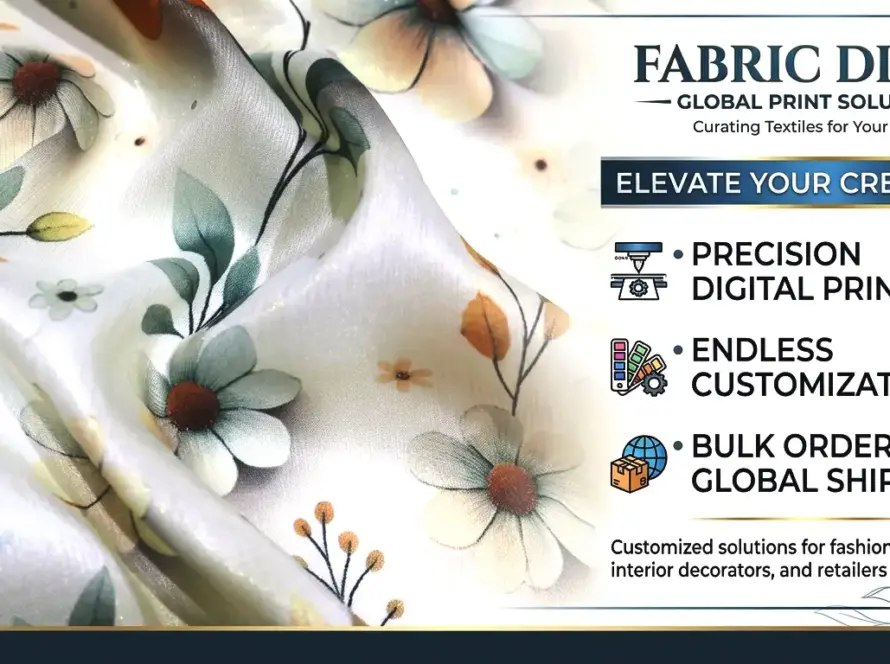



There is a moment in textile sourcing when a fabric stops being simply a material on a swatch card and becomes part of a much larger commercial conversation. Pashmina print fabric is moving into that territory. The word “Pashmina” still carries an association with softness, warmth, drape and a long textile tradition, but the fabrics being developed for contemporary fashion are no longer limited to the traditional idea of an unprinted shawl or a heritage surface.
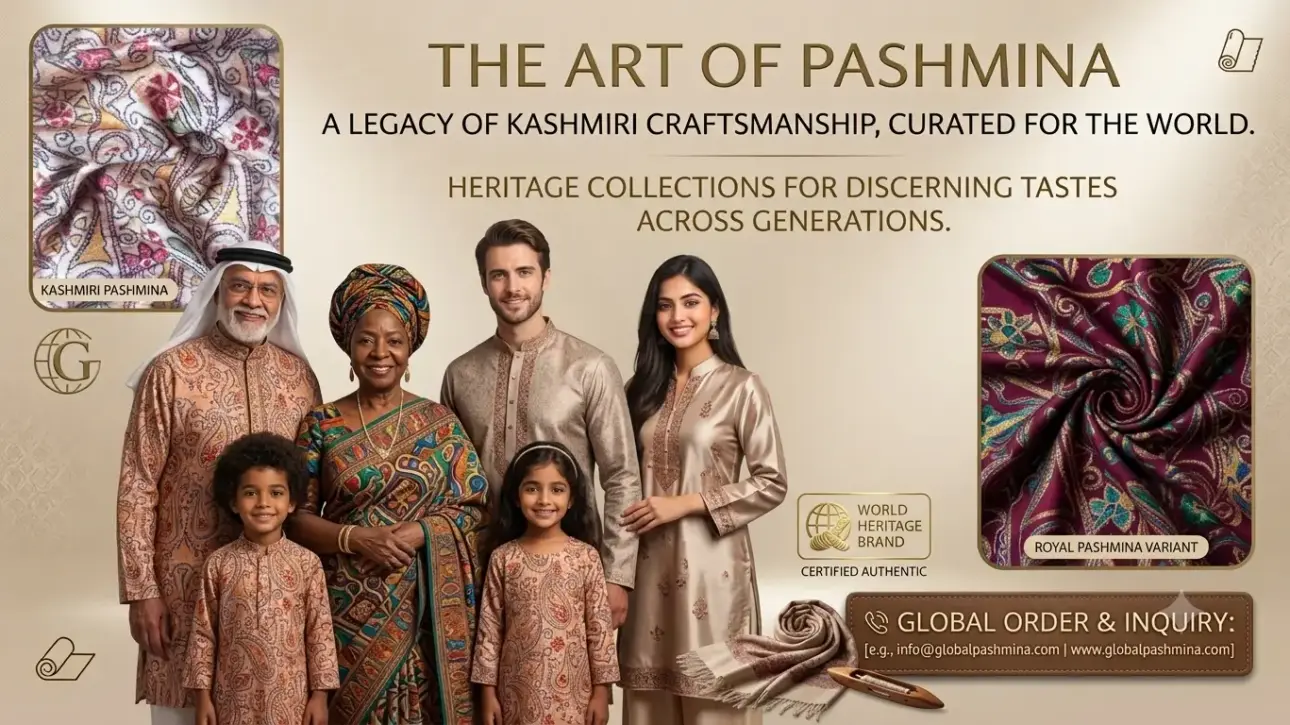
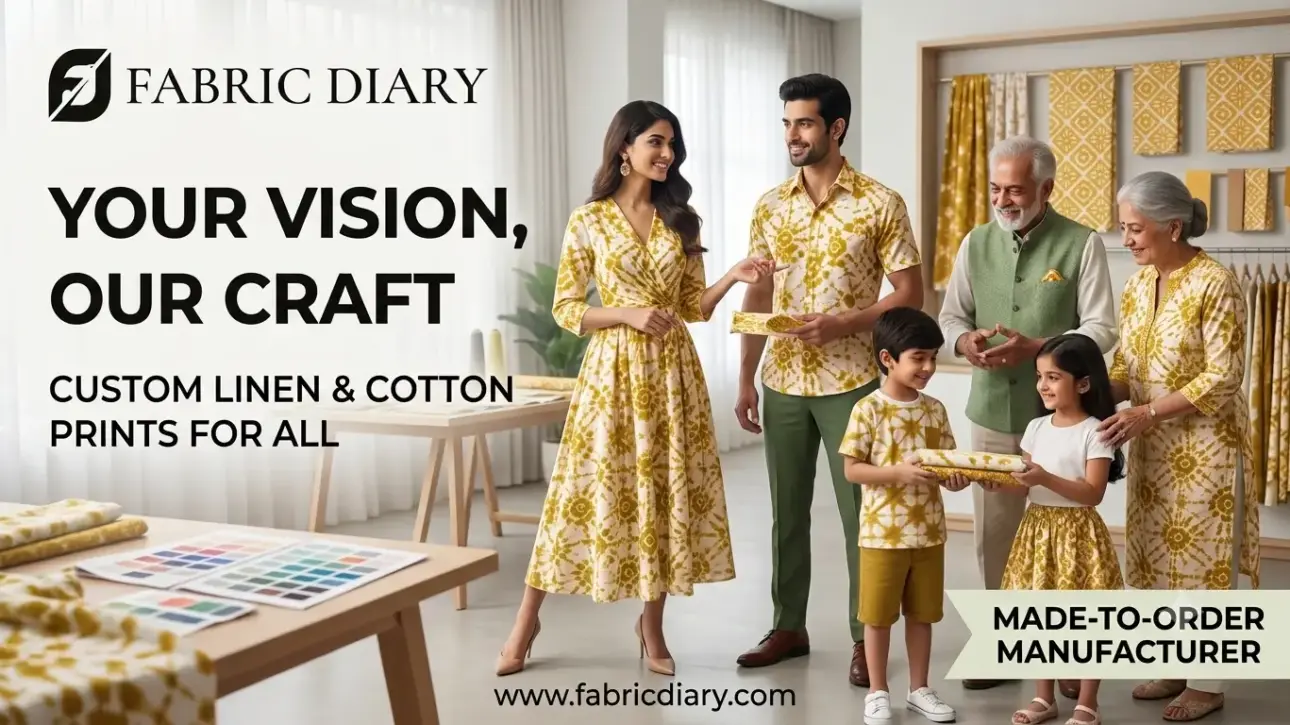
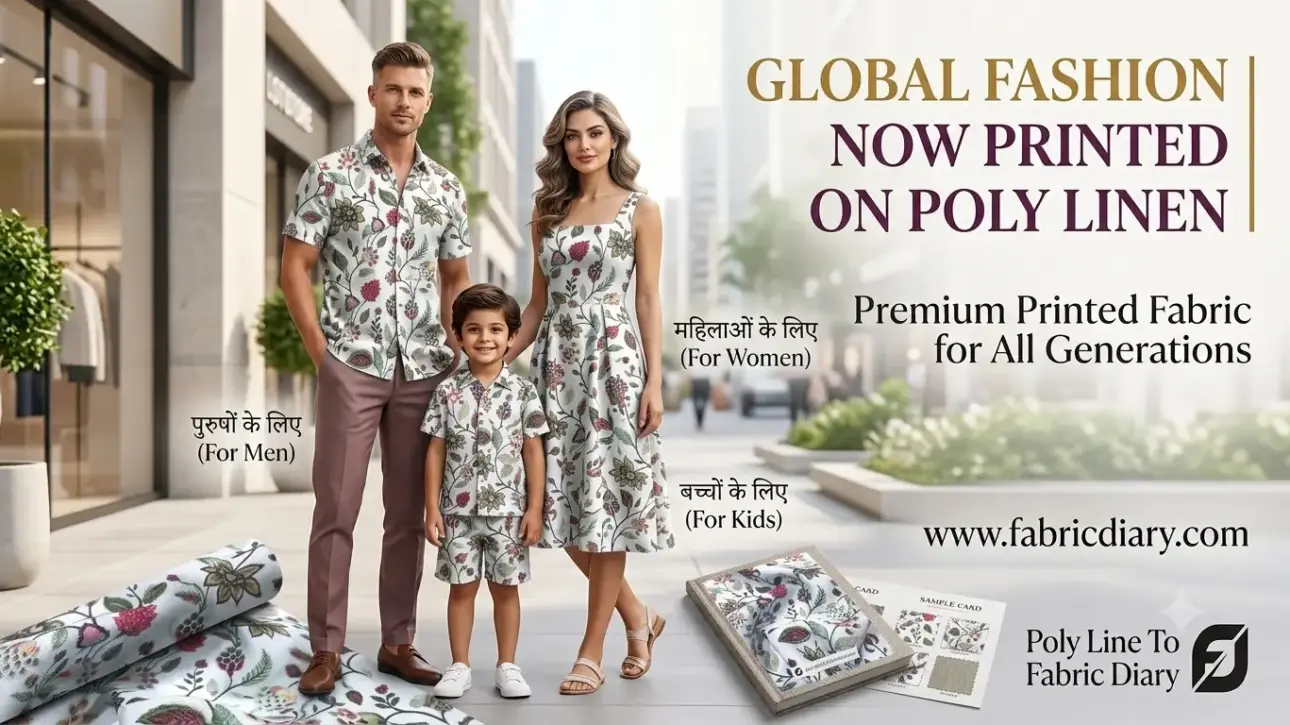
Today, buyers are looking at printed Pashmina-style constructions for garments, coordinated collections, boutique programs, winter-oriented fashion, scarves, kurtis, dresses and other commercially produced apparel. At the same time, digital textile printing is giving designers a different way to develop artwork, test colour, modify repeats and approach smaller or more design-specific production programs.
Pashmina Print Fabric Is Becoming a New Conversation in Fashion Textile Sourcing
Industry reporting has identified digital printing in India with shorter, design-led and more customized production as an important area of textile development, while recent cultural work around Pashmina continues to demonstrate how strongly the material remains connected to artistic expression and Kashmir’s textile heritage.
For Madhav Fashion, this shift is not simply a story about another printed fabric category. It is about the changing relationship between fabric sourcing and design development. A modern textile buyer rarely wants only a piece of cloth. A fashion brand may want a repeat that belongs exclusively to its collection. A garment manufacturer may need a commercially workable print that can be developed across several colourways. A boutique may want a smaller design-led quantity before committing to a larger program. An export house may need consistent construction, print development and repeatability across a production schedule. These buyers may all use the words “Pashmina printed fabric,” but what they actually need from a supplier can be very different.
Madhav Fashion operates within India’s textile manufacturing ecosystem in Surat, where fabric development, processing and fashion supply are closely connected. The company’s work with printed and textile fabrics places it in a market where the question is increasingly not simply whether a fabric can be printed, but whether the fabric, artwork, production method and buyer’s commercial requirement can be brought together into one workable sourcing process. That distinction matters for anyone searching for Pashmina Print Fabric Wholesale, Pashmina Digital Print Fabric, Poly Pashmina Printed Fabric, Custom Pashmina Print Fabric or a manufacturer capable of developing fabric for a larger fashion program.
The word Pashmina does not tell the whole fabric story
The first thing a serious buyer should understand is that the word Pashmina can describe very different commercial expectations. Genuine natural pashmina or cashmere belongs to a different fibre category from a poly-based or synthetic Pashmina-style fabric. A buyer sourcing for production therefore should not assume that every fabric marketed with the word Pashmina has the same fibre composition, construction, hand feel, warmth, drape or price structure.
This distinction becomes particularly important when printed fabric enters the conversation. A buyer searching “Pashmina Printed Fabric” may actually be looking for several different things: a soft winter-oriented printed fabric, a polyester or poly-mix Pashmina-style construction, a digitally printed fabric for a small collection, a wholesale printed fabric for garment production, or a textile that visually carries some of the associations connected with traditional Pashmina.
That is why professional sourcing begins with the construction rather than the name alone. The buyer should ask what the base fabric is, what fibre composition applies to the selected quality, how the fabric is constructed, what surface character it has, which print process is suitable, and how the finished textile behaves after printing. These questions may sound technical, but they are ultimately commercial questions. They determine how the fabric can be cut, stitched, marketed, priced and repeated.
For a textile source such as Madhav Fashion, this is where product terminology becomes useful rather than decorative. “Poly Pashmina,” “Pashmina Digital Print Fabric,” “Pashmina Printed Fabric” and “Blend Pashmina Print Fabric” should lead to a conversation about the actual quality being supplied rather than becoming interchangeable labels.
Why printed Pashmina is attracting design attention
Printed fabric changes the role of the textile. A plain surface asks the garment silhouette, construction and styling to create much of the visual identity. A printed surface begins contributing to that identity before the garment has even been cut.
That is particularly interesting for Pashmina-style fabrics because the visual character of the surface can influence how designers think about scale, repeat and colour. A small botanical repeat can create a quieter commercial fabric suitable for coordinated garments. A larger floral arrangement can become the central visual element of a dress or tunic. A paisley-inspired design can connect with familiar South Asian textile vocabulary while being redrawn in a more contemporary manner. Abstract artwork can move the fabric away from traditional associations altogether.
The result is a category with room for several design languages rather than one fixed aesthetic.
Current digital-print development is helping this flexibility become commercially useful. Digital textile printing is particularly relevant where artwork changes frequently, where sampling is important, or where a brand wants to test a new visual direction before committing to a larger production program. Industry reporting on India’s digital textile-printing ecosystem has specifically connected the technology with shorter runs, design-led production and quick response.
That does not mean digital printing automatically replaces conventional bulk printing. It means the two routes can serve different production problems.
The new sourcing question: digital development or bulk production?
For a buyer, the most useful question is not “Which printing method is better?” It is “Which production route matches my order?”
A designer developing a new collection may begin with one artwork, two or three colourways and a relatively small sample requirement. The value of digital printing in that situation is flexibility. Artwork can be changed without creating the same setup commitment associated with a conventional bulk process, and several design directions can be tested during development.
A larger manufacturer or export house has a different calculation. Once the artwork, repeat, colour separation and approval sample have been finalized, the buyer may need a substantially larger quantity. In that situation, bulk rotary or screen-based production can become commercially relevant because the approved design is intended to run repeatedly at production scale.
This difference is critical for Pashmina Print Fabric buyers. A common misunderstanding is that “custom printing” means every metre can carry a completely different design during a large production order. That is not normally how commercial bulk textile production is organized. Customization generally happens during development: artwork is adapted, colours are developed, repeat dimensions are established, samples are reviewed and the approved design is then produced consistently.
Digital development and bulk production therefore belong to the same sourcing journey but can solve different stages of it.
For Madhav Fashion, this distinction is particularly relevant to buyers who approach textile suppliers with an incomplete brief. A productive inquiry is not simply “Send me Pashmina print.” A stronger inquiry explains whether the buyer needs sampling, ready design selection, custom artwork, a small production run or a larger approved bulk program.
The rise of the design-led textile buyer
The traditional textile buyer often entered the market through fabric categories: cotton, silk, georgette, chiffon, Pashmina, satin or another construction. The contemporary fashion buyer increasingly moves in the opposite direction. The starting point may be a garment concept, a colour story, a collection identity or a target customer, followed by the search for a fabric capable of carrying that idea.
This is changing what buyers expect from textile manufacturers.
A private-label brand may not want a generic floral print that can be found across several suppliers. It may want a modified repeat, a distinctive colourway or artwork that can become part of its own collection identity. A buying house may be concerned with production consistency and approvals. A boutique label may value smaller development quantities. A garment factory may care more about repeatability, cutting efficiency and the commercial relationship between fabric cost and garment selling price.
These are not separate worlds. They are different positions inside the same textile supply chain.
Pashmina printed fabric fits this shift because it can combine a recognizable fabric identity with a wide design vocabulary. The commercial opportunity is therefore not limited to selling a printed fabric. It lies in helping the buyer turn that fabric into a usable product concept.
Print scale can change the entire garment
One of the most underestimated decisions in printed fabric development is motif scale.
A print that looks balanced on a flat fabric image may behave differently once it is cut into a garment. Small motifs can create an even visual surface and work well when the garment contains multiple panels or when the brand wants the silhouette to remain the dominant feature. Medium motifs can provide stronger visual recognition without overwhelming the garment. Large motifs can create drama, but they require more attention to cutting and placement because an important flower, paisley or graphic element can be divided across seams.
For Pashmina Printed Fabric, the correct scale depends on the end use, the fabric width, the repeat structure and the intended garment.
A dress designed around a large central floral composition requires a different artwork strategy from a kurti collection using a small allover repeat. A scarf may allow a border and central field to work together. A coordinated set may benefit from one primary print with a quieter companion colourway.
This is why professional textile development should not begin with the question, “Which print looks beautiful?” It should begin with, “Where will this print live after the fabric is cut?”
That single change in thinking can save a buyer from developing an attractive artwork that becomes commercially difficult at the garment stage.
Allover prints remain commercially important, but placement has a different role
Allover repeat printing is often the natural direction for a buyer who wants the fabric to remain flexible across multiple garments. The repeat can continue across the fabric width and length, giving the manufacturer freedom during cutting. This makes allover designs particularly practical for collections containing dresses, kurtis, tops, sets and other garments with different pattern pieces.
Placement or engineered prints serve another purpose. Instead of repeating continuously, the artwork is positioned for a particular panel, border, neckline, hem, sleeve or central garment area.
The distinction becomes especially useful when buyers are developing a collection rather than a single garment. An allover Pashmina print can become the commercial foundation of a range, while a related border or placement version can create a more specialized product.
For custom development, the buyer should therefore communicate the intended orientation at the beginning. Saying “I want a floral print” is not enough. A supplier needs to know whether the artwork is expected to repeat continuously, form a border, create a central panel or be engineered around a garment.
What colour development means for a Pashmina print
Colour is often discussed as though it were simply a matter of preference. In textile production, it is more complicated.
A buyer may arrive with a digital artwork containing one set of colours, but the final printed textile must be evaluated on the selected fabric. The surface, construction, printing route and finishing can influence how the artwork appears. This is why a colour that looks correct on a monitor should not automatically be treated as the final production reference.
For fashion brands, colourway development also has a strategic role. One print can sometimes support several commercial directions without creating an entirely new artwork. A botanical design, for example, could be developed into a restrained neutral palette, a deeper winter-oriented palette and a brighter fashion palette while retaining the same underlying repeat.
This gives the brand visual continuity.
For a textile manufacturer, however, the practical objective is consistency between approved development and production. The buyer should therefore establish what the approval sample represents, which colour reference is being used, and what level of variation is acceptable before the order moves into bulk production.
These conversations may sound less glamorous than discussing floral motifs or heritage paisleys, but they are exactly what separates a fabric concept from a production-ready textile.
Why India remains relevant to this conversation
India’s textile industry has an unusual advantage in fashion sourcing because fabric manufacturing, printing, processing, garment production and export-oriented supply chains exist within a large interconnected ecosystem. Surat in particular has developed a strong identity around synthetic and man-made fibre textiles and fashion fabrics.
That ecosystem matters when buyers are looking for more than a catalogue.
A buyer developing Pashmina Digital Print Fabric may need a fabric source, artwork development, printing capability, sampling and eventual bulk supply. When these functions can be coordinated within a manufacturing ecosystem, the sourcing conversation becomes less fragmented.
Recent reporting on Indian digital textile printing has pointed specifically to Surat and other textile centres as important locations in the development of digital-print capacity, with short-run and quick-response production identified as important drivers.
For international buyers, the value is not simply geographic. The real value is the possibility of connecting design development with manufacturing decisions earlier in the process.
That is increasingly important as fashion businesses try to reduce the distance between an idea and a production-ready textile.
Pashmina print is also a conversation about heritage
There is another reason the category deserves attention: Pashmina carries cultural meaning beyond commercial fabric terminology.
Recent reporting from Kashmir described an exhibition in which artist Masood Hussain and textile artist Mujtaba Kadri used Pashmina shawls as surfaces for painted interpretations of the verses of the fourteenth-century mystic poet Lalleshwari, known as Lal Ded. The project demonstrates how Pashmina can function not only as clothing material but also as a cultural and artistic surface.
That context matters when contemporary manufacturers use Pashmina-inspired terminology.
Modern Poly Pashmina Print Fabric should not be presented as identical to genuine Kashmiri natural Pashmina. The distinction protects both the buyer and the heritage associated with the original material. A poly-based construction can have its own commercial role: it can be developed for printed fashion applications, accessible production programs and contemporary garment collections without being described as authentic natural cashmere.
For textile sourcing, accuracy is part of brand value.
What a professional buyer should ask before ordering
The strongest Pashmina Printed Fabric inquiries tend to be specific because specificity allows the manufacturer to recommend the appropriate development route.
A buyer should first establish the fabric construction and composition being requested. If the requirement is Poly Pashmina, the exact selected quality should be confirmed rather than relying on the category name alone.
The next question should concern the intended garment. Dresses, kurtis, coordinated sets, scarves, blouses, winter garments and other applications can require different decisions around print scale, surface character and artwork placement.
Then comes the print. Is the buyer selecting from an existing design range or developing an exclusive artwork? Is the print allover or engineered? How many colourways are required? Is a digital sample needed before bulk production? Is the final order intended to be a smaller design-led run or a larger manufacturing program?
Finally, the commercial brief should make quantity and timing clear.
A supplier cannot meaningfully recommend a production route without understanding what the buyer is trying to manufacture.
The difference between buying fabric and sourcing a textile program
This distinction is becoming more important across the fashion industry.
Buying fabric means selecting from what already exists.
Sourcing a textile program means coordinating material, artwork, colour, production method, sampling, approval and repeat supply.
For a fashion brand planning one collection, the second approach can create more value. Instead of purchasing unrelated printed fabrics, the brand can develop a family of prints that share a common visual language. One Pashmina Print Fabric might carry the principal motif. A second colourway can serve another garment. A border treatment can support an accessory. A quieter repeat can become the commercial volume product.
The fabric then becomes part of the collection architecture.
This is where Madhav Fashion’s role as a textile source becomes relevant. The objective is not to tell every buyer that the same printing route or design approach is appropriate. The objective is to connect the buyer’s requirement with the right fabric development process.
Who is searching for Pashmina Printed Fabric today?
The phrase “Pashmina Printed Fabric” can represent several different commercial audiences.
A boutique owner may search for printed Pashmina fabric to create a small seasonal assortment. A garment manufacturer may search “Pashmina fabric wholesale” because the immediate concern is production cost and availability. A designer may search “Pashmina digital print fabric” because artwork development is central to the project. A private-label company may search “custom Pashmina print fabric manufacturer” because exclusivity matters. An exporter may search for a supplier capable of repeating an approved design consistently.
International buyers can also approach the category differently. Some markets may place greater emphasis on richer colour stories and winter-oriented apparel. Others may focus on lighter fashion layers, scarves or boutique collections. The terminology changes, but the underlying questions remain remarkably similar: what is the fabric, what can be printed on it, how can it be customized, how much can be produced and how reliably can the design be repeated?
That is the real B2B search journey behind the keyword.
Why custom printing is becoming part of brand identity
Custom fabric development is no longer limited to very large fashion houses.
Digital design tools have made it easier for smaller brands and independent designers to create artwork, modify repeats and build collections around original visual concepts. The challenge then shifts from artwork creation to textile execution.
A supplier must understand whether the file can be prepared for repeat, whether the motif needs adjustment, how large the repeat should be, which colour references are required and which printing route makes sense for the intended quantity.
For a Poly Pashmina Print Fabric project, these decisions should be made before the final bulk commitment.
The strongest workflow is collaborative: the buyer supplies the creative direction, the manufacturer evaluates the fabric and production requirements, artwork is adapted where necessary, a sample is reviewed, corrections are made, and the approved version becomes the production reference.
That process is less about “printing a design” and more about translating design into manufacturing.
The commercial future belongs to fabrics that can move between ideas and production
The most interesting development in Pashmina Print Fabric is not a single motif, colour or trend. It is the increasing closeness between design and production.
Fashion businesses are asking suppliers to respond faster, but they are also asking for greater specificity. They want fabrics that fit a particular garment concept, colour story, customer group or brand identity. They want to see samples before making larger commitments. They want custom artwork when a standard catalogue does not fit. And once a design succeeds, they want the ability to return to it with reasonable consistency.
That changes the role of a textile manufacturer.
The supplier becomes part of the development process rather than simply the final point of purchase.
For Madhav Fashion, this is the more meaningful story behind Pashmina Print Fabric. The category connects a familiar textile vocabulary with modern printing, custom design and B2B manufacturing requirements. It allows buyers to approach Pashmina-style fabrics not only as finished products but as foundations for new collections.
What buyers should take away
A serious buyer should leave the Pashmina Print Fabric conversation with several distinctions clear.
Pashmina-style fabric and genuine natural Pashmina are not automatically the same thing. Poly Pashmina should be evaluated according to its actual composition and construction. Printed fabric should be assessed not only by the artwork but by how that artwork works with the fabric and intended garment. Digital printing can be valuable for sampling, customization and shorter design-led programs, while conventional bulk printing can become relevant when an approved design needs to be produced at larger scale.
Most importantly, a buyer should not begin with a vague request for “good Pashmina print.”
The better starting point is a production brief.
What fabric construction is required? What garment is being produced? Is the design ready or custom? Is the print allover or placement? How many colourways are needed? Is the first requirement a sample or bulk production? What quantity is expected? Which market is the collection intended for?
Those questions turn a fabric search into a sourcing conversation.
And that is where the modern Pashmina Print Fabric market is becoming more interesting: not because the category needs another generic fashion trend, but because manufacturers, designers and buyers are finding new ways to connect textile heritage, contemporary print development and commercial production.
For brands, designers, garment manufacturers and international sourcing teams exploring Pashmina Printed Fabric, the opportunity is therefore broader than choosing a pattern from a catalogue. It is the possibility of developing a textile that belongs to a particular collection, a particular customer and a particular production requirement.
Madhav Fashion approaches that opportunity from the manufacturing side of the conversation—where fabric construction, printing, customization and commercial sourcing have to work together. And for buyers who need to move from an initial Pashmina Print Fabric idea toward sampling and production, that connection between design and manufacturing is ultimately what makes a textile source valuable.