


Linen satin fabric printing sits at the intersection of natural-fibre fabric development, surface construction, artwork preparation, colour management, textile printing and garment manufacturing. For a fashion brand or fabric buyer, the visible print is only one part of the finished textile. The underlying linen quality, satin construction, fabric weight, surface character, preparation, printing technology, colour development and finishing all influence how the final fabric performs in a garment.
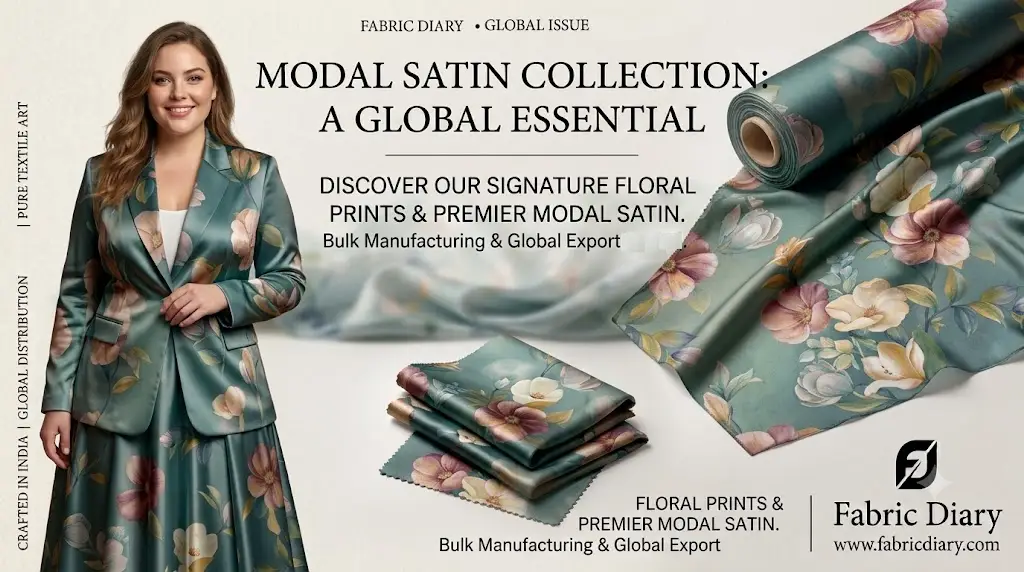
Madhav Fashion approaches fabric development from a manufacturing perspective, where the practical objective is not simply to reproduce artwork on cloth but to develop a fabric that can move through sampling, approval and bulk production with the required appearance and usable consistency. This becomes especially important when sourcing Pure Linen Satin Printed Fabric, because the natural character of linen interacts with the surface and printing process differently from many conventional synthetic or blended fabrics.
Linen Satin Fabric Printing: From Artwork to Bulk Production
For buyers developing dresses, shirts, resortwear, coordinated sets, designer garments, boutique collections or private-label apparel, understanding the route from artwork to finished printed fabric makes the sourcing process more predictable. A successful development starts before the first metre is printed and continues through fabric inspection, print sampling, colour approval, production monitoring and final finishing.
What Makes Linen Satin Fabric Different for Printing?
Before discussing printing technology, the fabric itself needs to be understood. Linen is a natural cellulosic fibre with a distinctive visual and tactile character. Depending on yarn selection, construction, finishing and fabric weight, it can show natural texture, subtle irregularity, a dry or soft hand, different levels of lustre and varying drape.
A satin construction changes the visual behaviour of the surface because the weave structure creates a smoother and more directional face than a conventional plain-weave linen. That surface can influence how artwork appears, how light reflects from the fabric and how colour is perceived.
This is why the term linen satin should not be treated as simply another name for ordinary linen. Two fabrics can both contain linen but behave differently during printing because their yarns, construction, weight, surface preparation and finishing are different.
For a B2B buyer, the correct approach is therefore to approve the actual fabric construction rather than selecting a print first and assuming it can be transferred identically to every linen quality.
The Manufacturing Chain Behind Printed Linen Satin
A printed linen satin fabric normally passes through several connected development stages.
Fibre and yarn → fabric construction → preparation → artwork → colour development → printing → drying/fixing where applicable → washing or finishing where applicable → inspection → approval → bulk production
Each stage can influence the next.
A change in fabric construction can change the appearance of the print. A change in finishing can alter colour perception or hand feel. A change in artwork scale can change the visual balance of the garment. A change in production equipment or process can require colour and print adjustments.
For this reason, professional textile development treats the fabric and print as one production system rather than two completely independent components.
Fabric Selection Comes Before Artwork Approval
One of the most common mistakes in fabric development is selecting an attractive print before confirming the base fabric.
For printed linen satin, the buyer should first establish the required composition, construction, width, approximate weight, hand feel, surface appearance, opacity, drape and intended garment application.
A lightweight printed linen satin intended for summer dresses may have a different requirement from a heavier quality intended for structured shirts or premium resortwear.
The same artwork can also appear differently on different constructions. Fine line details, tonal gradients, small motifs and dense areas of colour may require different development considerations depending on the surface.
The manufacturing process therefore begins with a fabric specification, not simply an image file.
Artwork Preparation for Linen Satin Printing
Once the base fabric has been selected, artwork becomes the next major development stage.
The artwork may be supplied as a repeat pattern, illustration, botanical drawing, abstract composition, geometric design, placement graphic or another fashion print direction.
The original design should be evaluated for:
- motif scale
- repeat size
- colour count
- tonal variation
- fine lines
- gradient areas
- negative space
- dense ink or colour areas
- intended garment scale
- cutting direction
- placement requirements
A print that looks balanced on a computer screen may not produce the same visual result when repeated across a full-width fabric.
This is particularly important for fashion applications because garment panels interrupt the repeat. A motif that appears attractive on the full roll can look very different after sleeves, collars, bodices and skirt panels are cut.
Allover Repeat vs Placement Printing
For most continuous fashion fabrics, an allover repeat allows the artwork to continue across the fabric width and length.
The repeat may be small and tightly packed, medium-scale, or deliberately large with significant open space between motifs.
Placement printing is different. Instead of treating the fabric as a continuous repeating field, artwork is positioned for a specific garment component or design area.
For example, a designer may want a large botanical motif concentrated on the front of a dress rather than repeated uniformly across the complete fabric.
This distinction needs to be established before production because the artwork preparation, fabric usage, cutting strategy and production planning can differ substantially.
For B2B buyers, the enquiry should therefore clearly state whether the requirement is allover printed linen satin or an engineered/placement print.
Digital Printing on Linen Satin
Digital textile printing is particularly useful during design development because artwork can be transferred to fabric without preparing conventional screens for every colour separation.
This can make digital printing practical for sampling, artwork testing, detailed illustrations, photographic effects, complex colour transitions and smaller development programmes, depending on the textile printer and fabric compatibility.
For a designer developing a new Digital Print Linen Satin Fabric, digital production can provide flexibility during the stage where artwork, colour and scale are still being refined.
However, digital printing should not be treated as a universal solution for every bulk programme. The appropriate process depends on fabric construction, required production quantity, artwork characteristics, colour expectations, available equipment, finishing requirements and commercial considerations.
The important manufacturing question is not simply whether digital printing is possible. It is whether the selected digital process can deliver the required result on the specific linen satin quality at the intended production scale.
Bulk Printing for Larger Production Programmes
When a design has been approved and production quantities justify a bulk textile process, the manufacturing route may differ from the sampling route.
Bulk production requires attention to repeat accuracy, colour consistency, fabric preparation, production planning, machine settings, inspection and finishing.
A sample created through one process may not automatically be a perfect representation of a bulk fabric produced through another process.
This is why professional approval should focus on the approved fabric and print standard, rather than treating the first sample as an assumption that every future production run will be visually identical.
The final bulk approval should identify the accepted colour direction, artwork scale, repeat, fabric construction and finishing requirements as clearly as possible.
Why the Strike-Off Matters
A strike-off is a small production sample used to evaluate the print before committing to a larger quantity.
For printed linen satin, the strike-off can help the buyer review the interaction between the artwork and the actual textile surface.
A buyer should examine the sample under appropriate lighting and compare it against the approved artwork or colour reference.
The review should include:
- Fabric: Is the base fabric the agreed quality?
- Colour: Does the printed colour direction match the approved target?
- Artwork: Are the motifs sharp and correctly positioned?
- Scale: Is the repeat or placement size correct?
- Surface: Does the print maintain the desired visual character of the linen satin?
- Hand feel: Has the printing and finishing affected the expected fabric handle?
- Application: Does the fabric still behave appropriately for the intended garment?
The strike-off stage is valuable because correcting a problem before bulk production is considerably easier than discovering it after a large production run.
Colour Development Is More Than Matching a Screen
Digital artwork is usually viewed through an RGB display, while textile production involves physical pigments or dyes and a specific fabric substrate.
As a result, a colour shown on a monitor cannot be assumed to reproduce identically on fabric.
The base textile, printing system, colour formulation, processing conditions, lighting and finishing can all influence the final visual appearance.
This is why colour approval should happen on the actual fabric, not only through a digital image.
For international B2B production, buyers should also communicate the reference system or physical standard they expect wherever applicable. A clear physical or recognised colour reference reduces ambiguity between designer, sourcing team and manufacturing partner.
How Linen Surface Affects Print Appearance
The natural character of linen can contribute to the visual identity of the finished print.
Unlike a perfectly uniform synthetic surface, linen may have subtle fibre and yarn characteristics that influence the overall appearance of the printed textile.
On a satin construction, the smoother face may provide a different visual relationship between the fabric surface and printed artwork.
This is one reason why the same floral, botanical or abstract artwork can appear noticeably different when reproduced on different textile constructions.
For designers, this difference can actually become part of the aesthetic. Instead of expecting the fabric to behave like a blank digital canvas, the print should be developed with the material’s natural character in mind.
Print Scale Should Be Chosen for the Garment
Print development becomes much more effective when the end garment is considered at the beginning.
A tiny floral repeat can create a completely different visual effect from an oversized botanical design.
For dresses, large motifs may create a statement appearance but require attention to garment cutting.
For shirts, smaller or medium repeats may provide more flexibility across different panels.
For coordinated sets, repeat scale needs to work across both top and bottom garments.
For resortwear, larger botanical or abstract artwork may be used to create a stronger visual identity.
For boutique and private-label collections, exclusive repeat development can help create a more differentiated textile story.
The manufacturer and buyer should therefore discuss not only what the artwork looks like, but also how it will be cut and worn.
From Digital Sample to Production Approval
One of the most important stages in printed linen development is the transition from design approval to production approval.
A digital sample may establish the artwork direction, but the production sample needs to confirm the actual textile result.
At this stage, the buyer should compare:
- composition
- construction
- width
- fabric weight
- surface
- colour
- print scale
- repeat
- placement
- hand feel
- finishing
- garment suitability
Only after these points are aligned should the production specification be considered sufficiently defined for bulk manufacturing.
This process is particularly important for Pure Linen Satin Printed Fabric, where the buyer may be purchasing not simply a printed pattern but a specific combination of natural fibre, satin construction and print development.
Common Problems During Printed Linen Fabric Development
Several issues can appear when textile development is treated only as artwork reproduction.
One is choosing artwork without confirming the base fabric.
Another is approving colour from a screen without reviewing a physical textile sample.
A third is failing to define the repeat size before production.
Buyers can also encounter problems when a sample and bulk order use different fabric specifications without an agreed approval process.
Another issue is overlooking the garment application. A print that looks attractive on a full fabric roll may not provide the intended result after cutting and sewing.
For international buyers, communication gaps around width, quantity, measurement units, colour references, packaging and inspection requirements can create additional complications.
A structured technical enquiry helps reduce these problems before production starts.
What Buyers Should Send to a Manufacturer
A detailed enquiry allows the manufacturing team to evaluate the requirement more efficiently.
For a printed linen satin development, the buyer should ideally provide:
- Fabric requirement: composition, preferred construction and approximate weight if known.
- Print requirement: allover or placement.
- Artwork: editable artwork or high-resolution print file where available.
- Repeat: required repeat dimensions or reference.
- Colour: colour references, physical standards or approved artwork.
- Width: required finished fabric width.
- Quantity: sampling quantity and expected bulk requirement.
- Application: dresses, shirts, resortwear, coordinated sets, designer garments or another use.
- Market: destination market where relevant.
- Finishing: any specific softness, surface, wash or appearance requirement.
The more clearly these details are communicated, the easier it becomes to determine whether an existing printed linen satin fabric is suitable or whether a custom development is more appropriate.
Manufacturing Considerations for International B2B Buyers
International buyers often need more than a fabric photograph before approving a textile.
They may need composition information, construction details, width, sampling, colour approval, production lead-time expectations, packing specifications and shipping information.
A manufacturer-led development process should therefore treat the fabric as a commercial production item rather than only a visual sample.
For buyers sourcing from India, this can be particularly useful when the project involves multiple stages such as fabric development, printing, finishing and garment production.
A clear technical specification also helps when a buyer needs to repeat an approved fabric for a future collection.
Printed Linen Satin for Fashion Collections
Printed linen satin can be considered across several fashion categories where the combination of natural-fibre character and a more refined surface is appropriate.
Potential applications include:
- women’s dresses
- resortwear
- premium shirts
- coordinated sets
- boutique collections
- designer garments
- seasonal fashion capsules
- private-label apparel
- contemporary occasionwear
- selected home-fashion applications
The correct application depends on the actual fabric specification and finishing, so buyers should evaluate the physical textile rather than relying solely on the name “linen satin.”
Pure Linen vs Linen Blend: Why Buyers Must Confirm Composition
One of the most important sourcing distinctions is the difference between pure linen and linen-blend fabrics.
A textile containing linen is not automatically a pure linen fabric.
Blended constructions may combine linen with other fibres to achieve different cost, performance, handle, appearance or production characteristics.
For a buyer specifically sourcing Pure Linen Satin Printed Fabric, composition should therefore be confirmed from the product or manufacturing specification before commercial approval.
This distinction also matters for product descriptions, garment labels, buyer communication and market-specific compliance requirements.
How a Manufacturer Thinks About Bulk Consistency
Bulk manufacturing is not simply a larger version of sampling.
The production team has to maintain the approved fabric specification and print standard throughout the order while managing the realities of industrial textile processing.
Consistency should therefore be considered across fabric construction, colour, print repeat, artwork positioning, finishing and inspection.
The exact tolerances depend on the fabric, process and buyer specification.
For this reason, a professional bulk programme benefits from a clearly documented approved standard.
The more precise the approval reference, the easier it becomes to identify whether later production remains within the agreed commercial specification.
A Practical Workflow for Printed Linen Satin Development
A practical development workflow can be structured as:
Step 1 — Define the fabric
Confirm fibre composition, construction, width, weight, surface and intended application.
Step 2 — Define the artwork
Confirm motif, repeat, colour direction, scale and whether the design is allover or placement.
Step 3 — Select the printing route
Evaluate digital or bulk printing based on fabric compatibility, quantity, artwork and production requirements.
Step 4 — Develop the sample
Produce the relevant printed sample or strike-off on the intended fabric.
Step 5 — Review colour and print
Check artwork, colour, repeat, sharpness, surface and overall appearance.
Step 6 — Approve the standard
Record the approved fabric and print specification before bulk production.
Step 7 — Move to bulk
Plan production according to the approved specification and commercial quantity.
Step 8 — Inspect
Review finished production against the approved standard before dispatch.
This workflow gives the buyer and manufacturer a common reference throughout development.
When Custom Printed Linen Satin Makes Sense
Custom development becomes useful when an existing printed fabric does not match the buyer’s collection requirement.
A custom project may involve a new artwork, exclusive repeat, modified colourway, different motif scale or a specific placement arrangement.
For fashion brands and private-label businesses, custom development can also be useful when the print is intended to become part of a seasonal collection identity.
The feasibility of custom printing depends on the fabric, artwork, production method, quantity and technical requirements.
The right starting point is therefore a detailed development enquiry rather than assuming every artwork can be reproduced in exactly the same way on every linen satin construction.
What Makes a Good Printed Linen Satin Development?
A successful printed linen satin programme is the result of alignment between five areas:
Material: The fabric construction must suit the intended product.
Artwork: The design must be technically appropriate for the textile.
Print: The selected printing process must match the artwork and production requirement.
Approval: Colour, repeat, fabric and finishing need a clear reference standard.
Production: Bulk manufacturing needs to maintain the approved specification.
When these elements are considered together, the resulting textile is more likely to work not only as a fabric sample but as a commercially usable garment material.
Why Material-Led Sourcing Matters
For professional buyers, fabric sourcing should begin with the finished product requirement rather than with a keyword alone.
“Printed linen,” “linen satin,” “pure linen” and “digital print” describe different aspects of the textile.
The actual sourcing decision comes from combining them.
A buyer may need pure linen, a satin construction, a printed surface, a specific width, a particular weight, a defined colour direction and suitability for a particular garment.
That is why a material-led sourcing approach is more useful than choosing a fabric based only on an attractive product photograph.
For buyers specifically looking for this intersection of material, construction and print, the Pure Linen Satin Printed Fabric collection provides the relevant sourcing direction while this manufacturing guide explains the production considerations behind it.
How to Start a Printed Linen Satin Enquiry
A productive B2B enquiry does not need to be complicated, but it should contain enough information to establish the requirement.
Start with the intended application and required fabric composition.
Then provide the artwork or describe the print direction.
Mention whether the requirement is allover or placement.
Add expected quantity, width, colour requirements and destination market where relevant.
If you already have a reference fabric, artwork or previous production sample, include it with the enquiry.
For buyers who are still at the development stage, a simple brief covering fabric + print + application + quantity is enough to begin the technical discussion.
Frequently Asked Questions
Can linen satin fabric be digitally printed?
Suitable linen satin fabrics can be evaluated for digital textile printing depending on their construction, preparation, printing technology, artwork and required production outcome.
Is digital printing suitable for bulk linen satin production?
It can be suitable for certain bulk programmes, but the appropriate process depends on quantity, artwork, fabric compatibility, colour requirements, production capability and commercial considerations.
What is the difference between printed linen and printed linen satin?
The main distinction is the underlying fabric construction. Linen satin uses a satin construction, while conventional printed linen may use a different weave and surface structure. The two can therefore produce different hand feel, lustre, drape and print appearance.
Can pure linen satin be custom printed?
Custom print development may be possible for suitable pure linen satin qualities, subject to fabric compatibility, artwork, quantity and production requirements.
What is an allover linen satin print?
An allover print is designed as a repeating pattern that continues across the fabric rather than being restricted to a specific garment placement.
What is placement printing?
Placement printing positions a specific artwork or motif in a defined area, often designed around a particular garment panel or construction.
Why is a strike-off important?
A strike-off provides a physical sample for reviewing colour, artwork, repeat and overall print appearance before larger production is approved.
Can the same artwork look different on different linen fabrics?
Yes. Fabric construction, surface, weight, preparation, finishing and printing method can influence how an artwork appears.
What information should I send for a custom printed linen satin enquiry?
Composition, construction, width, artwork, colour references, repeat or placement requirements, quantity and intended application are useful starting information.
Can printed linen satin be used for dresses?
Suitable constructions can be developed for dresses, depending on fabric weight, drape, opacity, surface, finishing and the requirements of the garment.
Can printed linen satin be used for shirts?
Yes, depending on the selected construction, weight, hand feel, drape and garment design.
Does pure linen mean the same thing as linen blend?
No. Pure linen and linen blends are different fibre-composition categories and should be identified separately in commercial sourcing.
Why should buyers approve the actual fabric sample?
Because digital images cannot fully communicate fabric hand, surface, drape, opacity or the physical appearance of printed colour.
Can a buyer develop exclusive linen satin prints?
Custom or exclusive print development may be possible depending on artwork ownership, production requirements, quantity and manufacturing feasibility.
What should be approved before bulk production?
The buyer should establish the agreed fabric specification, artwork, colour direction, repeat or placement, width, finishing and other relevant production requirements.
How can I source Pure Linen Satin Printed Fabric?
Start by defining the required composition, construction, print direction, application and quantity, then review the relevant fabric samples and production specifications before bulk approval.
Start Your Printed Linen Satin Fabric Development
Developing printed linen satin successfully requires coordination between material selection, artwork, printing, colour development, sampling and bulk manufacturing.
For brands, designers, garment manufacturers, boutiques and international B2B buyers, the goal is not simply to find a printed fabric image that looks right. The goal is to establish a textile specification that can move from concept to physical sample and then into reliable production.
If your requirement is specifically for Pure Linen Satin Printed Fabric, begin with the actual fabric construction and intended garment application, then define the print direction, artwork, colour and quantity.
Explore the Pure Linen Satin Printed Fabric collection for relevant fabric options and use the manufacturing information in this guide to prepare a more precise B2B development enquiry.