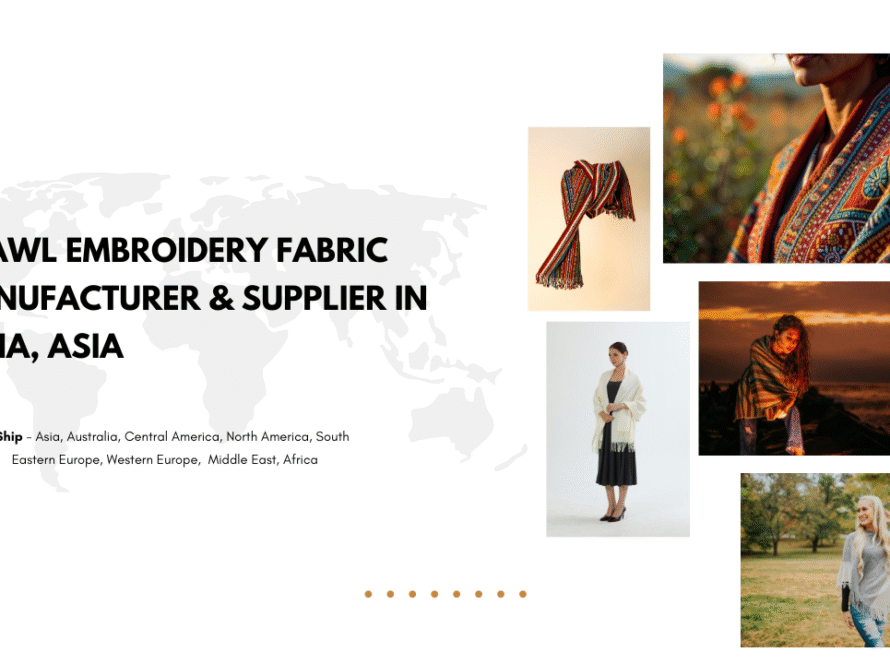



Walk through the wardrobe department of a major television production in London, a Broadway costume workshop, or a luxury streetwear label in Dubai, and one principle becomes clear: visual storytelling begins with textile selection. Among premium decorative textiles, Embroidered Raw Silk Fabric occupies a unique position.
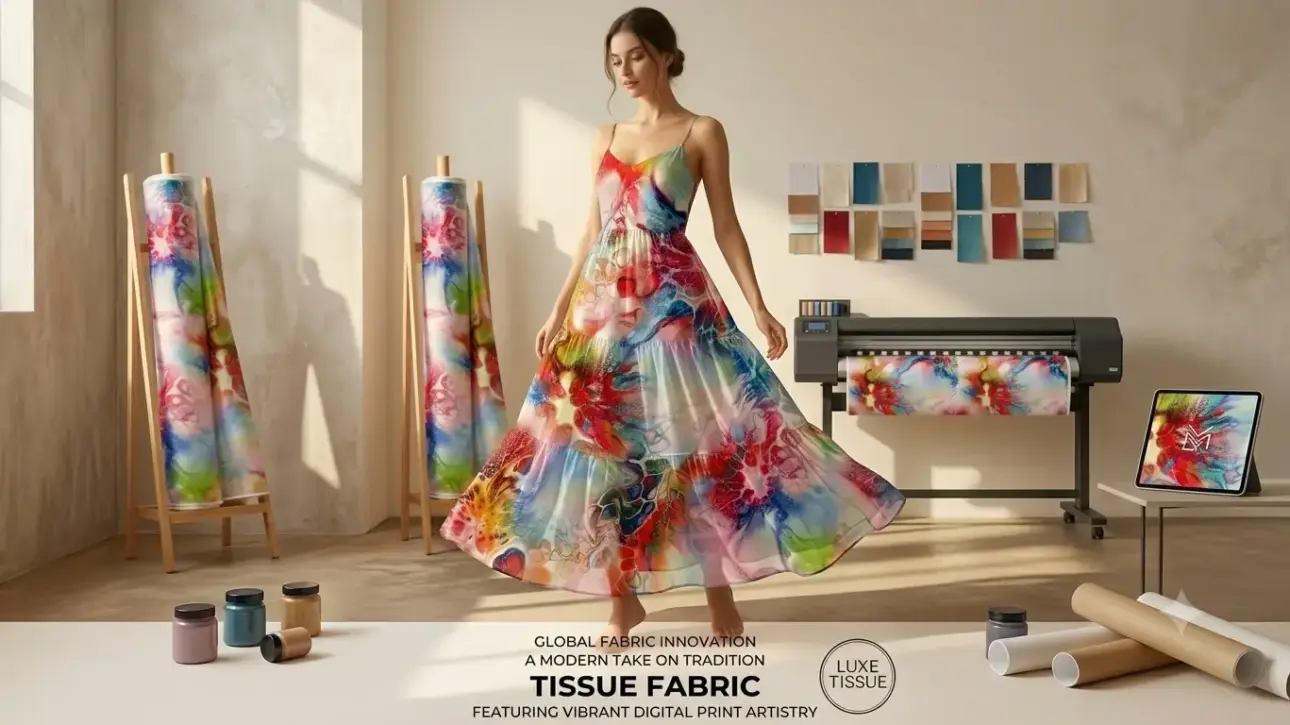
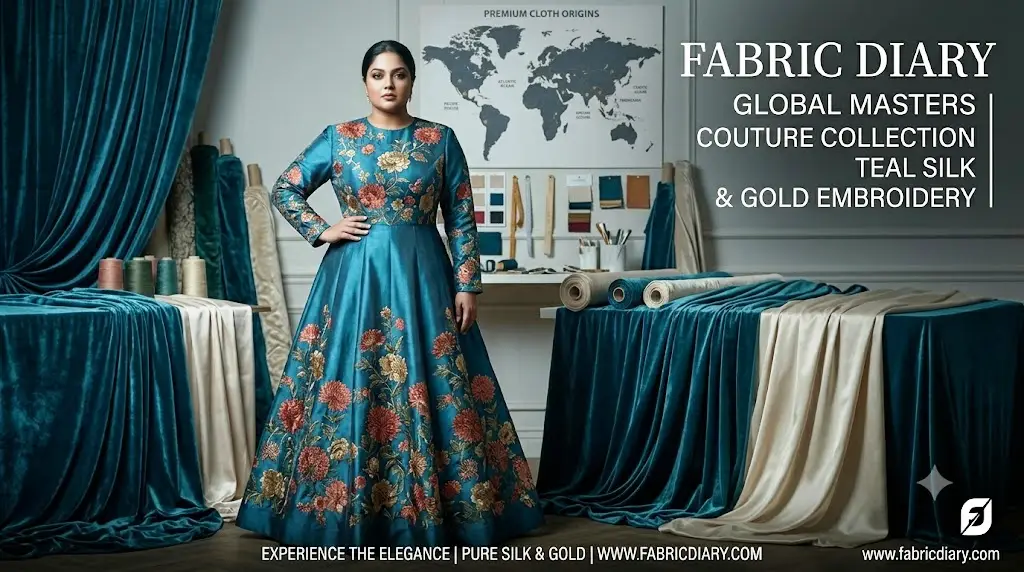
Unlike high-sheen satin or delicate organza, raw silk introduces natural texture, irregular slubs, structural stability, and understated elegance. When combined with precision embroidery—using rayon, viscose, polyester, zari, metallic yarns, sequins, or beads—the result balances heritage craftsmanship with contemporary design.
Embroidered Raw Silk Fabric for Costume Designers & Global Buyers
This versatility explains why embroidered raw silk has expanded beyond ceremonial apparel into costume production, luxury streetwear, premium jackets, theatrical productions, film wardrobes, and designer collaborations. The transformation is visible in global streetwear, where oversized embroidered bombers, artistic hooded jackets, and structured utility garments borrow traditional embroidery techniques while presenting them through modern silhouettes.


For costume designers working under demanding schedules, embroidered raw silk offers practical advantages. It responds well to controlled tailoring while maintaining enough body to support sculptural garment construction—whether creating historical costumes, futuristic fantasy apparel, or stylized stage uniforms.
Across international sourcing markets, buyers now evaluate embroidery registration accuracy, base fabric consistency, shrinkage tolerance, colour fastness, and production scalability. These expectations have elevated manufacturers capable of combining embroidery engineering with export-grade systems.
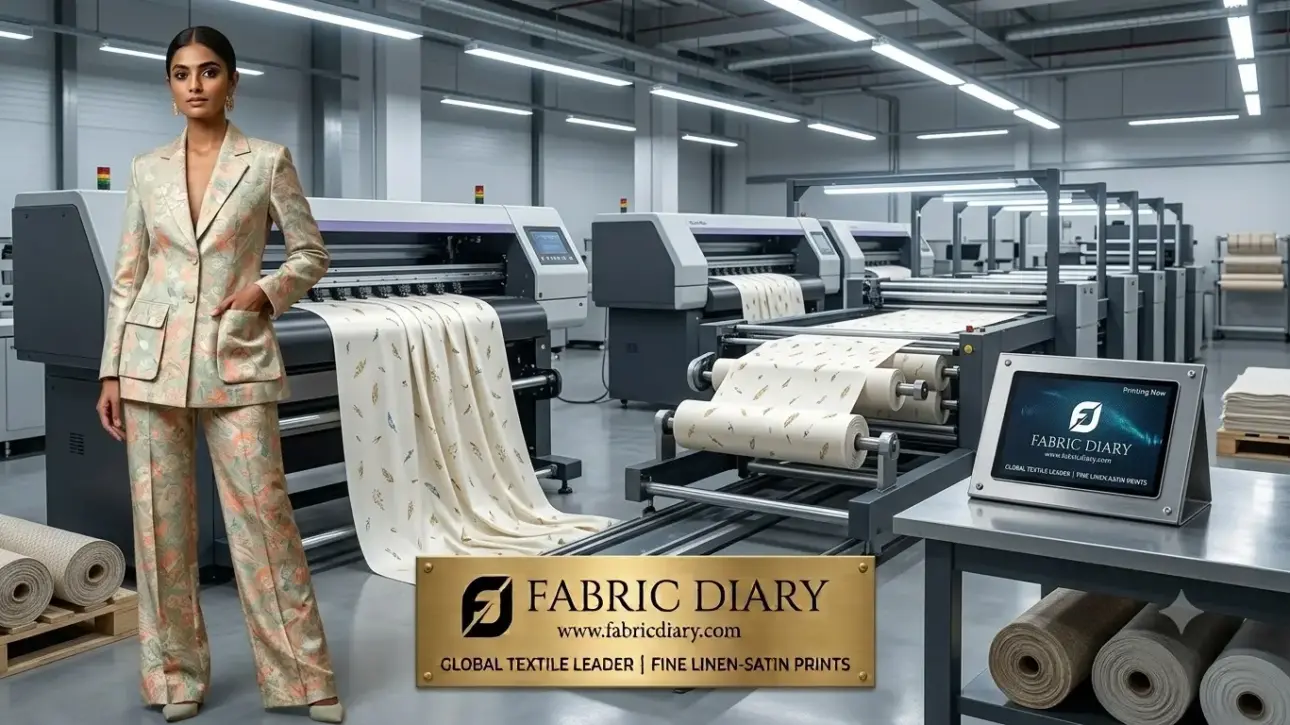
India has strengthened its position through specialised embroidery clusters, particularly Surat, where weaving, dyeing, embroidery, finishing, and export operations function within an interconnected ecosystem. Platforms such as FabricDiary have become trusted destinations for independent designers seeking premium fabrics without high minimum order quantities, while Madhav Fashion continues supporting larger commercial requirements through factory-scale production and customised embroidery development.
Understanding the Technical Profile of Embroidered Raw Silk Fabric
Raw silk differs from smoother silk varieties because it preserves the silk yarn’s naturally uneven character. These subtle slubs are not imperfections but defining visual characteristics that create depth and authenticity beneath embroidery.
Commercially, embroidered raw silk is available across multiple GSM categories:
- Lightweight (90–120 GSM): Suitable for overlays, decorative panels, and lightweight garments.
- Medium (140–200 GSM): The largest commercial segment, supporting kurtas, jackets, dresses, and structured fashion apparel.
- Heavy (220–320 GSM): Used for luxury coats, statement streetwear, couture garments, and dramatic costume production.
Embroidery compatibility is another advantage. Raw silk accommodates Schiffli embroidery, multi-head computer embroidery, zari, cord work, beadwork, sequin applications, and mixed-media techniques. Embroidery threads may include rayon, viscose, polyester, metallic yarns, or cotton.
International quality control extends beyond appearance. Buyers evaluate embroidery tension consistency, stitch registration, thread break frequency, seam slippage resistance, and wash performance. Professional inspection includes fabric width verification, GSM confirmation, colour shade continuity, defect mapping, and roll-by-roll inspection before shipment.
Finishing operations may include soft finishing, anti-static treatment, wrinkle-reduction, or stain-resistant coatings. While embroidered raw silk is durable, manufacturers generally recommend dry cleaning for heavily embellished fabrics and light steaming rather than direct ironing.
Sustainability is increasingly important. Buyers request documentation relating to restricted chemical compliance, azo-free processing, and responsible finishing practices. Manufacturers meeting these expectations strengthen long-term relationships across North America, Europe, Australia, Japan, and the Middle East.
Base Fabrics, Embroidery Constructions and Design Variations
While “raw silk” suggests a single category, commercial production encompasses multiple base constructions:
- Pure raw silk: The benchmark for luxury couture and heritage garments.
- Silk-blend raw fabrics: Introduce greater durability and cost efficiency for designer ready-to-wear.
- Polyester-enhanced raw silk: Offers improved wrinkle resistance and dimensional stability.
Embroidery defines the fabric’s commercial identity:
- Dense all-over Schiffli embroidery: Creates richly textured surfaces for ceremonial apparel.
- Spaced floral motifs: Preserve more of the raw silk’s natural character.
- Cord embroidery: Introduces raised linear elements that photograph well under directional lighting.
- Sequins, beads, and metallic zari: Add depth for garments intended for stage or screen.
Regional preferences shape embroidery direction:
- Middle East: Ornate geometric arrangements with metallic highlights.
- Europe: Restrained botanical patterns and tonal embroidery.
- North America: Oversized graphics, abstract motifs, and patchwork-inspired layouts.
- East Asia: Precision, symmetry, and subtle textural contrast.
Global Demand Trends Driving Procurement
A decade ago, embroidered raw silk was largely associated with bridal couture. Today, procurement managers from Los Angeles costume studios, European luxury ateliers, Middle Eastern fashion houses, and Japanese concept brands increasingly include it in seasonal sourcing calendars.
Key drivers of demand:
- Shift away from mass-produced uniformity: Buyers invest in fabrics that communicate craftsmanship and authenticity.
- Changes in consumer behaviour: Customers seek fewer pieces with stronger design narratives—premium embroidered jackets, oversized overshirts, and collectible capsule garments.
- Entertainment industry growth: Streaming platforms have transformed wardrobe production. Costume departments source fabrics for historical dramas, fantasy productions, and global advertising campaigns.
Regional demand patterns:
- North America: Premium streetwear collaborations and film costume production.
- Europe: Sustainability-driven sourcing; preference for durable, multi-season fabrics.
- GCC markets (UAE, Saudi Arabia, Qatar): Strong demand for richly embellished occasionwear, abayas, and evening collections.
- Asia: South Korean experimental fashion, Japanese refined craftsmanship, and India’s growing premium pret market.
- Emerging markets (Africa, Latin America): Expanding procurement for occasionwear and cultural apparel.
Sourcing has shifted from purely transactional marketplaces (Alibaba, IndiaMART) to partners providing technical consultation, sample development, and direct communication with manufacturing teams. This has benefited platforms like FabricDiary (flexible sampling, low MOQs) and manufacturers like Madhav Fashion (factory-scale production, export-grade consistency).
Why Streetwear Designers Are Reimagining Embroidered Raw Silk
Streetwear has matured beyond logo-driven graphics. Embroidery now functions as visual language, allowing designers to reference heritage, geography, and identity through textile craftsmanship.
Raw silk’s naturally textured surface creates depth beneath embroidery, making stitched motifs more dimensional under natural light and photography. Key trends include:
- Patchwork construction: Combining embroidered raw silk with plain dyed fabrics, prints, and technical polyesters.
- Evolving colour palettes: Moving from gold and crimson to charcoal, olive, sand, rust, and muted earth tones.
- Diverse motifs: Abstract geometry, architectural grids, oversized florals, celestial imagery, and graffiti-inspired compositions.
For costume designers, these developments are valuable. Film and television productions require wardrobes that establish character identity through texture. A science-fiction production may use metallic cord embroidery on charcoal raw silk, while a period drama uses antique zari motifs for historical authenticity.
The fabric also performs well in limited-edition designer collaborations. Flexible sourcing platforms like FabricDiary allow independent creators to order sample quantities without industrial-scale minimums, while manufacturers like Madhav Fashion provide scalability for commercial production.
Sourcing Strategies for Costume Designers, Theatre Companies & Film Wardrobes
Unlike conventional apparel brands, costume departments operate under compressed timelines. Script revisions, casting changes, and evolving artistic direction require sourcing partners with exceptional flexibility.
Professional buyers prioritise confidence over price. They need assurance that sampled fabric can be reproduced accurately, with consistent colour and embroidery placement. Sampling is the foundation of commercial trust. Designers evaluate handle, drape, stitch quality, colour rendering under lighting, and seam behaviour.
Documentation is critical: Commercial invoices, packing lists, certificates of origin, and export-compliant packaging are expected. For embroidered raw silk, the commonly referenced HS classification falls within woven silk fabric categories, though exact codes depend on fibre composition and destination regulations.
Shipping strategies:
- Sample swatches: Dispatched via international courier (several business days).
- Bulk orders: Air freight for urgent timelines; sea freight for cost efficiency.
Buyer psychology: Once designers establish confidence in quality, production reliability, and communication, supplier relationships often extend across multiple productions. The cost of changing manufacturers frequently exceeds any short-term pricing advantage.
Example: A London-based theatre company required embroidered raw silk reflecting nineteenth-century craftsmanship. After struggling with inconsistent quality from intermediaries, they sourced through FabricDiary, refined designs, and placed a larger order with Madhav Fashion. The final shipment arrived with consistent embroidery and export-ready documentation.
India’s Manufacturing Ecosystem and Export Standards
Surat’s textile infrastructure brings weaving, dyeing, embroidery, finishing, inspection, packaging, and export logistics into a closely connected supply chain. This results in shorter development cycles and faster adaptation to buyer requests.
The manufacturing process:
- Base fabric: Must achieve consistent construction, yarn tension, and dimensional stability before embroidery.
- Preparation: Scouring, stabilization, and pre-shrinking reduce puckering and distortion.
- Embroidery: Advanced multi-head computerized systems translate digital artwork into production-ready stitch files.
- Quality assurance: Verification of embroidery placement, stitch density, colour shade, GSM, and defect mapping. Laboratory testing may evaluate colour fastness, seam slippage, and shrinkage.
Export readiness: Documentation accuracy is crucial. Commercial invoices, packing lists, HS code declarations, and fibre composition details ensure smoother customs clearance.
Manufacturing flexibility: Today’s fashion industry rarely follows predictable volumes. Manufacturers capable of supporting both small capsule collections and large retail replenishment create stronger partnerships. FabricDiary supports independent designers with low-MOQ sampling, while Madhav Fashion provides factory-scale production and custom embroidery engineering.
Beyond Bridalwear: Occasion Fashion and Cultural Celebrations
Embroidered raw silk has moved far beyond weddings:
- Europe: Luxury evening collections, museum-inspired fashion, and couture outerwear.
- North America: Structured bomber jackets, artistic trench coats, and experimental streetwear.
- Middle East: Elegant abayas, kaftans, and modest fashion with metallic and tonal embroidery.
- Asia: Japanese precision, South Korean layered constructions, and Indian premium pret.
- Africa & Latin America: High-end occasionwear and editorial fashion celebrating regional craftsmanship.
Entertainment industry: Costume departments for films, television, theatre, and music tours require fabrics that communicate historical authenticity or fantasy narratives. Embroidered raw silk’s interaction with stage lighting and cinematography makes it particularly valuable.
Consumer expectations: Modern buyers seek garments with emotional durability—pieces that remain meaningful beyond a single season. Embroidered raw silk supports this philosophy, aligning with broader conversations about responsible fashion.
How Designers Evaluate Embroidered Raw Silk Before Production
Fabric approval is one of the most critical decisions. Designers examine how embroidery interacts with the raw silk’s slub texture, fold the textile to assess recovery, and view it from multiple angles to identify distortion.
For theatre companies: Movement is crucial. Fabrics must survive repeated rehearsals, quick changes, and continuous lighting exposure.
For film and television: High-definition cameras reveal surface details. Embroidery is evaluated under production lighting to avoid unwanted reflections or loss of texture.
For fashion brands: Scalability is key. Buyers investigate whether embroidery registration, colour consistency, and fabric construction can remain identical across thousands of metres.
Technical specifications requested: GSM verification, usable width, embroidery repeat, fibre composition, colour fastness data, shrinkage tolerance, and care instructions.
Design flexibility: Manufacturers capable of accommodating modifications (motif scale, colour, stitch density) without restarting production hold a competitive advantage. This is especially valuable in streetwear and theatre, where creative direction often evolves.
Designers increasingly combine embroidered raw silk with complementary textiles—Embroidered Fabrics, Printed Fabrics, Plain Dyed Fabrics, Jacquard—to create multi-textural garments.
B2B Buying Behaviour: From Sampling to Container Orders
Buyers rarely purchase fabric—they purchase confidence. Every metre ordered represents trust in manufacturing capability, delivery reliability, and the supplier’s ability to protect the buyer’s reputation.
The purchasing process:
- Discovery: Industry exhibitions, trade publications, sourcing platforms, or digital catalogues.
- Verification: Requesting technical information on composition, GSM, production capacity, and quality control.
- Sampling: Swatches or sample metreage to evaluate embroidery precision, colour, and drape.
- Commercial negotiation: Price becomes important only after technical suitability is confirmed.
Minimum Order Quantity (MOQ): Independent designers, costume departments, and boutique labels require limited quantities during development. Excessively high MOQs discourage experimentation. Platforms like FabricDiary support low-MOQ procurement, while manufacturers like Madhav Fashion provide scalability for repeat orders.
Risk diversification: Brands often establish primary and secondary sourcing relationships. However, consistent quality, communication, and logistics often evolve into long-term strategic collaboration.
Custom Embroidery Development Through FabricDiary and Madhav Fashion
Custom development has become increasingly important as fashion moves toward exclusivity. A distinctive embroidered jacket or memorable costume often begins with a customised textile concept.
The development journey:
- Design reference: Hand-drawn artwork, digital sketches, mood boards, or inspiration images.
- Technical translation: Manufacturers analyse motif size, stitch density, thread selection, and production complexity.
- Colour development: Exact shades aligned with brand identity or seasonal collections require controlled dyeing and shade matching.
- Embroidery placement: Unconventional layouts—oversized back motifs, asymmetric panels, border-inspired constructions.
For film and theatre, custom development may involve archival references for historical costumes or original motifs for fantasy productions.
FabricDiary supports designers with flexible ordering, sample development, and global swatch delivery. Madhav Fashion provides bulk manufacturing, consistent quality control, and export order execution. Working with a direct manufacturer allows buyers to communicate directly with production teams, reducing misunderstandings.
The Future of Embroidered Raw Silk in Premium Streetwear & Creative Fashion
The next decade will be shaped by how successfully the industry combines craftsmanship, technology, and responsible manufacturing. Embroidered raw silk is positioned to connect heritage techniques with future-focused design.
Key growth areas:
- Personalisation: Consumers desire exclusive garments through custom embroidery and limited production runs.
- Cross-cultural design exchange: Designers combine Indian embroidery with American streetwear, European minimalism with Asian traditions.
- Entertainment and digital media: Streaming platforms, music, and gaming increase demand for visually distinctive clothing.
- Supply-chain transparency: Buyers want to know where fabrics originate and how they are manufactured.
India’s role remains significant. Manufacturing centres like Surat continue evolving by integrating digital embroidery technologies and international quality expectations. Platforms like FabricDiary connect global creatives with accessible premium textiles, while manufacturers like Madhav Fashion demonstrate how traditional expertise can evolve into modern export-focused systems.
——–
FAQs
What import regulations and documentation are required when importing Embroidered Raw Silk Fabric from India?
Buyers generally require a commercial invoice, packing list, certificate of origin where applicable, shipping documents, and accurate HS code classification. Customs duties vary by destination country, fibre content, and local trade regulations. Experienced exporters prepare accurate documentation to reduce clearance delays.
What are the international shipping options and delivery timelines?
Sample metres are commonly shipped via international express courier (several business days). Larger commercial orders are transported through air freight (urgent) or sea freight (cost-efficient). Professional exporters provide tracking details and logistics documents.
How do MOQ requirements differ between sampling and bulk orders?
Sampling orders may start from limited metre requirements, allowing buyers to evaluate quality before committing. Bulk production orders generally involve higher quantities because embroidery programming and manufacturing efficiency become more economical at scale.
Can buyers receive swatches or sample metres before placing large orders?
Yes, professional suppliers commonly provide swatches or sample metres before bulk production. This allows evaluation of embroidery texture, raw silk surface, GSM, colour, drape, and garment compatibility. Platforms like FabricDiary support sample-based decision-making.
What base fabrics, GSM options, and construction types are available?
Options include pure raw silk, silk-blend constructions, and commercially engineered alternatives. GSM ranges vary: lightweight (90–120 GSM), medium (140–200 GSM), and heavy (220–320 GSM). Embroidery options include floral motifs, geometric patterns, zari, sequins, beadwork, cord embroidery, and customised designs.
What payment terms are generally accepted?
Payment structures vary but commonly involve advance payments before production begins, with remaining balances settled before shipment. Accepted methods include international bank transfers and secure online payment solutions.
How does the custom design process work for bespoke embroidery?
Custom development begins with a design reference or artwork. Manufacturers evaluate technical feasibility, embroidery method, and production complexity. The process includes digital programming, sample creation, colour approval, and final production confirmation. Customisation can include motif changes, exclusive colourways, and placement embroidery.